
Piltdown: The Forged Fossil That Did Not Fool Everyone
The famous hoax lasted for decades, but doubt was present almost from the beginning. Its history turns on the difference between recognising an anatomical problem and proving how an object was manufactured.
In 1915, the American zoologist Gerrit S. Miller Jr. published a blunt conclusion about the celebrated remains from Piltdown: the jaw and braincase could not have belonged to one individual. He was wrong about which ape the jaw represented. He was right that the supposed ancestor had been assembled from incompatible parts.
Miller’s The Jaw of the Piltdown Man complicates the usual story of a fossil that fooled science until its exposure in 1953. There was no single scientific mind that first believed and then abruptly disbelieved. Researchers disputed the anatomy, reconstructed the fragments differently and disagreed about the force of the evidence. The problem was that disagreement did not yet establish deliberate manufacture.
That distinction makes Piltdown more interesting than a story about gullibility. An object can be doubtful for reasons that are only partly correct. It can acquire authority through institutions and illustrations without becoming universally accepted. And a successful exposure can settle the fact of fraud while leaving uncertainty about precisely who carried it out.
A discovery with an appealing shape
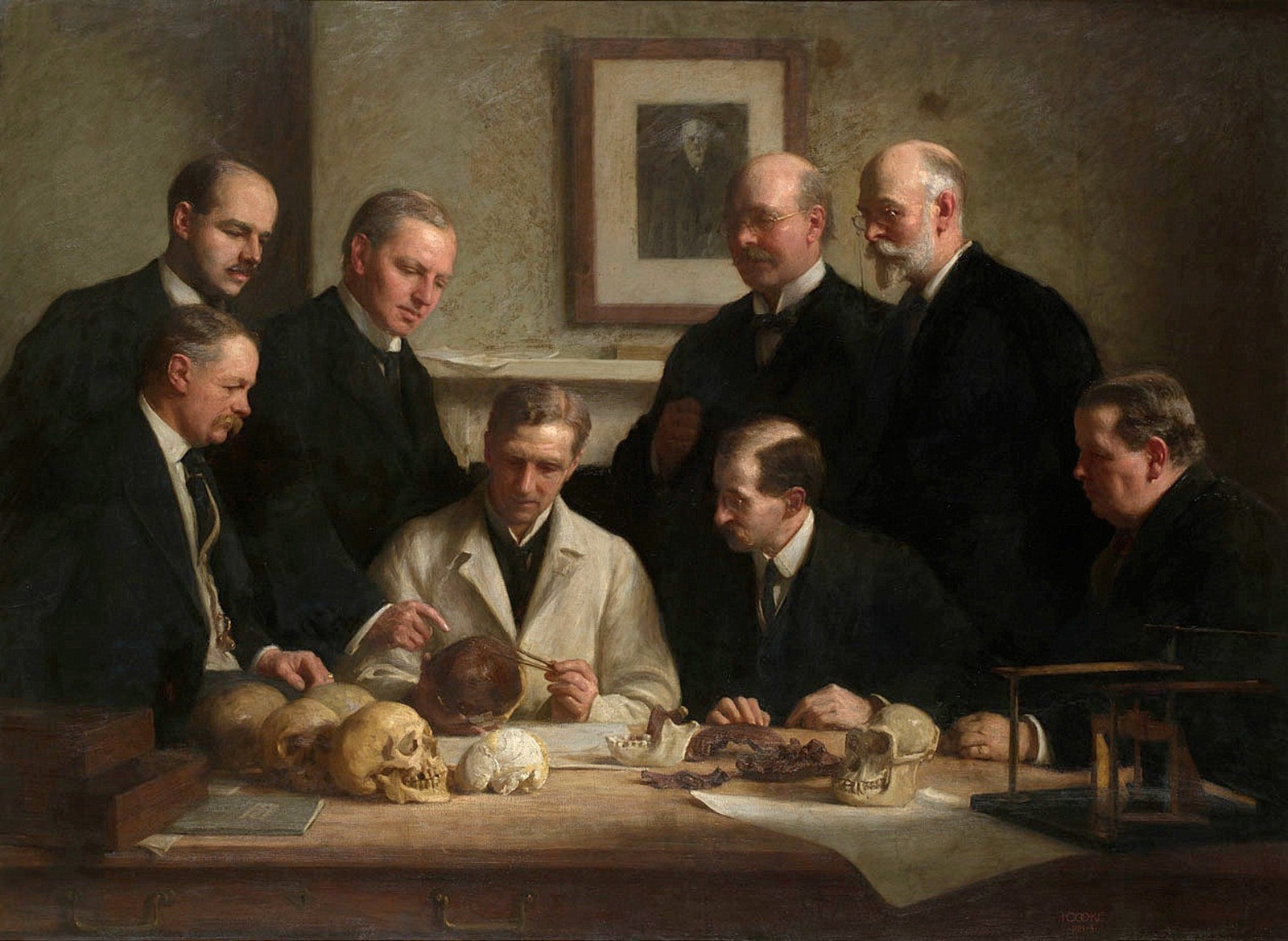
Charles Dawson, a Sussex solicitor and amateur collector, brought the remains to Arthur Smith Woodward, Keeper of Geology at the British Museum (Natural History). Their presentation to the Geological Society on 18 December 1912 gave the proposed human ancestor a scientific name, Eoanthropus dawsoni. It was not simply a curious object shown to a newspaper. It entered a professional network of meetings, papers, casts and comparisons.
The joint archival exhibition assembled by the British Geological Survey, Natural History Museum and Geological Society traces the finds to gravel at Barkham Manor near Piltdown. Dawson’s account connected skull fragments, a lower jaw, animal remains and implements with an apparently ancient deposit. The surrounding material was part of the claim: it supplied a setting in which the bones could be interpreted as old.
The combination was striking. A relatively human-looking braincase appeared with an ape-like jaw. This could be made to support a sequence in which a large brain preceded a more modern face. The appeal did not require every scholar to agree on the reconstruction. Indeed, disagreement over how to rebuild the skull helped turn the fragments into an extended programme of research.
A contemporary Nature notice of 19 December 1912, available in preview, treated the discovery as exceptionally important for England and expressed strong confidence in its antiquity. Its tone is evidence of reception, not evidence that the claim was true. The find offered both a dramatic anatomical proposition and a place for Britain in the emerging story of human origins.
The missing parts did important work
Fragmentary fossils always require interpretation, but the breaks in the Piltdown material were unusually consequential. Parts that would have made the relationship between jaw and skull easier to test were absent. Researchers had to decide how fragments fitted together and how much missing anatomy could legitimately be reconstructed.
In an October 1913 note, Woodward answered Arthur Keith’s criticism of his reconstruction. Their disagreement concerned brain capacity, the curve of the jaw and the form of the teeth at its front. Woodward’s published extract shows that the argument was already technical and public. It also shows how assumptions about human difference and intellectual hierarchy entered anatomical language; these were not neutral categories simply dictated by bone.
Miller separates the jaw from the skull
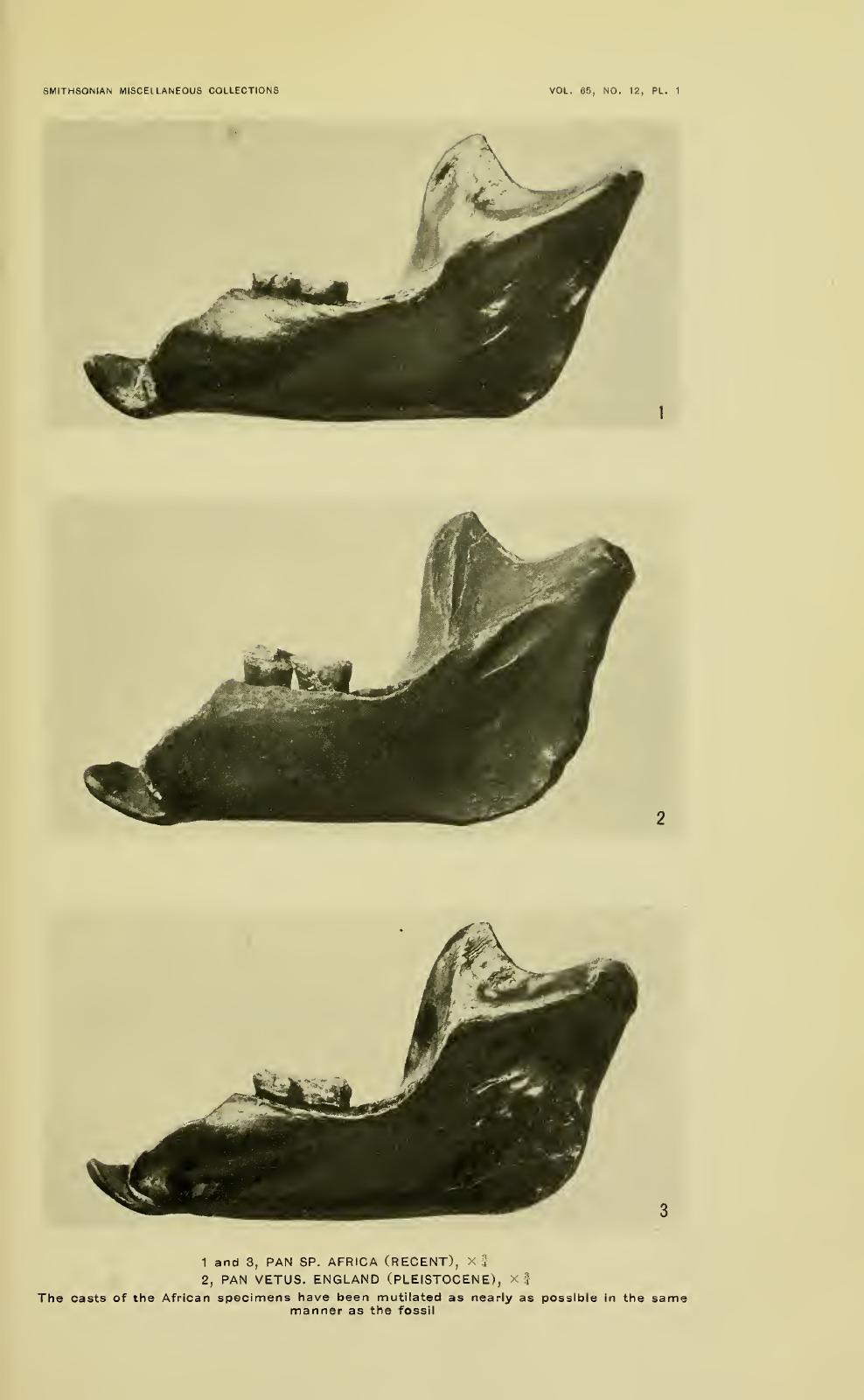
Miller approached the problem through comparison. Working from casts, he examined the Piltdown jaw against the United States National Museum’s collections, including chimpanzees, gorillas and orangutans. He argued that the anatomical evidence should not be overridden by the fact that fragments had reportedly been found close together.
That was the key methodological move. Association in a deposit can support a reconstruction when the anatomy is compatible. It cannot automatically resolve anatomical incompatibility. The story of where an object came from and the observable structure of the object are related forms of evidence, not substitutes for one another.
Miller distinguished three lines of argument used to join the remains: the expected geographical distribution of animals, the geological association, and anatomy. The absence of known comparable apes in ancient Britain did not, he argued, prove that an ape jaw must belong to a human skull. An incomplete fossil record could contain surprises. This was a logically careful objection, even though the proposed ancient British ape was itself an artefact of accepting too much of the find’s reported history.
He classified the mandible as a chimpanzee and proposed the name Pan vetus. That identification was mistaken: later work established the orangutan origin of the material. His error matters. Miller had not solved the forgery in 1915. He had dismantled one important claim while retaining another—that the jaw represented a genuinely ancient animal from the deposit.
The case therefore does not divide neatly into prescient sceptics and credulous believers. A researcher could reject the composite human ancestor without suspecting that someone had altered and planted the parts. Doubt had levels. An alternative interpretation was not yet a demonstration of fraud.
Even a popular account retained a question mark
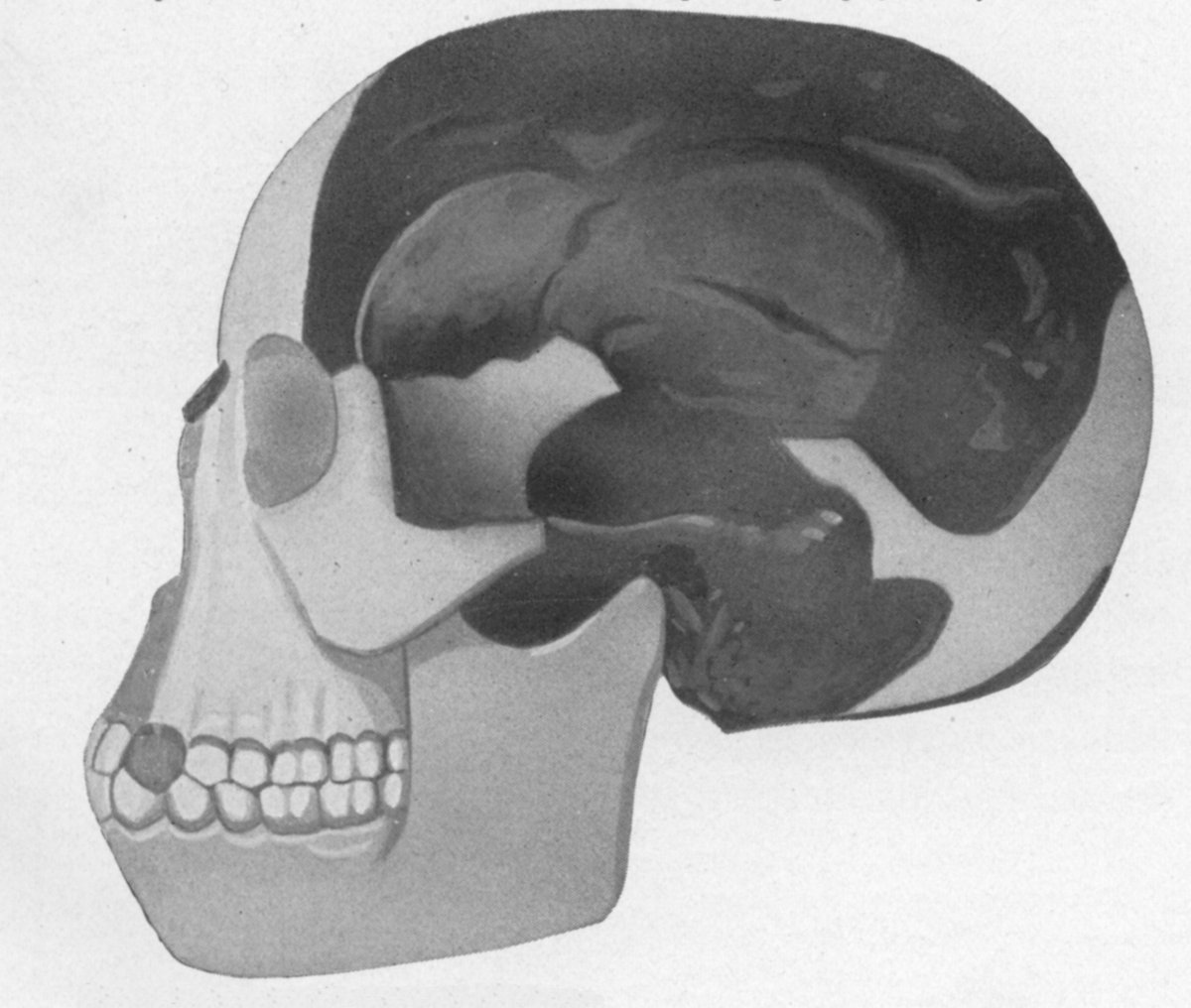
By 1922, J. Arthur Thomson’s The Outline of Science presented Piltdown to a broad readership. Its discussion treated the skull as ancient but explicitly allowed that the associated tooth and jaw might belong to an ape. The illustration distinguished preserved portions from reconstructed areas.
The book still transmitted an erroneous place for Piltdown in human prehistory. Yet its qualifications are important evidence against the claim that all readers were offered one unquestioned composite. The same printed page could circulate an authoritative-looking skull and acknowledge uncertainty about what belonged to it.
A reconstruction has a visual advantage over a list of reservations: it looks whole. Viewers can remember the assembled head more easily than the caveat that a jaw may not fit. That is an interpretation of how the image works, not proof of what every contemporary reader believed. The surviving illustration lets us see both the effort to mark the missing material and the persuasive completeness of the result.
The object was tested as an object
The exposure in 1953 involved Kenneth Oakley, Joseph Weiner and Wilfrid Le Gros Clark. The Natural History Museum’s archive guide distinguishes Oakley’s earlier fluorine work from the subsequent investigation that established the fraud. Fluorine testing undermined claims of great antiquity; examination of the remains then revealed artificial alteration and an assemblage that was not what its discoverers had claimed.
Fluorine analysis should not be imagined as a machine printing a precise calendar date. As the Smithsonian’s conservation bibliography explains, fluorine content can establish relative ages; it must be interpreted in an appropriate burial setting rather than treated as an automatic calendar. The crucial issue was whether the specimens’ condition agreed with the antiquity and association attributed to them. Their dark colour was not sufficient proof of age.
The Geological Society’s account identifies filed teeth and artificially coloured material among the evidence. Those observations moved the question beyond disagreement over reconstruction. A mismatched jaw might be an accidental association. Deliberately modified teeth and manufactured surface appearance required an explanation involving human intervention.
The fact that a specimen is made of real bone does not make its archaeological identity authentic. Piltdown’s effectiveness depended on that difference. The pieces were physical, measurable and capable of yielding data; the falsehood lay in their alteration, combination and asserted provenance. A researcher could measure accurately while testing the wrong historical proposition.
Inside the fabrication
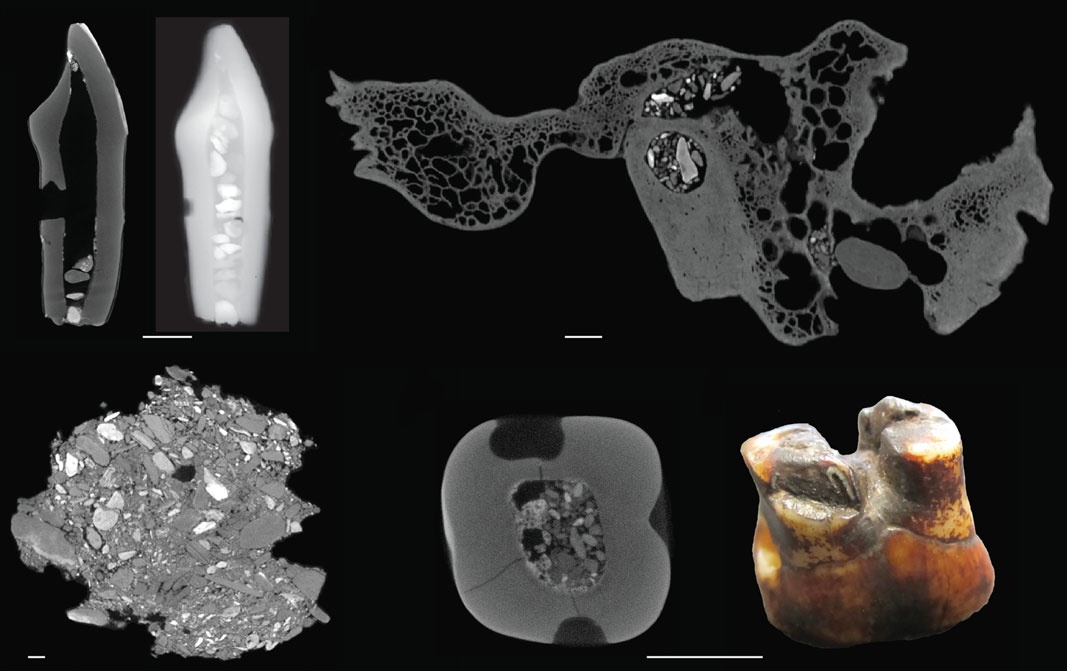
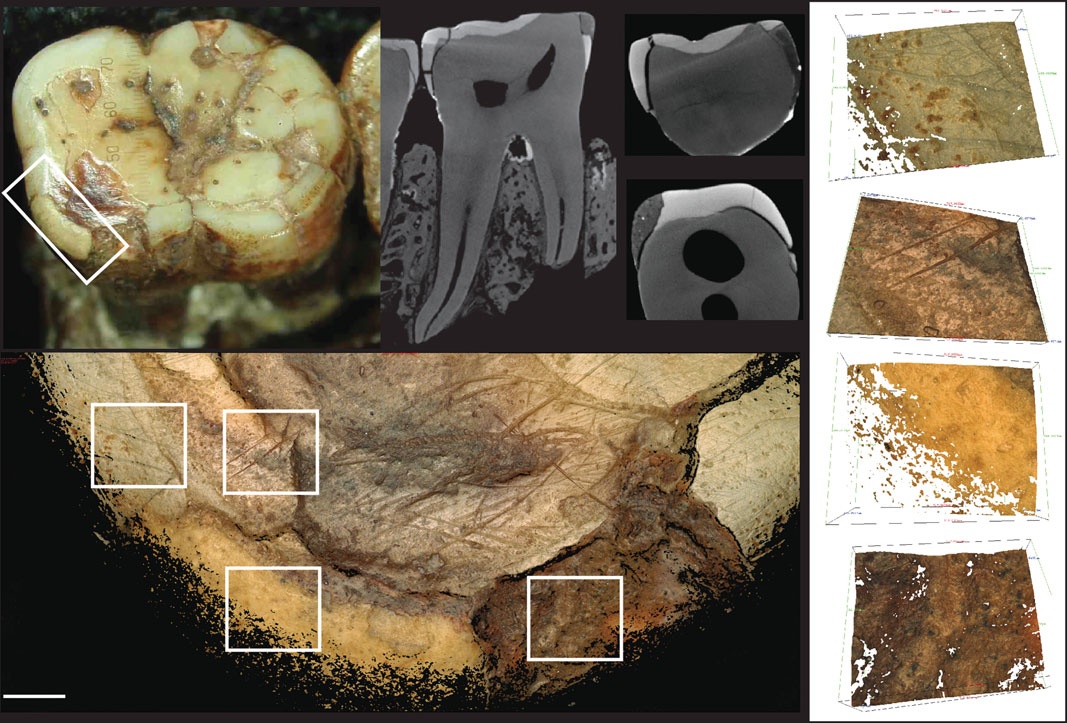
A 2016 study led by Isabelle De Groote returned to the surviving material using DNA analysis, three-dimensional imaging and examination of internal and external structure. The authors found strong evidence that the ape material used in the two purported Piltdown discoveries came from one orangutan, while the human skull pieces represented at least two people. Their conclusion was not that one genuine ancient individual had been misunderstood, but that a small supply of remains had served a repeated manufacturing process.
The scans revealed gravel inserted into cavities and held in place with plugs and restorative material. A consistent use of putty helped connect specimens from the two find groups. Tooth surfaces had been altered to create a more human-looking pattern of wear. These were not merely stains that could have arisen naturally in soil: they formed a linked set of interventions in the objects’ structure.
A likely maker is not an eyewitness confession
The 2016 team considered the consistency of the fabrication evidence indicative of a single forger, most likely Dawson. His role in supplying the material, his unique connection to the second site and the end of significant discoveries after his death in 1916 strengthened that interpretation. The authors nevertheless retained uncertainty about whether he acted alone. Scientific testing of bones is not the same thing as recovering a complete record of a person’s actions.
In particular, the DNA results did not identify Dawson’s DNA on a tool or furnish a biological signature of the fraudster. They linked animal material to a likely common source. The inference about authorship combines those results with the documentary history. Confusing the two would turn a strong historical case into a kind of evidence the study did not claim to possess.
Other names have been proposed over the decades. A useful account need not turn every association with the excavation into an accusation, or reproduce a catalogue of suspects as though each had equal evidential standing. The question is what connects a person to fabrication, not whether that person was sufficiently eccentric or had an imaginable motive.
The study also reported limits. Attempts to improve dating were hindered by contamination or lack of suitable material; the origins of the human remains were not securely established. It would therefore be misleading to give every component a confidently exact age. The forgery is certain in a way that the detailed biography of each bone is not.
Why the argument lasted
The hoax gained durability from more than a desire for an English ancestor. A respected specialist presented it, institutions preserved and discussed it, and researchers often worked with casts rather than unrestricted access to the originals. Further purported finds appeared to reinforce the first. These circumstances made the claim more substantial than a solitary unsupported assertion, even though they did not make it correct.
The Geological Society’s history of the meetings follows the subject from its crowded 1912 announcement to the 1953 presentation of the fraud investigation. The same institutional setting could confer initial visibility and later host the evidence that destroyed the claim. Institutions are not simply guarantors of truth or engines of error; their procedures and access to objects determine how a contested claim can be tested.
The passage of forty years should not be filled with an imagined, continuous unanimity. Miller’s paper, Woodward’s reply to Keith and Thomson’s published reservations document disagreement well before exposure. What persisted was the object’s status as a problem that might still belong within prehistory. The later tests changed the category of the problem itself.
A fossil of scientific history
The surviving Piltdown remains no longer tell us about an ancient species named Eoanthropus. They tell us about collecting, preparation, trust and the production of scientific authority in the early twentieth century. Their false geological identity does not make them historically empty. It gives them a different history to investigate.
The illustrations carry that change especially clearly. An early reconstruction shows how the fragments were made into a possible ancestor. Miller’s comparative plate records a serious objection that still misidentified the ape. Modern scans show material deliberately inserted into cavities and surfaces worked to resemble something else. Each image belongs to a distinct stage in the object’s career.
Piltdown is thus not a mystery in which every answer remains open. The assemblage was fraudulent; the jaw was not part of the human skull; alteration can be examined in the surviving objects. The unresolved elements concern the precise course of fabrication, the source of some remains and the full extent of participation. Keeping those boundaries visible is more revealing than either claiming that nothing is known or pretending that the exposure supplied every missing fact.