
Ashurbanipal’s Library: The Scribes Behind a King’s Knowledge
Ownership marks, scholarly copies and broken clay tablets reveal how a royal collection at Nineveh joined learning to power—and why its reconstruction is still unfinished.
A small note at the end of an Assyrian tablet could make an enormous claim. It identified the object as property of the palace of Ashurbanipal, king of Assyria, and then praised the ruler’s learning. The tablet might contain a list of words, a medical prescription or a complicated omen. Whatever its subject, the ownership mark placed inherited knowledge inside a royal project.
Those notes, called colophons, are among the best witnesses to the library assembled at Nineveh in the seventh century BCE. They offer something more precise than the familiar picture of a cultivated king surrounded by books. They show copying, classification, ownership and the relationship between intellectual work and the protection of a throne.
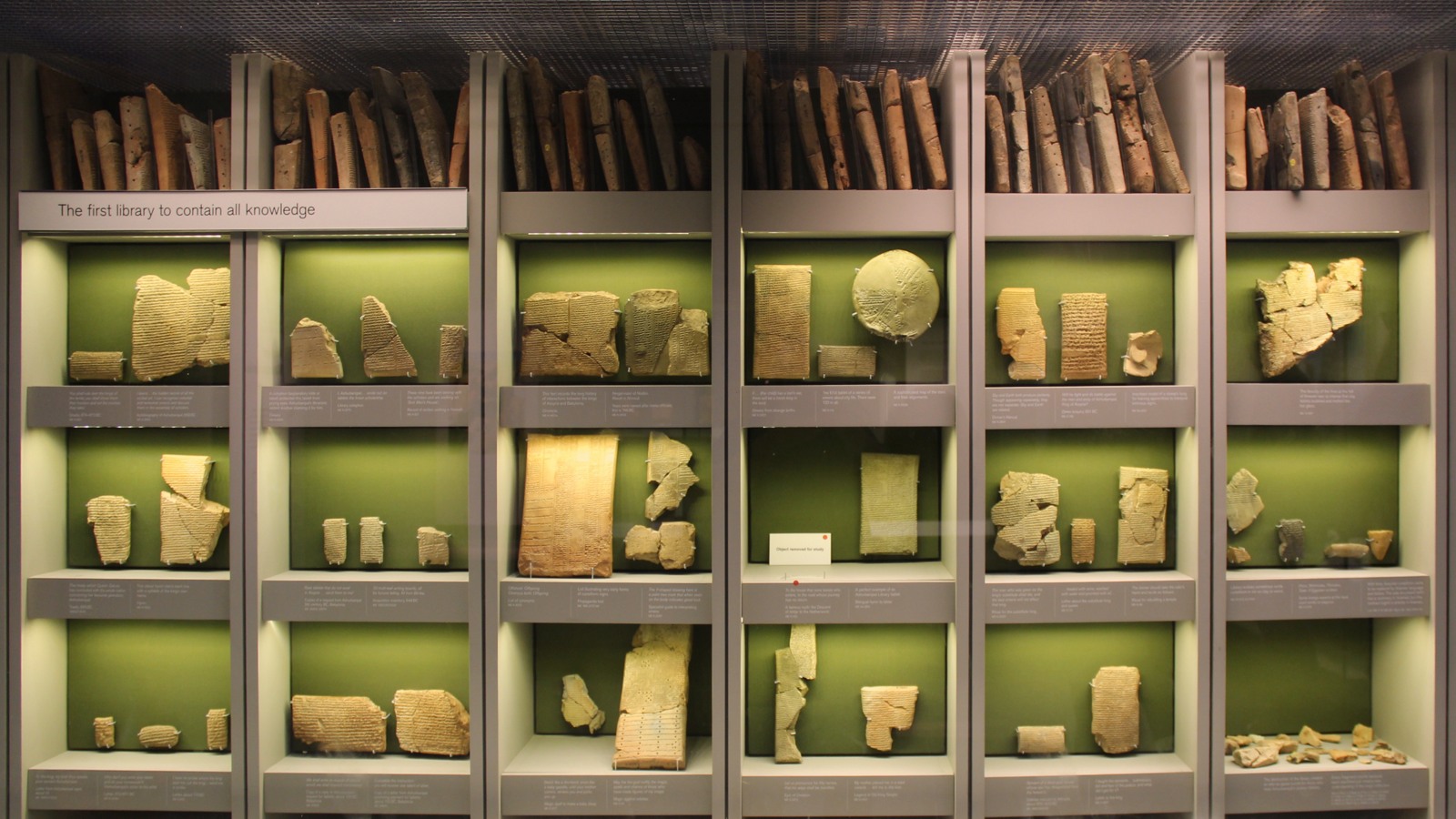
Ashurbanipal ruled from 668 to about 630 BCE. His capital stood beside the Tigris, opposite modern Mosul in Iraq. The collection associated with him survives in tens of thousands of clay tablets and fragments, most now in the British Museum. That last word matters: a fragment is not a book, and a modern museum number does not tell us how many complete texts once stood together. Reconstructing the library requires recovering both the writings and the system that brought them to Nineveh. The Ashurbanipal Library Project’s overview provides the starting point.
A collection with more than one past
The convenient singular, “Ashurbanipal’s library,” covers a complicated archaeological inheritance. Tablets were recovered from different buildings and deposits. Some carry the king’s standardised ownership formula. Others name a scholar, while still others were dedicated to the temple of Nabû, the god associated with writing. Many have no surviving colophon at all.
The project’s study of how the collection was assembled therefore begins with a question rather than an inventory total: which surviving pieces belonged to which ancient grouping? Literary works, reference texts, royal correspondence and administrative records can come from the same broad excavation area without having served the same purpose. An archive preserves records generated by activity. A scholarly collection gathers works for consultation and transmission. At Nineveh the modern body of finds contains evidence of both.
One modest example is a tablet listing offerings of wine and beer. The British Museum’s record for K.708 connects it with other documents suggesting that the queen maintained a household administration at Nineveh. It belongs to the evidence for the working court, but it does not establish that every practical account was shelved beside an epic. The distinction prevents the spectacular total of surviving pieces from flattening different kinds of writing into a single imagined reading room.
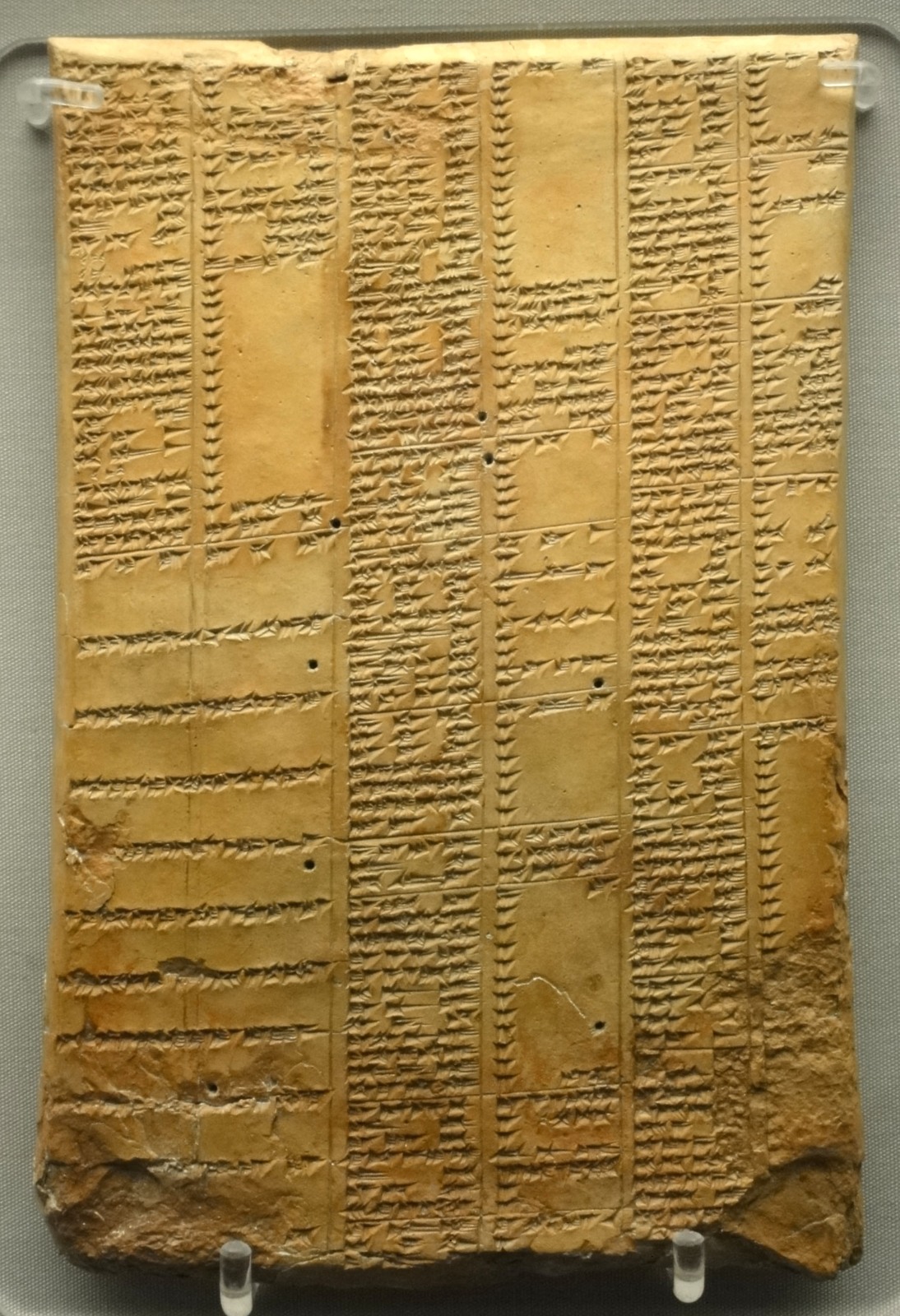
Nor did knowledge begin when Ashurbanipal ordered a copy. Scribes worked within traditions that stretched back many centuries. A synonym list placed words in organised relationships; a bilingual text could carry Sumerian learning into an Akkadian-speaking scholarly world. The older a composition was, the more work might be needed to transmit and interpret it. Collecting meant investing in that accumulated expertise, not simply accumulating clay.
The hands behind the king’s name
Royal colophons are highly visible, but the king did not personally produce the whole collection. The colophon research identifies roughly thirty standard library formulations, repeated across multiple manuscripts. These formulae usually omit the individual copyist’s name and date. They give the palace a durable presence while leaving many of the people who performed the writing anonymous.
Other tablets preserve a different sort of memory. Colophons naming individual scholars include a substantial group associated with Nabû-zukup-kēnu and his relatives. He had worked in royal service decades before Ashurbanipal. Such manuscripts connect the king’s project with earlier scholarly households and careers. The presence of a private owner’s name is not, by itself, proof that an entire private library was seized. Recent project research explicitly warns against that inference.
Copying itself was an intellectual operation. A scribe had to recognise signs, make choices where an exemplar was damaged or difficult, and situate a text within a sequence. A sequence divided among several tablets needed a way of retaining its order. A colophon could document aspects of production; differences in handwriting, spelling and clay could offer additional clues that were never intended as an explanation for future readers.
The analysis of the library’s colophon system suggests development over time rather than a single burst of enthusiasm. Some formulations appear early, others belong to a more differentiated system, and certain versions correlate with particular fields, including medicine and the interpretation of animal entrails. These are traces of organising decisions. They do not yet supply a complete floor plan or a modern catalogue, but they make it possible to investigate how the collection worked instead of treating it as an undifferentiated treasure.
Why a king needed so much knowledge
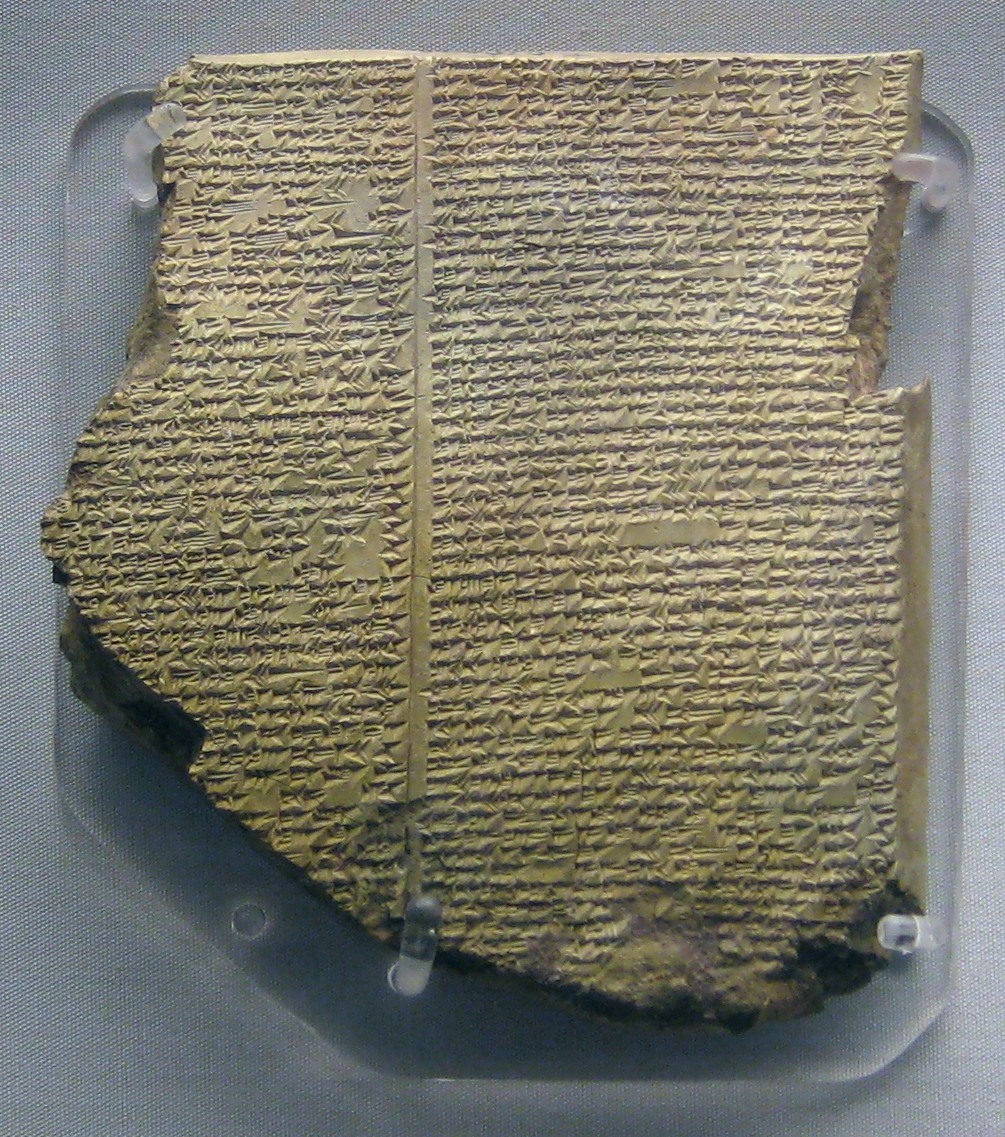
The surviving works do not divide neatly into the modern compartments of science, religion and literature. They include prayers, lexical lists, epics, medical treatments and extensive bodies of divination. In the Assyrian court, interpreting an eclipse or a troubling sign could be a matter of political responsibility. A ruler’s welfare and the kingdom’s welfare were bound together in the reasoning of his advisers.
Commentaries show how much interpretative work this required. Yale’s Cuneiform Commentaries Project describes palace, temple and private libraries as interconnected settings of scholarship. At Nineveh, explanations of difficult texts and sophisticated readings of omens form a major part of the evidence. A traditional work could become an object of argument and analysis rather than a statement copied without reflection.
Medicine offers a particularly concrete example. Tablet K.249 combines instructions for preparing and applying remedies with incantations addressing illnesses understood through the category of witchcraft. Its museum description records a damaged, multi-column compendium joined from several pieces. To separate the remedies as “real medicine” and discard the accompanying words would remove the framework in which its users understood treatment.
The Nineveh Medical Project has used an ancient catalogue from Ashur to help reconstruct a structured medical encyclopaedia from the broken Nineveh manuscripts. That is a revealing reversal: one ancient scholarly tool now helps modern researchers recover another. The investigation does not require accepting ancient explanations of disease as correct. It requires understanding the systematic effort that organised symptoms, substances and procedures, and acknowledging how much remains concealed by broken tablets and technical vocabulary.
Preservation, possession and power
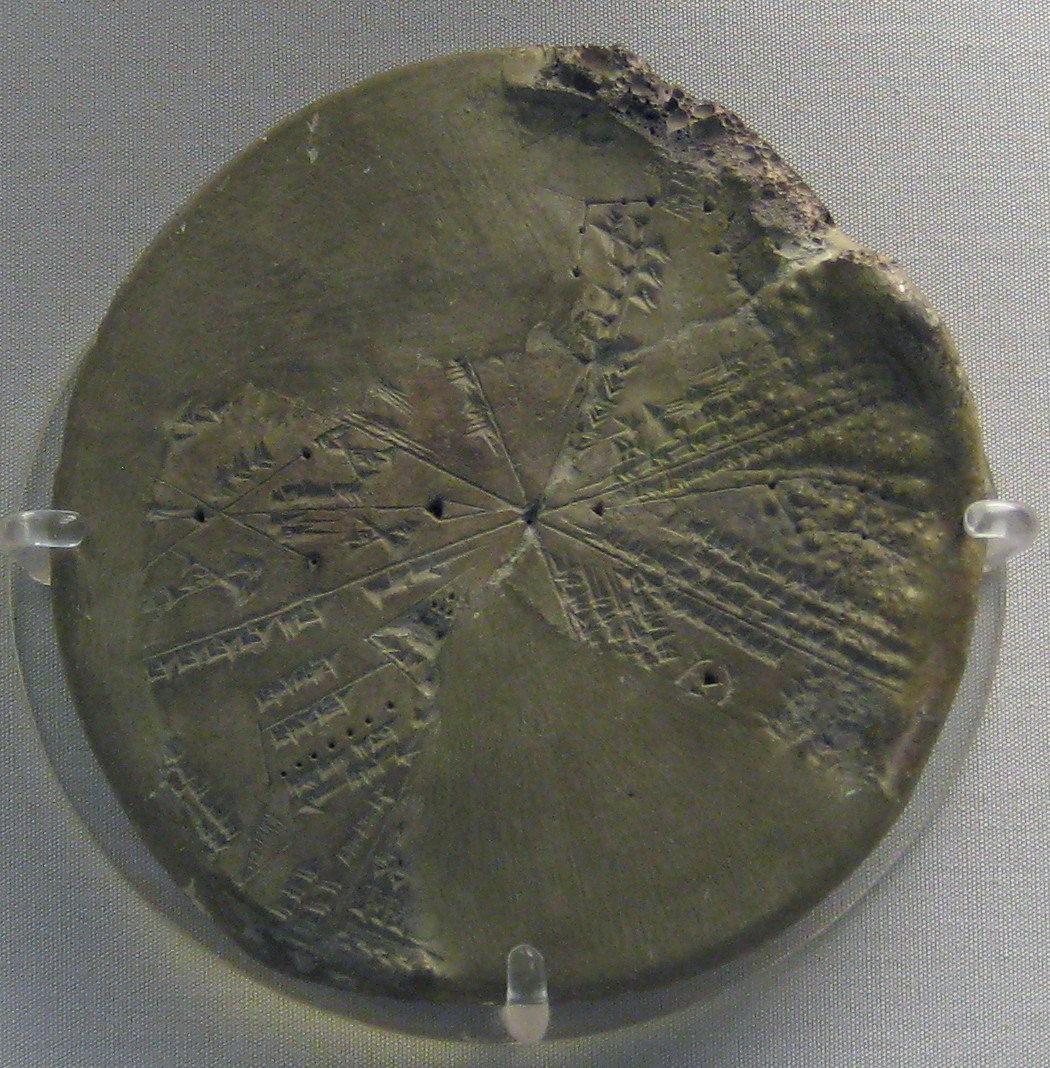
The famous flood narrative in the Epic of Gilgamesh is one beneficiary of this work of transmission. The seventh-century Nineveh copies preserve a composition with a much longer history. The so-called Flood Tablet belongs to the eleventh tablet of the standard epic, where the survivor of a catastrophic flood recounts his experience. It is evidence for an ancient literary tradition, not an eyewitness report proving that the narrated event happened as described.
Even this exceptionally familiar work survives through pieces. The British Museum record for fragment SM.1881 connects it with several other fragments of the flood narrative and records its excavation by George Smith. An apparently stable title such as “Gilgamesh” sits above generations of ancient copying and modern reconstruction. Reading a smooth translation can hide both kinds of labor.
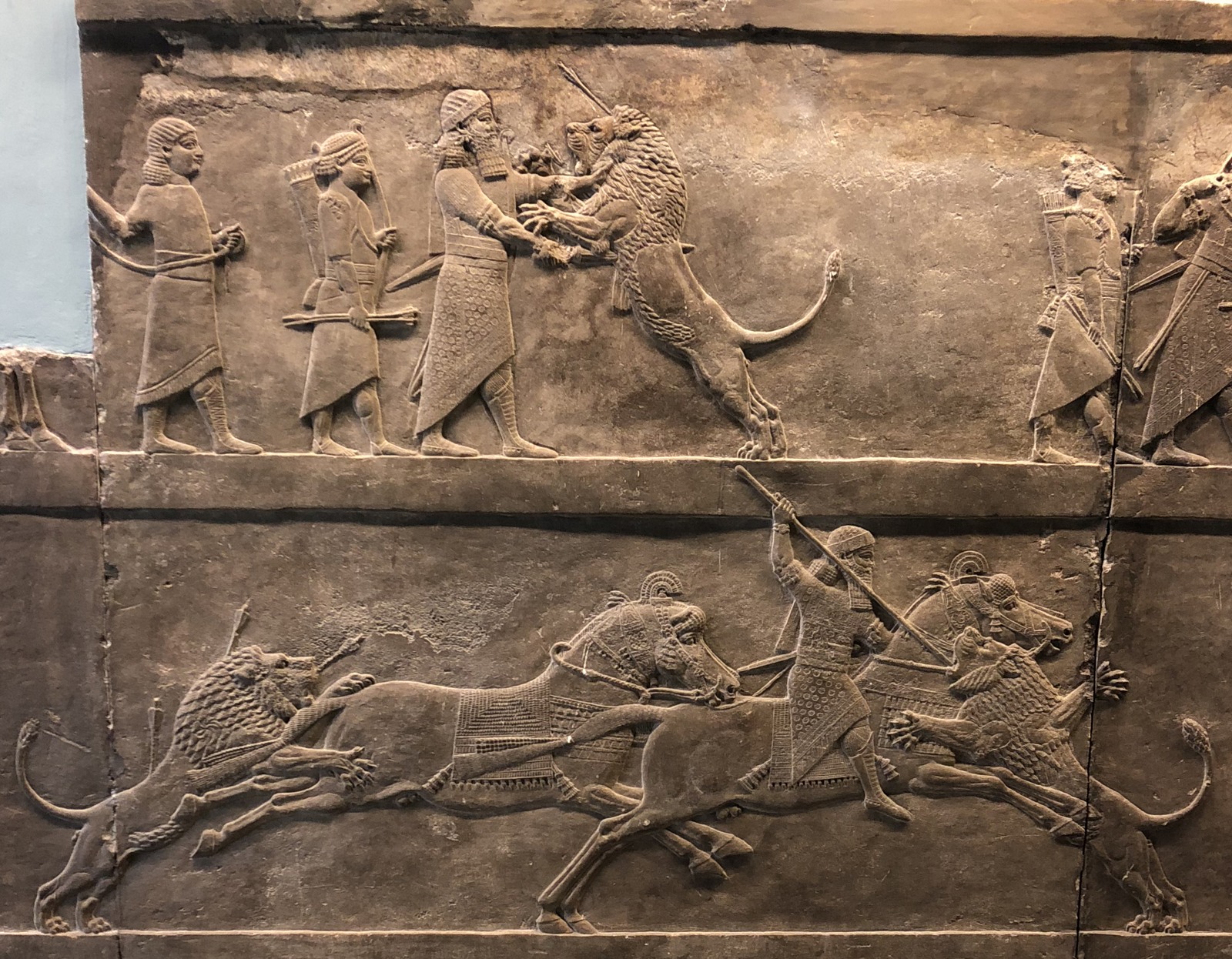
Royal interest gave scholarship resources, but it also imposed a purpose. The same court that gathered learned works commissioned images of Ashurbanipal defeating dangerous animals and human enemies. The lion-hunt reliefs staged mastery as a royal quality. The library’s ownership formulae did something related in another medium: they presented the king as the possessor and protector of exceptional understanding.
That does not mean every text can be reduced to propaganda. A copied lexical list retained uses and meanings that exceeded a ruler’s self-presentation. It does mean that preservation and domination could operate together. The palace could draw on scholars, older manuscripts and regional traditions because it commanded resources and obedience. The surviving evidence should not be made more comfortable by imagining a public library open equally to all, or more melodramatic by turning every acquisition into a documented act of looting.
A broken library, reconstructed twice
Nineveh fell in 612 BCE, after Ashurbanipal’s reign. Destruction ended the institutions that had used the collection. Fire hardened some clay and helped some pieces survive, while collapse and subsequent disturbance broke and dispersed others. It is misleading to imagine that a single beneficial blaze neatly preserved a complete library for modern discovery. The material record is uneven, and the damage is part of its history.
The first great modern finds were also collective achievements. According to the project’s excavation history, a large group of tablets was recovered in 1850 from the Southwest Palace while Austen Henry Layard was away. His supervisor Toma Shishman directed work in his absence. In 1853 Hormuzd Rassam uncovered another major group at the North Palace. Later campaigns, including Iraqi excavations, added further evidence. Remembering these names changes a familiar discovery story: publication and museum display made particular Europeans famous, but excavation depended on a wider body of expertise and labor.
Moving the finds to London created new problems of conservation, registration and description. The history of recording the library explains the scale of the challenge: institutions accustomed to relatively few cuneiform objects suddenly faced thousands, many fragile or incomplete. A catalogue number could make a piece retrievable without making its text intelligible. Fragments of one manuscript could remain separated by drawers and by the different subjects on which scholars worked.
Modern reconstruction therefore involves two tasks. Researchers join pieces to recover tablets, and compare tablets to reconstruct compositions. They also ask how those objects formed collections. The Reading the Library project notes that there is no surviving contemporary narrative description of the library to settle that second question. Colophons, duplicate passages and material details have to do the work.
The project’s account of continuing research describes digital transliterations, improved cataloguing and new joins as parts of that process. These are not simply finishing touches to a discovery completed in the nineteenth century. They can change what the collection contains and how its history is understood.
Ashurbanipal’s name remains on the tablets. Around it, a larger story comes into view: older scholars whose work was retained, unnamed copyists who made new manuscripts, court experts who interpreted them, excavators who recovered the pieces and readers who are still finding connections between them. The king’s ownership marks claimed enduring authority. Their survival now allows us to examine the many kinds of work on which that authority depended.