
The Rosetta Stone Was a Political Deal Before It Was a Key
Behind the famous breakthrough in decipherment lies a more uncomfortable story: a young dynasty, a rebellion, and the institutions that made royal authority believable.
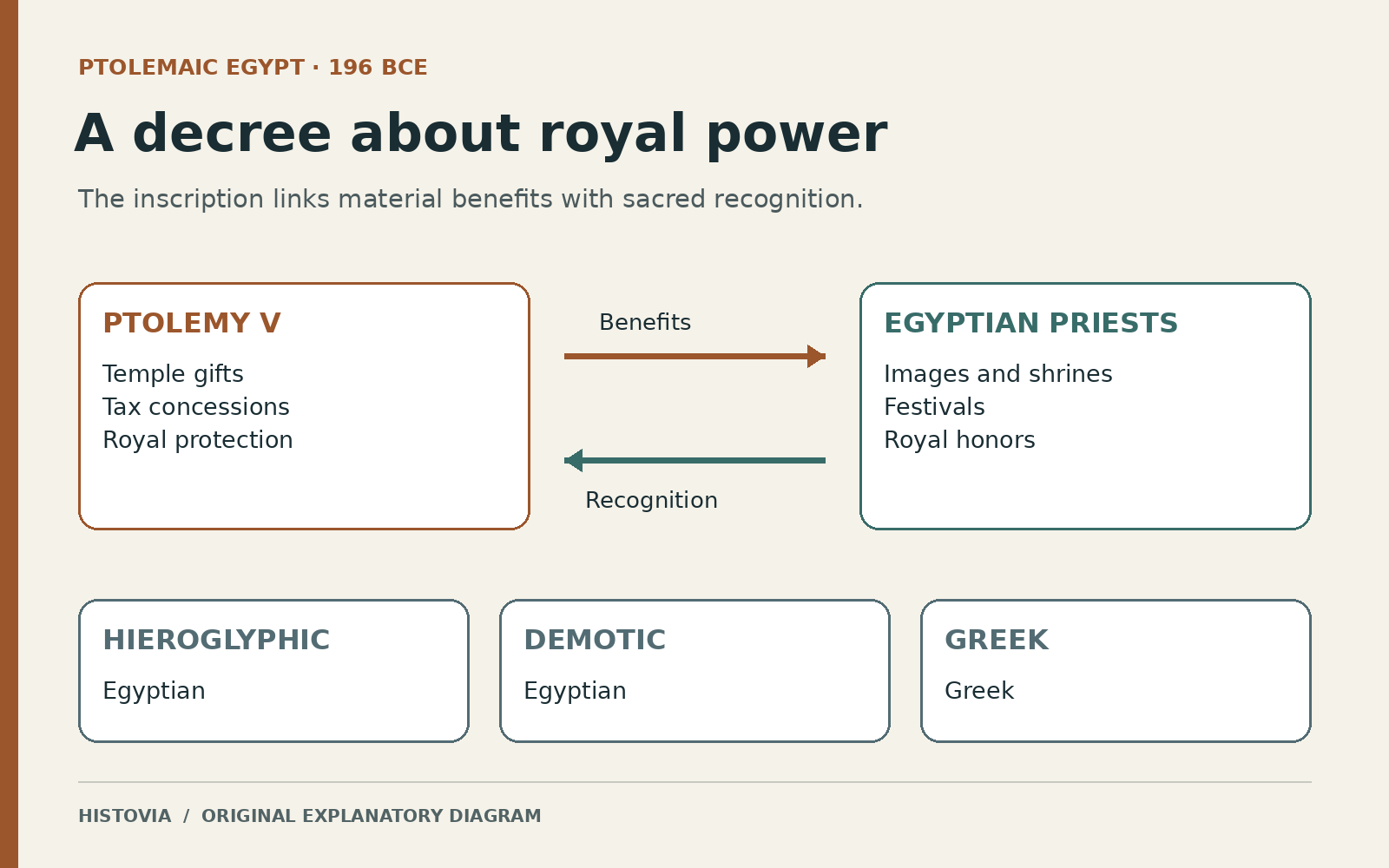
Among the favors recorded on the Rosetta Stone is relief from a tax paid in fine linen. Nearby come promises about temple revenues, prisoners, and debts. Later, the decree turns to shrines, royal images, and festivals. The movement from financial concessions to sacred honors is the document’s central transaction. Egypt’s priests describe what Ptolemy V has done for them and explain what they will do for him.
That transaction can disappear behind the object’s modern fame. The stone helped scholars recover the reading of Egyptian hieroglyphs, and it is now a familiar metaphor for anything that unlocks a difficult problem. But in 196 BCE its makers were addressing the immediate difficulty of government. A king needed recognition; religious institutions possessed the language, ceremonies, and local presence through which recognition could be made durable.
Reading the decree as an argument about power does not diminish its linguistic importance. It brings the people who commissioned it back into view. They were not leaving a puzzle for nineteenth-century Europeans. They were defining a relationship in their own country, at a moment when that relationship was under considerable strain.
A Macedonian dynasty in an Egyptian kingdom
The Ptolemies ruled Egypt after Alexander the Great’s conquest and the division of his empire. Ptolemy I assumed the royal title in 305 BCE; his descendants retained power until the Roman conquest in 30 BCE. Their court belonged to the Greek-speaking world of Hellenistic kings, but the country they governed possessed religious institutions and traditions of kingship far older than their dynasty. The Metropolitan Museum of Art’s account of Ptolemaic Egypt emphasizes both enduring Egyptian traditions and interaction with Greek forms.
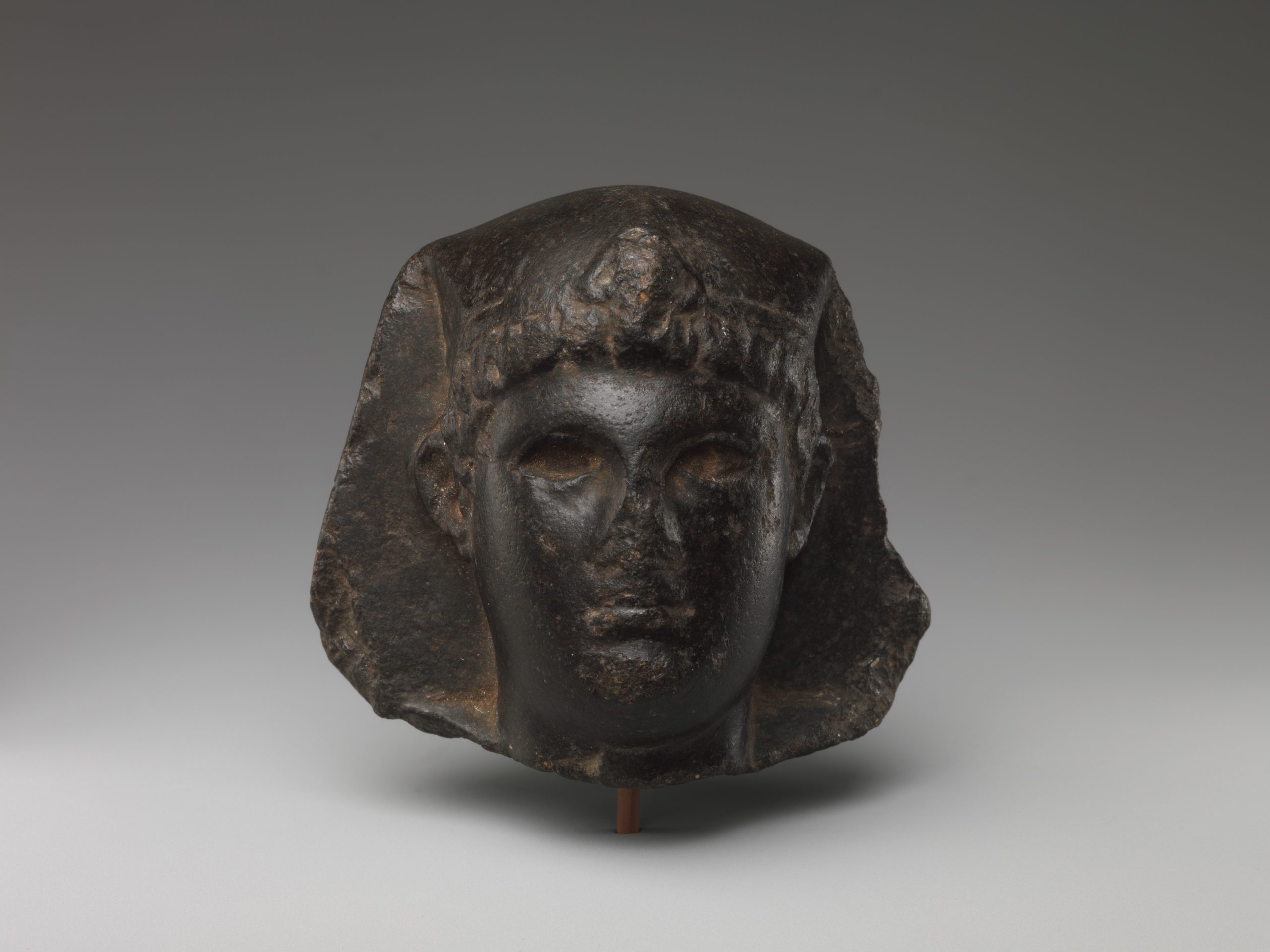
These were not two sealed cultures with an occasional bridge between them. A royal image could employ Egyptian pharaonic conventions, while other representations served different audiences. Alexandria connected the dynasty to Mediterranean diplomacy and commerce. Temples elsewhere remained places where authority was expressed through established religious practices. The same ruler could inhabit more than one political vocabulary.
Ptolemy V inherited a particularly vulnerable position. He became king as a child, while rival monarchs contested Ptolemaic territory and rebellion challenged the dynasty within Egypt. The historical introduction to Jane Rowlandson’s sourcebook on Greek and Roman Egypt places the Rosetta decree amid these internal and external pressures. A proclamation of restored order therefore cannot simply be taken as proof that order had returned everywhere.
This distinction matters whenever a ruler’s inscription becomes the principal witness to his success. An official text often describes the world that its sponsors want their audience to recognize. The scale of its assurances may reveal what remained difficult to secure. In this case, gratitude, loyalty, and the restoration of proper religious life are repeatedly made visible because they were politically valuable.
Who is speaking on the stone?
The text identifies an assembly of priests at Memphis. Its voice is institutional: it lists the king’s benefactions and then lays down honors in response. The British Museum’s presentation of the object situates it among priestly decrees affirming the royal cult, in a country where parts of the south were still outside effective royal control.
The distinction between a king proclaiming his own generosity and priests formally recognizing it should not be exaggerated into a modern negotiation between independent branches of government. Nor should it be erased. Priests possessed institutional interests, resources, and forms of authority. The decree makes their participation in royal legitimacy explicit.
Its opening titles wrap the young ruler in divine ancestry and traditional kingship. Yet the subsequent provisions are strikingly concrete. The Greek text in Carol Andrews’s translation names temple income, obligations to the crown, and concessions to priestly personnel. These details show which relationships needed regulation. Piety had an administrative dimension.
A tax concession could ease an institution’s obligations; a restored allowance could support its activities. But the inscription does not supply accounts demonstrating the effects of those measures across the country. It records the official description of the concessions. The difference between a declared benefit and a measured outcome should remain visible throughout the reading.

The material foundations of sacred authority
The older, public-domain British Museum guide by E. A. Wallis Budge, published in 1913, summarizes the decree’s many material provisions. Some of that guide’s terminology and historical explanations are dated, so it should be read beside modern scholarship rather than treated as the final authority. Its inventory nevertheless captures something easily missed when the stone is discussed only as a linguistic key: the document spends considerable attention on the working arrangements between temples and the monarchy.
Gifts of grain and money appear alongside remission of obligations and support for sacred buildings. Such provisions were not an incidental secular preface to a religious message. They belonged to the same account of good kingship. A ruler who sustained proper worship could be presented as maintaining the conditions under which the country prospered.
Temple support also had a practical institutional meaning. A shrine needed people, materials, and continuing income. A festival needed preparation. By describing royal benefactions in these terms, the decree placed the crown inside the everyday reproduction of religious life. It gave the king a claim on gratitude that could be renewed through ceremonies rather than exhausted in a single announcement.
There is a useful asymmetry here. The king’s concessions concern resources and obligations; the priests’ response turns those concessions into honors, titles, images, and repeated observances. Different kinds of power are exchanged. The document does not present this as a cynical bargain. For its makers, religious duty and political stability were closely connected. Calling it a political deal is an interpretation of that relationship, not a claim that we can recover private calculations from the inscription.
Mercy and violence in the same royal portrait
The decree’s account of royal benevolence sits beside its celebration of coercion. It describes the defeat of an entrenched rebellion at Lycopolis in the Delta and treats the punishment of opponents as a restoration of legitimate order. The rebels are presented through the categories of their victors. Their own explanation of the conflict is absent.
That absence limits what the stone can tell us. Its language cannot establish the motives of every rebel or the experience of every community caught in the fighting. It is much stronger evidence for the monarchy’s preferred interpretation of resistance. Opposition is rendered both politically dangerous and religiously improper, while force against it becomes part of the king’s beneficent role.
Elsewhere, the proclamation allows room for return and reconciliation. Concessions and punishment need not be contradictory within this portrait. A ruler could distinguish between opponents to be defeated and people to be brought back into obedience. The text’s combined vocabulary of pardon, restoration, and destruction shows how flexible the public image of a saving king could be.
The point is not to reverse every favorable claim and assume the opposite must be true. That would merely exchange one simplification for another. It is to keep the source’s position in view. The stone describes conflict from within a coalition of royal and priestly authority. It tells us a great deal about how that coalition justified itself, less about how its justification was received.
Making recognition repeatable
The honors were designed to recur. Budge’s summary lists royal images, shrines, festival observances, additions to priestly titles, and the setting up of copies of the decree in temples. These provisions move the document beyond a single occasion at Memphis. They establish repeated ways of encountering the king’s authority.
A statue beside other sacred images could make the ruler present in a place he never visited. A festival could bring his name into a recurring calendar. A priestly title could carry his recognition into formal documents. The force of this arrangement lay in repetition across institutions, not merely in the prestige of one monumental object.
The Rosetta Stone’s survival can make it look singular. In its original purpose, however, replication was important. The order to display copies meant that the same relationship between benefaction and honor could be asserted in different places. The fragment now treated as exceptional belonged to a broader strategy of public inscription.
Three scripts, two languages, several kinds of authority
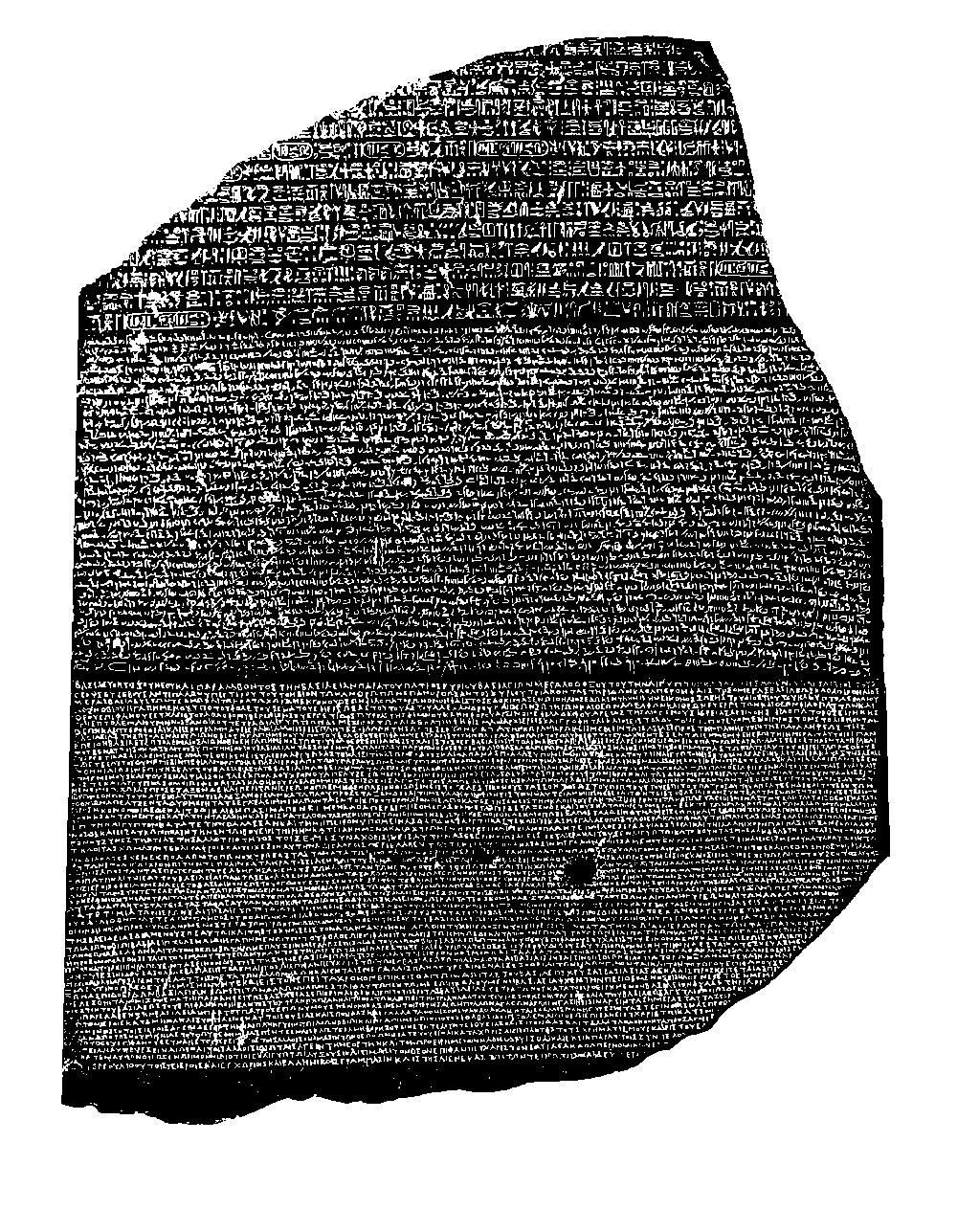
The famous arrangement of scripts was part of that original work. Egyptian appears in hieroglyphic and Demotic writing; Greek supplies the other language. Describing the stone as carrying three languages confuses language with script. Its different written forms also should not be reduced to a simple assumption that every inhabitant could read one of them.
Monumental writing could establish authority even for people who could not read every sign. Placement, appearance, ritual context, and the people responsible for interpreting a text all mattered. The decree’s script choices connected it to distinct traditions of writing and institutional use. The audience was consequently more complicated than a collection of individual readers standing before a translation exercise.
Much later, the relationship between the texts became essential to decipherment. That later achievement depended on scholarly comparison and knowledge extending beyond this single object. It should not obscure the original reason for the inscriptions: to publish and perpetuate an authoritative statement about the king.
Histovia’s discussion of Hatshepsut’s representation of the Punt expedition raises a related question about royal evidence. A monument preserves events through a designed public image. The task is to read both the information and the design of the claim.
The Rosetta decree leaves that task unusually clear. Follow the movement from grain, money, and taxes to shrines, festivals, and titles. Then notice who is praised, who is condemned, and whose voice never enters the text. The inscription unlocked an ancient writing system for modern scholars, but its own subject was how a precarious monarchy could make its authority appear necessary, generous, and sacred.