
The Great Wall from the Moon: A Famous Myth and a More Interesting Monument
The Great Wall cannot be seen with the naked eye from the Moon. Clearing up that claim opens a better question: what, exactly, do photographs, surviving walls and historical records allow us to see?
The claim is irresistible: the Great Wall of China is so enormous that it is visible from the Moon. One sentence appears to convert human effort into a planetary achievement. It is memorable, flattering to the monument and wrong.
Correcting it should be easy. Yet the correction often generates a second muddle. Someone produces a photograph taken from space, and the old argument starts again. The problem is that the discussion has quietly changed its terms: from the Moon to Earth orbit, from eyesight to a camera and sometimes from ordinary light to radar. Before deciding who is right, we need to decide what the claim actually means.
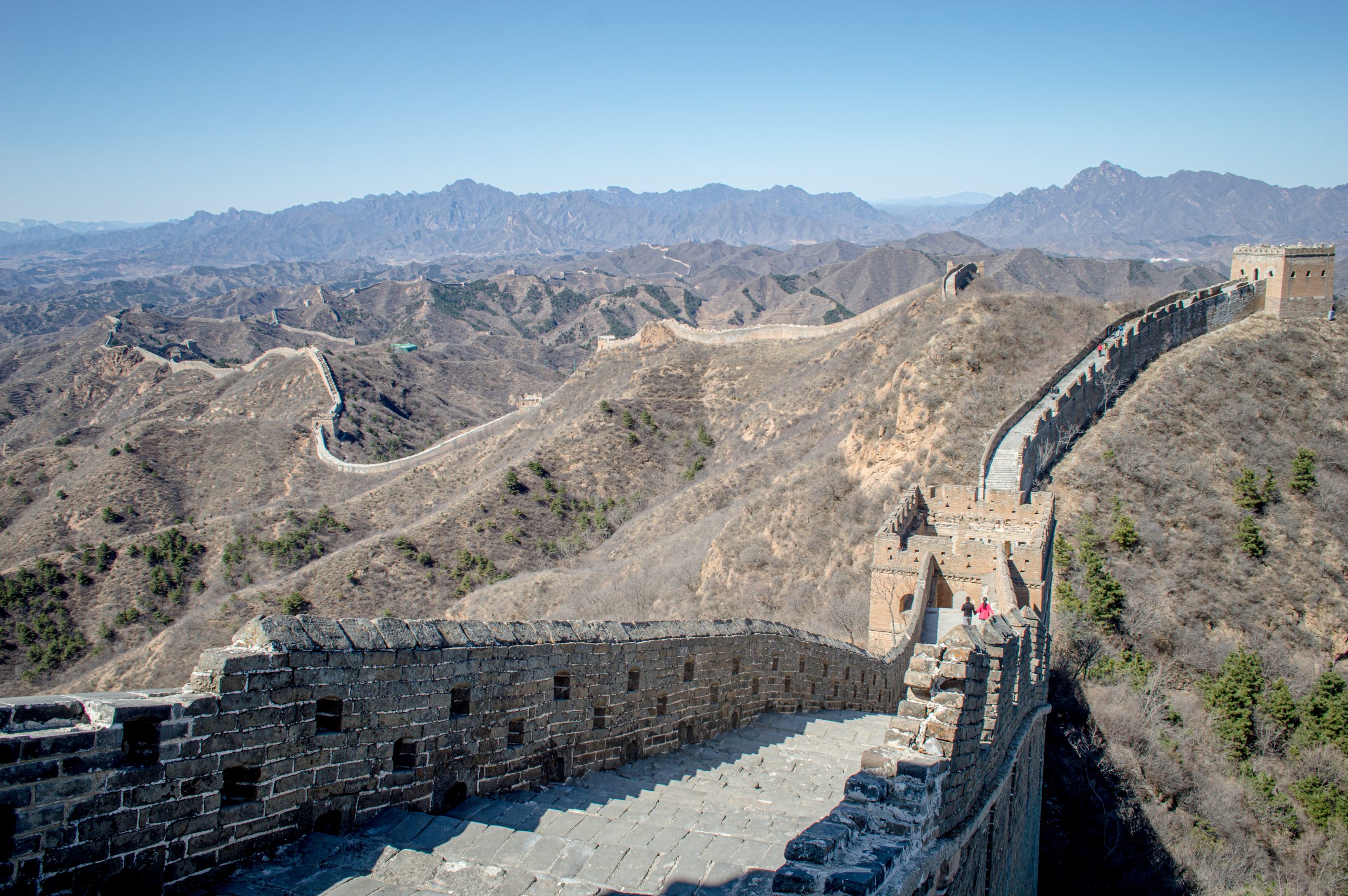
“From space” is not a useful distance
A spacecraft in low Earth orbit is much closer to the ground than an observer on the Moon. Treating both locations as simply “space” erases the distinction on which the visibility question depends. Nor does “visible” specify whether someone means unaided sight, binoculars, a long camera lens or an image processed afterward.
NASA’s Earth-observation FAQ explicitly rejects naked-eye visibility from the Moon. It also explains that detailed astronaut photographs may use long lenses whose view differs substantially from what a person sees through a spacecraft window. An orbital photograph is not a certificate of unaided human vision.
Length alone is not decisive. A wall can run for a very long distance and still be narrow. Its contrast with nearby soil and rock matters too. A long, low-contrast line is not equivalent to a broad, sharply contrasting patch. That simple distinction is what the famous claim encourages us to forget.
The safest answer is therefore specific: no, the Great Wall is not visible to the naked eye from the Moon. It can be recorded from orbit with suitable imaging equipment under appropriate conditions. Those statements describe different situations, not competing opinions.
Read the instrument before reading the photograph
NASA’s caption for an image photographed by astronaut Leroy Chiao makes the distinction particularly clear. The accompanying explanation says the wall is difficult or impossible to see from Earth orbit without the powerful lenses used for the picture. The image and its corrective caption belong together.
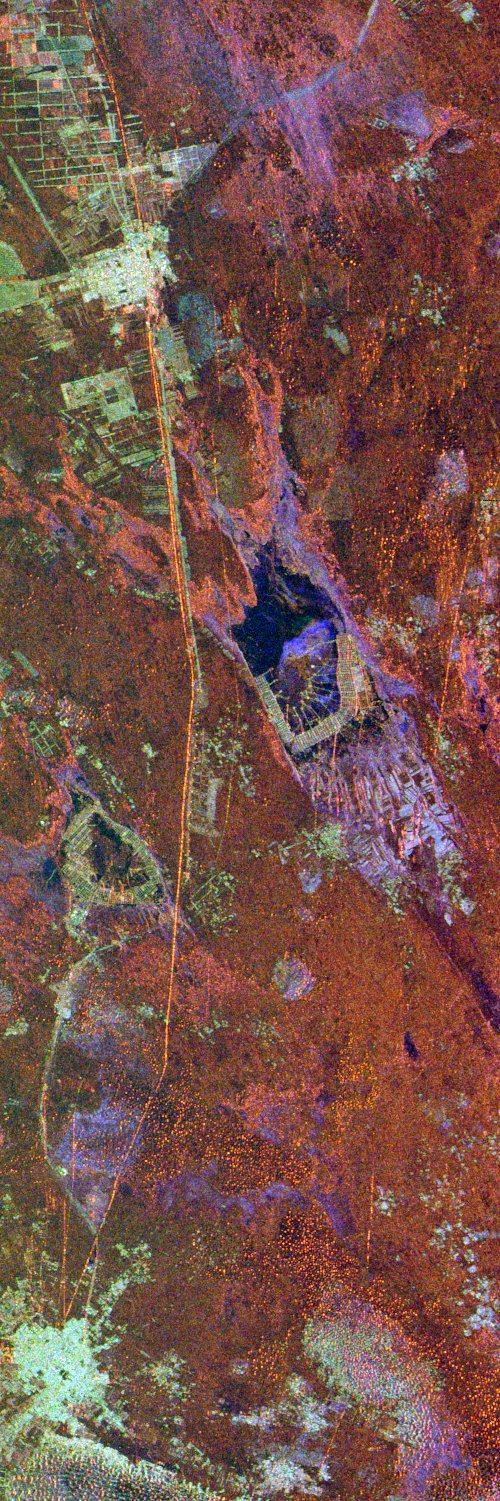
Other images require still more care. The false-colour radar view reproduced here was collected during a 1994 Space Shuttle mission. Radar records a response to an instrument’s transmitted signal, not the natural-colour view an astronaut would see. The colours encode information. They are not a landscape painted for human eyes at the spacecraft window.
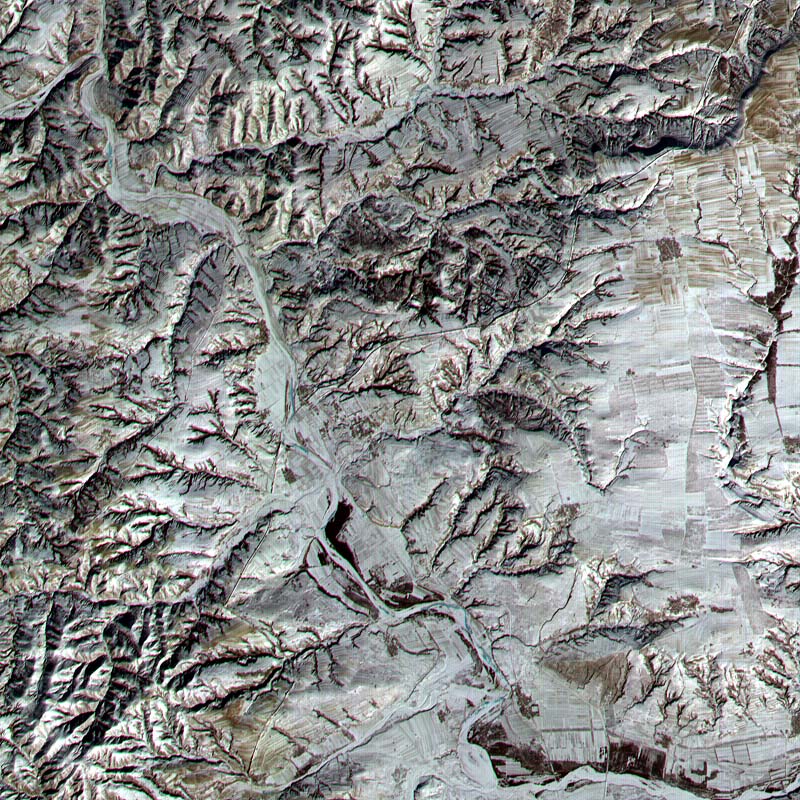
The 2001 ASTER satellite image is another kind of record. Snow and low-angle illumination help distinguish features across the landscape. Its value is precisely that an instrument can collect information under particular conditions and preserve it for examination. Using such an image to prove the Moon claim would turn a genuine technological achievement into evidence for something it never tested.
This is not pedantry about cameras. Historical pictures frequently reach us detached from the conditions that made them. As with the 1919 eclipse photographs, the image becomes much more informative once we know how it was produced and what question it can answer.
Why a grand institution can preserve a bad sentence
There is a revealing complication in the myth’s afterlife. The UNESCO World Heritage entry for the Great Wall, as consulted for this article, still contains a claim about visibility from the Moon in its statement of significance. The same page supplies valuable information about the monument’s history and conservation. Its prestige does not make that particular astronomical assertion correct.
This is an excellent example of why checking a source means more than checking its institutional name. UNESCO’s role in documenting heritage is not the same as NASA’s role in explaining orbital imaging. A historical description can retain wording long after the claim has become familiar as a misconception.
The answer is not to discard the whole UNESCO record. It is to separate its claims and test them with evidence appropriate to each. That is a less dramatic habit than declaring one source completely trustworthy and another completely unreliable, but it is much more useful.
There was never just one wall-building moment
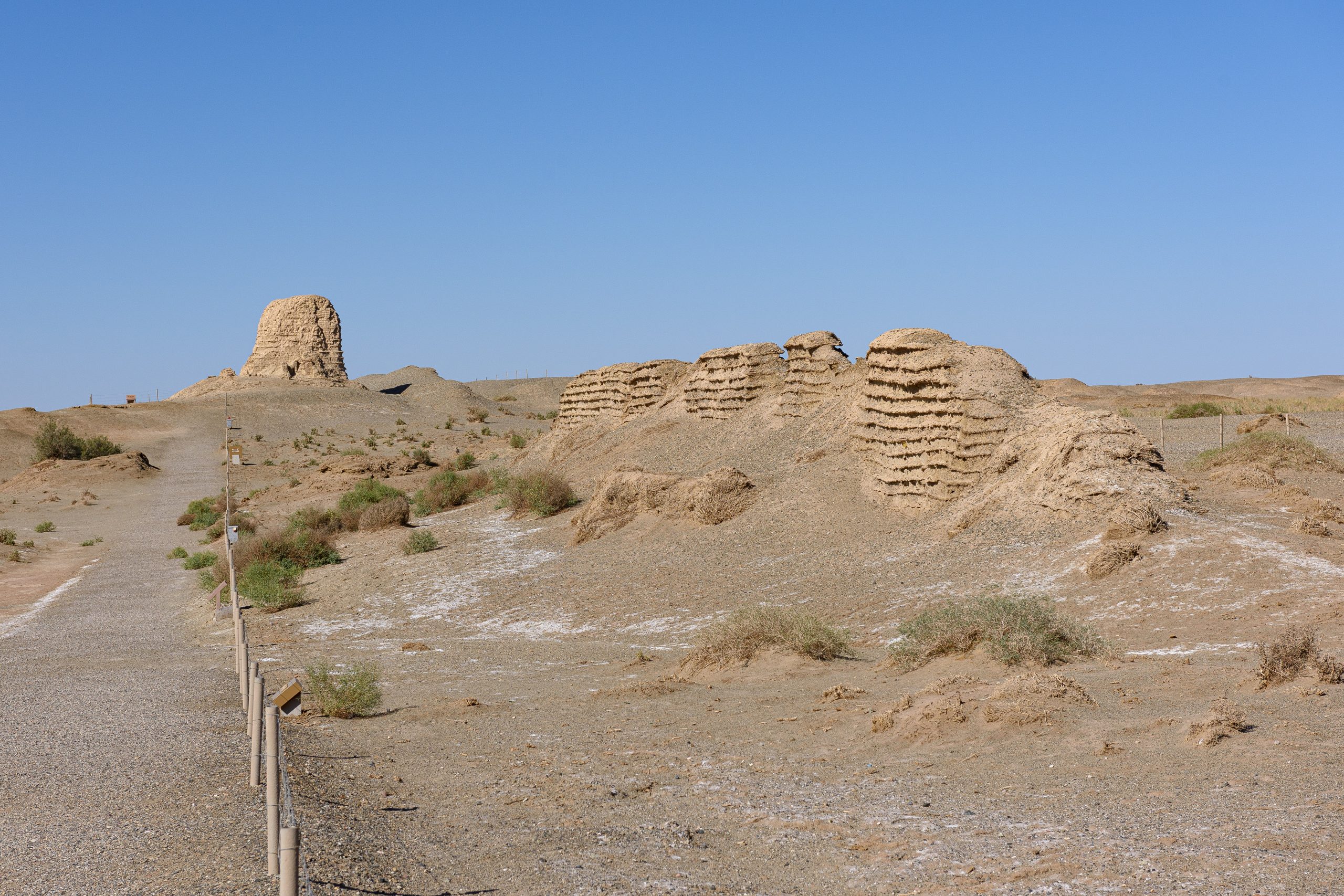
The physical monument is also more complicated than the singular name suggests. Fortifications existed before the Qin unification of China. Later rulers built, connected, repaired or replaced defences in different locations. The familiar brick-and-stone mountain walls are especially associated with the Ming dynasty, 1368–1644, not a single construction campaign completed under the First Emperor.
National Geographic’s educational account distinguishes early rammed-earth construction from later materials and designs. Earth compressed in layers can form substantial fortifications without resembling the picturesque masonry most visitors recognise. The surviving Han-period remains near Yumenguan therefore belong to the wall’s history just as surely as a restored tower near Beijing.
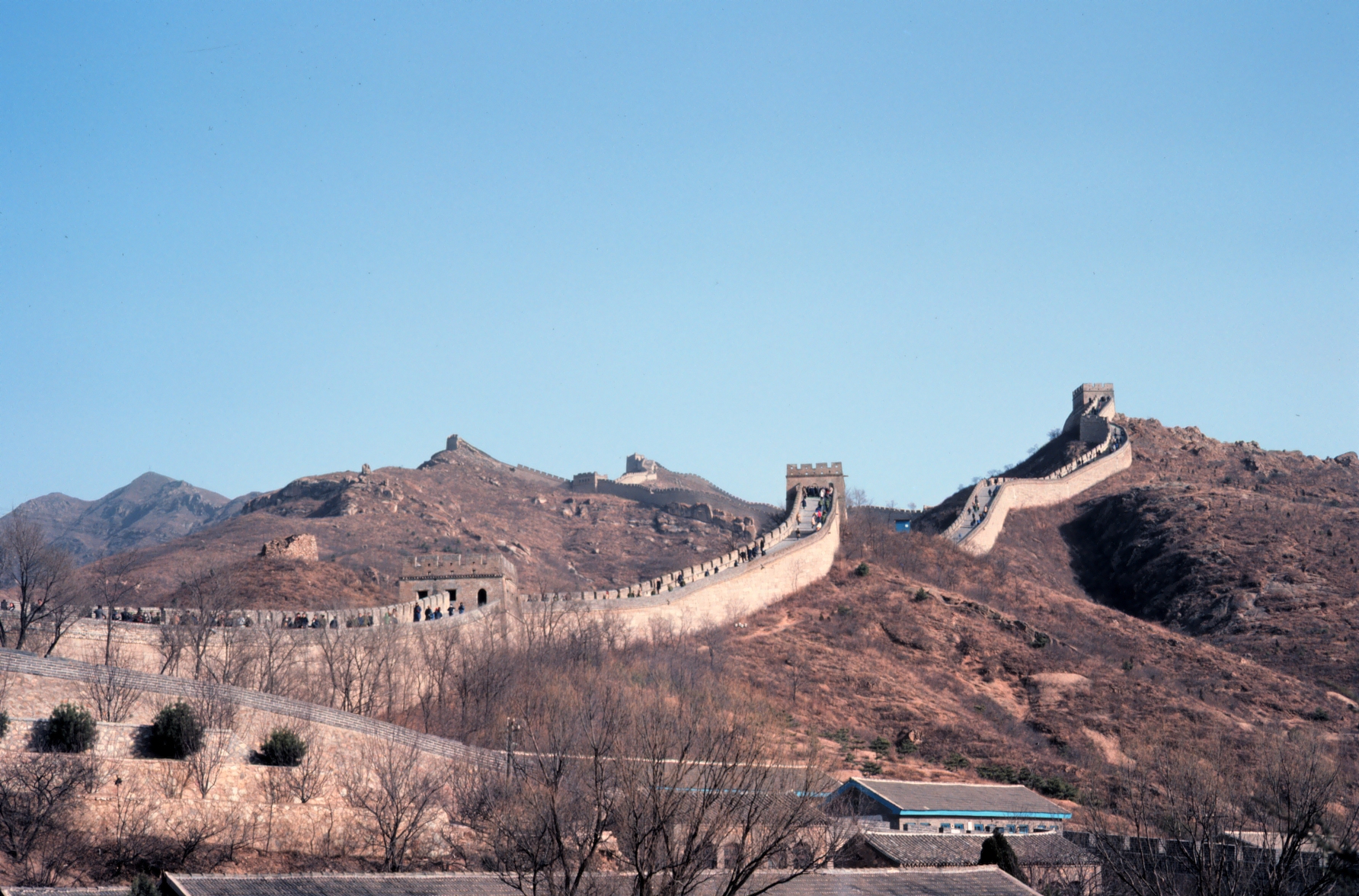
A photograph of Jinshanling cannot stand for every period and every frontier. Nor should a cumulative measurement of many walls and associated features be imagined as one uninterrupted walkway. When sources give different lengths, the first question should be what each measurement includes, not which impressive number wins.
A frontier system, not an enormous fence
Walls were connected to passes, towers, garrisons and routes. Their defensive purpose depended on people using them. Masonry alone could not observe movement, transmit a warning, decide who might pass or supply a force sent to respond. The structure was part of a military and administrative system.
This also makes the popular question “Did it work?” less simple than it sounds. No frontier system can guarantee that every enemy will always be excluded. The meaningful questions concern particular places and periods: did it channel movement, help defend a pass or allow a garrison to respond? A changing political situation could also make yesterday’s defensive line less important.
Nate Barksdale’s history of the wall’s builders, drawing on scholar Carlos Rojas, emphasises overlapping projects rather than one creator. Even Ming construction did not follow a single timeless blueprint. Decisions responded to changing circumstances along the frontier.
The monument’s history is consequently not just a contest between an emperor’s will and a mountain. It is a history of resources, labour and repeated decisions about where protection was needed and what could be sustained.
The people disappear when the view gets too distant
The Moon story offers a wonderfully clean image: a line across a continent, without the awkward detail of how it was built. Moving closer restores those questions. Who obtained the materials? Who carried them? What skills did construction require? Who maintained a section after the first building effort was over?
Historical accounts name rulers and commanders more readily than individual labourers. Barksdale’s discussion notes the difficulty of recovering the people who physically built Ming sections, while identifying the broad categories of labour involved. That gap in the record should remain visible. We should not fill it with invented workers or a precise death toll unsupported by evidence.
The workshops behind the Qin terracotta army raise a related problem: extraordinary imperial monuments are also products of organised labour. Bringing the makers back into view makes a monument more interesting, not less monumental.
A better reason to look
Debunking can become its own shortcut. “You cannot see it from the Moon” is true, but it does not tell us much about the wall. The worthwhile next step is to examine what survives, how it differs across regions and which parts have been restored. A modern visitor’s photograph records both historical building and later decisions about presentation.
The Great Wall does not need an impossible viewing distance to justify attention. Its earthen remains and masonry towers preserve different solutions to difficult problems. Its changing meanings show how defensive infrastructure can become a national symbol and a global destination.
From the Moon, the wall disappears. On the ground, the questions multiply. That is not a disappointing correction to a great story. It is where the better story begins.