
Mary Celeste, 1872: What the Inquiry Could—and Could Not—Explain
A seaworthy vessel reached Gibraltar without the ten people who had sailed in her. Surveys, disputed stains and newspaper stories reveal how an unexplained abandonment became something stranger.
On 13 December 1872, the Gibraltar Chronicle reported the arrival of an abandoned American brigantine. The Mary Celeste had been found at sea by the British vessel Dei Gratia, whose mate and two seamen had brought her into port. The short notice already contained the difficulty that would make the case famous: the recovered ship appeared watertight, and the rescuing captain could not account for her abandonment. The contemporary report, preserved in transcription from the newspaper, did not describe a supernatural event. It described a maritime emergency whose cause was missing.
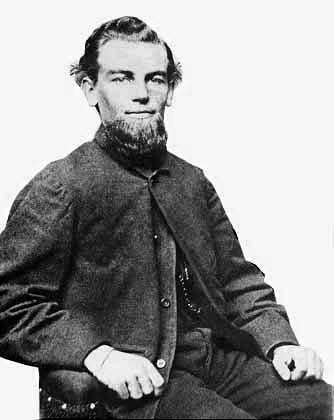
The people were missing too. Captain Benjamin Spooner Briggs, his wife Sarah, their young daughter Sophia and seven crew members had left New York for Genoa aboard the ship. None was aboard when men from the Dei Gratia inspected her in the Atlantic on 4 December. No surviving account from one of those ten people explains the decision to leave.
That absence creates two different questions. What had happened to the vessel before she was discovered? And what happened to the people after they were last recorded aboard? Evidence which helps answer the first does not necessarily answer the second. A sound hull cannot tell us what a captain believed about its condition several days earlier. A missing boat points towards an evacuation, but does not disclose the voyage that followed.
The most revealing story is therefore not a competition to invent the most startling solution. It is the history of an investigation: how inspectors turned marks and objects into arguments, how some arguments failed, and how fiction eventually supplied the witness whom the actual inquiry never found.
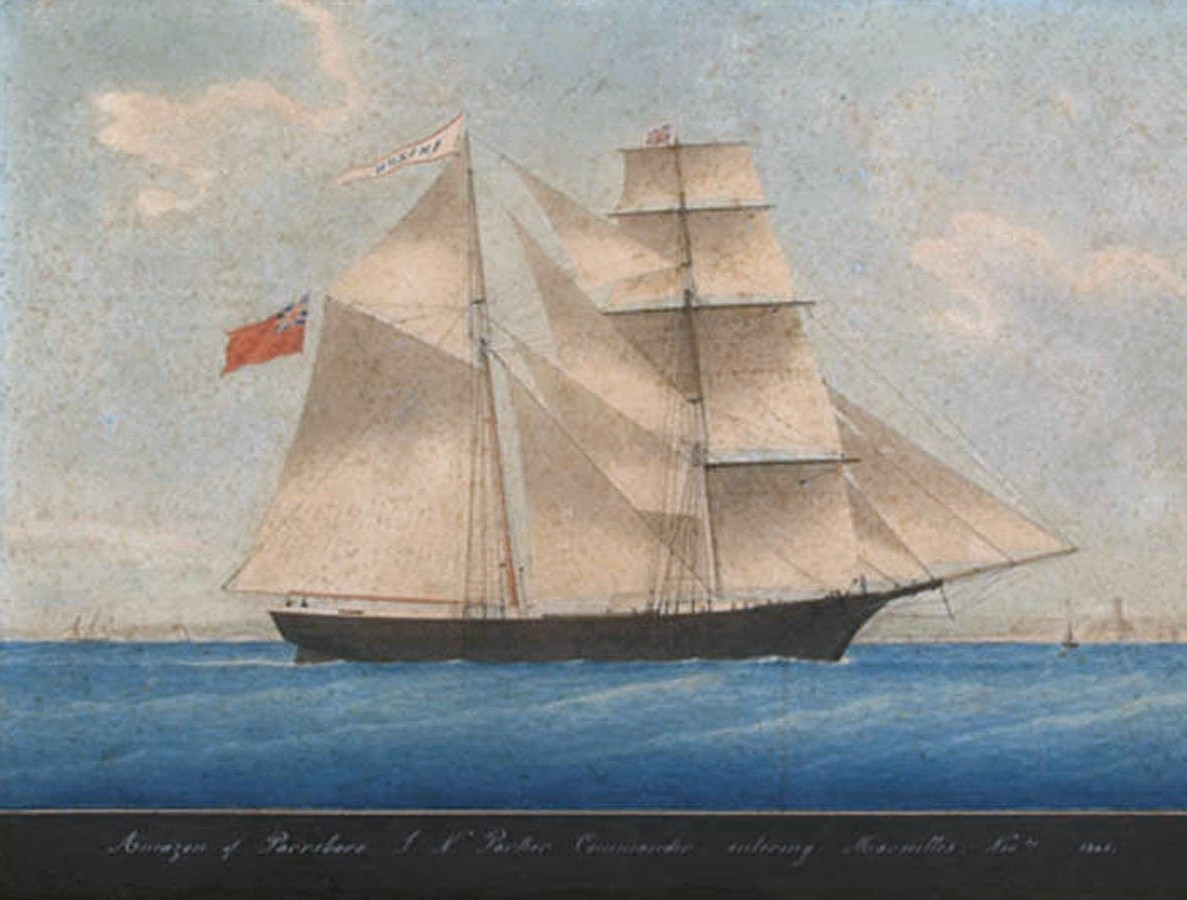
A working ship, and lives beyond the disappearance
The Mary Celeste was carrying a commercial cargo of alcohol across the Atlantic. She departed New York on 7 November 1872, bound for Genoa. The Royal Museums Greenwich account places the voyage within that ordinary working context: a merchant vessel, an experienced master and a crew whose disappearance was exceptional, not a ship whose purpose was mysterious.
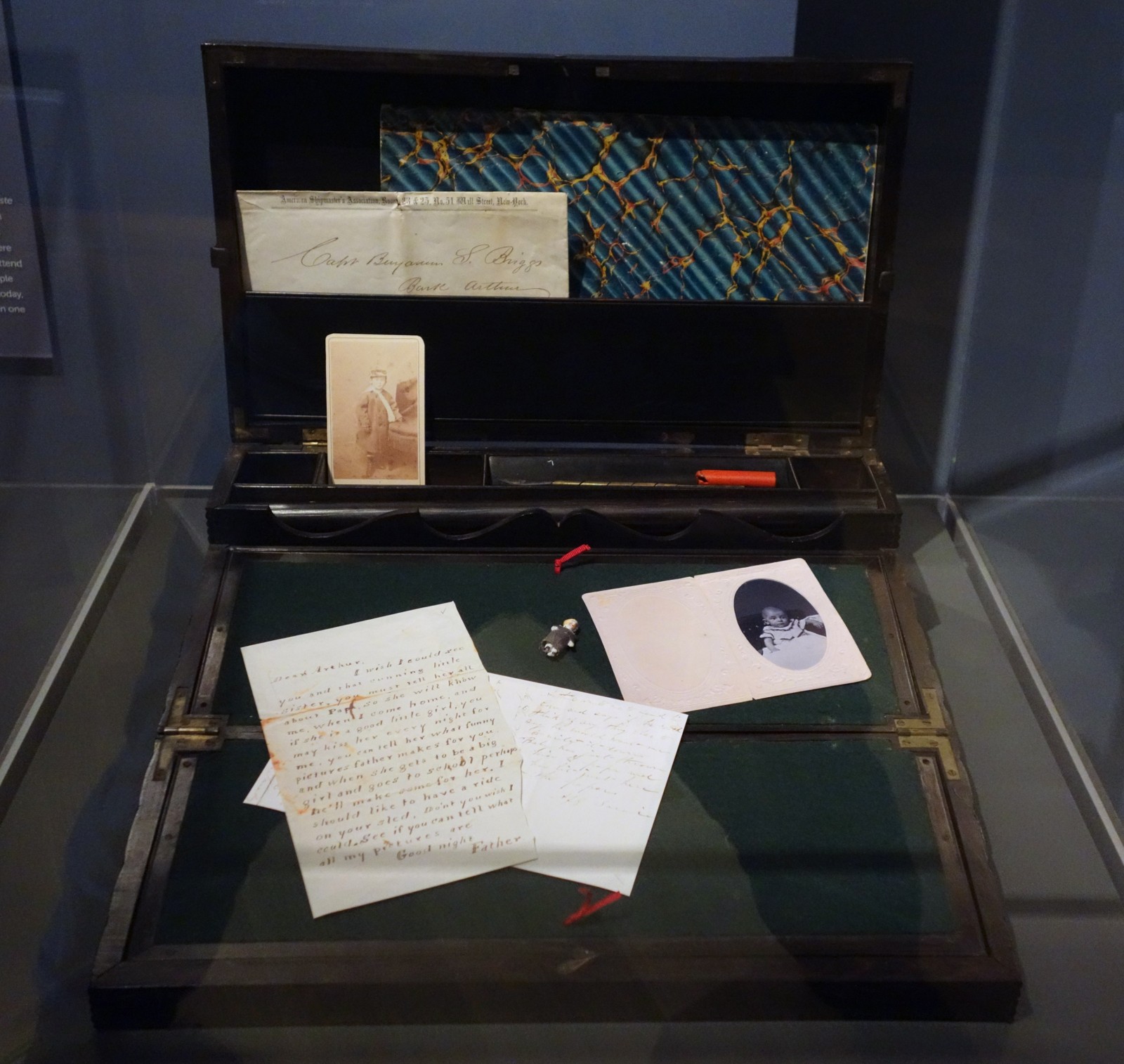
Briggs’s family was part of this seafaring world. The Phillips Library’s finding aid for the Benjamin Spooner Briggs papers describes correspondence from Sarah written aboard ships, family photographs and business records from Briggs’s earlier commands. It also records the couple’s two children: Arthur, who remained at home, and Sophia, who accompanied her parents. These are descriptions of the archive’s holdings, not a claim that every manuscript has been examined for this article.
The distinction matters. The case is often introduced as a vessel from which “everyone vanished,” as though the missing people had no history before becoming a puzzle. Letters, accounts and family photographs restore a more ordinary scale. A captain’s work involved commercial obligations and navigation; his household maintained relationships across long absences. For relatives ashore, the lack of a final account was not an entertaining gap in a story.
The cargo itself also needs to remain specific. Charles Edey Fay’s research, published by the Peabody Museum in 1942 and summarised with its documentary references here, identifies 1,701 barrels of alcohol. The ship’s boat was absent when the boarding party arrived. She was not subsequently towed to Gibraltar: a small party from the Dei Gratia sailed her there. That last fact establishes something important without explaining everything. The vessel could still be handled under sail after the abandonment. It does not establish that those who left her knew they could safely remain.
The ship was evidence, but evidence changed with time
The last surviving slate-log entry placed the ship near Santa Maria in the Azores on the morning of 25 November. Discovery came more than a week later and considerably farther east. Open hatches, missing equipment, water aboard and damaged sails had to be interpreted across that interval. Investigators could inspect the condition in which the ship reached them; they could not directly inspect the moment of departure.
On 23 December, surveyor John Austin examined the vessel in Gibraltar for five hours. His sworn report, transcribed from Fay’s documentary collection, is unusually detailed. He looked at planking, rigging, deckhouse seams, clothing, glass, furniture and small domestic objects. Dry belongings and intact structures led him to argue against the ship having encountered exceptionally violent weather. He also interpreted narrow injuries near the bows as cuts made by a sharp implement.
These are not all the same kind of statement. The location of a mark is an observation; an assertion about the instrument which caused it is an interpretation. Austin tried to reconstruct events from physical condition, sometimes through counterfactual reasoning: if a certain violence had occurred, he expected to find a certain kind of damage. Such reasoning can be useful, but its force depends on whether the expected consequence really was unavoidable.
A second inspection reached beneath the waterline. Diver Ricardo Portunato reported that he had examined the hull, keel, sternpost and rudder and found no indication of collision or grounding. His affidavit narrows the range of explanations. It does not rule out every temporary leak, every equipment failure or every mistaken assessment made earlier at sea.
The difference between surviving seaworthiness and perceived danger is the central difficulty. Historians know that the ship reached Gibraltar. Briggs did not possess that future knowledge when he last commanded her. Explaining an evacuation requires more than demonstrating that staying aboard would, in retrospect, have been the safer choice.
How suspicion became a murder story
The proceedings in Gibraltar began as a salvage case. The men who had recovered the vessel sought a reward for their work. An investigation into possible wrongdoing could affect how that claim was understood, but the court did not begin with a known murder and an identified body. Gibraltar’s official history of the courthouse describes the inquiry’s development and the suspicions pursued by Frederick Solly Flood.
Reddish stains on the deck and a sword seemed to offer a route from unexplained absence to violence. Yet examination weakened that route. In a report from January 1873, Dr J. Patron described testing the suspected marks, including microscopic examination. He concluded that the tested stains did not contain blood according to the scientific knowledge available to him. A visually suggestive object had not survived scrutiny as evidence of the crime imagined around it.
The bow marks were disputed too. The Gibraltar Chronicle of 4 March reported the assessment of Captain Robert Shufeldt of the American warship Plymouth. He rejected the proposed mutiny and interpreted the injuries as splintering rather than deliberate cutting. His alternative—that the crew had abandoned the ship under an alarm about her condition—was itself a hypothesis, not recovered testimony. The newspaper explicitly noted the disagreement between his judgment and that of the surveyors.
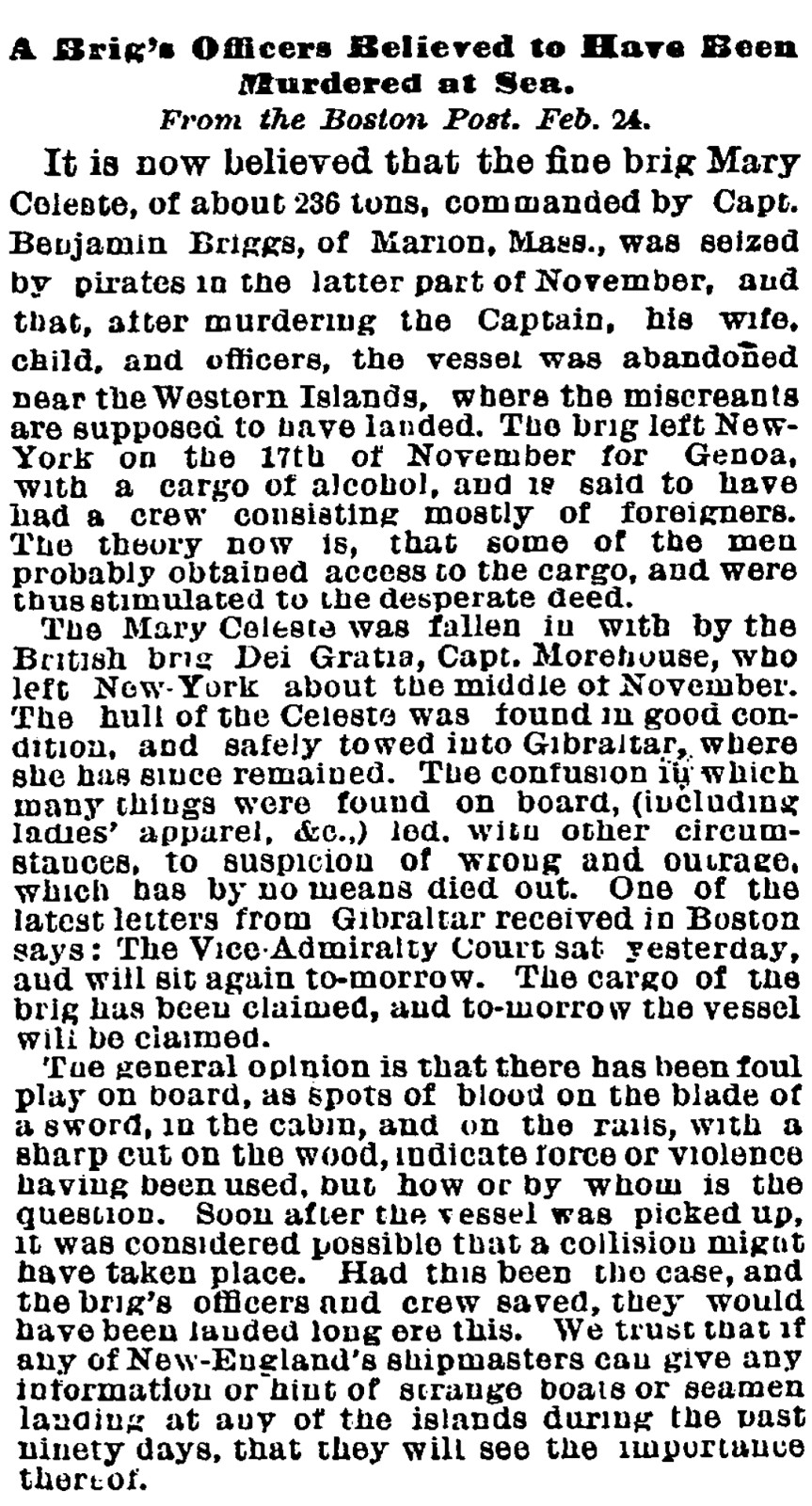
Meanwhile suspicion travelled faster than resolution. A New York Times report of 26 February 1873, reprinting the Boston Post, presented piracy, intoxication and murder as current explanations. It referred to supposed blood and stressed that the crew included foreigners. This is valuable evidence of the story being circulated, not proof that the story happened. Its departure date and account of towing were also wrong.
The inquiry did not establish a criminal explanation. Nor did the failure to establish one produce a complete account of the abandonment. It left a boundary which later retellings repeatedly crossed: suspicion had been investigated, but investigation had not converted suspicion into fact.
Fiction supplied the missing witness
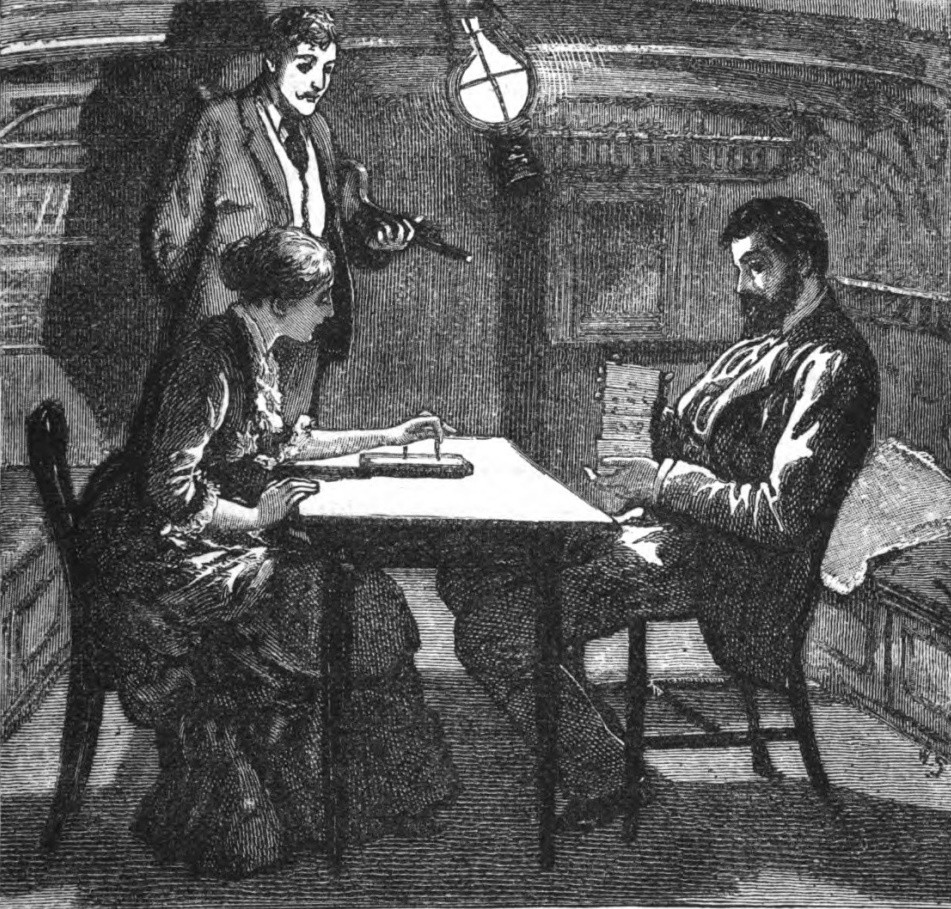
In January 1884, Arthur Conan Doyle published J. Habakuk Jephson’s Statement anonymously in The Cornhill Magazine. The Conan Doyle Collection in Portsmouth explains both its relationship to the real incident and its alterations. The ship became the Marie Celeste, with a different captain, route and company of passengers.
The form was especially effective. A “statement” appears to promise precisely what the historical record lacked: a person who had been there and could explain the disappearance. Doyle’s story, available with scans of its original publication, uses documentary-sounding preliminaries before giving its invented narrator an extraordinary experience. Its authority is literary. Jephson is not a recovered survivor.
That distinction changes how the familiar name should be understood. “Marie Celeste” is not merely an alternative spelling encountered in a shipping register. It belongs to a fictional version which helped reshape public memory of the real vessel. Once details from such a narrative enter summaries, the story can become harder to solve because the supposed evidence has been enlarged by things that never belonged to the case.
The often-repeated image of food left warm on a cabin table is another example of this enlargement. Fay’s documentary corrections explicitly reject it. Removing such details does not make the historical disappearance unimportant. It changes the question from how people vanished in the middle of an impossibly undisturbed scene to why they left a damaged but recoverable working ship. The second question is less theatrical and more difficult.
What a plausible mechanism can establish
Modern investigations have tried to reconstruct parts of the missing sequence rather than accept the most dramatic inherited details. In a 2007 Smithsonian report, filmmaker Anne MacGregor and oceanographer Phil Richardson discussed weather and drift reconstruction. Their work addressed whether the vessel could have travelled from the vicinity of the last log entry to the discovery position without a crew. MacGregor also explored a scenario involving impaired pumping and uncertainty about water aboard.
That is a useful separation of problems. A drift calculation can test a proposed route. It cannot recover a conversation on deck. A pump problem can help explain why a dangerous situation might have been feared, but fear is not documented merely because an explanation for it can be devised. The historical argument must retain those limits even when its physical components appear reasonable.
The alcohol cargo has produced another family of explanations: leaking vapour, an explosive event, or an alarm about one. On 7 April 2026, Chemistry World reported interviews with University of Manchester chemists Jack Rowbotham and Frank Mair about a model-ship experiment for a television documentary. They demonstrated that a rapid ethanol-vapour explosion could move parts of the model without leaving the burning and charring that a reader might expect from the word “explosion.”
The experiment challenges a simple objection to that hypothesis: the absence of obvious fire damage does not by itself make every explosive scenario physically impossible. But a model is not newly discovered evidence from the hold in 1872. It does not establish an ignition source, the exact conditions aboard the ship, or the decisions which followed. The published report is an account of an experiment and interviews, not proof that the historical case has been solved. This article does not claim to have viewed the documentary.
Even a convincing explanation for leaving the vessel would still leave the second loss to explain. If the missing boat carried those aboard away from the ship, its failure to return has to be accounted for separately. Weather, distance and separation can form plausible scenarios. Without the boat, a survivor’s account or new securely identified evidence, they remain scenarios.
An unresolved case is not an empty record
The archive contains substantial knowledge. A ship crossed the Atlantic with a named crew and family aboard; another crew found it abandoned; the recovered vessel could still sail; inspectors examined its structure and contents; a supposed sign of violence failed testing; witnesses and commentators disagreed about what particular marks meant. Those facts do not dissolve because the final sequence remains unknown.
The Briggs papers also preserve the traces of lives which the mystery genre tends to subordinate to an ending. Their letters and photographs need not contain a hidden solution to matter. They show that the missing people belonged to households, occupations and networks of correspondence, not simply to a catalogue of strange events.
The Mary Celeste is most instructive when those two scales remain together: the careful examination of a pump, stain or damaged plank, and the recognition that ten lives cannot be reconstructed from a ship’s surviving objects alone. We can reject invented evidence without selecting a final theory. We can explain why an inquiry failed to resolve a disappearance without pretending that nothing can be known. The unresolved part of this history is real. So is the evidence around it.