Science, Invention & Exploration
Timing Venus: The Global Experiment That Tried to Measure the Solar System
The transits of 1761 and 1769 sent observers around the world. Their clocks, correspondence and disagreements reveal how a planetary measurement was made—and why it remained uncertain.
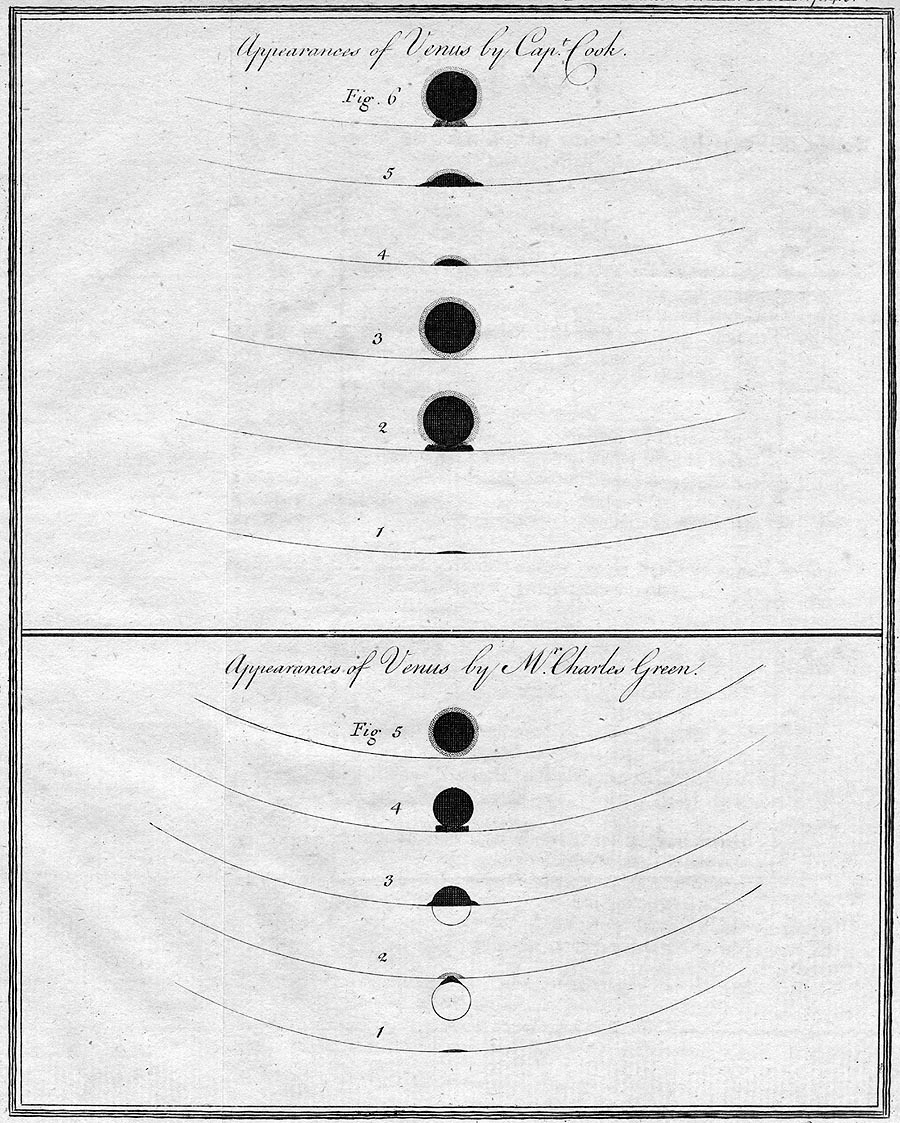
On 3 June 1769, the weather at Tahiti gave James Cook almost everything an astronomer could ask for. His journal records a clear day and an unobstructed passage of Venus across the Sun. Yet the observation did not end in perfect agreement. Cook, the expedition astronomer Charles Green and the naturalist Daniel Solander disagreed about the instants when the planet’s edge met the Sun’s. Around Venus, Cook described a troublesome dusky border. The very moment they had travelled so far to time proved difficult to define. Cook’s account preserves that frustration rather than concealing it.
The problem was not to discover that Venus crossed the Sun. Astronomers wanted to turn a tiny moving silhouette into a measuring instrument. By comparing observations from distant parts of Earth, they hoped to determine the distance to the Sun more accurately—and thereby attach a reliable scale to the planetary system.
Cook’s voyage is the best-known episode, but the experiment did not belong to one ship or one observer. Its essential apparatus was a dispersed network: clocks in temporary observatories, telescopes carried across oceans, instructions translated into practical routines, and reports that had to survive a second journey home. Even clear skies were only the beginning.
A solar system with proportions, but an uncertain scale
Kepler’s laws had made it possible to work out the planets’ relative orbital sizes. Astronomers could describe how their paths compared without knowing the corresponding distances with sufficient precision. It was rather like possessing a carefully proportioned plan whose scale bar still needed checking. Earlier measurements, including observations of Mars, had already produced estimates; the transit campaigns were an attempt at improvement, not the first human effort to measure the solar system.
The principle was parallax: an object appears against a slightly different background when seen from two separated positions. During a Venus transit, observers far apart on Earth see the planet follow slightly different tracks across the solar disk. Earth supplies a measurable baseline. Geometry, combined with the relative planetary distances, can turn the difference between the observations into a distance to the Sun. ESA’s account of transit geometry explains why a fleeting contact could matter more than a long, spectacular view.
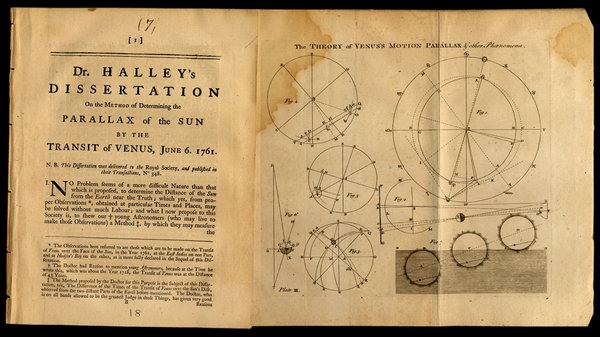
Edmond Halley developed the proposal over decades and made an influential appeal in 1716 for observations of the coming transits. He would not live to see them. His preferred procedure compared the duration of Venus’s passage between internal contacts: the moments when the planet had just moved wholly inside the Sun’s outline and was just beginning to leave it. Timing an interval reduced dependence on knowing the absolute time at each station. Halley’s printed appeal was, in effect, a programme for astronomers of another generation.
Joseph-Nicolas Delisle promoted a different approach, comparing the time of a single contact from separate places. It could use stations where the whole transit was not visible, but it demanded accurate knowledge of their longitudes. ESO’s history of the two methods explains the different demands they placed on observers. The choice was practical as much as mathematical: a theoretically valuable location was useless if observers could not reach it, establish their position or see the required phase.
Before the observation came the workshop
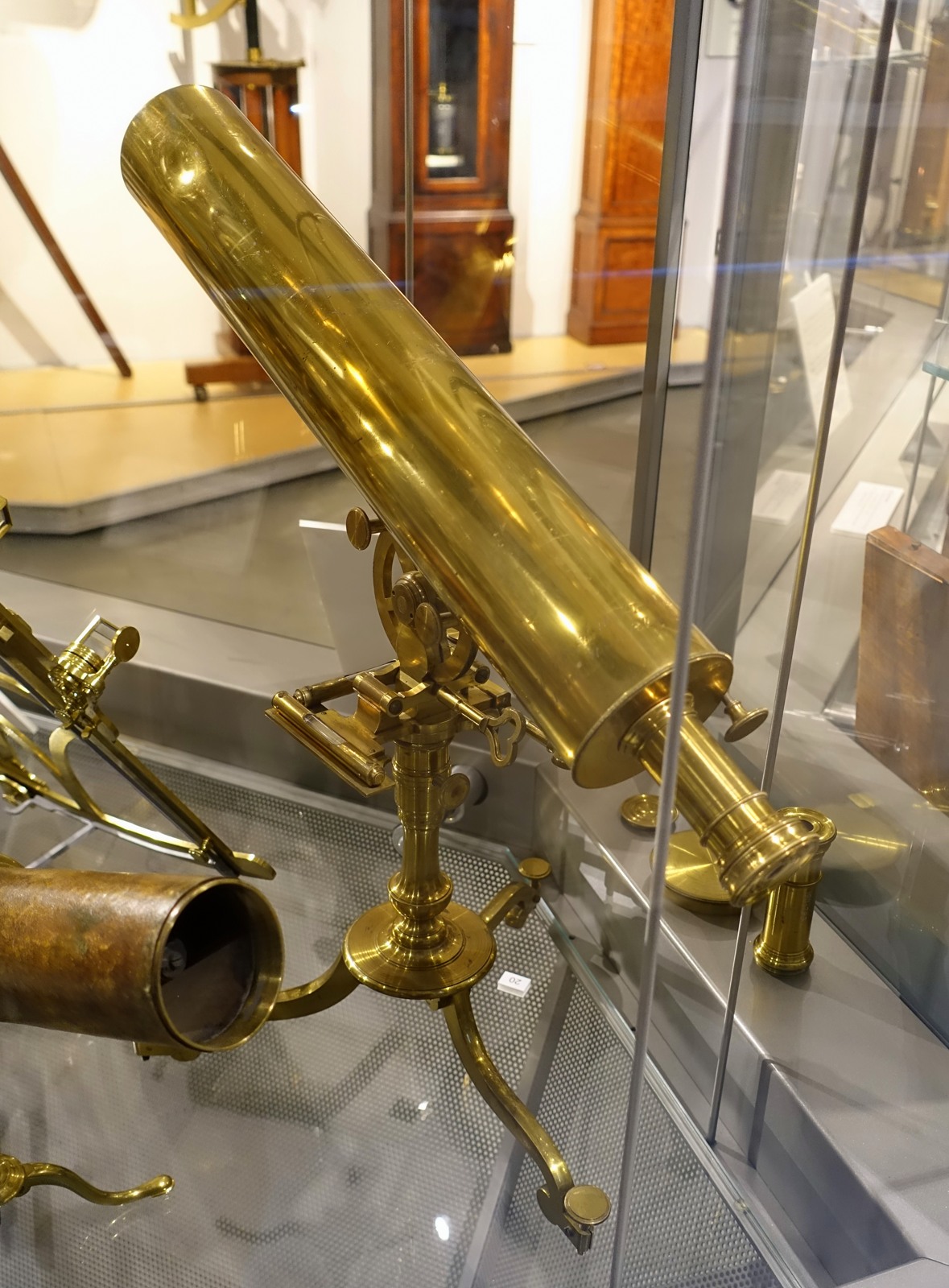
John Winthrop’s expedition from Massachusetts to Newfoundland in 1761 makes the preparatory work unusually tangible. Harvard lent instruments, and two students accompanied him. His equipment included a pendulum clock, an octant and both refracting and reflecting telescopes. At St John’s, hills blocked the necessary view from the town. The party found a more suitable elevation, erected tents, carried up equipment and secured the clock to a pillar. Repeated observations were needed to align the apparatus and check the time. Winthrop’s own report devotes attention to labour that a simple list of contact times would erase.
This was not a matter of taking a modern portable clock from its case and trusting the display. An observing station had to be made dependable. A stable mounting, a usable horizon and a properly adjusted timekeeper all contributed to the eventual number. An observer’s geographical position was part of the instrument, too.
The Royal Society’s surviving equipment list names specialist makers: telescopes by James Short, clocks by Ellicott and Shelton, quadrants by Bird and micrometers by Dollond. Thermometers, barometers and magnetic instruments appear alongside the astronomical apparatus. These campaigns drew upon a commercial world of precision manufacture, not just the mathematical ingenuity of their organisers.
Smaller reflecting telescopes helped make distant observation practicable. But portability did not make every telescope equivalent. Aperture, magnification, optical quality and the observer’s interpretation could all affect what counted as contact. Maskelyne’s printed instructions for 1769, preserved in the Smithsonian’s Chasing Venus exhibition, addressed the need for observations that other astronomers could actually compare.
The world would not hold still for 1761
Delisle circulated information about the transit’s visibility to a wide circle of correspondents. French observers travelled to places including Vienna, Tobolsk and Rodrigues. On a map, these destinations formed useful points in a geometrical exercise. On the ground, reaching them meant dealing with ships, weather, borders, sponsors and war. The 1761 campaign took place during the Seven Years’ War, when scientific correspondence and military rivalry operated at the same time.
Charles Mason and Jeremiah Dixon were intended for Sumatra. A French attack disrupted their voyage, and they eventually observed at the Cape of Good Hope instead. Their change of destination, documented in the Royal Society’s account of its archives, illustrates how readily a planned network could become an improvised one. Guillaume Le Gentil’s attempt to reach Pondicherry was likewise overtaken by the conflict; the place on which his plan depended had fallen to British forces.
Nor could international cooperation simply abolish national competition. When the Royal Society sought royal support for the next transit, its 1768 memorial linked astronomy to navigation and invoked Britain’s scientific reputation. Catherine II offered buildings and proposed training naval officers where Russia lacked enough astronomers. The surviving correspondence reveals both a shared objective and several governments eager to be seen advancing it.
The result was cooperation without a single command centre. Academies, courts, trading organisations and individual observers assembled overlapping ventures. The experiment needed data from beyond any one institution’s reach, yet the ships and funds that made travel possible came with interests of their own.
1769: more than the voyage to Tahiti
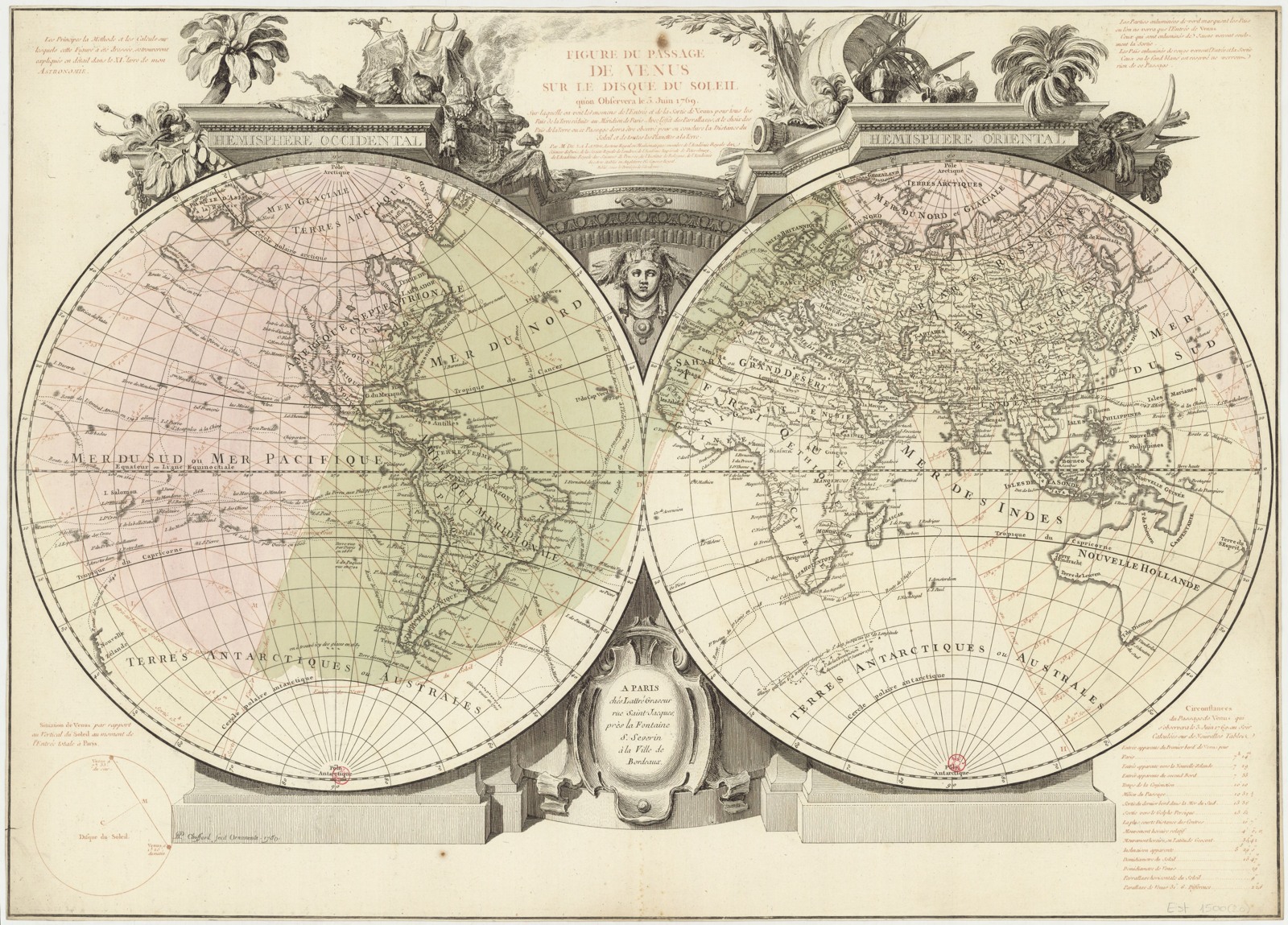
The second transit offered another opportunity, not a clean restart. Experience from 1761 shaped preparations, and observers spread across northern latitudes, Russia, the Americas and the Pacific. At San José del Cabo in Baja California, Jean-Baptiste Chappe d’Auteroche worked with a French-Spanish party that included Vicente de Doz and Salvador de Medina. They observed the transit successfully and remained for a lunar eclipse on 18 June to help establish the station’s longitude. The account of this expedition makes an important point: the supposedly decisive day did not finish the measurement.
Across the Atlantic world, observation could also happen near home. The American Philosophical Society coordinated three local stations in Pennsylvania. At Norriton, David Rittenhouse worked with collaborators rather than producing a solitary triumph. William Smith communicated the group’s report, while John Lukens and John Sellers were among those named in its published title. The Rittenhouse papers preserve the connection between observations and calculation.
The exchange continued after Venus had left the Sun. Nevil Maskelyne wrote to Benjamin Franklin requesting the Philadelphia observations; reports appeared in the Society’s first volume of Transactions in 1771. These letters and printed accounts were not supplementary publicity. They were the means by which a local event could become useful to a distant calculator.
In the Pacific, however, the expedition’s purposes extended beyond that exchange. Cook’s additional Admiralty orders directed him to search for a southern continent after completing the transit observation. The instructions preserved by the National Library of Australia joined surveying and commercial advantage to the expansion of British power. The astronomical mission was genuine; so were the imperial ambitions attached to its transport. Neither cancels the other.
The few seconds that would not become exact
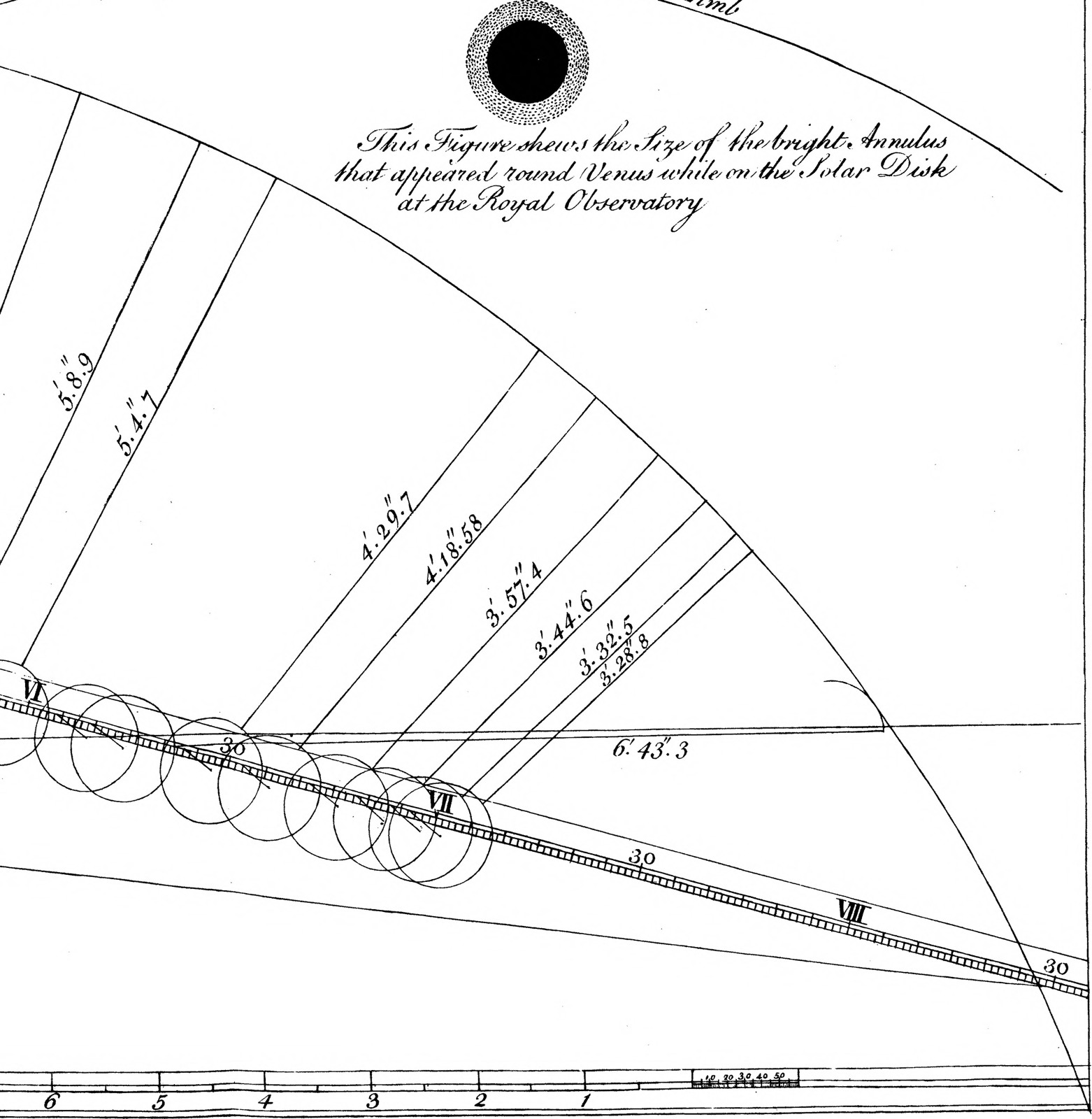
Cook’s surviving drawings and Green’s, published together in Philosophical Transactions, show why the solar edge was difficult to read. Near contact, a dark connection could seem to join Venus to the edge of the Sun instead of separating neatly. The historical plate reproduced by NASA makes the difficulty visible: a textbook diagram’s crisp circles were not necessarily what an observer saw.
It was not merely a Tahitian problem. Samuel Horsley’s account of his Oxford observation in June 1769 also described a dark ligament near contact. His letter and sketch belong to the evidence that uncertainty persisted even when observers were looking at the same physical event with serious attention.
The phenomenon became known as the black-drop effect. It should not be explained simply as Venus’s atmosphere. Modern research using spacecraft observations of Mercury—whose extremely tenuous exosphere cannot supply a Venus-like atmospheric explanation—has separated major contributions from instrumental blurring and the Sun’s decreasing brightness towards its visible edge. Schneider, Pasachoff and Golub’s study demonstrates how the observing system can help create an apparent connection between two outlines.
That does not mean eighteenth-century observers were careless, or that every discrepancy had one cause. It means the desired event—one sharply identifiable instant—was partly a demand imposed by the calculation. Atmospheric disturbance, optics, timing and judgement entered between the ideal geometry and the written number. Increasing the number of observers could expose disagreement without automatically removing its causes.
A result that continued to be worked on
The campaigns narrowed the problem, but they did not produce one universally accepted, final distance in 1769. Comparing observations required decisions about which timings to trust, how to locate stations and how to treat inconsistent reports. The distinction between gathering data and reducing it was crucial: a successful expedition could deliver evidence that remained difficult to interpret.
Johann Franz Encke returned to the eighteenth-century observations in the nineteenth century. Later Venus transits, measurements involving Mars and asteroids, and eventually radar brought further revisions. ESO’s table of successive determinations makes the long afterlife of the 1761 and 1769 material clear. The original notebooks were not exhausted when their authors stopped observing.
The strongest achievement of these campaigns was therefore larger than a single numerical answer, but more specific than a celebration of international friendship. They made a planetary measurement depend on linked work at widely separated sites. To reconstruct that achievement, the diagram, the clock, the ship, the printed instructions and the published disagreement must be kept together. Cook’s admission that his colleagues’ timings differed is not an embarrassing footnote to the experiment. It is part of the evidence that allows us to understand what the experiment actually achieved.