
Dark History
The Zong Case: How a Mass Killing Entered Court as an Insurance Dispute
The surviving arguments concern water, navigation, insurance and the timing of rain. Reading them closely reveals both what can be established about the killings and why the courtroom failed to become the murder trial abolitionists demanded.
Rain occupies an extraordinary place in the surviving court record of the Zong massacre. At a hearing in May 1783, a lawyer argued that some enslaved Africans had been thrown overboard after rainfall had relieved the shortage of water said to justify the killings. The timing of that rain could determine whether an insurance claim succeeded.
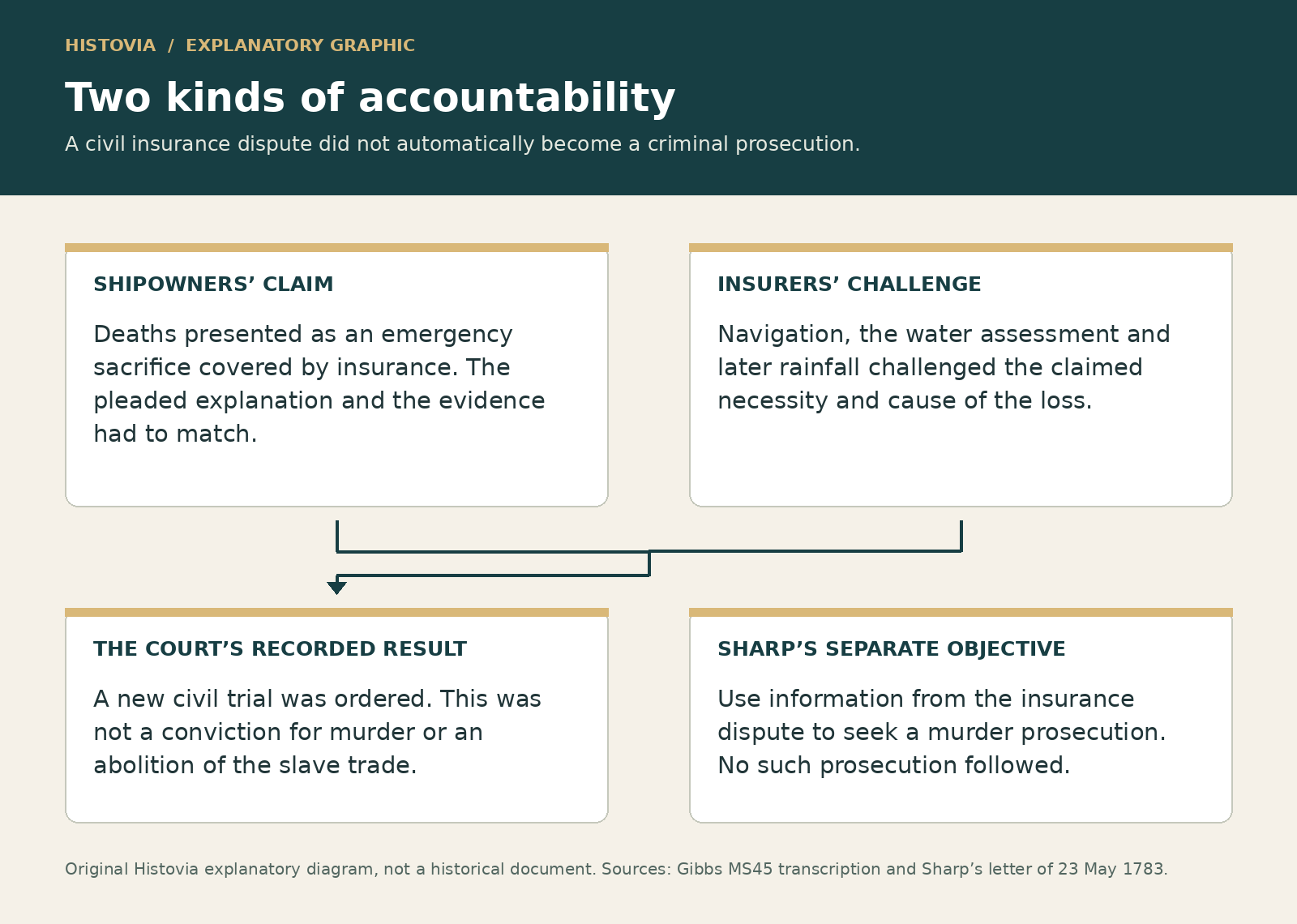
The people whose deaths were being discussed had been killed during the ship’s passage to Jamaica in late 1781. Their owners subsequently sought payment from the insurers. By the time the dispute reached the Court of King’s Bench, its formal question was whether the alleged loss fell within the policy, not whether the crew should be convicted of murder.
That difference shaped the evidence the proceedings collected. Navigation errors, quantities of water and the sequence of events became intensely consequential. The identities and lives of the people thrown into the sea remained largely outside the record. The case is therefore both a source for the massacre and evidence of the institutional framework that made it possible to discuss mass killing as a commercial loss.
A voyage reconstructed through a dispute
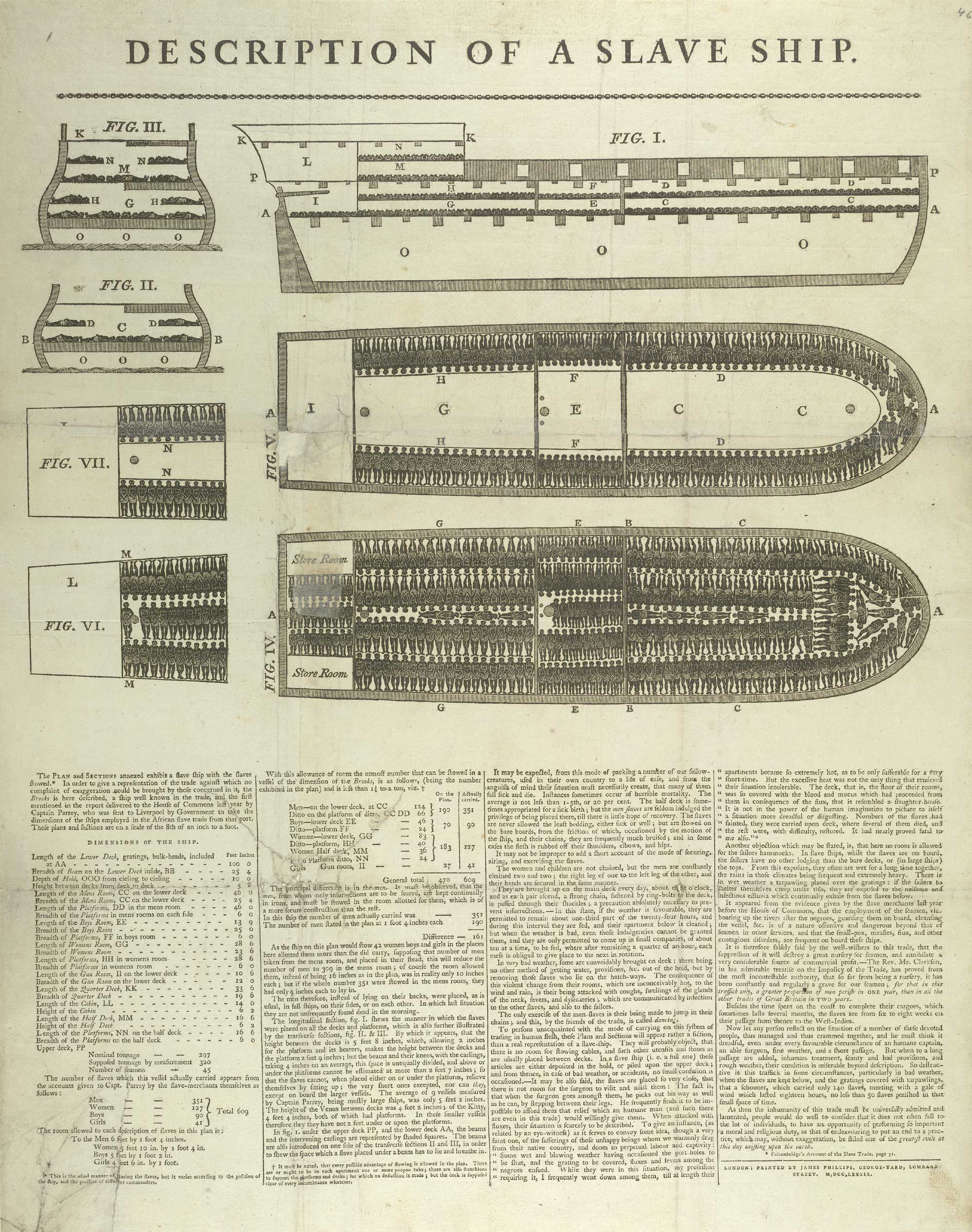
The Zong belonged to a Liverpool trading syndicate associated with William Gregson. It carried several hundred enslaved Africans toward Jamaica, where they were to be sold. Disease, death and a prolonged passage formed the circumstances in which the killings occurred. Around 130 enslaved Africans died in the massacre, although historical accounts differ over the precise total and how particular deaths should be counted.
Those differences should not be concealed behind a falsely exact figure. The surviving records were produced for different purposes and do not agree on every number. A declaration could state one total, a witness another, and an abolitionist account a third. Their disagreement does not turn the killings into a doubtful event. It places limits on the precision with which their sequence and scale can be reconstructed.
A particularly revealing source is the set of case notes attributed to the lawyer Sir Vicary Gibbs, now held by Middle Temple Library. The library’s published transcription of the eighteenth-century manuscript records competing versions of the voyage. It is not a ship’s log or testimony from one of the enslaved survivors.
The notes describe a mistaken assessment of water near Tobago and a navigational mistake in which Jamaica was confused with Hispaniola. They also record arguments about weather, currents and the time needed to regain the intended destination. These details were not neutral background. Each could affect whether the owners could attribute the deaths to a danger covered by insurance or whether they resulted from avoidable conduct aboard the ship.
The London Museum’s account places the litigation within a trade that depended on metropolitan finance as well as ships and colonial markets. The act of killing occurred at sea; the ensuing claim connected it to merchants and insurers in Britain. Distance separated these activities without making them independent.
The classification that made the claim possible
Maritime commerce had procedures for losses incurred when property was deliberately sacrificed to preserve a vessel and what remained aboard. Throwing goods overboard in an emergency could be treated differently from their ordinary deterioration. In the Zong proceedings, the owners sought to place the killing of enslaved people within that commercial category.
The Gibbs notes record an insured valuation of £30 per person. They also preserve the insurers’ argument that death aboard the ship would not have produced the same liability. By throwing people overboard, the captain could attempt to move a loss from the owners’ account to the underwriters’. This was an argument about the incentive created by the claimed distinction, not a modern reconstruction supplied by a later historian.
The owners’ lawyers did not ask the court to decide the legitimacy of slavery itself. They insisted that the status of enslaved Africans as property was not the issue then before it. Within that premise, they characterized the event as a jettison and argued that necessity could justify sacrificing some to preserve others.
Their opponents challenged both the underlying power over human lives and the specific claim of necessity. The case therefore cannot be reduced to a courtroom in which every speaker said exactly the same thing. But the available route to a decision remained the insurance action. A successful challenge by the underwriters would protect them from payment; it would not automatically establish a criminal conviction against anyone on the ship.
This procedural distinction explains why arguments that now seem secondary occupied so much attention. The wording of a declaration mattered because a party had to establish the loss it had alleged. If the declaration blamed perils of the sea while the evidence pointed toward a navigational mistake, the discrepancy could be legally decisive without the court resolving the full responsibility for the deaths.
What the rain could prove, and what it could not
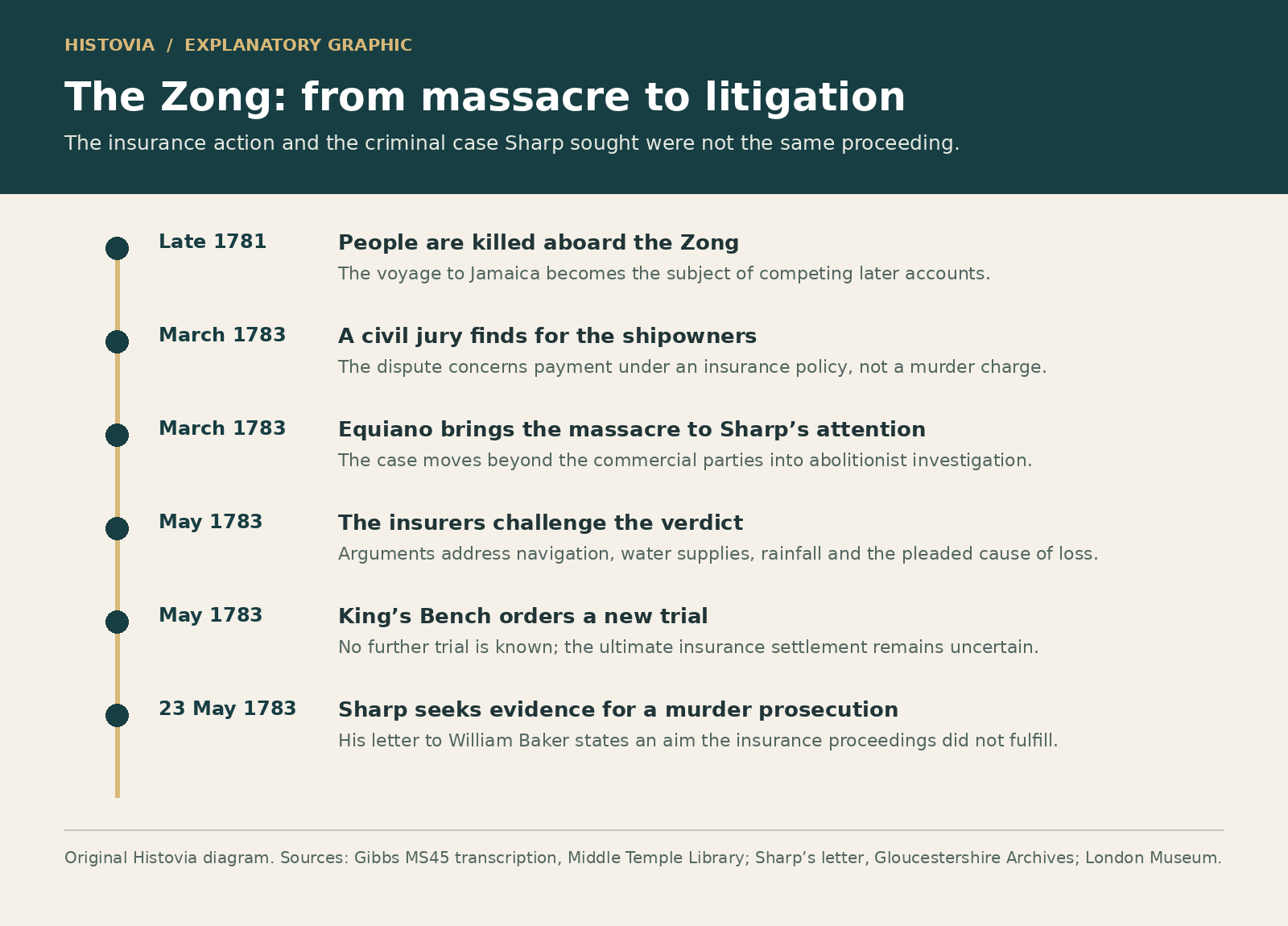
The first trial, held at London’s Guildhall in March 1783, resulted in a verdict for the shipowners. The insurers then sought a new trial. At the subsequent hearing, the recorded objections included the inaccurate assessment of water, the navigational error and the allegation that killings continued after rain had fallen.
Rain mattered because the owners’ argument depended on necessity. If usable water had become available, a claim that further deaths were unavoidable required a different explanation. The evidence challenged the factual condition on which the commercial justification rested. It did not merely add another distressing detail to the story.
Lord Mansfield’s remarks in the Gibbs manuscript called for re-examination. They drew attention to the difference between the alleged maritime perils and the actual cause of delay, and to the significance of deaths after rainfall. Justice Francis Buller similarly examined the relationship between the declaration and the evidence. The recorded result was an order for a new trial.
This was neither a murder verdict nor an abolition of the trade. The London Museum notes that a further trial appears not to have taken place and that the ultimate settlement is unknown. A later narrative that makes Mansfield convict the captain, or declares the victims legally vindicated through the insurance judgment, supplies an outcome the surviving evidence does not support.
Nor should the initial verdict be called an acquittal. The proceeding was a civil dispute over payment, not a criminal prosecution ending in a finding of innocence. Keeping the terms distinct is essential to understanding why campaigners outside the litigation remained dissatisfied even after the owners’ first success had been challenged.
Equiano carried the case beyond the litigants
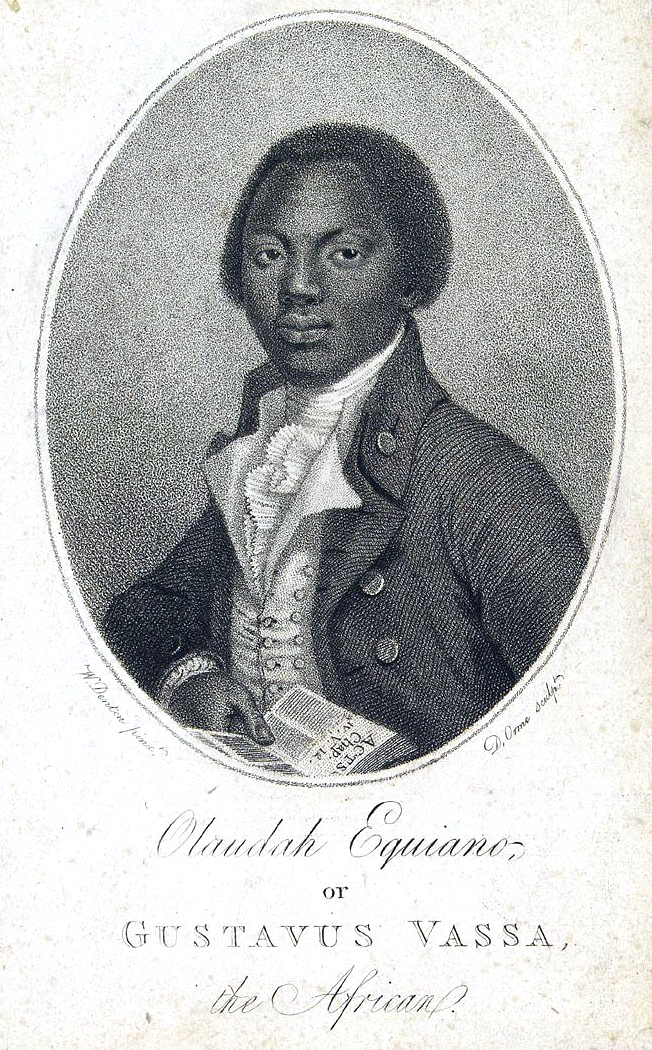
Olaudah Equiano brought news of the massacre to Granville Sharp in March 1783. Equiano, also known as Gustavus Vassa, had purchased his freedom and would become a prominent author and campaigner against the slave trade. His intervention was a link between an insurance dispute and an effort to pursue a different kind of accountability.
Sharp’s surviving correspondence makes that difference explicit. In a letter to William Baker dated 23 May 1783, preserved by Gloucestershire Archives, he described the contest between owners and insurers as a matter of monetary value. He hoped to obtain enough evidence from it to begin a prosecution for murder.
The letter also challenged the account of necessity. Sharp described people being selected and thrown overboard before strict rationing had even begun. He contrasted the asserted need to sacrifice people with the wider conditions that had already produced disease and death. His purpose was argumentative: to turn information generated by the commercial action into evidence against the trade and those responsible for the killings.
Sharp was not aboard the Zong. His account must be read as that of a determined investigator and advocate, drawing on evidence available after the voyage. Its value includes what it tells us about his next intended step. He did not consider a refusal of insurance payment an adequate conclusion.
Equiano’s part is equally important to the shape of the story. The legal record can make merchants, counsel and judges seem to be the only people capable of moving events. The transmission of the case into abolitionist networks depended also on a formerly enslaved Black campaigner. His intervention did not supply the missing voices of the victims, but it helped prevent the litigation from remaining solely a negotiation among commercial interests.
A powerful case was not a quick victory
The Zong became one of the incidents used to expose the trade’s violence. It offered campaigners a particularly stark connection between killing and financial calculation. Yet its later prominence can encourage an excessively straight line from the courtroom to abolition, as though public knowledge of a single atrocity had settled a political struggle.
The organized British campaign expanded in the following years through petitions, publications, organizing and parliamentary action. Parliament’s history of the trade dates the abolition statute to 25 March 1807, more than two decades after the Zong hearings. Ending Britain’s slave trade did not at the same moment end enslavement in its colonies.
The later emancipation settlement took another generation and imposed a coercive apprenticeship system before its early termination in 1838. The distinction between trade abolition and emancipation matters because the Zong’s place in an abolition narrative can otherwise imply a speed and completeness of change that did not occur.
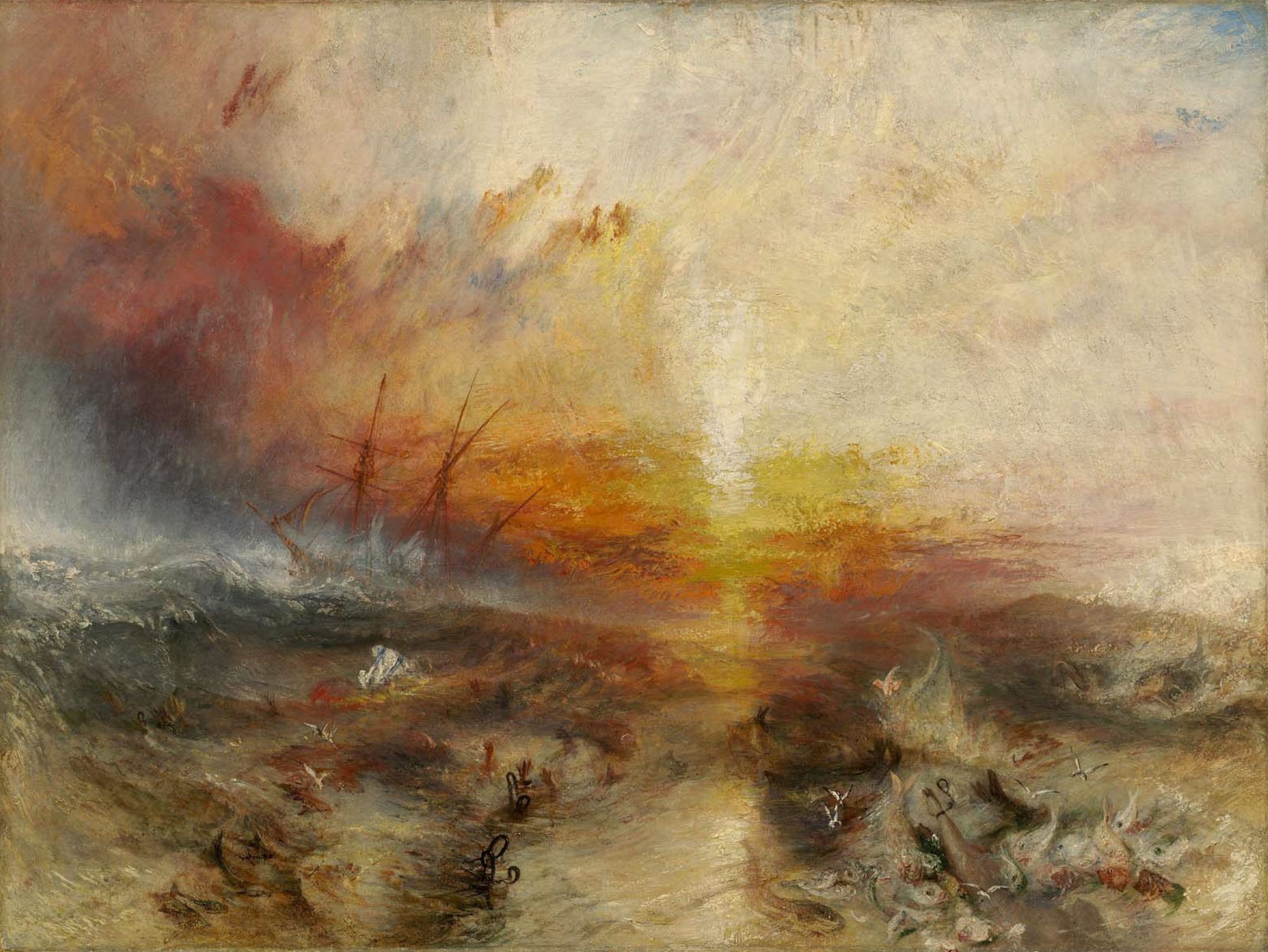
J. M. W. Turner returned to the subject in his 1840 painting Slave Ship. The Museum of Fine Arts, Boston, which holds it, identifies the Zong story among the painting’s sources. Turner’s sea and sky are an imaginative indictment created decades later, not eyewitness documentation of the ship’s appearance or the weather during the killings.
That distinction becomes especially important when the painting is reproduced beside an account of the massacre. Its visual force can make a viewer feel that the event has been seen. What survives instead is an artist’s response, composed in another political moment, alongside documentary fragments generated by litigation and campaigning. They answer different historical questions.
The evidence left outside the claim
The surviving material cannot restore a complete list of names, biographies and relationships for those who were killed. Supplying imagined conversations or thoughts would conceal this absence rather than repair it. The court notes preserve particular actions and assertions, but they filter the voyage through people whose authority to speak came from their position within, or opposition to, the trading system.
They also preserve disagreements that should remain visible. The totals vary. Statements about the water supply were contested. Counsel distinguished the explanation given in a legal pleading from what a witness had actually described. A careful history must retain those distinctions without allowing uncertainty over a detail to obscure the established violence.
Sharp’s letter leaves the next intended action unusually clear: gather evidence sufficient for a murder prosecution. That prosecution did not follow. The insurance dispute had opened a route by which the killings became known, but it did not deliver the proceeding Sharp was trying to bring into existence. The surviving request for a different trial remains part of the case’s unfinished record.