
The Dreyfus Affair: A Secret File and Twelve Years to Clear a Name
A disputed handwriting identification, concealed evidence, and a protected institution prolonged the wrongful conviction of Alfred Dreyfus from 1894 to 1906.
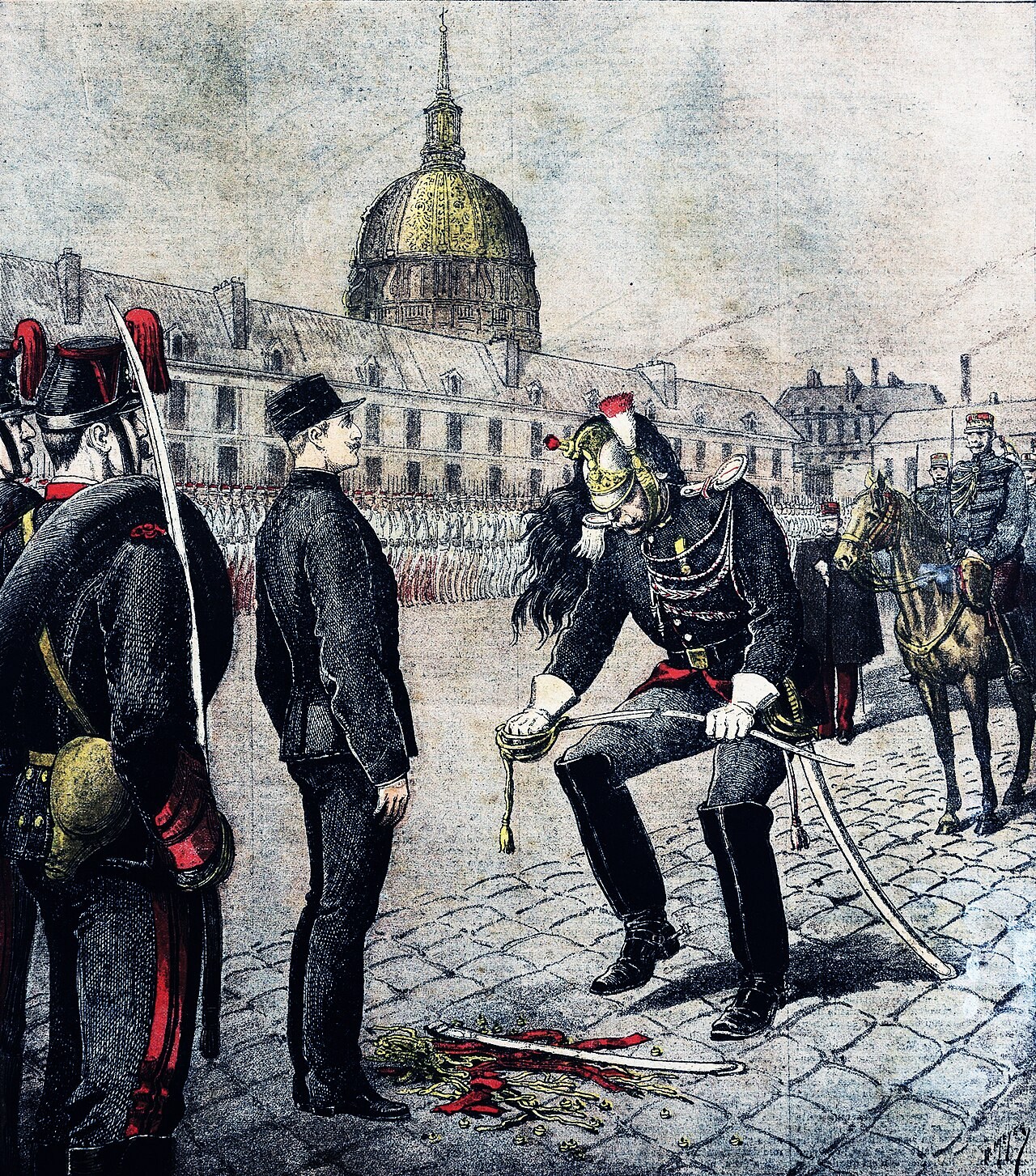
On 5 January 1895, Alfred Dreyfus stood before assembled troops at the École Militaire in Paris while his military insignia were removed and his sword was broken. The ceremony publicly enacted a verdict already delivered: the French army had found one of its officers guilty of treason. Dreyfus maintained that he was innocent.
The reversal of that verdict would take far longer than the ceremony. A conviction in 1894 led to imprisonment on Devil’s Island, a second conviction in 1899, and a presidential pardon that restored freedom without establishing innocence. Only in July 1906 did France’s highest court finally annul the remaining judgment. The distinction between being released and being cleared is essential to understanding the affair.
An officer becomes a suspect
Dreyfus was born in Mulhouse, Alsace, in 1859. His family moved to Paris after France’s defeat in the Franco-Prussian War and the German annexation of Alsace in 1871. He trained at the École Polytechnique and became an artillery officer, reaching the rank of captain in 1889. His career brought him into the General Staff headquarters in 1893. The United States Holocaust Memorial Museum’s biography traces this progression before the arrest that interrupted it.
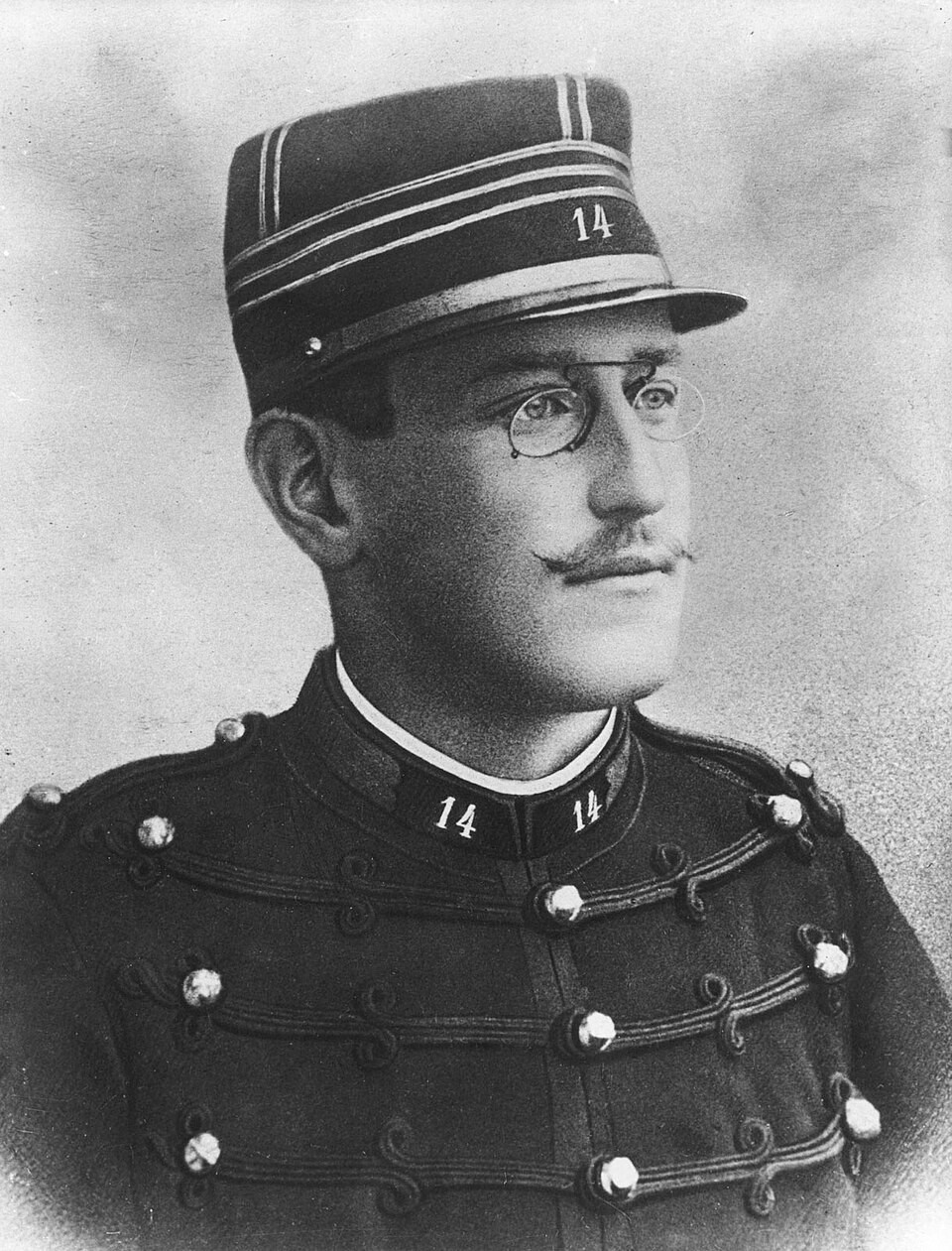
In September 1894, French counterintelligence obtained a torn, unsigned memorandum from the German embassy in Paris. Known as the bordereau, it referred to military documents being supplied to the German military attaché. There was a real espionage problem. Identifying its author required evidence, however, and the investigation instead concentrated on Dreyfus through disputed handwriting comparisons and antisemitic suspicion.
He was arrested on 15 October. The French Ministry of Justice’s reconstruction notes that the handwriting experts did not agree. It also identifies information in the memorandum that did not fit Dreyfus’s circumstances. These difficulties should have tested the accusation. They did not prevent it from becoming a prosecution.
France’s recent military defeat gave the army’s reputation particular political weight. Meanwhile, an antisemitic press portrayed Jewish officers as suspect members of the nation they served. As the Musée d’art et d’histoire du Judaïsme explains, prejudice and the desire to protect senior military authority became entangled in the case. The accusation against one officer acquired supporters who treated doubt about it as disloyalty.
Evidence the defence could not challenge
Dreyfus’s court-martial took place in December 1894. The central procedural abuse concerned material the defence could not examine. During the judges’ deliberations, a secret file was delivered to the tribunal without being disclosed to Dreyfus or his lawyer, Edgar Demange.
The National Assembly’s history of the affair identifies this clandestine communication as illegal. Secrecy gave the file an appearance of official authority while shielding its contents from the ordinary work of a defence: checking relevance, contesting interpretation, and exposing weaknesses.
On 22 December, the tribunal convicted Dreyfus. His public degradation followed in January, and he was subsequently transported to French Guiana. On Devil’s Island, imprisonment separated him from the people who might challenge what had happened. The distance also meant that the growing controversy in France could unfold while the man at its center remained largely excluded from it.
A family campaign and a second trail
Lucie Dreyfus and Alfred’s brother Mathieu refused to accept the verdict. Their efforts were vital before the cause attracted famous supporters. Mathieu gathered information and approached people who might help; the journalist Bernard Lazare became an early advocate. The campaign required correspondence, documents, introductions, and repeated attempts to persuade people who initially saw no reason to question the army.
The mahJ’s account of the Dreyfus family archive preserves that personal dimension through letters, prison records, and documents connected with Lucie’s efforts. These materials show that a celebrated public controversy rested on years of less visible family work.
A crucial development came from within military intelligence. In 1896, Georges Picquart encountered a message, known as the petit bleu, connecting the German military attaché with another French officer, Ferdinand Walsin Esterhazy. Comparing Esterhazy’s handwriting with the bordereau made the original case against Dreyfus still harder to defend.
The Bibliothèque nationale de France’s historical dossier follows Picquart’s attempt to alert his superiors and his subsequent removal from the intelligence service. He was sent away, eventually to Tunisia. Information nevertheless reached civilian supporters, including the lawyer Louis Leblois and Senator Auguste Scheurer-Kestner.
The significance was concrete. Doubting the first handwriting identification was one thing; identifying another officer linked to the German embassy was more damaging. It threatened to expose both the mistaken conviction and the conduct of the institution that had obtained it.
Why Zola invited prosecution
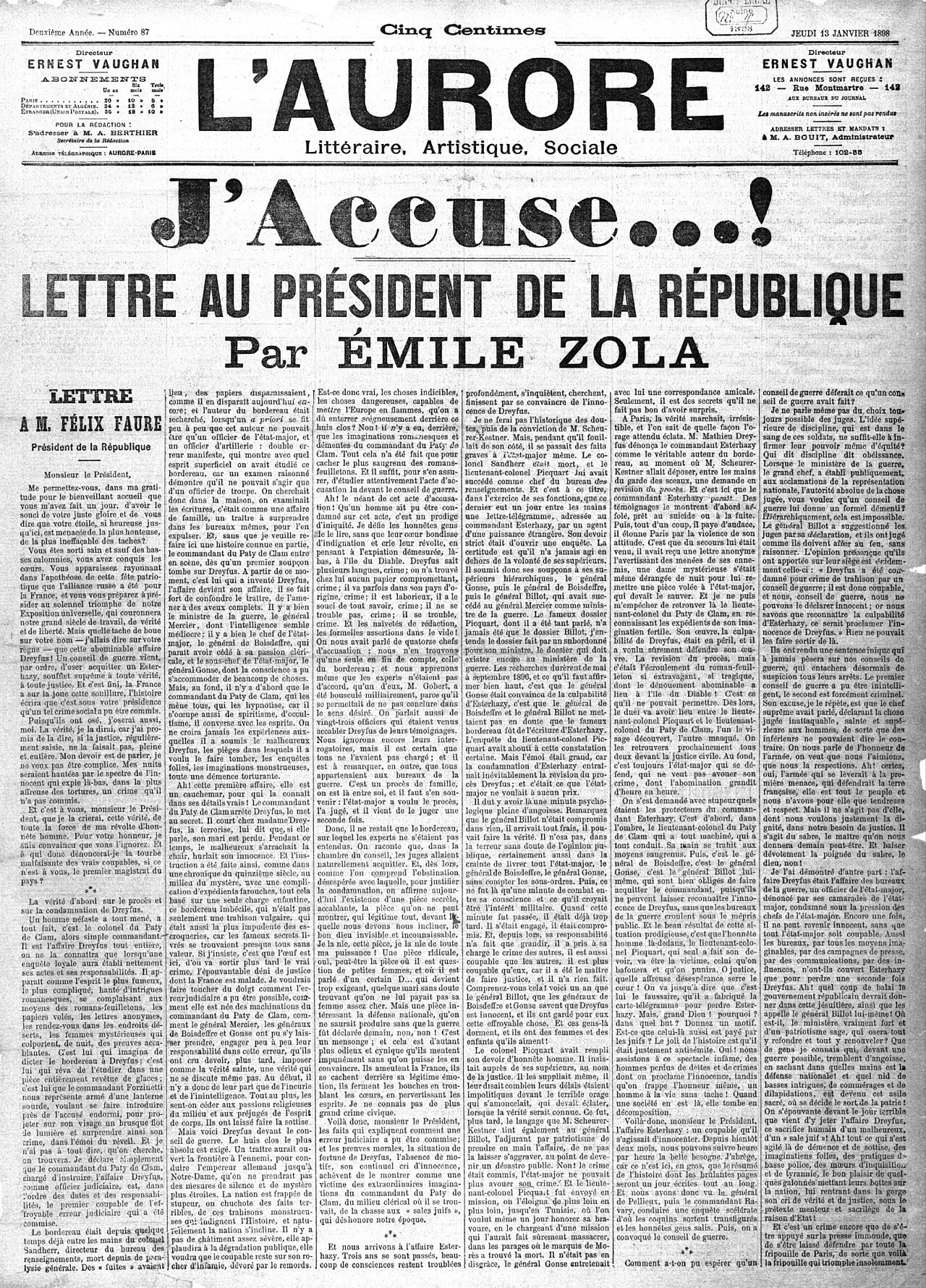
Esterhazy was tried and acquitted on 11 January 1898. Two days later, Émile Zola’s open letter to President Félix Faure appeared in L’Aurore under the headline “J’accuse…!” It named people and institutions responsible for the injustice and made the affair impossible to contain as an obscure military dispute.
The BnF’s account of the letter’s publication explains that Zola had begun writing before Esterhazy’s acquittal. The newspaper published a text originally intended as a pamphlet, and Georges Clemenceau supplied its famous headline. Zola’s intervention was both a moral denunciation and a calculated legal risk.
By exposing himself to a libel prosecution, he hoped to create a public proceeding in which the evidence could be discussed. His own trial in February 1898 provided such a forum, although it ended in conviction. Further proceedings followed, and he left for England in July.
Zola’s prominence amplified a campaign others had already sustained. It also intensified the conflict between those who demanded a review and those who insisted that revisiting the case would weaken the army. Publicity could make suppressed evidence harder to ignore, but it could also spread false allegations and antisemitic abuse. The press was a means of challenging the injustice and one of the forces that had helped create it.
A forgery and a contested review
The accusation suffered another blow in August 1898. Lieutenant-Colonel Hubert-Joseph Henry admitted fabricating a document used to support the case against Dreyfus. He died by suicide in custody the following day. His forgery belonged to the later effort to defend the conviction, an important chronological distinction from the evidence presented at the original trial.
The discovery helped open the way to judicial review. But the reviewing court itself became a target. The Court of Cassation’s history of Louis Loew and its criminal chamber describes the political pressure surrounding the inquiry. In 1899, legislation transferred the decision from the criminal chamber to the court’s combined chambers.
On 3 June 1899, the Court of Cassation annulled the 1894 judgment and sent Dreyfus for a new court-martial at Rennes. That decision broke the legal foundation of his original conviction. It also left another military tribunal to determine the case again.
Rennes and the limits of a pardon
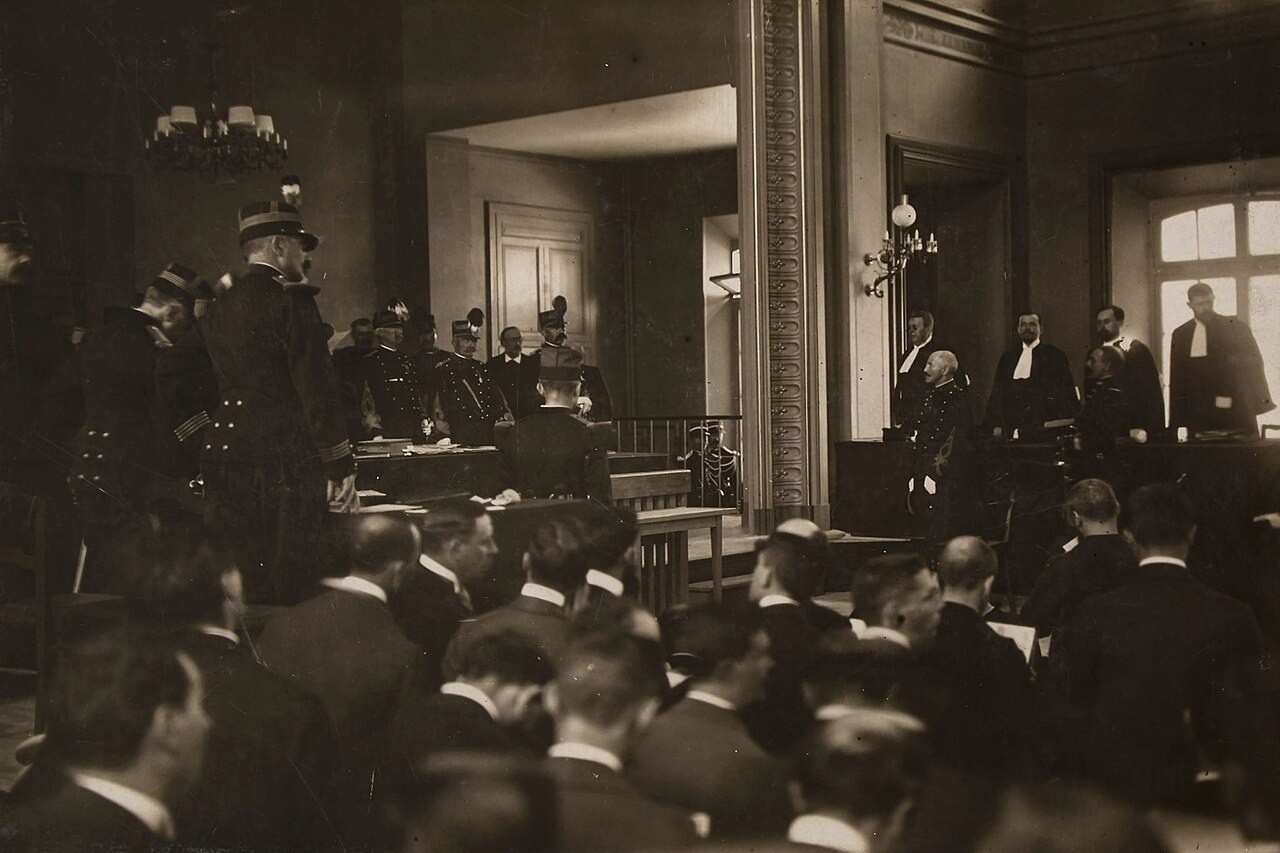
Dreyfus returned to France after more than four years on Devil’s Island. His new trial opened at Rennes on 7 August 1899. The city became a center of international reporting, police preparations, and competing political expectations. On 14 August, defence lawyer Fernand Labori was shot and wounded while on his way to court.
The Rennes municipal archives’ dossier assembles contemporary photographs, police reports, posters, correspondence, and local newspapers. It documents the practical security problem surrounding the trial as well as the legal proceedings. The evidence was being considered amid intense public pressure, rather than in the calm atmosphere that supporters of a retrial might have hoped for.
On 9 September, five of the seven judges again found Dreyfus guilty, this time with mitigating circumstances. The sentence was ten years. The finding left the essential accusation standing despite the collapse of the earlier case.
President Émile Loubet signed a pardon on 19 September. Dreyfus accepted release, but continued seeking exoneration. A pardon relieved the punishment; it did not mean the court had withdrawn its declaration of guilt. Supporters disagreed about accepting it, while Dreyfus faced the immediate consequences of years of imprisonment and damaged health.
What changed in 1906
A renewed investigation followed Jean Jaurès’s parliamentary intervention in 1903 and an inquiry within the War Ministry. The case returned to the Court of Cassation. This time the eventual decision would end the prosecution rather than send Dreyfus to face another military court.
On 12 July 1906, the combined chambers annulled the Rennes judgment without ordering a retrial. The Court of Cassation’s presentation of the original decision identifies the judgment as the decisive legal recognition that the accusation could no longer stand. The institution responsible was the civilian supreme court, not a new military tribunal.
The following day, legislation restored Dreyfus to the army. The National Assembly’s account of his rehabilitation records that legal restoration. He returned with the rank of major and received the Legion of Honour, although reinstatement could not return the years taken from his career and family life.
The affair’s outcome depended on a chain of actions: relatives who kept seeking evidence, an officer who followed a contradictory lead, journalists who challenged an official story, lawyers who pursued review, and judges who ultimately rejected the conviction. Their roles should not be collapsed into a single heroic intervention.
The twelve-year chronology also prevents an easy ending at the most famous headline. Zola published “J’accuse…!” in 1898; Dreyfus was still convicted again in 1899. Freedom arrived before legal vindication. The long interval between those outcomes shows how difficult correcting an injustice can become when an institution has made its own authority depend on refusing to acknowledge it.