
The Penguin Lessons (2025): Argentina Beyond the School Gates
The film begins with an English teacher and an unexpected companion. The history around them leads into Argentina’s dictatorship, the disappearance of its opponents and the long work of making evidence public.
A penguin is an unusually approachable way into the history of a military dictatorship. That is the tension at the centre of The Penguin Lessons, Peter Cattaneo’s 2025 film starring Steve Coogan. The official synopsis introduces an English teacher who arrives in Argentina in 1976 and rescues a penguin from an oil-covered beach. His expectations of an undemanding job at a school soon unravel.
The premise gives viewers a person to follow and a relationship to care about. It also leaves a large historical question waiting outside the classroom: what did it mean to live in Argentina in 1976, and what could disappear from view when someone tried to carry on with ordinary life?
This is a historical companion to the film, using its documented premise as a starting point. It does not attempt to verify every dramatised incident or to judge the performances. The illustrations are contextual photographs of wildlife, places and public remembrance, rather than film stills. Keeping those distinctions visible helps a small personal story open onto a much larger history without quietly taking its place.
In 2026, fifty years after the coup, the useful questions extend beyond whether a costume or vehicle looks right. Whose freedom of movement mattered? Who could ask officials for information? What happened when a government refused to acknowledge that it was holding someone? And how did families turn experiences that had been deliberately isolated into evidence that other people could see?
Those questions also change what we ask of a film centred on an outsider. An unfamiliar setting can give an audience a point of entry. It can also make local people seem to enter the story only when the visitor notices them. Reading around the film restores some of the history that no single character could carry.

What changed on 24 March 1976
The military coup of 24 March 1976 removed President Isabel Perón. Political violence had already entered everyday life before that date. The Montoneros and the ERP carried out guerrilla operations, while the right-wing Argentine Anti-Communist Alliance, usually called Triple A, targeted leftists and labour leaders. The historical overview accompanying the US Argentina Declassification Project describes both the violence and the unequal attention US agencies gave it: Cold War priorities encouraged them to concentrate on the armed left.
That chronology matters. Starting the story with an entirely peaceful society suddenly interrupted by soldiers would erase the preceding crisis. Starting with violence and presenting the coup as its unavoidable solution would reproduce the regime’s justification. A government’s duty to protect people does not give its agents a right to abduct them, torture them or remove them from legal protection.
The dictatorship lasted until 1983. The word “junta” describes the military leadership, but the workings of repression reached well beyond a few men at the top. Detention required buildings, vehicles, guards and chains of command. Secrecy required people who would withhold information, misdirect enquiries or decline to recognise what relatives were reporting.
Already in July 1976, the US embassy was reporting illegal detentions in the thousands, with torture and murder among the consequences. Ambassador Robert Hill had protested about abuses in May. By September, he was challenging the absence of punishment for those responsible. These are observations made during the dictatorship’s first year, preserved in the same declassification project’s account. They prevent the comforting assumption that the scale of the problem became visible only much later.
A school setting makes this particularly worth thinking about. Lessons, sport and staff routines can continue while the conditions around them change. Their continuation tells us that institutions have daily work to perform; it does not establish that the people inside them are equally protected. When following the film’s English teacher, keep asking who has access to shelter, connections or the possibility of leaving, and who does not.
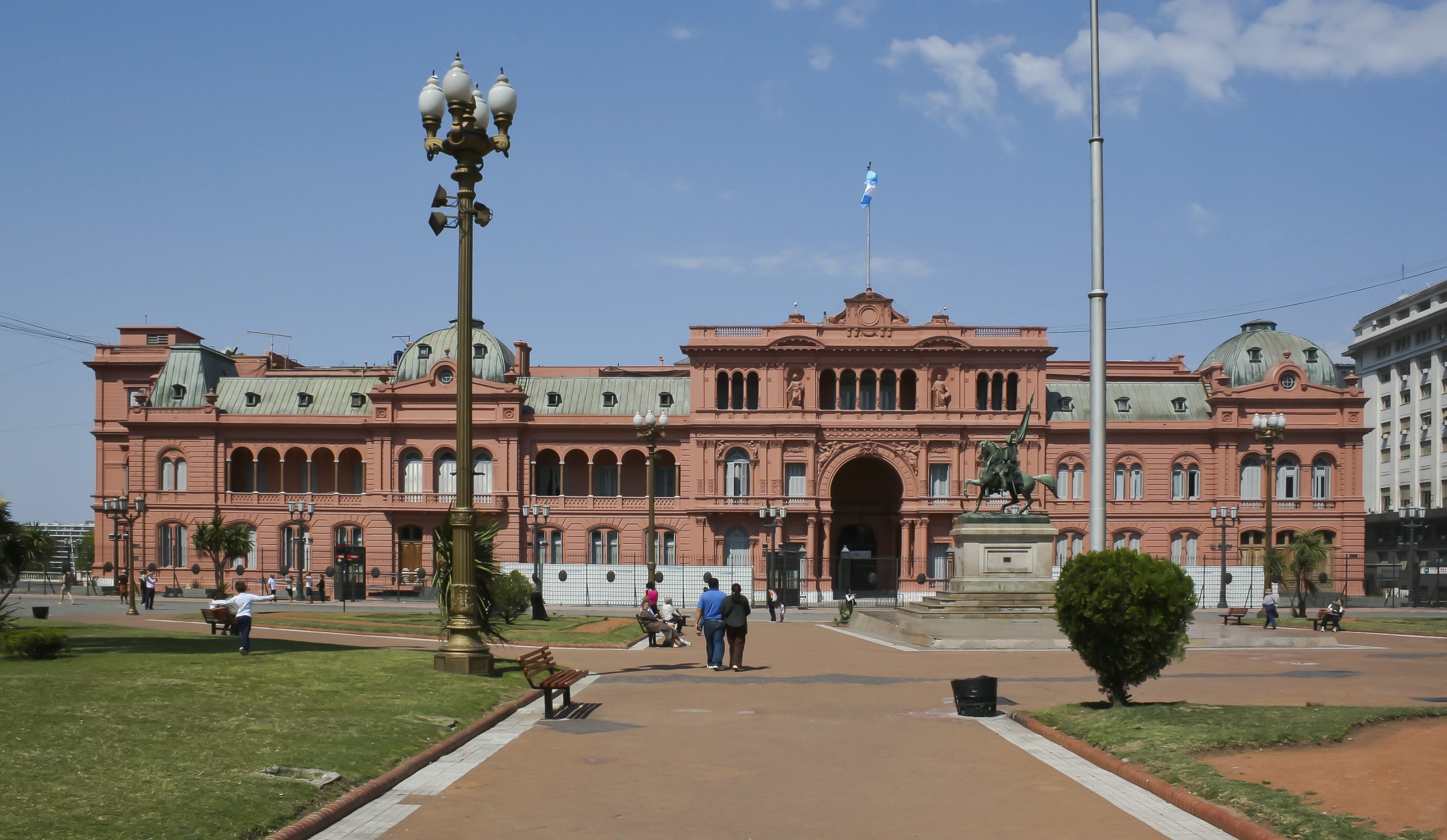
Disappearance made uncertainty part of the violence
The Spanish word desaparecidos can sound, in a loose English translation, as if people simply went missing. The records describe actions done to people. The Inter-American Commission on Human Rights’ 1980 report collected accounts of armed men taking victims from homes, workplaces and streets, followed by the absence of reliable information about their whereabouts. It emphasised the harm to relatives left unable to give legal or practical assistance.
That arrangement attacked a basic sequence on which legal protection depends: a person is detained, someone acknowledges custody, a lawyer can seek access, and a court can question the detention. Refusing to acknowledge custody breaks the sequence at its beginning. For the family, every enquiry can become another uncertain journey through offices, police stations and institutions that claim not to know.
We can see the physical infrastructure of this system at ESMA, the former Navy School of Mechanics in Buenos Aires. The Officers’ Quarters served as the navy’s principal clandestine detention centre during the dictatorship. UNESCO’s account of the site describes its role in the abduction, interrogation, torture and killing of opponents, including people involved in nonviolent opposition.
The existence of such a place changes the scale of the story. A disappearance might first be experienced as one empty chair or an unanswered message. Behind it could stand an organised network, concealed within institutions that still had names, addresses and official functions. Following that connection is how personal loss becomes a history of state action.
It also makes familiar shorthand worth handling carefully. “Dirty War” remains a widely used label for the period. Taken too casually, the language of war can make clandestine detention sound like an ordinary encounter between combatants. The commission’s conclusions instead identify violations of rights, including killings after detention and the fate of thousands of people who had disappeared. For the viewer, that is a firmer starting point than the regime’s vocabulary.

The families were already making a public history
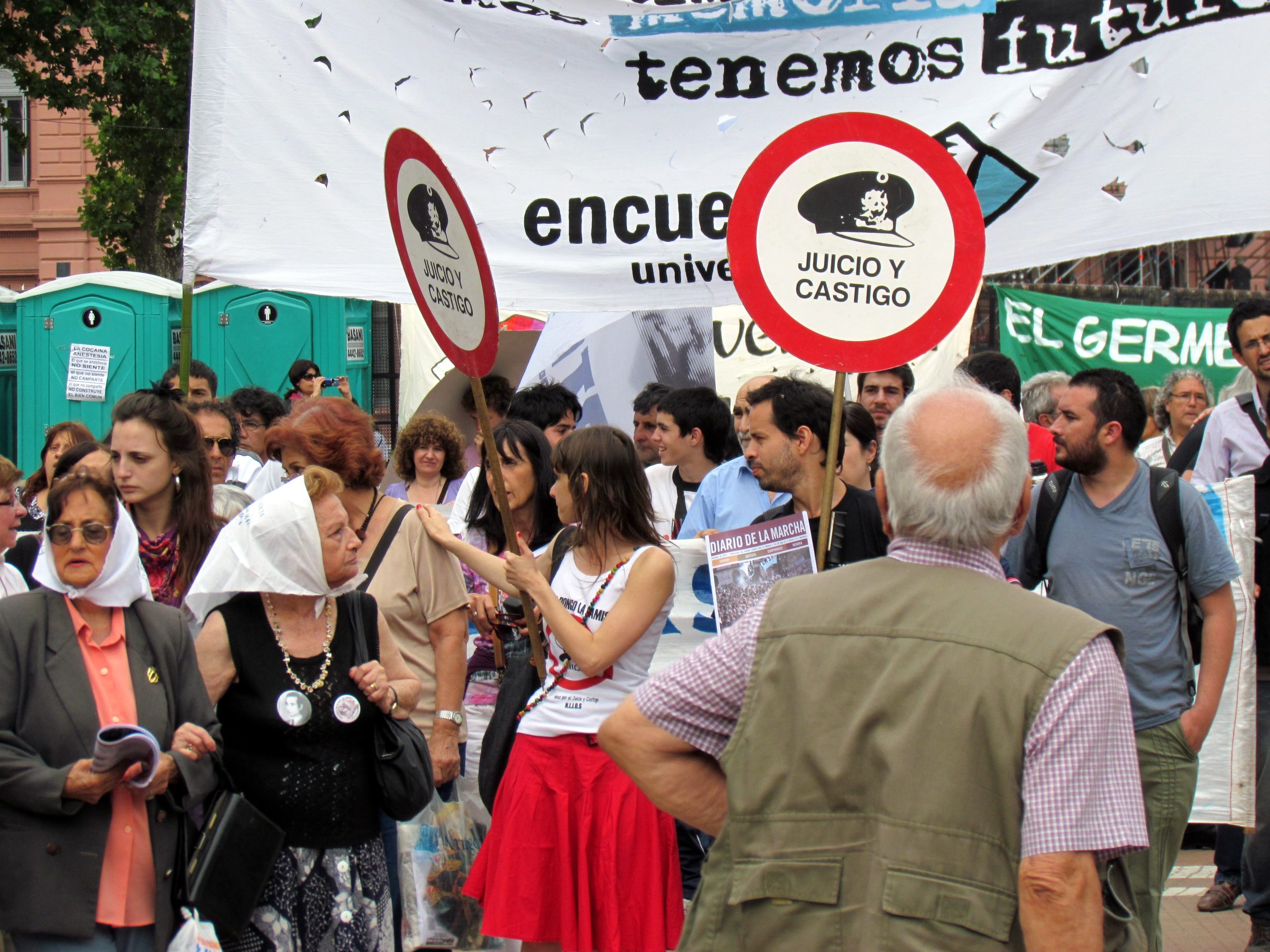
The history beyond an outsider’s viewpoint includes people who worked, at great risk, to prevent disappearance from becoming silence. The Mothers of Plaza de Mayo’s own historical account dates their first gathering in the square to 30 April 1977. Women who had been seeking answers separately began exchanging information and acting together. Their white headscarves and repeated rounds around the square became recognisable ways of making their demand visible.
The repetition was part of the work. An individual appeal could be ignored in an office. A recurring public presence made it harder to treat each missing person as an isolated private misfortune. The square brought together names, family relationships and questions that the authorities had tried to keep apart.
A related organisation, the Grandmothers of Plaza de Mayo, developed a particular search for children taken with their parents or born during captivity and then appropriated. In their account of that history, enquiries into institutions and adoptions grew alongside alliances with scientists, lawyers and others. Genetic methods became essential to identifying family relationships when a child’s parents were themselves missing.
This adds another timescale to the history. A child could grow up with a concealed identity long after the dictatorship ended. Finding a name, tracing a birth or establishing a biological relationship therefore involved consequences that extended across generations. The return of an elected government could not, by itself, resolve them.
For a viewer of The Penguin Lessons, these histories offer a useful adjustment of attention. Personal moral change is an accessible dramatic subject. Collective work has a different rhythm: the next meeting, the next document, the next witness willing to speak. Its importance often lies in continuing when an audience might expect the story to have finished.
Histovia’s account of the Dreyfus affair examines a very different struggle over evidence and official authority. The comparison is limited, but one question travels well: who has to do the work of challenging an institution’s preferred account, and what gives that challenge a chance of being heard?
Foreign governments could see, and still disagree about acting
International knowledge did not produce a single international response. The US record is useful partly because it preserves disagreement inside a government that possessed considerable influence. In 1976, Secretary of State Henry Kissinger expressed support for the Argentine leadership’s success while Hill was protesting abuses. The official historical overview places these conversations alongside one another, rather than turning US policy into a consistent moral position.
Under President Jimmy Carter, human rights acquired a more prominent place in the relationship. Congress also mattered. An amendment enacted in 1977 brought a halt to US military aid, training and arms sales to Argentina into effect in October 1978. Officials nevertheless argued about how to use pressure, whether to approve transfers before the prohibition began, and how to vote on loans through international financial institutions.
By early 1977, according to that overview, most US officials believed the left-wing guerrillas had been defeated. Continued detention, torture and disappearance were increasingly understood as acts by groups accountable to the Argentine state, unrelated to a continuing military threat from the armed left. The disputes inside Washington therefore concerned choices about applying pressure as well as competing assessments of conditions.
The picture changed again under Ronald Reagan, whose administration sought closer relations and favoured private discussions over public criticism. Seen across these shifts, “the outside world” becomes an inadequate character in the story. Different people knew different things, had different priorities and chose different uses for the influence they possessed.
For the history of an individual bystander, the lesson is one of scale. Knowing something and deciding what to do about it are separate steps. An embassy, a school administrator and a visiting teacher do not possess the same powers. We learn more by asking what each could see and what each could plausibly do than by distributing one general verdict over everyone.
That approach also helps when watching other historical films. As in Histovia’s companion to Nuremberg (2025), a relationship at the centre of the drama can be followed alongside the institutions surrounding it. The two scales answer different questions.
What remains after the film ends
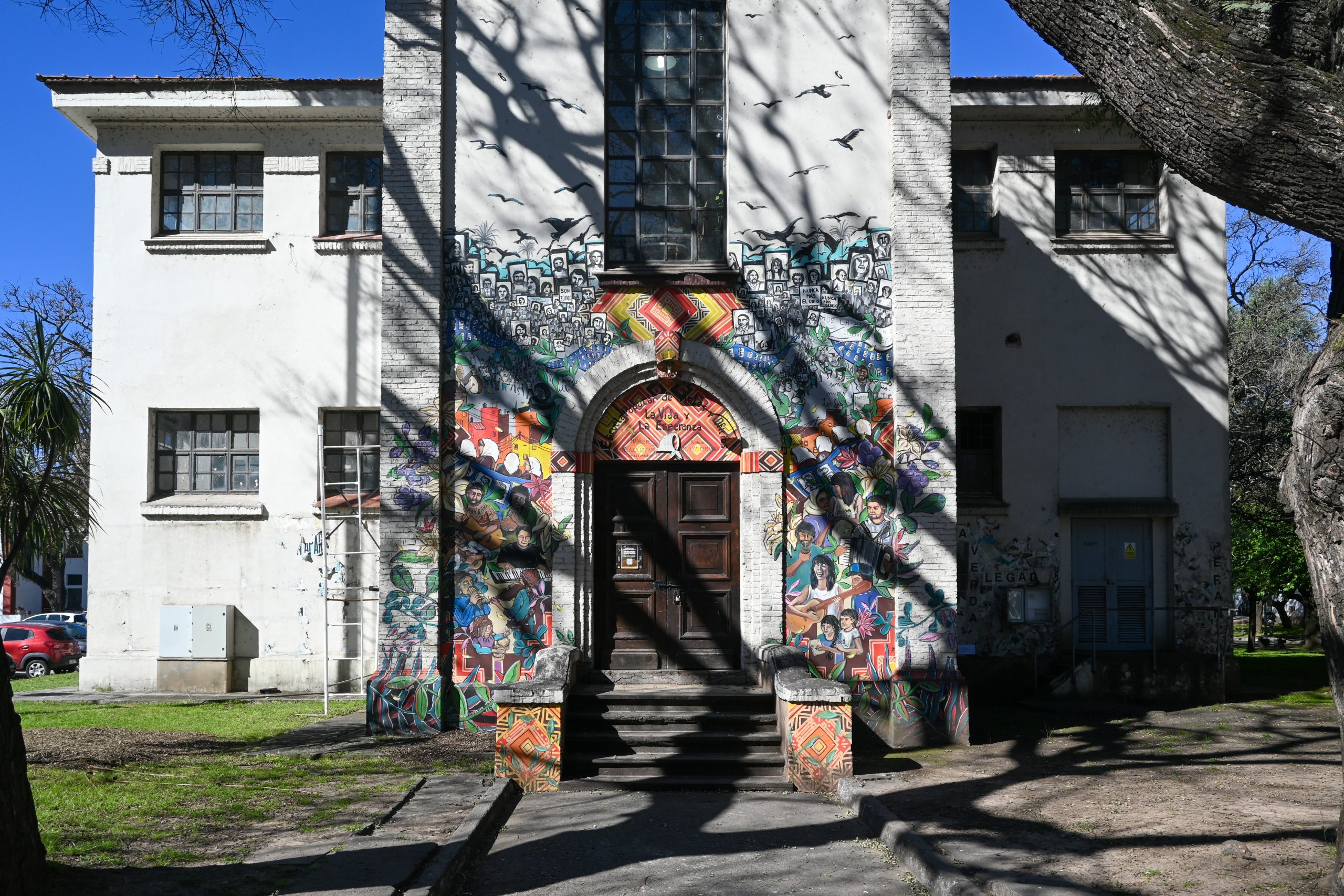
The building at ESMA now carries another responsibility: preserving evidence. Its significance lies partly in the relationship between surviving spaces, testimony and judicial investigations. UNESCO inscribed the museum and site on the World Heritage List in 2023. A visitor looking at a corridor today is therefore seeing both a place where crimes occurred and a place shaped by later work to make those crimes intelligible.
The documentary record has also continued to change. A US declassification project conducted from 2016 to 2019 brought together records from sixteen departments and agencies and released tens of thousands of pages. The National Archives describes the work of locating, reviewing and making those records available in its account of the project’s completion.
More pages do not automatically produce a complete history. A diplomatic report records what its writer knew, suspected or wanted a superior to hear. A witness remembers from a particular position. A building preserves some traces while losing others. Reading them together is what allows a historian to test a claim without pretending that every gap can be closed.
That is a productive way to leave The Penguin Lessons: with curiosity about the people and records that extend beyond its central relationship. Ask which parts of the story come from the film’s advertised true-life premise, which require independent corroboration, and whose experience deserves a source of its own. A historical companion should make those next steps easier.
Find the film: Sony Pictures’ official page for The Penguin Lessons provides the synopsis and links to authorised viewing options. Availability varies by country and service. For the historical follow-up, begin with the commission’s report, the families’ own accounts and the ESMA documentation linked above.