
Amritsar, 1919: The Massacre and the Argument over What an Empire Could Do
The evidence did not end the dispute. At Jallianwala Bagh, the question was not only what General Dyer had ordered, but whether imperial authority could turn a civilian crowd into an example.
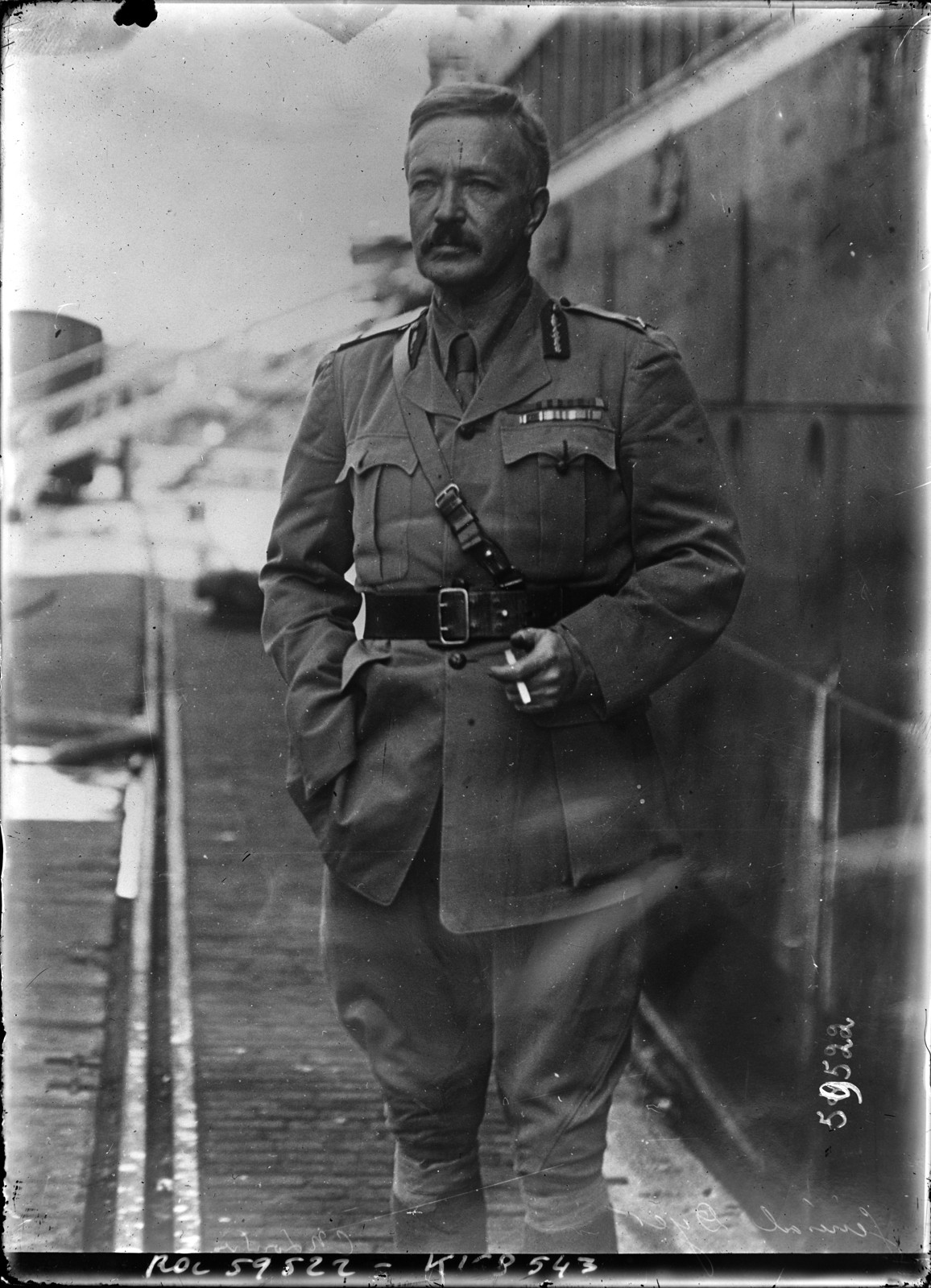
The official inquiry into the Amritsar massacre did not produce one agreed explanation. Its majority condemned crucial parts of Brigadier-General Reginald Dyer’s conduct. Its Indian members went further, rejecting arguments that made the shooting seem a legitimate operation carried too far. Much of the evidence was shared. What divided the investigators was what that evidence allowed a government to do.
This distinction is easy to lose when Jallianwala Bagh becomes a familiar sequence of numbers: 13 April 1919, roughly ten minutes of firing, 1,650 rounds, hundreds dead. Those facts establish the scale of the event. They do not explain why the officer responsible regarded shooting a crowd as a means of governing a province, or why his conduct could still attract defenders after the details became public.
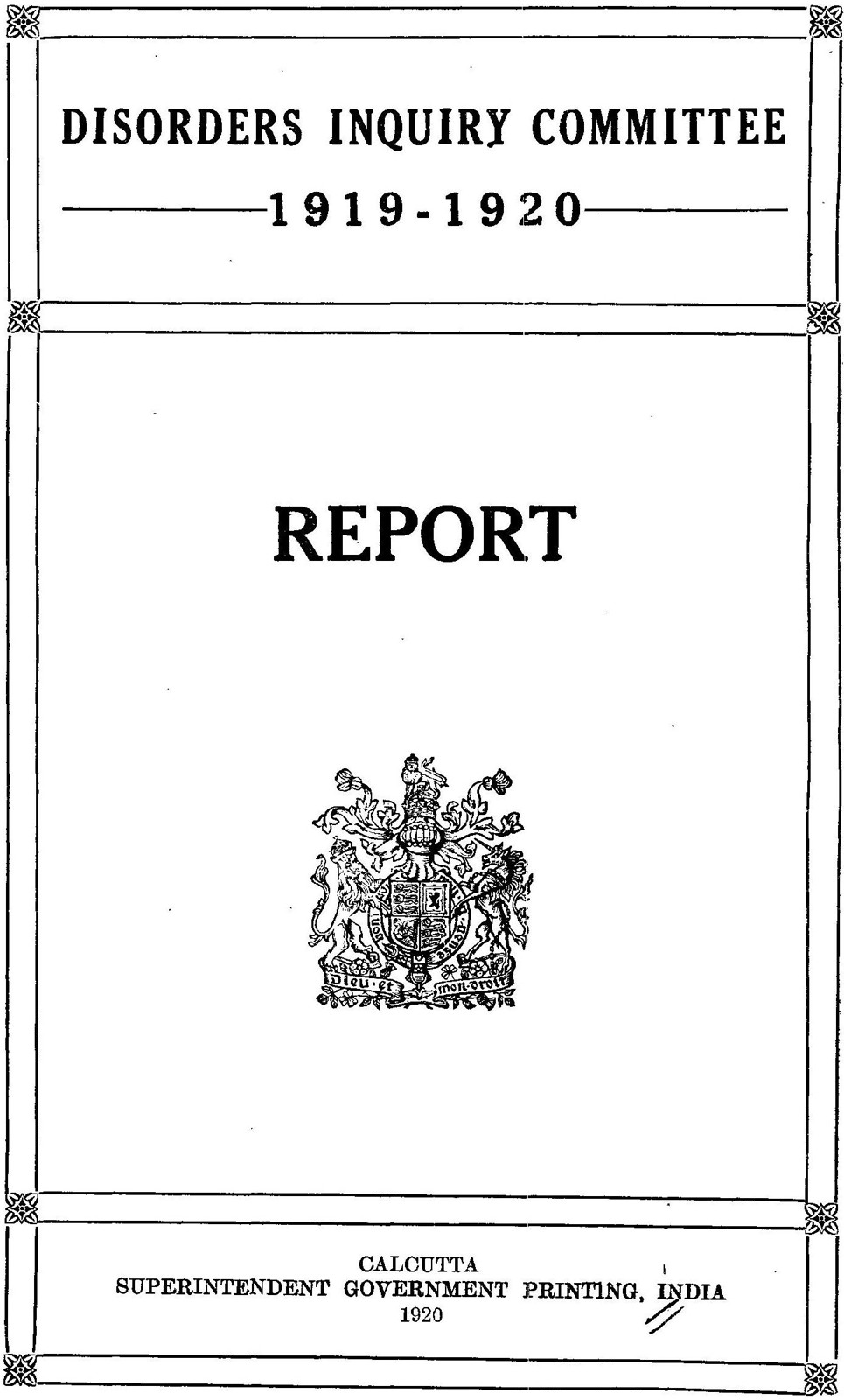
The Disorders Inquiry Committee report, published in 1920, preserves the argument inside the machinery of colonial government. It should be read neither as an impartial view from nowhere nor as a single, seamless official verdict. Its disagreements reveal the distance between restoring order and punishing a population.
A city in conflict before the gathering
Amritsar’s crisis developed amid opposition to the Rowlatt legislation and the continuation of exceptional powers after the First World War. Protest brought questions of political representation into collision with an administration trained to interpret unrest as a problem of security. The inquiry subsequently disputed how far the disturbances amounted to rebellion. That was not merely a choice of vocabulary: rebellion could be invoked to justify a different scale of force.
On 10 April, the authorities removed two local political leaders, Saifuddin Kitchlew and Satyapal, from the city. Crowds gathered after news of their deportation spread. Troops fired during confrontations; later violence included attacks on banks and communications, the killing of Europeans, and an assault on the missionary Marcella Sherwood. These events were real and serious. They do not establish that the people assembled three days later were the same people, or shared responsibility for those acts.
The minority report insisted on that separation. Its authors—Chimanlal Harilal Setalvad, Jagat Narayan and Sahibzada Sultan Ahmed Khan—did not deny the earlier disorder. They challenged the inference that the city’s inhabitants could therefore be treated collectively as rebels. Their criticism began with a question of identification: who had done what, and against whom was force now being used?
A prohibition was not the same as a warning
On the morning of 13 April, Dyer had a proclamation announced restricting processions and gatherings. But its circulation was incomplete. The minority report examined the route along which it had been proclaimed and the places it had missed. Visitors arriving for Baisakhi and the associated fair could not simply be assumed to know a military order announced elsewhere.
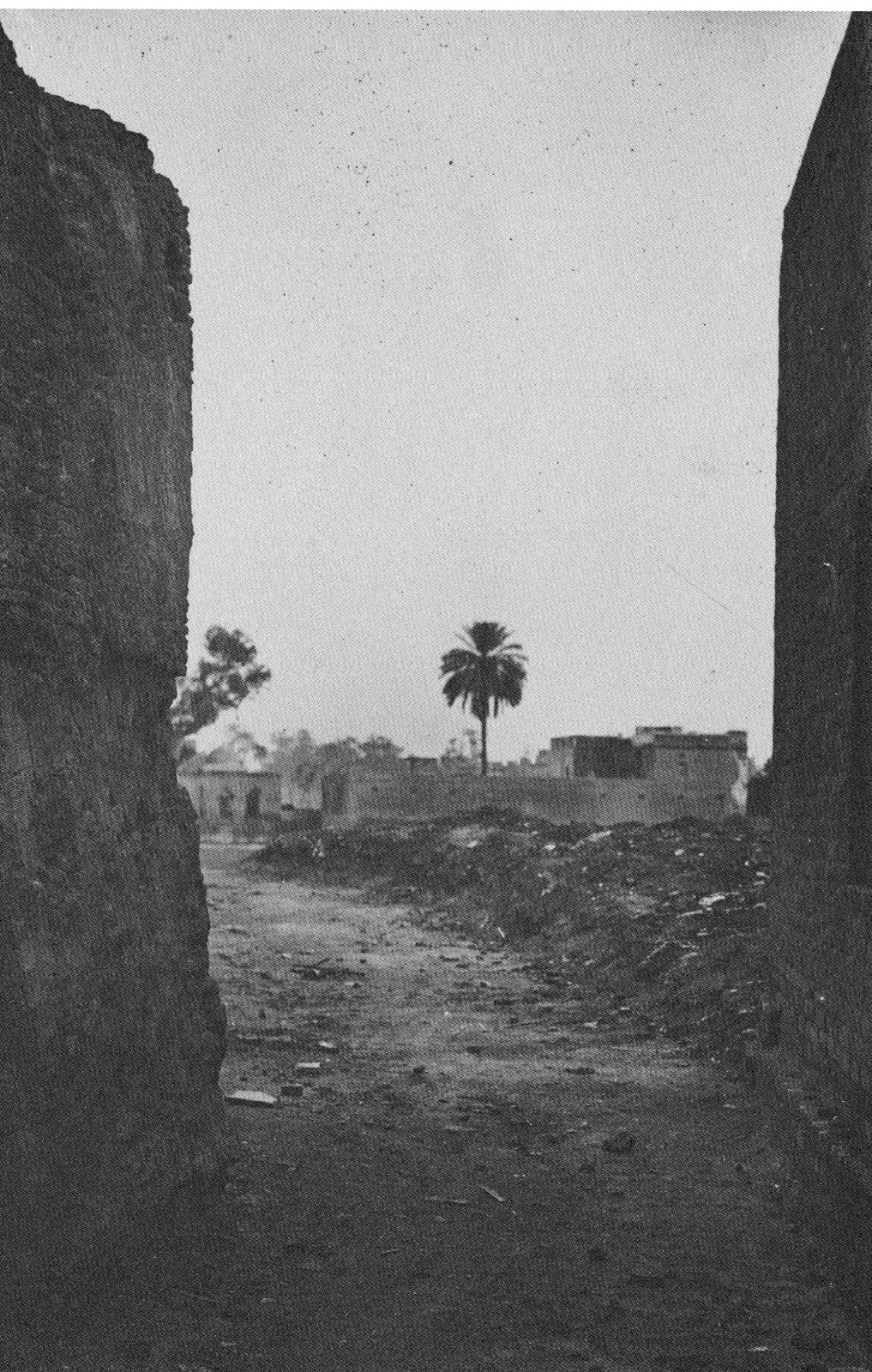
Later that day thousands gathered at Jallianwala Bagh. The name suggests a garden, but the inquiry described an irregular open space, largely enclosed by buildings and walls, with restricted ways out. A political meeting was taking place. The presence of a meeting does not tell us that every person there was an organiser, a committed demonstrator or even a resident of Amritsar.
Dyer learned of the proposed gathering before he went to the Bagh. He took troops and two armoured cars, but the entrance was too narrow for the vehicles. They remained outside. This matters because accounts sometimes turn the massacre into machine-gun fire: the troops inside used rifles. The distinction does not diminish the violence; it makes its execution accurately visible.
Fire directed at people trying to leave
The majority report described fifty riflemen, Gurkhas and Baluchis, positioned near the entrance. Dyer gave no warning to disperse before ordering fire. Shooting continued for approximately ten minutes, with 1,650 rounds expended. The crowd began trying to get away as soon as the firing started.
The inquiry found no evidence that the crowd possessed firearms. Its evidence about sticks did not transform the gathering into an armed force exchanging fire with the soldiers. Dyer’s own answers became central to the investigation because they exposed an intention wider than ending one meeting. He wanted an effect beyond the people immediately in front of him.
The minority report noted his admission that he directed firing towards places where the crowd was thickest. It also recorded his acknowledgement that people were trying to escape. Restricted exits therefore did not merely make an otherwise ordinary dispersal operation unusually dangerous. The behaviour of those fleeing was part of the information available while the firing continued.
The official evidence describes an asymmetry: soldiers able to keep firing, civilians attempting to leave, and a commander measuring success by a punitive effect rather than by the minimum action necessary to clear the ground.
What the number 379 does—and does not—mean
The figure of 379 deaths became the best-known official total. The majority report described a later investigation drawing on government work and the Allahabad Seva Samiti. It did not describe a complete count made immediately after the troops withdrew. The report also acknowledged the difficulty of establishing how many people had been wounded.
That history of collection belongs beside the number. An official total is not automatically an exhaustive total, particularly when visitors were present and the authorities did not immediately establish what had happened to every casualty. Equally, uncertainty does not license a writer to replace the documented figure with an unsupported precise alternative. The defensible conclusion is that hundreds were killed, the official inquiry reported approximately 379 deaths, and the full toll remains disputed.
The minority members criticised the delay and inadequacy of the effort to ascertain casualties. Their objection concerned more than statistical competence. A government that had used overwhelming force had not promptly made the people injured by it the object of an equally determined investigation.
Two reports, different boundaries of legitimate force
The majority concluded that Dyer should have warned the crowd before firing and should not have continued once it was dispersing. Yet its reasoning left room for the view that some firing might have become necessary. It accepted his belief that he was discharging a difficult duty while judging his conception of that duty mistaken.
The minority’s criticism cut deeper. Dyer had time to consider his course, had not faced an attack by the gathering, and had admitted that dispersal without shooting might have been possible. The minority rejected an argument that converted the disorders of 10 April into a continuing military necessity on 13 April. On its reading, the firing was not simply excessive in duration; its justification failed at the outset.
The disagreement also extended to what followed. Dyer withdrew without arranging immediate assistance for the wounded. The majority did not regard unnecessary suffering from lack of treatment as proved on the evidence before it. That is a limited evidentiary conclusion, not proof that adequate care had been supplied. The minority criticised the absence of arrangements and challenged the suggestion that the wounded lay outside the commander’s responsibility.
Chronology is especially important here. Martial law was formally proclaimed in Amritsar and Lahore on 15 April, after the massacre. Dyer’s earlier restrictions and military presence must not be confused with that later proclamation. To describe the 13 April shooting simply as enforcement of an already proclaimed martial-law regime imports a legal framework backwards into the event.
From a military decision to a doctrine of punishment
The inquiry investigated more than the Bagh. Orders requiring Indians to crawl along the street where Sherwood had been assaulted, public punishments and other coercive measures raised the question of whether humiliation itself had become an administrative instrument. The people affected were not necessarily those convicted of an offence.
In the House of Commons debate on 8 July 1920, Secretary of State for India Edwin Montagu made that distinction explicit. He attacked punishment intended to teach an entire province a lesson and described racially imposed humiliation as incompatible with the government’s stated political direction. His position remained imperial: he was arguing over how Britain should retain authority in India, not conceding a general right to independence.
Condemnation did not mean agreement about empire
Dyer’s army career ended, but that outcome did not represent a consensus in Britain. The Commons debate contained forceful criticism and equally determined defence. The House of Lords debate later that month exposed further opposition to his treatment. Defenders presented him as a soldier abandoned after saving the imperial position; opponents treated his reasoning as a threat to the legitimacy that position claimed.
The National Army Museum’s collection record for Dyer’s statement documents both his retirement in July 1920 and the public campaign supporting him. His loss of employment should not be confused with a criminal conviction. The inquiry and parliamentary controversy were mechanisms of official and political judgement, not a trial ending in a sentence for the deaths.
Nor should Reginald Dyer be confused with Michael O’Dwyer, the lieutenant-governor of Punjab. The inquiry’s account of official responses shows that Dyer’s action did not exist in an administrative vacuum. The distinction between the two men matters precisely because responsibility cannot be understood by collapsing an officer, his superiors and the wider government into one name.
Historian Kim A. Wagner argues that the massacre is better understood through the longer history of exemplary colonial violence than as an inexplicable eruption by one individual or a simple consequence of imperial decline after 1918. That interpretation shifts attention to what demonstrative punishment was supposed to accomplish. It does not remove Dyer’s agency; it asks why his claim to have created a wider deterrent made sense to supporters as well as to himself.
Tagore rejects an honour
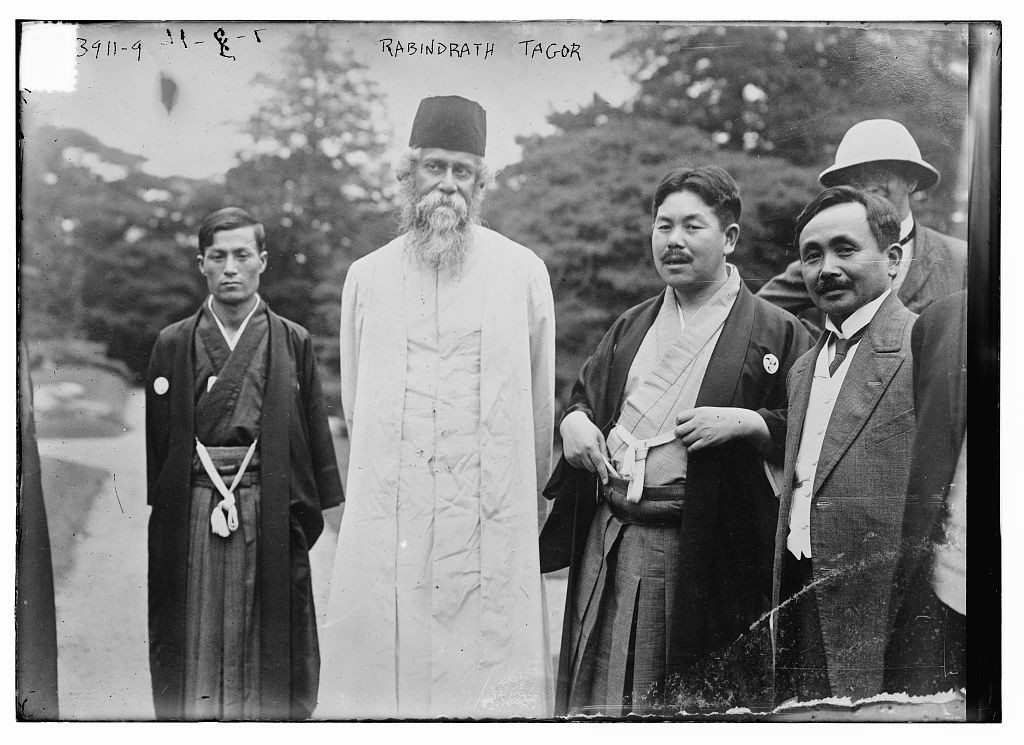
Rabindranath Tagore chose a different arena in which to answer the violence. In 1919 he asked to relinquish the knighthood conferred on him four years earlier. His letter, discussed in the Tagore archive presentation at Iniva, treated an imperial distinction as incompatible with solidarity with people subjected to humiliation.
There is a revealing administrative complication. Asked about the matter in Parliament on 31 July 1919, Montagu confirmed that Tagore had written and received a reply, but said the title had not been revoked. Tagore’s renunciation was a political and ethical act even though the official machinery had not formally cancelled the honour. To say simply that Britain withdrew his knighthood would reverse the direction of his protest.
The record does not close the question
The importance of the Hunter inquiry lies partly in what its members could not agree upon. A report that criticises excess may still preserve the assumptions that made the use of force possible. A minority opinion can accept many of the same events while refusing the connection between earlier disorder and later collective punishment. Reading both exposes the work performed by words such as necessity, rebellion and order.
Jallianwala Bagh also shows why careful counting and careful chronology are not distractions from moral judgement. Rifles were used, not machine guns inside the enclosure. The formal martial-law proclamation followed the massacre. The official death figure came from a delayed inquiry, not an immediate comprehensive count. Each correction restores a part of the actual process by which power was exercised and then explained.
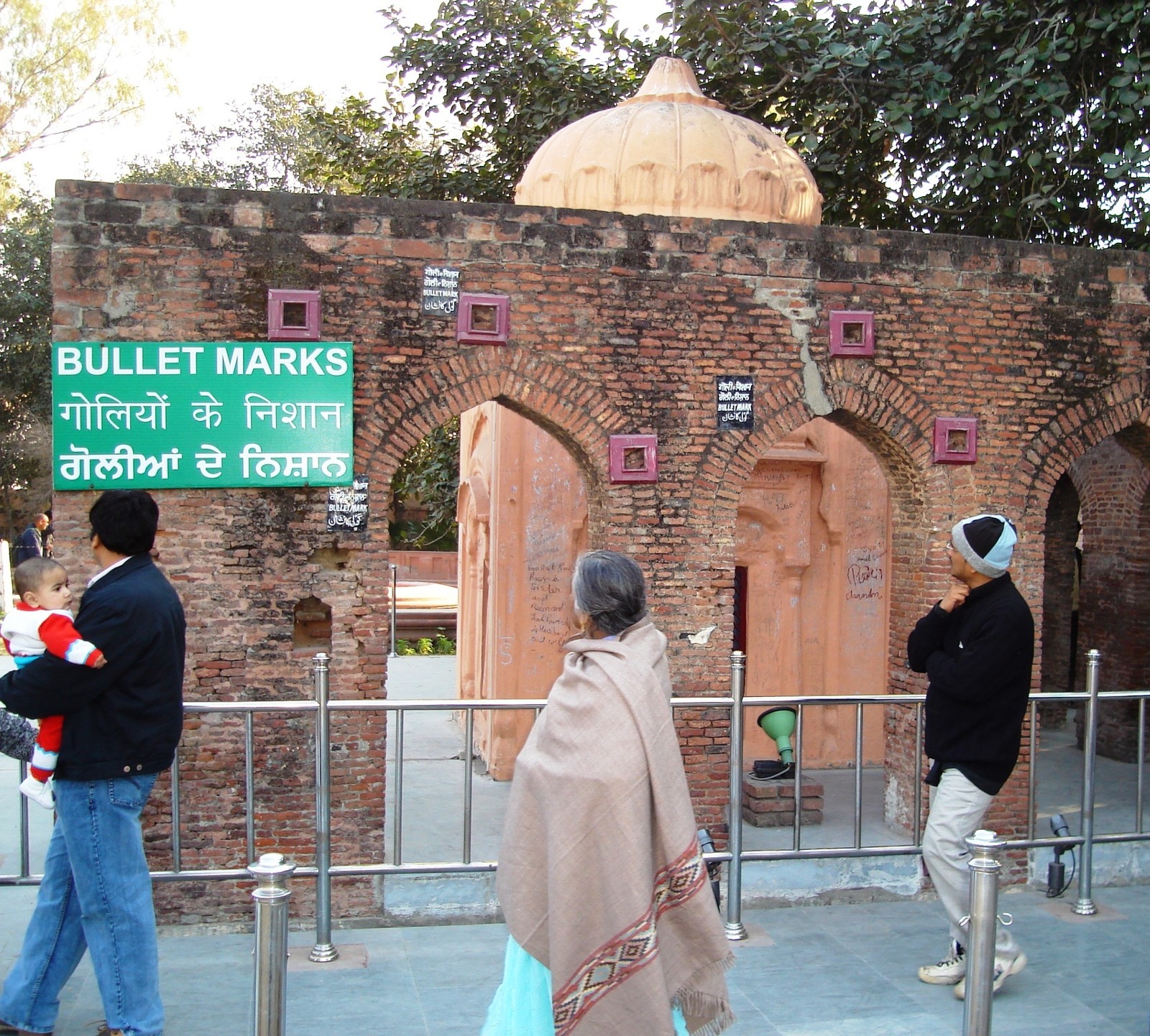
The preserved walls and the inquiry’s printed pages offer different kinds of evidence. One locates violence in a physical place; the other records how officials argued over its meaning. Neither allows the dead to be reduced to an illustration in a debate about a general’s reputation. The unresolved issue running through the documents is the status of the people themselves: subjects whose lives required individual protection, or a population against whom authority could demonstrate its strength.