
Kilwa Kisiwani: Coral Walls, Copper Coins and an Indian Ocean City
Kilwa’s mosques and palace reveal a prosperous Swahili port. Its coins, houses and living heritage show why the city’s history reaches beyond spectacular overseas trade.
The ruins of Kilwa Kisiwani face an ocean that once connected the city to ports far beyond the East African coast. Coral walls, vaulted prayer halls and an imposing palace are the most visible remains. Small copper coins offer another route into its history, bringing attention away from monumental wealth and toward the ways value moved through a town.
Kilwa was a Swahili city, built and sustained on the African coast through relationships extending inland and overseas. Its history is not explained by treating Africa as a place where foreign traders arrived and created urban life. The important question is how a coastal community made those connections its own.
A port between several worlds
Kilwa Kisiwani lies off the coast of present-day Tanzania. Its best-known period of prosperity falls in the thirteenth and fourteenth centuries, within a much longer history of occupation. UNESCO’s account of Kilwa and nearby Songo Mnara places the two settlements within the growth of Swahili culture and Indian Ocean commerce.
Gold and ivory travelled from inland networks toward the coast. Imported ceramics, textiles and other goods connected coastal consumers with production elsewhere. The movement was not a simple exchange between two endpoints. Producers, carriers, brokers, shipowners and buyers participated at different stages, and a pot or a piece of metal could change hands repeatedly.
The Metropolitan Museum’s study of the two towns, produced with World Monuments Fund, emphasizes Kilwa’s position linking inland sources with Indian Ocean ports. The surviving wealth was thus the outcome of relationships and transactions, not something generated by a harbor’s location alone.
An imported bowl establishes a connection to a manufacturing tradition or region. It does not, by itself, identify the nationality of the person who carried it to Kilwa. Keeping those questions separate helps avoid turning every foreign object into proof of a foreign population governing the city.
A mosque built in stages
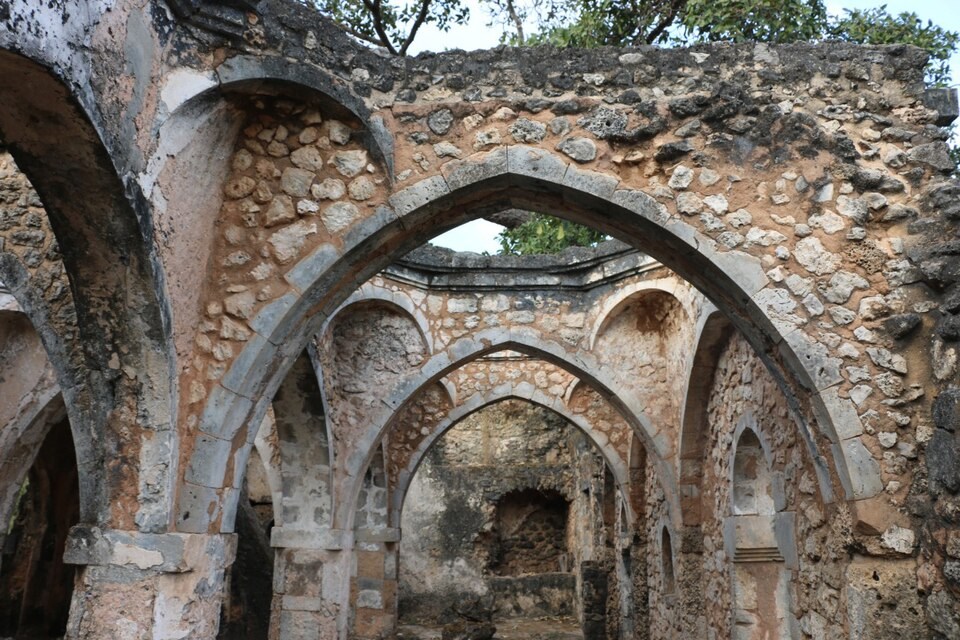
Kilwa’s Great Mosque developed over several building campaigns. Its surviving spaces should not be imagined as a single design completed on one occasion. Earlier construction and later enlargement produced a substantial complex of columns, vaults and domes.
These forms required knowledge of materials as well as religious patronage. Coral stone and lime mortar made the coastal environment part of the building process. Cutting, transporting, arranging and maintaining masonry were skilled activities. Monumental architecture records the availability of resources, but also the repeated work that converted those resources into usable space.
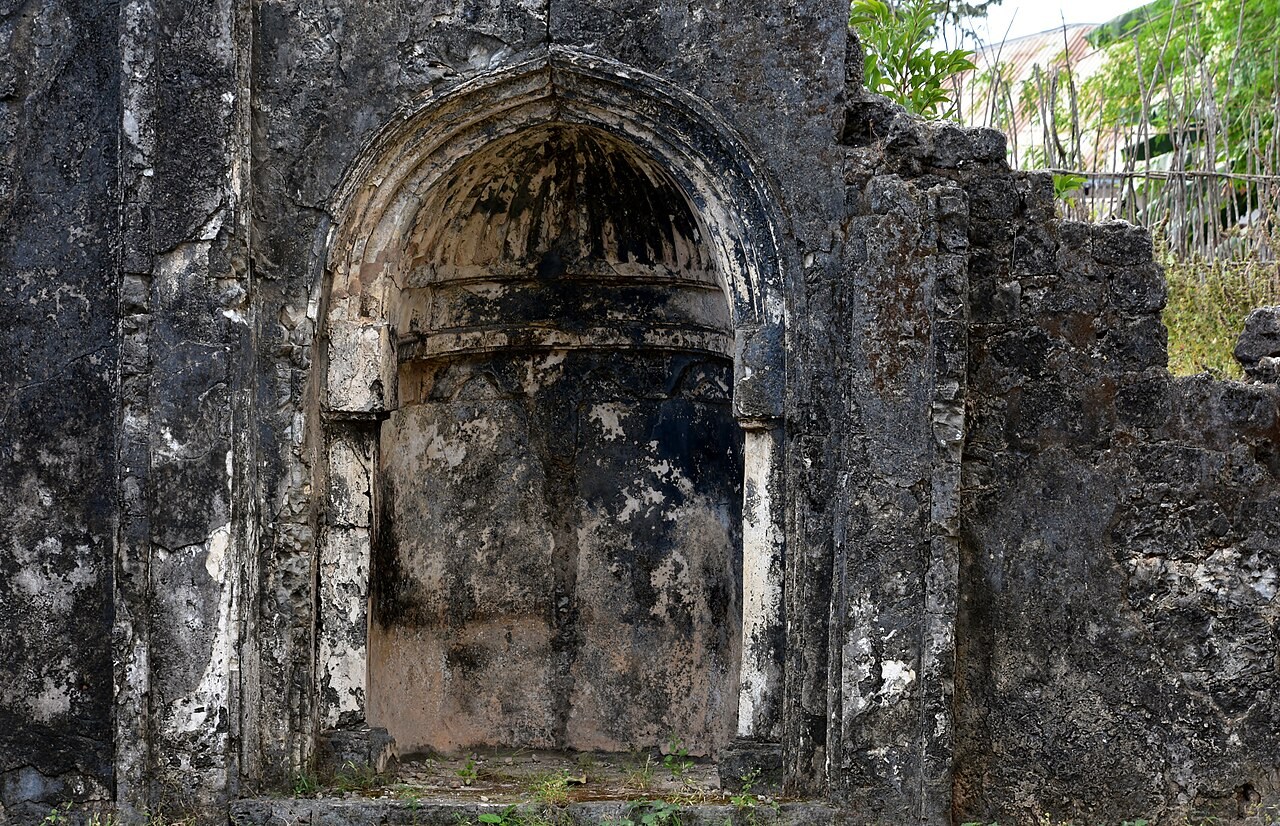
The mosque’s place in an Islamic world did not make it less African. Religious practice could link Kilwa to distant communities while being embedded in local households, patronage and building traditions. A coast connected to Arabia and India was still a coast with its own histories.
Husuni Kubwa and the visibility of power
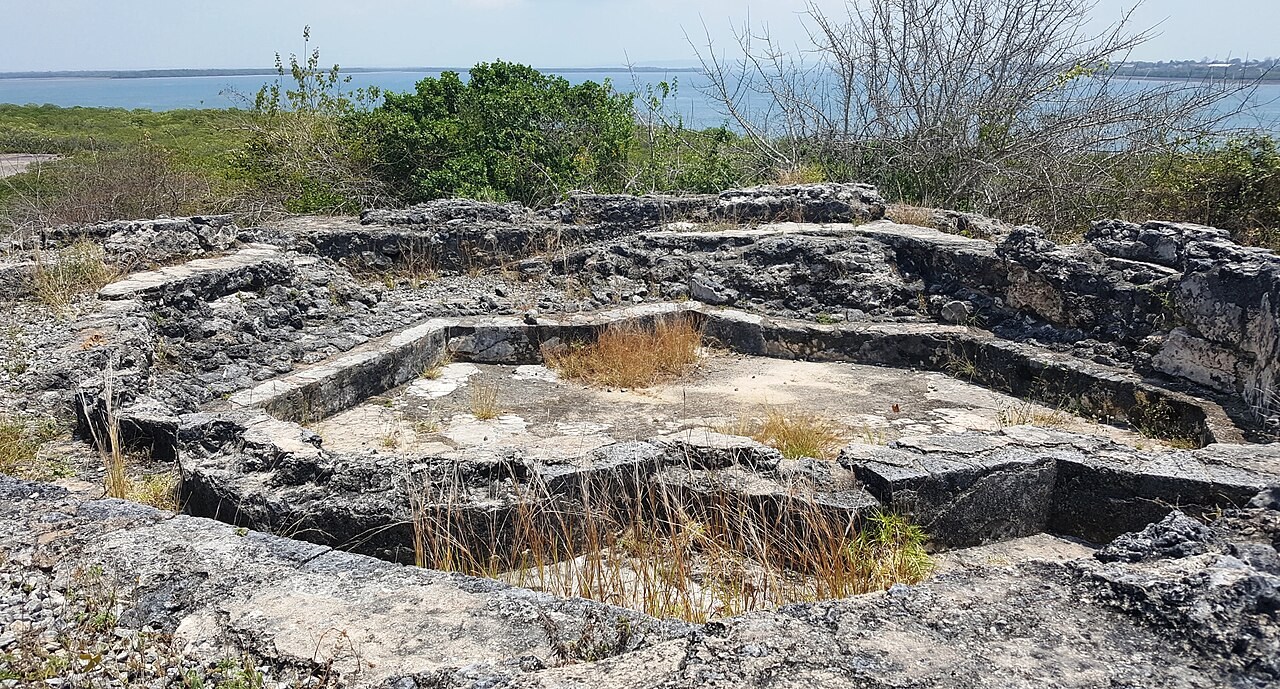
The palace known as Husuni Kubwa belongs to the early fourteenth century. Its extensive plan and surviving octagonal pool make elite expenditure unusually visible. Rooms, passages and courtyards arranged access to the complex as well as sheltering the people and activities within it.
A palace is not a transparent diagram of an entire economy. Its scale can demonstrate the capacity to concentrate labor and resources without telling us how prosperity was distributed across every household. Nor should an empty room today be confidently assigned a precise daily scene unless excavation or documentation supports that function.
The buildings invite a useful change of scale. From a distance, they communicate the authority of a wealthy port. Close inspection makes the contribution of masons, laborers and suppliers harder to ignore. Their names generally do not survive in the same way as rulers’ names, yet the fabric of the complex depends on their work.
The town beyond its monuments
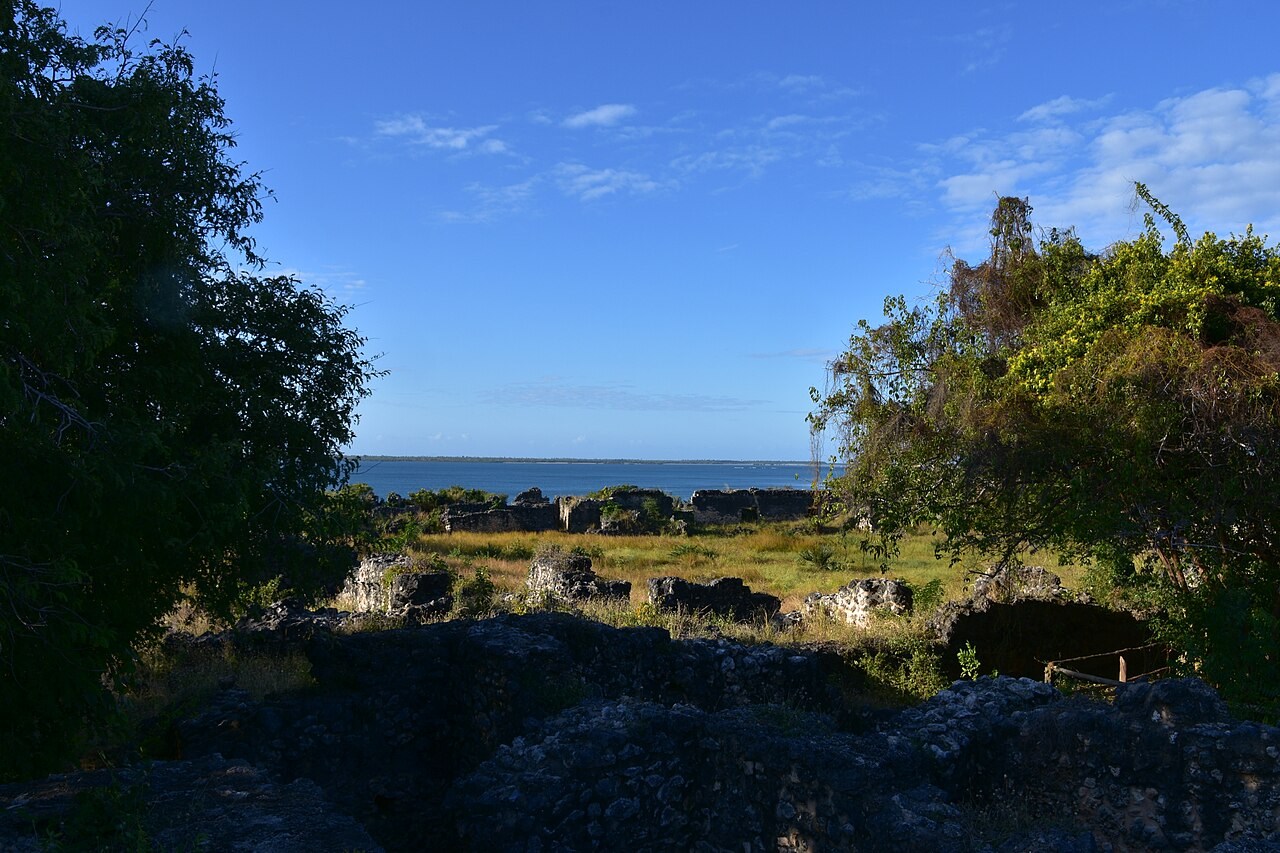
Nearby Songo Mnara offers an important comparison, rather than a second name for the same settlement. Excavations there have examined the relationship between stone houses, open spaces and productive activity. Stephanie Wynne-Jones’s study of the public life of the Swahili stonehouse argues that houses participated in a wider social and economic world. Their significance cannot be confined to the private lives of the households residing inside them.
That approach helps resist a familiar distortion. Stone survives prominently and attracts attention; less durable buildings can disappear from view. The standing town may therefore give disproportionate emphasis to particular kinds of architecture. What is easiest to photograph is not necessarily a representative sample of what once existed.
Research at Songo Mnara also warns against making a simple equation between building material and social status. Henriette Rødland and colleagues’ study of slavery and archaeological visibility considers how unequal relationships might be investigated without assuming that every less monumental dwelling automatically belonged to the poorest or to enslaved residents. Their analysis uses the distribution of terracotta, shell and glass beads as tentative evidence of unequal or servile relationships. Such patterns require interpretation; they do not directly identify the legal status of an individual resident.
The lesson is methodological as well as historical. Recovering people with little representation in surviving texts requires better questions about spaces and objects. It does not justify confidently naming the status of every unrecorded resident.
What a local coin could do
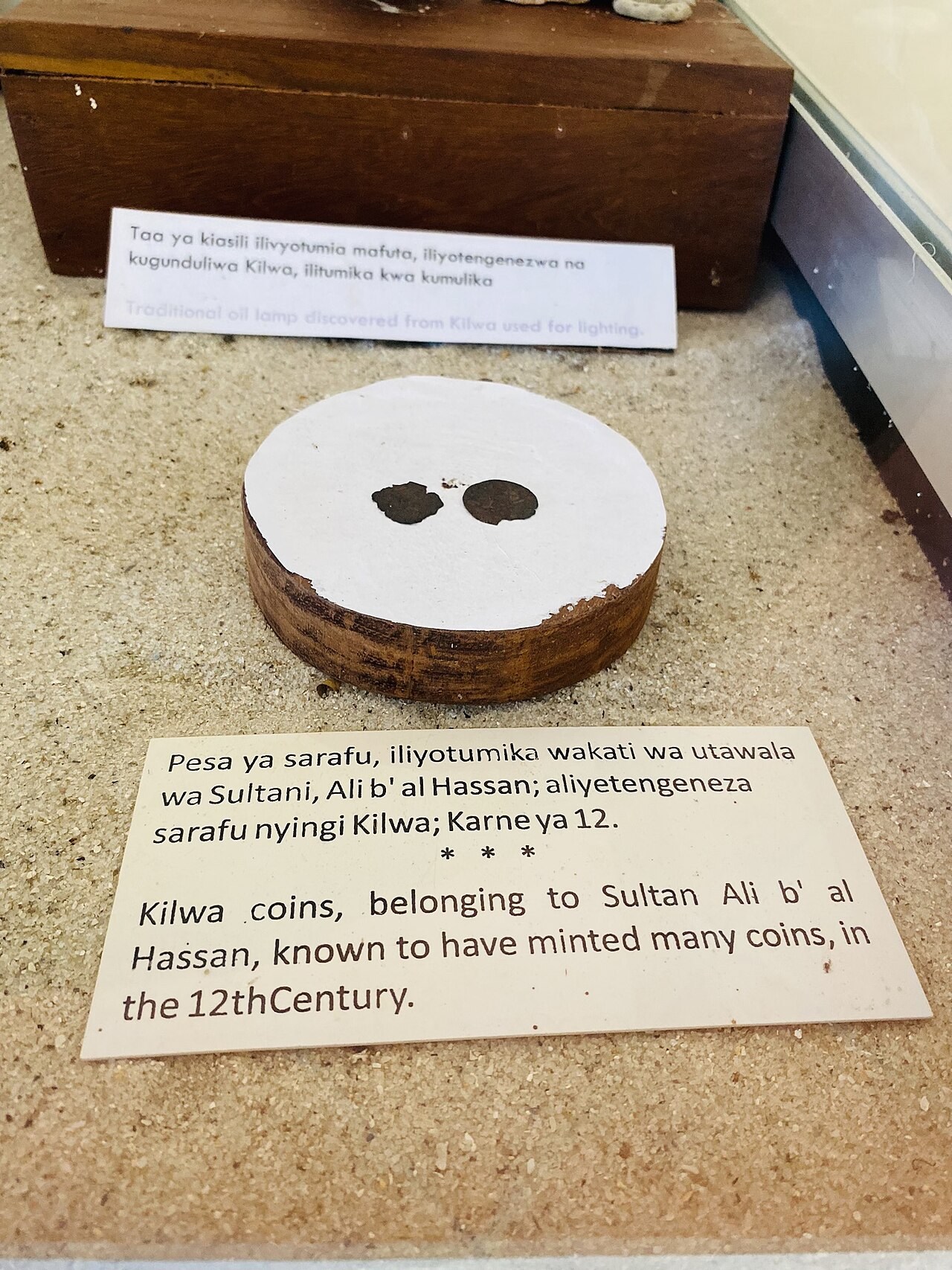
Kilwa issued its own currency, including copper coins bearing rulers’ names and inscriptions. Their presence makes monetary authority visible, but the meaning of a coin depends on where and how it was used.
In “Coins in Context,” Stephanie Wynne-Jones and Jeffrey Fleisher examine Kilwa-type coins excavated at Songo Mnara. Their approach treats value as something created through use and social practice, not merely as a metal’s abstract purchasing power.
A coin found within a domestic setting can answer different questions from a coin without a recorded findspot. Context helps establish how an object related to a building, an activity or other materials. An inscription can help identify a ruler or issue; it does not guarantee the date when that particular coin was lost or deposited. Currency can remain in circulation after the authority that issued it has changed.
The small scale of these objects is valuable precisely because the palace encourages such a large-scale view. Kilwa’s oceanic connections and its local exchanges belonged to the same economy, but they were not identical processes. A history concerned only with spectacular cargoes would overlook much of the work by which a town sustained itself.
A changing city, not a single moment of disappearance
Portuguese intervention in the sixteenth century altered trade and political relationships. It belongs to Kilwa’s history of coercion and competition, but it should not become an abrupt ending after which the island had no inhabitants or economic significance.
The Met’s account describes continued occupation and a later eighteenth-century role in the ivory and slave trades. Buildings from these later periods add further layers to the landscape. A monument’s current appearance may therefore contain evidence from very different phases of coastal history. The fortunes of Kilwa and Songo Mnara also need not have followed identical paths.
The community-oriented Kilwa heritage guide makes another important point: the site is still a home, and its mosques and graveyards retain religious significance for residents. Calling it a lost city can erase those ongoing relationships.
Kilwa’s ruins are evidence of maritime prosperity, but their richest story is more specific. Local builders transformed coastal materials into monumental spaces. Households and public places supported exchange. Coins carried authority into everyday transactions. Connections across the ocean mattered because people on this African shore organized, negotiated and lived through them.
Read the related book
For another perspective on the medieval Indian Ocean’s commercial networks, explore Paper Across the Sea, Histovia’s book on merchants and households in the Cairo Geniza.