
Strasbourg, 1518: The Dancing Plague and the Stories Added Later
An extraordinary outbreak left a real paper trail. Reading it carefully changes the familiar story of a woman, a dancing crowd and a city supposedly dancing to death.
A woman begins to dance. Others join her. The authorities hire musicians, the crowd grows, and people dance themselves to death. Strasbourg’s outbreak of 1518 is often told in that compact form, with a named heroine and a startling daily death toll. It is a remarkably efficient story. It is also much tidier than the evidence.
There was an unusual outbreak of dancing in Strasbourg in the summer of 1518. The city, now in France, was then a free imperial city within the Holy Roman Empire. Its authorities dealt with people whose behaviour they considered an illness, and surviving records show that they intervened. We do not need to choose between accepting every dramatic detail and dismissing the entire episode.
Start with three pieces of municipal business
The Musées de Strasbourg’s 2018 exhibition dossier identifies records from the event itself: deliberations and instructions dated 23 July; a letter from the magistrates to Bishop Wilhelm on 25 July; and a regulation signed by the city’s secretary, Sebastian Brant, on 2 August. The last prohibited public dancing. The dossier supplies archive references, including III 200/15 and 1 MR3, folio 72 recto.
That may sound less exciting than a street full of collapsing dancers, but it gives us something solid. Officials were discussing a problem, communicating about it and trying to control public behaviour. Those documents bring the outbreak within the ordinary workings of a city government.
They also have limits. A regulation records what officials wanted people to do. It cannot tell us whether everyone obeyed, how every participant felt, or the exact number of people present in a square. An official description of an illness preserves a contemporary judgment, rather than a modern clinical examination.
Keep that difference in mind throughout the story. The closer a claim comes to describing someone’s private thoughts, a precise diagnosis or a total number of deaths, the more supporting evidence it needs.
Frau Troffea is a problem of attribution
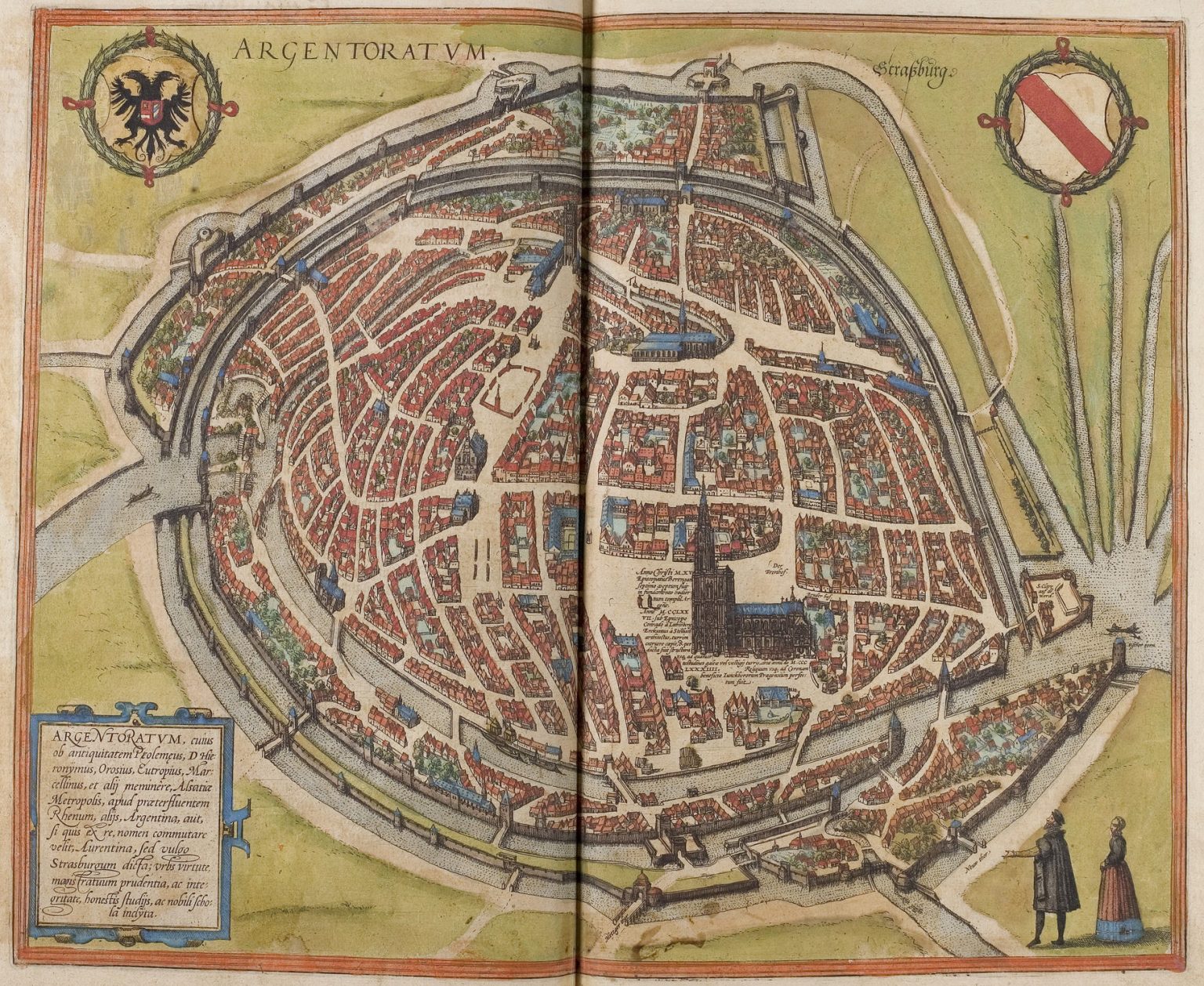
The famous first dancer is usually called Frau Troffea. The name appears in a discussion by Paracelsus, the physician and religious thinker who lived from 1493 to 1541. Reading his account directly is revealing, because it is doing something quite different from reporting a patient’s symptoms.
In his discussion of St Vitus’s dance, available in a 1914 French translation, Paracelsus describes a woman who resisted her husband. He alleges that she pretended to be ill and danced because her husband disliked dancing. Other women, he says, adopted the same behaviour. From that alleged beginning, he develops an argument about belief, imitation and the power of an idea to produce illness.
He gives the woman a motive that fits his explanation. That does not make the motive a recovered fact. The passage offers no dated interview, no named observer verifying the domestic dispute and no secure identification of a Strasbourg household in July 1518.
Paracelsus then moves far beyond dancing. He discusses possession, religious conviction and the effects he attributes to strongly held beliefs. His account combines medicine with moral and theological argument. It is valuable evidence for how he thought about people, bodies and faith. Its usefulness does not depend on treating his opening anecdote as an eyewitness report.
The gendered judgment matters too. A wife who refuses obedience becomes the starting point for a theory of collective illness. Repeating the anecdote as straightforward biography imports that judgment along with the memorable name. Replacing it with an equally detailed story about a desperate, starving woman would not repair the problem unless the new details had evidence of their own.
Paracelsus’s text does not tell us where or when Troffea lived. It supplies an explanatory anecdote, not a dated observation of Strasbourg in 1518. That distinction matters whenever he is presented as an eyewitness.
A careful account can therefore say that an unnamed woman is associated with the outbreak’s beginning. It should explain that “Frau Troffea” comes through a later, disputed identification. Readers lose a little narrative certainty and gain a clearer view of the source.
Medical advice, public order and a saint’s shrine
The authorities’ response is often presented as a spectacular blunder: let the dancers dance, provide music, then discover that the cure spreads the disease. Later chronicles describe the provision of spaces and musical accompaniment. The architect Daniel Specklin is among the writers behind this part of the familiar account. His narrative belongs to the later sixteenth century, rather than to a minute-by-minute record made during the outbreak.
Ned Pennant-Rea’s Public Domain Review essay helpfully identifies several of the textual links behind these details, including Specklin and subsequent chronicles. Read its notes alongside the vivid narrative. They show how an apparently continuous scene can be assembled from sources written at different times.
The 2 August restriction also deserves attention on its own terms. The regulation distinguished public dancing from some private celebrations, with limits on musical instruments. Such rules tell us that officials were trying to manage gatherings and sensory triggers, as they understood them. They do not prove that the authorities had experimentally established why the illness spread.
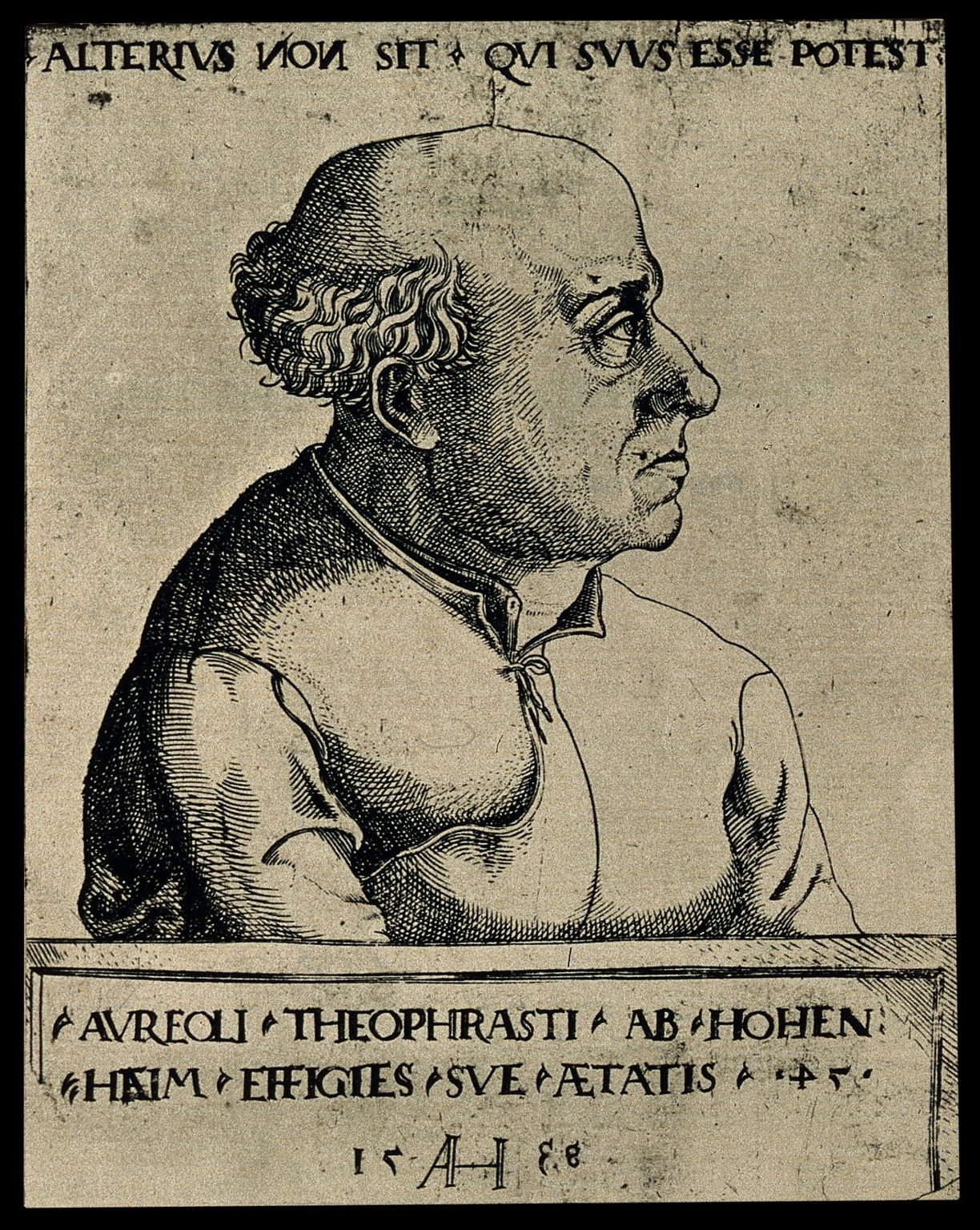
Later narratives also describe journeys to the shrine of St Vitus, known in French as Saint Guy, near Saverne. Pennant-Rea traces these accounts through the older literature. A saint associated with convulsions and uncontrolled movement offered a recognised place to seek relief.
From a modern viewpoint, consulting physicians and arranging pilgrimage can look like incompatible policies. Early sixteenth-century explanations of health did not divide the physical and spiritual world along our boundaries. Heat, the heavens, bodily processes, moral conduct and divine action could all matter within an account of illness.
Lynneth J. Miller’s study of interpretations of the outbreak emphasises precisely this coexistence of changing medical ideas and older religious understandings. It is more useful to ask how those explanations worked together than to divide every participant into a rational doctor or a superstitious believer.
There is a practical history here as well. Supervising distressed people, arranging journeys and limiting public entertainment all required decisions about responsibility. The dancers’ bodies became a problem for families, civic officials and religious institutions at the same time.
How many people danced, and how many died?
Numbers are where the story most often outruns its documents. Accounts range from dozens of participants to hundreds. Modern retellings frequently present four hundred dancers and as many as fifteen deaths a day as though these figures came from a single reliable register.
Élisabeth Clementz’s review of John Waller’s book makes a crucial distinction. She identifies contemporary accounts describing roughly fifty people and points out that the contemporary sources she examines do not report deaths from the outbreak. The fatality claims rest on later testimony. This does not establish that nobody died. It does mean that a confident death toll cannot be supplied from those early records.
The distinction between an estimate and a count is particularly important. If a chronicler writes “hundreds,” that may express the scale of an alarming event without implying that someone counted each participant. Repetition in ten modern articles does not turn one old estimate into ten independent observations.
A possible explanation still needs a dependable description
John Waller has argued that severe distress, shared expectations and belief in St Vitus could have helped produce a collective episode of involuntary behaviour. His interpretation, developed in his book and 2008 scholarly article, takes the cultural setting seriously. It offers a way to think about the connection between fear, expectation and bodily experience.
That is a hypothesis about an event reconstructed from historical writing. It is not a diagnosis established by examining the dancers. We have no clinical case series with consistent observations, verified exposures and individual outcomes. The same label may also have covered people whose experiences differed.
Ergot poisoning is another widely repeated proposal. Ergot can contaminate grain and cause serious neurological and vascular effects. But the existence of a toxin capable of causing abnormal movement is not evidence that these particular people consumed it. No identified batch of contaminated grain or contemporary toxicological evidence establishes ergot as the cause at Strasbourg.
The familiar phrase “mass hysteria” can obscure more than it explains, especially when it is used to suggest that people were foolish or simply pretending. Describing a possible role for social expectation does not make suffering unreal. We should be equally wary of turning a modern term into a confident explanation for people whose individual experiences are largely inaccessible.
The famous illustrations come from other times
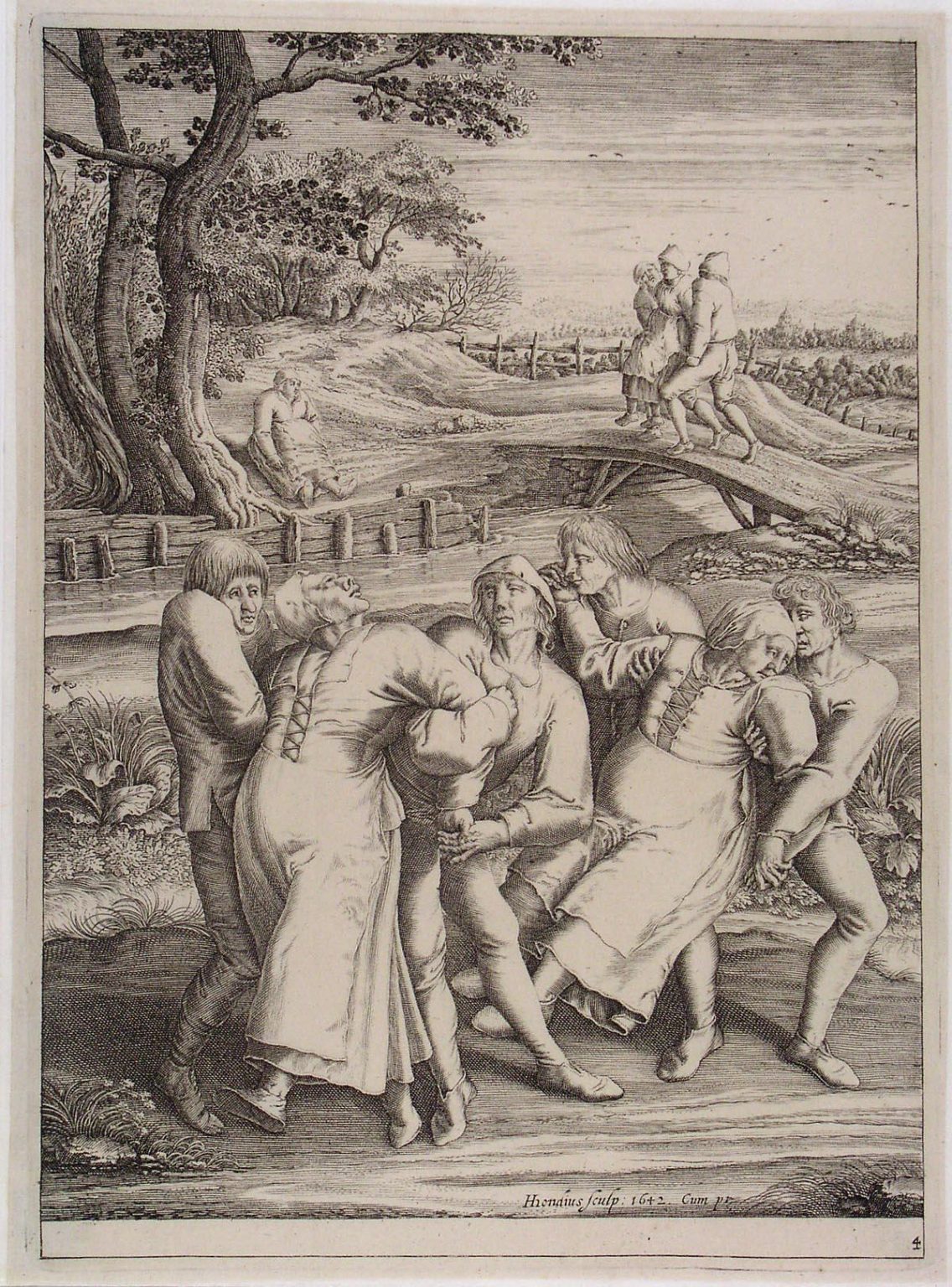
Pictures make the outbreak feel visible, but their dates need the same care as the written sources. A much-reproduced engraving by Hendrik Hondius, published in 1642 after Bruegel, concerns a pilgrimage at Molenbeek. It is associated with people understood as suffering from epilepsy or related afflictions. It does not depict Strasbourg’s streets in 1518.
The print remains relevant to the wider history of bodily distress, pilgrimage and the representation of unusual movement. Its later use to illustrate Strasbourg is part of the story’s afterlife. Once a caption is shortened to “the dancing plague,” a picture from another place can quietly acquire the authority of an eyewitness image.
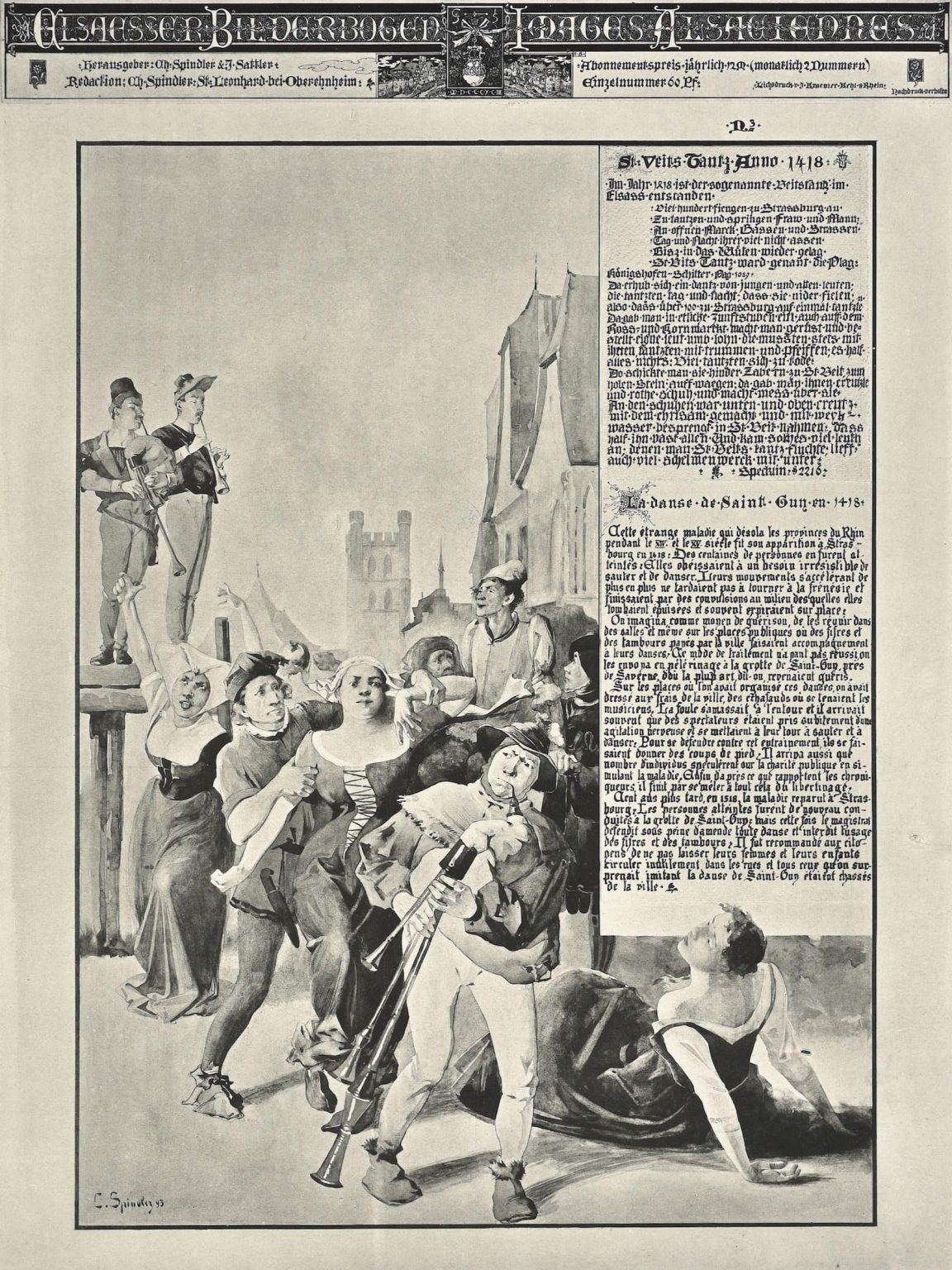
Charles Spindler’s illustration is different again. Published in Images alsaciennes in 1893, it deliberately represents the Strasbourg episode, but from nearly four centuries later. It belongs to the history of remembering and imagining 1518. The clothing, gestures and crowd arrangement cannot independently verify what happened.
Neither image has to be discarded. A clearly labelled later interpretation can help readers understand how the event has been pictured. Trouble begins when the label disappears and an imaginative scene starts carrying factual claims its maker could never witness.
Histovia’s account of Dürer’s rhinoceros follows another image whose influence greatly exceeded its artist’s direct observation. In both cases, asking how a picture was made opens up a better history than treating visual detail as proof.
A mystery with a history of its own
The story kept changing as medical writers adopted it. J. F. C. Hecker’s nineteenth-century account of the dancing mania, translated by B. G. Babington, grouped outbreaks across centuries into a broad history of epidemic disturbance. It discussed music, crowds, imitation, religion and alleged imposture within the same explanatory framework.
Hecker’s language repeatedly judges the people he describes. His account of Strasbourg even gives the year as 1418 in the English edition, while reproducing a verse about crowds dancing in the city’s streets. That discrepancy is a warning against copying an old medical history as a transparent record of 1518. The book is also evidence for nineteenth-century efforts to organise the past into categories of disease.
Paracelsus and Hecker, separated by centuries, both found more in the dancers than unexplained movements. They used the subject to discuss belief, authority and the behaviour of ordinary people. Modern accounts can do something similar when they force the event into a lesson about panic, social contagion or the supposed foolishness of earlier societies.
The surviving evidence supports a more measured account: people in Strasbourg displayed disturbing dancing behaviour during the summer of 1518; civic authorities responded; medical and religious explanations circulated; later writers expanded the episode in ways that are sometimes difficult to verify. Its precise cause, full scale and mortality remain uncertain.
That leaves plenty to investigate. Who had the authority to call behaviour an illness? Who decided where distressed people should go? How did an anonymous woman acquire a memorable name and an invented private life? These questions take us closer to the historical people than another confident claim that an entire city danced itself to death.
Like the evidence behind Roanoke’s “lost colony”, the Strasbourg record becomes more interesting when its surviving clues are allowed to remain specific. Uncertainty is part of what the sources tell us.