
Westphalia, 1648: The Bargains That Made a Difficult Peace
Who could worship, who would vote, and who had to provide the wagons when an army left? The settlements of 1648 answered practical questions inside a political order that was meant to survive.
Near the end of the Treaty of Münster, the negotiators turned to wagons, horses and boats. Inhabitants were to provide transport and provisions when garrisons withdrew. Officers were to return what they had borrowed. After years of war, even getting soldiers to leave required an agreement about who would carry their equipment.
That detail is a good introduction to the Peace of Westphalia. The settlements of 1648 addressed large questions of religion, territory and political authority through a dense accumulation of particular arrangements. They also had to make peace workable for places still occupied by armed men.
The familiar claim that Westphalia suddenly created a world of sovereign nation-states misses much of this work. The treaties repeatedly refer to the laws, courts and institutions of the Holy Roman Empire. Their authors expected that political order to continue, with its members bound by a revised and more carefully protected settlement.
Several wars, several agreements
The congress met in the Westphalian cities of Münster and Osnabrück. Its business involved overlapping conflicts among the emperor, imperial estates, France, Sweden, Spain and the Dutch Republic. As historian Konrad Repgen explains, the hoped-for general peace exceeded what the negotiators eventually achieved.
Spain and the Dutch Republic signed their agreement in January 1648 and ratified it in May. The imperial settlements with France and Sweden followed on 24 October. France and Spain remained at war. “Westphalia” consequently names a connected diplomatic achievement, rather than one document that ended every European conflict.
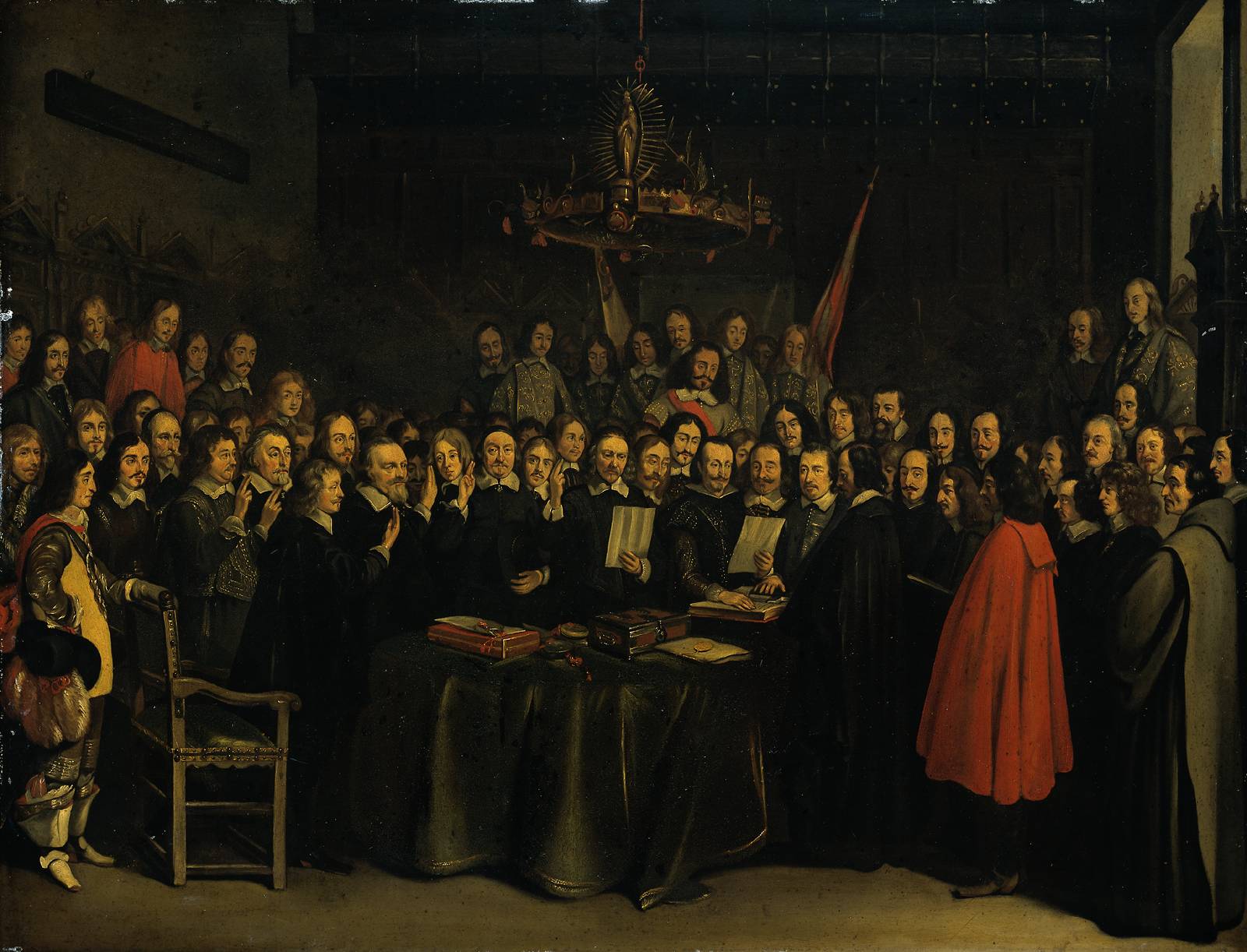
The painting below captures this distinction. It shows the May ratification of the Spanish-Dutch peace. Its raised hands and crowded chamber have become familiar images of 1648, but they do not show the signing of the October imperial treaties.
A peace written into an existing constitution
The Münster treaty’s political clauses confirm the electors, princes and estates in their established rights and territorial authority. They also protect their participation in decisions affecting the Empire: laws, war, taxation, recruitment, garrisons and alliances.
An imperial estate was a member of the Empire’s political order, such as a prince or an imperial city. The term did not mean the population voting as a modern electorate. When the treaty strengthened a right of consent, it was specifying the standing of recognised corporate and territorial powers.
Article LXV allowed the estates to make alliances with outsiders for their preservation and security. Read only that sentence and it is easy to imagine hundreds of fully independent states being created. The qualification comes immediately afterwards: such alliances must not be directed against the emperor, the Empire, the public peace or the treaty, and must respect existing obligations.
This was authority within a larger legal framework. Article CXX made the settlement a fundamental law of the Empire, binding its officers and courts. Other clauses called for future imperial assemblies to deal with unresolved business. The negotiators were leaving tasks to institutions they expected to function.
Histovia’s account of the Golden Bull of 1356 follows an earlier attempt to make this complicated order governable through rules. Westphalia worked with that inherited political landscape, even as it changed important parts of the bargain.
One disputed inheritance shows how the bargaining worked
The Palatine settlement offers a particularly clear example. The war had entangled the electoral dignity, family inheritance and possession of territory. Simply ordering everyone to return to an earlier position would have reopened the dispute.
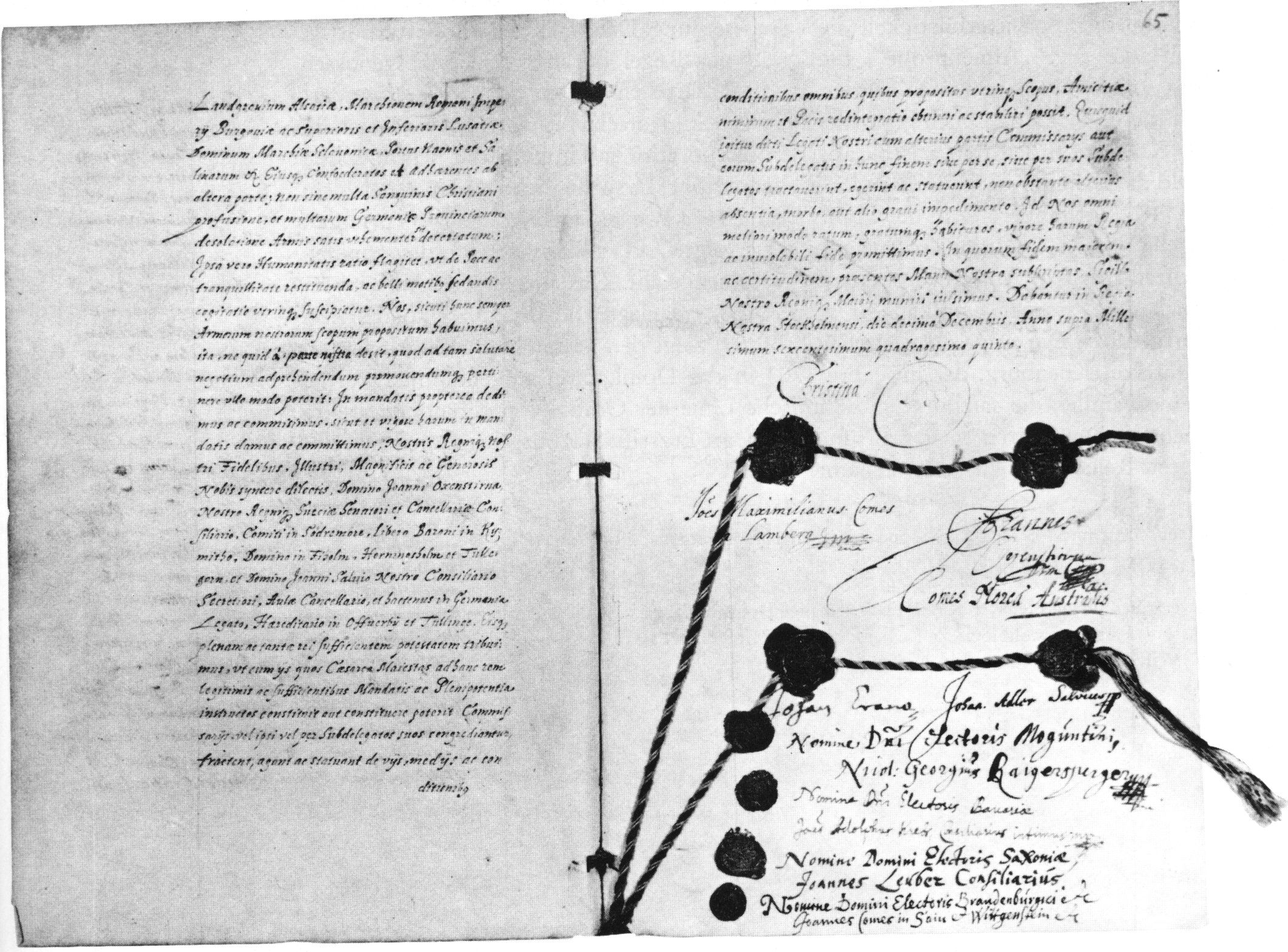
The agreement allowed the Bavarian branch to retain its electoral dignity and established an eighth electorate for Charles Louis of the Palatinate and his successors. It also specified what should happen if the relevant Bavarian male line died out: the dignity would revert and the additional electorate would disappear.
These are constitutional arrangements built around dynastic contingencies. They make little sense if 1648 is treated as the moment when modern, uniformly organised states replaced the older order. The negotiators were making a difficult succession settlement durable enough to survive the current generation.
Religious peace needed a date on the calendar
Religious settlement occupied much of the Osnabrück instrument. The problem included churches, monasteries, revenues, offices and the worship of communities living under rulers of another confession. Belief mattered deeply, and so did the material institutions through which religion was practised.
The agreement used 1 January 1624 as a central reference point for ecclesiastical possession. Rather than allowing every wartime transfer to become permanent, it established a date against which many claims could be tested. The rules contained exceptions and local provisions, but a shared reference point helped turn sweeping demands into questions about evidence.
A church or monastery might have changed hands more than once. The treaty’s method required people to establish who had possessed it at the relevant moment. It could not settle the theological disagreement. It could give courts and negotiators a rule for deciding who should receive the building and its revenues.
The religious peace also extended protection to the Reformed confession, alongside Catholics and Lutherans. When the recognised confessional parties in imperial deliberations divided over religious matters, the settlement required an amicable agreement instead of allowing a simple majority to settle the dispute.
This arrangement made coexistence depend partly on procedure. One side could not assume that outvoting the other would resolve a question which the other regarded as fundamental. The participants had to continue bargaining within a shared framework.
Protection had limits
Some provisions reached directly into the lives of subjects. The treaty protected specified forms of worship and made room for private devotion, attendance at services in neighbouring places and the education of children in another confession. These protections qualified what a territorial ruler could demand.
They were carefully bounded. The settlement distinguished established rights of public or private religious exercise from domestic devotion. It also regulated emigration, including circumstances in which a subject might be ordered to leave, while preserving certain rights over property left behind. A guarantee of conscience was not the same thing as a guarantee that every person could remain indefinitely in the same place on identical terms.
The settlement recognised three Christian confessions. It did not announce equal religious citizenship for everyone. Histovia’s article on the Edict of Nantes examines another arrangement in which meaningful protection existed alongside exclusions. Reading the conditions matters as much as reading the promise.

Amnesty was an attempt to stop the past restarting the war
The Münster treaty opens with an ambitious amnesty. It sought to prevent injuries, hostile acts and expenses incurred during the conflict from becoming reasons for renewed hostility. Its language covered words and writings as well as violence and damage.
This did not mean that everyone would forget what had happened. The treaty was trying to limit what people could do politically and legally with those memories. Without some such restriction, the settlement could be pulled apart by an endless sequence of claims and counterclaims.
Restitution was equally important. Rulers and communities were to recover rights or possessions under the agreed terms. Yet the treaty also recognised that some losses could not simply be reversed. Destroyed buildings and consumed or removed movable goods presented different problems from a title that could be restored on paper.
Another clause addressed debtors ruined by war or burdened by interest. It called for further consideration and moderation in enforcement. Peace had to reach an economy in which obligations remained even when the means of meeting them had disappeared.
These provisions reveal the distance between a legal settlement and physical recovery. A document could restore a right to an estate. It could not immediately replace the people, livestock, tools or buildings needed to make that estate productive.
The bargain also changed territory and status
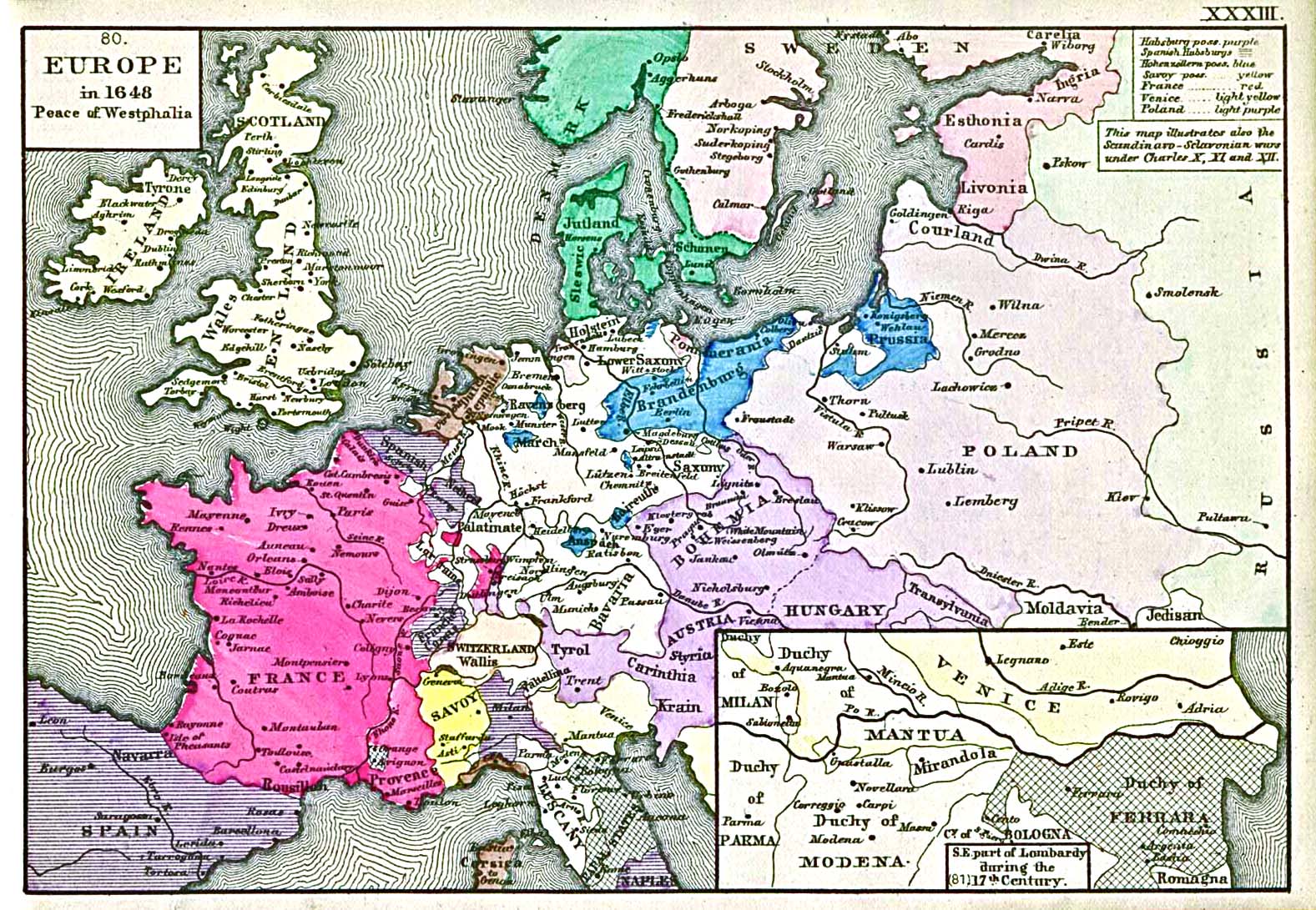
Territorial concessions and compensation formed part of the settlement. France and Sweden secured important advantages, while particular imperial rulers received their own adjustments. The resulting distribution still included overlapping rights and obligations that a coloured map can only partly show.
The Swiss provision is especially revealing. The Münster text confirmed the exemption of Basel and the other Swiss cantons from imperial courts and judgments, following an imperial decision of 1647. It dealt with a particular jurisdictional dispute through a particular legal formula.
The Spanish-Dutch agreement likewise recognised a political reality with a long history behind it. It would be misleading to imagine that either the Dutch Republic or the Swiss Confederation simply came into existence because diplomats wrote a date at the foot of a treaty.
Who would make the peace hold?
The treaty did not assume that a promise would enforce itself. Its guarantee clauses required the parties to protect the settlement. A party claiming injury was first to seek an amicable solution or ordinary justice. The text then provided for assistance if those means failed under its stated conditions.
At the same time, imperial estates were prohibited from pursuing their claims by armed force outside the agreed legal process. The imperial circles, regional groupings with responsibilities for maintaining the public peace, were to be renewed. The answer to a future dispute therefore involved several levels of authority.
That is another difficulty for a simple story of absolute non-interference. The agreement established obligations concerning what happened within territories, including religious rights, and made the preservation of those obligations a shared concern. It was a negotiated system of protection with rules about when and how action should follow.
The disbandment of armies presented a more immediate test. The Münster text required troops making war within the Empire to be discharged, while allowing rulers to retain forces judged necessary for their own security. It also distinguished artillery already found in a fortress from guns subsequently brought there. Departing garrisons needed instructions about what they could take.
This is where the wagons return. Local inhabitants had to help carry equipment away, and neighbouring territories were to share the burden as the troops moved through them. Peace imposed obligations on civilians even while seeking to relieve them of military occupation.
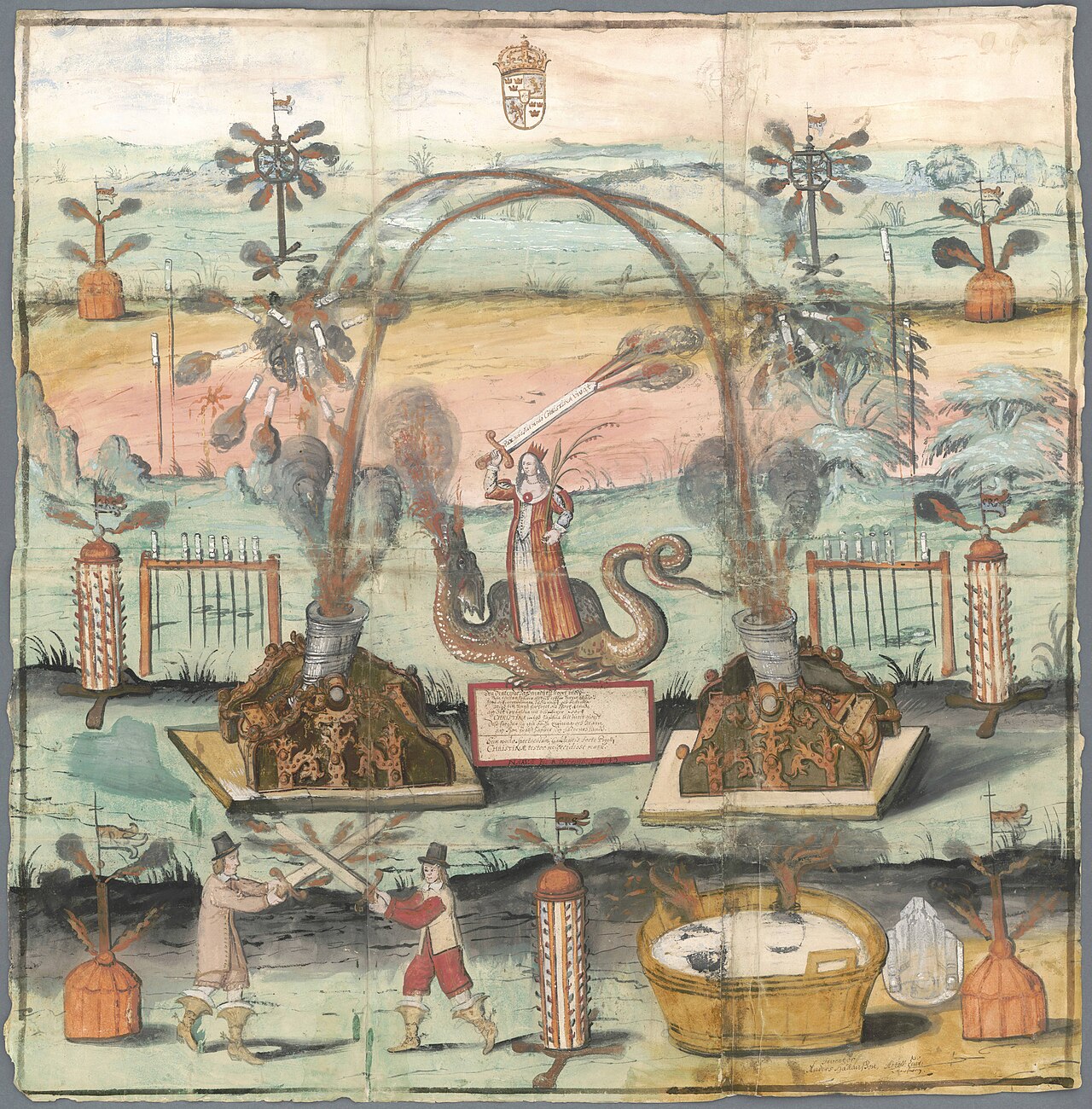
The Nuremberg Implementation Congress, held from May 1649 to July 1650, negotiated withdrawal, demobilisation and other unfinished details. A banquet on 25 September 1649 celebrated intermediate progress. The ceremony belonged to an ongoing process of making the settlement effective.
A useful achievement without an invented birthday
Later accounts often turn Westphalia into the birthday of sovereignty. Political scientist Andreas Osiander’s influential critique challenges the way international-relations theory has projected later assumptions back onto the treaties and the Empire. The phrase “Westphalian system” can be useful shorthand in a modern argument, but it should not replace reading the settlement itself.
The surviving provisions give us something more concrete. They confirm territorial powers while preserving imperial institutions. They protect particular religious rights while excluding other claims. They restore some possessions, accept other changes and establish procedures for disputes that everyone knew would continue.
Nor does a European settlement provide a universal origin story for political order. Other societies had their own institutions, diplomatic practices and understandings of authority. Making 1648 the starting line for the whole world makes those histories unnecessarily difficult to see.
Westphalia’s achievement was substantial enough without that burden. Negotiators found terms under which enemies could stop fighting without first agreeing on religion, dynastic justice or the meaning of every past injury. They left room for continuing disagreement and tried to keep it inside legal and diplomatic processes.
The peace becomes more impressive when we look closely at the awkward details. The electoral seat, the date attached to a church claim and the borrowed wagon all belong to the same undertaking. People were trying to make a settlement survive contact with the world it was supposed to govern.