
Inside the Roman Baths: Leisure Above, Labour Below
A noisy letter, a metal scraper and the rooms beneath the floor reveal a public institution that brought people together without making them equal.
In a letter about concentration, Seneca placed himself above a bathhouse and made the reader listen. Men exercising with weights grunted; a masseur’s hand struck a shoulder; someone called out the score of a game. The noise mattered because it interrupted a philosopher who wanted to study. For historians, the interruption is the attraction.
Letter 56 to Lucilius is not a neutral recording of an ordinary afternoon. Seneca arranged its sounds to make an argument about inner composure. Nevertheless, the activities he selected had to be recognisable: exercise, treatments, conversation and the conspicuous enjoyment of water. A Roman bathhouse was not simply a large room in which people washed.
Its social life depended on things the bather might scarcely notice. Fuel had to reach a furnace. Hot air had to circulate beneath floors. Water had to arrive and waste had to leave. Clothes needed watching, bodies needed attending and rooms needed maintaining. The public pleasure of the baths rested on a carefully organised division between the experience offered and the work that made it possible.
A common practice, not an equal experience
The baths spread through a varied empire, appearing in towns, military settings and wealthy households. English Heritage’s account of Roman Britain emphasises that men and women across social ranks, including enslaved people, participated in bathing. But participation did not mean equal leisure. A wealthy person with time available in the afternoon had opportunities that someone working long hours might not share.
That distinction prevents a seductive mistake. A communal institution can bring people into the same building while preserving differences in time, money and power. One person might arrive to relax; another might be there principally to work. Even the same individual’s access could depend on employment, household obligations and the particular establishment. The phrase “the Romans went to the baths” conceals almost as much as it explains.
A small tool in a large culture
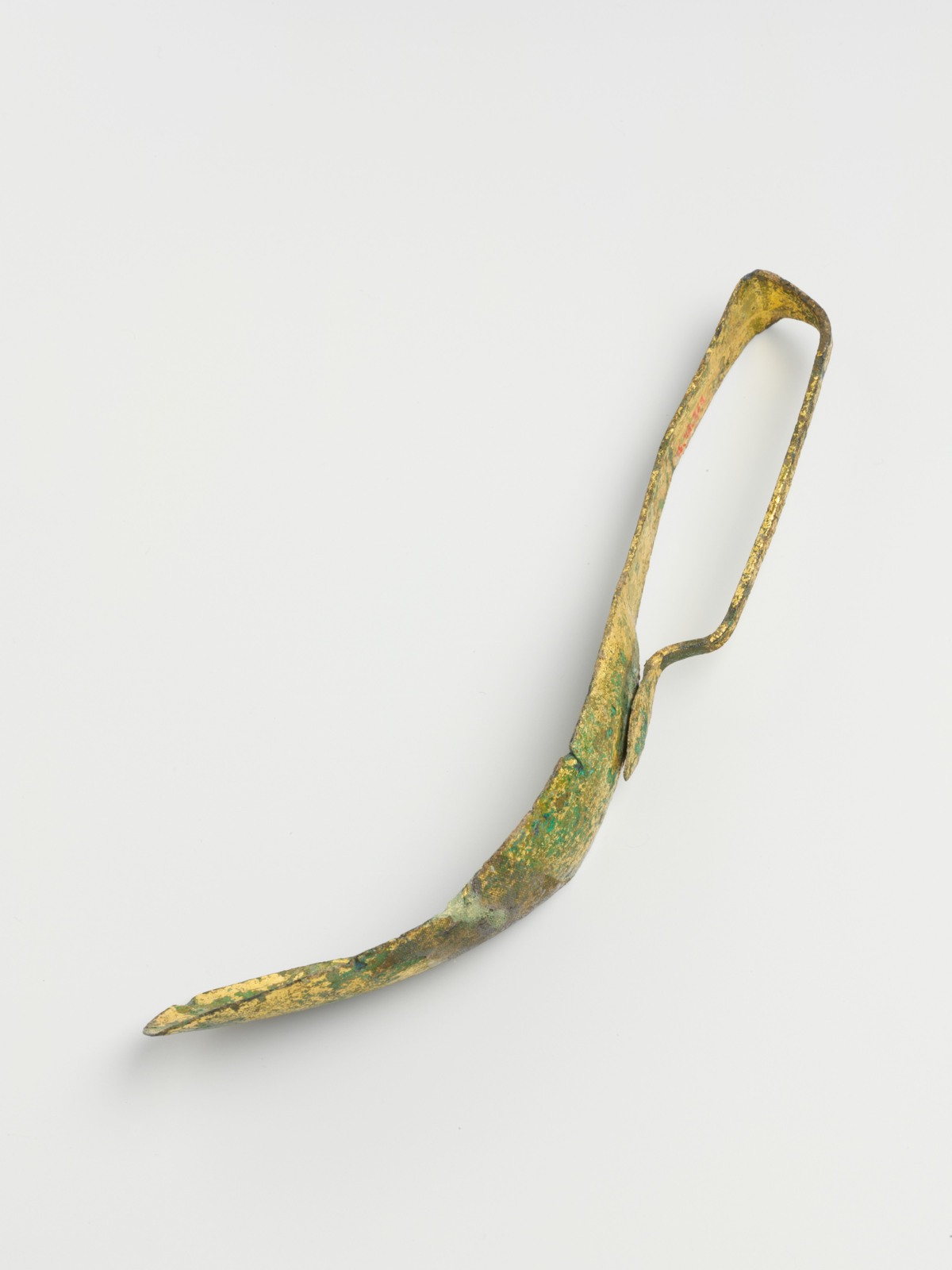
A surviving strigil brings the activity down to the scale of a hand. The curved implement scraped oil and dirt from the body. The Metropolitan Museum’s gilt bronze example, dated to the first through third centuries CE, illustrates how an object associated with Greek athletic practice became familiar equipment in Roman bathing culture.
Its gilding should not be treated as the normal finish of every bather’s kit. The London Museum’s iron strigil offers a useful contrast in material. Both objects belong to bodily care, but their survival in museum collections does not tell us how often every owner bathed, who wielded the tool or what the full kit cost. The object supplies evidence of a practice, not a complete biography.
The scraper also changes the way we imagine cleanliness. The familiar modern sequence of private shower, soap and towel is not a neutral model into which ancient evidence can simply be fitted. Oil, exercise, heat and scraping belonged to a different routine. Explaining that routine does not require declaring it either superior or disgusting by present standards.
Tools and treatments made bathing a service as well as an activity. A person able to rely on an attendant experienced the same physical process differently from someone performing it unaided. Seneca’s description of the audible massage is especially revealing here: care of one body involved the exertion of another. His concern was the noise, but his letter inadvertently keeps some of that work within hearing.
There is another limit to the evidence. Metal survives much better than many ordinary materials. What museums display is a selected residue of a much larger world of possessions and gestures. The well-preserved scraper is unusually legible; it should not make the missing parts of the routine seem unimportant.
Rooms arranged around changing temperatures
The plans of excavated bathhouses reveal movement rather than a single pool. Changing spaces, warm and hot rooms, cold plunges and exercise areas organised a visit into different activities. Their arrangement varied. A plan from one city should not become a compulsory itinerary for every bather across several centuries.
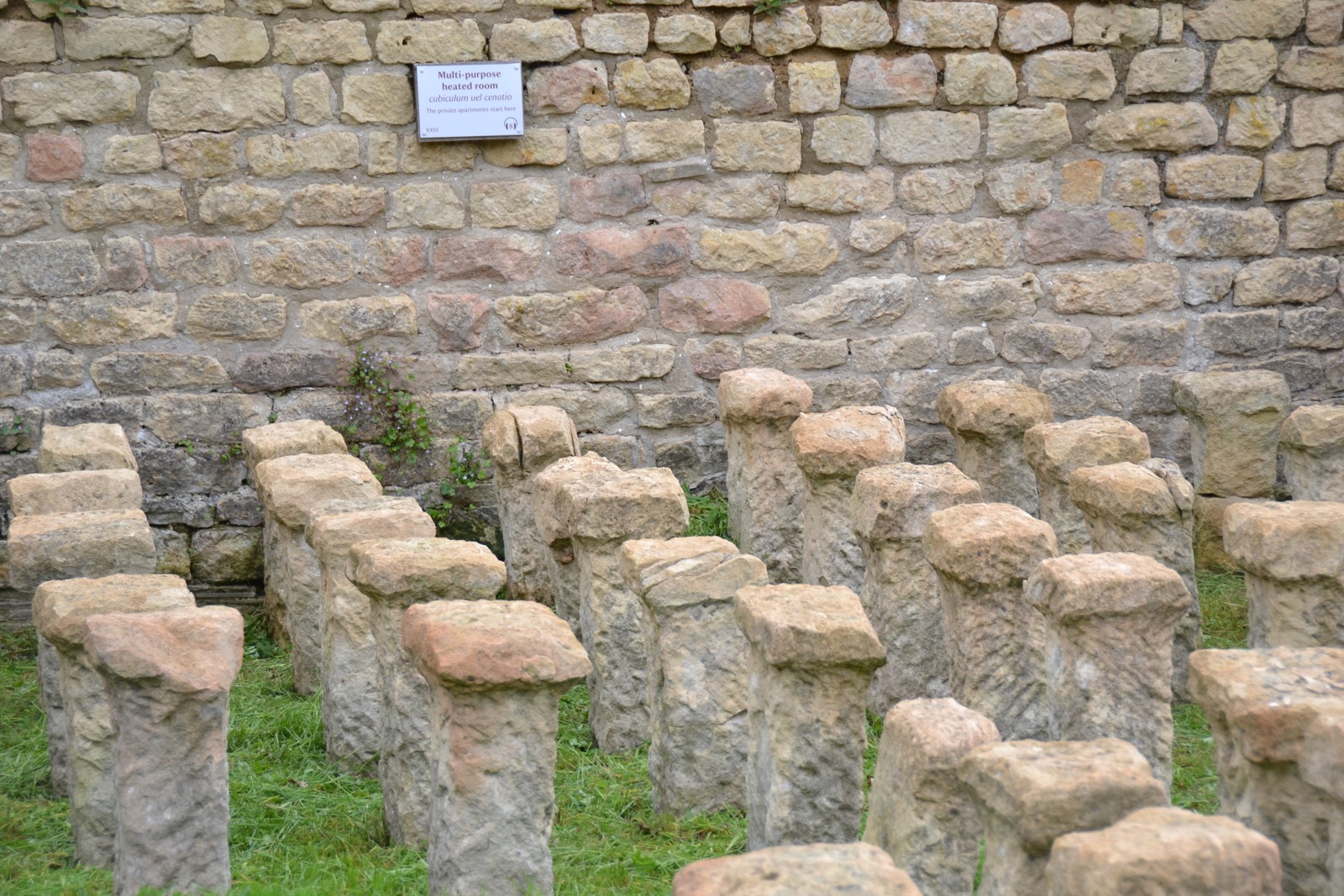
At Leicester, the Roman Leicester archaeological account describes the Jewry Wall complex as a place for exercise, sociability and business as well as washing. Its warm room acted as a gathering space, with changing rooms and hotter bathing spaces around it. The plan shows how transitions between activities could be built into the architecture.
The English Heritage description of the same site identifies raised floors supported on stacks of stone or tile. These supports made an empty space beneath the occupied room, through which furnace heat could pass. The surviving bases can look like an enigmatic forest of little pillars until the missing floor is mentally restored.
That act of reconstruction is important. Ruins expose parts of the building that ancient users were not meant to see. A bather stood above the hypocaust, not among its supports. Archaeology makes the service system visible precisely because the finished room has partly disappeared. The most informative view for us may be one no ordinary customer ever encountered.
Private bathing suites put the same general technology to a different social use. At Chedworth Roman Villa, the National Trust links the baths to the reception and entertainment of guests. Heating and elaborate interiors helped turn a household into a setting for cultivated hospitality. Public provision and private display were related forms of comfort, not identical institutions.
Below the comfortable floor
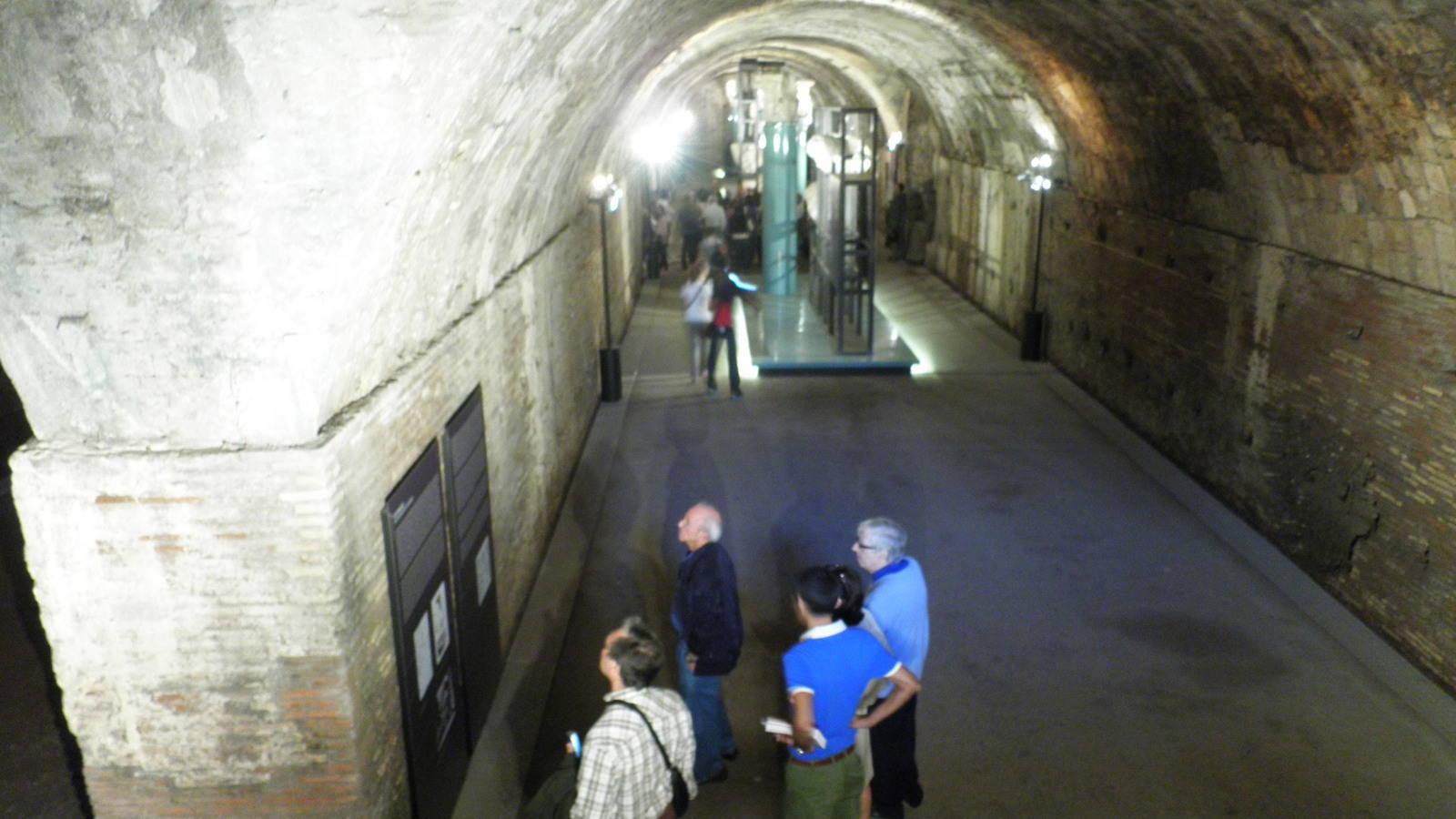
In Rome, the underground remains of the Baths of Caracalla make the scale of support work difficult to overlook. The city’s official account of the subterranean complex describes roughly two kilometres of passages containing timber stores, heating installations, water infrastructure and other service spaces. Workers and enslaved people kept that machinery functioning.
The tunnels connect monumental architecture with recurring labour. Constructing a bathhouse was only the beginning of its cost. A furnace needed fuel again tomorrow; a supply route had to remain usable; equipment required attention. The impressive ruin is a capital investment whose daily operation once consumed materials and human effort.
It would be misleading to make every worker an enslaved person merely because slavery was fundamental to Roman society. The surviving infrastructure does not identify the legal status of each individual who maintained it. What it does establish is that the visitor’s leisure depended on work that was spatially separated from the rooms designed for enjoyment.
The smaller baths at Vindonissa, described by Museum Aargau, bring the same problem into a different setting. The museum stresses fresh-water supply, drainage and sufficient fuel as conditions of operation. It also distinguishes the civilian bathhouse from the more lavish military establishment. Bathing was widespread without every installation being equally grand.
A technical achievement therefore cannot be understood only as a clever invention. A working hypocaust needed an organisation capable of feeding and maintaining it. The system joined architecture, water management, supply and labour. Its success was renewed through repeated tasks, not permanently secured by the original construction.
What happened to the clothes?
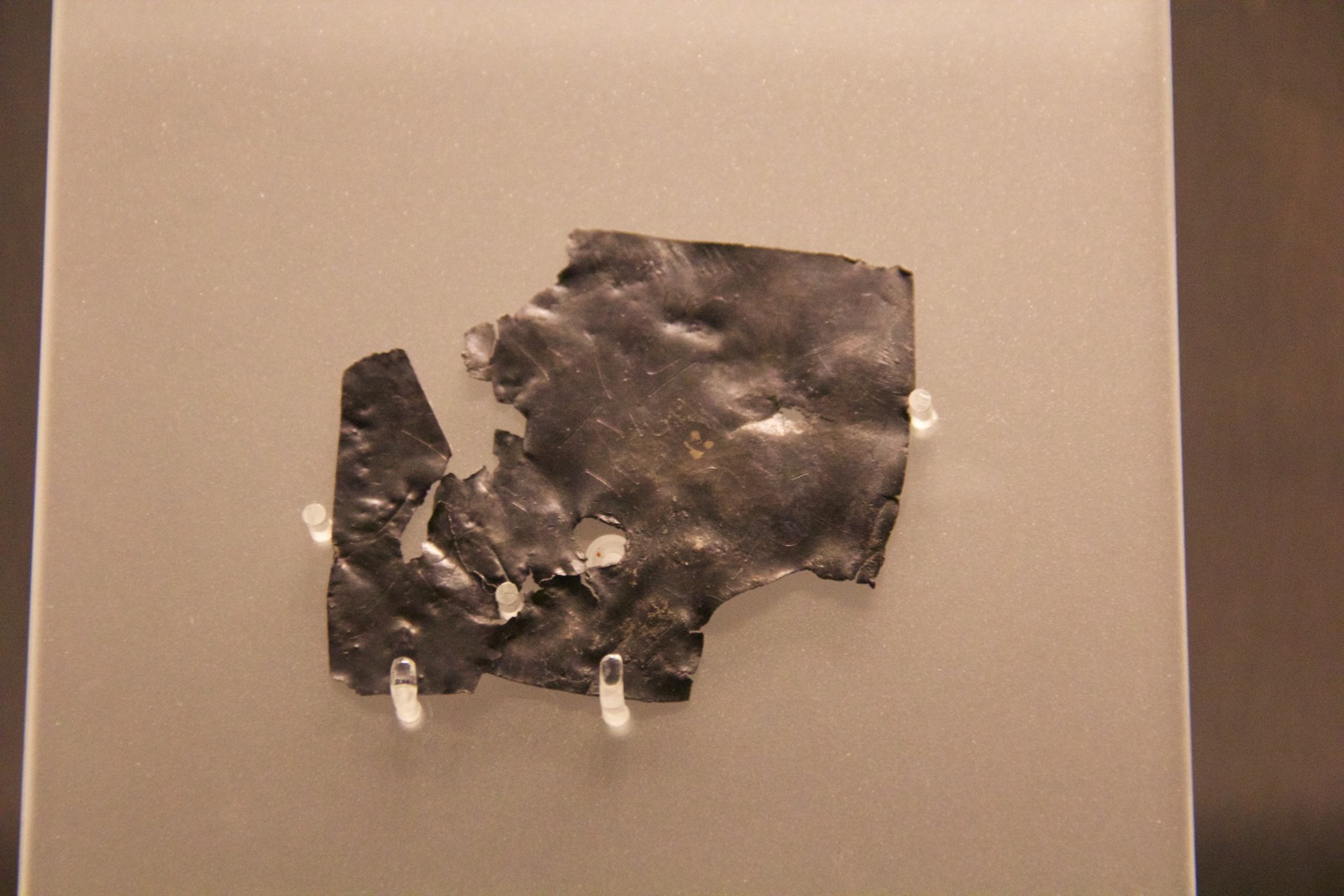
Communal bathing created a mundane vulnerability: possessions were left while their owners washed. The evidence from Bath shifts attention away from grand patrons and towards people upset by losses. The Roman Baths museum’s account of its curse tablets describes small metal sheets bearing requests for divine redress, deposited in the sacred spring between the second and late fourth centuries CE.
These texts should not all be reduced to amusing complaints about trivial objects. A garment that looks modest to a modern reader might represent a serious loss to its owner. The tablets also joined an ordinary grievance to the religious setting of the spring. Asking Sulis Minerva to act placed the missing property within a relationship with a deity.
Nor can every theft mentioned in the collection be confidently placed inside the bathhouse. The shrine served a wider community. The responsible inference is that the complex preserves evidence for possessions, anger and appeals for justice alongside bathing—not that every petitioner necessarily lost an item while taking a bath.
Such evidence complicates the picture of easy sociability. Public places could generate friendship and conversation, but also anxiety, conflict and mistrust. The same environment that brought strangers together could leave someone dependent on a guard, attendant or the goodwill of others. Leisure was not an escape from the practical problems of urban life.
The view a Roman bather did not see
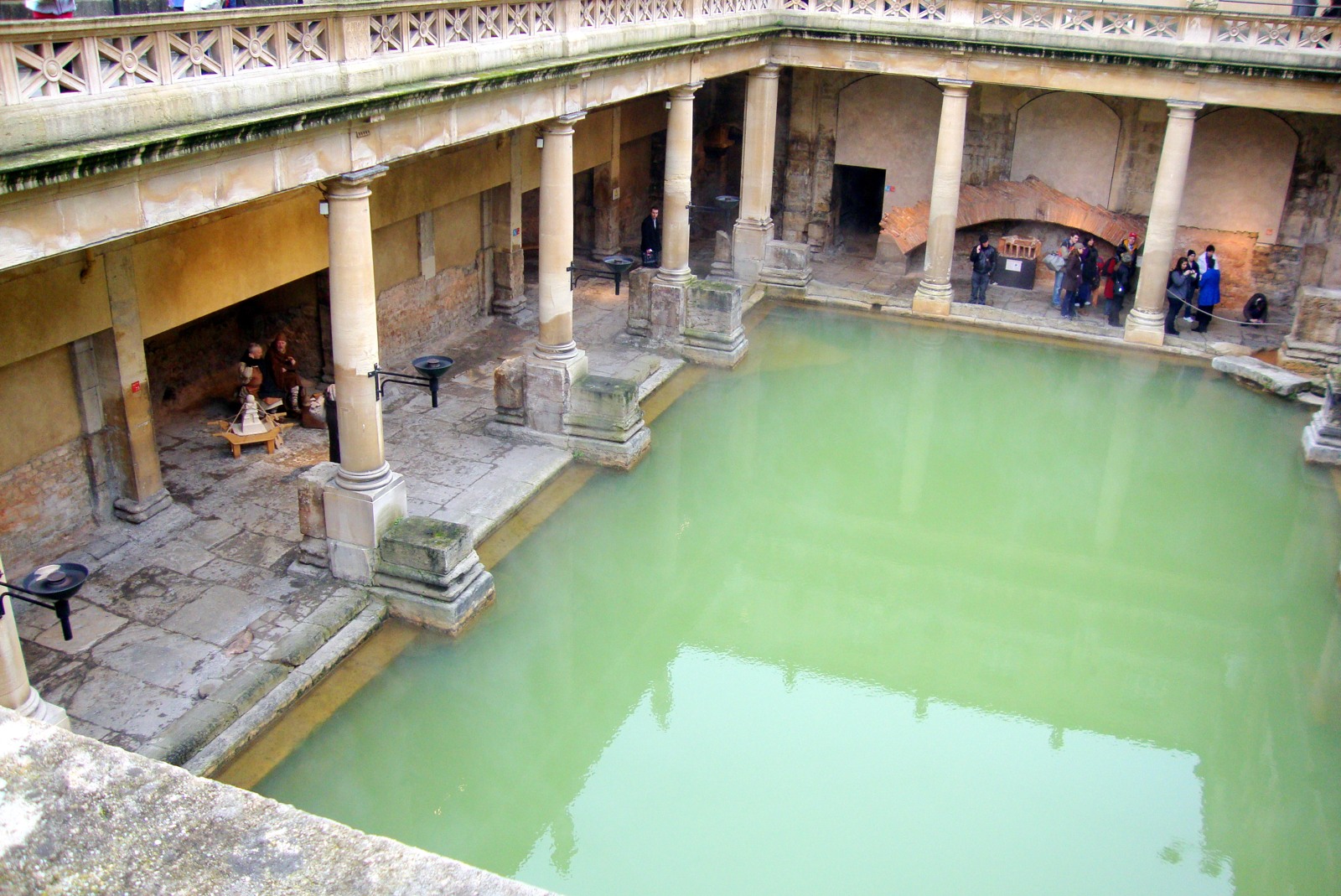
The Great Bath in the English city of Bath is now one of the most familiar images of the ancient practice. Yet its open-air appearance can mislead. The museum’s historical teaching guide explains that the Roman pool stood beneath a substantial roof. The surrounding high-level terrace belongs to a later presentation of the remains.
The museum’s account of that terrace dates its statues of Roman rulers and governors to 1894. They help frame the modern view, but they are not witnesses surviving from the bathing establishment’s ancient operation. A photograph can contain Roman fabric and Victorian interpretation at the same time.
That distinction is not a reason to distrust the site. It is a way to read it more closely. The missing roof, exposed heating system and surviving implements answer different questions from the monumental setting. Together they allow us to recover something more interesting than either a luxurious spa or an engineering triumph in isolation.
The baths organised encounters between bodies, services and resources. Their rooms offered warmth and company; their machinery required replenishment; their routines exposed differences in freedom and wealth. Seneca heard the public side of that arrangement through his floor. The ruins let us look beneath it.