
The Secret Ballot: How a Private Vote Changed Public Power
A private vote depends on much more than a curtain. Official papers, accessible instructions and a count open to scrutiny helped turn an old idea into a lasting democratic safeguard.
A voting booth is a small piece of political architecture. A screen, a writing surface and a little space to yourself can separate a citizen from the people who employ them, rent them a home or expect their loyalty. For a few minutes, those relationships are supposed to lose their power over the choice on the paper.
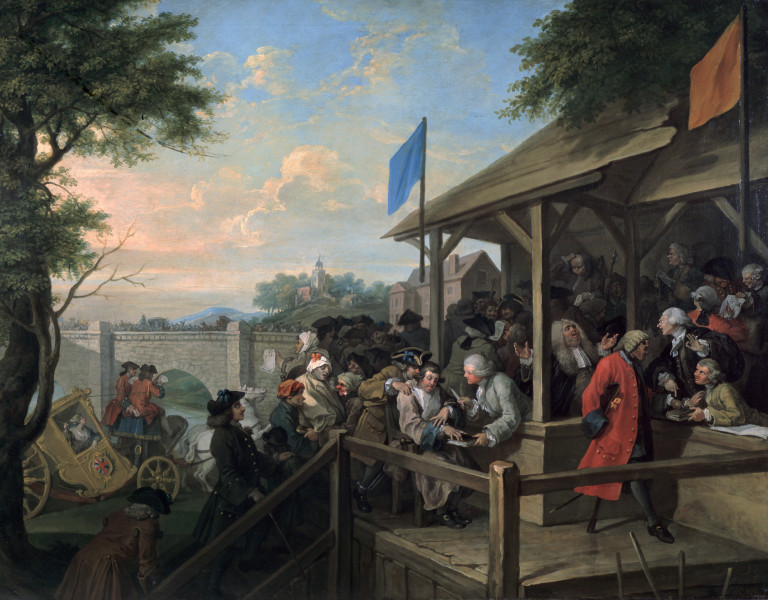
That protection had to be built. In nineteenth-century elections, voting could involve announcing a candidate aloud or carrying a party’s recognizable ticket through a watching crowd. A person might have the legal right to vote and still face very practical consequences for choosing the wrong side.
The reforms that became known internationally as the Australian ballot changed the situation by combining official ballot papers with a protected place to mark them. Victoria, South Australia and Tasmania adopted secret-ballot legislation in 1856. Britain followed with its Ballot Act in 1872, and American reformers secured important breakthroughs in 1888.
The story is more complicated than a single invention spreading around the world. Secret voting had ancient precedents. Australian procedures themselves changed. And a private ballot did not automatically give everyone a vote. Understanding those distinctions helps explain why election privacy still requires much more than a curtain.
When your neighbors could watch you vote
In the Australian colonies, early parliamentary elections borrowed British open-voting practices. The Museum of Australian Democracy’s account describes voters declaring their choices within an electoral culture of public nominations, hospitality and intimidation. The crowds were part of politics, but the spectacle exposed individual electors to pressure.
The problem was especially sharp when a voter depended on a politically powerful employer or landlord. Even without an explicit threat, an observable choice could carry a cost. Bribery worked by the same logic: payment was more attractive to the buyer when delivery could be checked. Secrecy would make both punishment and purchase less reliable.
People had hidden votes long before 1856
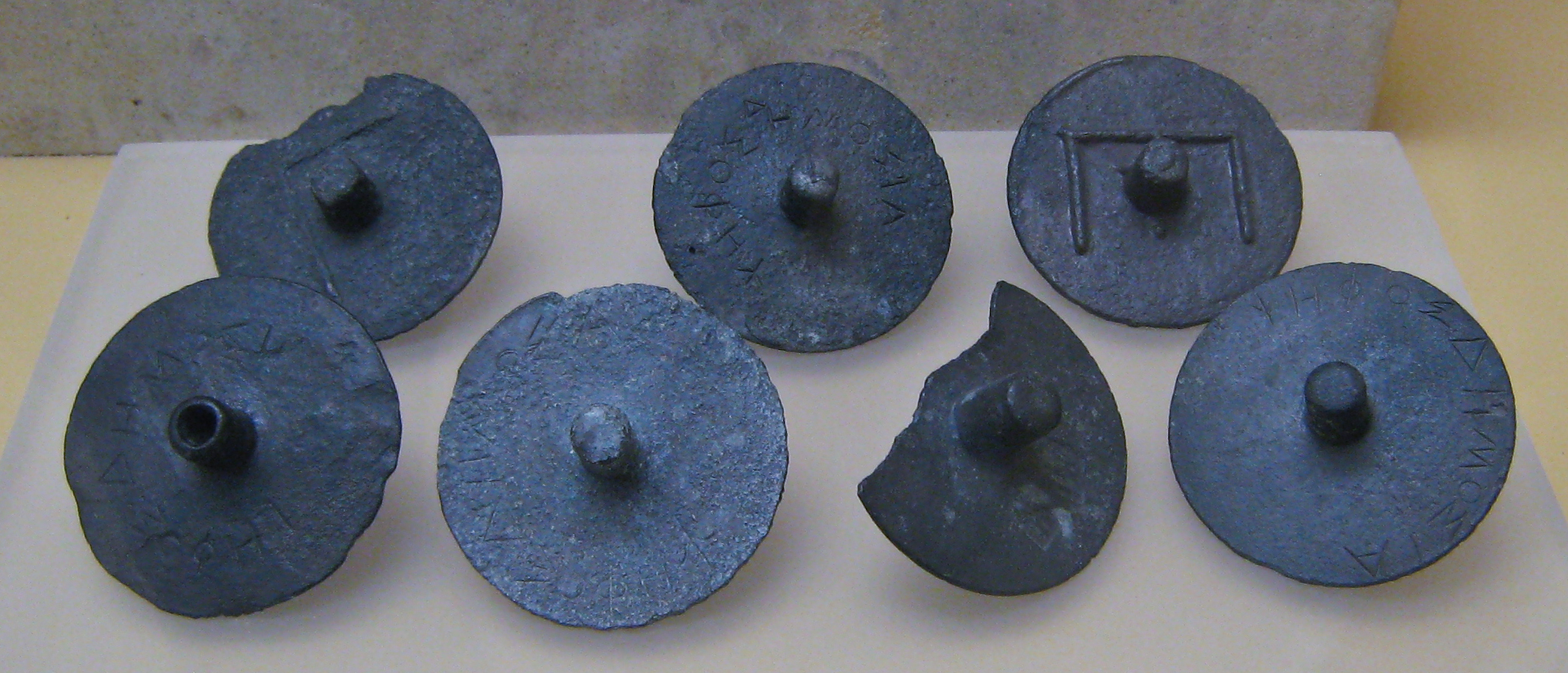
Ancient Athenian juries used bronze voting discs with solid or hollow axles. The Canellopoulos Museum explains the procedure: a juror concealed the axle ends with their fingers, cast the disc representing their decision into one vessel and discarded the other. The hand performed some of the work later assigned to the polling booth.
This was a judicial vote in a very different society, not a nineteenth-century parliamentary election. It nevertheless rules out the attractive claim that Australians invented the first secret vote in human history.
Nor did putting a choice on paper guarantee privacy. Paper voting existed in American colonies long before the 1850s. Eldon Cobb Evans’s 1917 history of American ballot practices describes early written ballots and later printed party tickets. The crucial questions were who supplied the paper, whether its appearance revealed the choice, and whether anyone could watch the voter prepare it.
Australia’s breakthrough was a whole procedure
Victoria’s Electoral Act received assent on 19 March 1856. William Nicholson had pushed for the reform, while Henry Samuel Chapman worked out a practical method. The government would arrange printed ballots listing the candidates, and electors would mark them away from public view. The National Museum of Australia places this change within a wider struggle over representation during the gold-rush era.
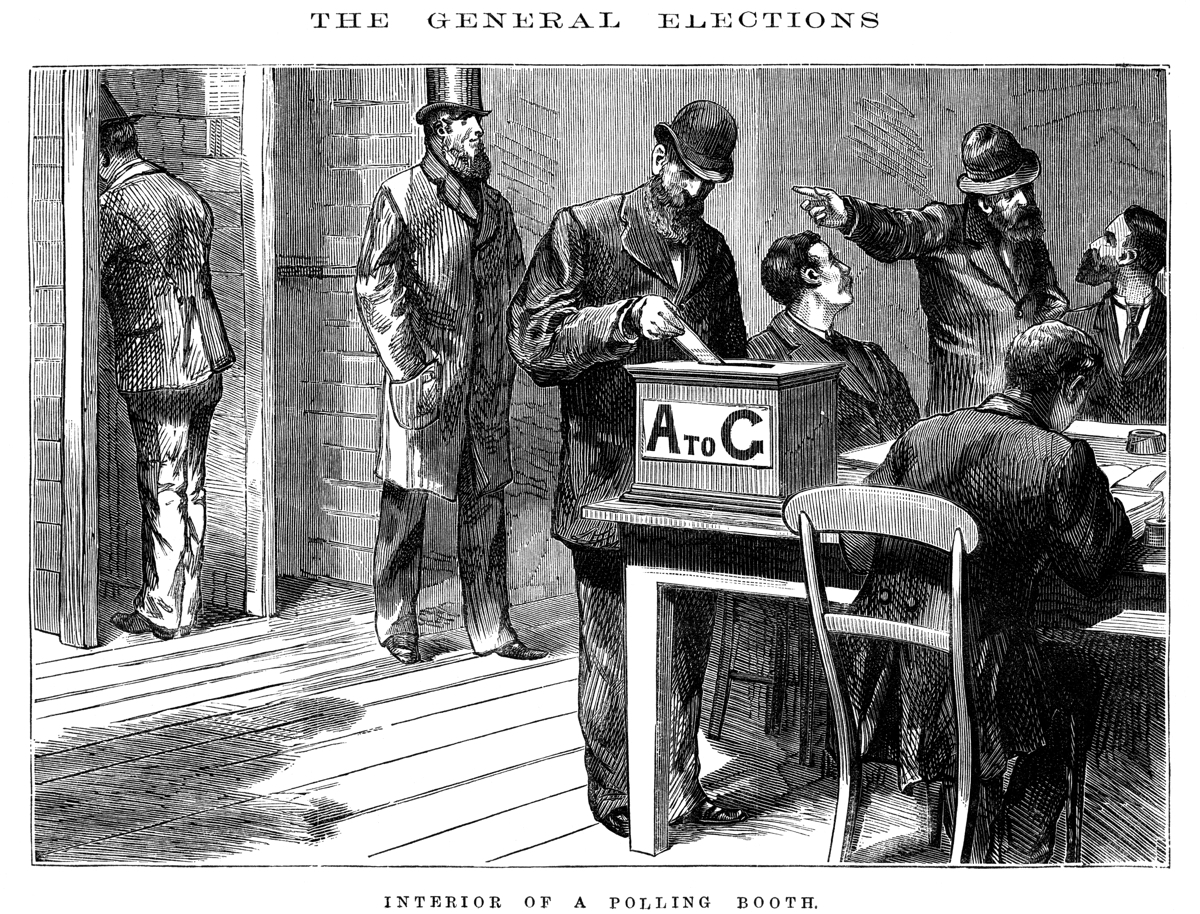
Reading the Act itself, especially sections XXXVI–XLI, makes the innovation wonderfully concrete. Officials had to provide a locked box with an opening for ballots. An eligible elector received an official paper, entered the compartment or ballot room, crossed out unwanted candidates and folded the paper to conceal the remaining names. The returning officer’s signature on the back stayed visible.
Each detail had a job. Official printing reduced dependence on candidates for voting materials. The compartment sheltered the decision. Folding protected it between the compartment and the box. The signature helped authenticate the paper without displaying the vote. Records of used and unused ballots supplied another check.
There were limits. Section XXXVIII required a number corresponding to the elector’s place on the roll to be written on the ballot. Section LIII allowed a numbered ballot to serve as evidence when a vote was disputed. Victoria’s new privacy was therefore protected by procedures and restrictions, rather than by making identification physically impossible.
The law also allowed an official to mark a ballot for someone unable to read or someone who was blind. That provision recognized an immediate problem: a method intended to free voters from pressure could become an obstacle if it assumed everybody could independently read and mark a printed form.
South Australia legislated on 2 April 1856, and Tasmania also adopted the ballot that year. Further improvements followed. William Boothby’s South Australian reform in the 1858 Electoral Act replaced striking out unwanted names with marking the preferred candidate. The South Australian combination of an unnumbered ballot and a cross helped shape the model exported abroad.
The familiar ballot was thus assembled through legislation, administration and revision. The dates of adopting secrecy and improving the mark on the paper should not be collapsed into one magical afternoon.
Britain, 1872: making a promise harder to police
Britain’s Ballot Act of 1872 introduced secret voting for parliamentary and municipal elections. Parliament’s own historical account emphasizes the practical effect: voters could choose in private, and a briber had greater difficulty checking that a bargain had been honored.
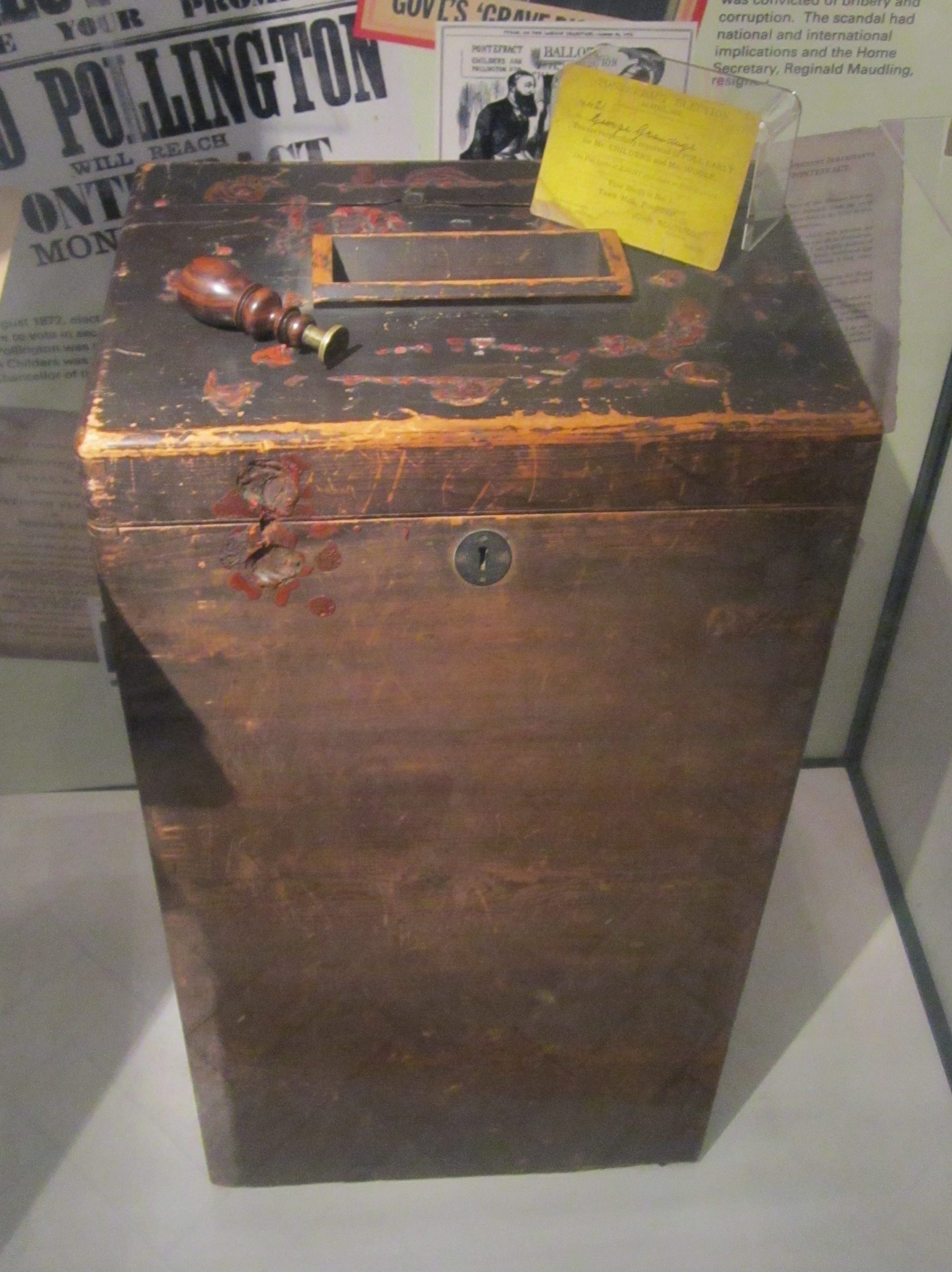
In August, Pontefract held the first British parliamentary election using the new secret ballot. Its surviving ballot box offers a pleasingly ordinary view of constitutional change. This was a container secured against interference, with seals made using a stamp from a local liquorice factory. Political liberty needed equipment that could be inspected, closed and watched.
Secrecy also changed what an election promise meant. A voter could tell a powerful person what that person wanted to hear and then vote differently. From the viewpoint of a landlord demanding loyalty, this looked like a loss of control. From the viewpoint of the dependent voter, it was precisely the protection the reform was meant to provide.
But the rule concerned how an eligible elector voted. It did not itself settle who qualified. As with the constitutional ambitions discussed in Histovia’s account of Frankfurt in 1848–49, it helps to separate a political principle from the institutions needed to make it effective. A shield around an existing right and an expansion of that right are different achievements.
The United States: getting the parties off the paper
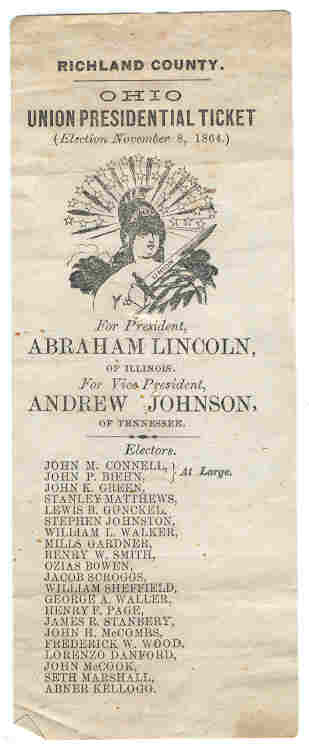
American elections did not all follow one procedure before reform. Some voters spoke their choices aloud. Others deposited printed tickets supplied by political organizations. Those tickets could be convenient, especially when many offices were contested, but convenience came with a political signature.
Evans’s account of party ballots describes colored papers, distinctive borders and designs recognizable even after folding. Attempts to standardize white paper could be frustrated by different shades. The choice might be legible to an observer without anybody opening the ballot.
The Australian model transferred an important part of election administration away from the competing parties. Instead of accepting the paper one party supplied, a voter could receive an official ballot carrying the alternatives and make choices privately. Parties still campaigned, organized and persuaded. They lost one particularly useful way of supervising what supporters did.
Reform advanced unevenly. According to Evans’s reconstruction of the legislation, Kentucky enacted an Australian-ballot law for Louisville in February 1888. Its local scope matters: Kentucky’s state constitution still required oral voting for state elections. In May, Massachusetts passed its statewide law. The Commonwealth Museum describes the new arrangement: state-printed ballots, booths protecting privacy, and restrictions on politicking within the polling place.
Afterward, adoption accelerated across different states and territories. Evans counted thirty-two states and two territories with Australian-ballot legislation before the 1892 presidential election. That is evidence of rapid spread, not a reason to imagine an instantaneous, uniform national switch. His chapter on implementation also records variations and reversals.
This belongs to the same broad struggle over political organization explored in Histovia’s account of Garfield and patronage. Reformers were asking where party influence should end and public administration should begin. Printing the ballot became one concrete answer.
A secret ballot could still leave people out
A standardized form is not automatically an accessible form. A voter who could previously recognize a party ticket by its color or obtain one from a trusted organizer might struggle with a dense official ballot. Rules governing symbols, instructions and assistance could determine whether the new privacy was usable.
Thomas R. Gray and Jeffery A. Jenkins’s study of American disenfranchisement notes that some Southern Democratic politicians saw ballot reform as a way to exclude Black voters. Unequal access to education made reading requirements especially consequential. Reform could be presented as clean administration while serving a racial political purpose.
Yet this should not become an equally simple story in the opposite direction. Gray and Jenkins find little evidence of a large, uniform direct turnout effect from adopting the Australian ballot across their study. Regional differences matter, and poll taxes, formal literacy tests, violence and other restrictions operated alongside ballot changes. The history supports scrutiny of implementation, not the claim that private voting itself inevitably suppresses participation.
Australia supplies another warning against a smooth progress narrative. The National Museum’s history of Indigenous voting rights describes rights available to First Nations men in several colonies in the 1850s, followed by exclusions in other jurisdictions and restrictive federal legislation in 1902. It would be wrong to suggest either that every Indigenous person was barred everywhere from the beginning or that pioneering the ballot produced equal citizenship.
These distinctions are essential. The franchise determines who may vote. Ballot secrecy protects the choice of someone voting. Accessibility helps turn legal eligibility into a usable opportunity. A democratic system has to attend to all three.
Private choices need an observable process
The phrase “secret ballot” can make the entire election sound hidden. The aim is much narrower: protect the connection between a voter and their choice while making the handling and counting of votes open to meaningful checks.
Modern Australian practice offers a concrete example. The Australian Electoral Commission explains that empty ballot boxes are shown to those present before sealing, with numbered seals recorded and witnessed. For declaration votes, officials check eligibility using the envelope, then separate the papers from identifying details before sorting and counting. Scrutineers observe the process.
Identification and secrecy therefore need not be enemies. An election can require evidence that somebody is entitled to vote without making their preferences available to an employer, a party organizer or the public. The difficult work lies in keeping those two functions separate.
Assistance needs equal care. The AEC provides for voters to nominate someone to help, or to receive official assistance. The underlying goal is for the decision to remain the voter’s, even when another person must help put it on paper. Privacy should protect participation rather than become an excuse to refuse support.
The nineteenth-century history leaves us with useful questions for any voting system. Who supplies the ballot? Who can see it being completed? Can a powerful person demand reliable proof of the choice? Can a person who needs help still express their own preference? Who watches the custody and count?
Those questions also help distinguish healthy scrutiny from intrusive scrutiny. Observing whether officials follow the rules can strengthen confidence in an election. Demanding to see how a particular person voted undermines the protection being examined. Equally, an official claim that choices are private cannot substitute for evidence that the count is accurate. The two promises belong together: citizens should be able to trust the total without being required to expose their own contribution to it.
A booth answers only some of those questions. The secret ballot’s lasting achievement was to make a private political choice something institutions should actively protect. Keeping that promise requires the patient, unglamorous work of designing forms, training officials and checking procedures. The little space around a voter is supported by a much larger public responsibility.