
Books & Movies · Research-based book introduction
Jonathan Cheng’s Korean Messiah: Faith, Power and the Limits of a Historical Parallel
Pyongyang’s Christian past opens a striking route into the Kim dynasty’s history—but religious resemblance must be tested against archives, institutions and political struggle.
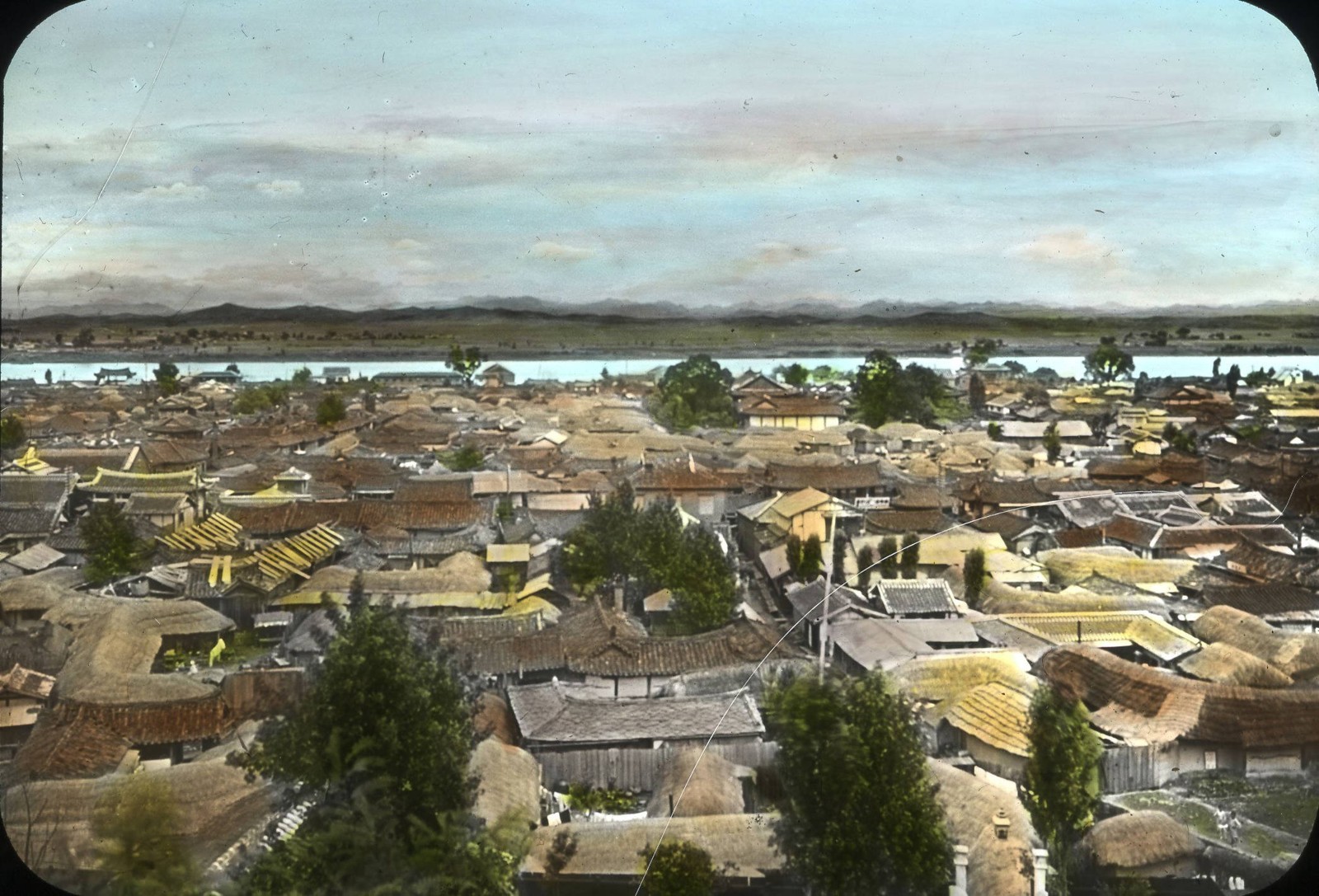
Before Pyongyang became a capital identified with the Kim dynasty, it was a major centre of Korean Protestant Christianity. That reversal is more than an arresting contrast between two cityscapes. It raises a difficult question about political power: when a regime destroys or subordinates religious institutions, does it also leave behind the habits of belief through which people once understood authority?
Jonathan Cheng’s Korean Messiah: Kim Il Sung and the Christian Roots of North Korea’s Personality Cult approaches the question through the history of a missionary community and the childhood world of North Korea’s founding ruler. Published by Knopf in April 2026, it became one of the three Cundill History Prize finalists announced on 30 September. Finalist recognition is the relevant dated signal here, not a claim that Cheng won the prize or that his interpretation commands scholarly consensus.
This essay is a research-based introduction and critical context, using the publisher’s description, public author interviews, archival guides and independent historical research. It is not a full-book review based on reading the complete volume. The most useful way to approach the argument is to distinguish three things that a provocative title might otherwise collapse: a documented religious environment, a plausible influence on political imagination, and proof of a specific causal connection.
The Christian city behind the familiar capital
The publisher’s account identifies the American Presbyterian missionary Samuel Austin Moffett and Kim Il Sung’s Christian family background as central strands. The attraction of that pairing is clear. It changes the starting point from an apparently self-contained dictatorship to a city connected with foreign missions, education and religious exchange.
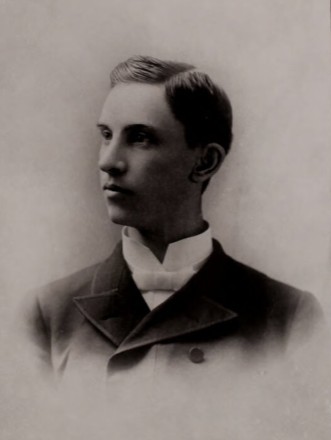
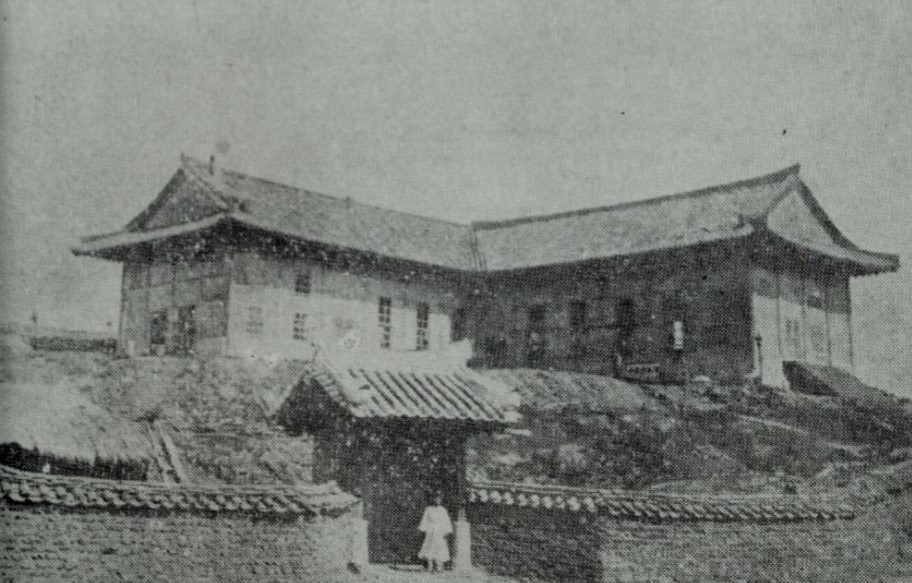
A Boston University history-of-missiology biography describes Moffett beginning theological instruction in 1901, with the first seven graduates completing their course in 1907. Such institutional details matter more than a picturesque label for the city. Christianity was sustained through training, organization and repeated relationships, not merely through the presence of an influential foreign preacher.
Korean participation must remain central to that story. An account of Presbyterian mission history notes the importance attached to Korean leadership and support, and the Korean majority in the first presbytery’s membership. Missionaries brought resources and convictions, but the churches that developed were not simply American institutions transplanted intact.
This is an important test for any narrative organized around a missionary and a future ruler. Those two lives can provide a compelling route through events without exhausting the society around them. Teachers, converts, women’s religious workers, congregations and opponents also helped make the religious world into which Kim was born.
What the archives can recover
The Moffett Korea Collection at Princeton Theological Seminary contains correspondence, photographs, publications and other materials relating to Korean churches and missions. Its finding aid identifies both family papers and a much wider body of records. It also explains that only part of the collection is digitized: copyright, privacy and physical condition affect what can be consulted online.
That description helps explain why the apparent disappearance of a historical city does not mean the disappearance of all evidence about it. A school, congregation or mission station may leave records in several countries. Letters written to maintain an institution can later supply evidence about the communities in which it operated.
But abundance is not neutrality. A missionary reporting to supporters had reasons to emphasize success, need or opposition. A family memoir might preserve details unavailable elsewhere while also shaping a retrospective account of a life. Reading such records critically means asking why they were made and for whom, not dismissing them because they have a standpoint.
In the Presbyterian Historical Society’s June 2026 discussion of Cheng’s research, the author describes working with mission archives as well as North Korean materials. The combination is promising precisely because the sources do not share the same institutional purpose. Their differences can expose omissions, contradictions and changes in how a life was publicly narrated.
That is a stronger basis for history than taking either a triumphant mission story or an official revolutionary biography at face value. The interpretive opportunity lies in placing accounts beside one another and explaining where they agree, where they conflict and where the surviving evidence cannot decide.
National freedom was not a single political destination
Christian institutions developed within a Korea increasingly subject to Japanese power and formally annexed in 1910. Religion could therefore intersect with questions of education, national identity and resistance. A study of Christianity and the March First Movement emphasizes Christian participation in the preparation and spread of the 1919 independence movement, while examining cooperation across religious lines.
The point is not that Christianity alone produced Korean nationalism. It is that religious affiliation could coexist with aspirations that were political and national as well as theological. People moving through the same institutions could subsequently choose very different forms of resistance or government.
Keeping those possibilities open prevents hindsight from turning Kim’s childhood into a coded announcement of his later rule. A family background is not a political programme. The historian has to explain the intervening experiences and institutions rather than treat the outcome as already present in the beginning.
Nor should the contrast between Christianity and communism erase other sources of authority. Colonial government, nationalist movements, guerrilla organization and socialist party practice offered different models of discipline and collective purpose. A convincing account of influence must show how a particular inherited practice entered that crowded field.
Where resemblance stops short of explanation
Cheng’s June 2026 conversation on Of This World is useful because he explicitly rejects a simple one-to-one transplantation of Presbyterianism. He notes that bowing before a leader’s statue is not Presbyterian practice and that attempts to align the dynasty with the Christian Trinity do not fit consistently. He presents Christian upbringing as one influence operating through a socialist structure and alongside other traditions.
Those qualifications are essential, not peripheral. Similar-looking rituals can arise through different routes. Public confession, reverence for a founder or the repetition of an authoritative text may invite comparison, but comparison alone does not demonstrate borrowing. To establish transmission, one would want evidence of contact, timing, adaptation and the actors who carried a practice from one setting to another.
The strongest version of the argument is therefore not that North Korea is Christianity in disguise. It is that Kim’s early religious environment belongs within the history of how he understood and mobilized authority. That hypothesis can illuminate overlooked connections while remaining compatible with political and institutional explanations.
The weaker version would make religious vocabulary do too much work. Calling a ruler a saviour can describe the language of a cult without explaining how the ruler controlled appointments, information, armed force or economic resources. An interpretation becomes more persuasive when it can connect symbolic claims to those mechanisms rather than substitute one for the other.
Occupation, war and the making of a political monopoly
The post-1945 setting cannot be reduced to a contest of beliefs. A U.S. policy paper of October 1945 records the divided American and Soviet military occupation and proposals for a future trusteeship. It is evidence of contemporary planning, not a neutral account of every Korean aspiration. It nevertheless shows the international structures within which competing Korean projects had to operate.
The Office of the Historian’s overview of the Korean War traces the conflict from the North’s invasion of the South through United Nations intervention, Chinese entry and the 1953 armistice. War transformed the conditions in which the new states consolidated themselves. It cannot be treated merely as a backdrop to a leader’s personal ideological development.
Independent archival work also shows that Kim’s predominance was contested. James F. Person’s research on the 1956 opposition movement describes challenges to his personality cult, policies and leadership within the ruling party. Soviet and Chinese involvement further complicated the struggle. The resulting concentration of power was a political outcome, not the automatic expression of an unchanging national culture.
The timing gives the argument its force. Khrushchev’s denunciation of Stalin in 1956 opened space for criticism of personal rule across the communist world. In North Korea, opponents raised objections at the August party plenum; Kim outmaneuvered them, while pressure from his Soviet and Chinese patrons initially forced concessions. His later consolidation was not simply a ruler acting on an audience without alternatives. It involved defeating people who occupied positions inside the same political structure and who disputed the proper form of communist leadership.
These histories do not make Cheng’s religious question irrelevant. They establish what it must be placed alongside. A claim about the emotional or symbolic force of leadership needs to be tested within the changing distribution of power. It should help explain a feature of the political system, not make the system’s conflicts disappear.
Belief is harder to observe than a ceremony
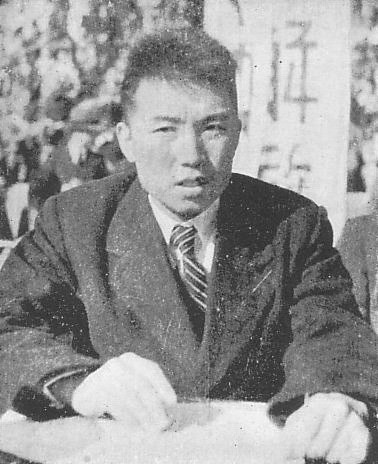
A photograph of a mass gathering records a public act. It does not supply a transparent measure of every participant’s conviction. Fear, conformity, habit, aspiration and sincere attachment can coexist, sometimes within the same person. This is a methodological problem for historians of many regimes, not a reason to imagine that the private minds of North Koreans can be read from outside.
The distinction affects how a book about a personality cult should be assessed. Evidence that institutions demanded reverence is different from evidence that people felt it. Evidence that some people expressed devotion is different from a reliable measurement of a whole population. The more sweeping the claim, the more demanding the evidentiary burden.
Cheng acknowledges uncertainty about the sincerity and distribution of devotion in the same public interview. That restraint should survive any summary of his thesis. A reader can take the emotional dimensions of political authority seriously without assuming that outward performance always reveals inward belief.
There is a parallel caution about continuity. A practice that appears at two moments may have changed its social meaning in between. Remembering a founder inside a voluntary congregation and venerating a ruler within a coercive state are not equivalent merely because both involve remembrance. The conditions of participation are part of the meaning.
A useful question, provided it remains a question
Kirkus’s January 2026 review welcomed the book as an illuminating account of the formation of a totalitarian, quasi-religious order. That favourable judgment belongs to Kirkus. The narrower assessment offered here concerns the historical questions visible in Cheng’s public presentation, not the execution of the entire narrative.
The value of Korean Messiah as a research proposition is its refusal to let the familiar image of North Korea determine where the story begins. The missionary city, religious family networks and surviving papers reopen a past that the present can make difficult to imagine. They also invite readers to examine how competing institutions narrated the same people and places.
The necessary limit is equally clear. Christian connections should enlarge the explanation rather than become its master key. Colonialism, occupation, war, party struggles and the control of institutions remain indispensable. So do the differences between a source’s account, an author’s inference and a reader’s analogy.
For readers approaching the book, the most productive question is not simply whether its title is surprising. It is how carefully the evidence connects upbringing to later practice, and where the author allows alternative explanations to remain in view. That is where a provocative parallel becomes a historical argument worth testing.
Book reference
Jonathan Cheng, Korean Messiah: Kim Il Sung and the Christian Roots of North Korea’s Personality Cult (Knopf, U.S. hardcover edition, 2026), ISBN 9781524733490. Publisher’s edition record · Amazon reference for this hardcover edition. The Amazon destination matches the author’s edition link; no affiliate identifier is included.