
Religion & Ideas
Nicaea, 325: A Creed, an Emperor and an Unfinished Settlement
Nicaea did not choose the Bible or settle Christian theology in a single stroke. Its letters, disciplinary rules and disputed language reveal a more consequential—and unfinished—meeting.
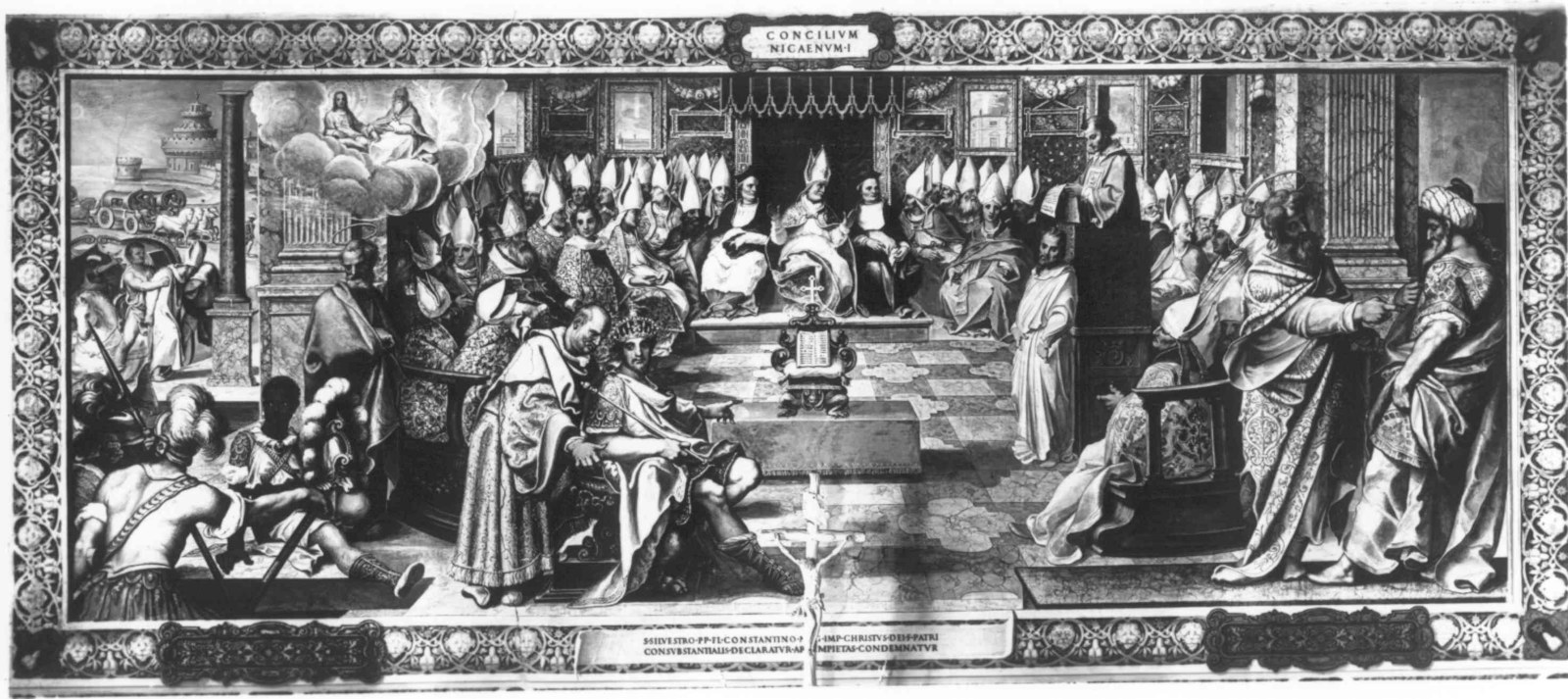
Before Constantine sat down, the bishops had to signal that he should. At least, that is how Eusebius of Caesarea described the emperor’s entrance at Nicaea: splendid clothes, a low golden chair and a ruler who waited for his ecclesiastical hosts before taking his seat.
The detail comes from Eusebius’s Life of Constantine, book III, a celebration of an emperor he admired. It is evidence for how a participant wished the encounter remembered, not a neutral camera inside the room. Even so, the choreography captures a genuine problem. An emperor had brought bishops together to resolve disputes within the church. What could his authority accomplish, and what still required their agreement?
The council of 325 produced a creed, disciplinary rules and an agreement on common celebration of Easter. It neither chose the books of the Bible nor ended the theological arguments associated with it. Understanding those limits makes its actual achievement more substantial, not less: a contested statement made under imperial sponsorship became a reference point that later generations repeatedly had to interpret.
A reunited empire, an unsettled church
Constantine’s defeat of Licinius in 324 left him sole ruler of the Roman Empire. Church disputes were among the problems he encountered in the eastern provinces. In Alexandria, the teaching of the presbyter Arius had brought him into conflict with his bishop, Alexander. Efforts at reconciliation had failed; letters and episcopal alliances carried the disagreement beyond Egypt.
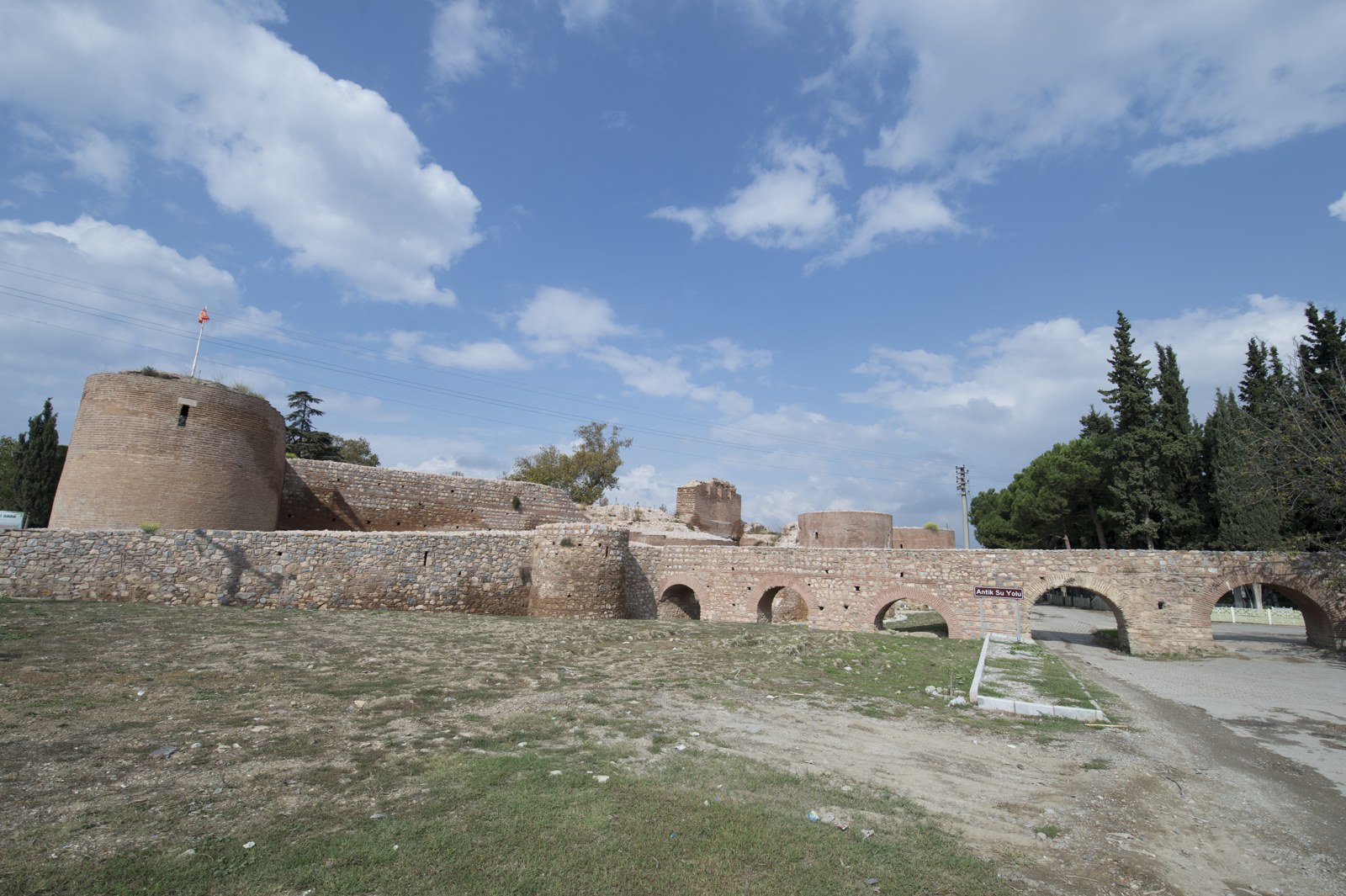
Wolfram Kinzig’s study of the creed’s origins places the gathering within a wider effort at ecclesiastical unity. The sequence of plans and negotiations remains debated. A council originally associated with Ancyra was moved to Nicaea, in Bithynia, near the imperial residence at Nicomedia. The agenda involved more than one disputed theologian.
Hundreds of bishops assembled, predominantly from the eastern part of the empire. The familiar traditional figure of 318 should not be mistaken for a securely preserved attendance sheet. Lists and ancient estimates differ. Eusebius describes imperial assistance with transport, including public conveyances and horses. Convening the meeting required material support as well as an invitation.
Recent persecution remained within living memory. The relationship between bishops and the imperial government had changed dramatically, but the church did not arrive as an institution without its own history. It already possessed scriptures, forms of worship, local councils and competing claims about legitimate leadership. Constantine was intervening in an existing network of communities and arguments.
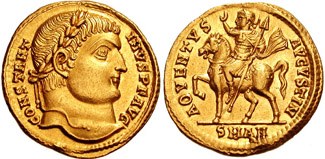
The gold solidus shown below offers a useful contrast to Eusebius’s reverent portrait. Imperial coinage still represented Constantine through established Roman forms of authority. His involvement with Christianity did not mean that every public image, institution or habit of government had suddenly been replaced by an entirely new system.
The argument was not whether Jesus was an ordinary man
Arius did not simply teach that Jesus was a gifted human teacher. In his letter to Eusebius of Nicomedia, he described the Son as existing before the ages, while insisting that the Son had a beginning and the Father did not. He defended a distinction between the unbegotten God and the Son who received existence through divine will.
That makes the disagreement harder, but also more intelligible, than a vote between belief and unbelief. Christians on different sides used scriptural language about the Father and Son. They disagreed about the relations implied by that language and about which explanations safeguarded the uniqueness of God.
For Alexander and those who opposed Arius, placing the Son on the created side of the distinction between God and creation undermined what Christians proclaimed about salvation. For Arius, preserving the Father’s unique unbegotten existence was indispensable. Each side understood itself to be defending proper Christian teaching, not proposing an optional adjustment to a shared philosophical puzzle.
The surviving controversy also warns against treating “Arian” as a complete description of everyone who later opposed particular Nicene formulations. Bishops could disagree over terminology, biblical interpretation and the implications of identifying Father and Son without accepting everything attributed to Arius. A polemical label can simplify a diverse group into an imaginary single party.
The council’s problem was therefore not merely to collect agreeable scriptural phrases. Wording acceptable at first glance might conceal incompatible understandings. To draw a boundary, the bishops needed language that specified what could not be meant as well as what could be affirmed.
What the disputed word did
The creed described the Son as “begotten, not made” and homoousios with the Father: conventionally translated as “of one substance” or “of the same being.” It also condemned claims that the Son once did not exist or was subject to change. These clauses addressed the argument directly rather than leaving its most divisive possibilities open.
But a signature did not guarantee that every signer understood every term in an identical way. In his letter explaining the outcome to his own church, Eusebius of Caesarea recounted discussions of homoousios and the reasons he accepted the settlement. He emphasized that it did not imply a bodily division of God, as though the Son were a piece cut from the Father.
The letter is especially valuable because Eusebius had something to explain. He presented his agreement as consistent with the faith he had previously taught. We should read that defence as part of the event’s history: the council’s wording had to be carried home and made intelligible to congregations, not merely adopted in an imperial presence.
Adam Renberg’s study of Eusebius stresses both his involvement in the controversy and the limitations of reconstructing Nicaea. No complete contemporary minutes survive. Historians work from the creed and canons, letters and accounts written with particular interests. A later confident retelling can conceal the gaps between them.
Constantine’s support mattered. It helped give the settlement reach, prestige and coercive consequences. Yet it would be misleading to make him the lone inventor of its theology, dictating a novel religion to passive bishops. The sources show negotiation among churchmen and an emperor pressing for an outcome; they do not reduce the council to either free academic discussion or a solitary ruler’s decree.
The practical business behind the famous creed
The twenty surviving disciplinary canons reveal concerns that disappear when Nicaea is remembered only for one Greek word. Canon 4 regulated the appointment of bishops through participation by other bishops and confirmation by the metropolitan. Canon 5 called for provincial meetings to review exclusions from communion, including the possibility that a bishop had acted from personal antagonism.
Other rules addressed clergy who moved between cities, clerical lending at interest and the reception of people who had abandoned the faith during persecution. These were questions about how a church lived together: who possessed authority, how decisions travelled between communities and under what conditions an excluded person might return.
Such provisions also complicate claims that Nicaea suddenly created the entire later structure of church government. The canons appealed to existing customs and attempted to regulate disputed practices. Their authority would itself depend upon transmission, interpretation and enforcement. A rule against a behaviour is evidence that the council wanted it controlled, not proof that it immediately disappeared.
The Egyptian conflict involving Melitius was another matter requiring settlement. Rival structures had developed around contested episcopal authority. The council’s letter to the Alexandrian church sought a constrained accommodation for Melitian clergy under Alexander’s authority. Reconciliation here meant deciding who could function in an office and on whose terms.
One Easter, but not a surviving universal calculation manual
Different dates for Easter made division visible in the calendar. One Christian community might be fasting while another celebrated. The council supported a common observance, and its letter to Alexandria reported that Christians who had followed a different eastern practice would celebrate with Rome, Alexandria and the other churches that already agreed.
The surviving documents should not be made to say more than they do. They establish a drive toward common observance; they do not preserve a complete technical decree spelling out every rule of the later Easter calculation. The familiar formula involving Sunday, the full moon and the spring equinox compresses a longer history of astronomical tables and ecclesiastical practice.
The Coptic Encyclopaedia’s discussion of the calendar notes the uncertainty over how the desired uniformity was to be achieved. Agreement about the goal did not by itself supply identical calculations to every church. Later disagreement is therefore not evidence that Nicaea addressed nothing; it shows the difference between deciding on unity and producing it.
Constantine’s circular letter also justified separation from Jewish calendrical practice through explicitly hostile language about Jews. That rhetoric belongs in the history of the settlement. It should neither be repeated as an objective description of Jewish practice nor hidden behind a neutral account of calendar arithmetic. Christian unity was being asserted, in part, by denigrating a community outside the gathering.
The Bible was not selected at Nicaea
No surviving Nicene decree chooses the books of the Christian Bible. The canons are disciplinary rules, not a biblical table of contents. The similarity of the words can confuse readers, but it does not create evidence for a vote that the surviving record fails to document.
A recent study of the supposed Nicene decision on the New Testament treats that story as a later invented tradition. Discussion of authoritative Christian writings began before 325 and continued afterward. The historical question is how different books acquired and retained authority across communities, not which emperor chose a complete collection in a single meeting.
Athanasius’s thirty-ninth Festal Letter, written in 367, provides a revealing later witness. As bishop of Alexandria, he enumerated the twenty-seven writings now familiar as the New Testament, while distinguishing other books recommended for instruction. That is a dated intervention by a particular bishop, forty-two years after Nicaea, rather than the minutes of the council.
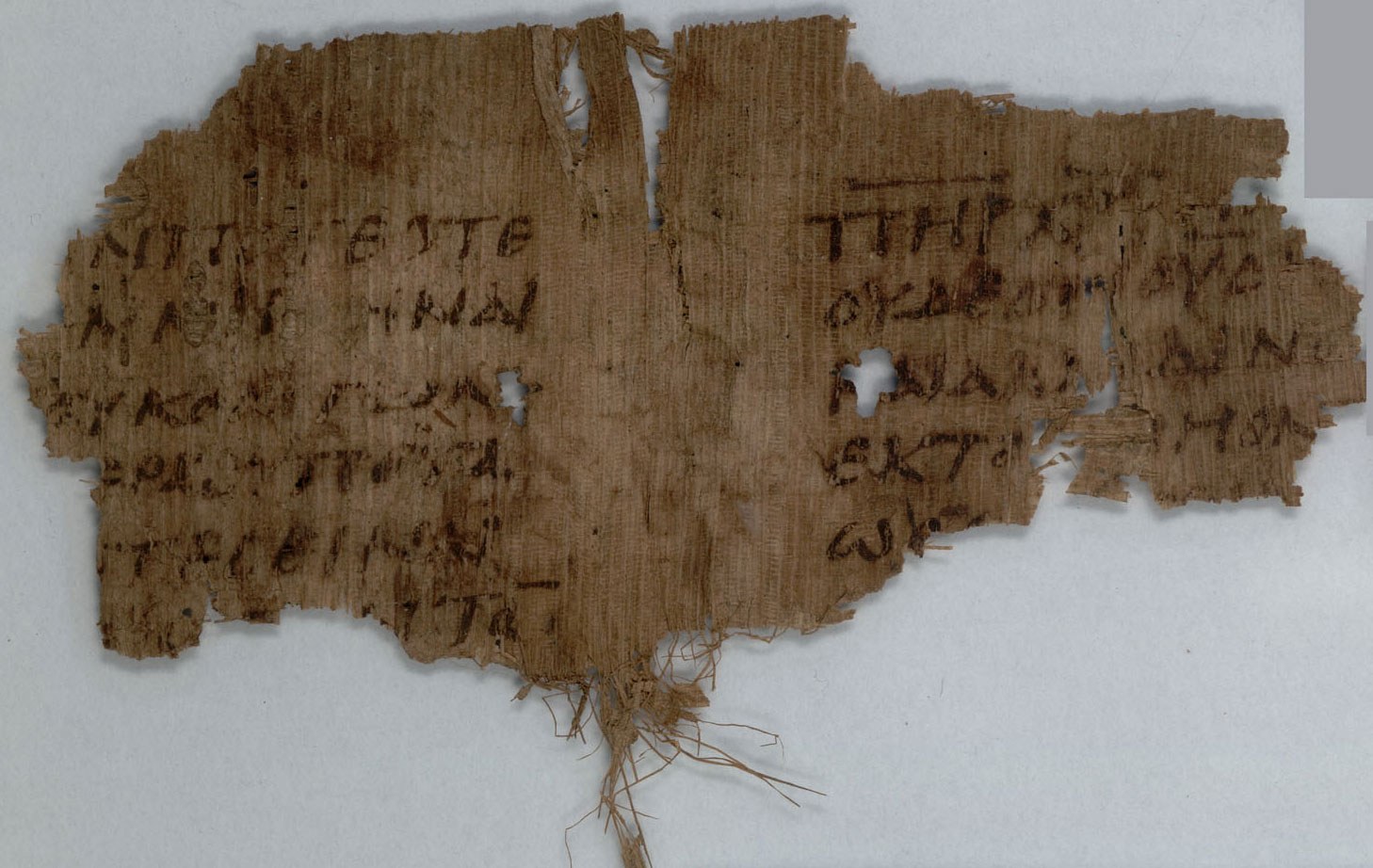
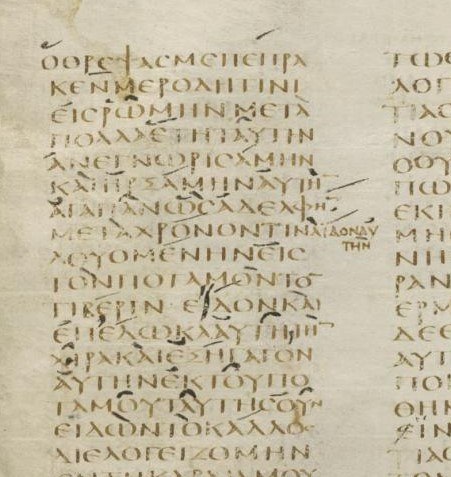
Material evidence adds another perspective. The fourth-century Codex Sinaiticus contains the Shepherd of Hermas as well as biblical writings. Its contents cannot simply be equated with a binding list accepted everywhere. They show why a surviving book, an episcopal recommendation and a universal decision must be distinguished.
Dispelling the myth does not require an opposite myth in which scriptures had no recognized authority before a much later council. The bishops at Nicaea already argued from writings they regarded as authoritative. Their dispute concerned interpretation and doctrinal language, not a choice between having a Bible and having none.
A settlement that required decades of argument
Arius was condemned and exiled, but that did not permanently remove him or his supporters from imperial consideration. Eusebius of Nicomedia regained influence. Athanasius, who succeeded Alexander as bishop of Alexandria, would himself be exiled. The direction of imperial favour and the meaning of acceptable belief remained contested.
Rebecca Lyman’s account of Nicene theology emphasizes the extensive theological work after 325. Later controversies cannot all be treated as a replay of the original exchange with Arius. New formulations, alliances and arguments shaped the eventual pro-Nicene consensus.
The creed commonly recited today under the name “Nicene” is the expanded form associated with Constantinople in 381, preserved in the records of Chalcedon in 451. It gives the Holy Spirit a fuller treatment than the brief statement of 325. Reading that later formulation backward into the first council erases the decades in which Christians argued about its questions.
Nicaea’s importance lies partly in this unfinished character. Its language did not end controversy, but it supplied a claim to authority that disputants could defend, reinterpret or resist. Later Christians made the council foundational through continued use, not because its first participants had already resolved every problem that would be placed under its name.
Eusebius’s golden chair thus belongs beside the creed rather than replacing it. Imperial power changed what could be convened and enforced. Bishops still had to explain what they had affirmed, communities had to receive it, and future councils had to work through questions it left open. The enduring settlement emerged from that longer history.