
The Environment After War: Why the Damage Outlasts the Fighting
On 6 November 2026, a new UNICEF warning makes an old problem urgent: war can leave water, soil and the conditions of ordinary life damaged long after a ceasefire.
A ceasefire can stop the shooting. It can’t immediately make a contaminated well safe, remove an unexploded shell from a field or get a city’s water pumps running again. For the people returning home, the war’s environmental damage runs on a much longer clock.
That difference is the reason for the United Nations’ 6 November observance devoted to protecting the environment in armed conflict. Established by the General Assembly in 2001, the day directs attention towards damage that can remain after a campaign has left the headlines.
This year’s observance arrives with a fresh warning. On 5 November 2026, UNICEF reported that recorded attacks damaging or destroying water and sanitation systems in conflict had tripled between 2021 and 2025. Its new Water Under Fire report describes dangers extending from infrastructure to the people who operate, repair and depend on it.
It’s worth pausing over the word “reported.” These figures don’t count every incident, or measure every kind of environmental harm caused by war. It is evidence about a particular, essential set of systems. It also makes a larger point tangible: damage to the conditions of everyday life can turn a violent event into a prolonged crisis.
To understand that longer history, follow several different kinds of damage: the churned battlefield, the deliberately altered landscape, the burning industrial resource and the explosive hazard left underground. Each needs a closer look. How the damage happened affects what we need to find out and what repair might involve.
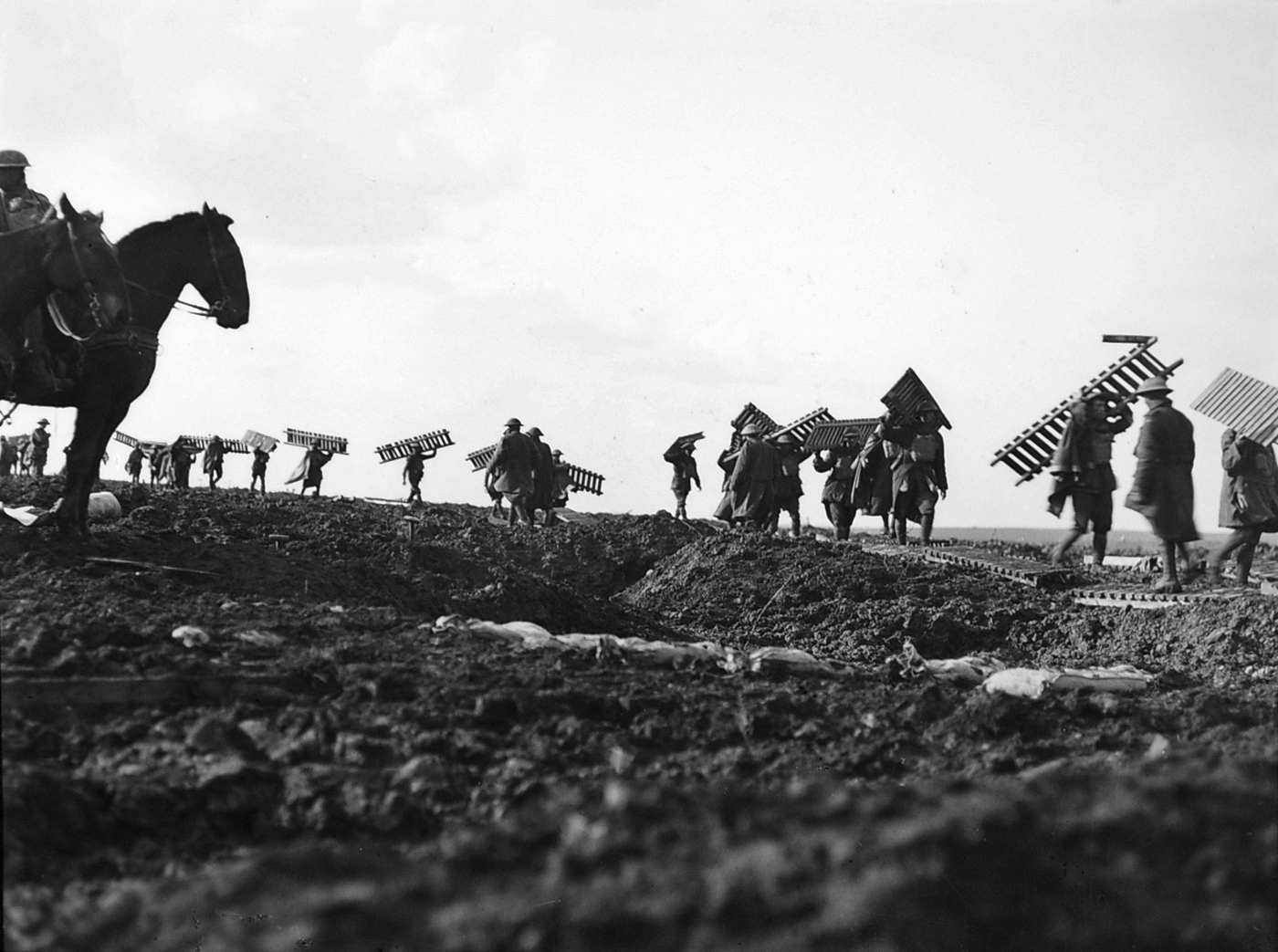
The battlefield is also somebody’s land
The photograph of Australian soldiers laying duckboards near Passchendaele in October 1917 shows a practical task rather than a charge. Men were trying to create a usable path across mud. The Australian War Memorial’s record places the scene within the work of the 1st Division. The landscape was an obstacle that had to be crossed before almost anything else could happen.
The destruction is easy to see in photographs like this. What happened afterwards takes more digging. A battlefield could contain unexploded ammunition, damaged drainage and disrupted farming. To move from an image of mud to a history of recovery requires other records: surveys, clearance work, land-use decisions and the experiences of people returning.
Follow the same piece of ground through different people’s lives and the story becomes wider. An army may describe it as a position, an engineer as a drainage problem and a household as the place where its livelihood used to be. A field doesn’t stop mattering to its owners when the army moves on.
The damage doesn’t always come from a deliberate attempt to harm the environment. Some damage follows directly from attack. Some arises when maintenance stops, skilled workers flee or authorities can no longer manage waste and water. Knowing how things broke down helps us explain the harm more clearly. It doesn’t make the hardship any smaller.
Histovia’s account of Angkor’s water city offers a useful historical reminder, although it concerns a very different process: water systems are maintained arrangements of channels, structures, knowledge and labour. Their survival cannot be read from the continued presence of a reservoir or a wall alone.
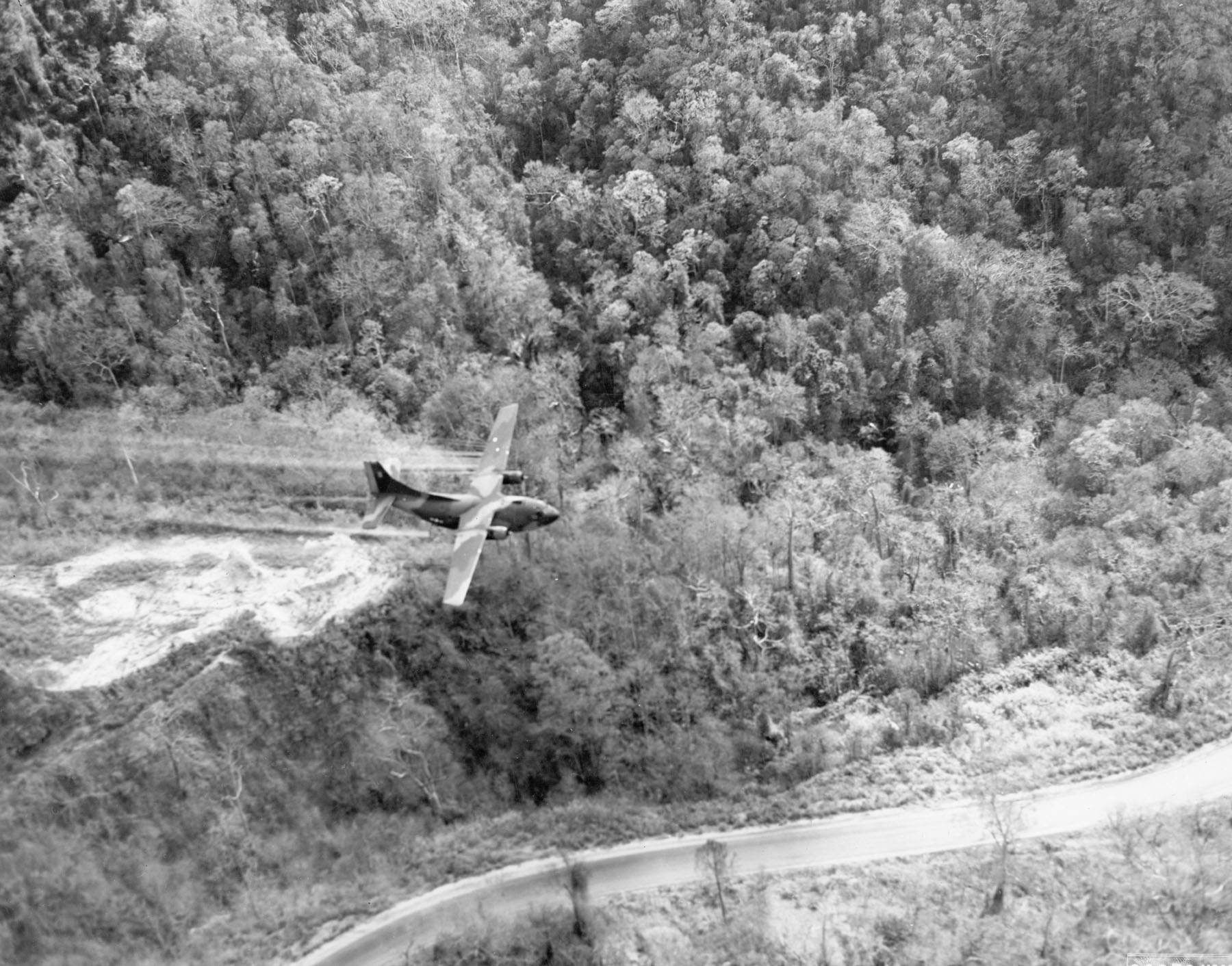
When vegetation itself became a military target
During the Vietnam War, the United States used herbicides to remove vegetation and deny cover. The US Air Force’s historical account of Operation Ranch Hand dates the beginning of its C-123 spraying operations to January 1962. The landscape was not simply damaged beside a military objective; altering it was part of the operation.
The 1966 photograph reproduced here shows an aircraft spraying a roadside in South Vietnam. It does not, by itself, identify the chemical mixture used on that flight. That’s a small but important limit to what the picture can tell us. A general history of herbicide warfare should not attach a more specific claim to an image than its documentation supports.
The case also shows why environmental and human histories cannot be cleanly separated. Forests and cultivated land are habitats, but they are also places where people gather food, work and move. A military report might describe the trees as cover for an enemy. Someone living there could see a source of food or the route to work in the very same place.
Two treaties, two different questions
The legal responses that developed in the 1970s did not produce one simple ban covering every kind of wartime environmental harm. The Environmental Modification Convention, adopted in 1976 and in force from 1978, addresses military or other hostile use of environmental-modification techniques against another state party. Its threshold refers to effects that are widespread, long-lasting or severe.
Additional Protocol I of 1977 addresses the protection of the natural environment within the law governing hostilities. Its environmental provisions use a different, cumulative formula: widespread, long-term and severe damage. That small switch from “or” to “and” makes a real difference to the legal threshold.
The ICRC’s 2020 guidelines also explain the relevance of ordinary rules governing attacks, including distinction, proportionality and precautions. Environmental protection does not begin only when the exceptionally high specific threshold is reached. Treaty participation, the classification of the conflict and the applicable customary rules still matter when assessing a particular case.
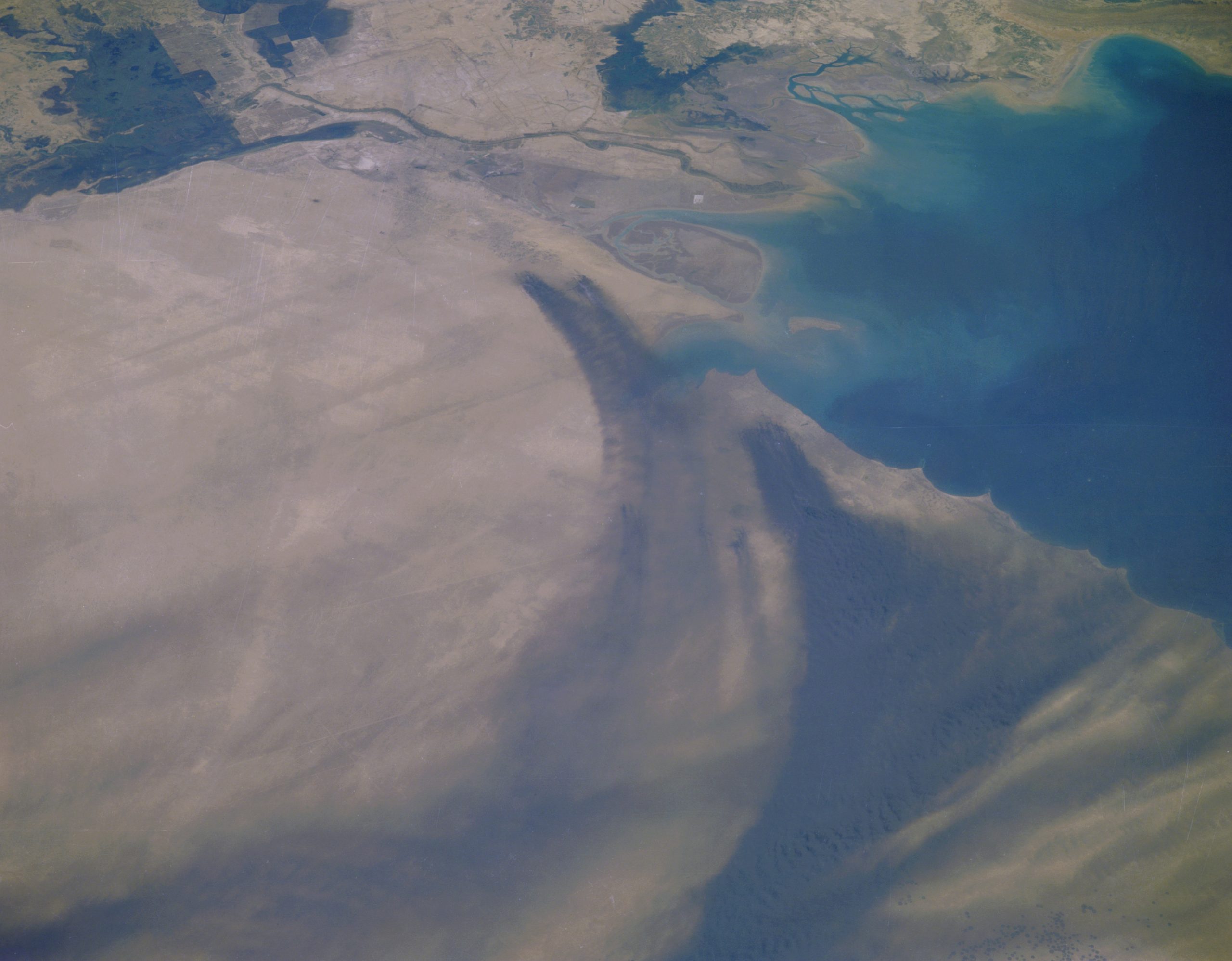
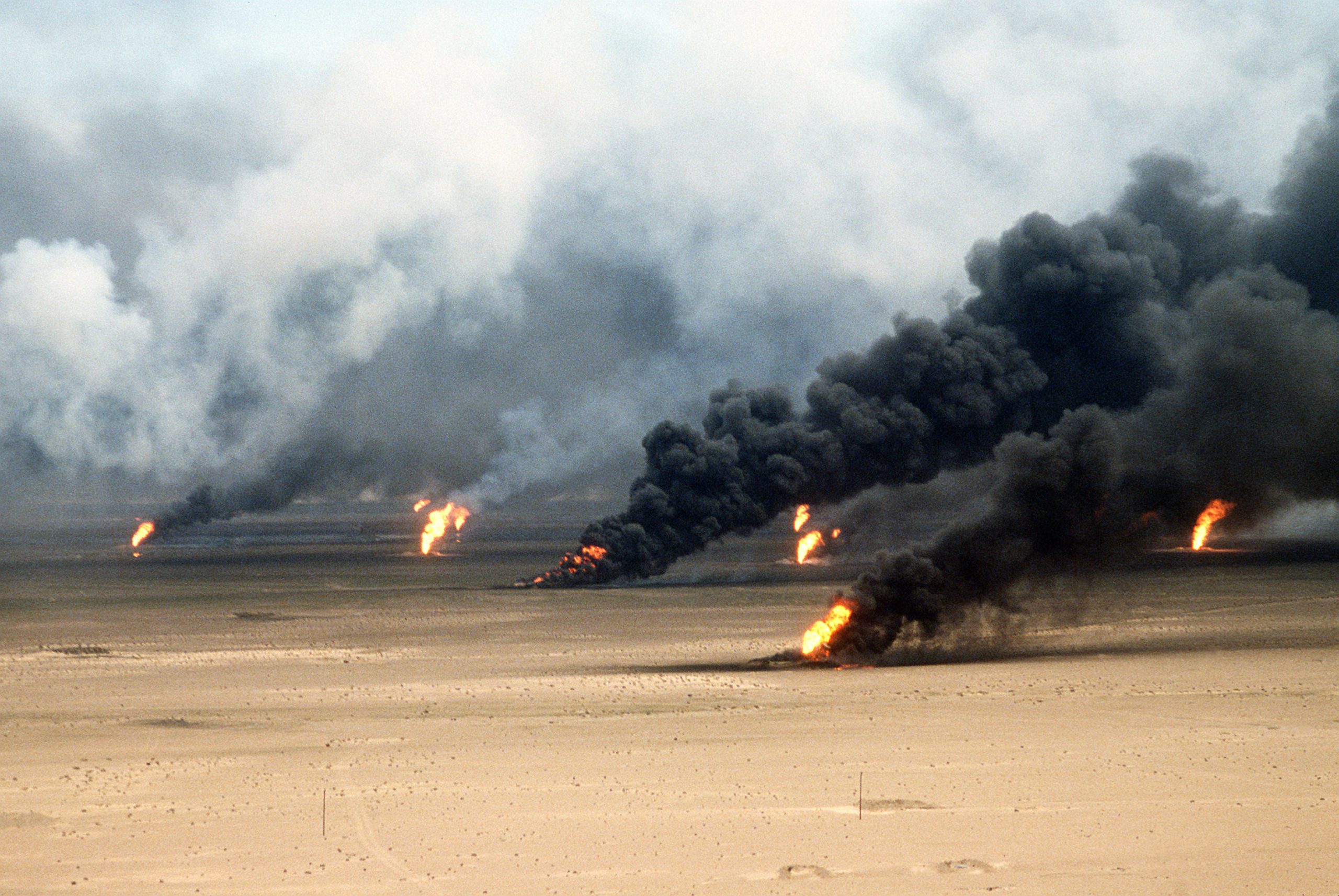
Kuwait: the flames were only the most visible stage
The retreat of Iraqi forces from Kuwait in 1991 left hundreds of oil wells burning. NASA’s account of the oil fires and its imagery record smoke on a scale that could be observed from space. The view from space makes the scale hard to miss. On the ground, there was more to deal with than smoke.
Oil also contaminated land. Putting out a well fire was a huge task. Dealing with the ground it left behind was another. The difference between putting out flames and rehabilitating ground is an example of the two calendars of war: an urgent intervention can succeed without finishing the work it makes possible.
The compensation process gives us a rare chance to follow what happened next in some detail. The United Nations Compensation Commission’s environmental follow-up programme monitored approximately US$4.3 billion in environmental awards to Iran, Jordan, Kuwait and Saudi Arabia. That figure concerns environmental restoration and remediation awards, not the commission’s entire compensation programme.
The Kuwait programme accounted for about US$3 billion. Its projects included dealing with contaminated land and other consequences of Iraq’s invasion and occupation. The record follows technical programmes and their oversight, not simply an announcement that the damage had been recognised.
This was a particular legal and institutional response, arising from the Security Council’s treatment of Iraq’s liability. Other conflicts don’t automatically have access to the same process. The gap between recognising an injury and obtaining funded remediation remains one of the hardest problems in environmental accountability.
Histovia’s discussion of the International Criminal Court and the bargain made at Rome addresses a related distinction: an institution’s existence is not the same thing as universal jurisdiction or effortless enforcement. Asking who has authority, over which conduct and through what procedure is part of understanding the remedy.
After the front moves, the hazard may stay
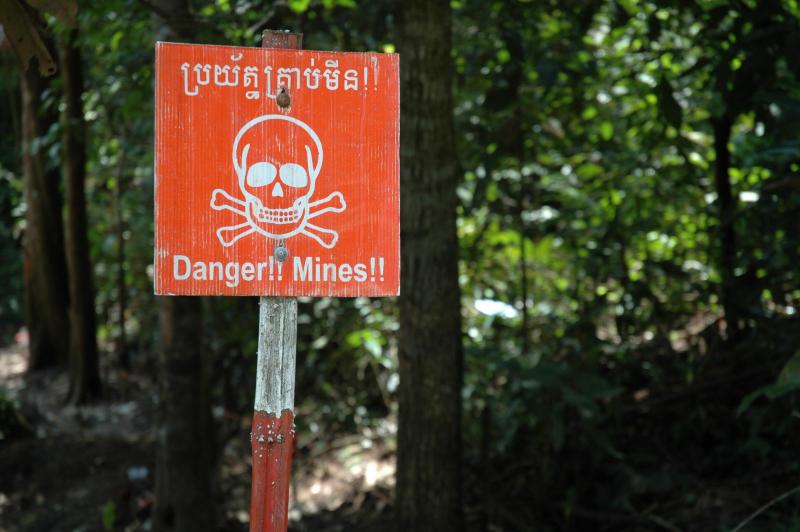
Sometimes what remains of a war is quite literally waiting in the ground. Mines and unexploded or abandoned ammunition can threaten people returning to fields, roads and buildings. The fighting can be over while the land is still unsafe to use.
The ICRC’s account of explosive remnants of war describes their continuing consequences for civilians. Mines and other explosive remnants are not all the same category of weapon or hazard. For a family deciding whether it can cultivate a field, however, uncertainty about what lies beneath the surface can itself prevent ordinary work.
Look at the warning sign in the Cambodian photograph. It can help keep people away from danger, but the danger is still there. Marking a hazardous place can reduce exposure. It does not remove the explosive objects or establish that adjacent land is safe. An article or photograph cannot substitute for locally competent safety information.
The UN Mine Action Service’s explanation of clearance describes work involving survey, marking and removal or destruction of hazards. Such work can restore access to agricultural land, infrastructure and public services. Its benefits extend beyond preventing a single injury to allowing activities that contamination had made impossible.
Water damage travels through a system
Water presents a different but connected problem. A pump may depend on electricity, a treatment plant on chemicals and trained staff, and a distribution network on pipes that remain accessible for repair. Looking only for a direct strike on a water tank can miss other ways a service fails.
UNICEF’s November 2026 report draws on documented information across 23 countries and territories and distinguishes several types of attack affecting water, sanitation and hygiene. Its breadth reinforces the need to examine service systems and the people who keep them working, rather than treating each damaged object in isolation.
For historical comparison, the useful question is not whether a modern pump is equivalent to an ancient canal. It is which dependencies make a community vulnerable when one part of its infrastructure fails. The technologies change; the need to trace those dependencies remains.
Repair begins with knowing what happened
Some damage is much harder to see than a burning oil well. A photograph may show a destroyed industrial building without establishing which substances escaped, where they travelled or who was exposed. A satellite image may indicate a fire or changed vegetation without answering every question that a field investigation would ask.
UNEP’s 2022 discussion of the war’s toxic legacy in Ukraine illustrates the importance of identifying environmental hazards while recognising the limits imposed by an active conflict. It is an early assessment, not a current total of damage in November 2026. The date matters: an early assessment can help explain a problem without telling us its full size today.
Getting the record right takes patient work. Researchers need to separate observed damage from suspected contamination, plausible exposure from demonstrated effects, and an interim assessment from a completed survey. Those distinctions can determine priorities for testing, access and cleanup. They also keep uncertainty from becoming an excuse either to exaggerate or to ignore a risk.
Protection has a before and an after
The International Law Commission’s 2022 principles on protection of the environment in relation to armed conflicts organise the subject across the period before conflict, during it and after it. Their scope includes such matters as occupation, environmental information and remedial measures. The General Assembly took note of the principles; they are not a new treaty ratified by every state.
Look at this longer time frame and a peace settlement starts to raise some very practical questions. Ending hostilities is indispensable. It may still leave unresolved who will survey land, retain technical records, fund treatment of pollution or ensure that displaced people can return safely. An environmental provision without people, institutions and resources to carry it out can remain a promise.
The history behind 6 November is therefore not only a succession of ruined landscapes. It is also a history of attempts to name damage, establish responsibility and organise repair. The work can be technical and slow: a sample analysed, a hazardous area marked, a contaminated site treated, a water service restored.
When someone promises recovery, ask what “finished” will actually look like. Is the aim to remove an immediate hazard, restore a service, make land usable again or compensate a loss that cannot be reversed? These are related goals, but they are not interchangeable. Naming the intended result makes it possible to examine whether a programme has achieved it, and whose needs remain outside its definition of success.
There’s rarely one dramatic finish to this work. But for people living where the fighting happened, it’s a large part of what makes peace real. The fighting may stop on a particular day. The recovery of a usable environment has to be made, step by step, afterwards.