
Science, Invention & Exploration
Gutenberg’s Bible and the Work of Making Print Repeatable
Metal type was only one part of the achievement at Mainz. Money, skilled labor, hand decoration and changing partnerships shaped the books that survive.
In a letter dated March 1455, Aeneas Silvius Piccolomini described an extraordinary product he had seen: printed portions of a Bible, clear enough to read easily and already attracting buyers. His account gives us a contemporary glimpse of the enterprise now associated with Johannes Gutenberg. As the Library of Congress research guide explains, it does not name Gutenberg. Nor does it describe the machinery or show us a complete day inside the workshop.
That combination of strong evidence and missing detail runs through the story. The surviving Bibles demonstrate an astonishing achievement in repeated printing. The documents reveal money, risk and disagreement. Together they suggest a more interesting history than a lone inventor simply pulling a lever and changing the world.
A major European achievement in a longer global history
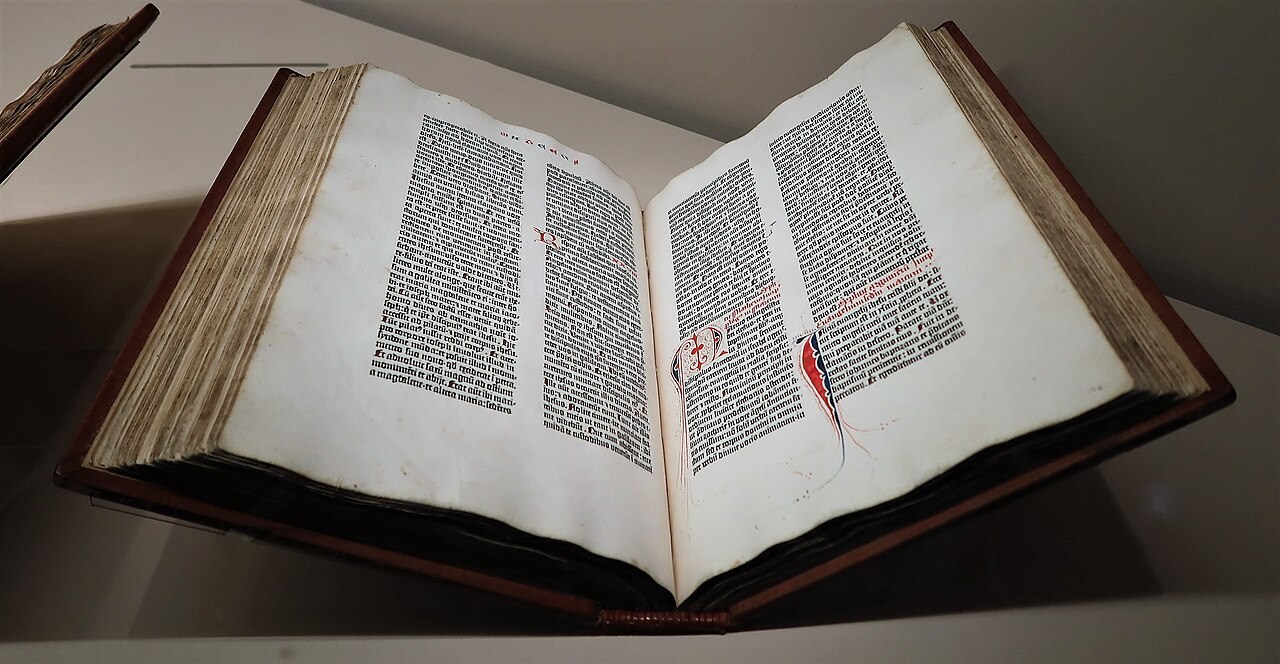
The Gutenberg Bible was produced at Mainz in the mid-1450s. It is often called the 42-line Bible because that is the usual number of lines in each column. The text is Latin, based on the Vulgate tradition. It belongs to the history of European typographic printing, rather than marking the invention of printing everywhere.
Woodblock printing had already developed in East Asia centuries earlier. The Diamond Sutra of 868 survives as a complete dated printed scroll, and the Korean Jikji of 1377 is the earliest surviving book printed with movable metal type. The Library of Congress’s Jikji-to-Gutenberg project uses these objects to broaden the history beyond a single European starting point.
That wider perspective does not diminish the Mainz achievement. It asks a more precise question: how did this particular combination of technology, financing, skilled work and customers make a large typographic book possible in fifteenth-century Europe?
The press was one part of a system
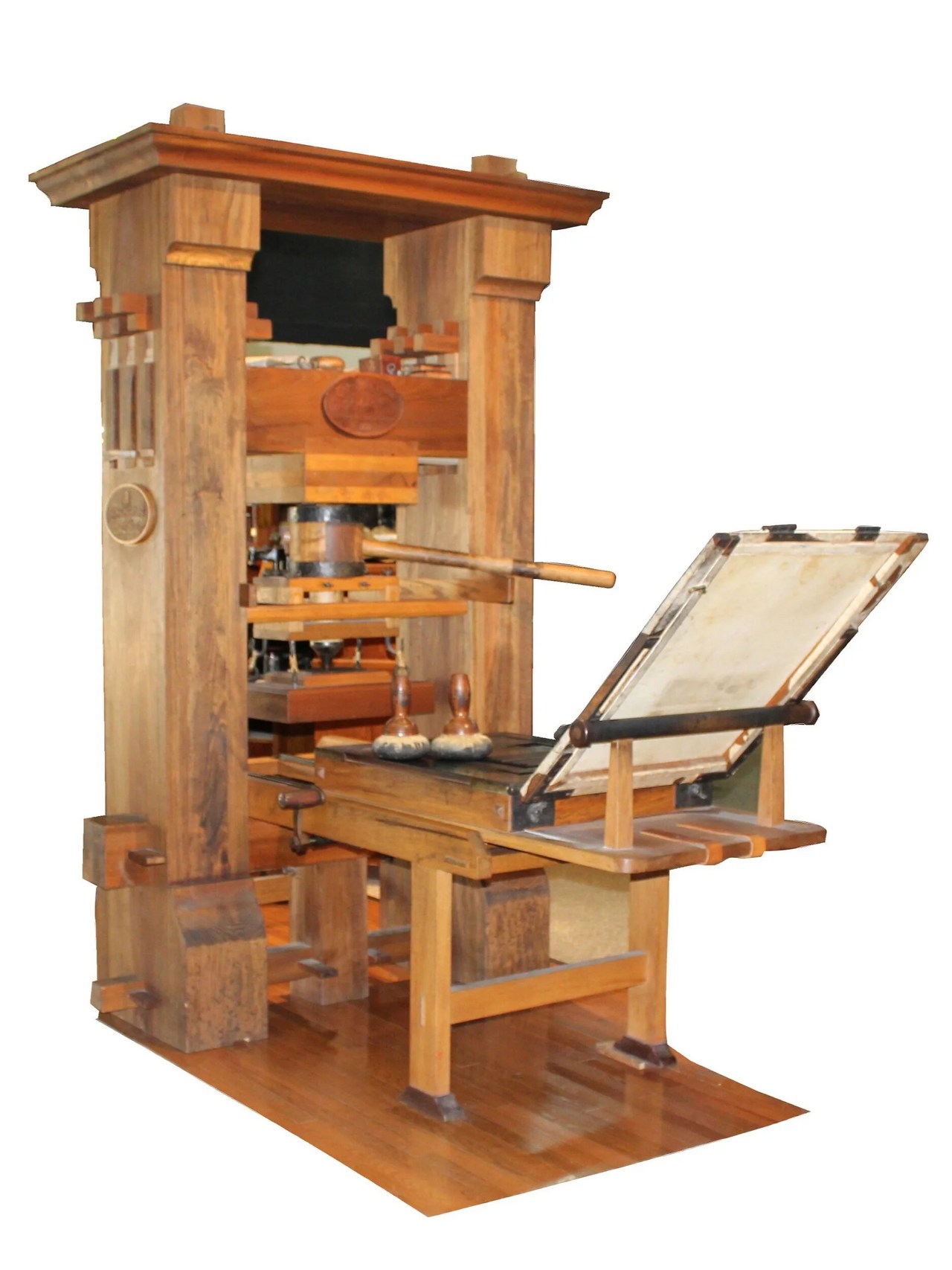
A wooden press is the most recognizable object in demonstrations of early printing. But pressure alone could not produce a readable Bible. The workshop needed characters that could be assembled into lines, held together, inked and impressed repeatedly. After printing, type could be redistributed for other pages.
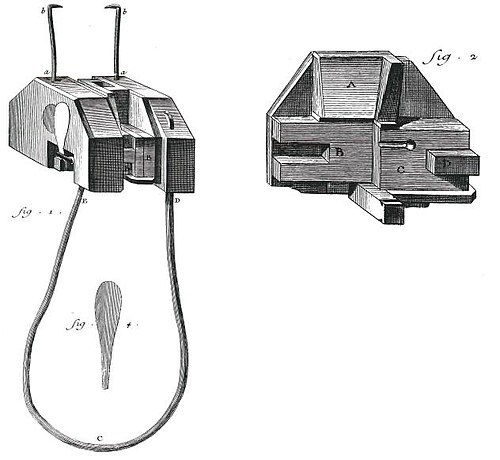
The Gutenberg Museum’s explanation of the process describes punches, matrices and a hand-casting instrument for producing individual pieces of metal type. The letters needed consistent dimensions, not just attractive shapes. Tiny differences repeated across a page could interfere with alignment or the transfer of ink.
The alphabet was not the entire stock. Capitals, lowercase letters, abbreviations, punctuation and combined forms had to be available in the quantities a page required. Composition meant choosing and placing those pieces in the correct order. A system built for repetition still depended on careful work at every stage.
Modern reconstruction presses make that physical process understandable. They should be identified as reconstructions, however. A working demonstration is an interpretation of early practice, not Gutenberg’s surviving machine transported intact into a museum.
Repetition required preparation
Movable type changed where effort was concentrated. Preparing a page involved a substantial investment before its first impression. Once prepared, the arrangement could produce multiple copies. The more copies printed from it, the more that initial work could be spread across the run.
Yet repetition also created a new responsibility. A mistake in a prepared page could appear again and again. Correcting the type did not automatically correct sheets already printed. Consistency was something workers had to achieve and check, not a magical property of machinery.
The Gutenberg Bible’s regularity therefore represents organization as well as invention. Type, paper or parchment, ink, pressure and the handling of sheets had to work together. Its appearance offers direct material evidence that those demands were met, even where no detailed workshop record survives.
The financial dispute behind the famous book
Johannes Fust supplied important financing. A legal document dated 6 November 1455, usually called Helmasperger’s Notarial Instrument, records aspects of the dispute between Fust and Gutenberg over money and the enterprise’s obligations. The Göttingen library’s UNESCO nomination, which discusses the notarial document, identifies it as a key contemporary record of Gutenberg’s business relationship with Fust.
The Gutenberg Museum’s chronology describes Fust’s substantial advances and cautions that the outcome of the proceedings is not completely preserved. Familiar retellings often turn the case into a fully documented scene of betrayal and ruin. The surviving record is narrower than that dramatic narrative.
The financing mattered because a printing operation needed resources before all its sales could be realized. Equipment, materials and wage-earning assistants cost money while the book was still being made. Technical success did not eliminate the possibility of financial conflict.
This is one reason to resist the image of a solitary inventor. Even when an individual’s contribution was exceptional, the project depended on people willing to supply capital, perform skilled work and buy its output. Their interests did not always align.
Printed pages still passed through other hands
A Gutenberg Bible leaving the printing stage was not necessarily a finished, bound volume. Rubricators supplied colored headings and initials; illuminators could add more elaborate decoration; binders assembled sheets into a usable book. Princeton University Library’s account of illumination explains how blank spaces were deliberately left for that work.
A buyer could acquire printed sheets and commission further work elsewhere. The resulting object combined typographic repetition with local craftsmanship and individual expenditure. Two copies could carry substantially the same printed text while differing visibly in decoration, binding and subsequent use. A dated note supplies a particularly concrete example: Heinrich Cremer recorded completing the decoration and binding of one volume on 23 August 1456, a week after its companion. The act of finishing was important enough to leave its own trace in the book.
The Morgan Library’s digitized Gutenberg Bible makes this material history accessible at the scale of an opening. The museum’s collection includes copies on both paper and vellum, as well as differences in completeness. Its estimate of an original edition of roughly 160–180 copies is a reconstruction, not a surviving workshop sales ledger.
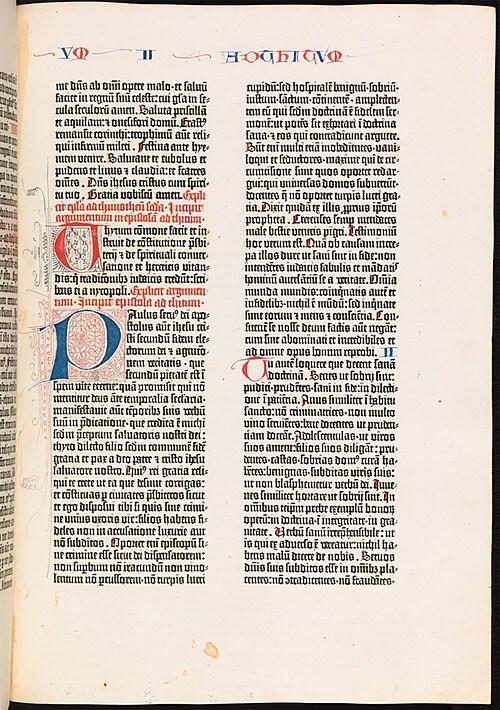
Looking at the page can also correct an overly simple story of replacement. Early printing worked within a manuscript culture. Familiar letterforms and hand-added decoration helped the new product remain legible and recognizable to the people expected to use it. Scribes and decorators did not vanish at the moment a press began operating.
Fust and Schöffer continued the experiment
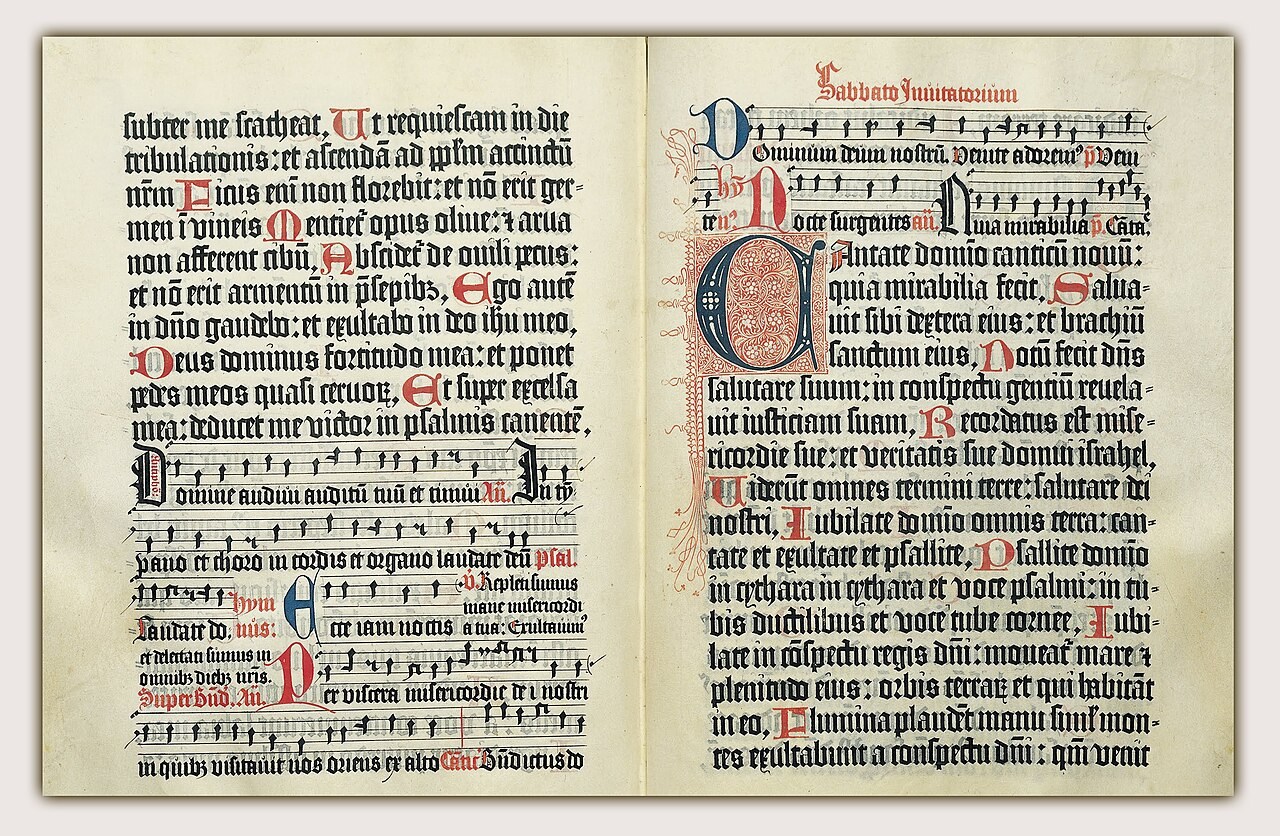
The Mainz Psalter of 1457 is another landmark of the same printing world. Produced by Fust and Peter Schöffer, it is celebrated for its colored printed initials and its explicit statement of production. A later Benedictine Psalter followed in 1459. The Library of Congress’s description of a surviving leaf places the two Psalters within that developing business.
These books show that the history did not stop when Gutenberg’s most famous project was completed. Printers continued to experiment with color, format and the needs of particular readers. The workshop was an evolving institution, and the people associated with it pursued further work through changing partnerships.
Why the finished books remain the strongest witnesses
The Gutenberg Bible does not announce every person who made it. Its surviving copies have also undergone centuries of rebinding, collecting, repair and sometimes dispersal into individual leaves. Their present condition has to be read as a history in its own right.
Nevertheless, the books allow questions that a celebratory inventor’s portrait cannot answer. How regular is the type? Where does decoration vary? Which elements were printed and which added later? What can ownership marks tell us about a copy’s movement? These observations bring production and use back into the story.
The achievement at Mainz was the creation of a working system for producing a major book repeatedly, supported by substantial investment and many kinds of skill. Its significance lies as much in the coordination of those parts as in any single device. The revolution becomes more concrete when the famous press is placed back among the people, materials and financial commitments that made its impressions possible.