
How the Passport Became the Paperwork of Modern Borders
Photographs, standard forms and refugee documents did not abolish borders. They changed how a person became legible at one.
A passport looks like an ordinary personal possession until someone asks to see it. Then the little booklet becomes a meeting point between a person and several states. One authority identifies its holder; another decides whether to admit them. A photograph appears to settle identity, while a visa, stamp or electronic record raises a different question: permission.
That familiar arrangement did not emerge in one clean invention. Safe-conducts, letters of protection and travel controls have long histories, but the standardised passport associated with modern international travel took shape through war, administration and negotiation. Its history is not simply a march from inconvenient paper to convenient technology. It is also a history of who could obtain documents, whose identity was accepted and who remained stuck between categories.
Before the booklet, a different landscape of documents
The British Home Office traces a line from medieval safe-conducts to later passports, but those early documents should not be mistaken for today’s universally expected booklet. A letter asking authorities to allow a traveller through was not the same administrative object as a routinely issued, photograph-bearing national passport.
The American record makes the distinction especially clear. According to the US National Archives, passports were generally not compulsory for American overseas travel before 1941, apart from specified wartime periods. The government nonetheless issued them, and the surviving applications can tell us a great deal about the people who sought them. A document can be useful without yet being mandatory for every journey.
It would be a serious mistake, though, to turn that limited observation into a golden age of unrestricted movement for everyone. Colonial subjects, racialised migrants, enslaved people and other controlled populations encountered restrictions that a well-connected European tourist might scarcely notice. Scholarship on the passport’s international history stresses that freedom to travel was uneven before the First World War, not just after it. Histovia’s account of exclusion laws and the border explores a related problem: mobility rules can extend far beyond a line on a map.
How do you prove that you are you?
Before photographs became routine, officials relied on written descriptions. The American archives preserve forms recording characteristics such as height, hair and eye colour, along with features of the face. Read one today and the difficulty is obvious. A verbal description might distinguish some people, but it could not create a uniquely convincing match between document and body.
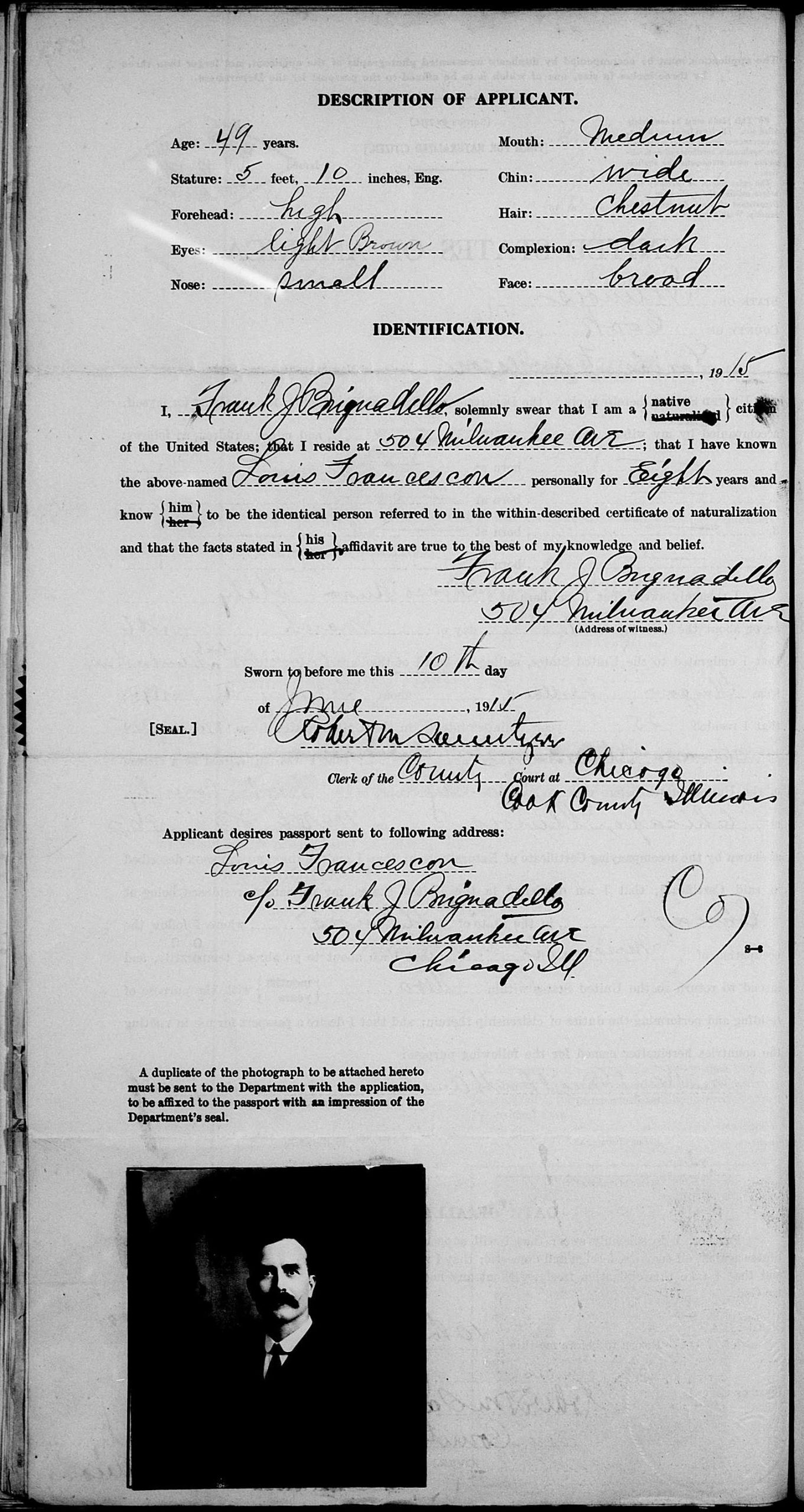
The US required photographs with passport applications from December 1914. Britain introduced a photograph-and-signature format in 1915, followed by a booklet format in 1921. These changes sit inside the disruption of the First World War, when states became more concerned with identifying travellers and controlling cross-border movement.
A photograph did not eliminate judgement. Officials still had to decide whether the person in front of them matched it, whether the supporting information was credible and whether the document itself was genuine. Nor did the move to individual identification happen uniformly. Older American applications could include a traveller’s wife, children or servants. Such arrangements are a reminder that administrative identity has sometimes been organised around a household and its presumed head rather than around an autonomous individual.
That makes a historical passport a particularly revealing object. Its fields show what an issuing authority wanted to know. Its omissions show what it did not ask, or assumed it already understood. The form is part of the history, not merely a container for it.
Standardising the border without removing it
After the war, the League of Nations became a forum for trying to make international travel documents more consistent. A passport conference in 1920 and subsequent discussions addressed a system that had become both widespread and cumbersome. Common formats promised practical benefits: an official who recognised a document’s layout could process it more readily.
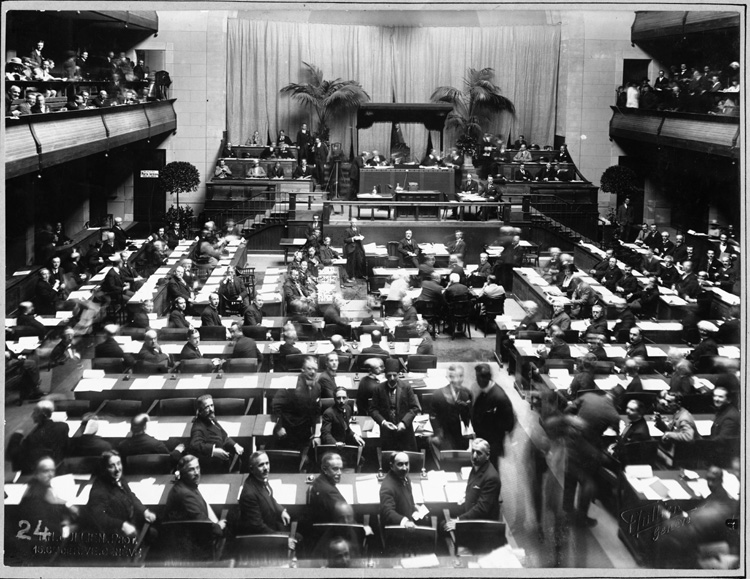
Standardisation can sound like a small technical adjustment. In practice, it means persuading different governments to represent identity in ways that other governments can recognise. A document has to travel across administrative systems as well as geographical space. The same person may be described in different languages, under different naming conventions and through different legal categories.
But agreement about a format is not agreement about admission. A government can accept that a passport is authentic and still refuse entry to its holder. It can recognise nationality while requiring a visa, limiting a stay or restricting work. The passport and the permission are connected, but they are not interchangeable.
This distinction is the key to understanding why a modern-looking document did not create an equally mobile world. Standard paperwork could make permitted travel easier while making the filtering of unwanted travellers more systematic. Administrative efficiency is not, by itself, a guarantee of freedom.
The people a national passport could not serve
Refugees made the limits of a nationality-based system painfully visible. What happened when a person could not obtain protection or documentation from the state with which they had previously been associated? A border system built around national papers could leave them without a usable way to move.
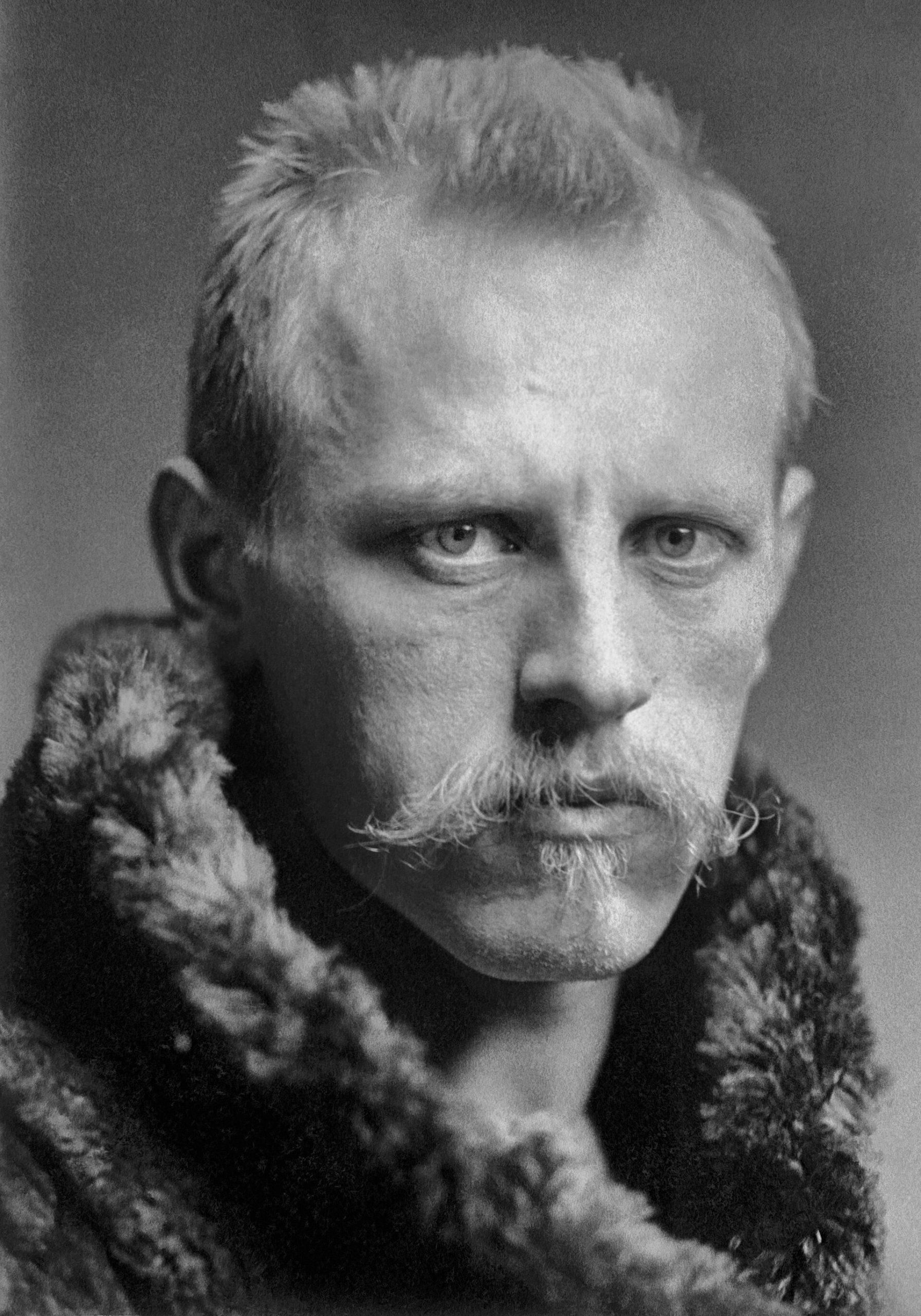
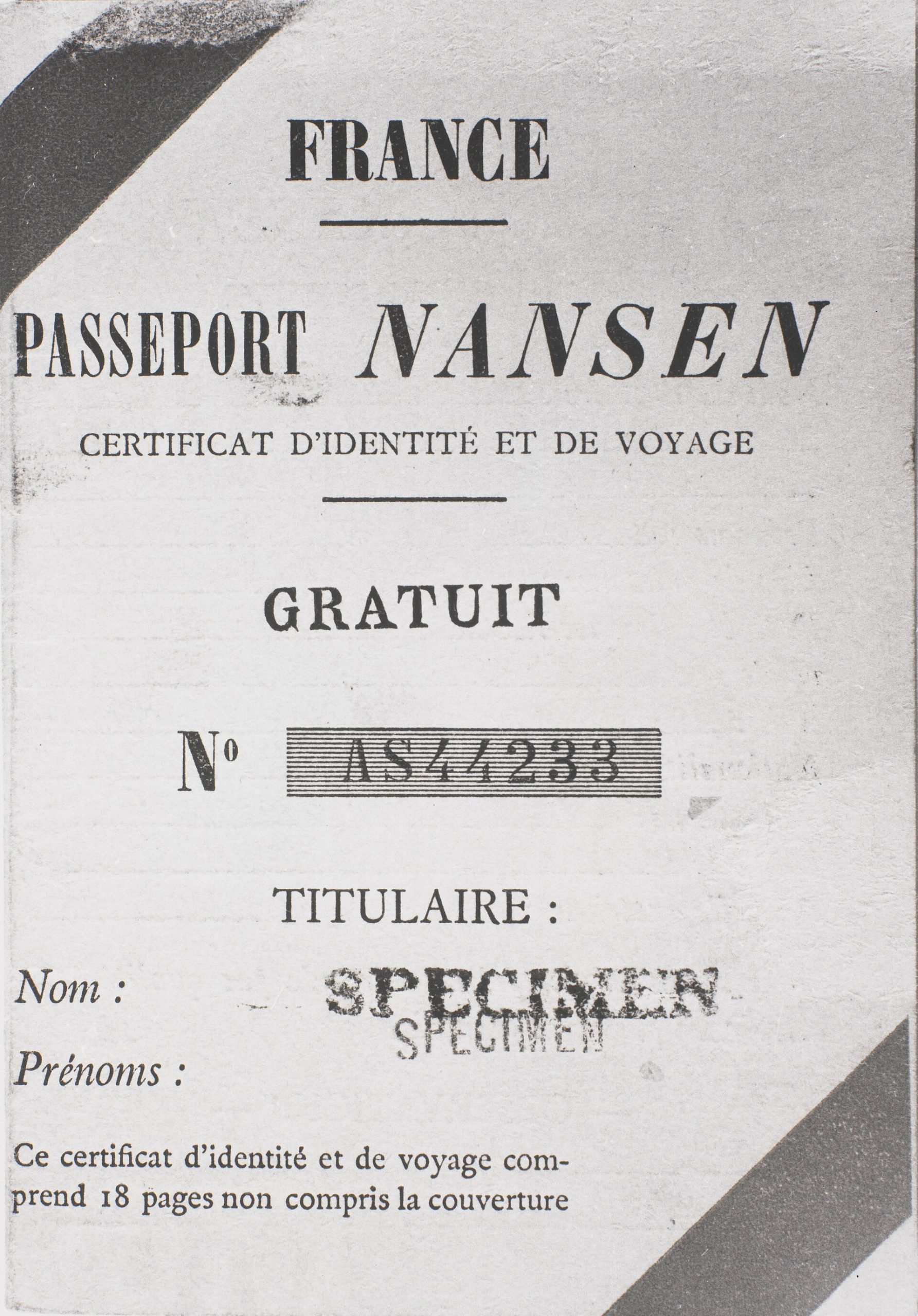
The Nansen passport scheme, introduced in 1922 for Russian refugees and later extended to other groups, addressed that problem through internationally recognised identity documents. Norway’s National Archives explains how the scheme emerged from humanitarian and legal work involving Fridtjof Nansen, the League and other participants. It was not simply the lone invention of the famous man whose name it carried.
Its importance becomes clearer if we resist describing it as a replacement nationality. It could help its holder travel, but it did not automatically confer citizenship or a universal right to settle. Recognition depended on participating authorities. Renewal and permission still mattered. The Norwegian archival account includes a refugee whose document was nearing expiry while she sought to continue her journey: the bureaucratic difficulty was not over merely because a paper had been issued.
There is a larger lesson here. A humanitarian document can make a life-changing difference without solving the political conditions that made it necessary. Calling it imperfect should not minimise the mobility it enabled; celebrating it should not conceal the insecurity its holders continued to face.
A colonial travel document asks another question
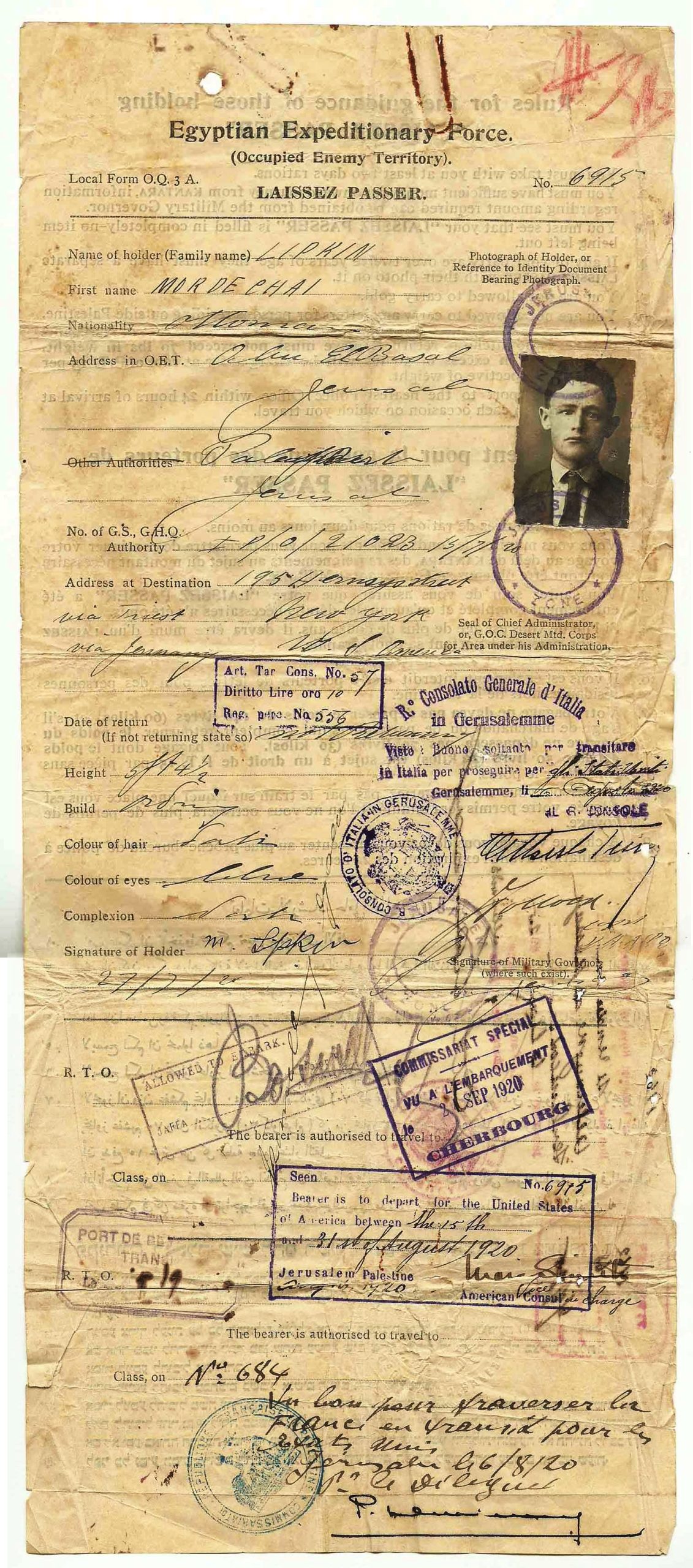
A 1920 laissez-passer from Palestine bearing an Egyptian Expeditionary Force heading, reproduced here as a historical object, helps unsettle a too-simple national story. Not every travel paper fits the model of a sovereign nation issuing an identical booklet to equal citizens. Empires, occupations and mandates produced their own combinations of status, authority and movement.
The object should not be made to stand for every person’s experience or every rule in that territory. Its value here is narrower: it makes the administrative diversity visible. A history assembled only from the passports of metropolitan citizens would miss part of the machinery governing travel. Ask who issued the paper, what status it recorded and where it was supposed to be recognised before assuming that the word “passport” means the same thing in every setting.
From the official’s eye to machine-readable travel
Mass air travel sharpened another problem: speed. ICAO’s history of facilitation describes the growing pressure to reduce delays as passenger numbers and aircraft capacity increased. The border was becoming a processing bottleneck in a transport system that could move people through the air faster than it could move them through arrival procedures.
Machine-readable information and, later, electronic passport chips changed the handling of identity data. The British sequence provides one example: machine-readable passports appeared in 1988 and biometric passports in 2006. These developments made it possible to check information through systems not limited to a human reading a page.
Yet the underlying separation remains. A quicker identity check does not settle the legal right to enter, work or remain. Technology can change the speed and method of sorting travellers without making the outcomes equal. Looking at an automated gate as the final stage of a simple progress story misses the policy choices operating behind it.
What the booklet can teach us
The passport brings together three histories that are easy to confuse: identifying a person, recognising a political status and authorising a movement. Sometimes they reinforce one another. Sometimes a person can establish one perfectly well and still be denied the others.
For that reason, the most useful historical question is not “When were passports invented?” but “When did this kind of document become necessary for this kind of traveller, and who decided?” The answer changes across places and populations. The little booklet is a global object with an uneven history. Understanding that unevenness makes today’s border paperwork look less natural, and much more human-made.