
The Herero and Nama Genocide: War, Land and the Lives of Survivors
An unfinished list of the dead leads through Germany’s colonial war in Namibia, the camps that followed surrender, and the struggle to rebuild after dispossession.
Edward Fredericks tried to keep a list of the dead. Imprisoned on Shark Island after surrendering to German forces, he recorded men, women and children from his community who did not survive. Eventually, he stopped. As he later explained, he feared that all of them were going to die.
His account appears on page 99 of the 1918 report on German rule in South-West Africa, usually called the Blue Book. It is a difficult source, compiled by officials of a rival colonial power and filled with the racial language of its time. Yet within it, Fredericks describes a sequence that no battlefield summary can capture: surrender, detention, repeated transfers, compulsory work and years of separation from home.
The genocide of the Herero, also known as Ovaherero, and Nama between 1904 and 1908 unfolded across those different settings. German soldiers killed people in military operations and drove fugitives into lethal conditions. Camps then exposed survivors to disease, violence and exhausting labour. Land confiscation and restrictions on movement made survival under colonial rule a continuing struggle.
Before the war: cattle, credit and unequal justice
Germany claimed its South-West African colony in 1884. The territory, much of present-day Namibia, already contained communities with their own political authorities, economic networks and conflicts. German sovereignty on a European map did not instantly produce effective control on the ground. It advanced through agreements, military posts, settler occupation and coercion.
For pastoral communities, losing cattle meant more than losing saleable property. Herds supported food, exchange and the ability to maintain a household outside a settler employer’s control. Access to grazing and water mattered together. A boundary across a map could cut through the practical geography on which a community depended.
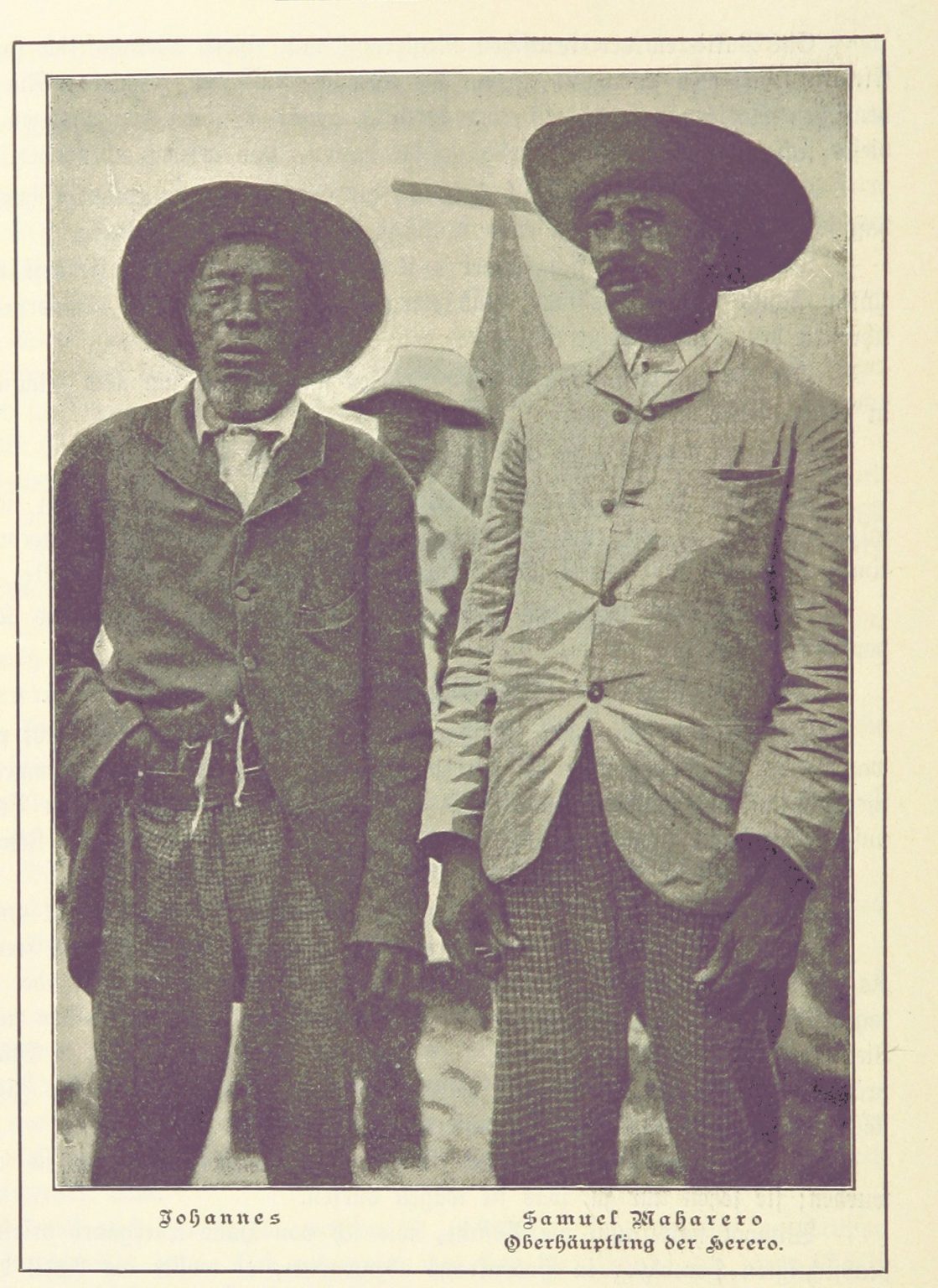
Samuel Maharero set out some of the grievances in a letter to Governor Theodor Leutwein dated 6 March 1904. He described killings of Herero by white men, inadequate redress and traders seizing cattle to settle debts. This was an interested political account, written by a leader at war. It nevertheless shows what he wanted the governor to confront: years of unequal treatment, rather than a sudden outbreak without a history.
How a colonial war became a campaign against a people
Fighting began in January 1904. Herero attacks killed German settlers and challenged colonial control over farms and transport routes. German reinforcements followed. Governor Leutwein and General Lothar von Trotha differed over how to defeat the resistance and what relationship should exist afterwards. Neither offered the restoration of an independent Herero political order.
Von Trotha arrived in June. On 11 August, German forces attacked the Herero gathered near the Waterberg, at Ohamakari. Families and livestock were present alongside fighters. Many escaped eastwards into the Omaheke. The subsequent pursuit and obstruction of access to water turned flight into mass death. Calling this simply a battle lost leaves the central question unanswered: what did the victors do to the people who had fled?
The clearest documentary answer is von Trotha’s proclamation of 2 October 1904. It expelled the Herero from the colony and ordered the shooting of any Herero encountered within its frontier, whether armed or unarmed and whether possessing cattle or not. Its threat included women and children. An instruction to the troops explained that shots should be fired above their heads to drive them away, while anticipating that no more male prisoners would be taken.
That qualification did not offer families a safe place to go. Expulsion under fire, with access to water obstructed, put civilians in conditions that could kill them without a soldier firing the final shot. The document’s distinction between armed and unarmed people collapsed altogether for men. Membership of the targeted population had become the criterion.
The Blue Book, chapters XIV–XV, reproducing earlier German material alongside testimony, describes both military pursuit and the distrust that made surrender dangerous. Its editors sometimes make sweeping claims about what every German intended. Those claims need separating from particular orders and witness statements. The extermination proclamation supplies direct evidence of the commanding general’s policy without requiring us to accept every editorial assertion in the later report.
Some people escaped beyond the colony, including Maharero, who reached British Bechuanaland. Such survival matters to the account. The Herero were never merely a population waiting for decisions from Berlin: people fled, hid, sought water, preserved relationships and carried knowledge of what had happened beyond German jurisdiction.

The Nama war had its own course
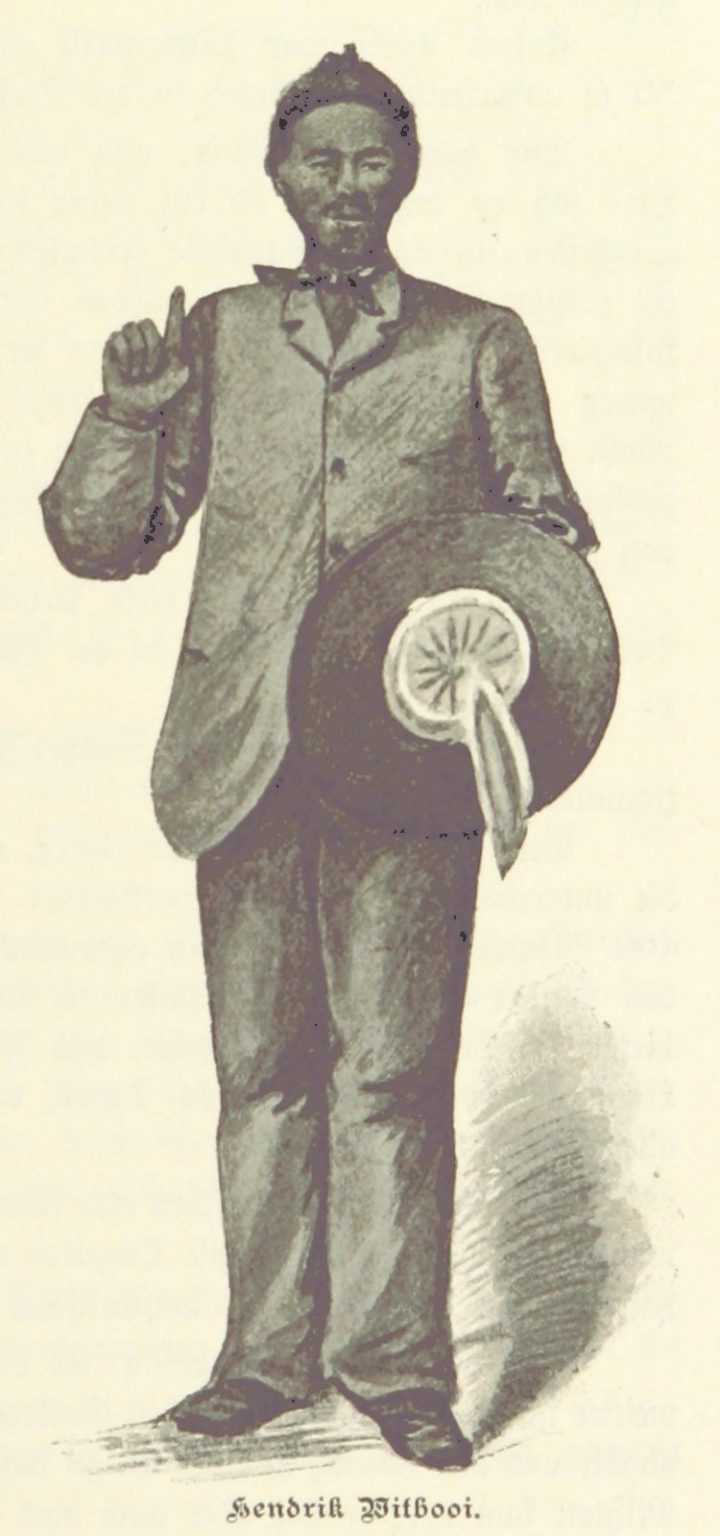
Nama resistance should not be squeezed into an appendix to the Herero story. Hendrik Witbooi had opposed German expansion before reaching an agreement with colonial authorities in 1894. His followers subsequently fought alongside German forces. In October 1904 he broke with that relationship and took up arms again. Other Nama leaders and communities followed their own paths through resistance, negotiation and surrender.
The fighting in the south relied heavily on mobility and knowledge of the country. There was no single southern equivalent of Waterberg that explains the whole campaign. Witbooi died after being wounded in October 1905; resistance continued under other leaders. Von Trotha also issued a threatening proclamation against the Nama in April 1905. These stages are set out in South African History Online’s chronology.
The contradictions of imperial alliances appear particularly sharply in the Blue Book’s accounts of Nama men deported to Cameroon. Frantz Lambert reported that he had been sent by Witbooi to assist German forces against the Herero. After Witbooi’s break with Germany, men who had served the Germans were arrested and sent away. His testimony describes railway work and deaths in an unfamiliar climate.
Read that sequence slowly. Prior service did not protect these men once the colonial authorities treated their wider community as an enemy. Nor did detention necessarily keep people within the territory where their families lived. Germany’s African possessions could become connected routes of punishment and forced labour.
The testimonies printed on pages 98–100 also distinguish people who remained in the field from those who surrendered. Some survivors remembered fighting on because they believed capture meant death. Others recalled promises made before surrender that were followed by confinement and removal. We cannot recover every conversation from these later statements, but their repeated attention to assurances and betrayal explains why a formal offer of peace might have little credibility.
These testimonies preserve political judgment as well as suffering. Witnesses explained whom they had served, why they had fought, what they had understood an agreement to mean, and how events contradicted it. They were describing obligations broken by the state that claimed authority over them.
Shark Island: captivity after surrender
Berlin ordered the withdrawal of the extermination policy in December 1904. The change did not restore freedom to the survivors. Herero and Nama were confined in concentration camps and used as labourers. The term belongs to this period’s system of confinement; the camps must be understood through their own institutions and conditions, without treating every later use of that name as identical.
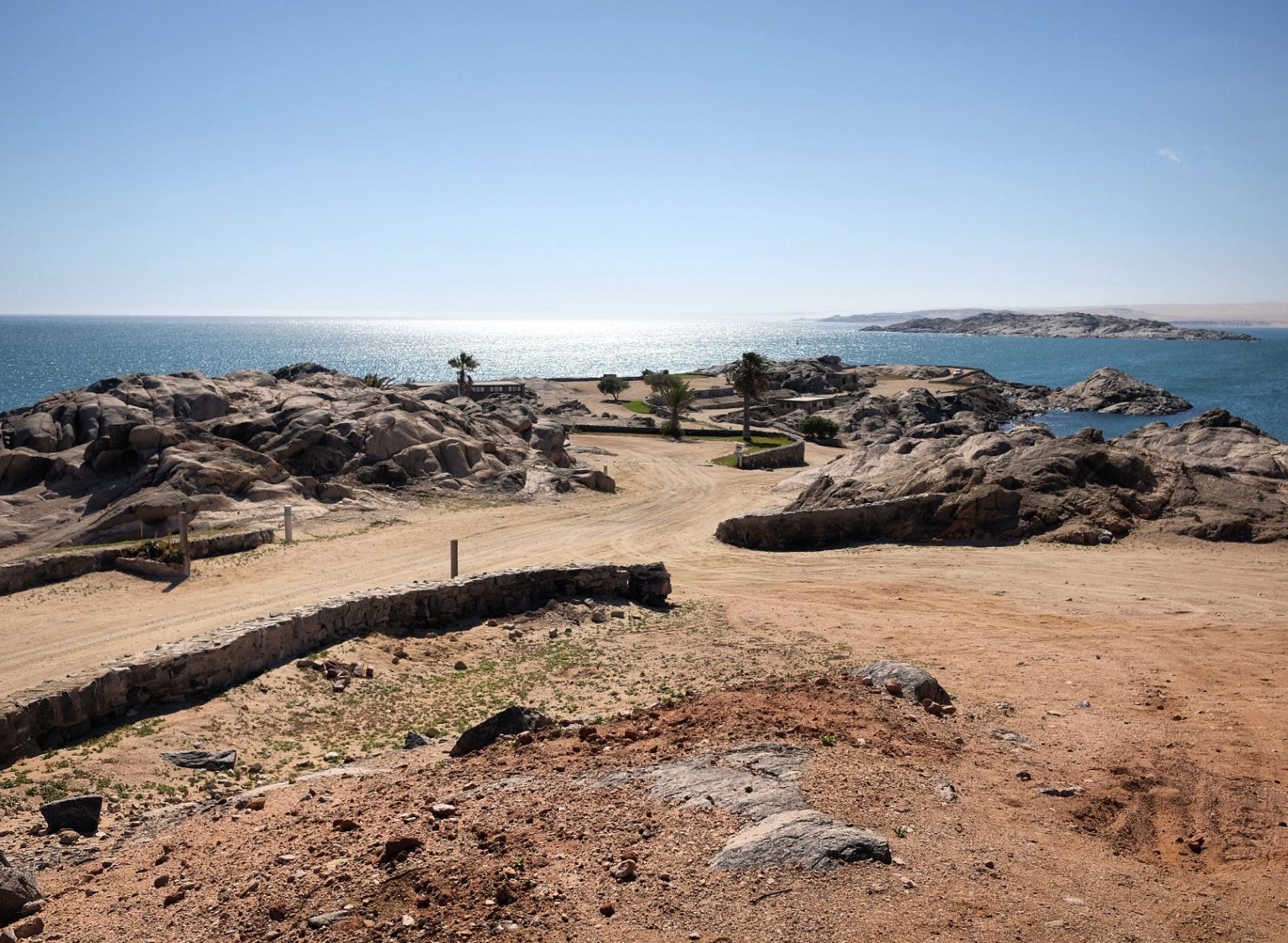
Shark Island, beside Lüderitz on the Atlantic coast, became one of the most lethal sites. The exposed coastal setting, inadequate shelter and destructive treatment of prisoners were especially dangerous for people already weakened by war and displacement. Captivity connected confinement with work on the colony’s harbour and transport infrastructure.
Edward Fredericks’s account is unusually useful because it follows a person through the system. He reported being taken prisoner in 1906 after peace had been made, moving through Aus and Lüderitz to Shark Island, and later being transferred through Swakopmund and Karibib. He described beatings and sexual violence as well as deaths. There is no need to reproduce the graphic details to understand what those conditions meant.
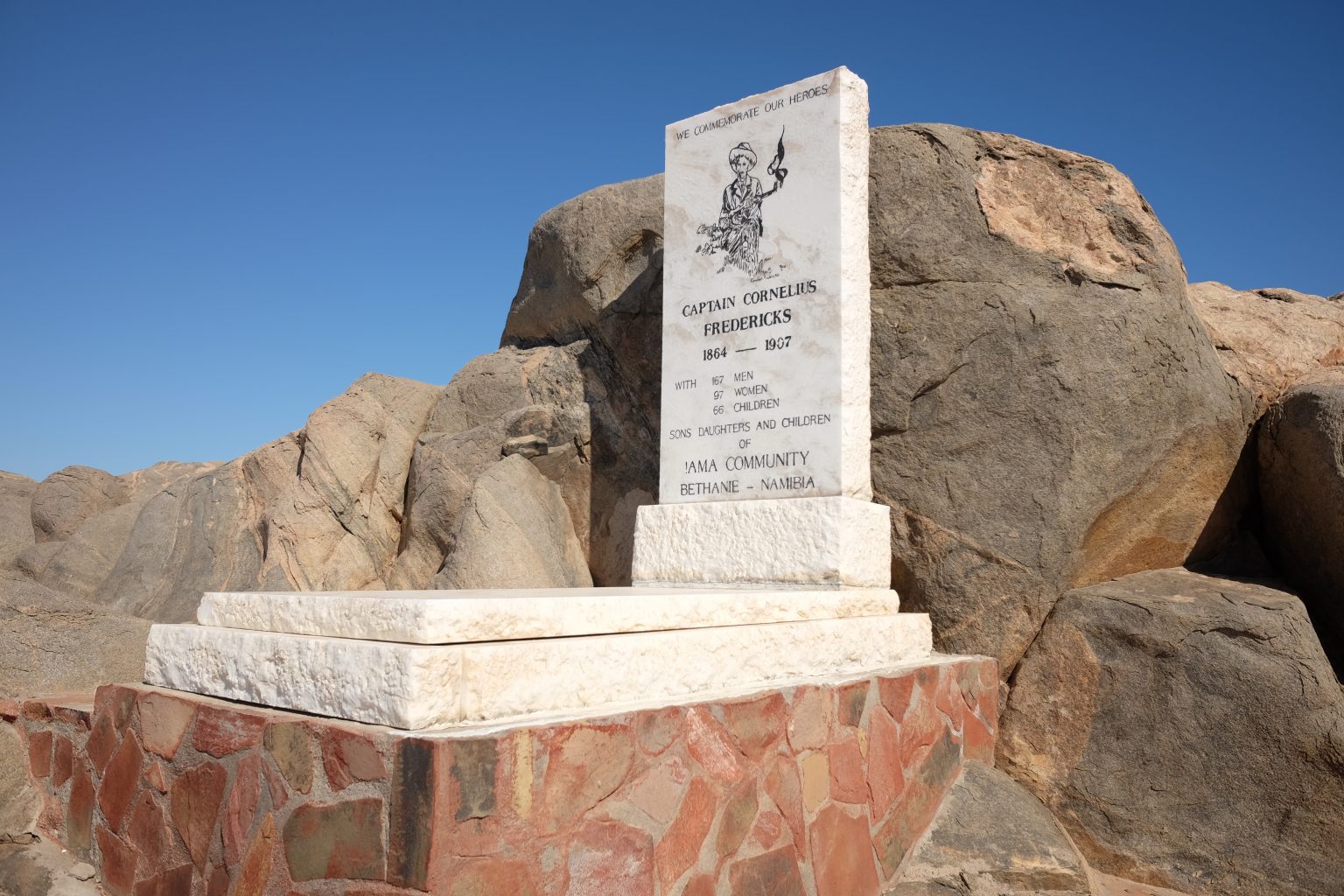
His incomplete death list included Cornelius Fredericks, the Nama leader who died on Shark Island in February 1907. The report printed the list’s categories, including children, and recorded Edward’s explanation for abandoning it. That admission limits what we can count from his testimony while making its circumstances painfully clear. A survivor attempting to remember the dead was also trying to survive.
His story continued after leaving the island. He described further movements and labour in the interior, and said that his community returned to Bethany only in 1915, after the defeat of German colonial rule. The chronology prevents a comforting shortcut in which removal from the worst camp equals the end of coercion. A person could leave Shark Island and remain far from home, dependent on authorities and employers who controlled movement and work. His full statement appears in chapter XVIII of the Blue Book.
Modern photographs of the shoreline show the place, not the conditions prisoners experienced. Historical portraits similarly show people at a particular moment, rather than providing a transparent window into their lives. Keeping those limits visible is preferable to turning a landscape or a face into decorative evidence for every part of the story.
What surviving could mean after 1908
The camp system ended in 1908, but the colonial settlement had already been reshaped around dispossession. The Blue Book’s discussion of the August 1907 ordinances, pages 111–113, identifies three linked controls: passes, restrictions on acquiring land and livestock, and the registration of labour contracts.
The pass described in the report was a numbered metal badge worn on the person. The rules reached children older than seven, with specified exemptions. Restrictions on land and cattle placed recovery of an independent livelihood under the governor’s permission. Contract rules tied employment to police administration. Each measure affected a different part of everyday life, and together they narrowed the ways a survivor could live without serving the settler economy.
The report’s authors denounced this arrangement using their own political vocabulary. We need not borrow all of it to see how the provisions worked together. Someone deprived of a herd could need wages immediately. Someone prevented from acquiring cattle could find it difficult to save towards an independent future. Someone required to display official identification could not move anonymously to seek a different opportunity.
This is why the history of genocide includes property as well as death. A surviving family could lose relatives, land, animals and the legal capacity to rebuild on its own terms. The consequences extended into who could bargain over wages and who had to accept the work available. Histovia’s account of racially divided labour on the Panama Canal examines a different system, but raises a related question about how administration assigned unequal options to workers.
Population estimates require equal care. The Mémorial de la Shoah gives the widely cited figures of approximately 65,000 Herero and 10,000 Nama killed, corresponding to around 80 percent and half of their respective populations. These are estimates, not a complete register of named deaths. Pre-war population figures, displacement and surviving records complicate exact calculation. The scale of destruction does not depend on pretending that the surviving evidence supplies perfect arithmetic. The museum’s overview places these losses within the broader campaign.
A colonial report, and the voices inside it
The Blue Book was prepared in 1918 under South African occupation and presented to the British Parliament. Its officials wanted to demonstrate Germany’s unfitness to recover the colony after the First World War. Their condemnation of German rule served another empire’s claim to authority. A document could expose terrible crimes while offering a flattering comparison with its own sponsors.
Historian Mohamed Adhikari’s review of the annotated Blue Book and later research explains both its political purpose and the value of its evidence. The report assembled African testimony, German publications and official material. Its agenda is a reason to examine how claims were selected and supported; it does not justify discarding the people whose accounts it preserved.
There are several questions to keep asking. Does a passage reproduce an order, quote a named witness, or express the compiler’s conclusion? Was the witness describing something personally experienced? Does another source corroborate the event? What did translation and editing do to the published voice? These distinctions also matter in the testimony about violence in the Congo Free State, where an imperial investigation preserved experiences that its own political framework could not fully contain.
Recognition without a finished settlement
In May 2021, German Foreign Minister Heiko Maas announced official recognition of the events as genocide and a proposed €1.1 billion reconstruction and development programme. His statement explicitly excluded legal compensation claims arising from the programme. Recognition, an apology and reparations were therefore connected but legally and politically distinct questions.
It would be misleading to describe that announcement as a completed settlement accepted by everyone affected. The German Foreign Office’s bilateral-relations page, dated 30 March 2026, still described negotiations as ongoing after the joint declaration was initialled in 2021. The history here does not end with a diplomatic press release.
Edward Fredericks’s unfinished list offers a more grounded place to leave it. He counted people because they belonged to a community whose losses he knew. His account also insisted on what happened after surrender and after the camp. Following those years brings the history back to the people who had to live through its supposed endings.