
Science, Invention & Exploration
Mary Anning: The Work Between a Fossil and a Scientific Discovery
The cliffs supplied the fossils. Finding, extracting, interpreting and selling them required a different kind of knowledge, much of it carried by a woman whose name did not always travel with her specimens.
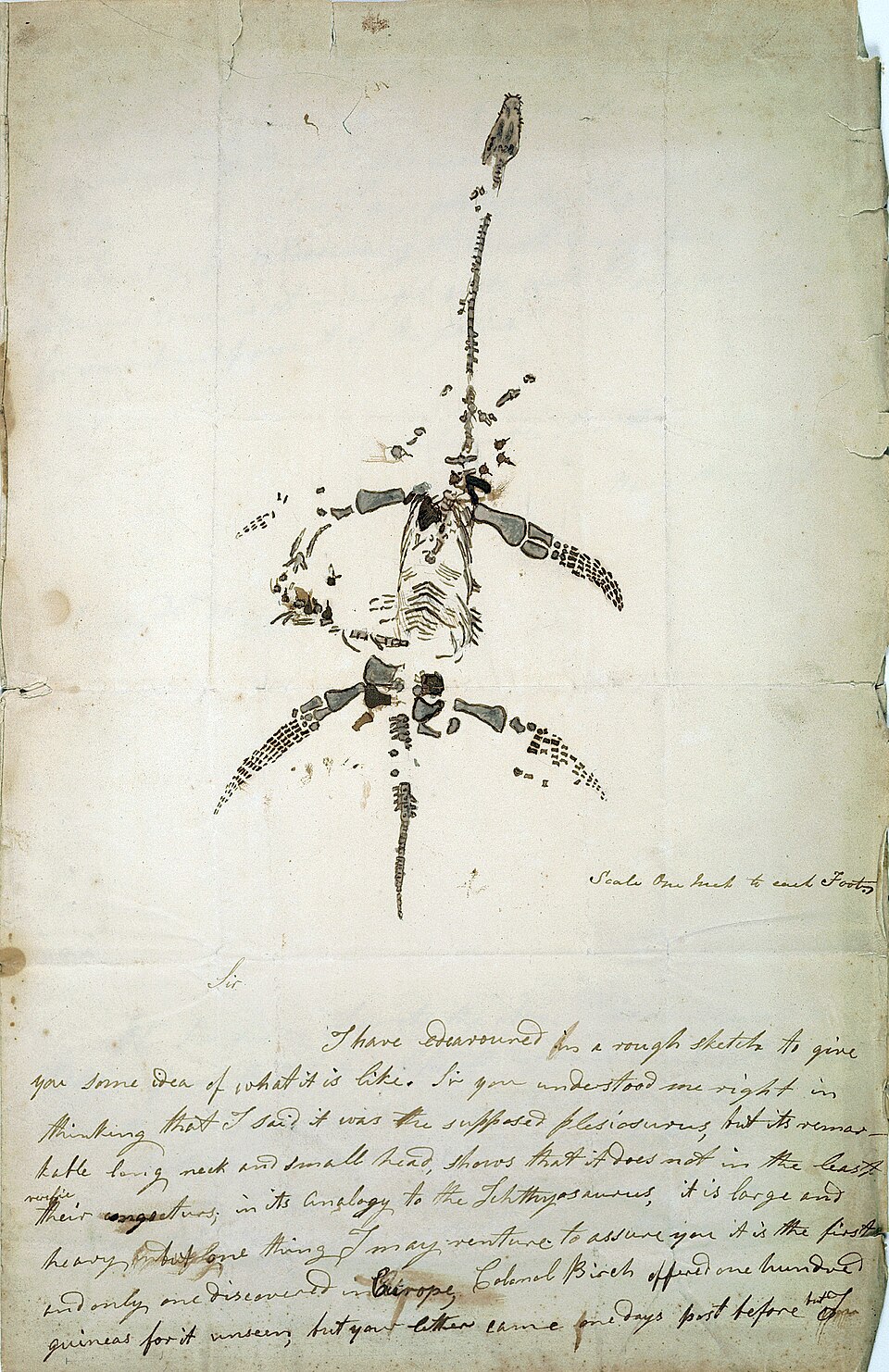
In December 1823, Mary Anning wrote to a possible buyer about a skeleton with an exceptionally long neck. Her letter included a drawing, a description and a price. She also explained why she was offering him the specimen before another interested customer. Anatomical judgment and commercial negotiation occupied the same sheet of paper.
The letters, now at the Wellcome Collection, make an unusually direct introduction to Anning. She was neither a child who happened upon a monster nor an isolated genius working outside society. She was a fossil dealer who understood both the importance of what she had found and the business of persuading someone to pay for it.
That business connected the cliffs at Lyme Regis with private collections, learned societies and museums. A fossil did not become scientific evidence simply by emerging from the rock. Someone had to recognise it, remove the surrounding material without destroying it, establish which bones belonged together, communicate the discovery and arrange its movement. Anning performed work at several of those stages. The published account might record only the last.
A family trade on an unstable coast
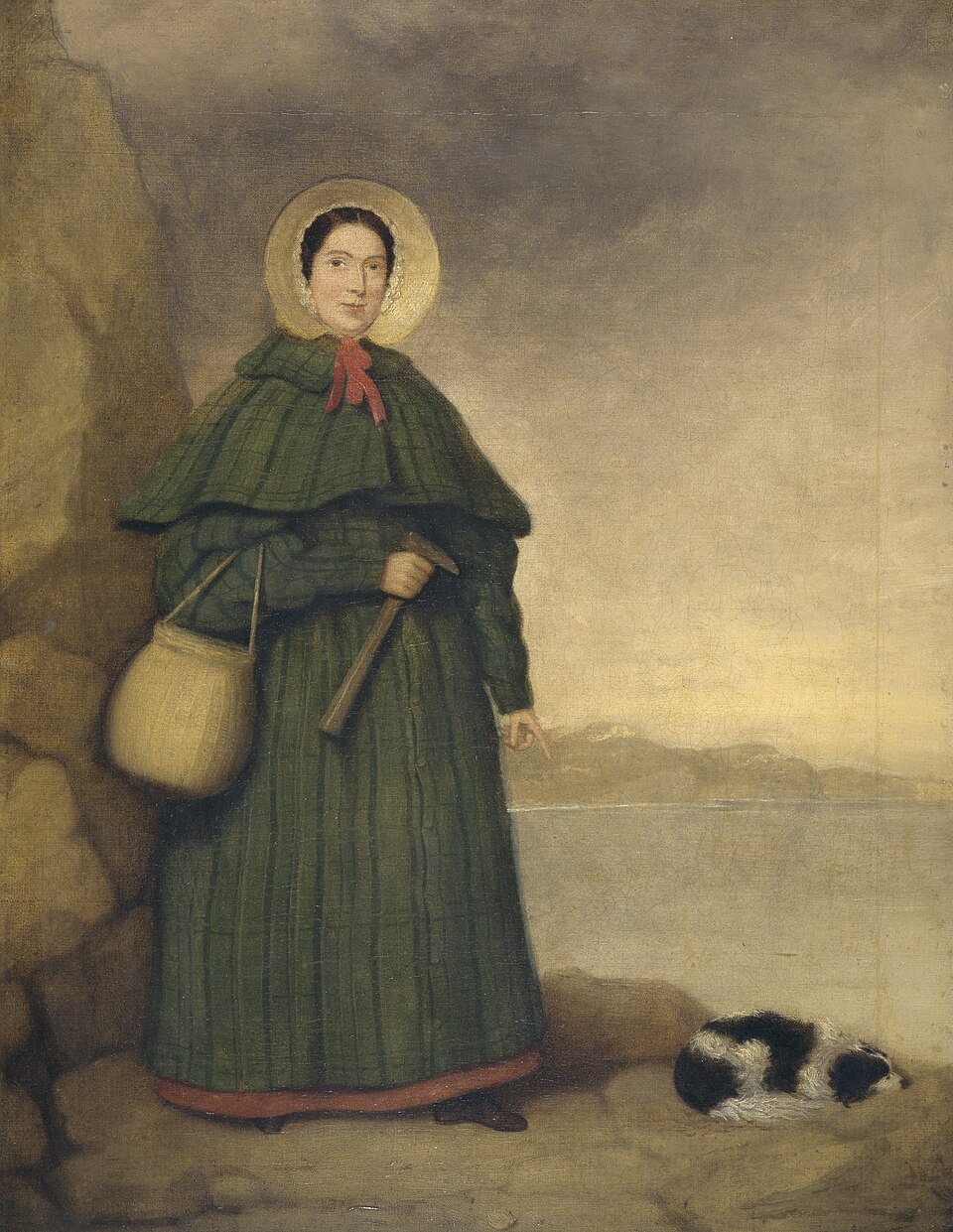
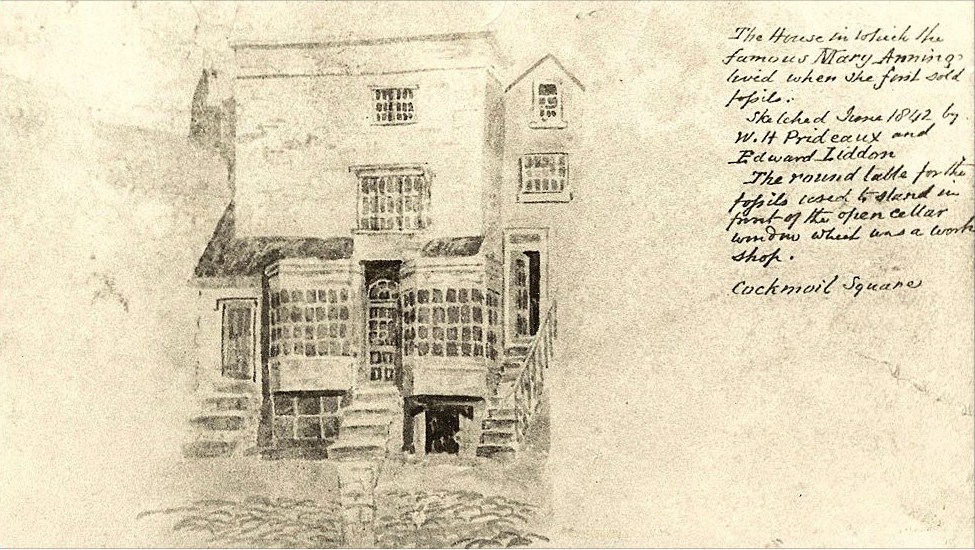
Anning was born in Lyme Regis in 1799. Her father, Richard, combined cabinetmaking with fossil collecting, and the family sold specimens to visitors. After his death in 1810, her mother and brother remained part of the enterprise. The Natural History Museum’s account places the trade within a household that needed income, not a leisurely collecting hobby.
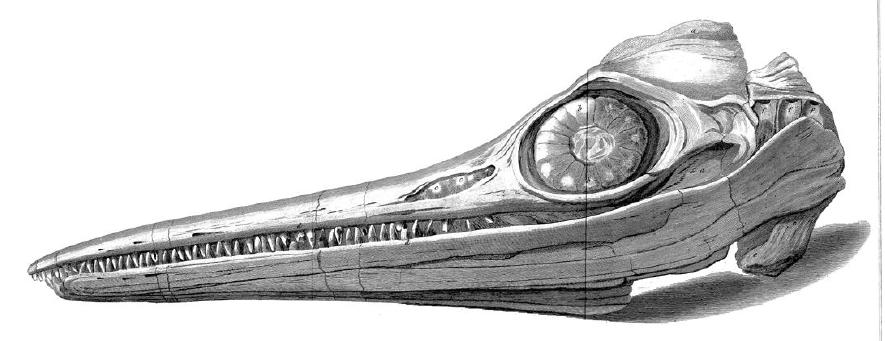
The famous early ichthyosaur was a joint discovery. Joseph found the skull in 1811; Mary subsequently excavated more of the skeleton. It eventually became known as Temnodontosaurus platyodon, although its classification changed as researchers learned to distinguish different marine reptiles. Calling every animal in Anning’s career a dinosaur obscures the discoveries. Ichthyosaurs and plesiosaurs were marine reptiles; pterosaurs were flying reptiles. They were not dinosaurs.
The coast offered opportunities because erosion exposed remains. The same process could destroy them or endanger the collector. A promising fragment was only the beginning of a decision: whether more lay inside the rock, whether extraction was possible, and whether the resulting specimen would repay the effort. The small fossils sold to visitors and the large skeletons sought by wealthy collectors belonged to the same precarious trade.
Knowing where to look
Roderick Murchison’s field diary for September 1825 preserves something more useful than a general tribute to Anning’s talent. Visiting with his wife Charlotte, he recorded that Anning distinguished beds containing different kinds of fossils. Her mother could also discuss the specimens. The diary describes a family with accumulated knowledge of a particular landscape.
Murchison noted the expense of hiring workers to extract a large skeleton and the difficulty caused when an expected buyer did not complete the purchase. The account changes the scale of the familiar picture of a solitary collector with a basket. Large discoveries required labour, money and a buyer willing to accommodate an awkward object. Anning could make the scientific judgment correctly and still be left carrying the financial risk.
Her familiarity with the beds also mattered after extraction. A specimen with its location understood could be compared with others. The collector’s observations helped turn an attractive object into evidence about a sequence of rocks and the animals preserved within them.
A skeleton that tested a reconstruction
The name Plesiosaurus existed before Anning’s great find of 10 December 1823. Henry De la Beche and William Daniel Conybeare had described the animal from incomplete material in 1821. As the Geological Society’s reconstruction of that research explains, missing parts restricted what could confidently be said about the whole creature.
Anning’s articulated skeleton put the bones into a much firmer relationship. A long neck, small head and four flippers could now be examined together rather than assembled mainly through inference. The arrangement was strange enough to raise doubts: were these really parts of one animal? Georges Cuvier initially questioned the discovery before accepting it.
The issue was not whether novelty should always be distrusted. It was how an extraordinary claim could be tested. A drawing transmitted the arrangement, while the specimen allowed closer examination. Comparison could distinguish an unfamiliar anatomy from an artificial combination. Histovia’s account of Piltdown’s forged fossils follows a very different case in which the relationship between separate pieces of evidence proved decisive.
Conybeare presented the plesiosaur to the Geological Society in February 1824. The Duke of Buckingham had bought it; Anning had found and prepared it. Those roles did not receive equal visibility. Her work entered a scientific institution whose membership excluded women.
The Society’s surviving records also show Anning trading a different, incomplete plesiosaur to a French buyer after acquiring it from another collector. She did not sell only objects she had personally excavated. She knew specimens, customers and prices, and used that knowledge professionally.
Discovery was not the same as authorship
It would be misleading to say that every scientist concealed Anning’s name. William Buckland explicitly credited her when describing the pterosaur she found in 1828. It would be equally misleading to assume that occasional acknowledgement gave her the standing of a society member or the authority attached to a substantial published paper.
The one brief scientific contribution known to have appeared under her name was an extract from a letter printed in the Magazine of Natural History in 1839. It concerned a fossil shark, Hybodus. The editor, Edward Charlesworth, had attributed discovery partly to the collector who acquired Anning’s specimen. Her intervention exposed how easily ownership could become confused with finding.
That distinction was not a minor question of manners. If later readers reconstructed a field from its printed literature, a purchaser or author could remain visible while the person who recognised and prepared the fossil receded. A catalogue entry, a private letter and a published description might preserve different parts of the same history.
Anning’s case therefore requires more than adding a name to a list of discoveries. It requires following the specimen through several kinds of work. The habits that made scientific knowledge publishable also determined whose contribution was easiest to remember.
More than spectacular skeletons
The pterosaur discovery expanded the range of creatures known from the British rocks. Now called Dimorphodon macronyx, it supplied evidence of a flying reptile rather than another animal of the sea. Buckland’s published illustration also included jaw material from fellow Lyme collector Elizabeth Philpot, a reminder that knowledge of a creature could draw on more than one collection.
Less spectacular objects opened another line of inquiry. Anning noticed that certain pebble-like forms occurred within fossil animals and contained fish remains. Buckland developed the investigation of these coprolites, or fossilised dung. They could reveal feeding relationships, not merely body shape.
A large skeleton could establish that an animal had existed. A small deposit containing scales or bones could help explain what it ate. Both demanded close observation, and the second depended particularly on noticing an association that might otherwise disappear during collecting or preparation.
Turning specimens into an ancient sea
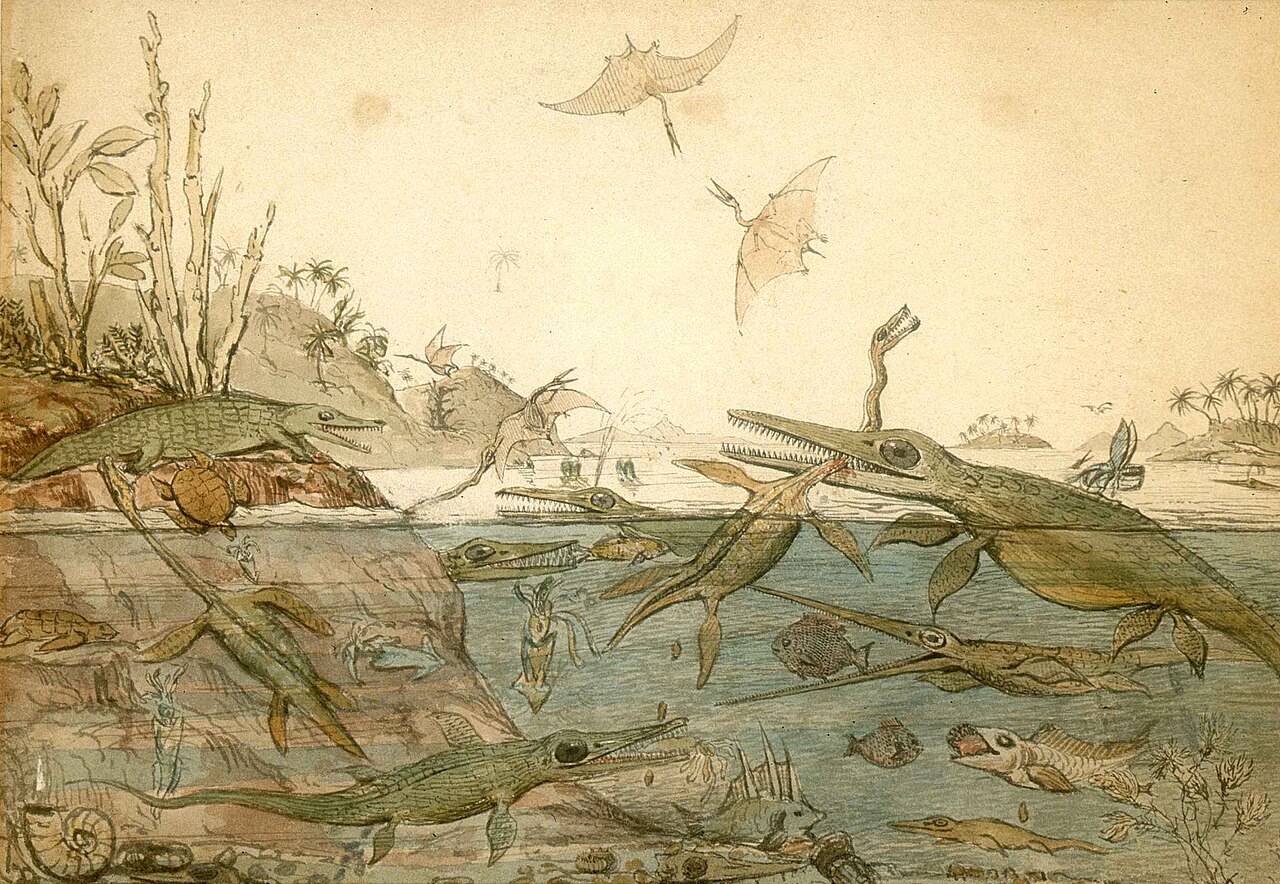
In 1830, Henry De la Beche pictured the Dorset animals together in Duria Antiquior. Reptiles pursue prey above and below the water; flying creatures occupy the air. The image is a reconstruction, not a scene copied from nature. Its historical importance lies in the attempt to imagine a whole environment from material evidence.
The print’s production and sale also belonged to Anning’s economic history. De la Beche and Buckland arranged for copies to be sold for her benefit during a difficult period. Anning received copies to sell herself. An image informed by her discoveries could generate support when the fossil trade did not provide a secure livelihood.
The picture makes interpretation visible. The bones constrain which animals can be represented, but do not dictate every movement, colour or encounter. A responsible caption should therefore identify the painting as an early reconstruction. Treating it as a transparent window into the Jurassic would erase the nineteenth-century decisions that made it.
Scientific pictures often outlive the questions that first produced them. Histovia’s story of Maria Sibylla Merian’s work in Suriname offers another route into the labour and observation behind an image that later readers may encounter as a finished illustration.
Known, supported and still excluded
Anning’s relationships with geologists included dependence and inequality, but also friendship, exchange and practical help. The Geological Society’s archive records efforts by scientific acquaintances to raise money and obtain support, resulting in a modest annuity. Those efforts make little sense if she had been wholly unknown to the scientific community.
Recognition did not remove the vulnerability of earning a living through irregular discoveries. Nor did friendly relations open the Society’s membership to her. Personal respect and institutional exclusion could exist at the same time. Describing either alone produces a simpler story than the surviving records support.
Anning died in March 1847. At the Geological Society’s anniversary meeting the following year, De la Beche paid tribute to her contribution, departing from the usual commemoration of members. His account recognised the care that made her skeletons useful to comparative anatomists. The act honoured a person whom the institution had never admitted.
Her papers were subsequently dispersed. The surviving record is consequently uneven: some of her knowledge survives in her own handwriting, some in customers’ diaries, some inside published work by others. That unevenness does not justify inventing the thoughts or conversations that have been lost.
The December 1823 drawing supplies a firmer ending. It places the extraordinary skeleton beside the hand that described it, with the practical business of a sale still attached. In that document, Anning’s observation, judgment and livelihood have not yet been separated.