
Waterloo, 1815: The Coalition That Stayed Within Reach
Napoleon’s plan depended on keeping two enemy armies apart. The decisive story runs through their retreat routes, messages, ammunition and the hard work of making promised help arrive.
At three in the morning on 18 June 1815, the Duke of Wellington wrote to the governor of Antwerp. The fortress was to be treated as under siege, and its defensive inundations prepared. The letter also made provisions for the French king and for families leaving Brussels. Preserved among Wellington’s dispatches, it is an unusually useful starting point for Waterloo: not a declaration that victory was certain, but an order to prepare for events going wrong.
Wellington’s main army was south of Brussels, facing Napoleon. To the east, the Prussian army under Field Marshal Gebhard Leberecht von Blücher was recovering from defeat at Ligny. The two forces were not already united on the battlefield. Their capacity to act together depended on decisions made during retreat, communication between headquarters and the movement of troops across actual roads. A promise of assistance was essential. So were the means of fulfilling it.
Waterloo is often reduced to a duel of commanding personalities: Napoleon’s genius against Wellington’s steadiness, interrupted at the last moment by Blücher. That arrangement produces a clear dramatic cast but a poor explanation of the campaign. Wellington commanded a multinational army, not a purely British one. Prussian troops did more than arrive for a closing scene. French commanders faced an increasingly difficult problem of allocating forces between threats which could no longer be dealt with separately.
The battle on 18 June was decisive for Napoleon’s restored regime. Its outcome was not the simple result of a single missed order, one cavalry charge or a commander’s mood. It emerged from the interaction of two levels of war: the effort to hold particular fields, farms and villages, and the effort to bring separate armies into a relationship that the French could not break.
The victory at Ligny did not finish the Prussians
Napoleon had returned from Elba in March 1815. His campaign in the Netherlands, in present-day Belgium, aimed to prevent Wellington and Blücher from combining their armies. The National Army Museum’s account explains this purpose: turn the coalition’s separate deployments into separate defeats.
The French crossed the Sambre on 15 June. On 16 June, Napoleon defeated Blücher at Ligny while Ney fought Wellington’s forces at Quatre Bras. The junction at Quatre Bras mattered because movement between allied armies was part of their fighting capacity. Holding ground there did not supply the assistance Blücher needed elsewhere.
The French also faced problems coordinating separated forces. In his letter of 26 June, published in The Times on 13 July 1815, Ney alleged that d’Erlon’s corps had been diverted from his command and returned too late to help. He was defending himself against accusations after the defeat, not writing an impartial verdict. The document exposes a dispute over who could direct troops and when. It cannot prove that an alternative order would certainly have won the campaign. Operational advantage still had to pass through messages, interpretation and movement.
After Ligny, the direction of the Prussian retreat became crucial. The army did not simply withdraw eastwards out of Wellington’s reach. It regrouped around Wavre, maintaining the possibility of cooperation. The Fondation Napoléon’s account of the Prussian campaign emphasises this choice. Defeat had caused serious losses; it had not destroyed the army’s organisation or ended its role in the coalition.
Wellington then withdrew from Quatre Bras to the position near Mont-Saint-Jean. The allies had lost ground and suffered heavily, but their withdrawals had not achieved Napoleon’s larger purpose. They remained close enough to make a shared battle possible.
A defensive position had to remain connected
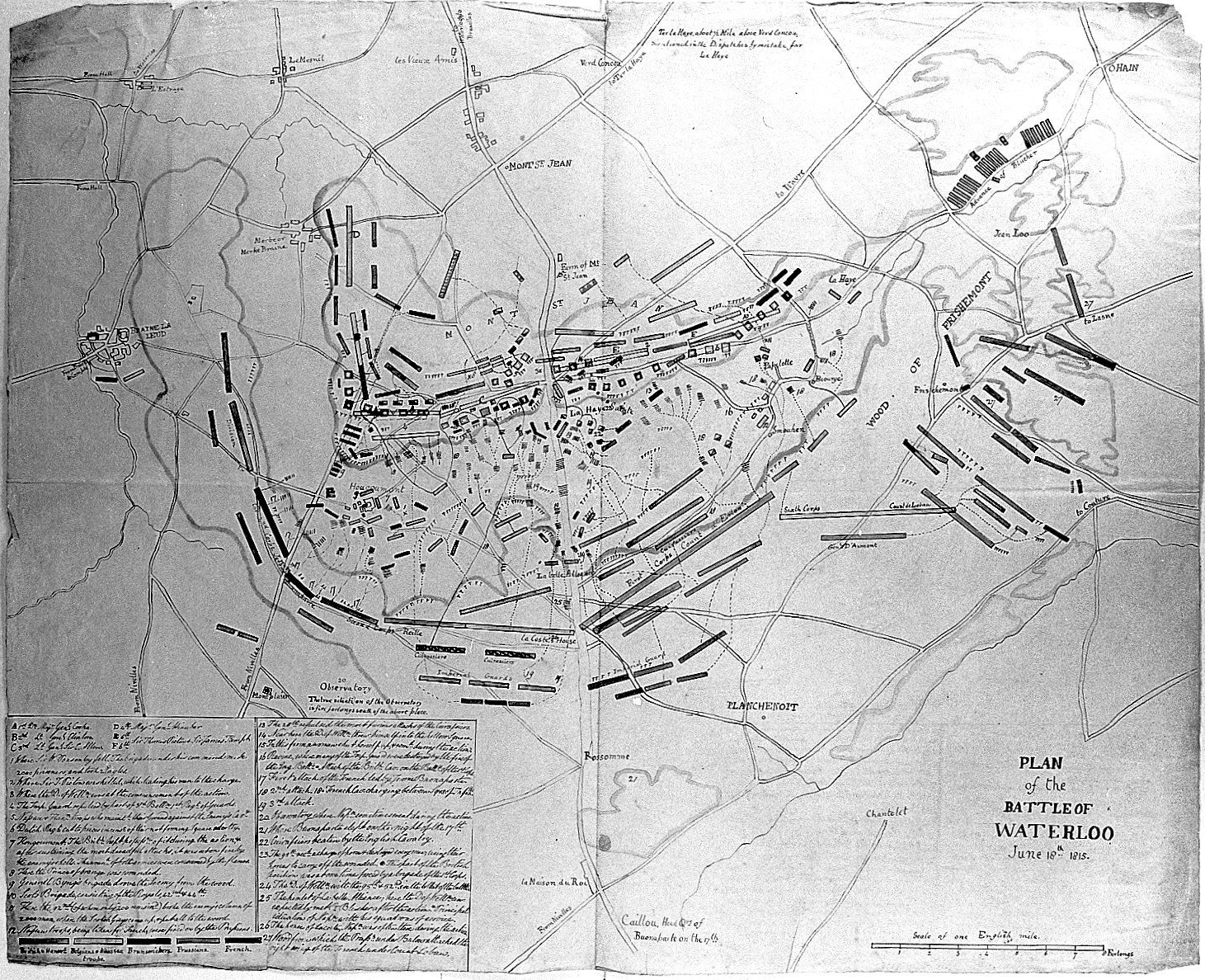
Wellington placed much of his army behind the ridge, reducing its exposure to French observation and artillery. Forward strongpoints complicated the approach: Hougoumont on the right, La Haye Sainte near the centre, and the settlements towards Papelotte on the left. These were not decorative landmarks on a battlefield map. Walls, gardens, orchards and farm buildings altered where men could move, where they could find cover and how attackers could deploy.
His army’s composition is equally important. British troops served alongside men from the Netherlands, Hanover, Brunswick and Nassau, as well as the King’s German Legion in British service. The Royal Armouries’ account of the campaign’s participants makes this international setting visible. Familiar national labels can conceal it. “British position” is often a convenient shorthand for Wellington’s line, but it should not make the men who held different parts of that line disappear.
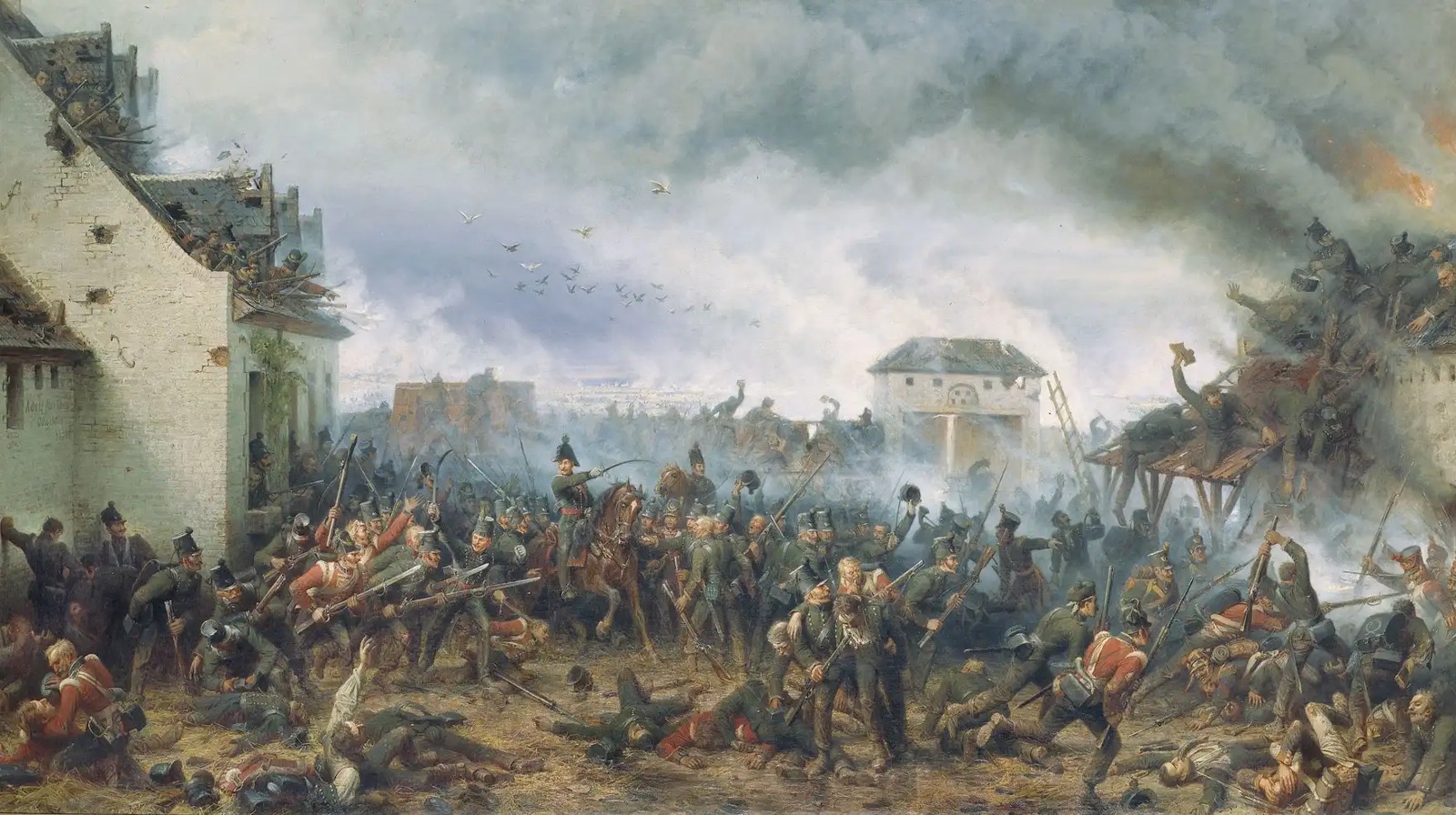
Hougoumont illustrates the practical side of defence. Its enclosure was formidable, but the garrison still needed ammunition, reinforcements and a way to communicate with troops on the ridge. The north gate supplied access to the rear. Its vulnerability and value were aspects of the same problem: an outpost sealed against everything would also be sealed against help. Project Hougoumont’s reconstruction describes the gate’s role in resupply and the danger posed by attacks around the enclosure.
At La Haye Sainte, Major Georg Baring’s King’s German Legion troops held an exposed farm close to the main road. The Waterloo Association’s detailed account follows their defensive preparations and the difficulty of replacing rifle ammunition once fighting surrounded them. The farm eventually fell. Wellington’s own dispatch acknowledged that its defenders had exhausted their ammunition and that the French had occupied the route connecting them with the army.
These episodes are often narrated as contests of courage. Courage mattered, but it could not manufacture cartridges or make a blocked passage safe. A strongpoint’s fighting value depended on its continuing connection to the force behind it. The wider coalition faced the same problem on a much larger scale.
Arrival was a process, not a single moment
In his report to Lord Bathurst, dated 19 June, Wellington explained that his left communicated with Blücher at Wavre through Ohain. Blücher had promised support if the French attacked. The report, published in the London Gazette of 22 June 1815, is both an account of operations and a public allocation of credit. Its emphasis on the Prussians is unmistakable.
That support did not arrive as a single compact body which could instantly be added to Wellington’s strength. Prussian formations approached by different routes and entered different parts of the struggle. Bülow’s corps pressed towards the French right and Plancenoit; other troops later joined the fighting nearer Wellington’s left. A column marching towards a battle still had to emerge, deploy and bring its weapons into action. Men behind it could not contribute merely because the leading elements had arrived.
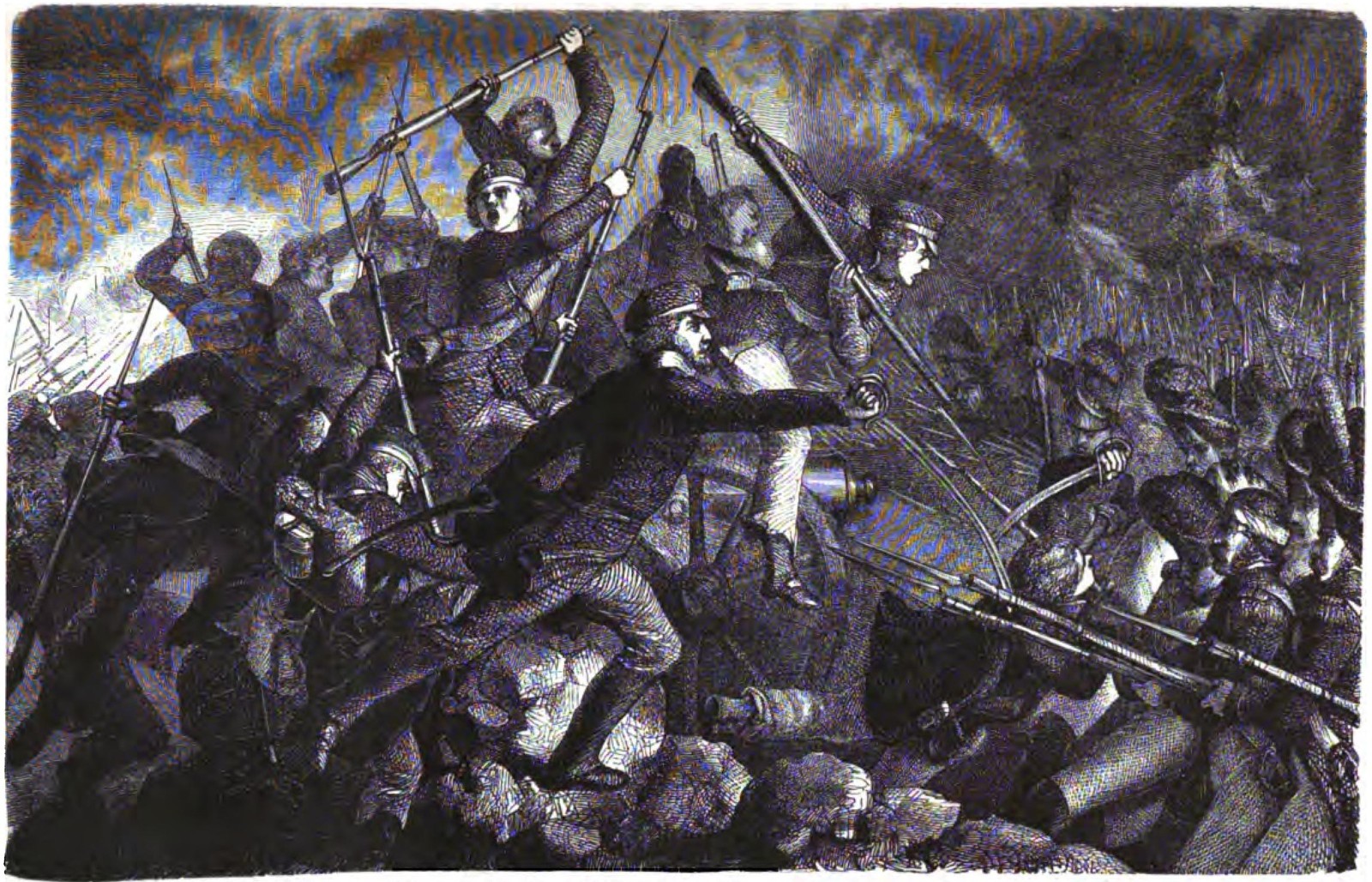
The Prussian advance changed French choices even before all those troops were engaged. Napoleon had to divert forces to his right rather than employ them entirely against Wellington. Fighting at Plancenoit was therefore part of the central battle, not a secondary episode beyond its edge. It threatened the French flank and rear, absorbing troops which might otherwise have supported attacks on the ridge.
The French capture of La Haye Sainte late in the day made Wellington’s centre more vulnerable. Yet a local success did not remove the growing Prussian pressure. Napoleon faced simultaneous demands on finite reserves. The question was no longer simply whether Ney could break a particular section of the allied line, but whether a breakthrough there could be exploited while another enemy army was advancing into the French right.
Wellington’s published dispatch explicitly connected his final general advance to both the repulse of the French attack and the effect of Bülow’s movement. This does not make his account complete or disinterested. It does make the later image of an almost exclusively British victory difficult to reconcile with the commander’s own report.
Why one missing marshal is not an explanation
Napoleon had detached Marshal Emmanuel de Grouchy to follow the Prussians after Ligny. Grouchy fought at Wavre rather than appearing on the Waterloo battlefield. The separation became one of the campaign’s most durable controversies. Why did he not prevent the Prussians joining Wellington? Could he have marched towards the sound of battle? Were his orders adequate, timely or correctly understood?
These are legitimate questions, but they do not have the same evidential status as the fact that his force was absent. An attractive counterfactual can quietly remove the very conditions commanders faced: uncertain information, marching distances, enemy resistance and the time required to change a large formation’s direction. A marshal cannot be moved across a historian’s map as quickly as a finger.
Blame also began to accumulate while participants were defending their own reputations. In a letter written after the defeat, Ney complained that word had circulated that Grouchy had arrived, when the troops threatening the French right were Prussians. His account is important testimony to the confusion and subsequent controversy. It is not a detached audit of everyone’s decisions. The point is not to acquit or convict a marshal through one document, but to recognise that retrospective explanations were themselves part of the aftermath.
The final French attacks failed; Wellington’s line advanced; Prussian forces pressed the retreat. The partnership continued after the fighting on the ridge. Wellington reported that he halted his pursuit because his soldiers were exhausted and Blücher intended to continue through the night. Exploiting a victory required fresh movement just as surely as winning it did.
Napoleon abdicated on 22 June. Waterloo did not instantly end every military operation, and no serious account needs to pretend that it did. It destroyed the immediate campaign on which his restored power depended. The coalition had prevented him from converting the separate vulnerabilities of its armies into their separate destruction.
The battlefield that memory rearranged
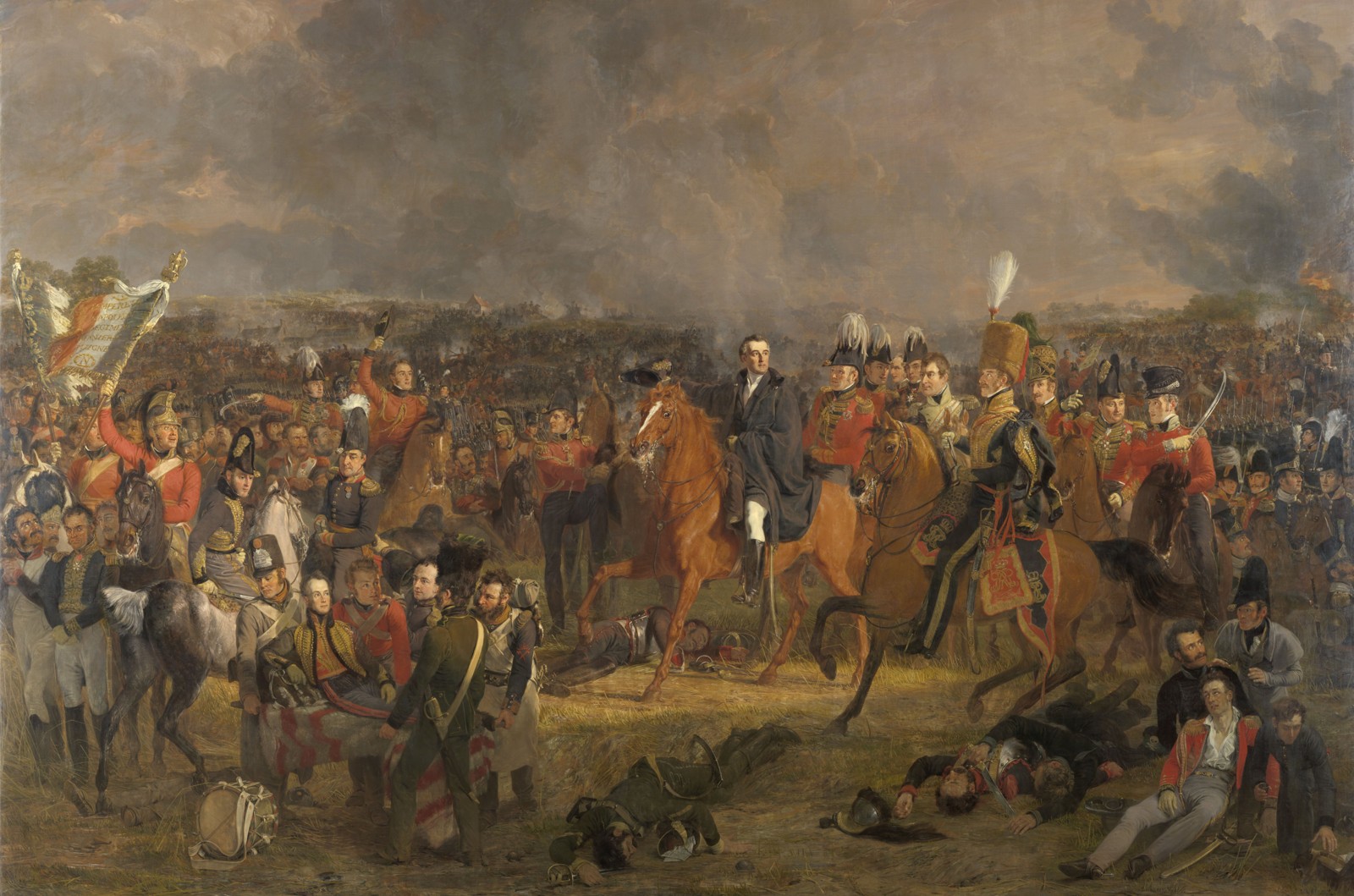
Jan Willem Pieneman’s great painting of Waterloo, completed in 1824, places Wellington at its centre as news of Prussian assistance arrives. The wounded Dutch crown prince occupies the foreground. The Rijksmuseum explains that the picture was originally intended for Wellington but bought by William I for his son. It is a carefully composed representation of coalition victory and dynastic sacrifice, not a simultaneous view recorded by an observer on 18 June.
Maps and models could also organise remembrance. William Siborne surveyed the battlefield and gathered hundreds of replies from surviving officers for his model, completed in 1838. Yet the National Army Museum’s catalogue notes the selectivity of his evidence and the limited area given to the advancing Prussians. Immense detail did not make the representation neutral. A model’s boundaries could influence the story as powerfully as the number of figures placed inside it.
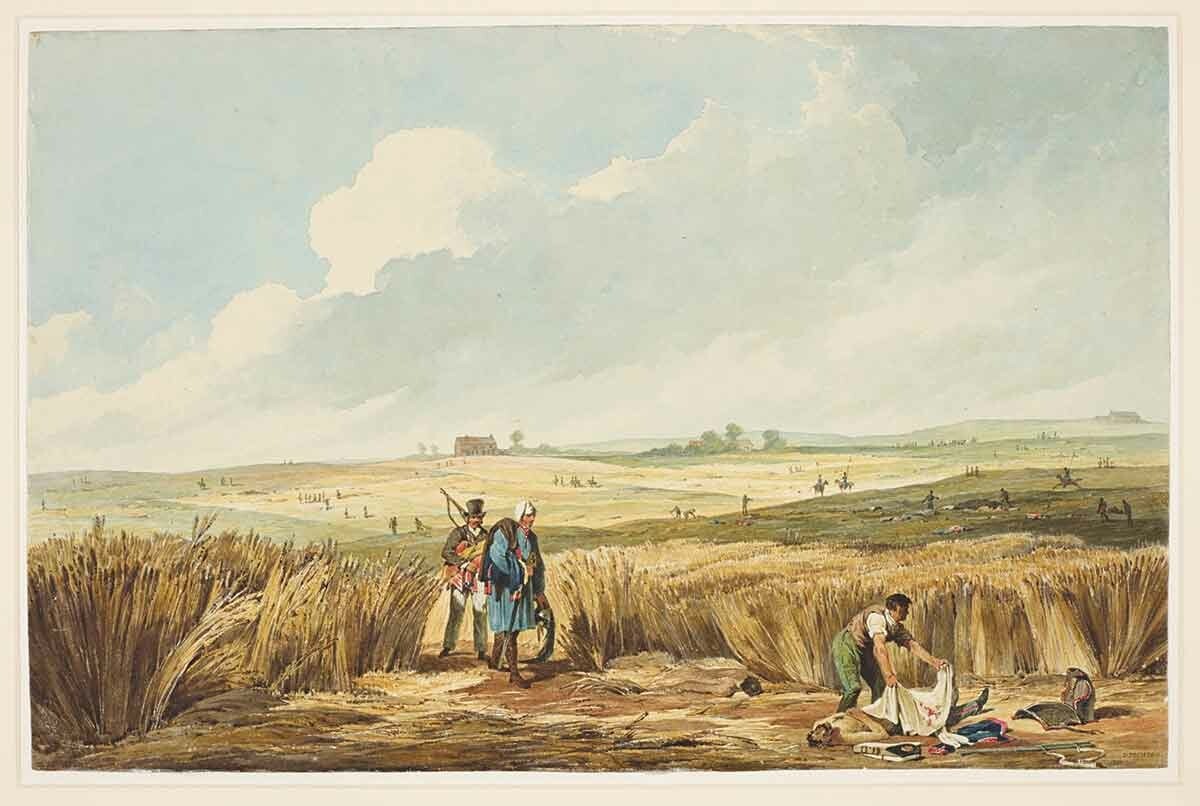
Nor was the ground left behind an empty stage awaiting commemorative art. Buildings had burned, men and horses had died, and the wounded needed care. Denis Dighton’s images of the aftermath show a landscape of clearing, burial and loss, rather than a clean diagram of opposing lines. Later research using early visitor accounts has investigated where the dead were buried and how the battlefield changed. Tony Pollard’s study of Waterloo’s graves demonstrates how those accounts can be tested against landscape evidence without treating every striking description as exact.
The coalition interpretation does not replace one solitary hero with a new one. It explains why endurance on the ridge, the survival of the Prussian army after Ligny, the defence of forward posts and the arrival of successive formations belonged to the same event. Waterloo was won by forces which stayed capable of helping one another, and lost by an army which could no longer keep their demands on it separate. Its famous commanders mattered because they operated through those relationships—not outside them.