
Wars & Conflicts
Malta, 1565: Forts, Supply Lines and the Cost of Holding Out
The Great Siege was fought with guns and determination, but also with grain, boats, repair work and carefully organized relief. Behind the familiar story of the knights lay a much larger effort to keep people and positions connected.
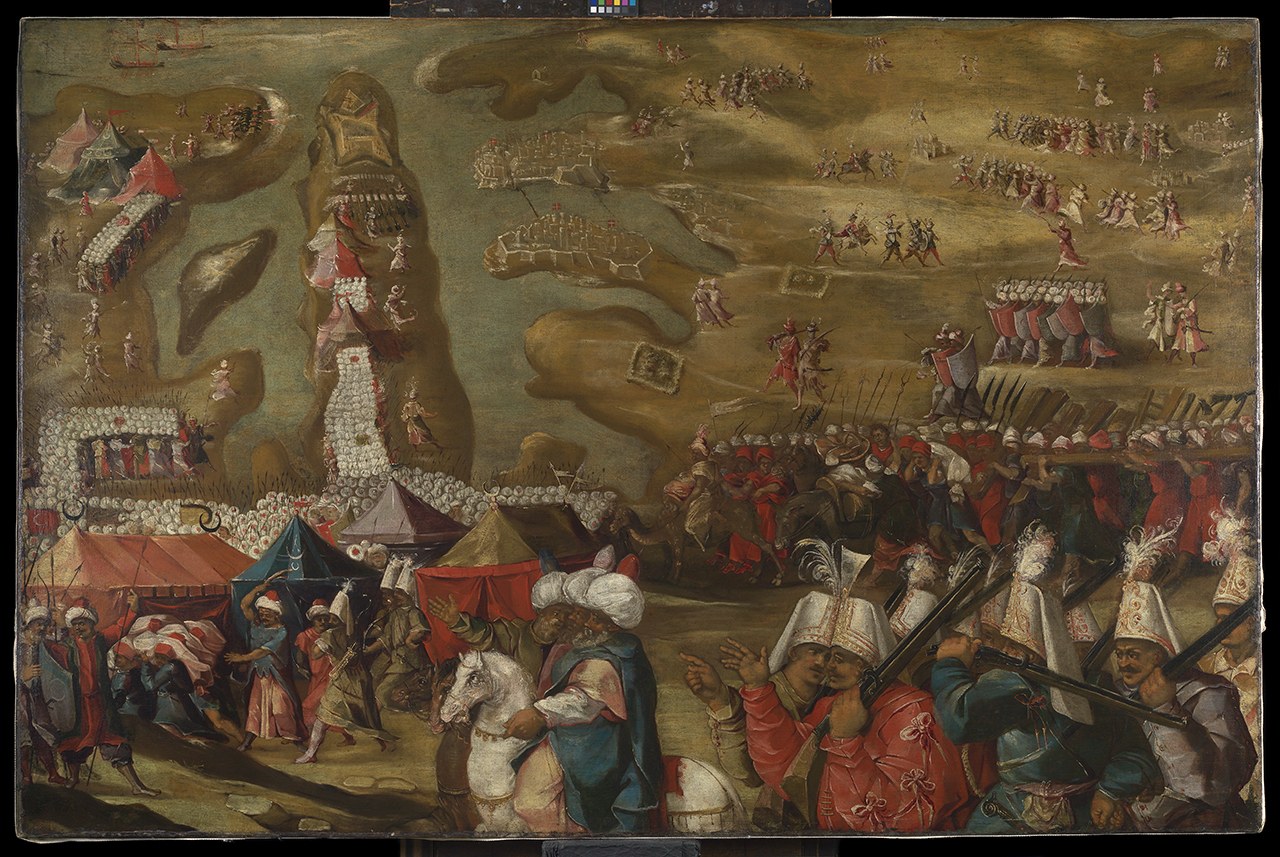
Behind the armed men in Matteo Perez d’Aleccio’s painting of the siege of Malta comes another column: engineers and craftsmen carrying tools and materials. They are easy to overlook beside the commanders, guns and harbour. Yet they point towards the work on which the fighting depended. Artillery needed platforms; approaches needed excavation; damaged defences needed rebuilding.
The painting, now at the National Maritime Museum, is a late-sixteenth-century commemoration, not an eyewitness snapshot of the day named in its title, 27 May 1565. Its elevated view offers a later arrangement of the campaign. Even within that heroic composition, however, war appears as organized labour as well as combat.
Between May and September 1565, an Ottoman expedition attempted to take Malta from the Order of St John. The defenders held their principal harbour strongholds until relief arrived from Sicily. Explaining that result requires more than a contrast between a few brave knights and an enormous invading host. Both sides had to move people, ammunition, food and water through a landscape that made some movements possible and others ruinously expensive.
A harbour divided into fighting positions
The battlefield was not the city of Valletta as visitors know it today. That city did not yet exist. Fort St Elmo stood at the seaward end of the Sciberras peninsula, between Grand Harbour and Marsamxett Harbour. Across Grand Harbour, Birgu and the neighbouring peninsula of Senglea formed the Order’s main defended urban positions.
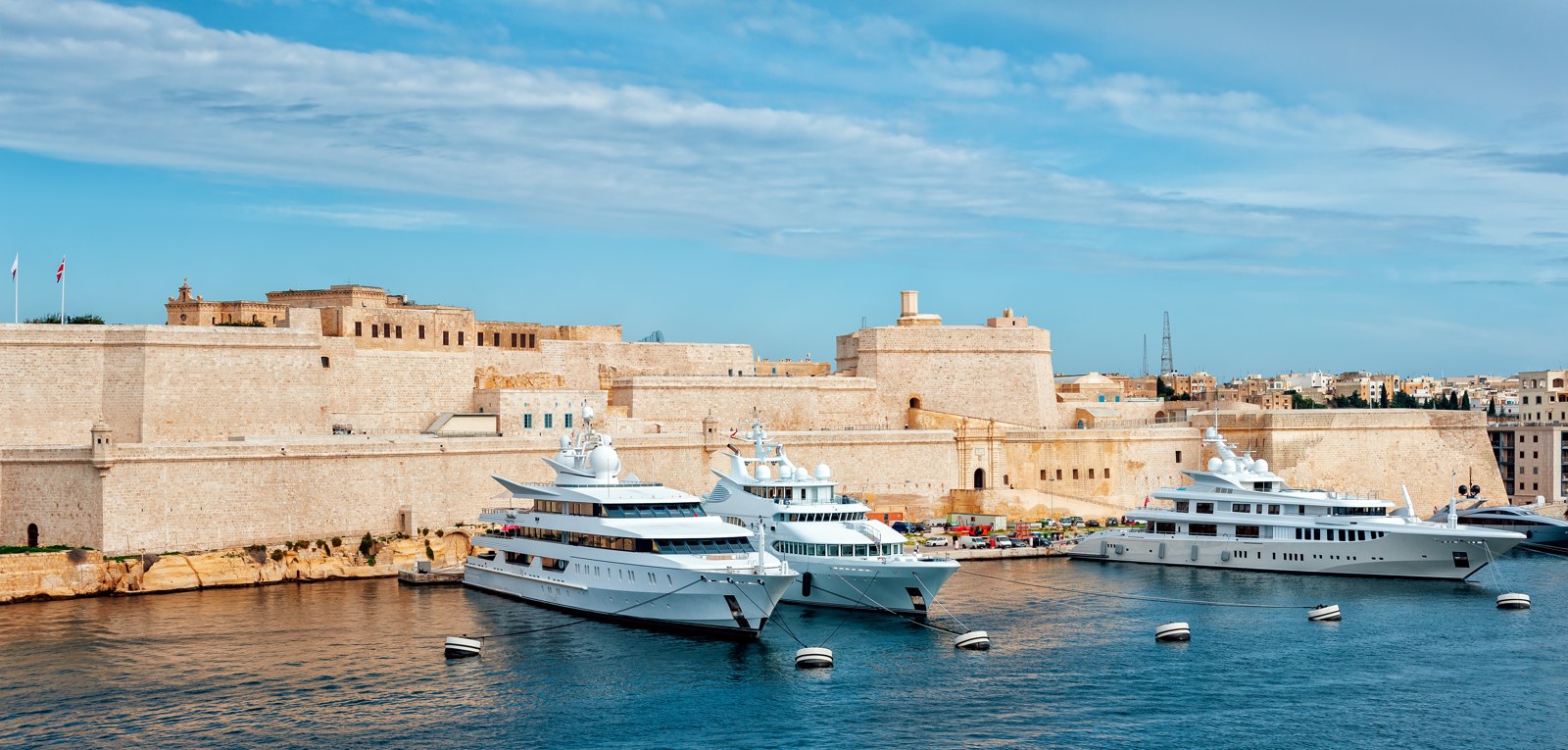
Fort St Angelo, at Birgu’s tip, incorporated an older castle that the Hospitallers had extensively adapted after their arrival in 1530. Artillery platforms and bastioned works made it a different kind of stronghold from a medieval tower. Fort St Michael defended Senglea, while St Elmo stood apart from these positions across the water.
Distance alone therefore gives a misleading impression. Two points visible to one another could still be separated by enemy fire or an exposed crossing. A harbour could provide a route for reinforcements and evacuation, a barrier against attackers, and an avenue for an assault by boats. Control depended upon guns, obstacles and access, not merely possession of the shoreline.
As architectural historian João M. Mateus explains, Malta’s fortifications belonged to a developing European practice of adapting walls to artillery. Thick ramparts and projecting bastions supported overlapping fields of fire. But the permanent works were only part of the defence. Temporary breastworks, palisades and other improvised constructions became essential during the siege. The map was continually being altered by labour.
Preparations measured in grain and water
The expedition was not an entirely unexpected catastrophe. Records of the Order’s council, reproduced in Victor Mallia-Milanes’s reassessment, show recruitment in January, an extraordinary levy on the Order’s priories in February and inspections of arms in April. On 9 May a commission was charged with bringing wheat, barley and vegetables into Birgu. Preparation joined the island to the Order’s wider network of estates, income and personnel.
Neither that network nor Malta’s harbours made food unlimited. Historian Noel Buttigieg’s study of provisioning emphasizes the island’s limited resources and the difficulty both armies faced in sustaining a long siege. The defenders needed reserves for soldiers arriving from abroad as well as residents. The attackers needed supplies ferried from distant stations, exposed to weather and interception.
Water presented a separate problem. Charles Savona-Ventura’s study of the siege’s medical arrangements describes inspections of wells and cisterns and efforts to keep storage filled before the fighting. Grain in a magazine did not solve thirst, nor could a stockpile by itself ensure fair distribution. Crowding behind the walls increased demands on every shared resource.
These preparations complicate two opposite legends: that inspiration improvised everything after the fleet appeared, or that a perfect defensive plan guaranteed victory. Advance organization existed. So did shortages, unfinished work and decisions made under pressure.
St Elmo: time purchased at a terrible price
The Ottoman fleet appeared on 18 May. Mustafa Pasha commanded the land forces and Piyale Pasha the fleet; North African forces also joined the expedition. The effort against St Elmo was bound up with securing Marsamxett as an anchorage. Taking a small fort could have consequences far beyond the ground enclosed by its walls.
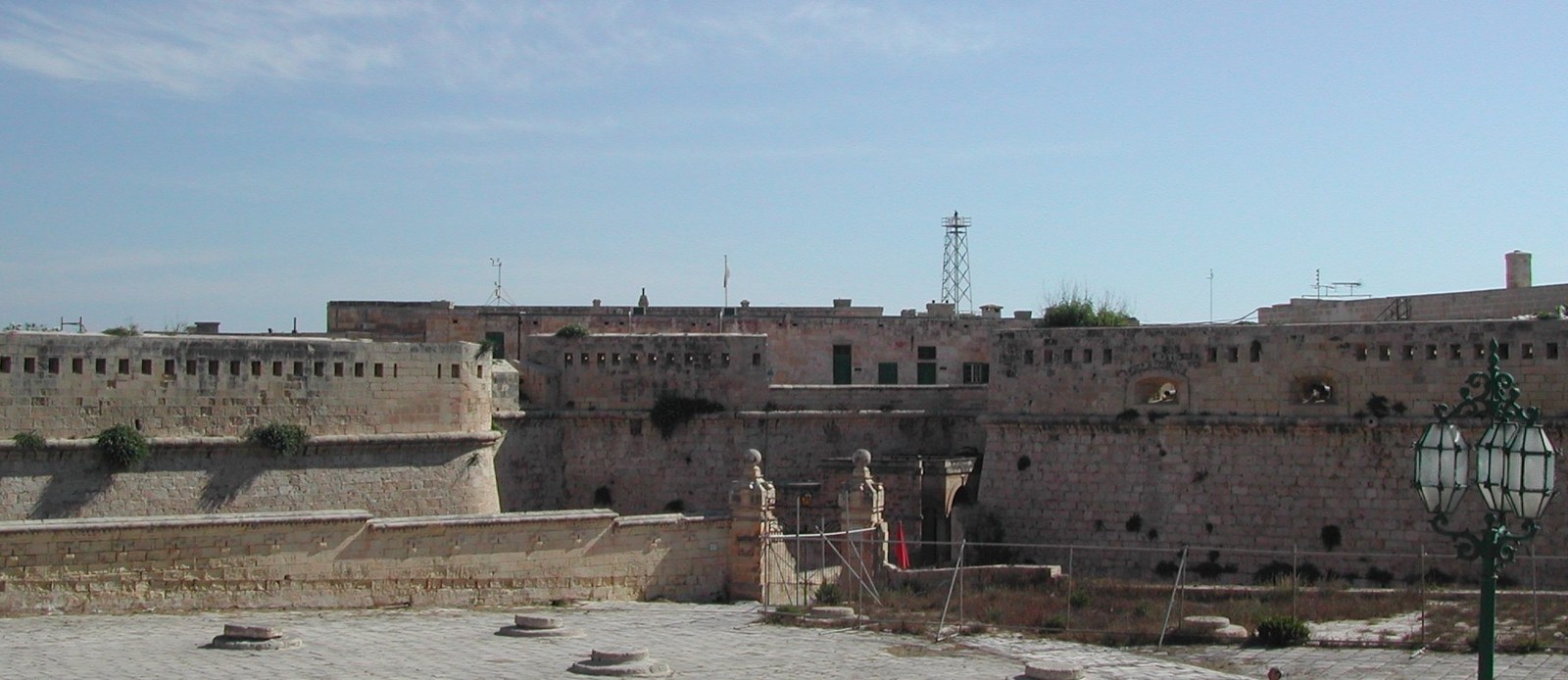
Built in 1552, St Elmo had acquired additional works before the siege, including a hastily constructed ravelin, or outwork. Heritage Malta’s architectural history stresses how different that small star-shaped fort was from the much-expanded structure surviving today. Its resistance lasted about a month; it fell on 23 June.
That month was not the endurance of one unchanging group. Reinforcements were sent into the fort as casualties accumulated. The Grandmaster’s Palace account of the siege cycle records troops entering even in mid-June. Defending St Elmo consumed men while delaying the assault on the main strongholds. The value of the delay and the cost to its garrison belong in the same explanation.
The word “knights” can hide much of that garrison. Carmel Vassallo’s re-examination of Spanish documentation emphasizes experienced Spanish infantry and warns against allowing the Order’s aristocratic leadership to absorb their contribution. These were gunpowder battles fought by mixed forces, not a last triumph of medieval armour over modern weapons.
Keeping the remaining positions connected
After St Elmo fell, the struggle concentrated on Birgu and Senglea. The defenders needed to reinforce threatened sectors without exposing every movement to the besieging army. A floating bridge across the creek between the towns helped connect their positions. Malta’s official historical teaching materials distinguish this crossing from the protective chain intended to obstruct hostile vessels: movement for one side and obstruction for the other were complementary requirements.
The Ottoman assault on Senglea on 15 July combined attacks by land and water. Boats did not automatically turn a defended shore into an open flank. Fire from the St Angelo side helped defeat the waterborne attack. The episode illustrates how separate positions could support one another across a harbour, provided that defenders retained the weapons, crews and communications to make the connection effective.
Meanwhile, the population was rebuilding what bombardment destroyed. In his research on Maltese participation, George Cassar draws attention to men, women and children working on the defences alongside servants, galley personnel and enslaved people. Their presence prevents a simple equation between useful military work and membership of the Order. It also warns against treating all labour as freely offered: a shared task did not erase differences of status or coercion.
The wounded required another network. Savona-Ventura describes emergency treatment spaces in the Order’s auberges and private houses, supplementing Birgu’s infirmary. Earlier, boats had carried badly wounded men from St Elmo until the crossing was cut off. A fortress could lose fighting capacity through the failure of evacuation and care as well as through a breach in its wall.
The besiegers had supply lines too
The Ottoman army’s numerical superiority did not remove its material constraints. Feeding a large force on a relatively small island meant drawing resources from beyond the immediate battlefield. The fleet that made the expedition possible also brought thousands of additional mouths.
In his study of Süleyman’s navy, Colin Imber explains the imbalance between a galley’s numerous crew and its limited carrying capacity. Fleets needed shore provisioning or accompanying supply vessels. For Malta, he identifies an Ottoman record of a ship returning to Lepanto for provisions. An armada was therefore not a self-contained storehouse that could remain indefinitely wherever its commander wished.
The attacking army should not be imagined as an undifferentiated crowd appearing from nowhere. Ottoman administrative records include the fleet’s itinerary, decrees and soldiers’ requests for advancement. As Ottoman historian Caroline Finkel noted when reviewing published archival material, such records also preserve injuries and reported acts of courage. They provide a different view from the enemy army seen through the defenders’ walls.
Supply, shelter and the health of crews help explain why securing an anchorage mattered. They also make prolonged resistance consequential without requiring a single decisive blunder to explain the campaign. Every additional week imposed demands on the besiegers as well as the besieged.
Relief was an operation, not an arrival on cue
Help from Sicily is often treated as the final scene in a story whose real action belongs inside the forts. Yet assembling and landing a relief army was itself a major military problem. Don García de Toledo had to find ships and experienced troops, protect the force in transit and choose a landing place beyond the immediate reach of Ottoman patrols.
Hüseyin Serdar Tabakoğlu’s study of Spanish archival documents shows that food and ammunition were integral to this calculation. Soldiers put ashore without adequate reserves could become another isolated force needing rescue. The Spanish monarchy was also unwilling to gamble its fleet in a direct confrontation that might expose its other Mediterranean possessions. Delay had strategic causes, although explaining those constraints does not prove that every decision was optimal.
A smaller reinforcement had already reached the defenders before the main relief. The larger landing on 7 September changed the balance. Ottoman withdrawal followed, with fighting still occurring during the campaign’s final days. The conventional commemoration on 8 September should not compress these movements into one instantaneous departure.
A local record makes the relief visible outside the commanders’ correspondence. The Notarial Archives Foundation preserves the account of Birgu notary Giacomo Baldacchino, who recorded the landing on 7 September. A notarial register, normally associated with civilian transactions, became a place to mark the interruption—and possible restoration—of ordinary life.
How a victory became a story
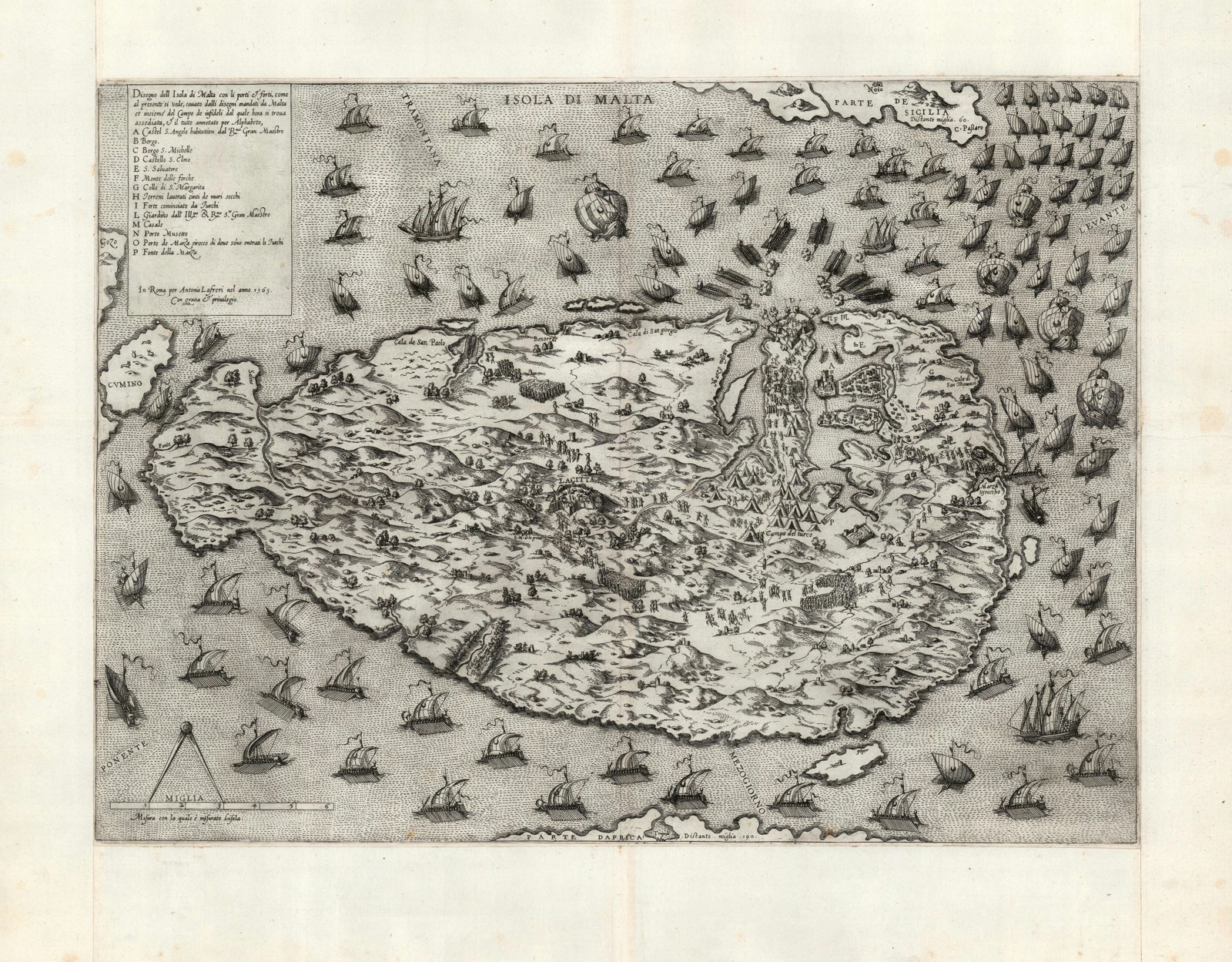
Printed reports and images were already shaping the siege while it continued. Antonio Lafreri’s 1565 map placed the island, its harbours and the attacking fleet on a sheet that could circulate far from Malta. It was a representation assembled for viewers, not an aerial photograph or an exact inventory of ships.
Jessica Maier’s research on siege maps shows printers revising plates as news arrived, borrowing from one another and combining events from different moments. Later monumental paintings transformed these materials into ordered, commemorative sequences. Their usefulness as evidence depends on asking whether a feature records information, organizes a narrative or celebrates a patron.
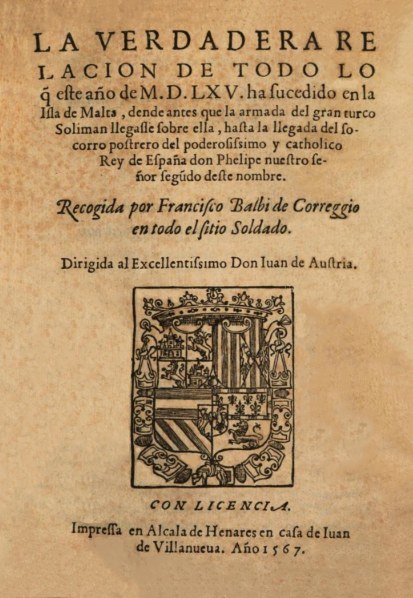
Written accounts require similar care. Francisco Balbi de Correggio’s narrative, first printed in 1567, is an important participant’s account. The title page reproduced below identifies him as a soldier present throughout the siege. That proximity matters, but it did not grant access to every council, casualty list or Ottoman intention. Nor should disagreements between force estimates be concealed behind a confidently precise total.
The most familiar narrative is richest on the defenders’ side. Ottoman records and civilian traces broaden it, without supplying a complete view from every position. Acknowledging those uneven perspectives is not an argument that nothing can be known. It is a way to distinguish the course of the siege from the claims made for it afterwards.
Survival was not the same as recovery
The Order survived, but the island’s households faced damaged homes, disrupted cultivation and lost resources. In his study of civilian suffering, Cassar follows the consequences beyond the battlefield: rural destruction impaired the ability to earn income and meet obligations. Victory did not immediately restore a harvest or replace livestock.
The subsequent construction of Valletta reshaped the peninsula from which the Ottomans had attacked. Its fortified urban plan, described in UNESCO’s account of the city, belongs to the response to 1565, not to the original battlefield. Present-day masonry records centuries of rebuilding rather than a scene frozen at the moment of victory.
Malta’s defence was a serious Ottoman defeat and a foundational event for the Order’s later identity. It did not end Ottoman power or Mediterranean conflict, as Mallia-Milanes cautions. Its more securely demonstrable achievement was local and immense: the main strongholds remained untaken. They held through leadership and determination, but also through supplied magazines, repair work, connected positions and a successful relief operation. The craftsmen in the commemorative painting belong near the centre of that explanation.