
Adwa 1896 and the Making of Ethiopia’s Victory
Ethiopia’s victory at Adwa grew from political coalition, modern weapons, and battlefield decisions, then secured recognition through diplomacy.
On the night of 29 February 1896, Italian-led columns moved through the mountains near Adwa in northern Ethiopia. The plan depended on separate brigades finding the right positions and remaining close enough to support one another. In darkness, on difficult tracks, those assumptions began to fail. By the following afternoon, the army that had advanced from Italy’s colony of Eritrea was broken.
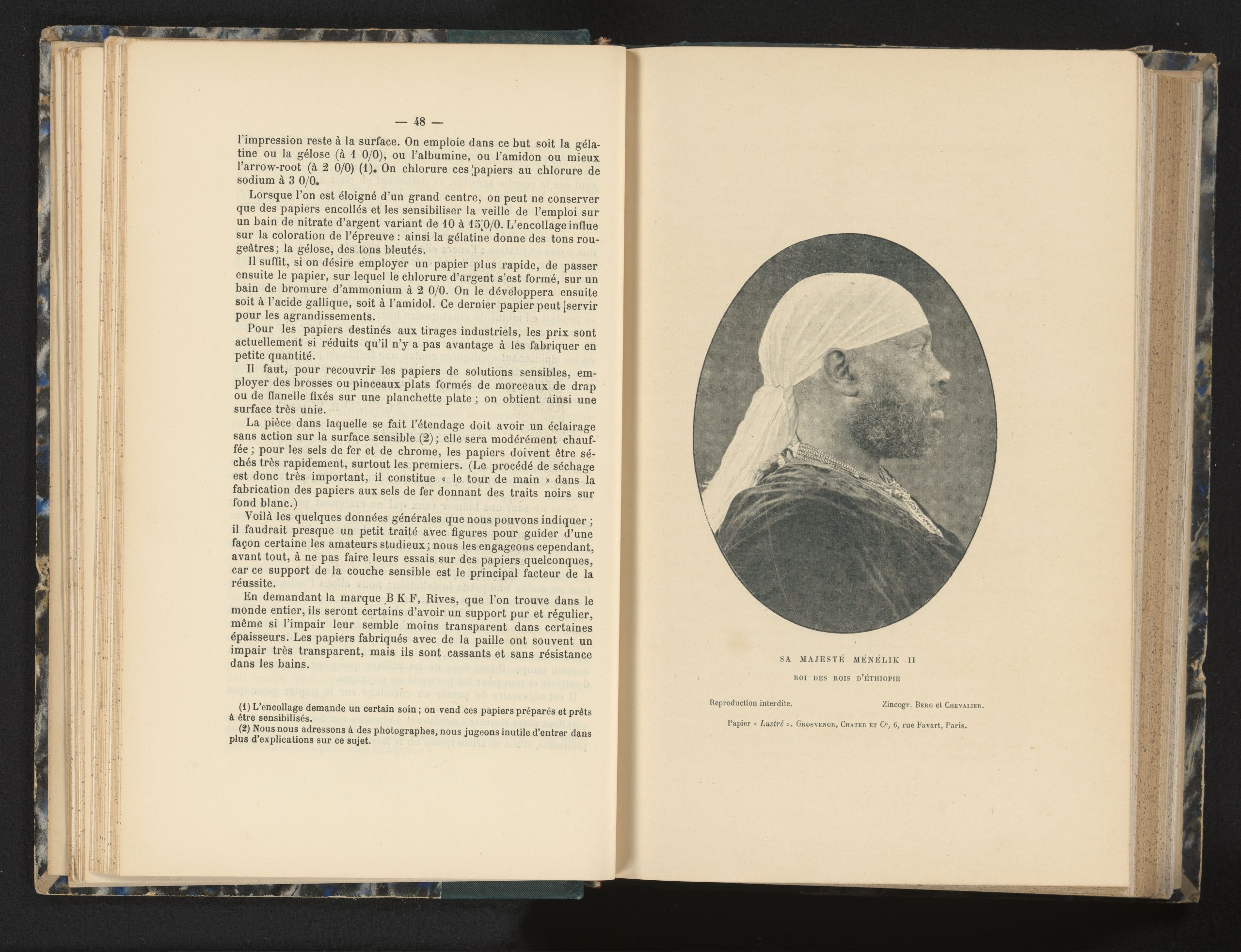
Ethiopia’s victory on 1 March was won on that landscape, but its foundations lay in years of politics, weapons acquisition, and mobilization. Menelik II and Empress Taytu helped bring together forces that Italy had expected to divide. Their army then exploited an opportunity that Italian commanders had disastrously created.

A treaty became a claim to sovereignty
The Treaty of Wuchale, signed on 2 May 1889, contained a dangerous difference. Its Amharic Article 17 allowed Ethiopia to use Italy’s diplomatic assistance. The Italian reading made mediation obligatory. Rome claimed a protectorate, placing Ethiopia’s external relations under Italian control.
Calling the conflict a translation error makes it sound smaller than it was. The disagreement concerned who could speak for Ethiopia internationally. Menelik rejected the Italian claim, and Italy’s territorial advance gave the dispute a military edge. The treaty documentation assembled by legal historians at Aix-Marseille sets out both the controversy and the eventual settlement.
Italy already possessed a coastal base from which to operate. Its colony of Eritrea was formally established in 1890. Adwa would halt the attempted conquest of Ethiopia’s interior, but it would not expel Italy from that colony. The distinction is visible in the Library of Congress’s account of B. Melli’s contemporary history of Eritrea.
Building an army from political relationships
Menelik was emperor, but the title did not turn regional rulers into interchangeable officers. Their cooperation had to be secured. The force that assembled included contingents with their own commanders, loyalties, and histories. Menelik’s southern power base and Taytu’s northern aristocratic connections helped make this coalition possible. As the Open University’s account of the campaign emphasizes, political consolidation was a condition of military success.
Taytu had an independent role in this work. She opposed the protectorate claim, participated in deliberations, and accompanied the campaign. Accounts of the siege of Mekelle associate her with cutting the Italian garrison’s water supply. The Library of Congress’s study of Taytu presents a politically experienced actor, rather than a ceremonial figure beside her husband.
The army’s size is uncertain. Estimates often place the Ethiopian force around 80,000–100,000 or more, substantially larger than the roughly 15,000–20,000 troops available to the Italian command. Counting conventions differ, particularly over combatants, reserves, and accompanying personnel. The numerical advantage is secure; exact totals are not. A Nordic Africa Institute compilation preserves the range and its underlying historical references.
Rifles needed food as well as ammunition
This was no encounter between a modern army and an unarmed crowd. Ethiopian commanders had acquired large quantities of imported firearms and artillery. Menelik used international rivalries and commercial networks to strengthen his position. Weapons from abroad became effective because Ethiopian forces could organize, move, and employ them.
Mobilization also depended on obligations reaching into ordinary households. Historian Tsegaye Tegenu’s study of the army’s logistics describes soldiers carrying provisions for roughly twenty days, including dried meat and flour. Local officials prepared supplies along the line of march. Assistants fetched fuel, tended animals, and prepared food. These arrangements connected military strength to taxation, agricultural production, and domestic labor. They also created a clock: even an army capable of winning a battle could struggle to remain concentrated after nearby supplies ran low.
Italy faced its own political timetable. Prime Minister Francesco Crispi’s government wanted success without the open-ended expense of a major colonial war. Pressure from Rome encouraged an advance that General Oreste Baratieri had reason to consider dangerous. Historian Robert Clemm’s review of Raymond Jonas’s archival study connects these military choices to the fractured politics of Italian imperialism.
When the brigades lost one another
At Adwa, difficult terrain and confused movement separated Italian formations. Albertone’s brigade advanced too far on the left; Dabormida’s movement on the right left another force isolated. The intended supporting line became disconnected battles. Ethiopian troops could concentrate against exposed formations and press advantages that an intact defensive position might have denied them.
That sequence does not reduce the victory to Italian incompetence. An opponent still had to recognize openings, move forces, sustain attacks, and pursue a retreat. Ethiopian commanders and soldiers did so. Sean McLachlan’s military study of the campaign reconstructs the failed deployments and the fighting that followed them.
The Italian-led force also included African colonial soldiers, commonly called askari. Their presence complicates any description of two racially uniform armies. Thousands died on the Italian side, and Ethiopian losses were also severe. After the battle, captured Eritrean askari faced particularly harsh punishment, including mutilation, while many Italian prisoners became valuable instruments of negotiation. The Nordic Africa Institute’s source compilation records this unequal treatment. Victory was followed by choices about captivity as well as diplomacy.
Turning the battlefield into recognition
Menelik did not pursue a conquest of Eritrea. Preserving his military and diplomatic position offered a more achievable result: forcing Italy to abandon its protectorate claim. Adwa also provoked a political crisis in Italy. Colonial policy had opponents there, and military defeat made continuation harder to defend.
The Treaty of Addis Ababa of 26 October 1896 annulled Wuchale and explicitly recognized Ethiopian sovereignty. It left the final frontier for later negotiation, with a provisional boundary in the meantime. Military victory and diplomatic settlement therefore produced a specific outcome: Italy accepted Ethiopia as an independent state while retaining Eritrea.
Prisoners remained central to the aftermath. Their releases took place in stages, with the last Italian prisoners leaving in 1897. Contemporary illustrations, diplomatic encounters, and celebrations preserved by the Library of Congress’s pictorial history show how carefully the victory and its settlement were presented to audiences abroad.
A victory with several audiences
Adwa challenged claims that European conquest was inevitable. People across the African diaspora drew meaning from an African state successfully defending its independence. That larger significance was real, but it did not make Menelik the commander of a single continent-wide movement. His immediate objectives concerned Ethiopia’s sovereignty and his dynasty’s authority. Raymond Jonas’s study follows the event’s different meanings across Africa, Europe, and the Americas.
The October peace required its Amharic and French texts to agree. Ethiopia’s right to conduct its own affairs was explicit.
Sources and further reading
- Treaty of Addis Ababa, 26 October 1896, transcription and documentation, Documents de droit international.
- B. Melli, La colonia Eritrea dalle sue origini fino al Io. marzo 1899, Library of Congress.
- Resisting colonisation: the Battle of Adwa, 1896, Open University.
- Taytu Betul: The Cunning Empress of Ethiopia, Library of Congress.
- Bernhard Lindahl, Local History of Ethiopia: Adi–Aero, particularly the Adwa battle bibliography, Nordic Africa Institute.
- Robert Clemm, When Ethiopia Stunned the World, Origins, 2012.
- Sean McLachlan, Armies of the Adowa Campaign 1896, Osprey, 2011, hosted by South African History Online.
- Emperor Menelik II of Ethiopia and the Battle of Adwa: A Pictorial History, Library of Congress.
- Raymond Jonas, The Battle of Adwa: African Victory in the Age of Empire, Harvard University Press, 2011, university book overview.
- Tsegaye Tegenu, The Logistic Base and Military Strategy of the Ethiopian Army: The Campaign and Battle of Adwa, research paper.
- African Queens Regnant, Northwestern University Program of African Studies newsletter, spring 2024, p. 17.