Wars & Conflicts
Vicksburg, 1863: The Campaign That Turned a River Fortress Inside Out
Grant reached Vicksburg by moving away from it. River transport, roads, railroad destruction and a sequence of hard battles transformed the city’s formidable position into a trap for its defending army.
On 29 April 1863, Union gunboats spent hours bombarding the Confederate works at Grand Gulf, Mississippi. The attack did not open the landing Ulysses S. Grant wanted. Instead of forcing his soldiers ashore beneath the surviving defenses, he sent them farther south along the Louisiana bank and looked for another crossing.
The adjustment was small on a map of the continent and decisive on the ground. Grant needed somewhere his army could leave the river’s low, difficult margins and gain the roads of the Mississippi interior. Once across, it would not march directly against Vicksburg. It would move northeast, disrupt the city’s connections and defeat Confederate forces outside the fortifications before returning to them.
Vicksburg’s surrender on 4 July is often paired with Gettysburg as a turning point in the American Civil War. The familiar date can compress a complicated campaign into a victorious siege. Its more revealing story lies in how the Union army arrived at that siege, and how an apparent source of Confederate strength became a restriction on Confederate movement.
Why the river was not enough
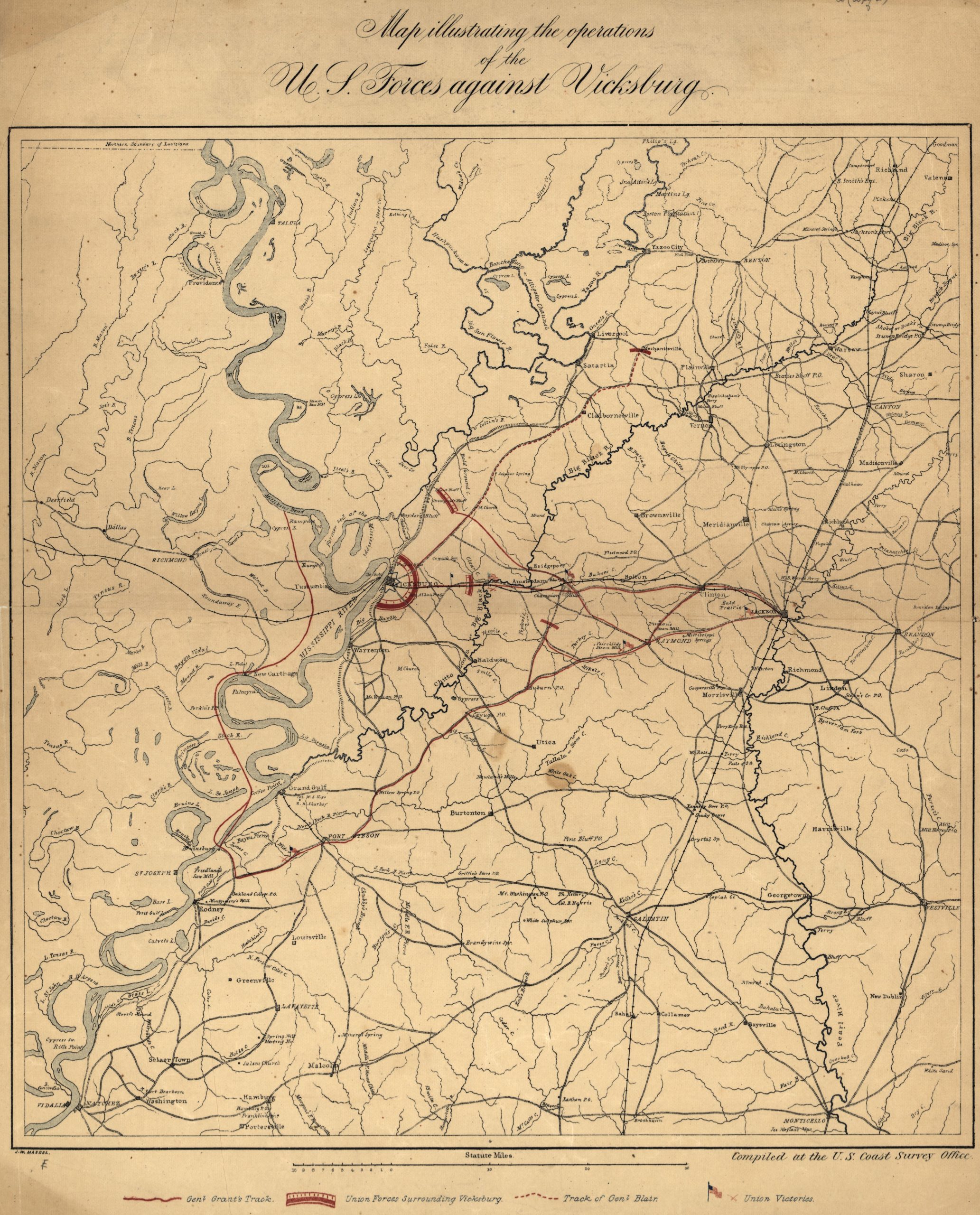
Vicksburg commanded a stretch of the Mississippi from high ground. Batteries on the bluffs threatened vessels passing below, while the terrain to the north complicated an army’s approach. Possession of the city helped keep the Confederacy connected across the river and obstructed Union use of a major commercial and military artery. The National Park Service’s campaign overview places the struggle within this larger contest for the Mississippi.
A river fleet could bombard the heights or attempt to run their guns. Neither operation automatically occupied the land behind them. Conversely, a large army on the wrong bank might possess formidable strength without being able to apply it where it mattered. Grant and Rear Admiral David Dixon Porter had to solve a combined problem of transport, landing, supply and fighting.
Earlier operations had exposed the difficulty. In December 1862, a Confederate cavalry raid destroyed the Union supply depot at Holly Springs, disrupting Grant’s overland advance. William T. Sherman’s assault at Chickasaw Bayou failed against the defenses north of Vicksburg. Winter efforts to find alternative water approaches encountered engineering problems, changing river levels and Confederate resistance.
Grant’s later memoirs explain these experiments at length. They are an essential participant’s account, but also a retrospective defense of decisions made more than twenty years earlier. Their value increases when particular claims are checked against the campaign’s dates, movements and surviving records rather than treated as a complete view from above.
The spring solution divided the immediate tasks. Troops would march south on the Louisiana side. Enough gunboats and transports would pass Vicksburg to carry them across below the city. This did not make the batteries irrelevant. It required accepting their fire in order to escape the geographical arrangement they protected.
Passing the guns and finding the road
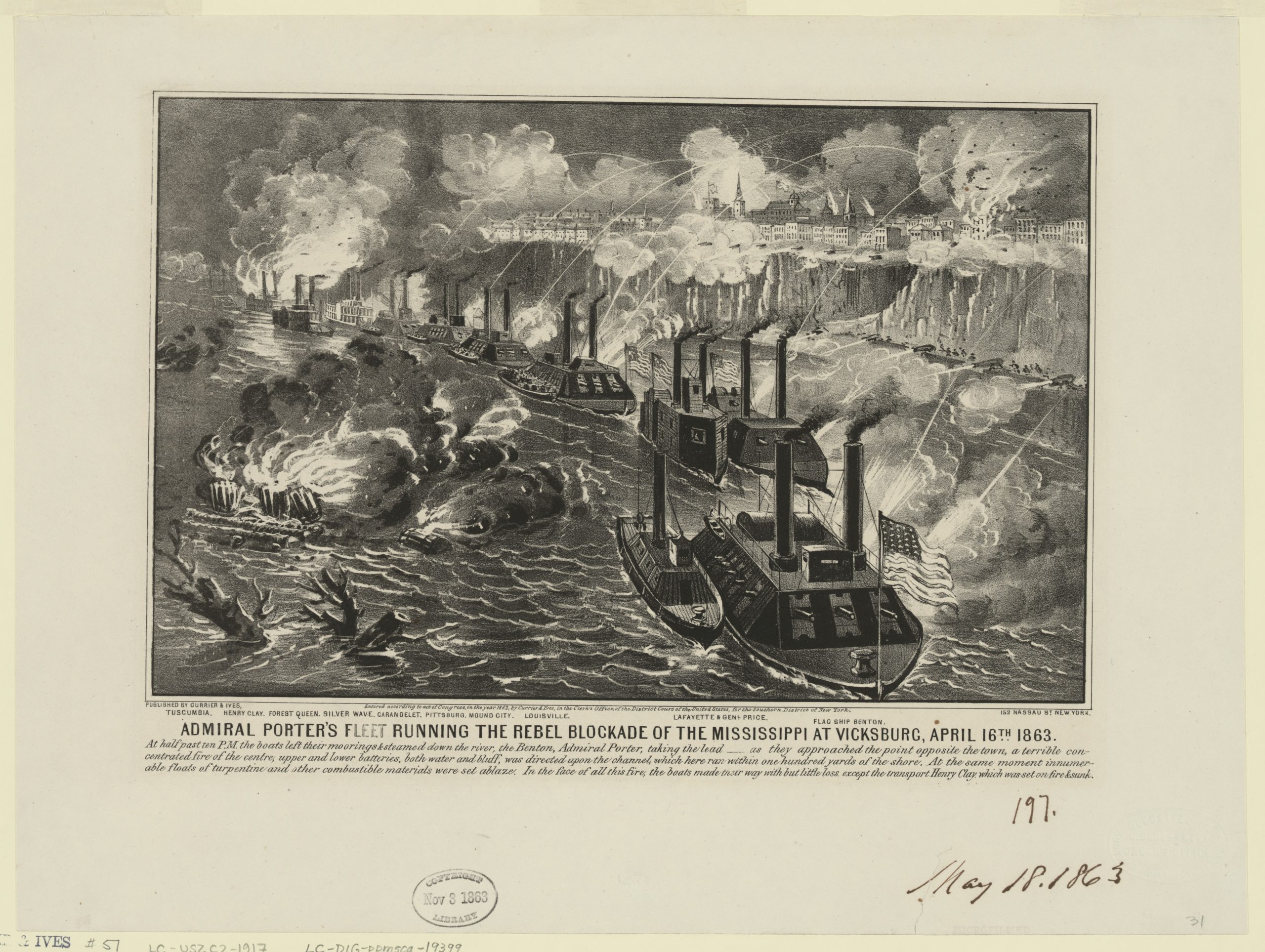
On the night of 16 April, Porter’s vessels moved downstream past Vicksburg. Confederate defenders illuminated the river and fired into the passing fleet. Most of the vessels got through; one transport was lost. The NPS account of the passage emphasizes that the fleet’s success placed transport and naval firepower where Grant’s southward-moving troops could use them.
Grand Gulf was the next obstacle. When the bombardment there failed to produce a satisfactory landing, the army continued south. In his memoirs, Grant credited an unnamed Black man with informing him that Bruinsburg offered a landing and a road toward Port Gibson. The account preserves the importance of local knowledge while leaving the informant’s identity and circumstances largely outside the record.
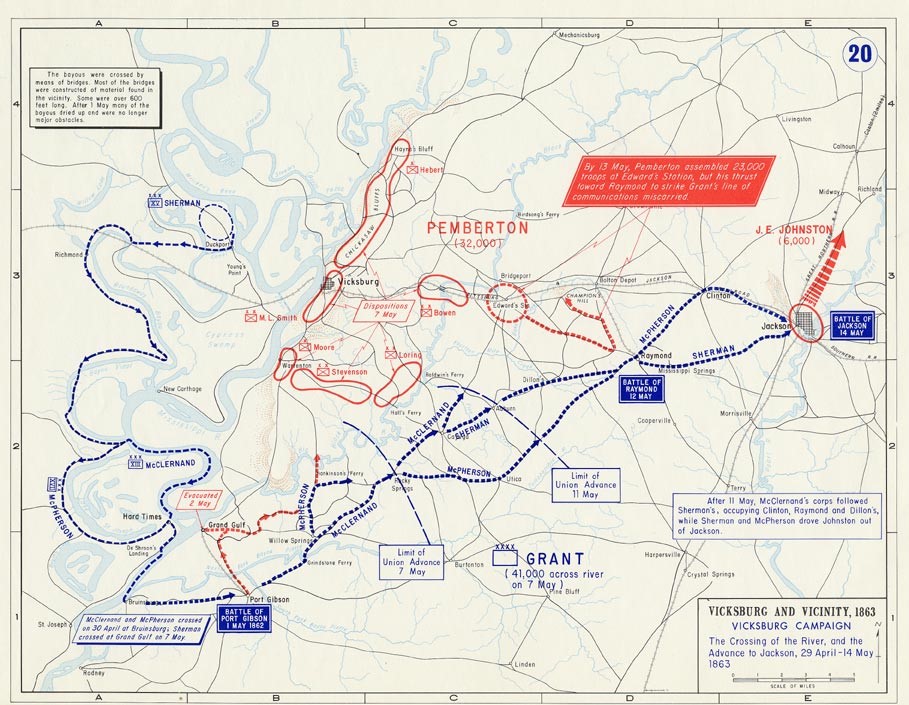
The first Union troops landed at Bruinsburg on 30 April, and the crossing continued into 1 May. The landing itself was unopposed. That did not make the operation secure. A force ferried over in successive loads needed room to deploy, ammunition and food, and a route onto firmer ground before Confederate troops could concentrate against it.
The landing account describes the movement away from the river and the night march toward Port Gibson. There the Union army fought on 1 May and forced the Confederates back. Their defeat made Grand Gulf untenable, allowing Grant to use the position as a supply base instead of having to seize it by a direct amphibious assault.
This sequence explains why the crossing mattered more than the patch of bank on which it occurred. Bruinsburg was an entrance to a road network. Port Gibson secured freedom to move within that network. Grand Gulf then became useful from the landward side. A fortified point that had resisted the navy could be abandoned after a battle elsewhere altered its situation.
The army did not live on courage instead of supplies
One enduring version of the campaign has Grant cutting loose from every supply line and living entirely off the countryside. It is a misleadingly absolute description. The NPS study of the inland advance stresses the continued importance of Grand Gulf. Grant’s own memoirs describe a mixed arrangement: obtaining what could be brought forward while collecting substantial provisions locally.
He did not expect a single road to deliver full rations to the whole army. He did expect supplies such as hard bread, coffee and salt to come from the base, with the country furnishing much of the balance. Transport shortages changed the proportion supplied by each method. They did not abolish the need for organization, wagons, roads or ammunition.
Foraging also transferred part of the burden onto the region through which the soldiers passed. Food and livestock were not an abstract resource awaiting a strategist. They belonged within farms and plantations whose labour system depended heavily upon slavery. Special Orders No. 110 of 20 April 1863, paragraph thirteen, reproduced in Grant’s memoirs, permitted collecting military necessities while prohibiting indiscriminate destruction and unauthorized searches. The distinction in the order demonstrates what command wanted regulated; it does not prove perfect conduct by every soldier.
The operational gain was flexibility. Grant could move more quickly than if every meal had to follow from a distant depot, yet retain a connection to supplies that local farms could not reliably replace. Once the army reached the area north of Vicksburg and reconnected with the fleet on the Yazoo, its logistical geography changed again.
Calling this simply an abandonment of logistics conceals the achievement. Grant was changing how the army was supplied and which route mattered most at each stage. The campaign demanded successive solutions rather than one spectacular decision to dispense with material limits.
Between two Confederate forces
The Southern Railroad linked Vicksburg eastward with Jackson. Grant’s inland movement threatened that connection and also placed him between Confederate forces that needed to cooperate. Lieutenant General John C. Pemberton had to consider the defense of Vicksburg, the safety of his field army and instructions from General Joseph E. Johnston. These objectives could pull in different directions once Union troops intervened between them.
After fighting at Raymond on 12 May, Grant turned toward Jackson. Union forces captured the state capital on 14 May, and Johnston withdrew. Destroying railroad facilities and other military resources there reduced its usefulness as an immediate base against Grant’s rear. The Union commander then turned west against Pemberton rather than allowing the two Confederate forces an easy opportunity to combine.
The decisive field battle came at Champion Hill on 16 May. The key was not merely possession of an elevated patch of ground. Roads and crossroads determined whether Pemberton could maintain a route back toward Vicksburg. Union pressure against his left threatened that connection. Confederate counterattacks recovered ground for a time, but they did not restore a stable position.
The NPS reconstruction of Champion Hill follows the fighting around the crest and crossroads and the eventual Confederate retreat. William W. Loring’s division became separated from the route taken by the main army and made its way toward Johnston. Pemberton reached the next defensive position with a force diminished by casualties, prisoners, lost artillery and separation.
At the Big Black River on 17 May, another Union attack broke the Confederate bridgehead. Retreating troops crossed toward Vicksburg, and the bridges were burned to impede pursuit. Grant’s army established crossings of its own. The city’s fortifications now sheltered a beaten field army, but they also fixed it in a place the Union could surround.
The limits of momentum
Grant tried to convert the sequence of victories into an immediate capture. Assaults on 19 and 22 May failed. Men who had driven Confederate troops from open-field positions could not simply carry the city’s earthworks through the force of their recent success. Broken ground, prepared defenses and concentrated fire imposed different conditions.
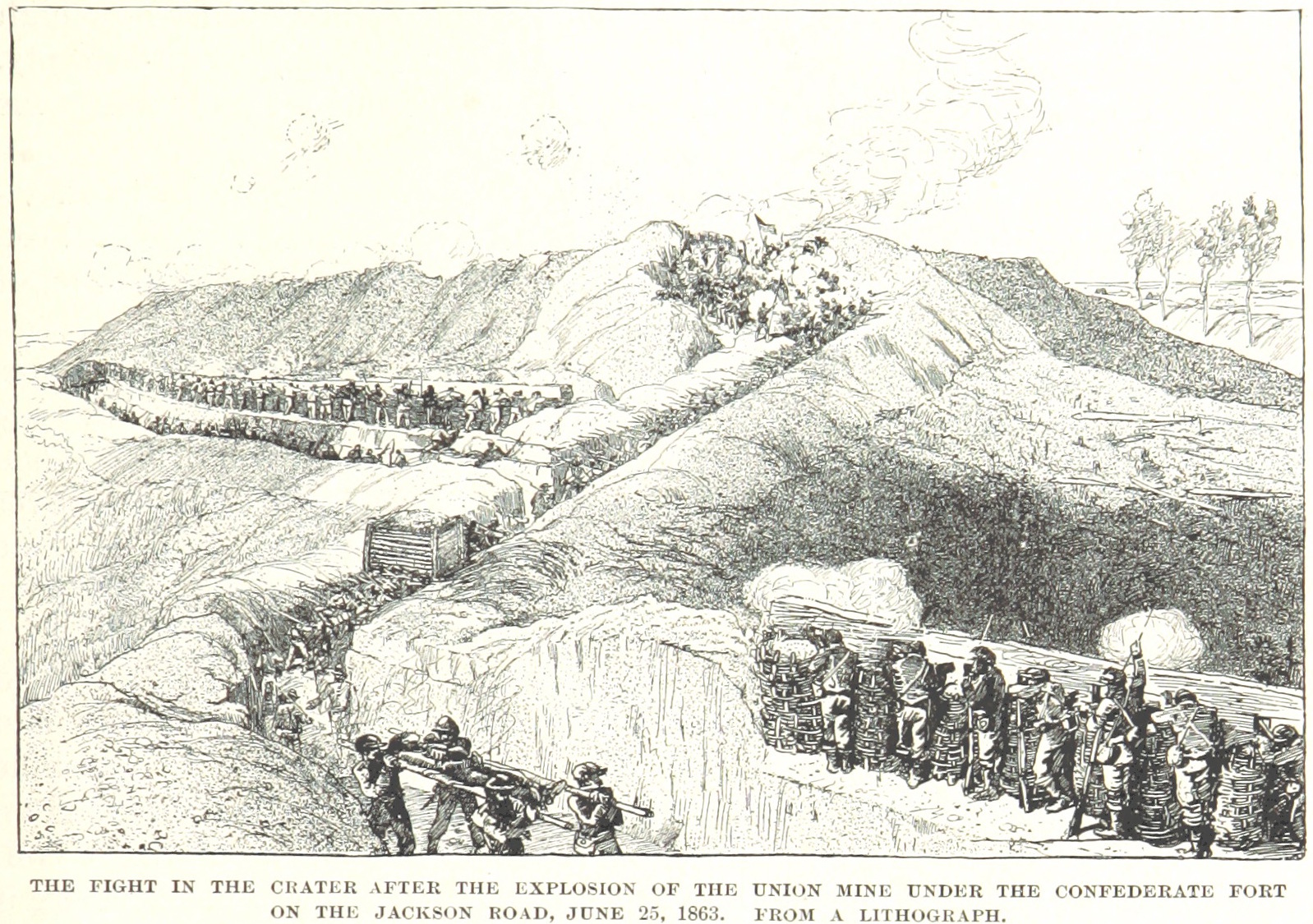
The ensuing siege required labour as well as artillery. Union troops dug approaches toward the Confederate works, protected working parties and prepared mines. A charge exploded beneath the Third Louisiana Redan on 25 June, but the fighting that followed did not produce the hoped-for breakthrough. The NPS siege history records both the engineering effort and the continued resistance.
Grant also had to look away from the city. Johnston’s assembling force threatened to attack the besiegers from outside. Union defenses therefore faced in two directions: toward Pemberton’s lines and toward a possible relief army. Encirclement did not remove the possibility of a reversal. It made the contest depend on whether the garrison could endure long enough for outside action to change its position.
Inside Vicksburg, reduced rations and bombardment shaped military and civilian life. Residents excavated shelters in the hillsides. Accounts of these caves describe a city adapting its daily routines to incoming fire, rather than simply waiting untouched behind its soldiers.
Safety was distributed unequally. Enslaved people could be required to dig shelters and perform exposed work for those who occupied them. An NPS account drawn from Mary Loughborough’s recollections describes an enslaved boy named George obtaining food, maintaining a shelter and carrying messages. His work connects the celebrated siege to the labour and coercion that a purely operational map leaves invisible.
Surrender was another transport problem
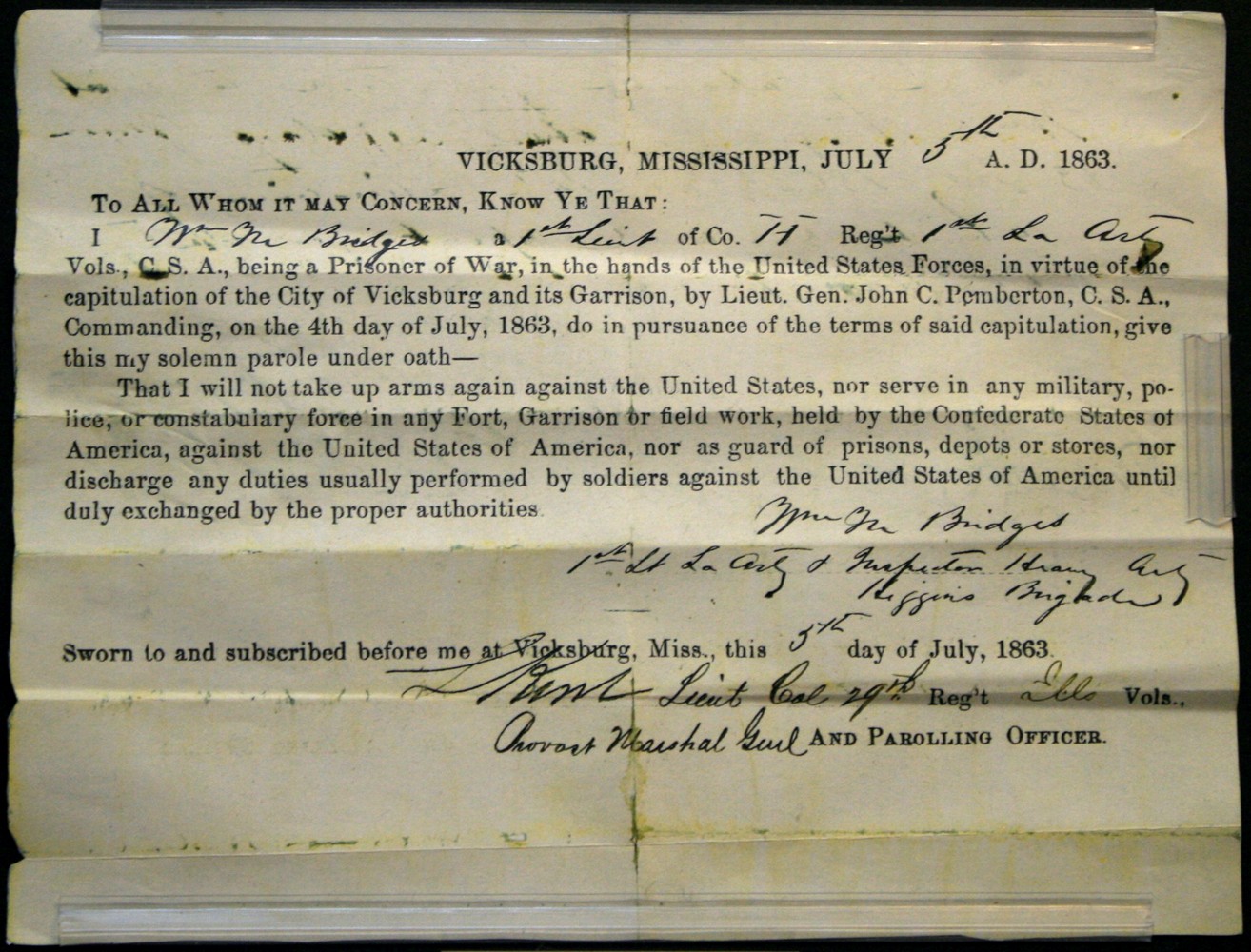
Pemberton opened negotiations on 3 July. The agreement produced the surrender of Vicksburg on 4 July and the parole of its Confederate soldiers rather than the immediate shipment of the entire garrison north as prisoners. The surrender record and Grant’s memoirs show a negotiation over practical terms, not simply the application of his nickname, “Unconditional Surrender.”
Grant later explained the burden that transporting and guarding tens of thousands of prisoners would have imposed. Parole left the captured men under an obligation not to resume fighting until properly exchanged, while allowing Union vessels and troops to be used elsewhere. The outcome was shaped by the same material considerations that had governed the approach to the city.
Vicksburg’s fall did not by itself remove the last Confederate river stronghold. Port Hudson surrendered on 9 July. Together, the two capitulations opened the Mississippi to Union control and severely disrupted Confederate connections across it. They did not end resistance in the trans-Mississippi region or make every mile of river immune to attack.
The campaign had reversed the meaning of Vicksburg’s position. At its beginning, the city’s guns denied Union access to a river corridor. By its end, Union control of land approaches and river transport helped determine how a Confederate army would leave the city. Grant had not found a single weak spot that made the fortress worthless. He had altered the roads, supply routes and neighbouring forces upon which its strength depended.