
Destinations
Ravenna in Mosaics: How to Read a City of Emperors and Bishops
A practical historical route through stars, imperial processions, baptismal domes and a palace whose missing people still leave traces.
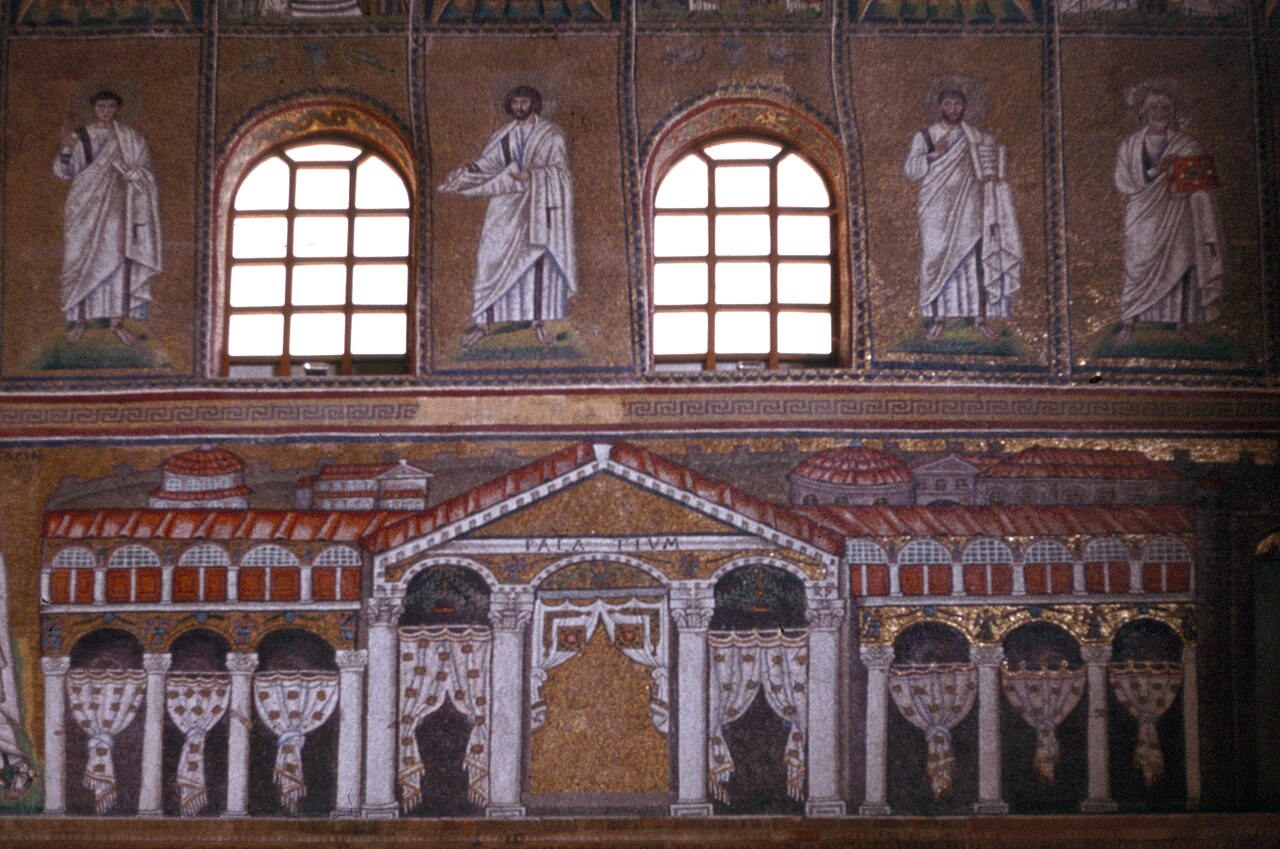
In the palace mosaic at Sant’Apollinare Nuovo, curtains hang between columns where people once stood. Parts of those people survived their removal: hands remain against the architectural supports. The detail gives a visitor a way into Ravenna. Its mosaics preserve acts of devotion and claims to authority, but also changes of ownership, allegiance and memory.
That makes the city more rewarding than a sequence of glittering ceilings. Ask who commissioned a building, what its images were doing there and what happened when a new community inherited it. The answers will not always belong to the same century.
UNESCO’s Early Christian Monuments of Ravenna is a group of eight buildings dating to the fifth and sixth centuries, inscribed in 1996. They span Ravenna’s roles as a western imperial capital, the seat of Ostrogothic rule and a centre of Byzantine Italy. Calling everything simply “Byzantine” conceals some of the changes that make the group important.
Build the route around comparisons
San Vitale and the Mausoleum of Galla Placidia stand close together and make a useful first pair. Their proximity lets you compare two very different interiors without treating their shared address as evidence that they were built together. The small fifth-century monument and the larger sixth-century church answer different architectural needs.
The cathedral area supplies another cluster: the Neonian Baptistery and the Archiepiscopal Museum, which contains the Chapel of Saint Andrew. Sant’Apollinare Nuovo lies elsewhere in the historic centre, on Via di Roma. Sant’Apollinare in Classe, several kilometres to the south, deserves a separately planned journey rather than being confused with its similarly named urban counterpart.
This is a route of contrasts, not an instruction to rush through all eight monuments in one day. A useful habit is to choose one question for each stop: how a ceiling directs the eye, how a ruler is placed among clergy, or how a familiar Christian story changes when translated into a different visual arrangement.
Photographs are helpful companions, particularly for details placed well above eye level. Use them to return to a feature after the visit, but keep their limits in mind. A close-up can make a small figure appear dominant; a camera can brighten a dark interior or crop away the architecture around a panel. The images accompanying this guide record particular viewpoints and dates. Comparing a detail with a wider view is often more informative than choosing whichever photograph makes the colours look most spectacular. In the building, start by locating the image before trying to interpret it.
Galla Placidia: a name, a building and a sky
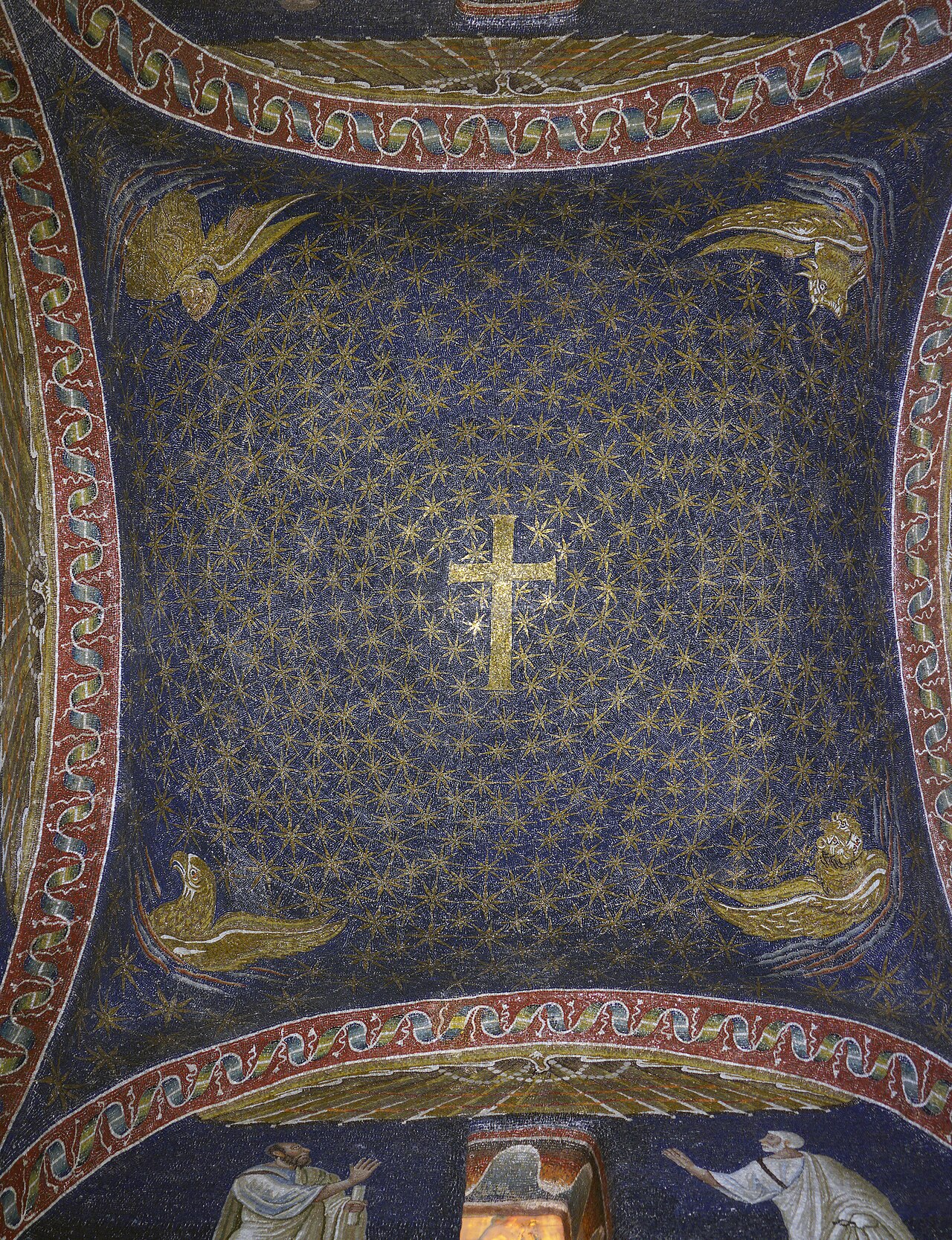
The brick exterior of the Mausoleum of Galla Placidia gives little indication of the mosaic decoration inside. The building was associated with the nearby church of Santa Croce and commissioned in the fifth century. Its familiar name survives, but Galla Placidia herself died in Rome in 450 and was buried there. The name is not a reliable label for the occupant of a tomb.
The starry vault is the obvious point of attention. A golden cross occupies its centre, while repeated stars turn the curved blue surface into an ordered field. Look also at the border: it marks the transition from one decorated surface to another, keeping the ceiling legible as a composed space rather than an unlimited sky.
The Good Shepherd appears over the entrance. Other figures, animals, plants and patterned bands occupy the surrounding surfaces. Instead of trying to identify every symbol at once, follow how the decoration handles a corner or the curve of an arch. Mosaic is doing architectural work as well as carrying images.
The contrast with the outside is instructive, but it should not become an invented account of what every ancient visitor felt. The surviving surfaces show how the interior was organized. They do not preserve a transcript of a worshipper’s response.
San Vitale: the court inside the sanctuary
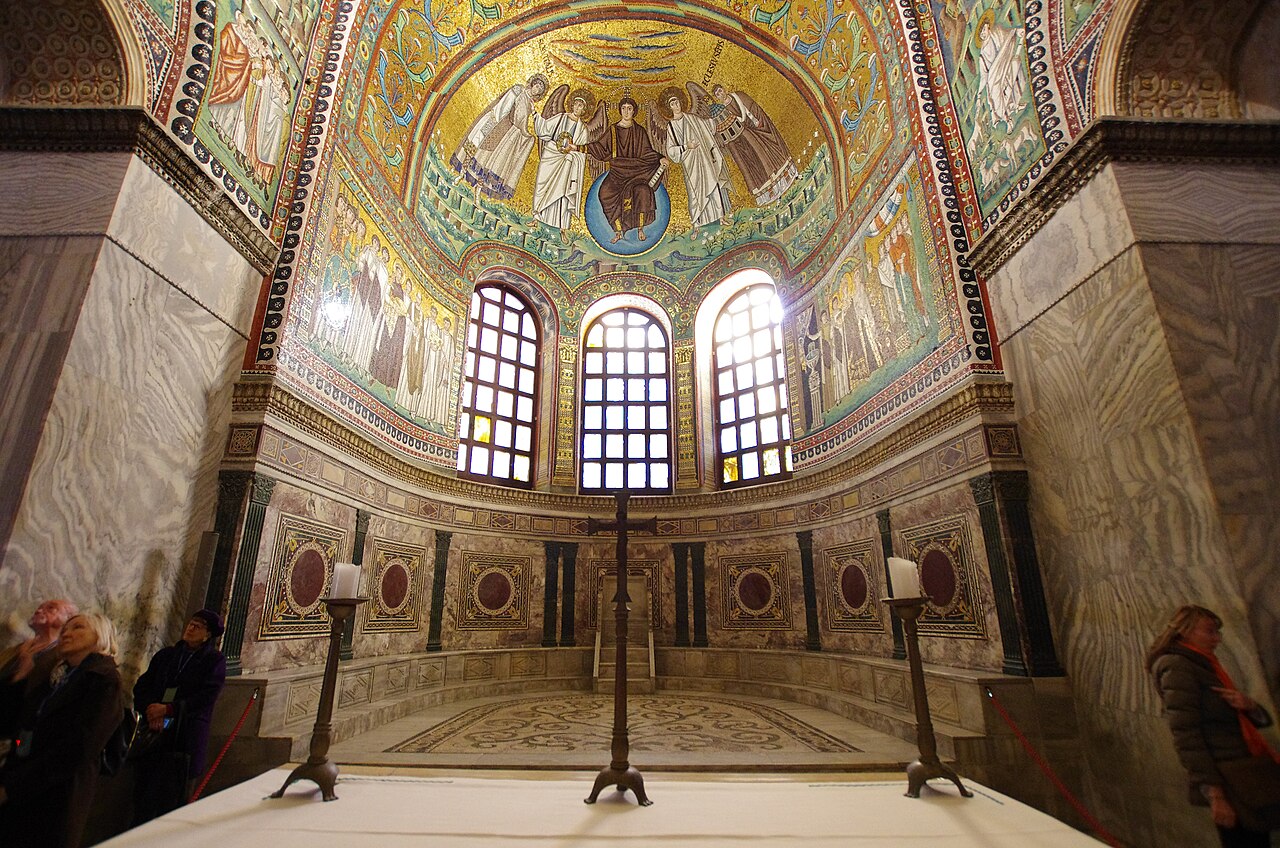
San Vitale’s central, octagonal arrangement differs from the long nave of a basilica. Begin with that shape before concentrating on the famous figures. The church’s sixth-century sanctuary brings marble, patterned borders and mosaics into a dense composition around the apse.
The imperial panels face one another across the sanctuary. Justinian holds a paten; Theodora carries a chalice. Purple clothing, jewels and attendants distinguish the rulers. The Metropolitan Museum’s analysis of their dress explains how costume establishes rank and connects imperial presence with the surrounding sacred imagery.
In Justinian’s panel, the name of Bishop Maximian provides an explicit identification. Such an inscription is a firmer guide than confidently assigning names to every face. Clergy, court and soldiers share the same compressed pictorial field: political and ecclesiastical authority are made visible together.
Treat these as ceremonial images, not as a documentary photograph of the court standing in this church. Their function does not depend on recovering an actual gathering in front of the Ravenna altar. The vessels, positions and clothing construct a relationship between the rulers and the worship taking place in the building.
Finally, move your attention away from the portraits to the apse above. Isolating Justinian or Theodora in a close-up can make a powerful teaching image, but it cuts them out of the larger programme. Seeing the panels within the sanctuary helps explain why their claims to authority were expressed here rather than on an otherwise empty wall.
The baptisteries: compare before you rank
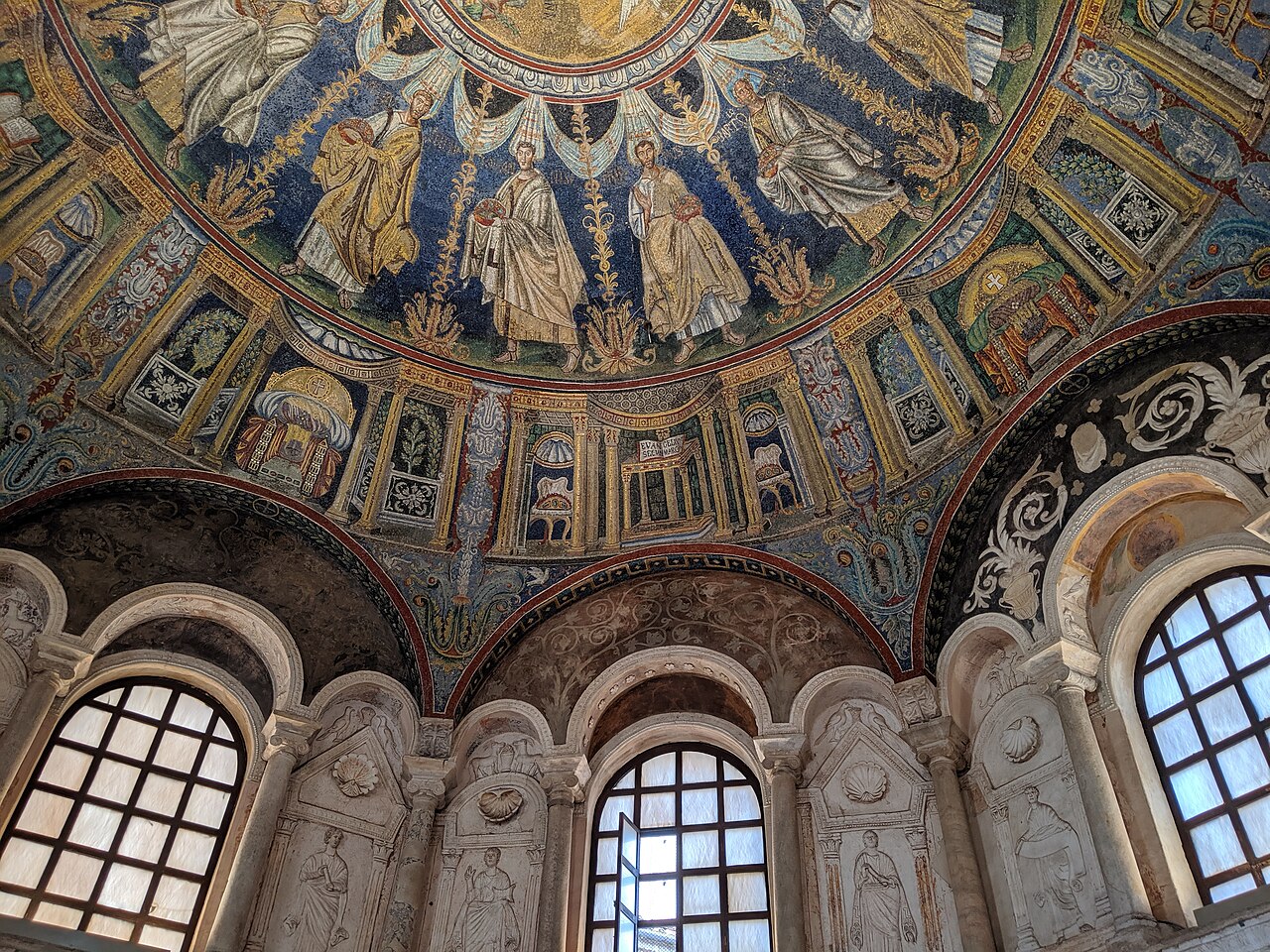
The Neonian Baptistery takes its conventional name from Bishop Neon, associated with its fifth-century decoration. Its octagonal interior sets different materials above one another: marble, stucco and mosaic. The baptism of Christ occupies the central medallion, with apostles arranged around it. The river Jordan is personified as a figure within the scene.
This makes the building a useful place to think about an image’s location. Baptism was not an arbitrary subject selected to fill a circular ceiling. It corresponded to the building’s religious purpose. The surrounding figures and architectural motifs organize the surface around that central event.
The Arian Baptistery, associated with Theodoric’s rule, offers a comparison rather than a lesser duplicate. It too uses Christ’s baptism and a surrounding procession of apostles. The two monuments belonged to different Christian communities in a city where religious affiliation mattered politically as well as doctrinally.
The words “Arian” and “Orthodox,” still used in monument names, should not turn a visit into a caricature of one Christian group against another. Shared subjects can coexist with important theological differences. Nor should every stylistic variation automatically be assigned a theological cause. Compare the arrangements first; then use a reliable guide to distinguish interpretation from observation.
Sant’Apollinare Nuovo: a church that changed its public
Sant’Apollinare Nuovo began as Theodoric’s palace church around the turn of the sixth century, serving an Arian congregation. After the Byzantine conquest, it was brought into Nicene worship and its decoration was reworked. The palace mosaic’s surviving hands make that change unusually tangible.
The curtains do more than conceal missing figures. They turn a space once occupied by people into an architectural backdrop. A viewer who notices only a handsome colonnade misses the earlier composition still visible in fragments. Conversely, the surviving traces do not license us to name every erased person or reconstruct the exact appearance of the lost group.
Look along the nave as well as across it. Processions occupy the lower zones, while Gospel scenes appear higher up. The arrangement rewards following a sequence instead of collecting isolated pictures. The palace and the representation of Classe also introduce places into the programme, linking the sacred figures with an imagined civic setting.
An architectural image is not a measured survey. It can identify a palace or a harbour while arranging buildings for clarity, status or symbolic effect. The mosaic is evidence for how a place was represented, not a substitute for excavation or a reliable street map.
The church itself has accumulated later features, including the portico and bell tower. This is another reason to resist assigning one date to everything in view. A useful visit separates the building’s foundation, its changing decoration and its later architectural additions without treating any of them as irrelevant intrusions.
Classe: read the sheep in their different roles
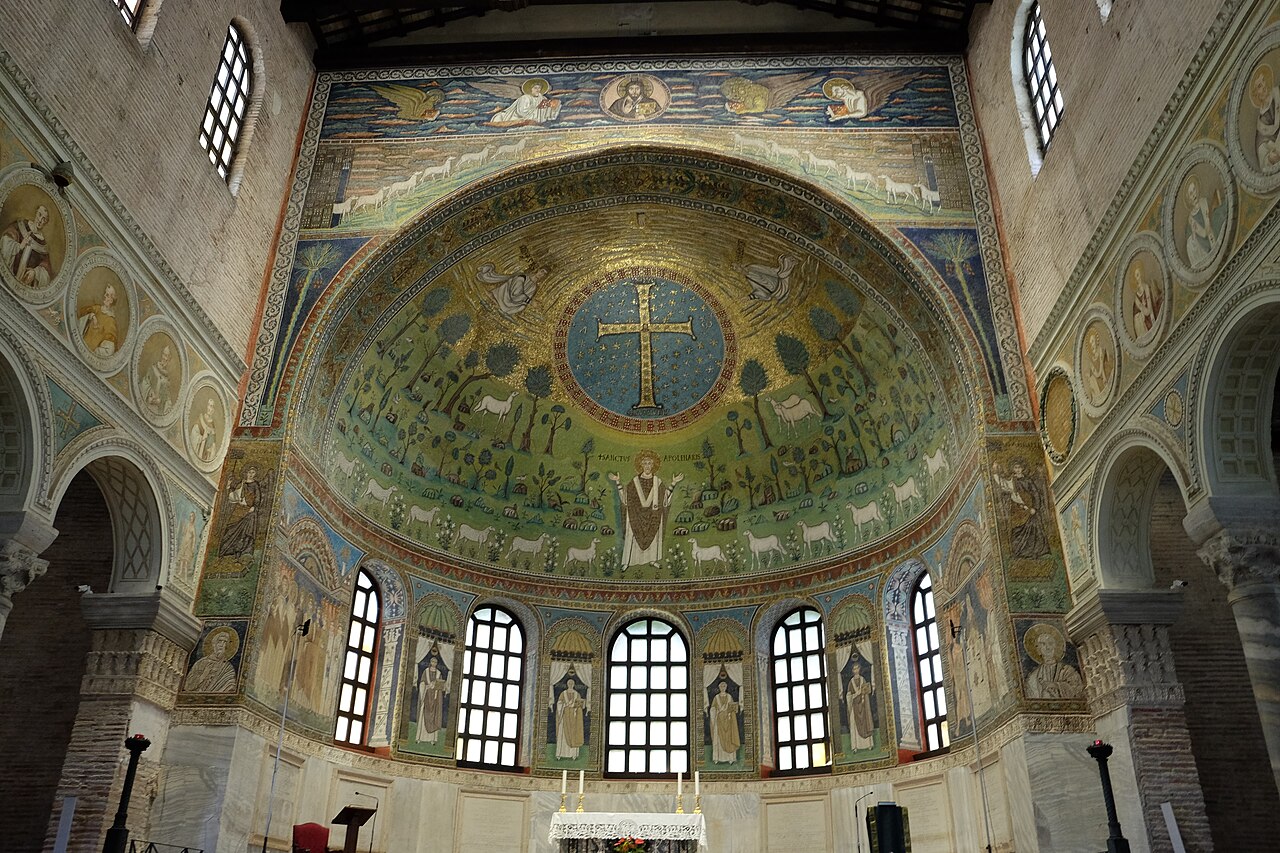
Sant’Apollinare in Classe, consecrated in 549, belongs to the history of Ravenna’s port settlement. The long nave leads towards an apse where a green field, trees and sheep surround Apollinaris, the city’s patron saint, shown with raised hands.
Twelve sheep flank him in the lower part of the composition. Higher up, three other sheep participate in the symbolic representation of the Transfiguration, together with the great cross medallion and the figures of Moses and Elijah. Counting is useful here because the same animal form performs different roles in different parts of the image.
The green landscape can seem invitingly familiar, but it is not a snapshot of a local meadow. The arrangement joins a sacred event to the figure of a bishop and the community he represents. Looking for those relationships explains more than asking whether the trees reproduce a particular stretch of countryside.
The state museum’s account of the basilica also distinguishes later decoration and restoration from the sixth-century work. The surrounding mosaics were not all made at the moment of consecration. Keep the broad date in mind without allowing it to flatten the building’s subsequent history.
Compare the apse with San Vitale before leaving. Both bring an ordered sacred world into a church interior, yet their emphases differ. One of the pleasures of a historical route is developing a comparison from the images themselves rather than assuming that every gold background or repeated figure expresses the same idea.
Two more monuments change the picture
The Chapel of Saint Andrew, now reached through the Archiepiscopal Museum, was a private episcopal oratory created under Bishop Peter II during Theodoric’s reign. It reminds visitors that the Ostrogothic period cannot be reduced to the king’s own religious affiliation. Different Christian institutions continued to commission spaces and images within the same city.
The Mausoleum of Theodoric, built around 520, supplies a different corrective. Its massive stone construction and single-block roof contrast sharply with the mosaic interiors. An account of Ravenna centred only on glittering surfaces would leave out one of the most distinctive ways its rulers made themselves monumental.
Neither stop needs to be treated as an obligation to complete a list. They are useful because they test an impression formed elsewhere. The chapel complicates a simple religious division; the mausoleum complicates the idea that Ravenna’s late-antique architecture can be understood through mosaic alone.
Tickets and conservation: plan for the buildings you mean
As checked on 25 October 2026, the city’s official pages describe two-, four- and five-monument ticket options. The five-monument itinerary covers San Vitale, Sant’Apollinare Nuovo, Galla Placidia, the Neonian Baptistery, and the Archiepiscopal Museum with Saint Andrew’s Chapel. Use the official Ravenna Mosaici site to check current combinations and booking arrangements. A five-monument ticket is not admission to all eight UNESCO buildings.
Classe, the Arian Baptistery and Theodoric’s mausoleum belong to a different management and ticketing system; check the Musei nazionali di Ravenna portal for those venues. Opening hours, access arrangements and booking rules can change, so confirm them for the date of travel rather than relying on an old itinerary or an undated ticket reseller.
Conservation is part of the practical story. UNESCO identifies subsidence, pollution and condensation associated with visitors among the pressures on the monuments. Follow the current instructions in each building, including any limits on photography or time inside. Access is organized around fragile interiors, not simply around the convenience of a sightseeing schedule.
The most useful souvenir of the route may be a distinction rather than a photograph: a fifth-century building beside a sixth-century church, a baptism shared by rival communities, or a hand left behind when its owner’s image was removed. Ravenna becomes clearer when the mosaic pieces are allowed to belong to different histories.