
Angkor Beyond the Checklist: How to Read Three Extraordinary Temples
Read Angkor Wat, Bayon and Ta Prohm as different historical places, with questions about authority, religious change and the work of conservation.
The photograph is usually of towers reflected in water, or roots gripping a doorway. Both are real. Neither tells you quite what you are looking at. At Angkor, the temptation is to collect famous views until the temples blur into one magnificent ruin. A more rewarding visit starts with three different questions: how did kings present their authority, how did religious life change, and who keeps these buildings standing now?
Angkor Wat, Bayon and Ta Prohm offer unusually rich answers. They are close enough to belong in the same journey, but they should not be treated as interchangeable stops. This guide suggests a way to read them, with practical planning information checked on 18 October 2026. It is a researched itinerary, not an account of a personal visit.
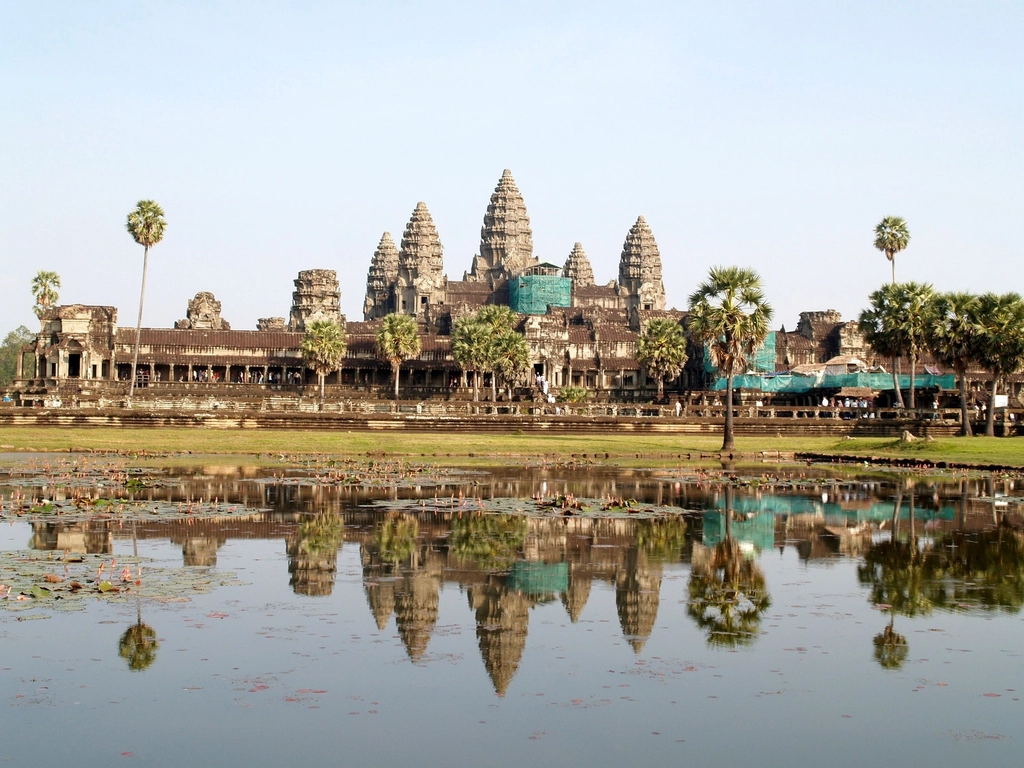
First, separate Angkor from Angkor Wat
Angkor Wat is a temple within a much larger landscape. UNESCO describes the Angkor World Heritage property as roughly 400 square kilometres containing successive Khmer capitals, temples, waterways and settlements. Its major monuments span several centuries. The park also contains villages and continuing religious practice. The familiar phrase “lost city” becomes misleading if it makes local people disappear from that history. UNESCO’s account is a useful corrective.
Think of the three temples as chapters, rather than the whole book. A royal building programme could announce a ruler’s legitimacy; a later generation could change a sacred image or the use of a room; a modern conservation team could decide how to stabilise a wall without erasing its history. The stone you see carries more than one moment.
Angkor Wat: look past the skyline
The National Museum of Cambodia dates Angkor Wat to the early twelfth century and associates its construction with Suryavarman II, whose reign began in 1113. Its original dedication was to Vishnu. Those details matter: the building emerged from a particular court and religious world, rather than from an undifferentiated “ancient Cambodia.” The museum’s monument chronology places it beside buildings from other reigns.
Begin by noticing the experience of approach. Water, causeway, enclosure and ascending architecture create a sequence. Before asking what every carving means, ask how the building changes your pace and your sense of scale. Where are you directed? What becomes visible gradually? Monumental authority works partly through such physical choices.
Then give a gallery more time than you give a photograph. The Churning of the Ocean of Milk relief turns a sacred narrative into a sustained band of carved movement. The University of Michigan’s art collection identifies the scene in the eastern gallery and its central figures, Vishnu and Mount Mandara. You need not master the entire story to appreciate the contrast between repeated bodies, coordinated action and the compositional centre. The university’s image record provides a reliable starting label.
There is also a modern history inside that gallery. World Monuments Fund lists its conservation project at the Churning of the Ocean of Milk Gallery as completed and describes long-term work with APSARA at Angkor. The carving’s survival depends on present-day Cambodian expertise as well as ancient craftsmanship. Its account of conservation at Angkor makes that labour visible.
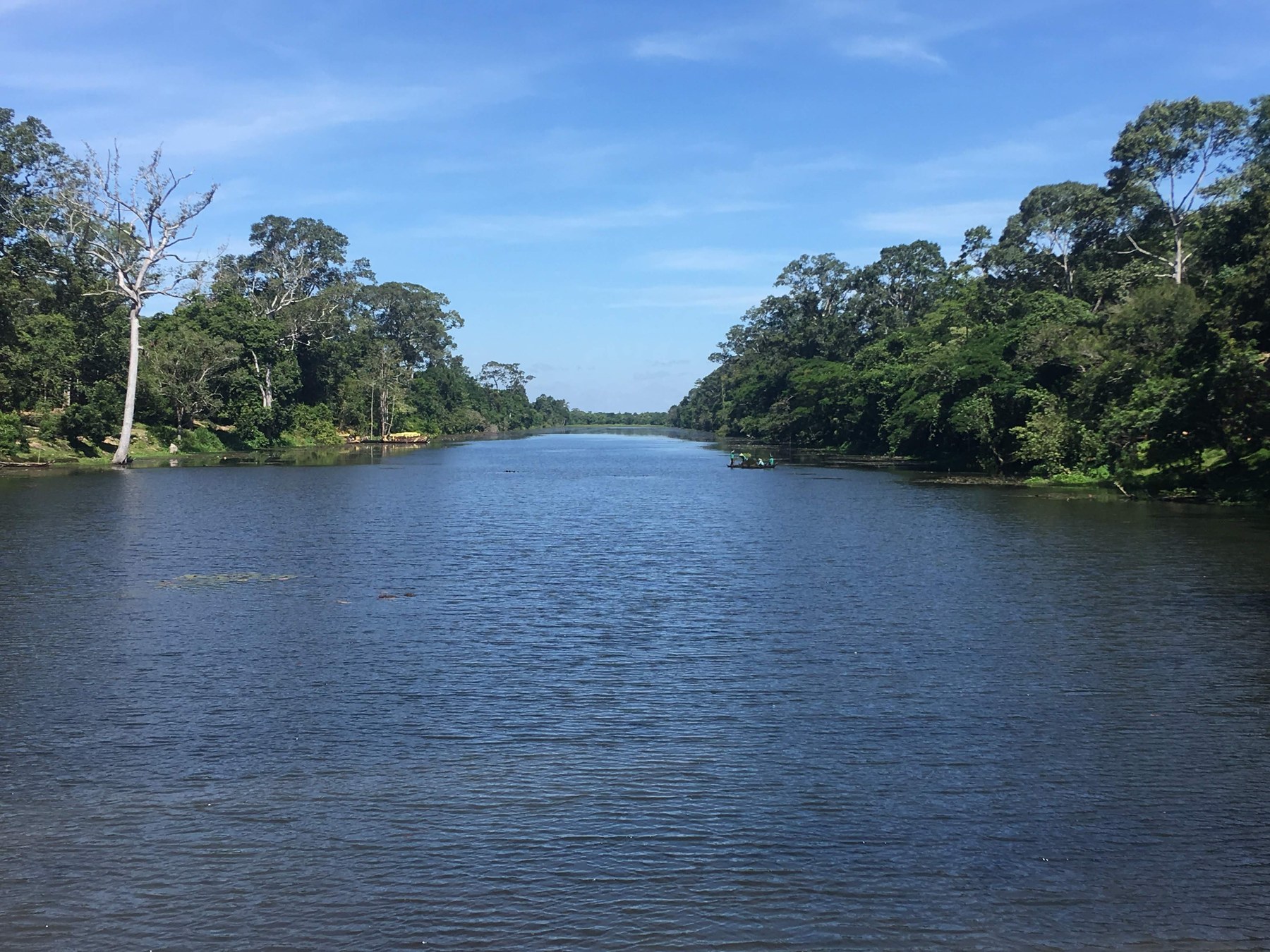
Bayon: resist the easy answer about the faces
Bayon stands within Angkor Thom, the royal city associated with Jayavarman VII. UNESCO places its construction across the twelfth and thirteenth centuries and explains its original Buddhist setting. Later religious changes altered the building and its imagery. It is therefore better read as a layered monument than as a perfectly preserved statement from a single year. UNESCO’s conservation overview traces those transformations.
The famous faces invite certainty: surely they must all represent one named person or deity? The evidence is more complicated. Scholars have proposed divine identities and royal associations; UNESCO’s account explicitly describes the debate. A guide who acknowledges that uncertainty is giving you something more valuable than a memorable answer without qualifications.
Look down as well as up. Angkor Enterprise’s description draws attention to reliefs combining mythological, historical and ordinary scenes. Instead of trying to identify every figure, select a short passage and examine gesture, equipment, movement and differences of scale. What does the sculptor make prominent? What seems secondary? A carved scene is a designed representation, not a photograph of society. The official Bayon introduction helps orient that closer looking.
Bayon rewards curiosity more than speed. Its layered plan can make a rushed circuit disorienting. Follow the open visitor route, pause at an accessible viewpoint, and allow one detail to become legible before moving on. If a terrace or passage is closed, the loss of one viewpoint does not make the visit unsuccessful.

Ta Prohm: the trees are only the beginning
Ta Prohm’s roots make an unforgettable image, but “nature swallowing a temple” is an incomplete explanation. APSARA dates its dedication to 1186 under Jayavarman VII. Its central religious association was with Prajnaparamita, the personification of perfected wisdom, identified with the king’s mother. That brings devotion, family memory and royal patronage into the same place. APSARA’s temple history also cautions against assuming that a medieval Buddhist institution worked exactly like a modern monastery.
Try a second kind of looking here. After the dramatic roots, inspect the junctions: stone beside timber support, a protected passage, a carefully restricted approach. Such interventions are reminders that the picturesque ruin is managed. Leaving everything untouched would itself be a consequential decision. Conservators must weigh structural stability, visitor access, living vegetation and the historical character of the monument.
Research continues to change what can be known. In March 2025, the Associated Press reported that a Buddha torso found at Ta Prohm had been matched by scanning to a head discovered there in 1927. At the time, reassembly still required approval. That is a specific discovery, not evidence that every question about the site has been solved. The report is a useful glimpse of archaeology as ongoing work.
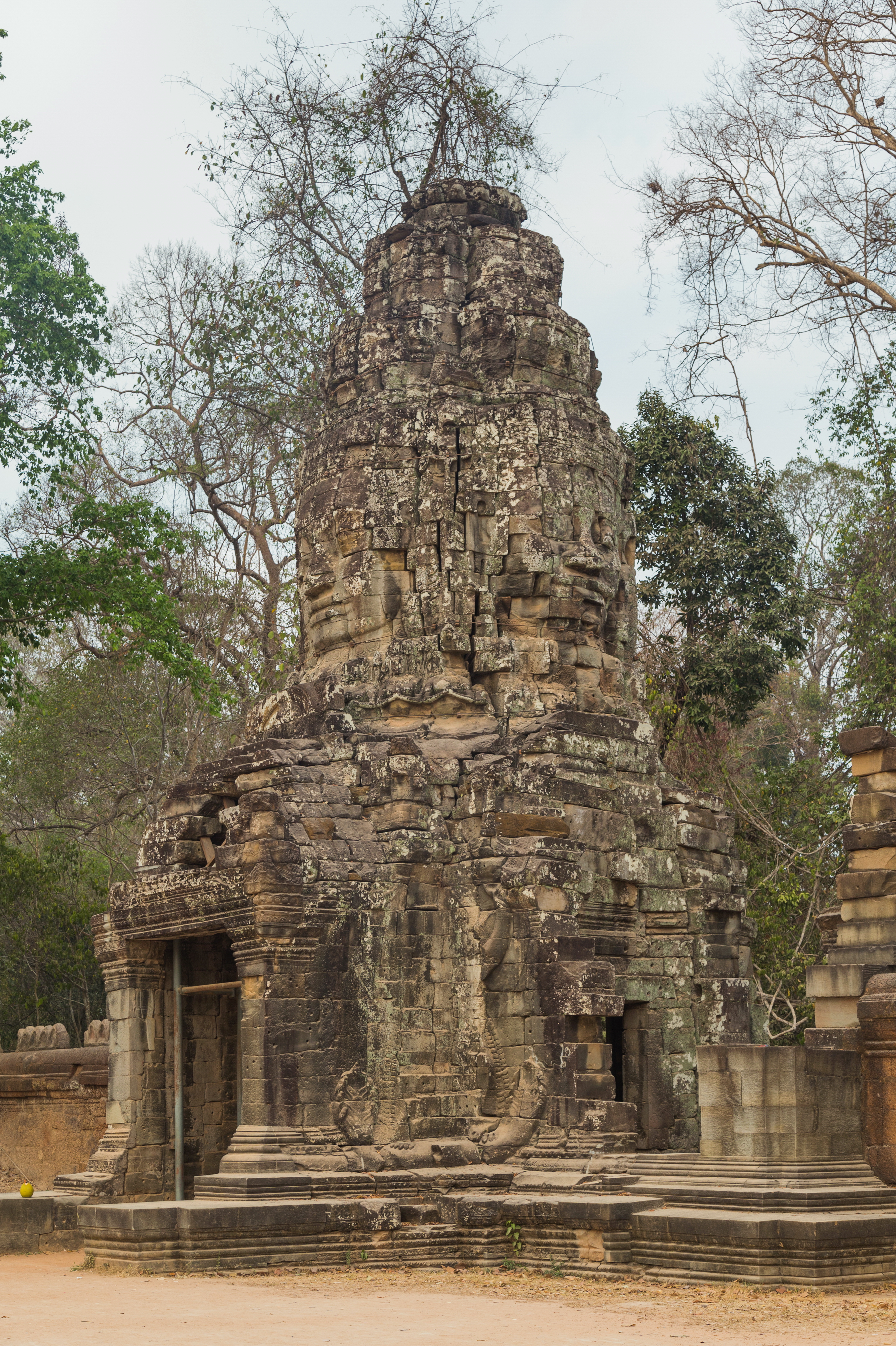
Build a day around attention, not a scorecard
For a first visit, choose fewer sites and protect time for galleries, shade and travel between them. A sunrise photograph can be part of the day, but it should not consume all the energy available for understanding the buildings. Discuss the sequence with your guide or driver and adjust it to current access, weather and your own mobility. This is a planning approach, not a timed route or a promise about crowd levels.
As checked on 18 October 2026, the official Angkor Enterprise page lists Angkor passes at US$37 for one day, US$62 for three visiting days within seven days, and US$72 for seven visiting days within thirty days. Buy through the official service and recheck the rules before payment. A park-wide ticket listing should not be read as a guarantee that every temple, tower or gallery shares identical opening hours.
Ask about access before committing to a strenuous plan. Uneven surfaces, stairs and heat can change what is comfortable. Arrange water, suitable footwear and rest breaks. Where assistance is needed, describe the specific requirement to a guide or the site authority rather than assuming that “accessible” has one universal meaning.
APSARA’s visitor code asks visitors to respect worshippers and monks, wear appropriate clothing, avoid touching or climbing on monuments, take litter away and refrain from giving money to children. These are practical ways of recognising a sacred and inhabited place. Follow current barriers and staff instructions even when an older photograph shows visitors elsewhere.
Leave with a better question
The most useful souvenir may be a question you could not have asked before arriving. At Angkor Wat, it might concern how movement through architecture expresses power. At Bayon, how changing beliefs leave visible alterations. At Ta Prohm, how conservation decides what a ruin should look like.
Those questions extend beyond the temples. Histovia’s guide to Angkor’s water city explores the wider landscape, while the history of Nalanda offers another way to think about religious institutions as centres of work, learning and connection. Angkor becomes more compelling when its beauty is the beginning of the inquiry.
Sources and further reading
- UNESCO: Angkor World Heritage Property
- National Museum of Cambodia: Angkor Complex and Neighbouring Temple Groups
- University of Michigan: Angkor Wat Relief of the Churning of the Sea of Milk
- World Monuments Fund: Conservation at Angkor Archaeological Park
- UNESCO: Thirty Years of Safeguarding Bayon (2024)
- Angkor Enterprise: Bayon
- APSARA National Authority: Ta Prohm
- Associated Press: Buddha Torso Found at Ta Prohm (12 March 2025)
- Angkor Enterprise: Official Passes and Validity
- APSARA National Authority: Visitor Code of Conduct