
How to Visit Pompeii and Read the City Beyond the Ruins
A forum, a grand house, a bakery and an arena reveal different kinds of Roman power. Build your visit around those contrasts, and the ancient city becomes much easier to understand.
The mountain is the easiest thing to notice. From Pompeii’s Forum, Vesuvius gives the scene an ending before you have begun to read it. Yet a visit organised entirely around the eruption risks overlooking the city that existed before the disaster: a place where people advertised status, bought food, worshipped, worked and competed for public attention.
One useful way to explore Pompeii is to keep asking two questions. What activity did this space make possible? Who had the freedom, wealth or authority to use it? A colonnade and a millstone then become more than contrasting photo opportunities. They become evidence of how the same community distributed comfort and work.
This is a historical visitor guide based on archaeological and official visitor information, rather than an account of a personal visit. The suggested sequence is an interpretive choice, not a promise that every building will be open on your travel date.

First, understand what has survived
Pompeii was buried during the eruption of Vesuvius in AD 79 and progressively excavated from the eighteenth century onward. Its streets preserve an unusually extensive urban setting, but the site is neither an untouched snapshot nor a complete census of Roman experience. Objects have moved to museums; roofs and upper floors often survive differently from foundations; excavation and conservation have changed what visitors see.
The UNESCO description of the Vesuvian archaeological areas is particularly useful for distinguishing Pompeii from nearby Herculaneum. Different burial conditions produced different patterns of preservation. Visiting one does not simply duplicate the other. At Pompeii, the strength is often the relationship between spaces: following a street from public buildings toward houses and workshops lets you think at the scale of a town.
Do not let the apparent familiarity of a doorway persuade you that you understand the household behind it. A building’s modern name may refer to a painting or an object found there rather than a securely identified ancient resident.
At the Forum, look for activities around the edges
Begin with the Forum if your entrance and chosen route make that convenient. Instead of treating its open rectangle as a stage for a volcano photograph, turn toward the surrounding buildings. The park’s street-by-street interpretation connects this area with civic administration, commerce, justice and religion. These activities occupied neighbouring spaces rather than separate modern districts.
The Capitolium faced the square; the Macellum belonged to the city’s commercial life. Their proximity is the point. Public religion and transactions were woven into the same visible centre. Ask what someone crossing the square would encounter, and which kinds of authority were made hard to ignore.
Then look for a named benefactor. Eumachia’s building offers a way into women’s public prominence that a list of magistrates can conceal. A public priestess could finance a conspicuous monument and have her name recorded even though Roman political office was not equally open to women. Her case should not stand for every woman in Pompeii. Its value is precisely that the evidence shows a particular route to prestige, shaped by wealth, family and religious position.
A good pause here is less about memorising every building name than noticing the methods of public remembrance: inscriptions, monumental entrances, privileged locations and associations with imperial power.

In the House of the Faun, follow the performance of wealth
The House of the Faun is a useful counterpoint to the Forum. The official excavation guide describes a residence occupying roughly 3,000 square metres, with two atria and two peristyles. Its layout takes you through successive spaces rather than revealing the entire household at once.
Look at the relationship between entrance, courtyard and reception areas. Architecture could manage what a visitor saw, where they waited and how impressive the household appeared. This is a way to read elite domestic space without imagining it as a modern private home simply enlarged.
The familiar dancing Faun and Alexander Mosaic also raise a practical museum question. The pieces displayed at the house are copies; the originals are in the National Archaeological Museum of Naples. That distinction does not make the archaeological setting worthless. It makes the two visits complementary: the house explains spatial relationships, while the museum allows a different encounter with objects removed for protection and display.
Do not infer that the household’s surviving grandeur describes the living conditions of everyone who worked there. A lavish courtyard is evidence of resources concentrated in one place, not evidence of equal prosperity.
Give ordinary work a place in the route
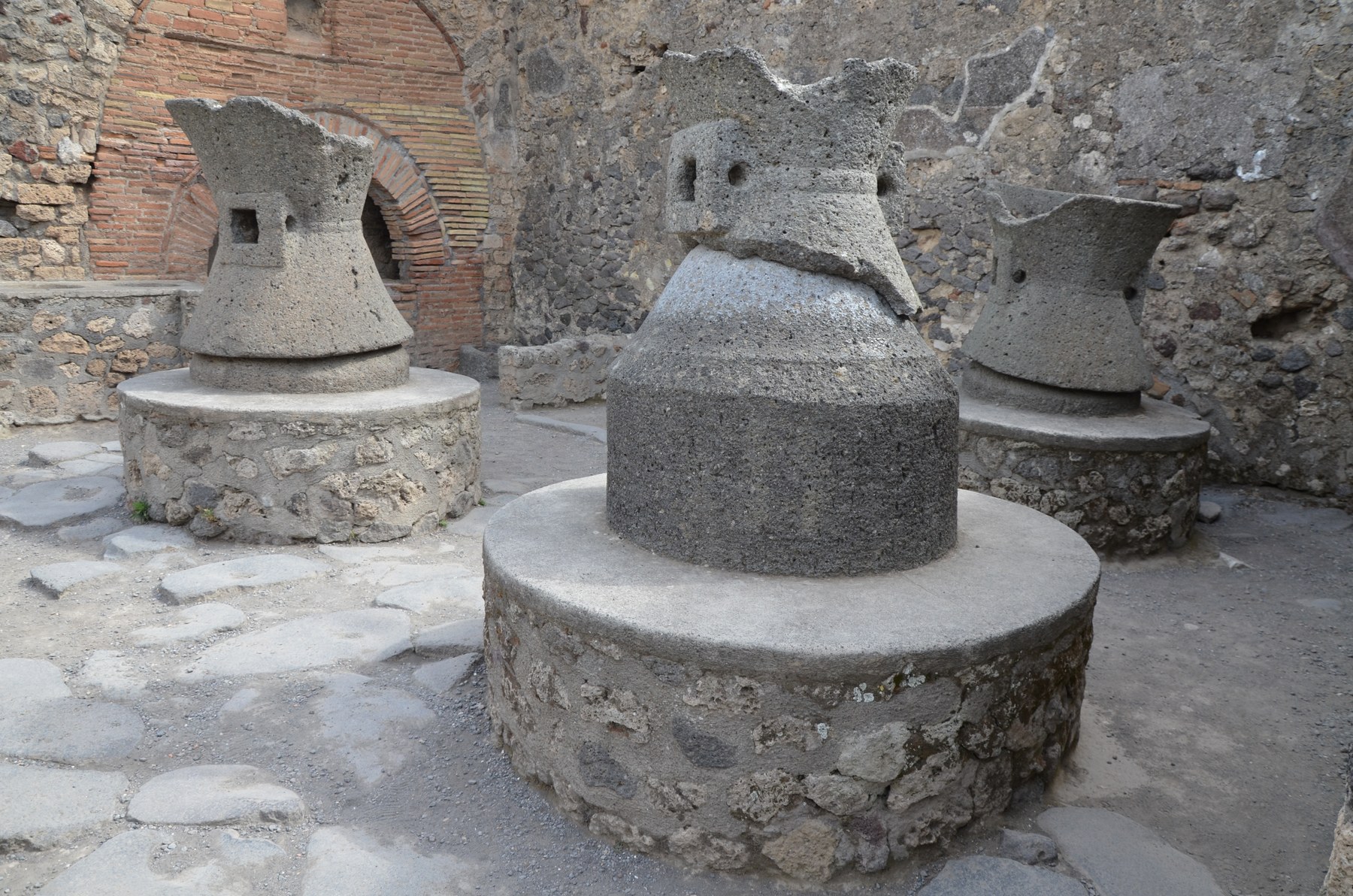
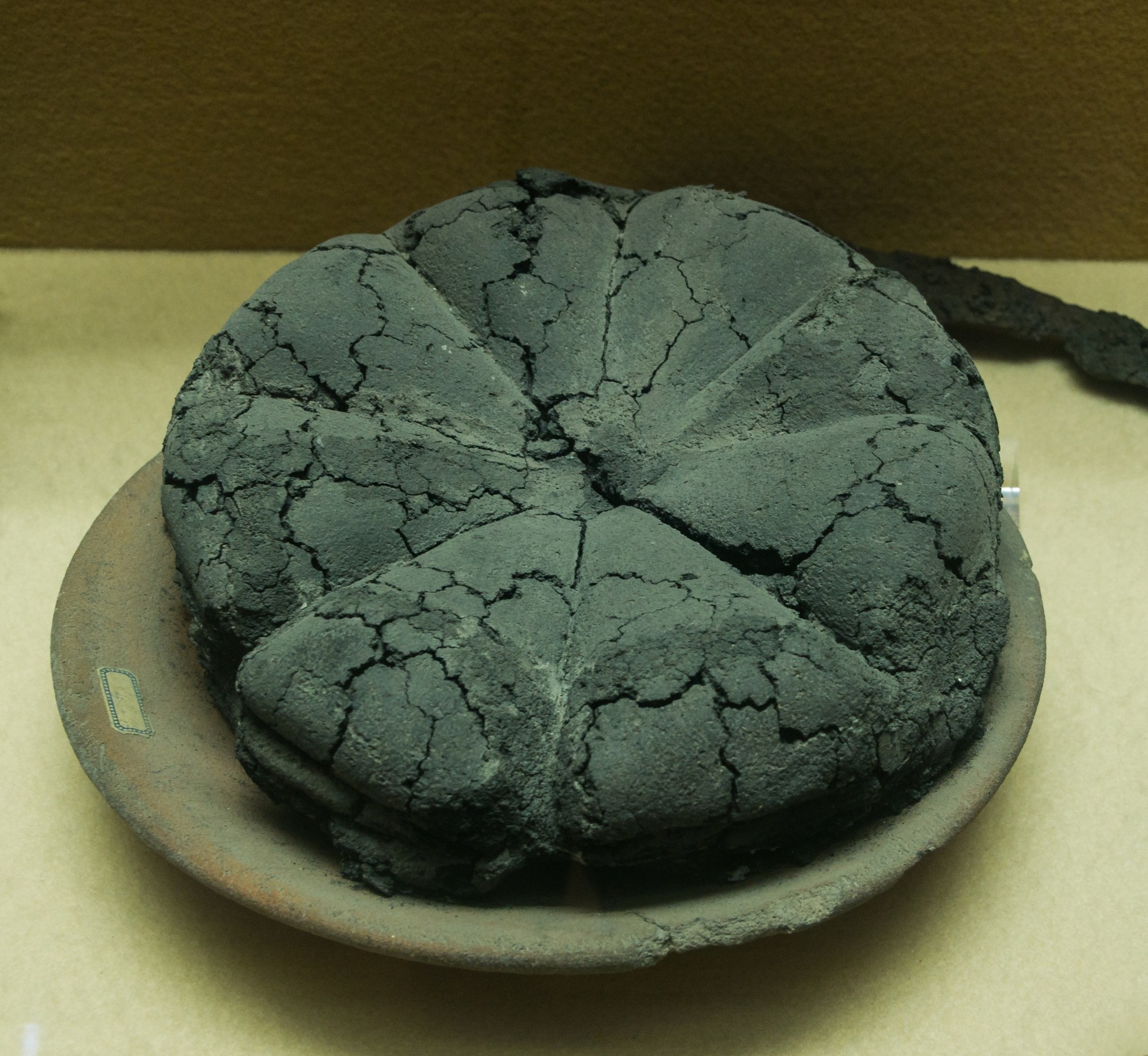
After a monumental square and a wealthy house, a workshop or bakery can change the questions you ask. A mill or oven directs attention toward repetitive labour, fuel, ingredients and production. The useful contrast is not a romantic one between “ordinary people” and luxury. It is the connection between the two: urban comfort required other people’s sustained work.
Histovia’s guide to Pompeii’s bakeries examines what mills, ovens and bread remains can and cannot tell us about skill and enslaved labour. Use that background to look carefully, while resisting the temptation to give every surviving object a complete story. An oven can establish a production activity more securely than it can identify the individual who tended it.
If a workshop on your intended route is closed, the historical question still travels with you. Look for the contrast between rooms arranged to impress visitors and spaces arranged to accomplish work. Reading the town this way is more resilient than a checklist built around one famous doorway.
The amphitheatre: spectacle had a social order
If you have enough time and energy to reach the eastern part of the site, the amphitheatre provides another scale of experience. Pompeii’s management plan places its construction around 70 BC and describes the differentiated seating of its audience. This was a place for large gatherings, but gathering together did not erase rank.
Think about the route from an entrance to a seat. Who would be visible, and from where? The building made the crowd part of the event. It also connected entertainment with civic reputation and public order, as the violent clash between Pompeians and Nucerians in AD 59 demonstrates.
The arena works especially well as a concluding stop because it changes the meaning of the earlier spaces. The Forum, house and amphitheatre each organised visibility differently. Together they show a city in which being seen, and deciding where others could stand or sit, mattered.
Plan for the site that is open now
Visitor information checked on 18 October 2026: the official ticket and timetable page lists winter opening from 15 October to 15 March as 9am–5pm, with last admission at 3.30pm. Pompeii Express is €20 for the ancient city; Pompeii Plus is €25 and adds specified suburban sites. Both are single-entry tickets. Check the inclusions before choosing, especially if the Villa of the Mysteries is important to your plan.
Use the park’s linked official seller, Vivaticket, and check the current open-buildings list. Individual access can change even when the park itself is open. The official suggested routes are a better starting point than assuming that every visitor needs the longest circuit.
For accessibility planning, consult the park’s Pompeii for All guidance: some ramps exceed 8%, and uneven paving can make independent wheelchair travel difficult. Carry water, plan rest breaks and wear suitable footwear. This is practical guidance, not a guarantee that a particular route will meet your needs.
Leave room for the modern story
Finally, look for the work that keeps the ruins standing. The park’s account of the House of the Faun’s restored columns traces damage from wartime bombing and a later earthquake as well as subsequent interventions. Conservation is not a distraction from the ancient city. It is one reason an encounter with it remains possible.
The strongest Pompeii visit is not the one that collects the most buildings. It is the one in which a few spaces change your understanding of the people who used them. Leave able to explain a difference between a public square, an elite courtyard and a workplace, and you will have seen considerably more than ruins beneath a mountain.
Sources and further reading
- UNESCO: Archaeological Areas of Pompei, Herculaneum and Torre Annunziata
- Archaeological Park of Pompeii: Along the Streets of Pompeii
- Archaeological Park of Pompeii: Eumachia
- Archaeological Park of Pompeii: A Guide to the Pompeii Excavations (2015; PDF)
- Pompeii World Heritage Site: Management Plan (PDF)
- Archaeological Park of Pompeii: Current Timetables and Tickets
- Vivaticket: Official Pompeii Ticket Service
- Archaeological Park of Pompeii: Open Buildings
- Archaeological Park of Pompeii: Suggested Routes
- Archaeological Park of Pompeii: Pompeii for All Access Guidance
- Archaeological Park of Pompeii: Restoration of the House of the Faun’s Columns