
Power & Politics
Newburgh, 1783: The Army’s Unpaid Accounts and the Limits of Revolutionary Power
Victory over Britain left a dangerous bill unpaid. At Newburgh, military grievances, congressional weakness and a proposal to use the army’s influence converged around the question of who could compel whom.
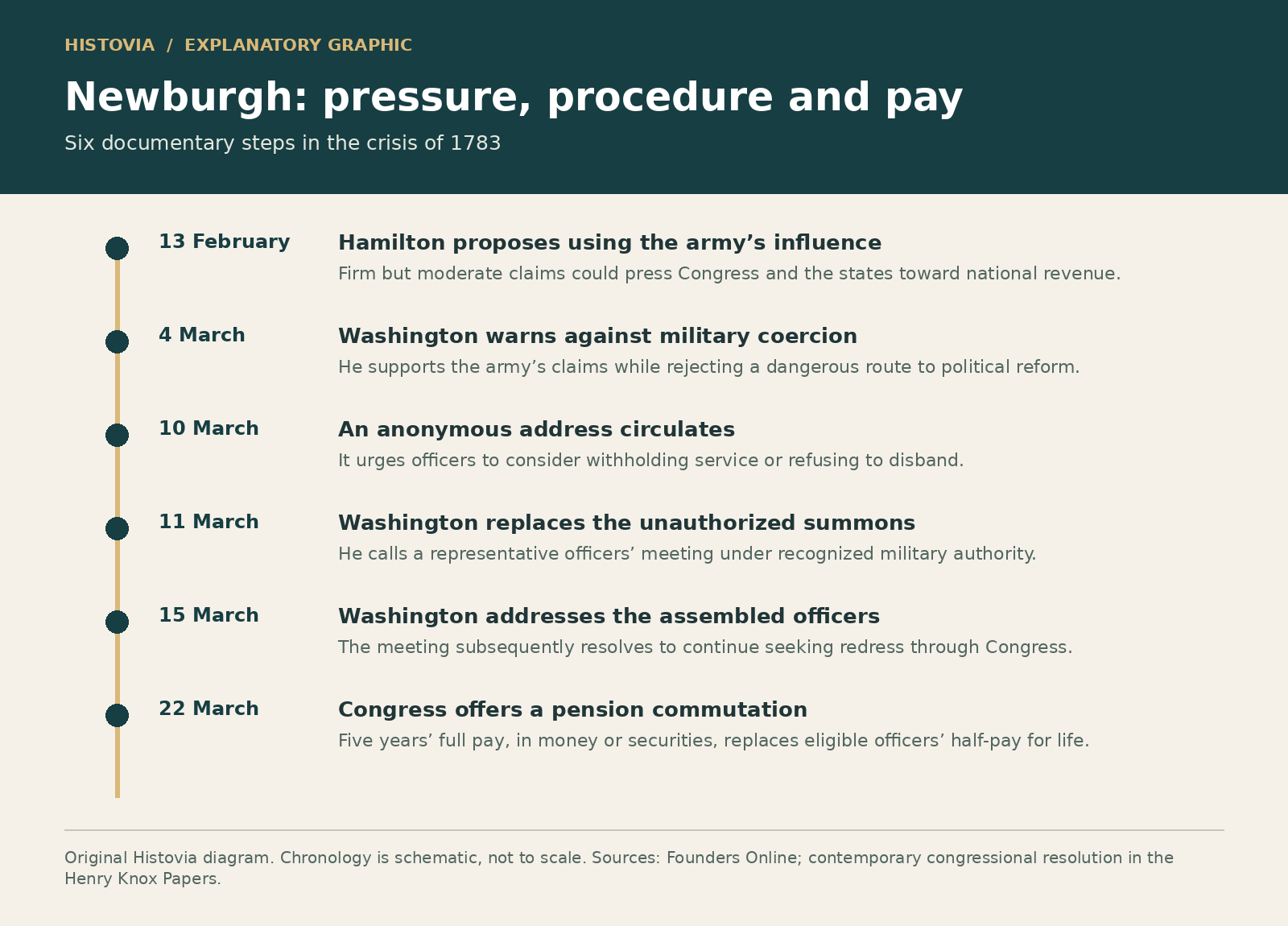
On 11 March 1783, George Washington answered an unauthorized summons with a meeting notice of his own. Officers of the Continental Army had been invited, anonymously, to assemble that day and consider what to do about the money their country owed them. Washington disapproved of the invitation, postponed the gathering until Saturday and specified who should attend. The senior officer present would preside and report its conclusions to him.
The order bought four days. More importantly, it changed the authority under which the officers would meet. They could deliberate about a genuine grievance, but they would do so within the army’s recognized chain of command. Washington had neither paid their accounts nor forbidden them to complain. He had interrupted the process by which a demand for payment might become an organized threat.
The episode became known as the Newburgh Conspiracy. Its most consequential documents concern salaries, pensions, taxation and public credit. These apparently prosaic subjects explain why officers who had helped secure American independence could fear that peace would leave them worse placed to obtain justice than war.
A creditor army at the end of a war
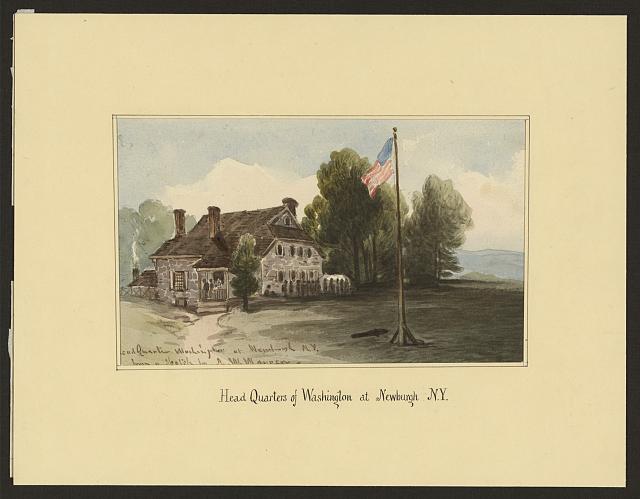
The British surrender at Yorktown in 1781 had not immediately dissolved the Continental Army or produced a final peace. Troops remained in service while diplomacy continued. Washington’s headquarters stood at Newburgh on the Hudson, and much of the northern army occupied the nearby New Windsor cantonment. The men were still an organized military force, but the emergency that had made their service indispensable was receding.
Their claims involved several different obligations. Arrears were pay already earned. Unsettled accounts concerned allowances and expenses. Pensions represented future support promised in return for continued service. Congress’s offer of half-pay for life to qualifying officers had become particularly contentious. Officers regarded it as part of their compensation; critics could see a privileged, permanent charge upon the public. A lump-sum commutation offered a possible compromise, provided someone could finance it.
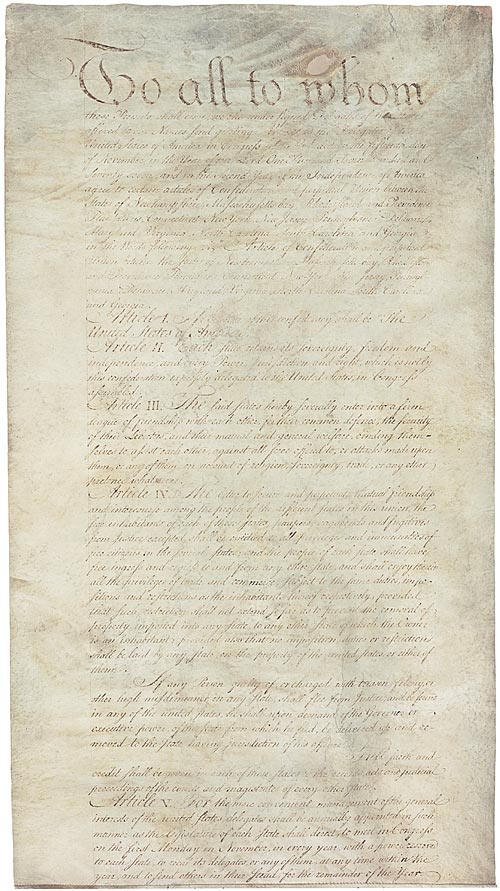
The constitutional machinery made that proviso formidable. Article VIII of the Articles of Confederation assigned the raising of the states’ contributions to their own legislatures. Congress could determine common expenses and call for money without possessing an equivalent, independent capacity to collect it from taxpayers. Its promises therefore depended upon decisions taken elsewhere.
An officer did not need a theory of federalism to experience the consequences. A claim acknowledged in Philadelphia was not necessarily cash available at an encampment. Nor was the prospect of eventual payment equivalent to money needed for immediate debts and family expenses. The army’s financial grievance was not an invented pretext concealing a perfectly comfortable institution.
Peace introduced a further asymmetry. Once discharged, the officers would be scattered individuals seeking settlement. While still assembled, they possessed hierarchy, common experience and weapons. The approaching end of service made their claims more urgent precisely because their collective leverage was about to diminish. That calculation appears explicitly in correspondence written before the March crisis.
Hamilton’s proposal and Washington’s boundary
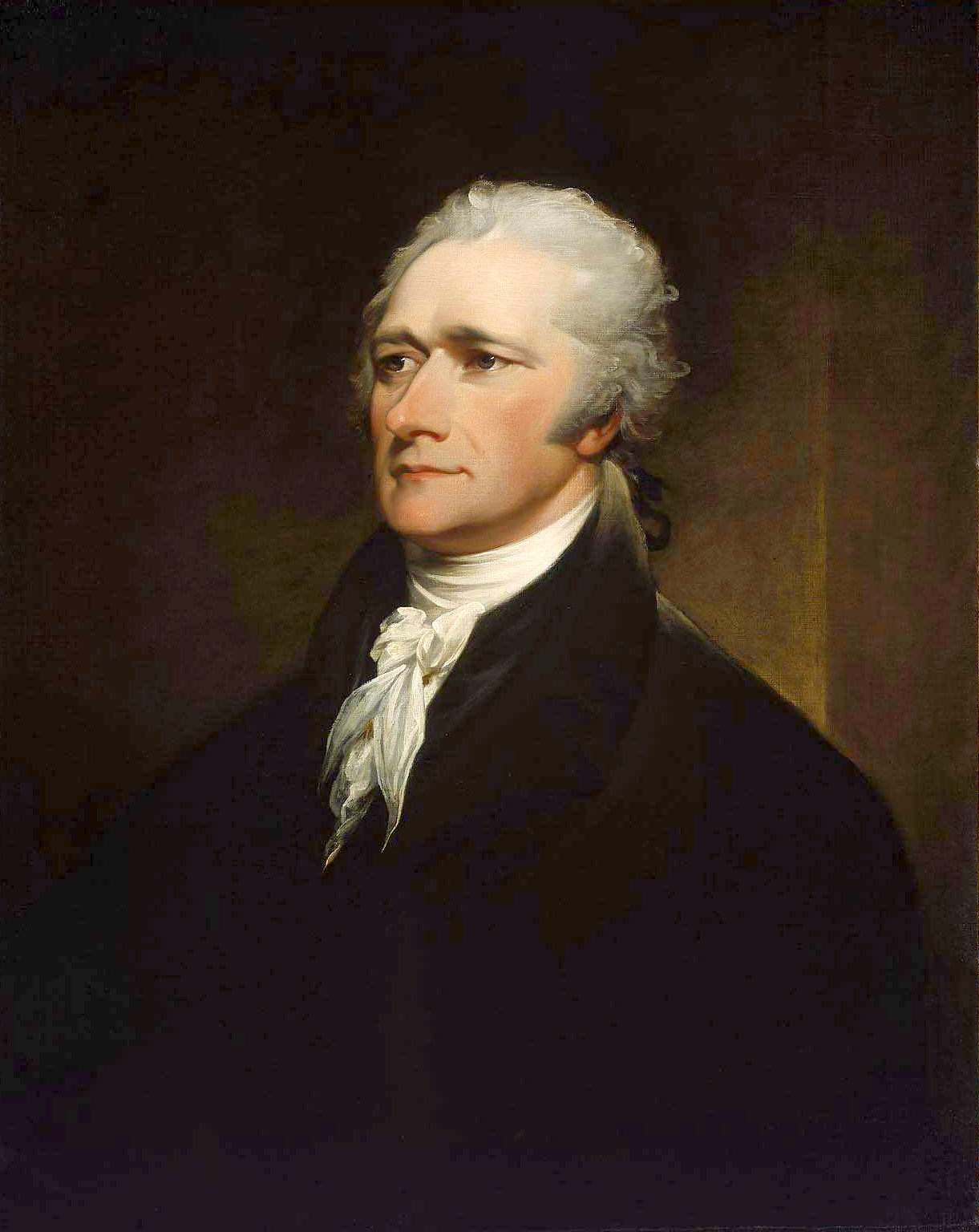
In a confidential letter of 13 February 1783, Alexander Hamilton told Washington that many in the army expected the desire to compensate them to disappear when their services were no longer needed. Hamilton, then a member of Congress, did not dismiss this fear. He thought appearances gave it considerable support.
He also saw a political opportunity. Claims presented firmly but moderately could strengthen Congress’s applications to the states and encourage reluctant politicians to establish reliable national revenue. The army was one class among the nation’s creditors, but an unusually influential one. Its grievances might help secure a financial settlement benefiting the government as well as those who had served it.
Hamilton understood that this was dangerous. His letter distinguished pressure he considered useful from disorder he hoped Washington could prevent. He wanted the commander to retain the confidence of both the army and the public, quietly directing discontent through trusted intermediaries. The difficulty lay inside the proposal itself: military influence would be useful because civilians might fear it, yet it had to remain moderate enough not to become coercion.
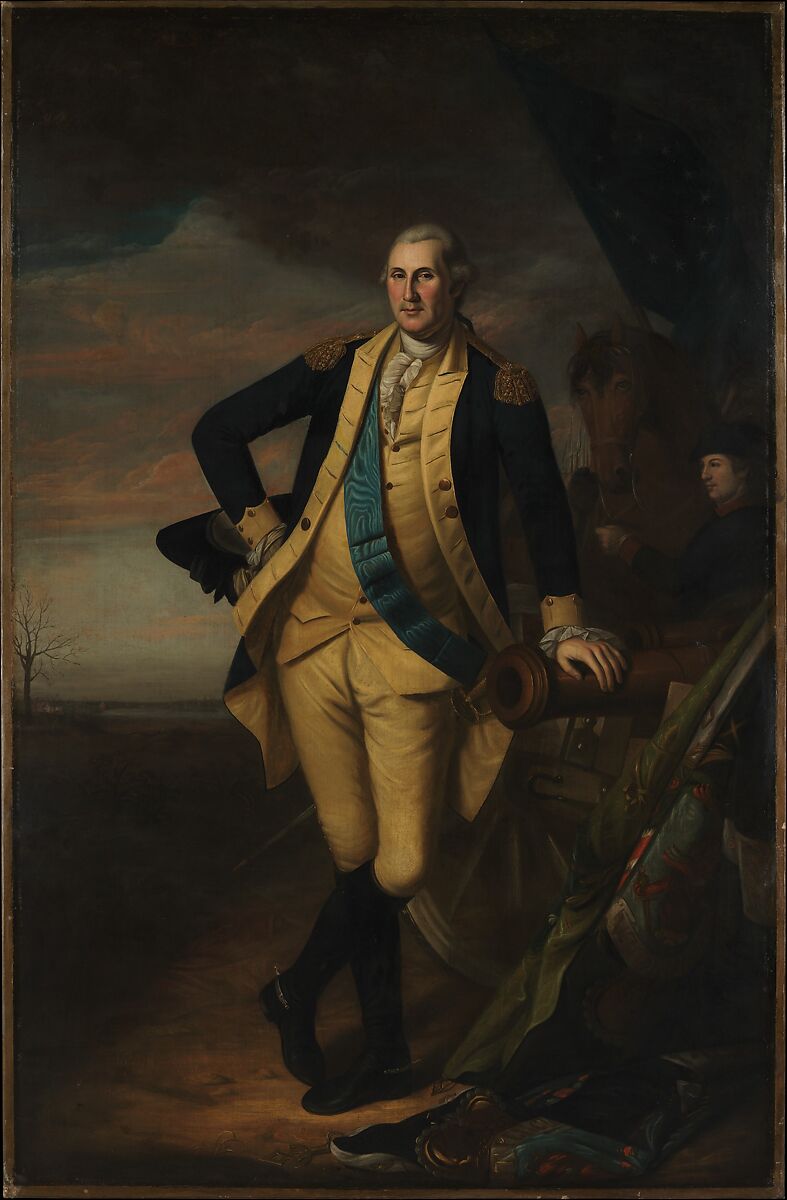
Washington’s reply of 4 March combined sympathy with a warning. He acknowledged Congress’s inability and the states’ delay. He also recalled the harm caused when an army, lacking subsistence, became its own provider. A return to that situation, he thought, could bring civil conflict and bloodshed.
He wanted the states to hear a candid explanation of the army’s just demands. He did not want its organized power introduced into politics in a way that would provoke jealousy and confrontation. Washington was not defending the Confederation’s finances as adequate. The same letter argued that Congress needed powers sufficient for national purposes. He was separating an argument for a stronger government from a method of extracting that government through military pressure.
These letters establish a real discussion about using the army’s influence. They do not, by themselves, prove a fully coordinated plan for a coup. Historians have differed about how closely congressional nationalists, disaffected officers and Major General Horatio Gates were connected. Mount Vernon’s historical account preserves that uncertainty. The label “conspiracy” is a starting point for investigation, not a substitute for identifying what each participant actually proposed.
The anonymous address made moderation suspect
On 10 March, an anonymous address circulated among the officers alongside the invitation to meet. Its author was John Armstrong, an aide to Gates. It urged the army to abandon a posture of repeated patience. If the war continued, the soldiers could withdraw and leave an ungrateful country to defend itself. If peace arrived, they could refuse to put aside their arms until their claims were satisfied.
Both alternatives used the army’s continuing existence as a bargaining instrument. One threatened the withdrawal of protection; the other threatened the persistence of armed organization after its wartime purpose had ended. The address also turned the discussion inward by casting suspicion upon anyone who recommended further moderation. An officer arguing for patience risked being treated as an enemy of his fellow officers’ interests.
Washington’s general orders of 11 March dealt with this problem through procedure. He called for general and field officers, a representative from each company and suitable staff representation. The gathering would hear the report of the army’s committee to Congress and consider rational means of securing its object. These were instructions for a deliberative body, rather than an invitation to an emotional plebiscite.
The distinction was practical. A commander who simply silenced the matter could confirm the charge that he had abandoned the army. Allowing the unauthorized meeting to proceed would concede that an anonymous writer could organize a political assembly within his command. The replacement meeting recognized the complaint while refusing that writer’s claim to direct the institution.
What Washington actually asked them to accept
When the officers assembled on 15 March, Washington appeared and delivered the address now most closely associated with the crisis. Its surviving text is more argumentative than a simple appeal for obedience. He attacked the anonymous writer’s methods, examined the proposed alternatives and repeatedly insisted that the army’s claims deserved satisfaction.
Withdrawal into unsettled country, he argued, would not magically separate soldiers from the society they were abandoning. Their households, farms and dependants remained part of that society. Refusing to disband after peace would direct the army’s power against the country for which it had fought. Washington asked his listeners to consider what these courses would actually require, not merely how forceful they sounded.
He also answered the attempt to discredit moderate voices. If an officer could not recommend restraint without becoming suspect, the assembly’s freedom to reason had already narrowed. Washington’s well-known warning about the loss of freedom of speech belongs to this specific dispute: the danger that an angry collective would deny a hearing to members who opposed its proposed course.
His reassurance about Congress was emphatic, but not equivalent to an appropriation. He professed confidence that the civilian government intended to do justice and explained its slowness through the difficulty of reconciling different interests. He pledged his own efforts on the army’s behalf, subject to his obligations to the country and the authorities it was bound to respect.
That limitation was the hinge of the speech. His relationship with the officers would support advocacy, not supersede civilian power. Conversely, preserving civilian authority did not oblige him to describe unpaid service as unimportant. The officers were being asked to relinquish the threat of compulsion while retaining their claims. They were not being asked to announce that the country owed them nothing.
An agreement on conduct, not a treasury full of money
After Washington withdrew, the officers resolved to continue working through Congress. This was the immediate achievement at Newburgh: an organized body chose not to make its armed position the means of enforcing its financial demands. It did not produce an instant end to the public debt or settle every question about military compensation.
Congress acted on 22 March to offer five years’ full pay in place of the promised half-pay pension, payable in money or interest-bearing securities. A certified contemporary copy in the Henry Knox Papers records the terms. The possibility of securities is important. A quantified obligation and an immediately spendable payment were still different things.
The commutation also should not be described as an identical award to every enlisted soldier. The disputed half-pay arrangement concerned officers. Different categories of service carried different claims, and the officers’ meeting represented a particular part of the army rather than every person affected by demobilization.
In retrospect, the crisis fits neatly into a story leading toward the Constitution of 1787. Its participants did not yet possess that ending. Hamilton and Washington wanted a more effective national government, but in March 1783 they faced an immediate problem: how to keep a financially distressed army within lawful authority while a weak civilian government struggled to honour commitments it could not simply cancel.
Back to the orderly book
The general orders of 18 March placed Washington’s satisfaction with the officers’ proceedings beside much less celebrated business. The original papers were to remain at the orderly office so that officers could read or copy them. A large accumulation of filth between the huts of several Massachusetts regiments was to be removed. Work on the communication between the army’s wings was to continue.
The sequence is unusually revealing. The record did not close with a commander declaring himself the embodiment of the nation. It returned to papers, sanitation, materials and officers responsible for completing a job. The orders set the political crisis beside the army’s continuing routine work. Its accounts still required an answer from the government; its next orders concerned the camp.