
Mahavira and the Jain Art of Living Carefully
Nonviolence in Jain tradition is more than a slogan. It connects a view of living beings to demanding choices about knowledge, possessions, and conduct.
What does it mean to live without harming other beings? As an aspiration, the idea sounds simple. Put it into practice and the questions multiply. Eating sustains one life while affecting others. Earning money creates obligations. Speaking can injure without leaving a visible wound. Jain traditions have spent centuries treating these complications not as objections to ethics, but as the place where ethics begins.
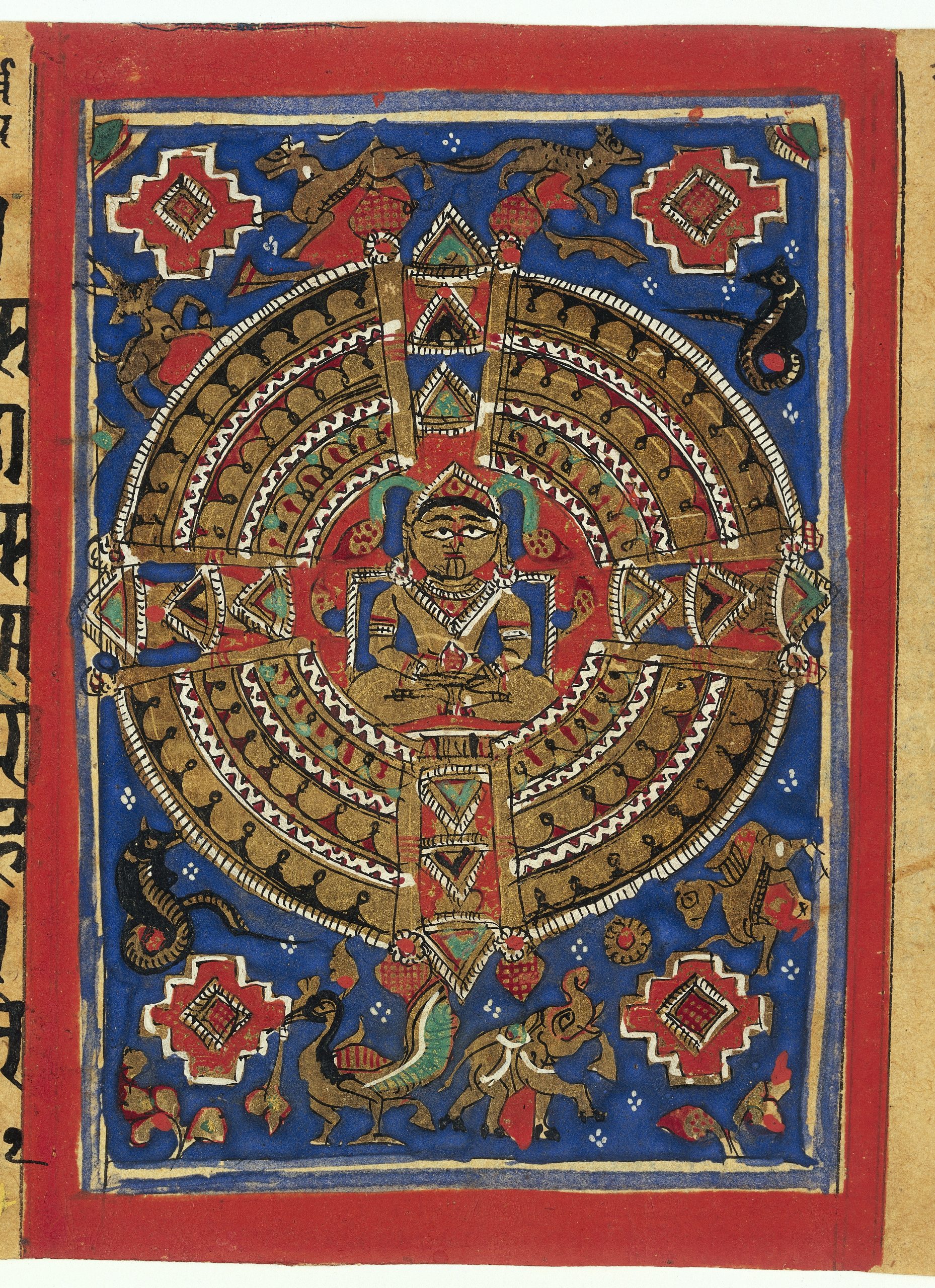
Mahavira stands at the center of that history. Yet calling him simply the “founder of Jainism” misses how Jains understand their tradition. He is revered as the twenty-fourth tirthankara of the present cosmic cycle, a teacher who makes a crossing possible. The distinction matters: he does not invent truth from nothing or act as a creator god. He teaches a path toward liberation that Jain tradition understands as much older than his individual life.
A teacher, and the traditions that remember him
The name Mahavira means “great hero.” His personal name is traditionally given as Vardhamana. Jain accounts place his birth in a privileged family in the region of ancient Vaishali, in northern India, and describe his renunciation of household life, prolonged ascetic discipline, attainment of complete knowledge, and subsequent teaching. The heroism involved is the conquest of attachment and passion, not conquest by an army.
The Pluralism Project’s account of Mahavira presents the traditional dating of his life in the sixth century BCE. Exact dates remain debated, and the traditional chronology should not be quietly turned into a universally settled historical calculation. Much of what readers encounter comes through religious narratives preserved and shaped by later communities.
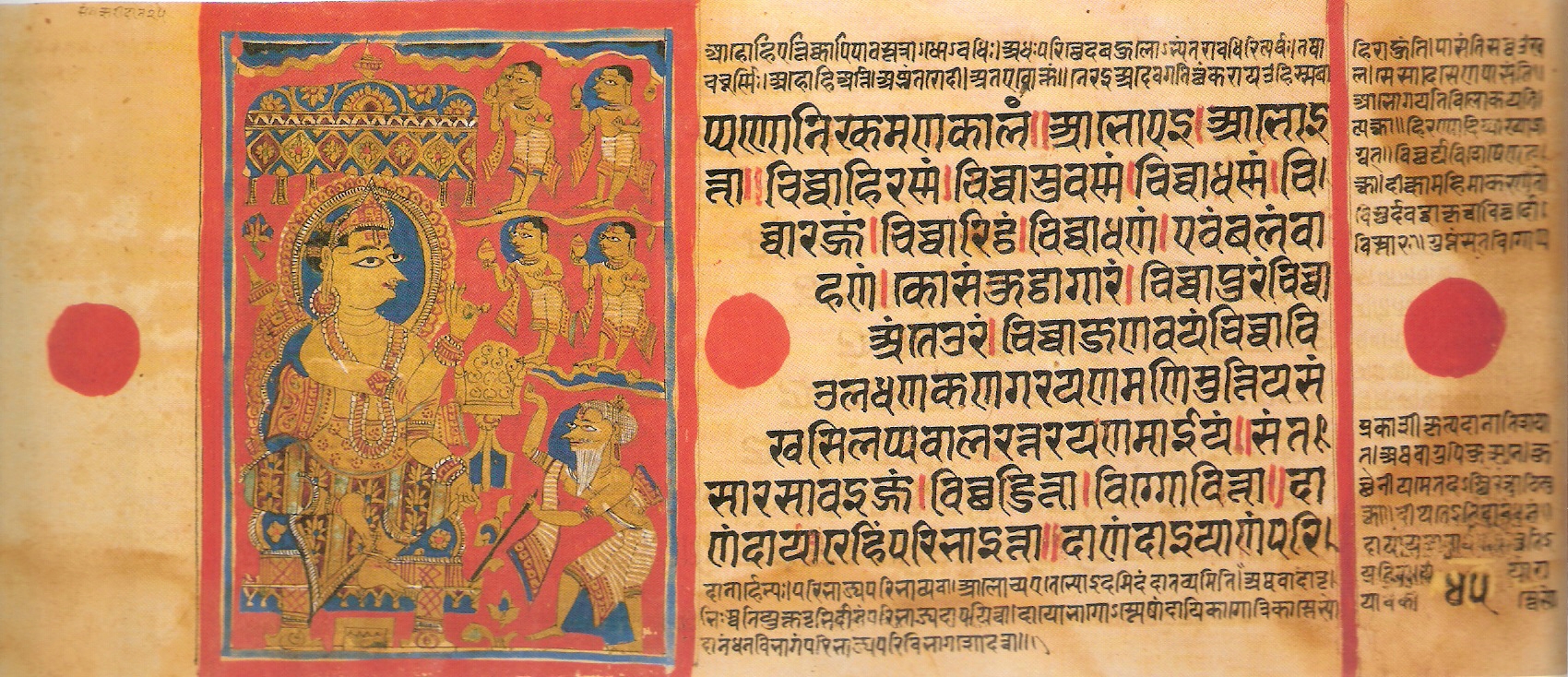
That does not make these narratives historically worthless. It changes the questions we ask of them. A biography can illuminate ideals of renunciation and authority even where an episode cannot be independently verified. A manuscript illustration from the fifteenth or sixteenth century tells us how a later community pictured Mahavira, not what an observer saw during his lifetime. The distinction lets us appreciate devotional art without using it as photographic evidence.
What a “ford-maker” makes possible
A tirthankara is conventionally translated as a “ford-maker”: someone who shows a way across the repeated cycle of birth and death. The metaphor is helpful because it makes liberation a path to be followed, rather than a favor arbitrarily bestowed. The Jain sequence of tirthankaras places Mahavira within an expansive understanding of time, not just a single historical generation.
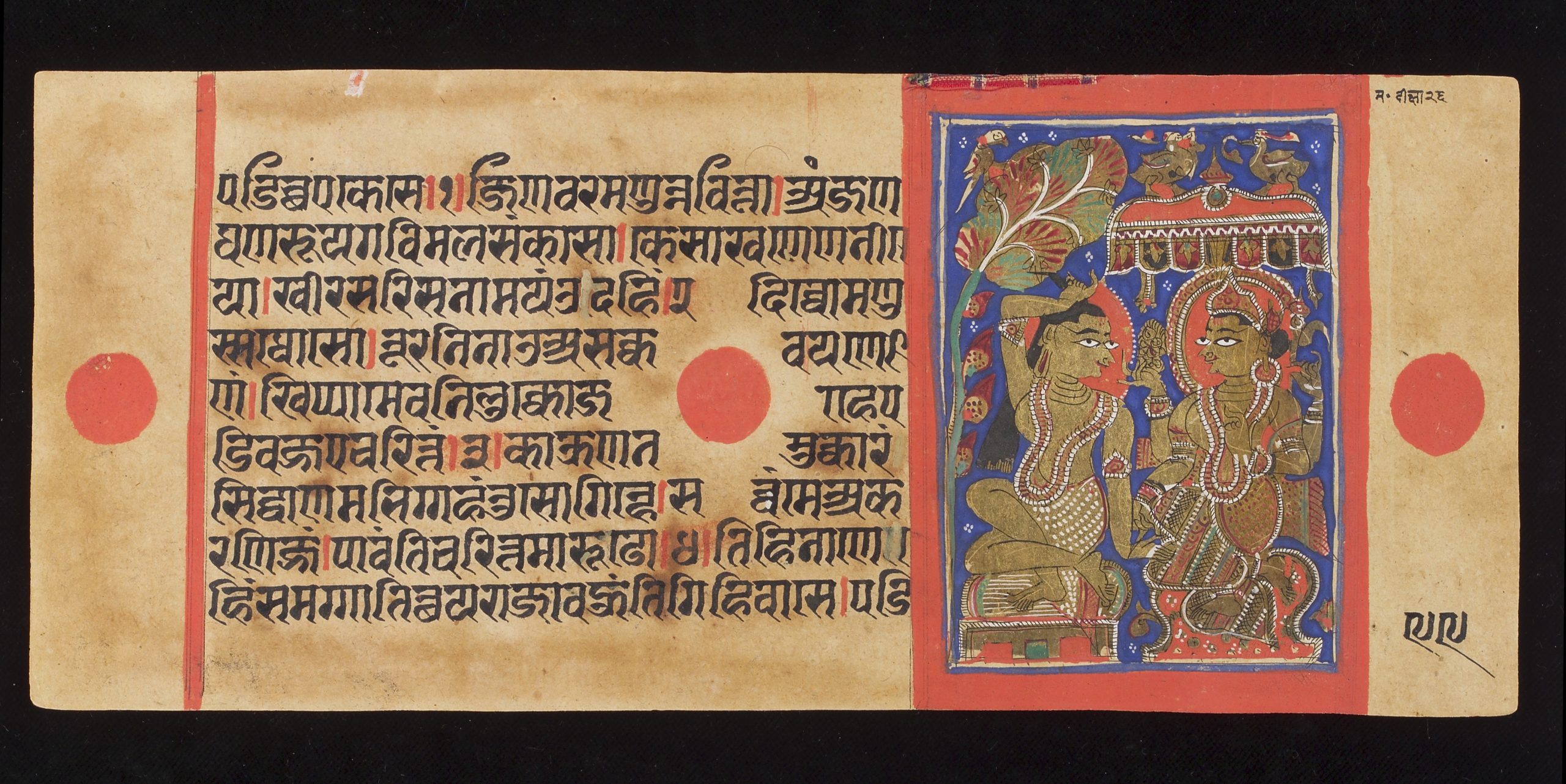
Jains also speak of a jina, a conqueror. Here again the conquest is inward. Greed, anger, pride, and attachment obstruct freedom. The honored teacher is exemplary because these obstacles have been overcome. This is why a serene, unmoving image can represent a very demanding achievement. Stillness is not a sign that nothing has happened.
Readers familiar with Buddhism may recognize shared questions about rebirth, discipline, and liberation. But similarity of vocabulary does not erase disagreement. Jainism has its own account of the soul and of what binds it. Religious life in ancient India was not a set of identical answers wearing different names. Traditions developed partly through encounters and arguments with one another, a broader landscape also visible in Nalanda: The Monastery That Carried Learning Across Asia.
Karma is not merely a moral scorecard
In everyday English, “karma” often means that good or bad behavior eventually brings a matching result. The Jain concept is more specific. Jain teachings describe karmic matter as binding to the soul, obstructing its inherent capacities. Liberation requires stopping further bondage and removing what has accumulated. Conduct and inner dispositions belong to that process.
This makes ethics more than obedience to a command. How one acts affects the condition of the acting being. Intention matters, but so do habits and the consequences of participating in harmful activity. The point is not simply to produce a favorable public reputation. One can look respectable while remaining deeply attached to possessions, prestige, or anger.
Jain thought distinguishes living beings, jivas, from what is not living. Its moral concern extends beyond human society. Plants and animals belong within the field of consideration, although beings are classified differently and practical obligations vary. This is a religious account of life and liberation, not an ancient version of a modern laboratory classification.
A modern reader need not accept every metaphysical premise to understand the connection. If other beings have their own stakes in existence, everyday convenience stops being a sufficient explanation for every choice. What can be avoided? What can be reduced? What sort of attention does an action require? Those questions are where a demanding ethic becomes recognizable in daily life.
Five vows, with more than one level of practice
The five central commitments are nonviolence, truthfulness, not taking what is not given, chastity, and nonattachment. The “three jewels” of right vision, right knowledge, and right conduct connect ethical practice with understanding. Knowing the right vocabulary is not a substitute for changing behavior.
These commitments are not applied identically to everyone. The great vows of renouncers are more rigorous than the limited vows undertaken by laypeople. For an ascetic, chastity involves celibacy; a householder’s commitments operate within a different form of life. Nonattachment likewise cannot be reduced to one rule about how many objects a person may own. It concerns the hold that possession and desire exercise over the self.
The distinction prevents a common mistake: presenting the most exacting monastic practice as something every Jain performs. Jain communities include families, workers, donors, scholars, monks, and nuns. To describe them only through a striking photograph of an ascetic is to substitute an emblem for a society.
Ahimsa, or nonviolence, is the best-known commitment, but the other vows help explain its reach. False speech can harm. Taking what has not been given can harm. Possessiveness can encourage harmful acts in pursuit of more. The vows are connected disciplines rather than five isolated boxes to tick.
Renouncers and householders need one another
A tradition devoted to renunciation still has to exist in the world. Monastics rely on lay support; laypeople seek instruction and participate in religious communities. The relationship between mendicants and laity makes visible a social structure that a purely philosophical summary can miss. Religious ideals are sustained through recurring acts of giving, learning, and observance.
This helps explain why Jain history contains both asceticism and extraordinary works of art. Manuscripts, temples, and images can express religious devotion and the generosity of patrons. They do not automatically refute the ideal of nonattachment, though they certainly invite questions about wealth, prestige, and the uses of resources. Historical communities negotiate such tensions; they do not disappear because a doctrine is demanding.
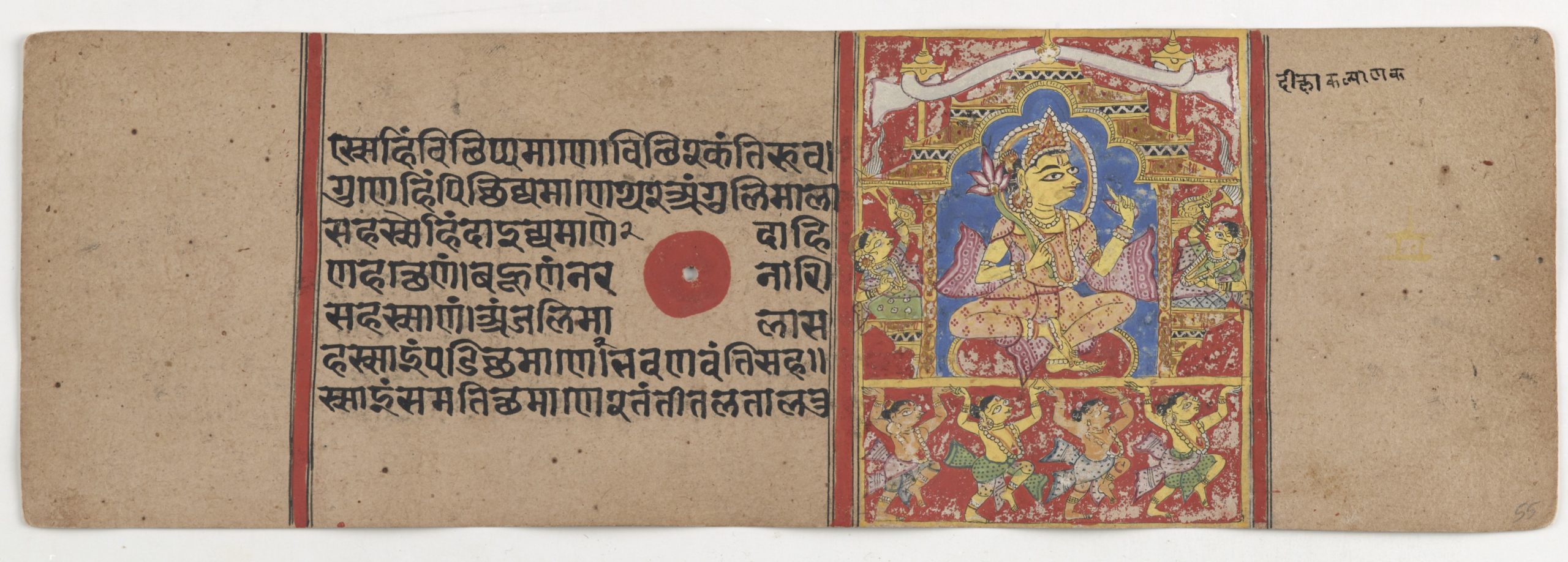
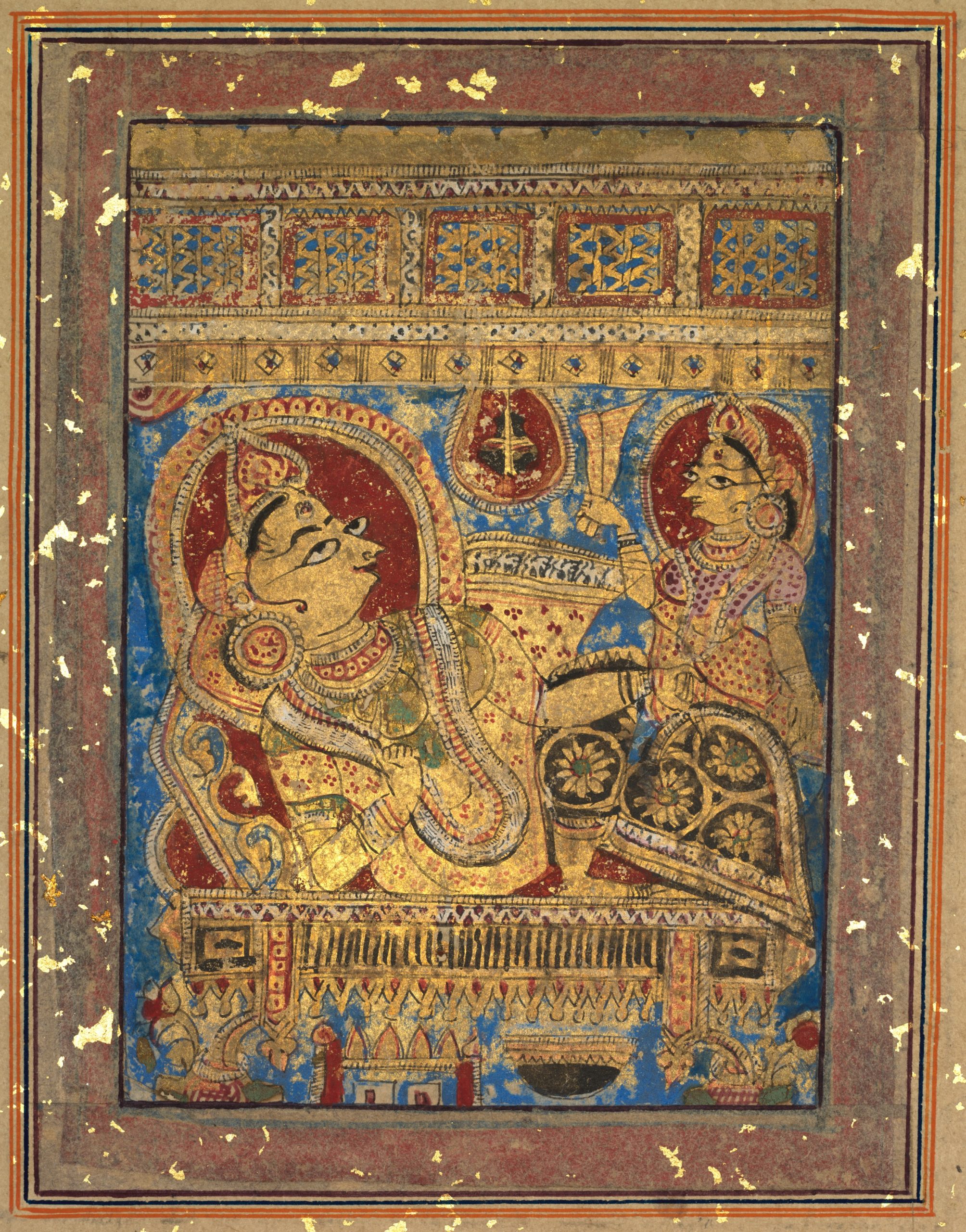
The illustrated Kalpa Sutra manuscripts accompanying this article belong to that later devotional history. Their vivid colors, compressed scenes, and carefully organized pages are products of skilled work. In a different religious setting, The Diamond Sutra of 868: Printing, Merit and a Sealed Cave likewise shows that transmitting a sacred text involves material resources, patrons, and makers as well as ideas.
Difference inside the tradition
Jainism is not institutionally uniform. The major Digambara and Shvetambara traditions preserve differences in monastic practice, scriptures, and accounts of Mahavira’s life. “Sky-clad” and “white-clad” refer to a visible distinction, but clothing is not the whole disagreement. Questions about women and liberation have also divided their teachings.
The Pluralism Project’s overview of these traditions also notes subdivisions within them, including differing attitudes to image worship. Consequently, even a beautiful temple photograph cannot stand for every Jain form of devotion. Some communities emphasize practices that do not center on worship before images.
Internal diversity does not mean that the shared ethical vocabulary is empty. It means that shared commitments can coexist with disagreements over authority, interpretation, and practice. We should be just as careful about declaring all Jains identical as about describing the tradition as a collection of unrelated customs.
Many-sided knowledge is not “anything goes”
Anekantavada concerns the many-sided character of reality and the limitations of partial viewpoints. Jain discussions of perspective invite intellectual discipline: a statement may grasp something real without exhausting its subject. Listening to another account can reveal the boundary of one’s own.
It would be a mistake, however, to translate this into the claim that every statement is equally correct or that Jains hold no firm convictions. A tradition with rigorous ethical commitments is plainly not indifferent to truth. The challenge is to avoid mistaking a limited formulation for complete understanding. That is more demanding than agreeable vagueness.
Akbar’s House of Debate and the Politics of Religious Difference offers another historical setting for thinking about religious disagreement, while Ashoka’s Edicts and the Limits of Imperial Dhamma explores a ruler’s language of ethical conduct. Neither should be treated as simply Jain in disguise. Comparisons are useful when they make differences clearer.
Mahavira’s continuing significance lies partly in this combination of exacting conduct and scrutiny of the self. The tradition asks not only whether an action is permitted, but what attachments sustain it and whose life it affects. That is why Jain nonviolence is poorly served by a single uplifting slogan. Its interest lies in the sustained, uncomfortable, and often very practical work of living carefully.