
Reading The Last Dynasty: The Kingdom Behind Cleopatra
Toby Wilkinson’s history puts three centuries between Alexander and Cleopatra back in view. Read alongside the objects and documents, that dynasty becomes a kingdom of priests, soldiers, scribes and uncertain harvests.
On 7 May 254 BCE, a complaint about a missing donkey entered the paperwork of Ptolemaic Egypt. The complainant, Antigenes, identified himself as a Macedonian. The document reached the archive of Zenon, who managed an estate at Philadelphia in the Fayum. A chief policeman was involved. A valuable working animal had become a matter for administration.
The University of Michigan’s account of the papyrus gives us something a royal family tree cannot: a small problem moving through a system of property, work and official authority. The donkey’s fate is less important here than the fact that the complaint survived.
Keep that document in mind when approaching Toby Wilkinson’s The Last Dynasty: Ancient Egypt from Alexander the Great to Cleopatra. The Bloomsbury paperback edition published in September 2025 offers a route into the Ptolemies’ long rule. The title names its famous endpoints, but between them lie generations of rulers and a country that had to keep producing food, collecting revenue and recognising claims.
This is a reading companion built from the book’s published scope and independently checked historical evidence, rather than a verdict based on a complete reading of the book. It follows several things worth watching as the royal narrative develops: how kings represented themselves, what queens did, how temples maintained authority and what documents reveal beyond the palace.
There is a practical benefit to widening the view. A succession of Ptolemies, Arsinoes, Berenices and Cleopatras can become bewildering quite quickly. Following an institution, a place or a kind of evidence gives those recurring names something solid to stand on.
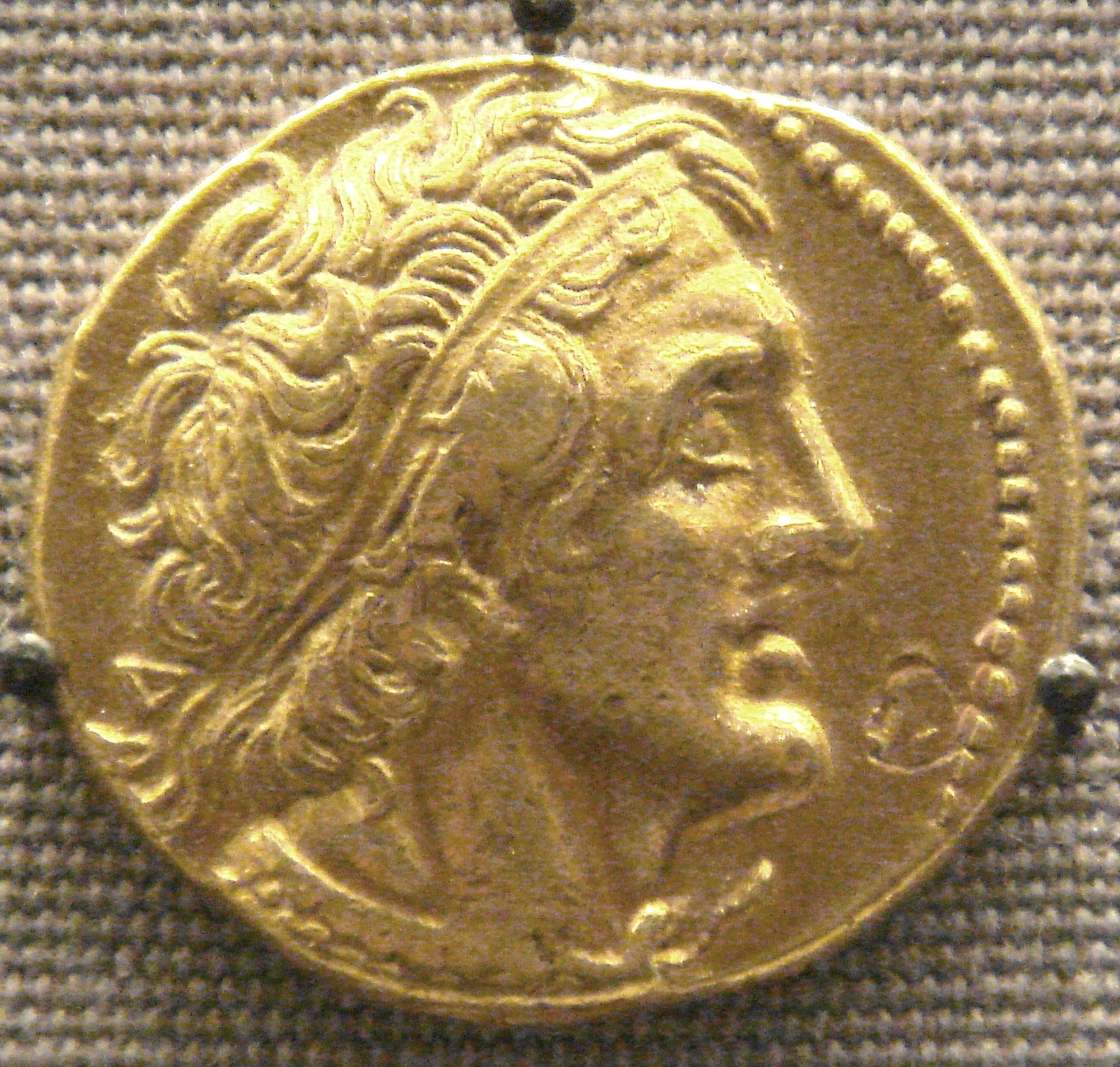
How a Macedonian dynasty became Egyptian kings
Alexander entered Egypt in 332 BCE. After his death in 323, Ptolemy took control of the country and eventually assumed kingship in 305. His descendants ruled until the Roman takeover in 30 BCE. These basic dates, set out in the Metropolitan Museum’s overview of Ptolemaic Egypt, mark a process of constructing a kingdom from the wreckage of Alexander’s empire.
They do not describe a complete cultural replacement. Egypt already possessed temples, trained scribes, administrative habits and deeply established ways of presenting royal authority. Greek-speaking newcomers entered that landscape. The newcomers also brought connections to other Hellenistic kingdoms, and rulers had to operate within both worlds.
Sally-Ann Ashton’s UCL guide to Ptolemaic Egypt makes the visual evidence particularly useful. Coins and some portraits show the dynasty in the manner of Greek rulers. Temple reliefs and Egyptian-style statues present its members as pharaohs. The variation is a clue to the different settings in which an image needed to work. It should not be simplified into two sealed populations, each looking at its own pictures.
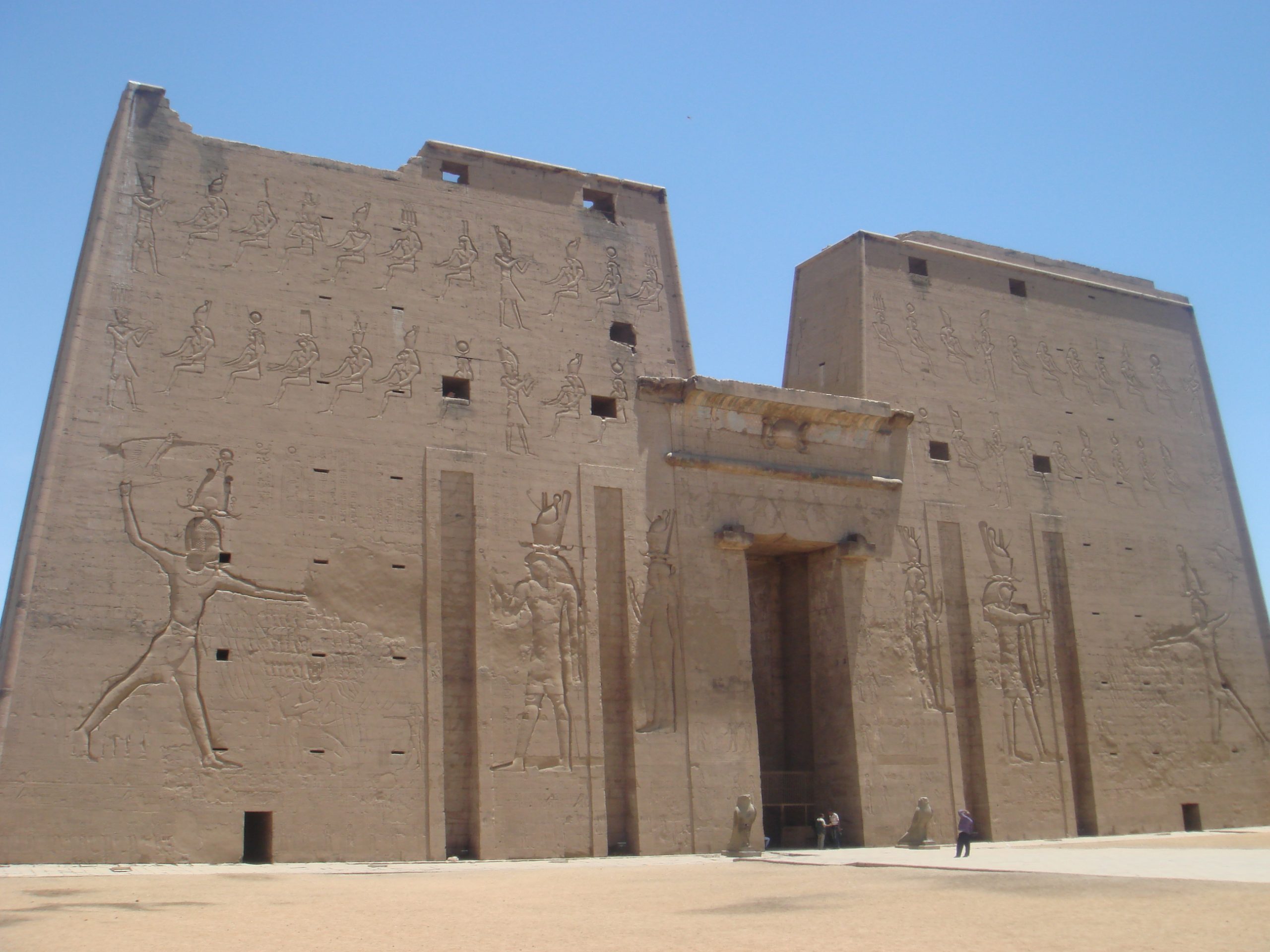
At Edfu, that royal commitment acquired enormous physical form. Egypt’s Ministry of Tourism and Antiquities dates the surviving temple’s construction from 237 BCE under Ptolemy III to completion in 57 BCE under Ptolemy XII. Its entrance pylons carry scenes of the later king overcoming enemies and worshipping the gods.
So a temple that looks convincingly “ancient Egyptian” can belong to the centuries after Alexander. The visual tradition was still being commissioned, carved and used. It required skilled labour, resources and institutions able to carry a project across many reigns. When a history turns to a new king, it is worth asking which long-running projects continued through the change.
Histovia’s article on Hatshepsut’s expedition to Punt considers royal representation much earlier in Egyptian history. Read the two periods together for the questions they share: who made the image, where was it displayed, and what relationship between ruler and gods did it ask viewers to accept?
Alexandria’s splendour had institutions behind it
Alexandria offered the dynasty a capital facing the Mediterranean. Its harbours, royal buildings and scholarly institutions made it more than a ceremonial seat. The city provided settings where monarchy could be seen, visitors received and knowledge supported.
One valuable description comes from Strabo’s Geography, book 17. Writing around the transition to Roman rule, he placed the Museum, or Mouseion, within the royal palace complex. He described learned men sharing a dining hall and common resources, with a priest at the institution’s head. The appointment had belonged to the kings and now belonged to Caesar.
The details are wonderfully practical. Scholarship needed rooms, meals, funds and someone to manage the arrangement. The famous intellectual life of Alexandria depended on an organised environment. Strabo also gives us a reminder about chronology: his description comes from near the dynasty’s end, under new political conditions. It cannot automatically be projected unchanged onto the city’s first decades.
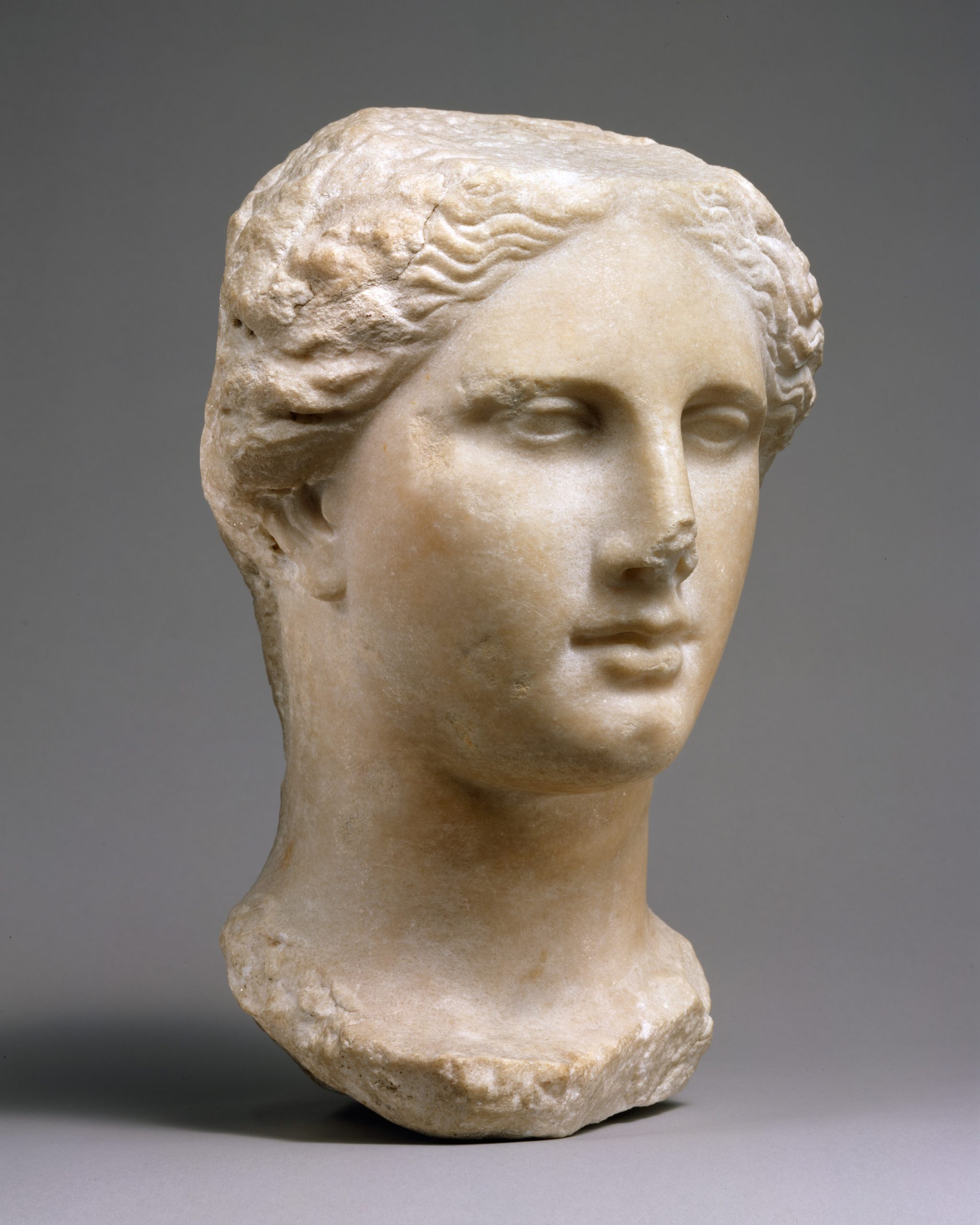
Royal women were another essential part of the public world the Ptolemies built. A marble head in the Metropolitan Museum, dated approximately 270–250 BCE, is identified as a Ptolemaic queen and has been associated with Arsinoe II. The museum relates its idealised appearance to her cult. Its wording preserves a degree of uncertainty about the portrait’s identification, which a caption should preserve too.
The object makes a useful reading aid. A queen’s significance might extend through marriage, succession and religious honours, rather than fitting neatly into the modern distinction between a ruler and a ruler’s spouse. A cult image could continue to make her politically present after her death.
That is why a dynasty’s women deserve more attention than a quick search through the family tree for somebody’s mother. When the same names recur, note the titles, partnerships and public representations attached to each person. The repetition can obscure differences that mattered very much to contemporaries.
Paperwork brings the country into focus
The surviving papyri offer another way through the period. They include letters, petitions, accounts and records of transactions. Princeton’s guide to its papyrus collections shows how widely this material ranges, while also separating Ptolemaic documents from the much larger span of later Roman and Byzantine evidence. A papyrus found in Egypt is not automatically a source for Cleopatra’s kingdom.
Zenon’s archive is especially useful because documents can be read together. Michigan’s introduction to its contents includes trade, travel, legal business and the management of an estate. The missing donkey belongs within that working world. Linking a complaint to its archive provides information that the isolated incident would never supply.
There are limits. An archive survives because somebody kept certain papers and because later conditions preserved them. It is neither a census of everyone’s experience nor an unfiltered transcript of daily life. A petition also has an audience: its writer wants someone with authority to act. Those purposes matter as much as the facts the document happens to mention.
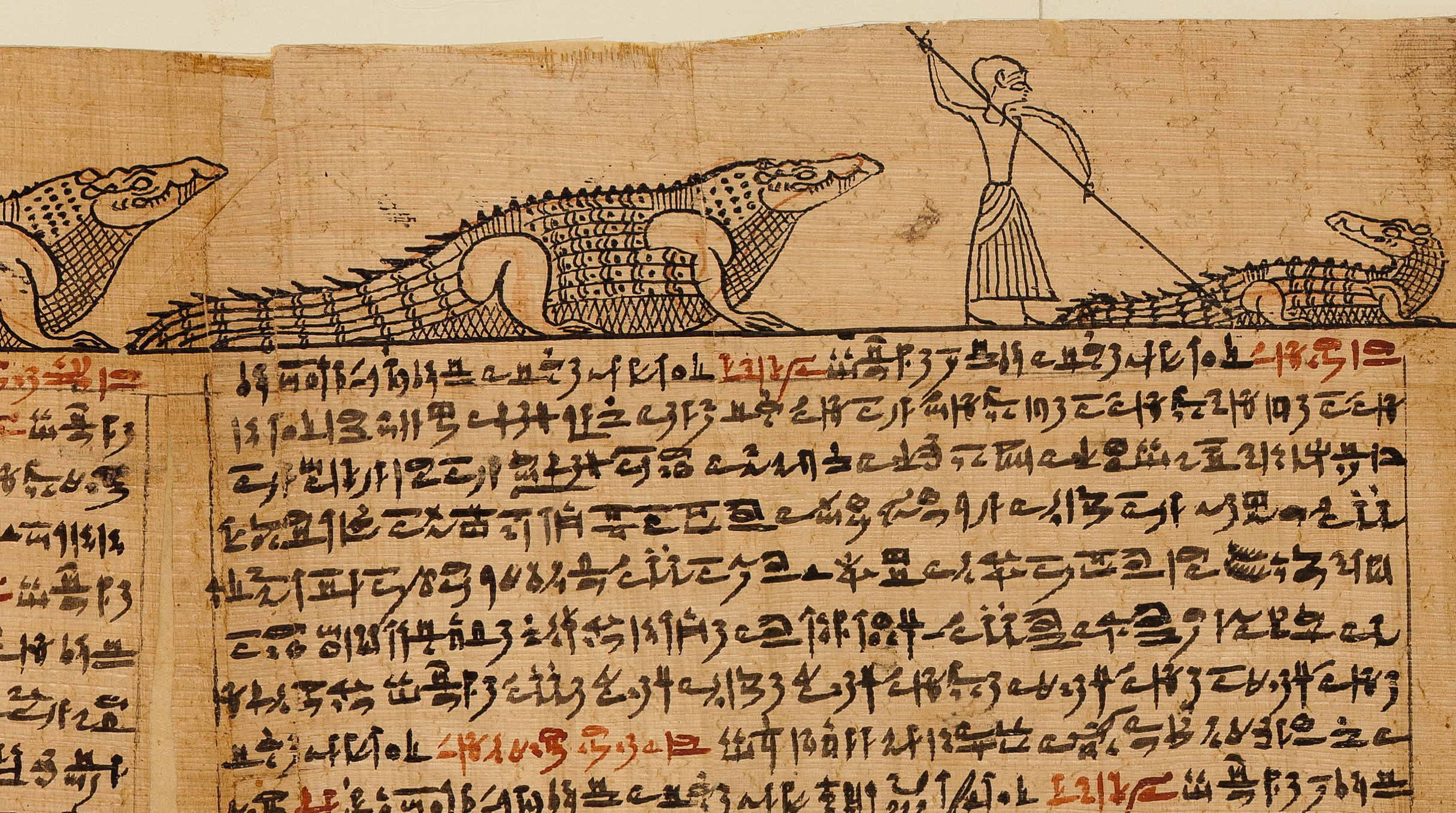
Even the category “papyrus” contains very different kinds of writing. The Book of the Dead made for a priest named Imhotep, dated about 332–200 BCE, gathers funerary spells and images intended to help him after death. It belongs to the same broad period as early Ptolemaic administration, but it answers different historical questions. The illustration below is a detail of that religious manuscript, not a page from Zenon’s business records.
Reading these materials side by side prevents the palace from monopolising the period. A monarch’s proclamation, an estate complaint and a funerary text each reveal an organised activity, with people who knew how to carry it out. The kingdom depended on those activities continuing.
A royal crisis could begin far from the palace
Family disputes are easy to narrate. Failed harvests and strained households are harder to follow, especially when the evidence survives unevenly. Yet a government’s ability to collect revenue and maintain armies ultimately depends on resources, and in Egypt those resources were closely tied to the Nile’s annual flood.
A 2017 study led by Joseph Manning and colleagues brought climate modelling, ice-core evidence, later Nilometer measurements and ancient written records into the same investigation. It found that explosive volcanic eruptions could suppress Nile summer flooding through their effects on the African monsoon. For the Ptolemaic period, the researchers identified associations between eruptions, the beginning of revolts and changes in warfare and economic behaviour.
This adds a useful set of questions to a dynastic history. What happens to a household’s obligations when production falls? How does a ruler choose between external campaigning and trouble at home? When does a priestly decree signal a need to reinforce authority? Environmental pressure helps explain why political arrangements could become harder to sustain.
The study does not give every rebellion a single volcanic cause. A statistical association across a long period is different from a complete explanation of one decision. Conditions interacted with institutions, inequalities and choices. The value of the research is that it makes those interactions available for investigation.
Temples also belong in this picture of negotiation. Foy Scalf’s account of the Rosetta Stone for the American Research Center in Egypt treats its decree as evidence of a relationship between the royal house and priestly organisations. Honours and benefits helped articulate that relationship publicly.
Histovia’s closer reading of the Rosetta decree follows that political bargain. Here, its place is within the wider kingdom: alongside farming, taxation, religious institutions and the pressures that could make cooperation urgently valuable.
Cleopatra comes into view with a kingdom behind her
By the time Cleopatra VII appears, a reader has several centuries of institutions and royal practice to keep in mind. That changes the familiar story of her relationships with Julius Caesar and Mark Antony. Those relationships involved the survival and ambitions of a dynasty within a Mediterranean world increasingly shaped by Roman power.
It also helps us read the literary sources with care. Plutarch’s Life of Antony gives Cleopatra memorable scenes and considerable powers of persuasion. In chapter 27, he describes her conversational ability and facility with languages, contrasting her with earlier rulers who had not learned Egyptian. The passage is often used to reconstruct her education and political skill.
Keep the form of the evidence in sight. Plutarch was a later biographer explaining Antony’s character and fortunes. His Cleopatra participates in that purpose. The famous description is valuable testimony about her reputation; it is not a surviving record of a language examination or a transcript of her diplomatic conversations.
Elsewhere, the same biography relates elaborate entertainments, arguments over power and the final campaign. Its lively detail encourages us to imagine that we are close to the action. The distance between a compelling account and an independently confirmed event still needs attention. Ask when the author is reporting a claim, describing a reputation or arranging a scene to illuminate character.
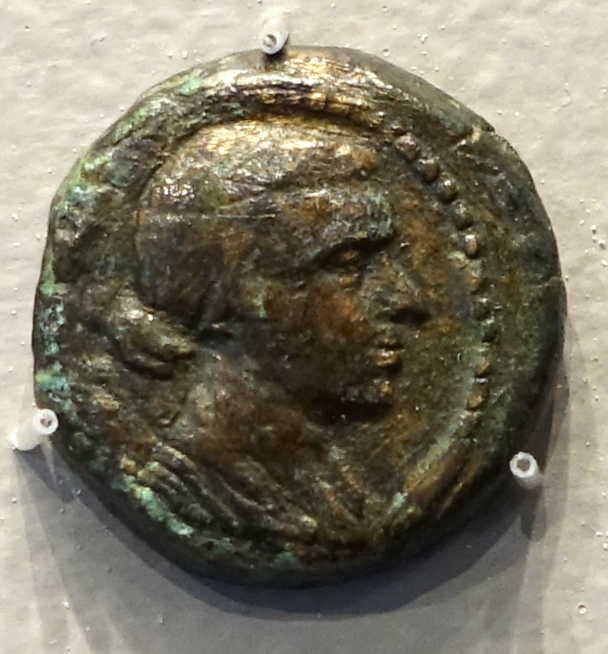
Coins supply a different kind of evidence. Cleopatra’s profile on a bronze issue presents an authorised royal image in a medium designed to circulate. It cannot settle every question about her appearance. It can show that contemporaries encountered her as an issuing ruler, with an identity deliberately represented in public.
The distinction is helpful when reading a modern narrative. A literary anecdote, a royal portrait and an administrative document can all be relevant without carrying equal weight for the same claim. The strongest account will make room for their differences.
Rome’s annexation in 30 BCE ended Ptolemaic sovereignty. It did not make the Nile Valley’s people, religious practices or accumulated expertise vanish. An ending defined by a dynasty is a political boundary within longer histories. Keeping those longer histories in view is one of the rewards of reading beyond the best-known queen.
A few questions to keep beside the book
As you read The Last Dynasty, try following one subject across several reigns: a temple, the royal image, relations with Rome or the work of administration. Then compare it with the sequence of rulers. Sometimes a change at the top disrupts the whole arrangement; sometimes institutions outlast the person who claimed to embody them.
Three questions are especially useful. What kind of source supports this episode? Whose work made the described wealth or achievement possible? And what evidence might look different if the account began in the countryside rather than at court?
The donkey complaint is a good place to return. Its small scale does not diminish the kingdom’s grand history. It gives that history people with tasks, assets and reasons to approach an official. A dynasty lasting almost three centuries needed such systems to function, even when its family relationships were coming apart.
Find the book: Toby Wilkinson, The Last Dynasty: Ancient Egypt from Alexander the Great to Cleopatra, Bloomsbury paperback, 25 September 2025. This is a direct, non-affiliate publisher link. Publication dates vary by edition; the 2025 date here identifies this paperback, rather than the book’s first appearance.