
Hatshepsut’s Ships to Punt and the Making of a Royal Image
An expedition brought myrrh trees and distant cargo to Egypt. At Deir el-Bahri, its story became a carefully constructed statement about work, divine favor and royal power.
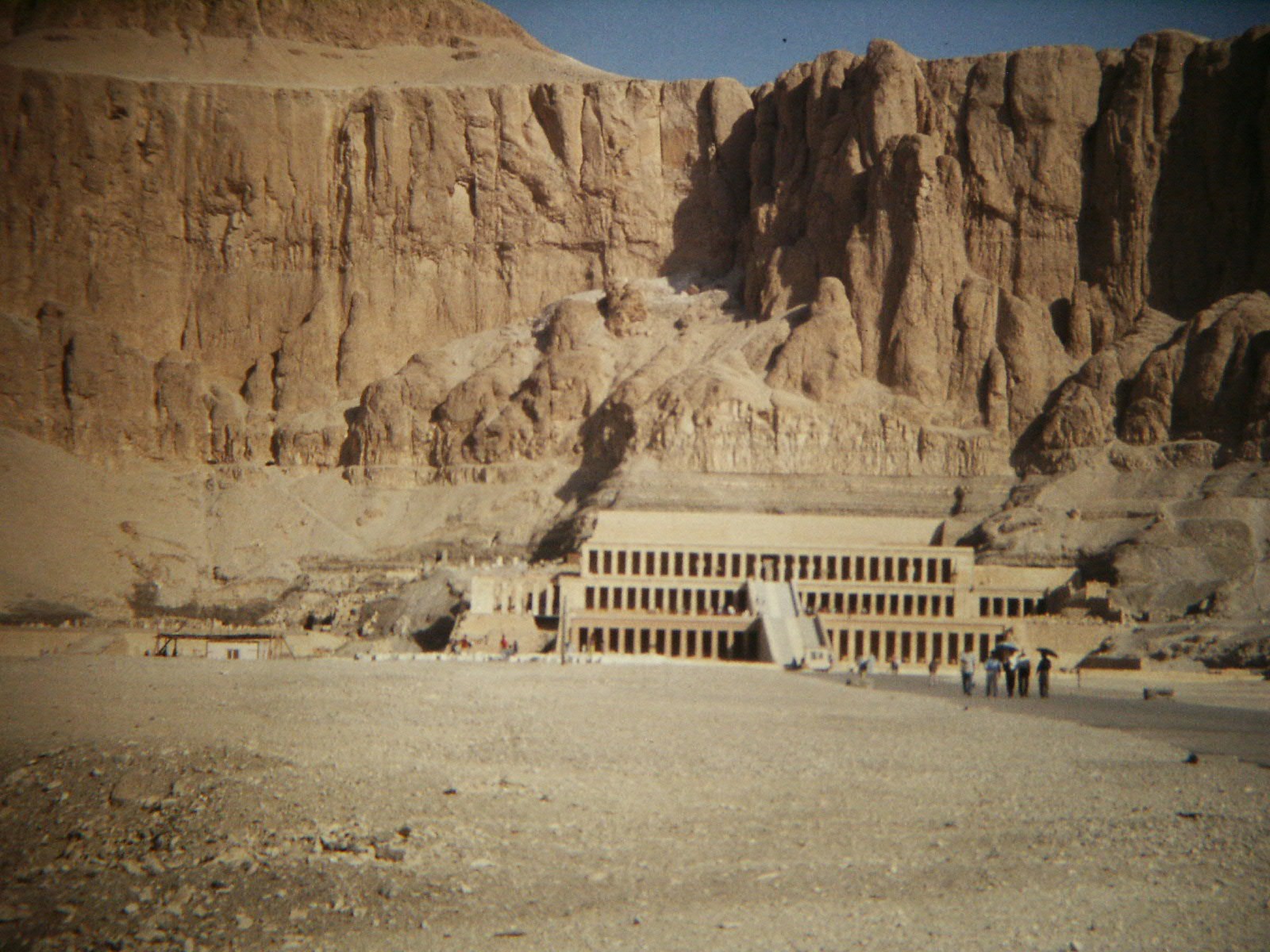
At Deir el-Bahri, on the west bank of the Nile at Thebes, a line of carved sailors brings a distant country into an Egyptian temple. Ships arrive, goods are carried aboard, and living trees travel with their roots protected. The destination is Punt. The patron of the expedition is Hatshepsut, the woman who ruled as an Egyptian king in the fifteenth century BCE.
The reliefs preserve unusually rich evidence of an overseas expedition. They also make an argument. What begins with a ruler’s access to distant resources ends with offerings to Amun, the god whose support was central to her kingship. Reading the pictures as a travel diary misses the reason they were carved on these particular walls.
A ruler who inherited the language of kingship
Hatshepsut initially governed as regent for the young Thutmose III after the death of Thutmose II. She then assumed royal titulary and became the senior figure in a joint kingship. The Metropolitan Museum dates many of her royal statues to approximately 1473–1458 BCE. Different chronological schemes exist; assigning every event a single modern year can imply more precision than the evidence provides. The Met’s exhibition overview places her reign within the rebuilding and expansion of Egypt’s early Eighteenth Dynasty.
Her images did not all present the same body. One seated statue combines female clothing with the royal nemes headcloth. Other sculptures give her the kilt, beard and idealized physique traditionally used for a king. Their inscriptions could still identify her with feminine grammar. This was a recognizable political and religious visual language, not evidence that her subjects were being deceived about who she was. The museum’s discussion of the seated granite statue makes that distinction explicit.
The expedition belonged to this larger work of making royal authority visible. A successful ruler maintained temples, supplied the gods and demonstrated an ability to order relationships beyond Egypt’s borders. Distant cargo could become evidence of competence and divine favor.
An expedition, arranged on temple walls
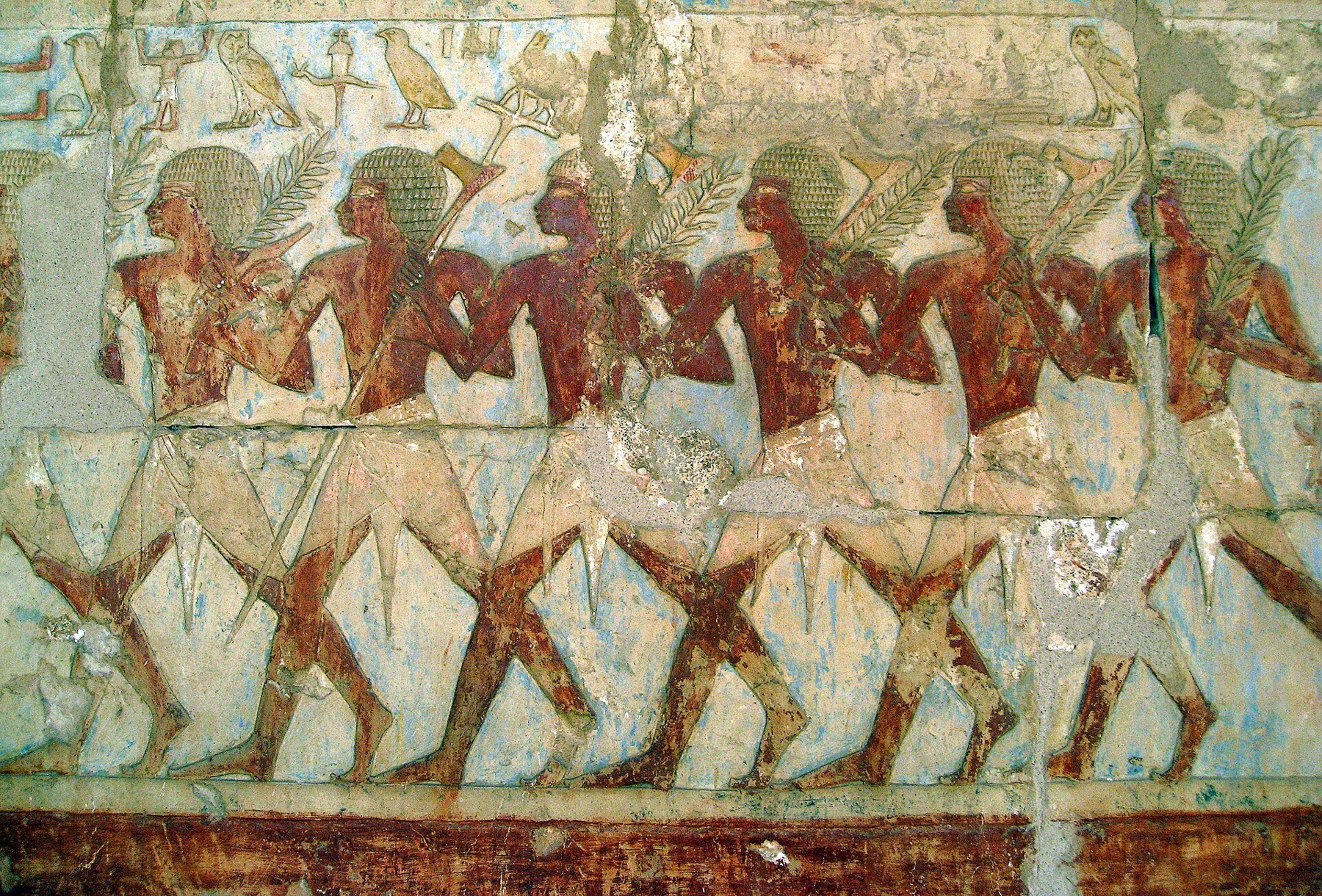
The Polish-Egyptian mission at Deir el-Bahri identifies the voyage with regnal year nine of Thutmose III, during the joint reign. Its guide to the Punt Portico follows the reliefs around the southern part of the middle terrace. The narrative moves between walls rather than forming a modern left-to-right strip.
The scenes show the expedition’s leader, Nehes, meeting Punt’s leaders, Parehu and his wife Iti. Elsewhere, men transport goods, ships are loaded, and the cargo is presented in Egypt. The composition brings together activity at sea, negotiation on shore, physical labor and ceremonial accounting. These are distinguishable operations, even though the monument folds them into a single account of royal success.
Hatshepsut is the patron, not a documented passenger on these ships. Nor can the apparent speech in a royal inscription be treated as a verbatim transcript of a meeting. Egyptian artists and scribes represented the encounter for an Egyptian temple audience. The people of Punt appear through that framework; their own account has not survived beside it.
Why transport a living tree?
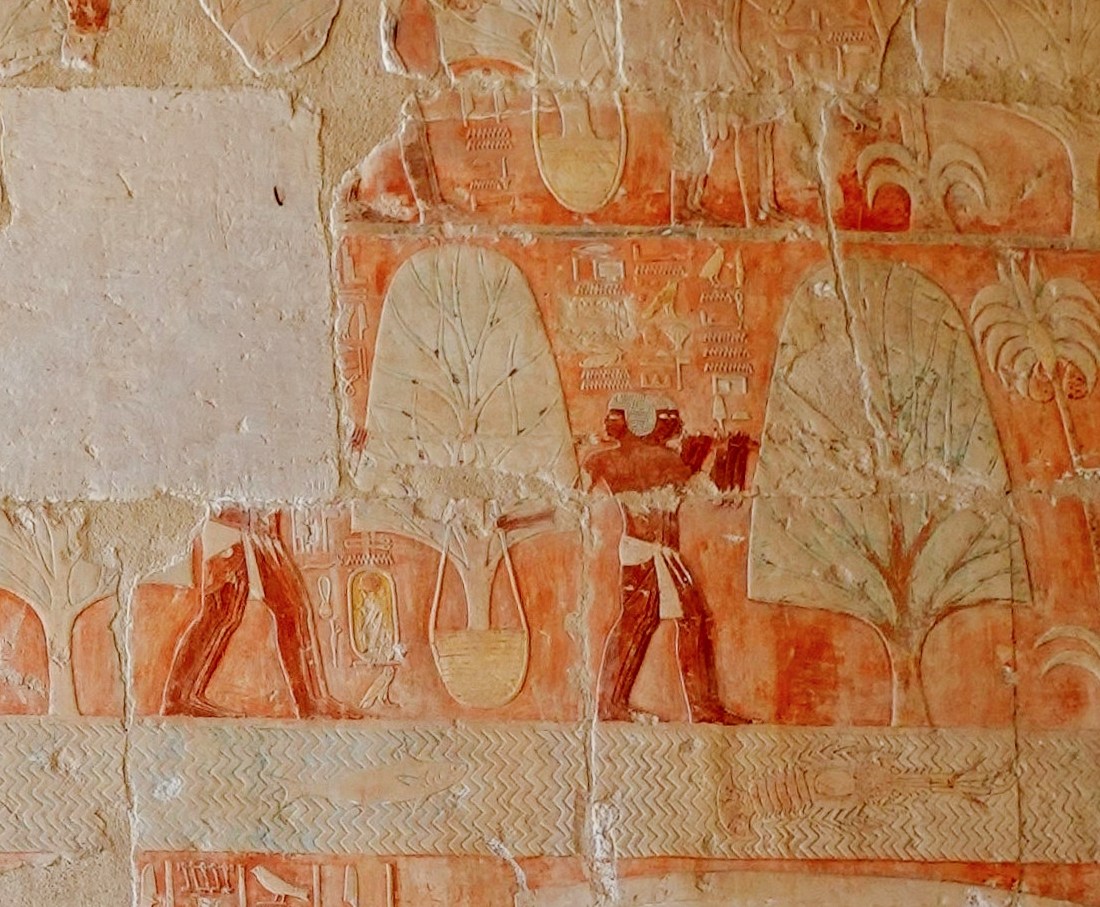
A cargo of aromatic resin could supply immediate ritual needs. Living myrrh trees offered something different: the possibility of cultivating the source itself. The relief of men carrying trees therefore deserves more attention than a passing label about exotic souvenirs. It records the handling of vulnerable, useful plants over a long journey.
In the translated expedition inscriptions, the desired products are tied to Amun’s temple. Myrrh, wood, ivory and animals form part of a far-reaching inventory. The translation also includes people and their children among the arrivals. The record should not be softened into an uncomplicated celebration of cultural exchange, nor can it establish the individual circumstances of everyone transported.
The monument credits the king and god. Its pictures nevertheless preserve the essential presence of other workers: sailors, carriers, officials and people supplying the cargo. A royal command did not float a vessel or keep a transplanted tree alive. The distance between command and accomplishment was filled by practical knowledge and labor, much of it anonymous in the surviving record.
We should also distinguish a represented project from a measured outcome. Pictures and inscriptions support the transport and ceremonial importance of the trees. They do not give a survival rate, a horticultural diary or a reliable account of how long every imported specimen flourished in Egypt.
Amun’s success and Hatshepsut’s success
The text presents divine instruction as the voyage’s starting point. Its return supplies the god who authorized it. That structure makes the expedition appear as a complete circuit of legitimate action: Amun commands, the ruler provides, and the result confirms their relationship.
This helps explain the location of the narrative. Deir el-Bahri was part of a lived ceremonial landscape connected to Amun’s great temple at Karnak across the river. During the Beautiful Feast of the Valley, a sacred image of the god travelled to the west bank. Hatshepsut’s monumental statues stood along the approach and terraces, turning movement through the complex into an encounter with royal devotion.
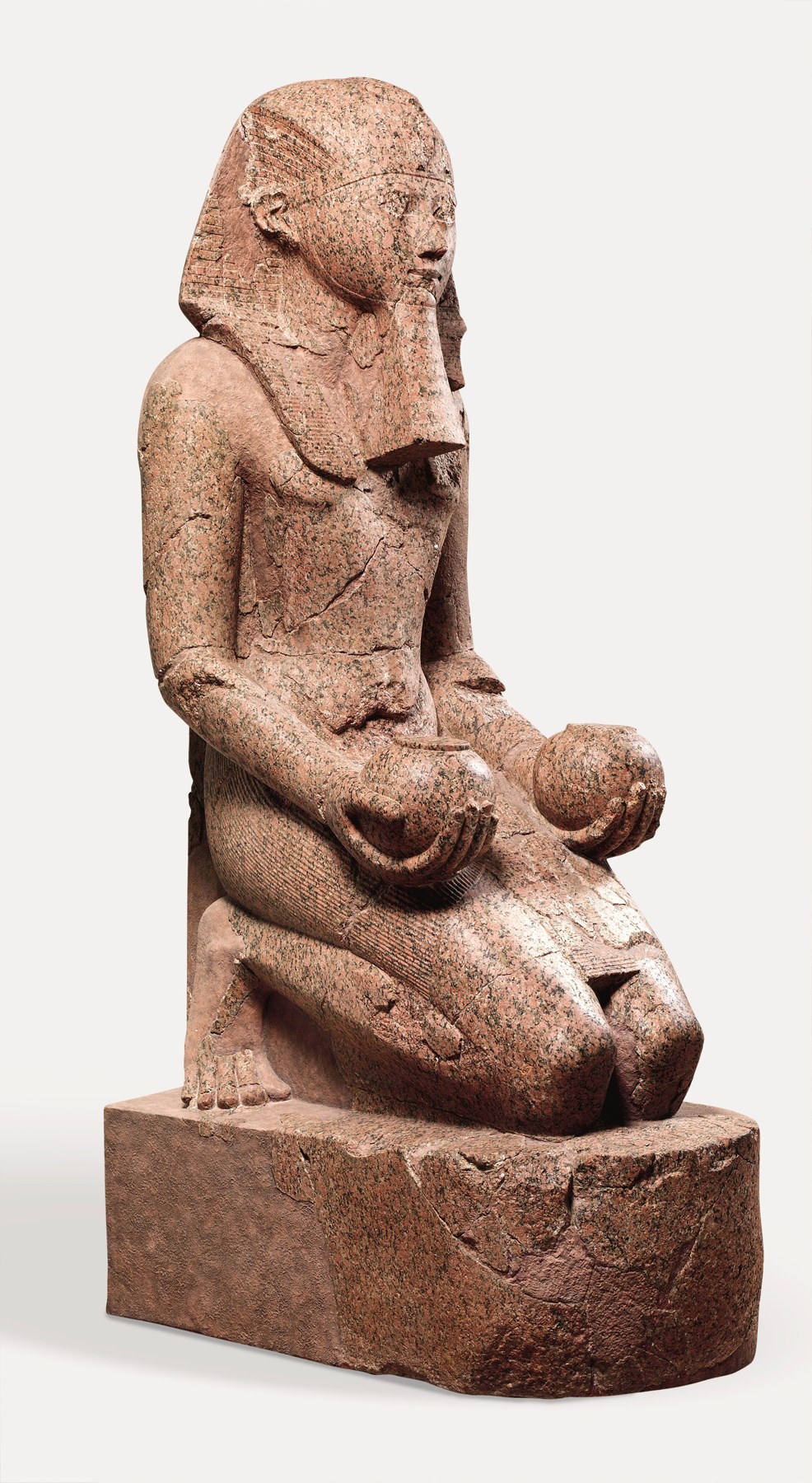
The large kneeling statue now at The Met represents the ruler making an offering. Its inscription associates that action with Maat, the principle of proper order, truth and justice. The statue and the Punt reliefs are different forms of the same political claim: this king successfully performs the obligations on which ordered life depends.
That claim does not make the voyage imaginary. It tells us why a real expedition was selected, arranged and enlarged into lasting public memory. Evidence can be both informative and interested. A relief may reveal a ship or a method of carrying cargo while remaining a carefully constructed statement about authority.
How much of Punt can we locate?
Punt’s precise location remains debated. Egypt’s contacts with the southern Red Sea and adjacent African regions are central to the discussion, but a scene containing a tree or an animal is not a modern coordinate. Goods could also move through exchange networks before reaching the people encountered by an Egyptian expedition.
The inscriptions themselves mix geography with sacred language. A place described as a divine land has a religious position as well as a physical one. Ancient claims of unprecedented access are also part of royal praise. They should not erase earlier Egyptian connections with Punt or become proof that nobody had made a comparable journey before.
The sensible boundary is therefore clear. Hatshepsut’s monument gives strong evidence for an expedition understood by its creators as a major success. It is much less helpful for reconstructing an exact daily itinerary, a complete shipping manifest or the borders of a Puntite state.
A monument with more than one history
The walls did not remain untouched. Hatshepsut’s figures and names were damaged after her death; images of Amun later suffered during the Amarna period and were restored under subsequent rulers. Those interventions have different dates and purposes. A missing face on a temple wall cannot automatically be assigned to one act of personal revenge.
The statues also survive through modern decisions. The Met’s account of restoring a seated Hatshepsut describes fragments brought together from different collections and successive approaches to filling losses. The smooth outline of a museum sculpture may contain ancient stone, modern supports and reconstructed gaps. Its current appearance is evidence of conservation as well as of ancient carving.
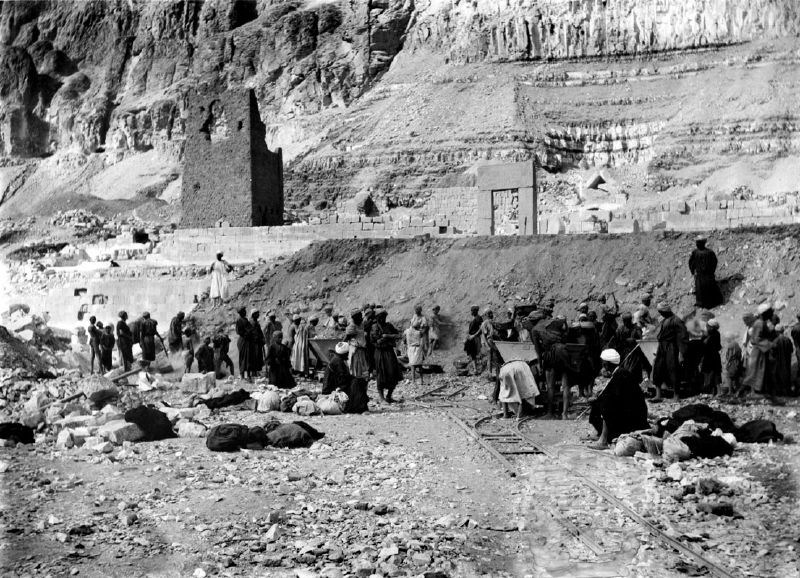
Nineteenth- and twentieth-century excavators uncovered and published the temple, while later Egyptian and international teams continued documentation and conservation. The Punt narrative we read today has consequently passed through carving, deliberate alteration, burial, removal, copying and restoration.
It is still possible to recognize the practical achievement inside the royal presentation. Ships carried people and goods between distant shores. Trees were lifted, loaded and delivered. Officials counted and displayed the returns. Hatshepsut’s enduring success was to make that work speak twice: once as the result of an expedition, and again as an image of a ruler fulfilling the duties of kingship.