
How Edo Fought Fire and Learned to Live with It
Edo’s firefighters pulled buildings apart to save streets. Their brigades, coats, and public reputation reveal how danger was shaped by work, rank, and inequality.
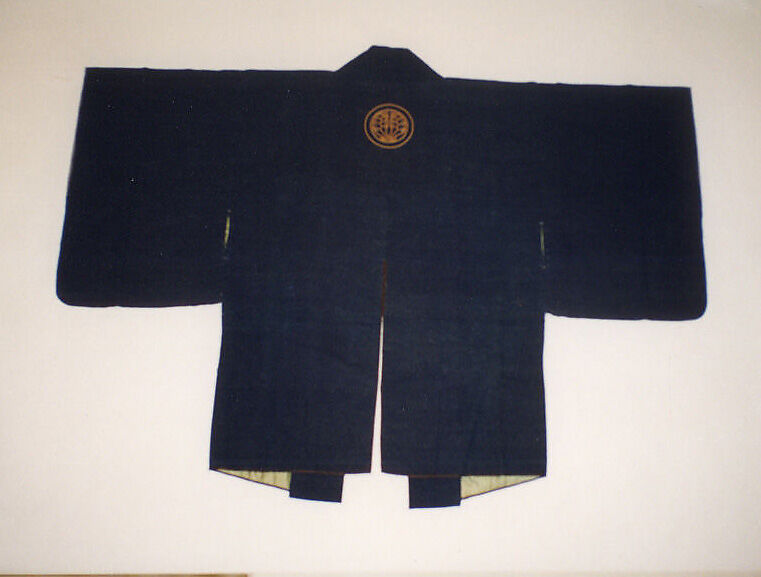
A firefighter’s coat could hide a monster. One surviving mid-nineteenth-century Japanese jacket has an indigo exterior and a brilliantly decorated lining showing the deity Susanoo confronting the serpent of legend. Thick quilted cotton offered practical protection, but the image gave the garment another purpose: it placed the wearer inside a world of danger, courage, and spectacular rescue. The coat now belongs to the Metropolitan Museum of Art. [1]
In Edo, the city that became Tokyo, firefighting was both necessary work and public performance. A coat could be protective equipment, an emblem of a brigade, or ceremonial dress. Reading these objects beside accounts of fires reveals a city where practical danger and public reputation were closely connected.
A city that used fire everywhere
Edo’s vulnerability began in ordinary rooms. Cooking, heating, and lighting required flames. Houses were largely wooden, while narrow streets and closely packed buildings helped a local accident spread. The crowded commoner districts around Nihonbashi, Kyōbashi, and Kanda were especially exposed. Dry conditions and strong winds could turn the routines of household life into a neighborhood emergency. The Tokyo Fire Department’s historical account emphasizes these material conditions rather than treating conflagrations as inexplicable disasters. [2]
The same streets contained homes, shops, workshops, and livelihoods. Losing a building could mean losing a place to sleep and the means of earning the next day’s income. Fire therefore connected people whose interests usually differed. A merchant’s stock, a landlord’s rental property, and a tenant’s few possessions could all lie along the same advancing front. Yet common danger did not produce equal protection or an equal ability to recover.
What changed after the fire of 1657
The Great Fire of Meireki in 1657 devastated a large part of Edo. Precise casualty totals are uncertain: the Tokyo Metropolitan Library gives a range of approximately 30,000 to 100,000 deaths. It is safer to retain that uncertainty than to turn the often-repeated highest estimate into a census. The disaster reached the political center of the city as well as its crowded residential districts. [3]
Reconstruction changed Edo’s shape. Authorities relocated some aristocratic residences, temples, and shrines toward the outskirts. Wider roads and open areas were meant to interrupt the passage of flames. Honjo and Fukagawa developed as urban districts across the Sumida, and the construction of Ryōgoku Bridge helped link the expanding city.
This was more than rebuilding identical houses on cleared plots. It was an attempt to make urban space perform a defensive task. An empty stretch of ground could be valuable precisely because it carried no building for fire to consume. But relocation and widening also required decisions about whose land and premises would be moved. Fire prevention was an exercise of government power.
Several brigades in one city
Edo did not have a single uniform fire service throughout the Tokugawa period. Daimyō brigades served the great lords, with protection of the castle and warrior residences prominent among their duties. Following the Meireki disaster, the shogunate established standing brigades, the jōbikeshi, in 1658 under its own retainers. Their stations kept men ready to respond. [4]
In 1718, the magistrate Ōoka Tadasuke organized the machibikeshi for the commoner town. These units were subsequently reorganized; the familiar iroha brigade names belong to an evolving system, not a complete institution that appeared unchanged in one decree. Construction workers became central to their work because they already knew how to move over roofs and dismantle timber structures. [5]
Rank and obligations shaped which brigades responded and where. As commoner crews became more effective, their expertise made them indispensable even in spaces associated with the shogun.
Saving a street by pulling houses down
Much of the work would look strange to someone expecting a modern fire engine. Edo crews used hooks, large saws, and other tools to demolish buildings in the fire’s path. Hand-operated pumps existed, but their capacity was limited. Removing fuel could be more effective than attempting to extinguish an advancing mass of burning wooden structures. [5]
Demolition demanded speed and intimate knowledge of construction. Workers had to break apart a building while judging what might collapse beneath or around them. Their ordinary trade skills became emergency skills: the ability to assemble the city also supplied the ability to take it apart. The Tokyo Fire Department still traces this relationship between construction workers and early firefighting in its historical explanations. [6]
A brigade’s raised standard, or matoi, identified its presence near the scene. Visibility mattered in a confused streetscape of smoke, movement, and competing groups. It also announced who had arrived and claimed the dangerous work. For householders, however, a successful defensive line could still mean the deliberate destruction of their own home. Firefighting redistributed damage as well as limiting it.
Who supplied the labor
The historian William W. Kelly shows that early commoner arrangements drew heavily on tenants and servants sent by property holders. Wealthier residents could meet an obligation by supplying someone else’s labor. Some poorer residents resisted by failing to appear or leaving their assigned duty. This complicates the familiar image of a city united behind its fearless volunteer heroes. [7]
Over time, professional experience and brigade organization shifted the balance. By the late eighteenth century, commoner firefighters had become dominant in the city’s firefighting. They were ordered into the castle precincts during major nineteenth-century fires, including those of 1838 and 1844. Men excluded from elite status could possess skills on which elite buildings depended.
Admiration did not abolish the labor hierarchy. Looking at recruitment alongside heroic imagery brings the unequal burden of service back into the picture.
Clothes for danger and for display
Protective garments and ceremonial outfits must also be distinguished. The Asian Art Museum’s fire-procession costume, dated broadly to 1700–1900, was made for display rather than entering a blaze. Its account describes working outfits of leather or padded cotton that could be soaked with water. Brigade crests made collective identity visible, while public processions offered opportunities to demonstrate agility and style. [8]
The Met’s quilted Susanoo jacket brings those roles closer together. Its plain outer surface and elaborate inner scene belonged to a reversible garment. The museum dates it to the mid-nineteenth century, allowing either late Edo or early Meiji attribution. That uncertainty is worth keeping: a beautiful surviving object cannot automatically represent every brigade across two centuries. [1]
Another nineteenth-century Met ensemble incorporates costly wool and a ginger-plant crest whose particular family identification remains unknown. Even when an object’s owner has vanished from the record, its materials preserve differences in rank and resources. [9] Edo’s firefighters left more than a legend of daring men on ladders. They left coats whose fabric, lining, and insignia record the distance between working in danger and being seen to command it.
Sources and further reading
- Metropolitan Museum of Art, “Fireman’s Jacket with Susanoo-no-mikoto Deity Scene.” Mid-nineteenth-century object and curatorial account.
- Tokyo Fire Department, “江戸三大大火” (Edo’s three great fires). Japanese-language institutional history.
- Tokyo Metropolitan Library, “Reconstruction of the city after Great Fire of Meireki.”
- Tokyo Fire Department, “定火消” (Standing fire brigades).
- Tokyo Fire Department, “江戸の火消” (Firefighters of Edo).
- Nishiarai Volunteer Fire Corps newsletter, no. 87 (2022). Historical explanation of hooks and demolition firefighting.
- William W. Kelly, “Incendiary Actions: Fires and Firefighting in the Shogun’s Capital and the People’s City,” in Edo and Paris (1994).
- Asian Art Museum, “Fire Procession Costume, 1700–1900.”
- Metropolitan Museum of Art, “Fireman’s jacket, plastron and sash,” 1999.247.4a–c.