
Leaving Gallipoli: How the Allies Organised an Escape from a Failed Campaign
The withdrawal from Anzac and Suvla was not a last-minute dash for the boats. It was a carefully staged operation whose success saved lives without turning the campaign into a victory.
The most effective Allied operation at Gallipoli was the one that abandoned it. In December 1915, forces withdrew from Anzac and Suvla, removing men, guns and animals while trying to persuade Ottoman defenders that the positions were still fully occupied. The final departure from Helles followed in January 1916.
It sounds like a neat reversal: failure in attack, brilliance in retreat. That contrast is real, but it can flatten the story. Evacuation was not merely a clever trick with rifles left firing in empty trenches. It involved decisions about what to carry, what to destroy, who must remain longest and how to keep a thinning force from revealing its weakness. Above all, it meant accepting that the original objective would not be achieved.
Why the army was there
The Allied campaign sought to open the Dardanelles, threaten the Ottoman capital at Constantinople and improve access to Russia. As the National Army Museum’s account explains, an initial naval effort met mines, guns and difficult geography. Land forces were then committed to a problem that naval power had not solved.
The landings of April 25, 1915 brought British Empire and French troops onto the peninsula. Australians and New Zealanders fought alongside British, Indian and other forces in a campaign whose later national memories often narrow the cast. Ottoman defenders were not passive obstacles. They held critical ground and countered attempts to break out from the beachheads.
After costly fighting, including the failed Allied offensives of August, there was no decisive breakthrough. By late 1915, remaining on the peninsula meant sustaining exposed positions without a convincing route to the strategic prize. Disease and winter conditions compounded the problem. The question was no longer simply how to advance. It was whether continuing to stay could be justified.
Withdrawal was a military decision, not an admission written on a map
Orders to leave cannot instantly reverse an amphibious invasion. Soldiers in trenches still need to be supplied while ships remove their reserves. Transport has to approach a coast under enemy observation. The last troops cannot rely on a neighbouring formation that has already departed. Every successful embarkation makes the remaining position harder to defend.
This is why the evacuation deserves attention beyond its famous devices. It was a sequencing problem. Reduce too slowly and an opportunity may disappear; reduce too quickly and the rear guard becomes dangerously weak. The plan had to preserve enough fighting power for an emergency while quietly making that fighting power smaller.
Yorktown’s combination of fleets, roads and siege lines offers a useful comparison in reverse. At Gallipoli, sea transport was not sealing the enemy inside a position. It was being used to remove an army from its own precarious foothold.
Three stages, and a carefully maintained appearance
The Australian War Memorial’s reconstruction from war diaries distinguishes preliminary, intermediate and final stages. Early reductions could be justified as preparations for winter before the ultimate decision was generally known. The intermediate stage reduced men and material further while retaining the capacity to hold out against attack. The final stage removed the remaining force over two nights.
That structure solved a political as well as a military problem: preparation did not have to wait until every decision was publicly settled. It also limited how widely the final objective initially needed to be understood. Secrecy here was not simply silence. It was the ability to present changing activity as something an observer might reasonably expect.
Ordinary traffic could help sustain that impression. A beach with activity was not necessarily a beach preparing to leave. Guns, animals, stores and men moved through a system that had already spent months handling supplies. The evacuation redirected existing routines, then tried to keep that redirection from becoming obvious.
The unglamorous route from trench to ship
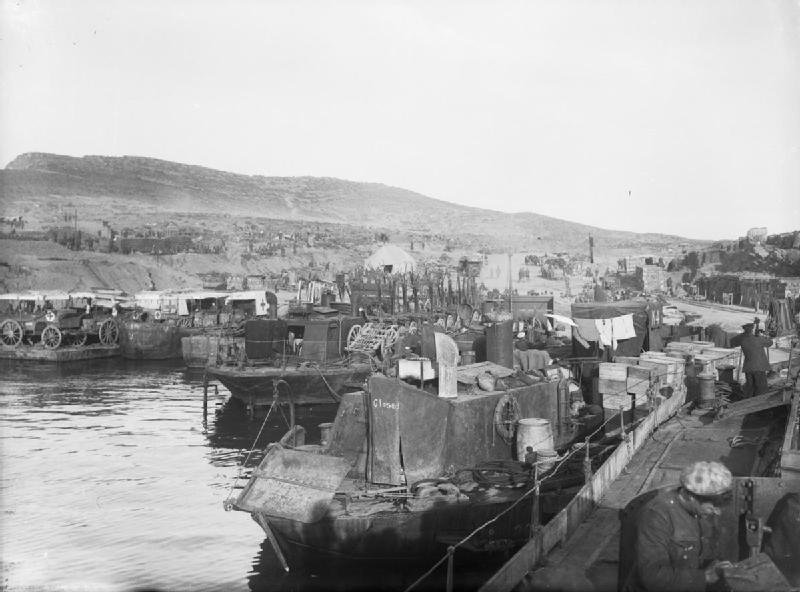
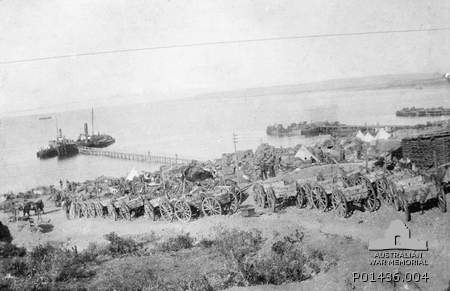
Accounts centred on Anzac Cove can obscure the importance of North Beach and its piers. The Australian Department of Veterans’ Affairs describes equipment moving toward Williams’ Pier and the work of the Indian Mule Corps. The handlers’ quiet, controlled transport was part of the operation’s security, not a decorative detail.
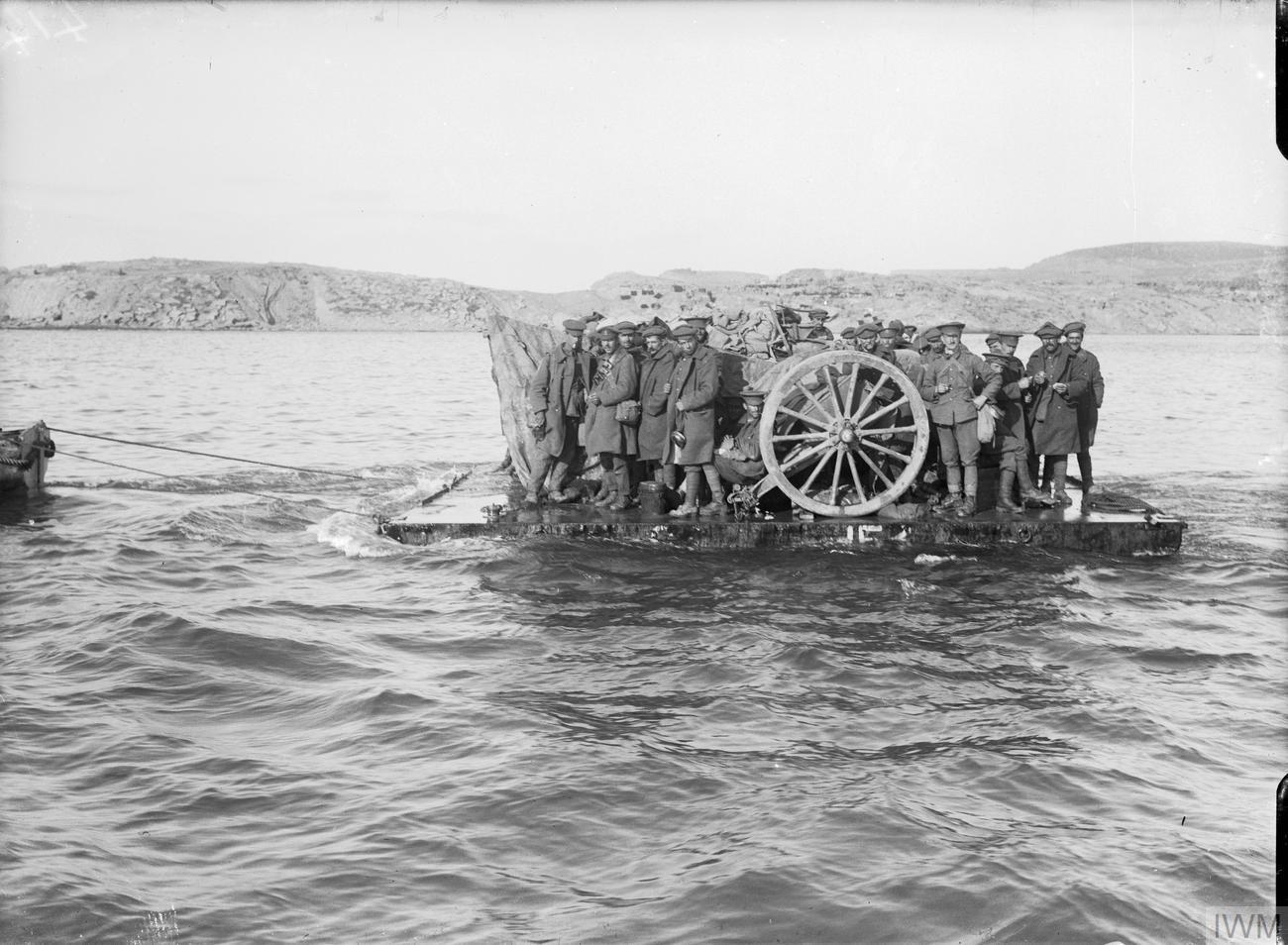
Taking a gun away means more than deciding to save a gun. Its associated equipment has to reach the embarkation point. Routes must remain usable. Loads have to be transferred to small craft and then to larger vessels. A delay at one point can create a visible concentration elsewhere. The surviving photographs of limbers, rafts and crowded landing craft make these connections easier to see than a narrative of commanders alone.
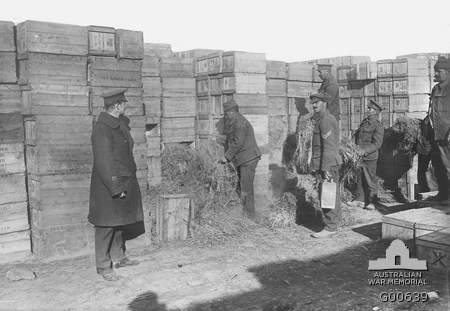
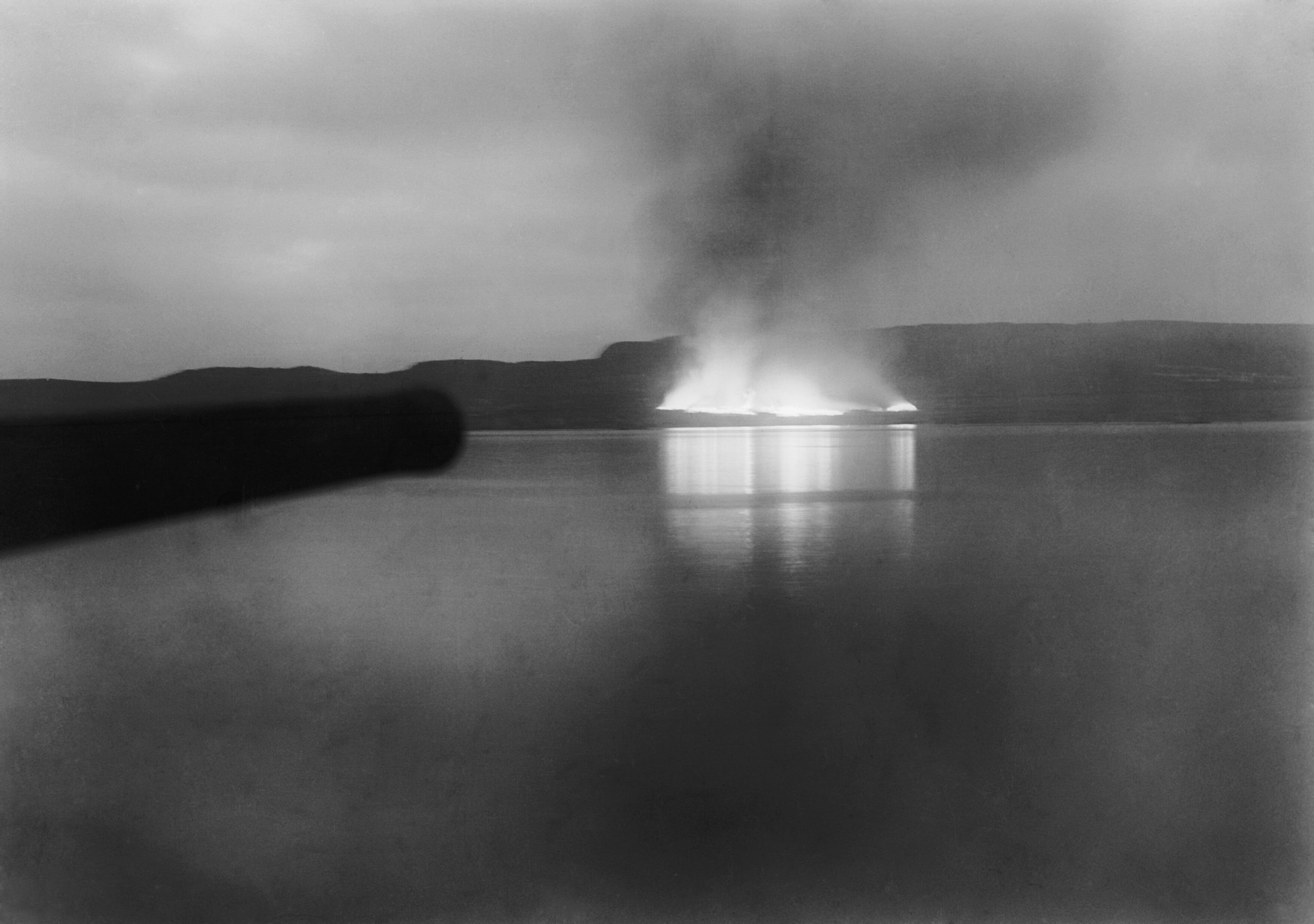
Not everything could be saved. Stores were left or destroyed. Photographs of burning supplies at Suvla record that calculation in material form: removing people and essential equipment took priority over carrying away every object landed during the preceding months. A retreat is also an inventory of what an army is prepared to lose.
Deception worked because it was organised
Small rear parties maintained enough noise and gunfire to suggest that the lines were still occupied. Automatic firing arrangements, commonly remembered as drip rifles, became the most famous feature of this effort. Their appeal is obvious: an ordinary mechanism appears to substitute for the absent soldier.
Yet a device can only buy time within a larger plan. It cannot schedule vessels, calm an embarkation point or ensure that the last men know their route. Nor should its success be taken as proof that Ottoman troops were foolish. Defenders had to interpret incomplete signs across difficult ground. Familiar activity, darkness and uncertainty could make the significance of a change hard to establish in time.
The War Memorial’s campaign overview credits a comprehensive deception operation rather than a single invention. That is the better scale of explanation. The trick was not that an empty trench could behave exactly like a full one forever. It only needed to remain ambiguous long enough for the evacuation timetable to work.
Two December nights were not the whole ending
The final withdrawals from Anzac and Suvla took place on the nights of December 18–19 and 19–20. For the soldiers remaining last, the operation narrowed from a campaign to a sequence of immediate responsibilities: hold the appearance of a line, leave at the appointed time, reach the boats. The larger force was disappearing around them.
Helles remained occupied after those northern positions were abandoned. Its final evacuation on January 8–9, 1916 ended the Allied presence on the peninsula. Keeping these dates distinct prevents a common compression in which the entire campaign seems to end with the departure from Anzac.
“Bloodless evacuation” is also a phrase best handled carefully. It usually describes the remarkably low losses during the final withdrawal, not the whole preceding operation or campaign. A successful final phase cannot subtract the casualties already suffered. It changes what happened to the survivors, which is important enough without rewriting the past.
Leaving the graves
The departure carried an emotional problem that transport planning could not resolve. Soldiers were leaving buried comrades behind. Charles Bean’s account, quoted by the Anzac Portal, describes men tending graves before they left. The action is more specific and more revealing than a claim that everyone felt the same mixture of relief and shame.
That memory later became part of Gallipoli’s commemorative power, particularly in Australia and New Zealand. It should not remove the Ottoman experience from the story. For the defenders, the Allied departure confirmed the successful defence of the peninsula. An evacuation can be a remarkable achievement for those conducting it and still be the outcome their opponents had fought to obtain.
The value of stopping
Gallipoli’s ending resists the language of a redeemed campaign. The Allies did not capture the strategic objective. Careful execution in December and January could not make the original undertaking successful. What it did was prevent failure from demanding an even larger sacrifice simply because withdrawal was difficult to admit.
That is a different kind of competence: recognising a limit, planning around it and bringing people out. The evacuation shows how much military effectiveness depends on coordination that rarely becomes a monument: loading, timing, animal handling, route management and disciplined communication.
Seen that way, leaving Gallipoli was neither a magic trick nor an uplifting final chapter pasted over disaster. It was a demanding operation carried out inside a failed strategy. Understanding both halves is the only way to do justice to the people who escaped, the people who helped them leave and those who did not come home.