
Indigo: The Skilled Work and Unequal Worlds Behind a Beautiful Blue
A blue textile begins with green plants, careful transformations, and human labor. The history of indigo joins remarkable craft to uncomfortable questions about power.
A length of cloth comes out of an indigo vat looking greenish, then turns blue in the air. Even when you know why it happens, the change can feel like a small piece of theater. But the performance depends on preparation: the right material, a functioning vat, careful handling, and someone who understands what the color is doing. Blue is the result, not the beginning.
Indigo’s history is often told as a story about a beautiful commodity moving around the globe. That is only half the story. Before the color reached a customer, people grew plants, processed leaves, managed liquids, handled cloth, and transported dye. In some settings those people worked within highly skilled craft traditions; in others they labored under coercive colonial arrangements. The same color can connect both histories without making them identical.
There was no single blue plant or single beginning
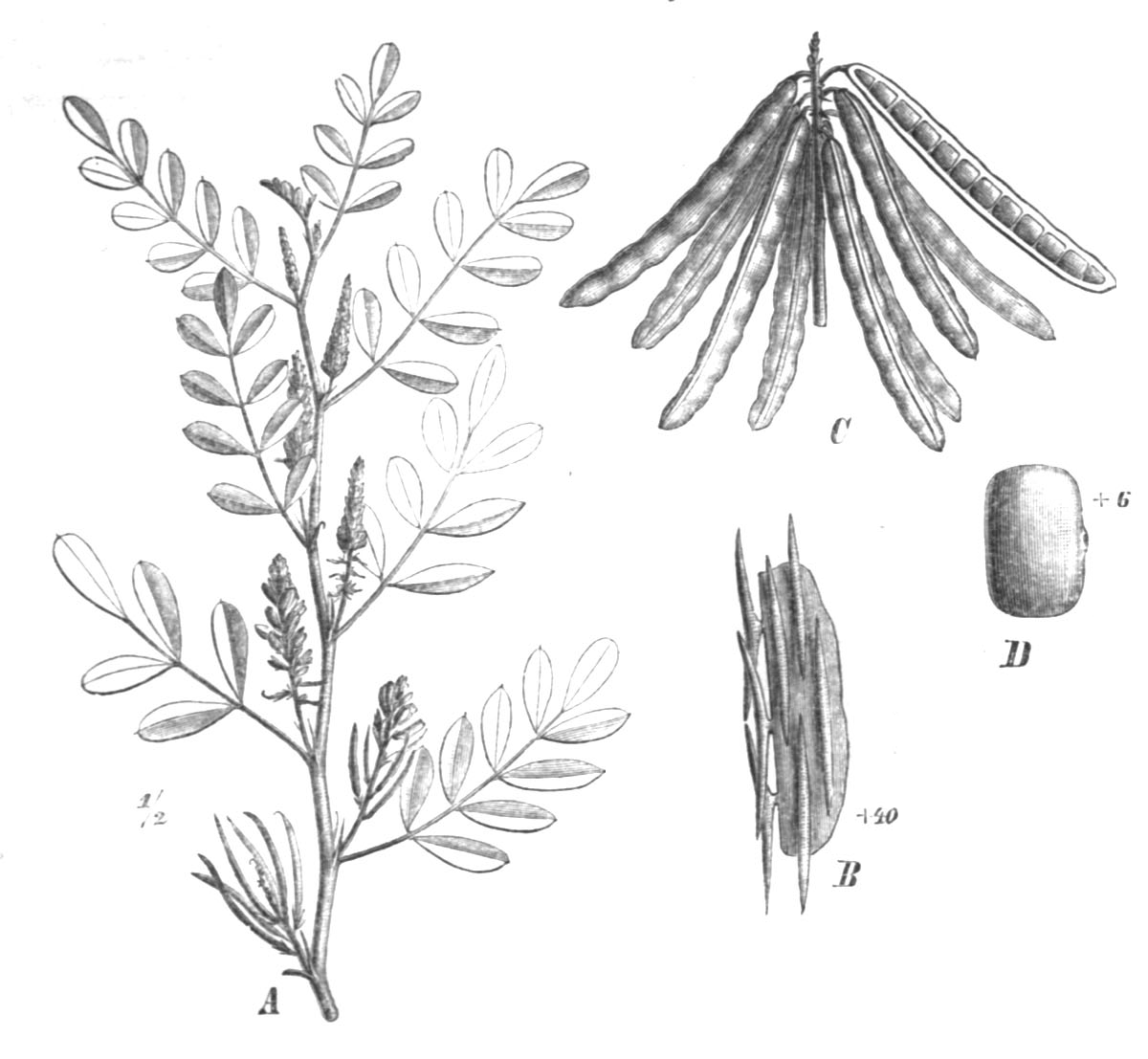
“Indigo” names a dye associated with several plants and a shared color-producing chemistry. Indigofera species are important, but they are not the only botanical route to the blue. Woad, long cultivated in Europe, also yields indigotin. It is therefore misleading to treat every indigo-dyed textile as evidence that one particular plant or one particular society supplied it.
A 2016 study of textiles from Huaca Prieta in Peru identified indigoid colorants on cotton fragments dating back roughly six thousand years. The finding expanded the known early history of the dye. It did not prove that every later indigo tradition descended from that site, or that the precise processing method can be reconstructed from a colored fragment alone.
This distinction is worth keeping. An earliest surviving example is not necessarily the first example ever made. Archaeology depends on what was preserved, excavated, recognized, and tested. The absence of earlier material cannot establish the absence of earlier skill. A good history of color leaves space between a firm analytical identification and a much larger story about invention.
How green leaves become a portable blue
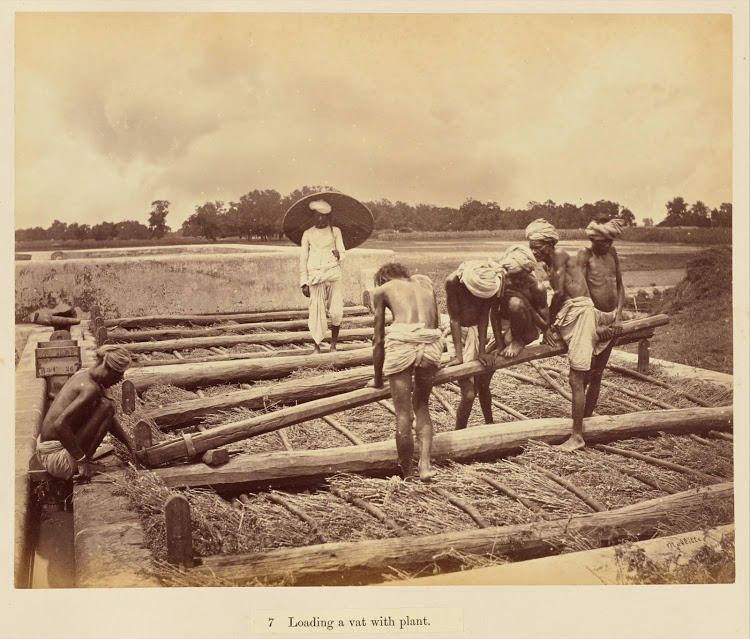
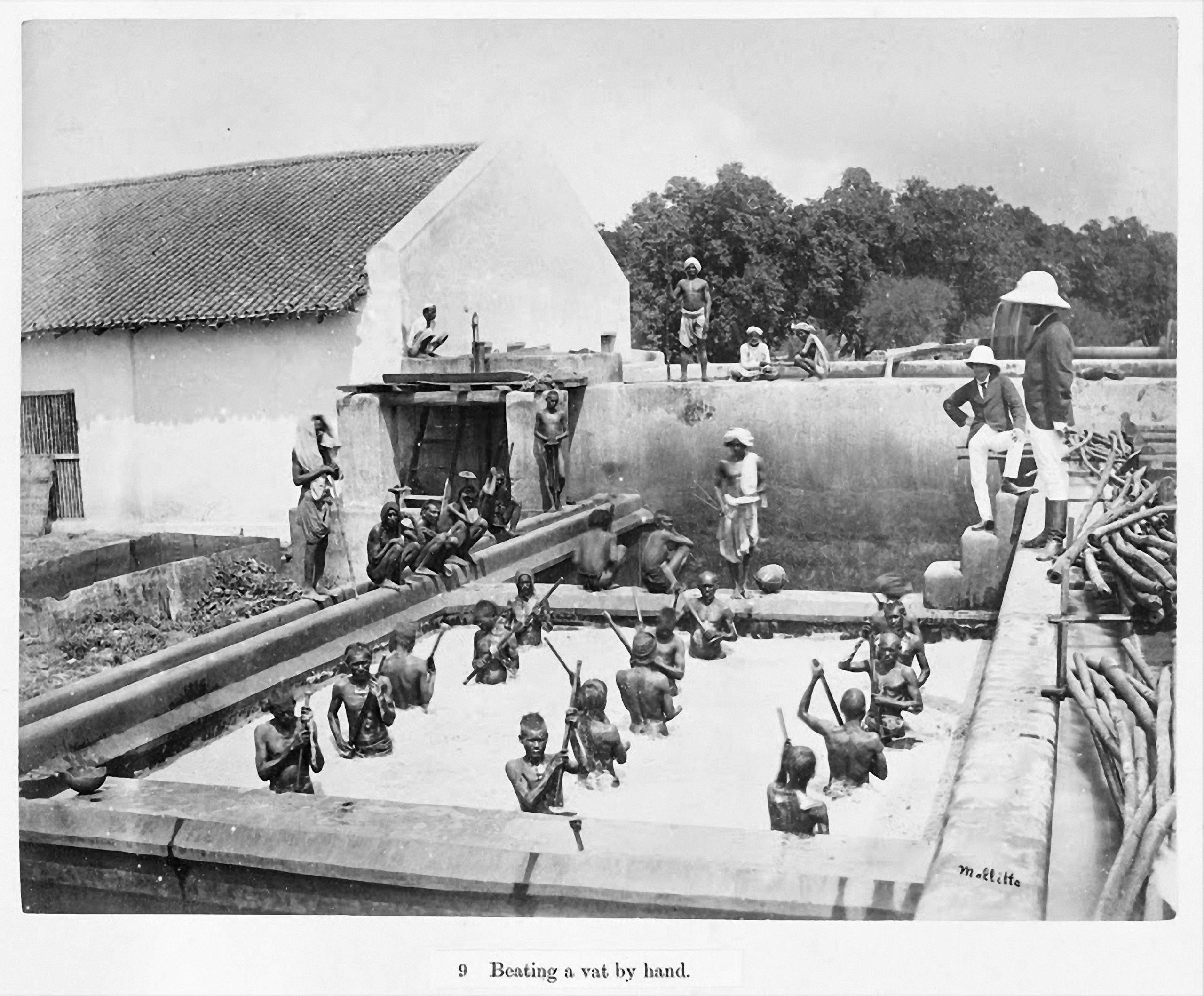
The plant does not simply contain ready-to-use blue paint. Processing makes the dye available through a sequence of transformations. Methods vary, but traditional extraction commonly involves steeping plant material, managing fermentation, and introducing air so that the blue pigment forms and can be collected. The solid product can then be dried into a compact material suitable for storage and transport.
That portability matters historically. A dyer need not stand next to the field where the plant grew. Dye cakes can travel through trading networks and be used elsewhere. The commodity links agricultural knowledge to workshop knowledge, while allowing the two to become geographically separated. Buyers at the far end may see a standard-looking block without knowing much about the conditions under which it was produced.
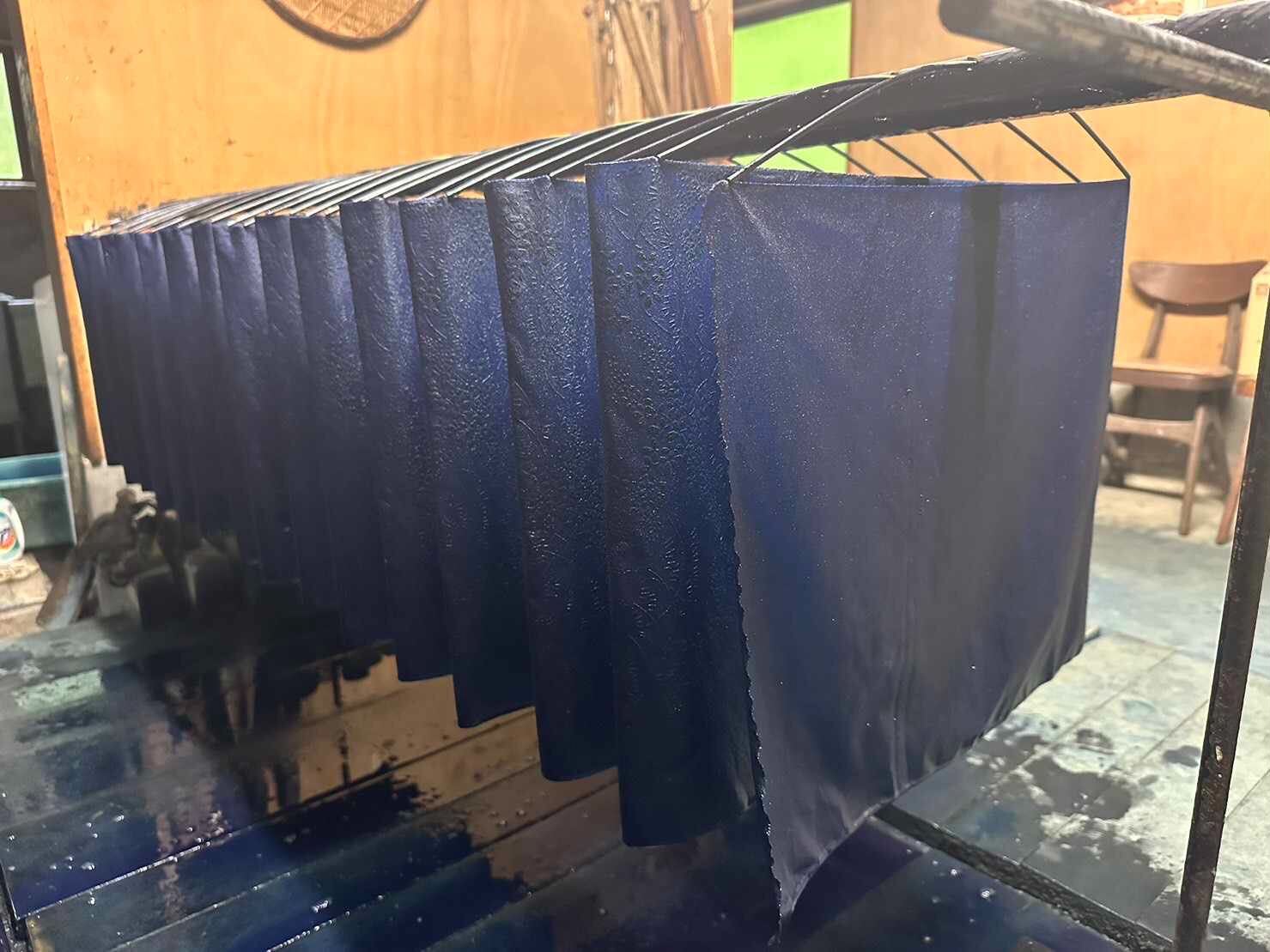
The Auckland Museum’s account of indigo explains the second essential transformation: a dyer makes insoluble indigo usable in a reducing vat. Cloth absorbs the soluble form; exposure to air restores the blue. Repeated dips can deepen the shade. This is why the dramatic color change belongs to a controlled process rather than a lucky trick.
Craft knowledge was not a substitute for science
It is tempting to describe historic dyers as people who somehow achieved a chemical result without understanding anything about it. That gives modern terminology too much credit and practical knowledge too little. A worker can understand that a process is failing, recognize the conditions that affect it, and correct the problem without describing molecules in the language of a modern textbook.
The distinction is between kinds of explanation, not between knowledge and ignorance. A workshop may preserve expertise through demonstration, repeated practice, vocabulary, and judgments of color or behavior. A written recipe can transmit some of that information, but it cannot automatically reproduce the trained perception of the person using it.
This is also why material history needs workers in the frame. “Indigo was produced” is grammatically convenient, but it hides the people doing the producing. Looking closely at the process turns a commodity back into a chain of actions. Similar questions arise in How Fabriano Turned Old Rags into Paper Worth Writing On and Inside Edo’s Print Trade: The Work Behind the Floating World, where finished objects can obscure the many specialists who made them possible.
Blue could become pattern, not just a solid field
Indigo’s appeal extended beyond an evenly colored piece of cloth. Resist techniques protect selected areas from the dye, allowing undyed parts and blue parts to form a design. Depending on the tradition, craftspeople can use tied or stitched sections, applied resists, or carefully prepared yarns. The technique chosen changes the relationship between planning, dyeing, and weaving.
Ikat, for example, involves patterning yarn before weaving. Other methods act on already woven cloth. These are not interchangeable stages. A pattern that looks straightforward to the finished textile’s owner may require considerable anticipation by its maker. The final image depends on choices made before the whole object was visible.
The Metropolitan Museum’s discussion of Indian textile production and trade places dyeing within networks of specialized work and overseas demand. India’s textile commerce long preceded European colonial rule. European traders entered existing worlds of production and exchange; they did not invent those worlds by arriving in them.
One technical distinction is useful here. Not every dye used in a multicolored textile attaches to fiber in the same way. Indigo vat dyeing should not be casually described as if it works through the same mordant process associated with some other textile colors. The beauty of a patterned cloth may rest on combining different procedures successfully.
When one blue competed with another
In Europe, imported indigo challenged established woad interests. Because both could produce the same principal blue colorant, the rivalry was not simply between a “real” blue and a fake one. It involved concentration, price, supply, technique, and the livelihoods of growers and processors already invested in another crop.
The University of Chicago Library’s account of the conflict between woad and indigo shows how a material dispute became an economic and political one. Restrictions and denunciations were not neutral judgments delivered by color itself. They reflected communities trying to protect particular forms of production and trade.
That is a useful antidote to an overly smooth history of technological progress. A useful new input does not simply replace an older one because everyone immediately recognizes its advantages. People have investments, local knowledge, institutions, and interests. What looks inevitable after the outcome was contested while it was happening.
A model factory, and the people inside it
A striking object at Kew brings another phase of indigo’s history into view: a large model of an Indian indigo factory made for the Colonial and Indian Exhibition of 1886. According to Kew researcher Caroline Cornish, its maker was Rakhal Chunder Pal. Its many figures make visible a division between Indian workers and European supervision.
The model presents a highly organized world. That is exactly why it needs to be read critically. An exhibition object could make colonial production look orderly, productive, and available for inspection. It does not independently certify that the relationships it represents were fair. The viewer has to ask what the display makes visible and what its miniature scale leaves outside the frame.
Kew’s account connects the industry to coercive cultivation and indebtedness. Farmers’ choices over crops and land could be constrained by the demands of indigo production. In such circumstances, calling the finished dye “natural” says something about its material source but nothing reassuring about the labor relations behind it.
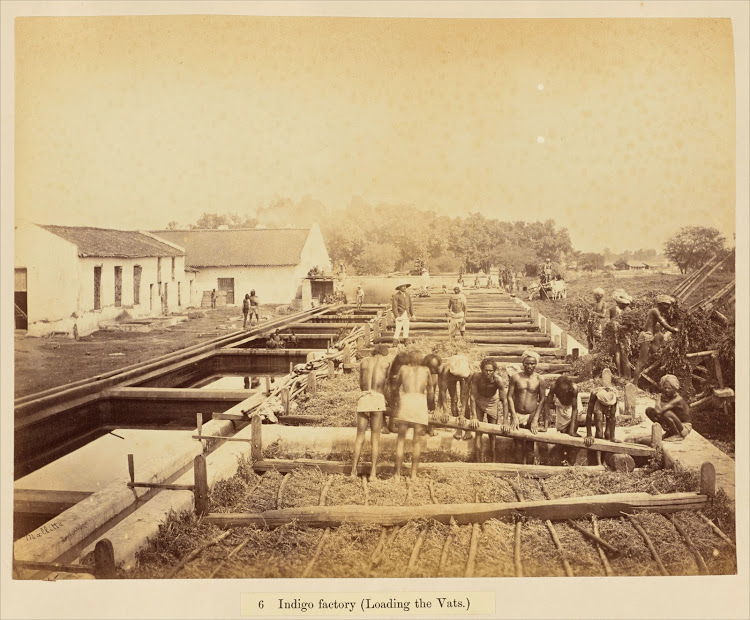
The photographs by Oscar Mallitte accompanying this article date from 1877. They document stages of production in colonial India, but they are not an all-purpose illustration of indigo everywhere or at every date. A photographed worker’s presence does not reveal consent, wages, or the full terms of employment. Those questions require additional evidence.
Looking at blue without forgetting the work
The later development of synthetic indigo changed the industry again, but a simple tale of replacement would leave too much behind. Natural-dye practices continue, and historic textiles remain evidence of highly accomplished production. Neither fact requires romanticizing every past workshop or treating all contemporary uses of the color as a direct continuation of one old tradition.
The more rewarding approach is to ask specific questions. Which plant and process produced this blue? Where was the cloth woven? Was the pattern made in the yarn or on the cloth? Who supplied the labor, and under what conditions? What did a merchant’s description omit? Each question restores another part of the object’s history.
Alewives and the Work of Brewing in England from 1300 to 1500 offers a parallel case of expertise hidden inside an everyday product. Inside Ottoman Coffeehouses: Work, Conversation, and Everyday Life follows a different commodity into the social spaces where people used it. Indigo, too, belongs both to production and to lived experience.
The color is still beautiful. Historical attention does not take that away. It makes the beauty less anonymous: a result of plants, transformations, practiced hands, commercial decisions, and sometimes profoundly unequal power. Once those connections are visible, blue becomes not less interesting, but much more so.