
How Fabriano Turned Old Rags into Paper Worth Writing On
Before a letter could travel or a printer could fill a page, someone had to make a sheet that would take ink. In Fabriano, that work began with worn-out cloth.
A blank sheet of paper looks like the absence of something. In medieval Fabriano, it was the end of a surprisingly crowded story. Someone had collected old cloth. Someone else had sorted and prepared it. Water had driven machinery, workers had formed individual sheets, and further treatment had made those sheets suitable for a pen.
That is a useful way into the history of this town in Italy’s Marche region. Fabriano did not invent paper, and it was not Europe’s first papermaking centre. Its importance lay in developing a particularly successful combination of materials, equipment and finishing techniques. By the fourteenth century, its paper had acquired a reputation that reached well beyond the town.
A local industry with a much longer journey behind it
Paper’s history began in China long before it reached Italy. Knowledge of papermaking travelled through the Islamic world, North Africa and Spain before Italian production became established. The journey involved many makers and intermediaries over many centuries. A story that jumps directly from an ancient Chinese inventor to a European workshop misses most of the movement that made the workshop possible.
The Library of Congress’s account of Fabriano paper places the town within that wider history. Here, the crucial raw material was cloth fibre, including linen and hemp. The familiar modern association between paper and wood pulp would be a poor guide to the sheets coming from these workshops.
Paper manufacture is documented in Fabriano in the thirteenth century. That does not give us a single afternoon on which a complete industry sprang into existence. Records establish that people were making and using paper; surviving sheets and later workshop practices help explain how the craft developed. The evidence gets more useful when we ask what each stage of production actually accomplished.
Old clothes were part of the supply chain
The rag pile was a store of useful fibres. Linen and hemp cloth had already passed through cultivation, processing, spinning and weaving before it entered a papermaker’s hands. Recycling it gave those fibres another working life. The transition was substantial: a piece of woven fabric had to become a suspension of separated fibres that could settle into a new structure.
Sorting and preparation mattered because the quality of the starting material affected the result. A maker could not turn any mixture of dirty scraps into equally good writing paper merely by adding water. The finished sheet depended on choices made before there was a sheet to inspect.
Fabriano’s water-powered stamping equipment helped break prepared rags down into pulp. In her Library of Congress lecture on the town’s early paper, conservator Sylvia Rodgers Albro identifies multi-headed stampers as one of the important features of its industry. Water supplied energy for repeated mechanical work, rather than serving only as an ingredient in the vat.
This was part of a broader medieval ability to put flowing water to work. Histovia’s account of watermills, rights and rivers follows the people and arrangements behind apparently simple machinery. In a paper workshop, too, a dependable water supply and maintained equipment were practical conditions of production.
Making a sheet was still skilled handwork
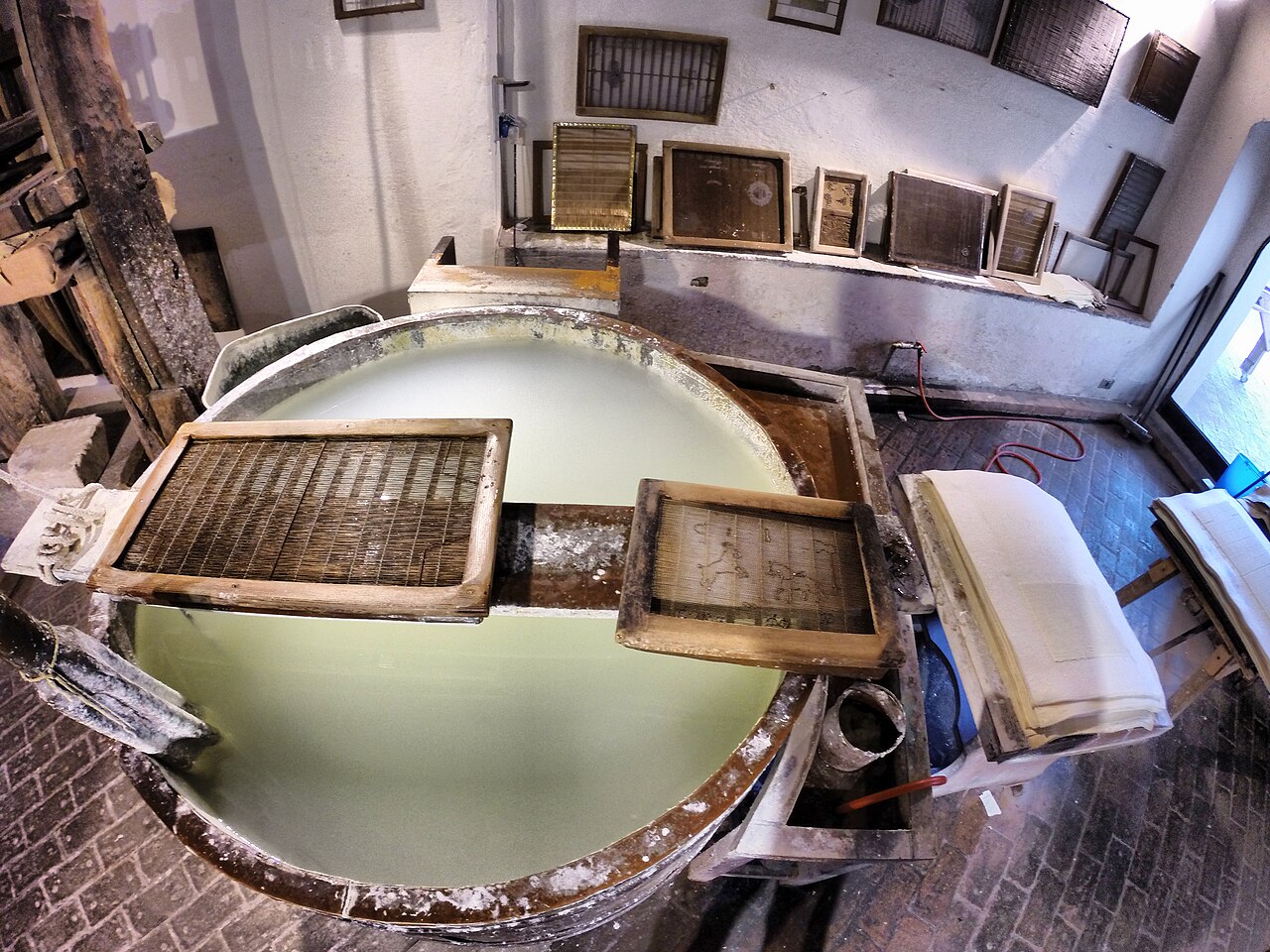
The pulp went into water in a vat. A worker lifted a mould through the mixture so that fibres collected across its mesh while water drained away. The mould’s movement helped distribute the fibres. A thick patch here and a thin patch there would remain a problem after drying; later stages could not completely undo careless formation.
The damp sheet was transferred from the mould onto felt. Sheets and felts could be built into a stack and pressed to remove water, then separated for drying. Each operation asked something different of the material. It had to release from the mould, survive handling while wet, and dry into a sheet that could be finished and used.
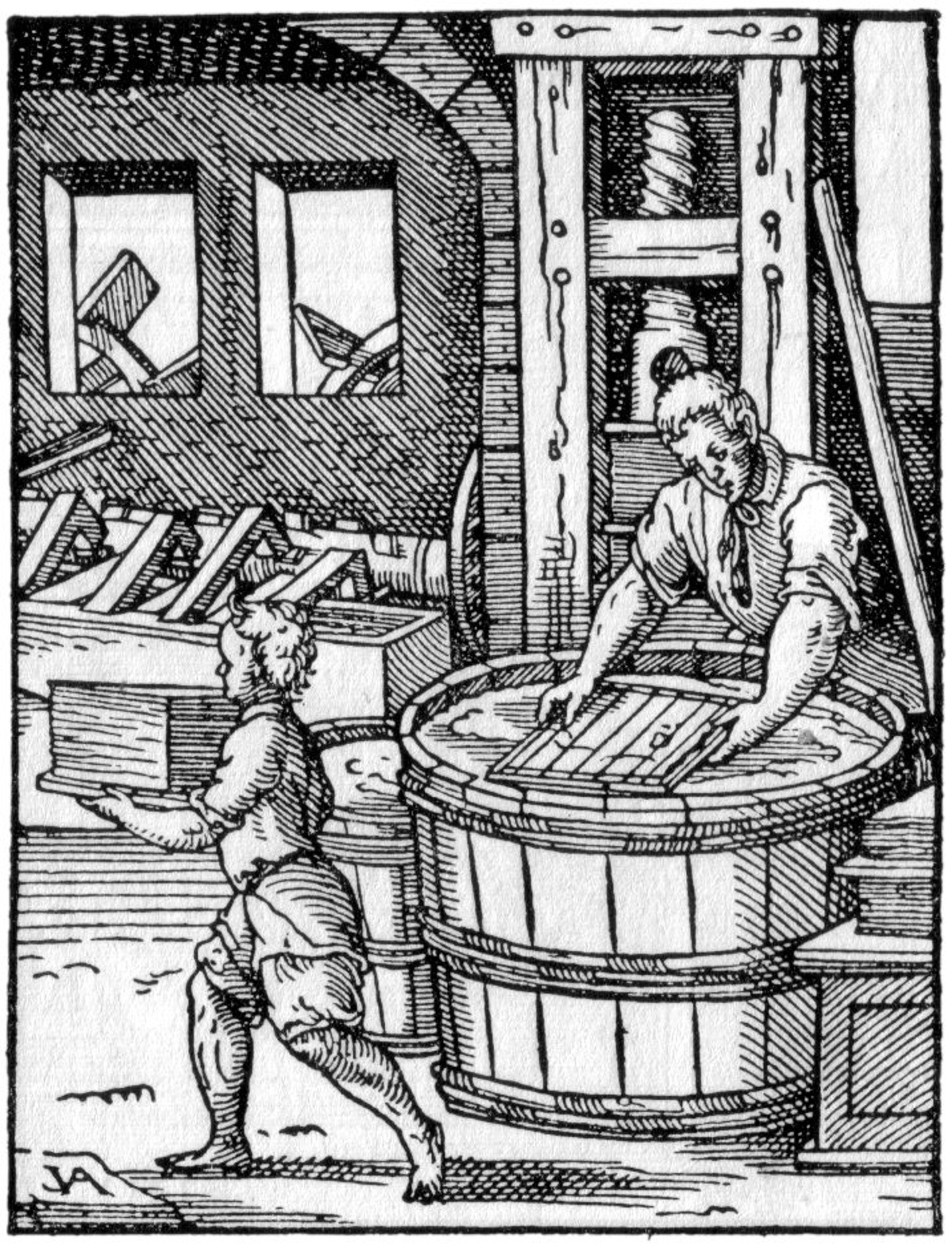
Jost Amman’s 1568 woodcut of a papermaker, shown below, gathers several activities into one busy scene. It is a German illustration made centuries after Fabriano’s industry began, so it is not a picture of a particular Italian workshop. It does, however, make a useful point visible: the vat worker belonged to a chain of labour, with machinery, pressing and drying all contributing to the finished product.
Why the ink needed more than a dry surface
A sheet can be strong enough to handle and still be frustrating to write on. Untreated paper readily takes up liquid. For someone using a quill and liquid ink, too much absorption could make a carefully drawn stroke spread into the surrounding fibres.
Fabriano’s makers used animal-gelatin sizing to improve the surface. “Sizing” here means a treatment that changes how paper responds to liquid, not the cutting of sheets to a particular measurement. Gelatin helped provide the smoother, more resistant surface that writing demanded.
Albro’s conservation research also connects the treatment with paper’s long-term behaviour. Good rag fibres, gelatin and favourable water chemistry could contribute to durability. The local water’s calcium and magnesium content mattered, while the relative absence of damaging metals such as iron and copper could be beneficial. These are material advantages, not a guarantee that every sheet would survive careless storage.
A mark made by thickness, not by ink
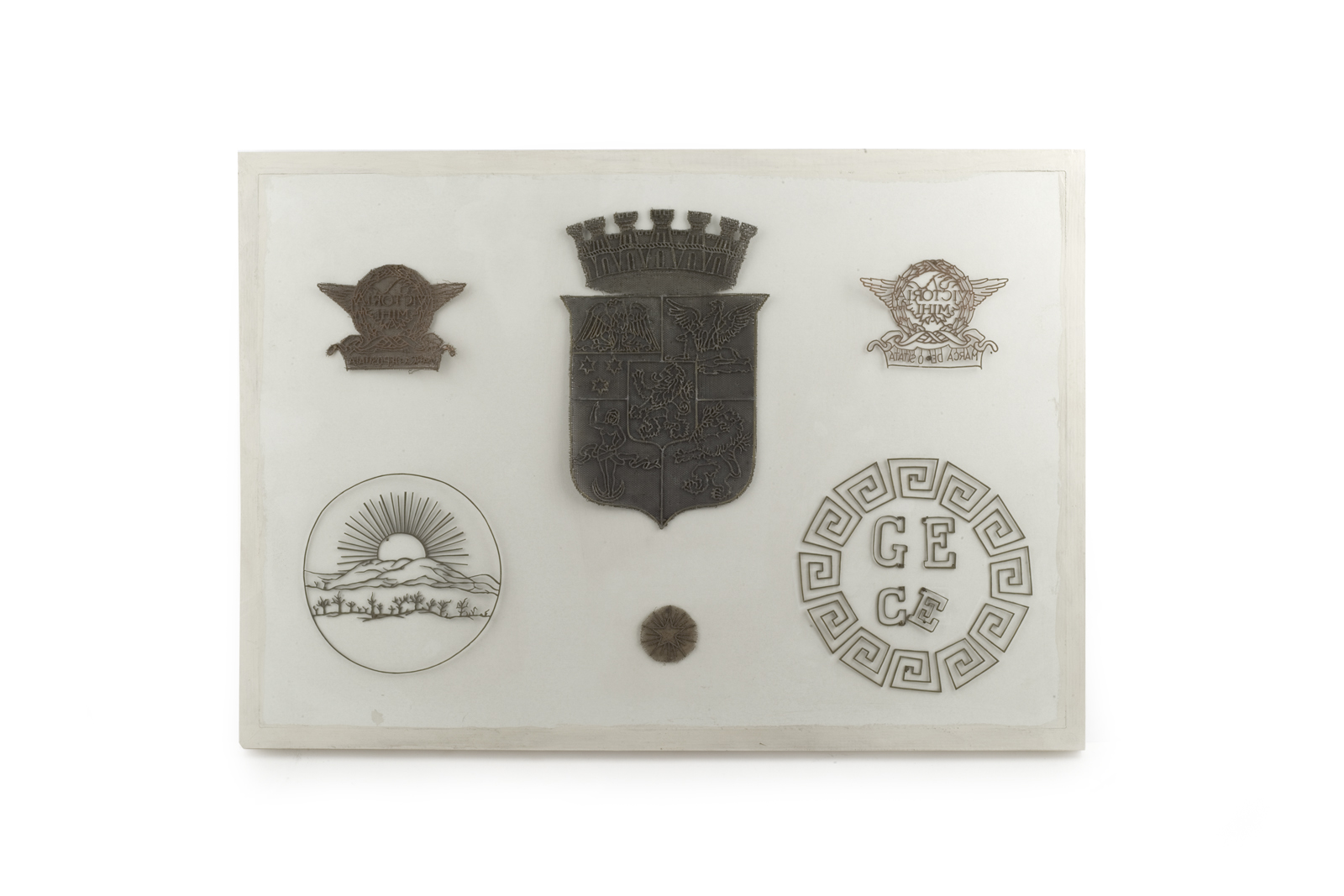
The watermark was another important feature of Fabriano paper. A design attached to the mould altered the amount of fibre deposited in particular places. Held against light, the resulting differences in thickness made the design visible. Nothing had to be printed onto the sheet to produce it.
The fixed wires of the mould also left patterns. Closely spaced laid lines and more widely spaced chain lines can help a researcher understand how a sheet was formed. The watermark belongs to this physical structure. It is evidence carried by the paper itself, even when the writing on it says nothing about where the paper came from.
Marks could identify a maker or product and help distinguish sheets moving through trade. Over time they took a wide variety of forms. An animal, tool or flower may look like a decorative extra today, but in the workshop it was part of a material object produced repeatedly for sale and use.
Following the paper into a book
Printing created a demanding market for paper. A substantial book required many sheets, and a printer needed stock suitable for the work planned. The ingenuity of movable type was only one part of the operation. As the story of the Gutenberg Bible’s workshop makes clear, a finished volume depended on materials, labour and coordination as well as a press.
Surviving books make Fabriano’s wider reach tangible. The Library of Congress describes a copy of Decisiones rotae romanae, printed in Rome by George Lauer in 1475. Its 394 leaves are on large-format Fabriano paper, with horn and anvil watermarks. A legal text now preserved in Washington therefore also records a chain connecting a paper-producing town with a Roman printing shop.
A second example is Bartolus’s Super Prima Parte Digesti Novi, printed by Nicolas Jenson in Venice in 1478. Its paper carries several watermark designs, including scissors, a ladder and an encircled anchor. The variety reminds us that the physical materials in one volume need not be perfectly uniform. Looking only at the title page would miss that part of its manufacture.
Manuscripts carry similar clues. A manuscript of Baldo degli Ubaldi’s work on the privileges of Recanati has paper with a flower watermark associated with late-fourteenth-century Fabriano production. Paper could connect a scholar, a local legal question and a workshop whose workers remained unnamed in the text.
Those connections are not all the same kind of evidence. A book’s printed date tells us when that edition appeared. A watermark comparison helps investigate the paper used for it. The sheet may have been made earlier and kept in stock or carried through merchants’ hands. Production, sale, writing and printing are separate events, even when they eventually meet in one object.
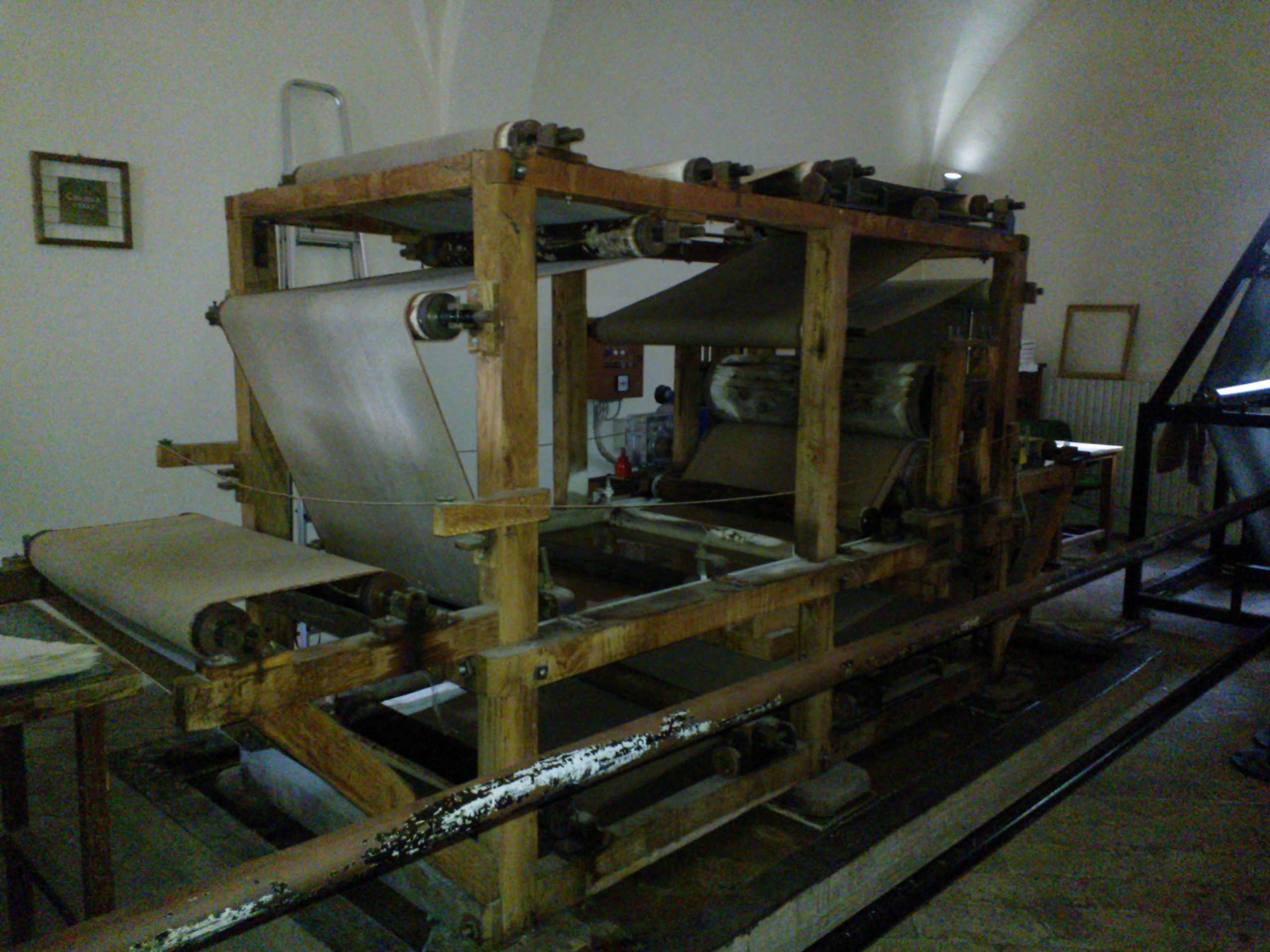
The history also continued beyond the medieval hand workshop. Later machinery increased the possibilities for continuous and more mechanised production. The equipment photographed below belongs to that longer museum story. It should not be read backwards as the machine that thirteenth-century workers used.
How to read a watermark without asking too much of it
A familiar symbol is a starting point, not a complete identification. Similar designs could recur, and a mould could change through wear or repair. The International Association of Paper Historians’ documentation standard records details such as dimensions, position and the relationship between the mark and the mould’s lines. Those details help researchers compare objects more carefully than a glance at the motif would allow.
A date written on a document also needs interpretation. It can anchor evidence that a sheet was in use by then without proving the precise day the paper was made. Comparing a mark with a reliably dated example is valuable; converting a rough visual resemblance into an exact production date goes too far.
Fabriano’s historical collections offer an unusually rich basis for this work. The Fondazione Fedrigoni’s account of the Zonghi collections describes Augusto Zonghi’s 2,212 paper specimens, including 1,697 watermarked examples, drawn from material dating from 1267 to 1798. The earliest watermarked examples in that collection date to 1293. The collection’s chronology should not be mistaken for a claim that no earlier watermark existed anywhere.
Augusto and his brother Aurelio studied paper preserved in local records. Their work turned everyday administrative survival into a comparative resource. A document kept for its legal or civic importance could later help identify the material used in a book far from Fabriano.
The museum puts the work back into view
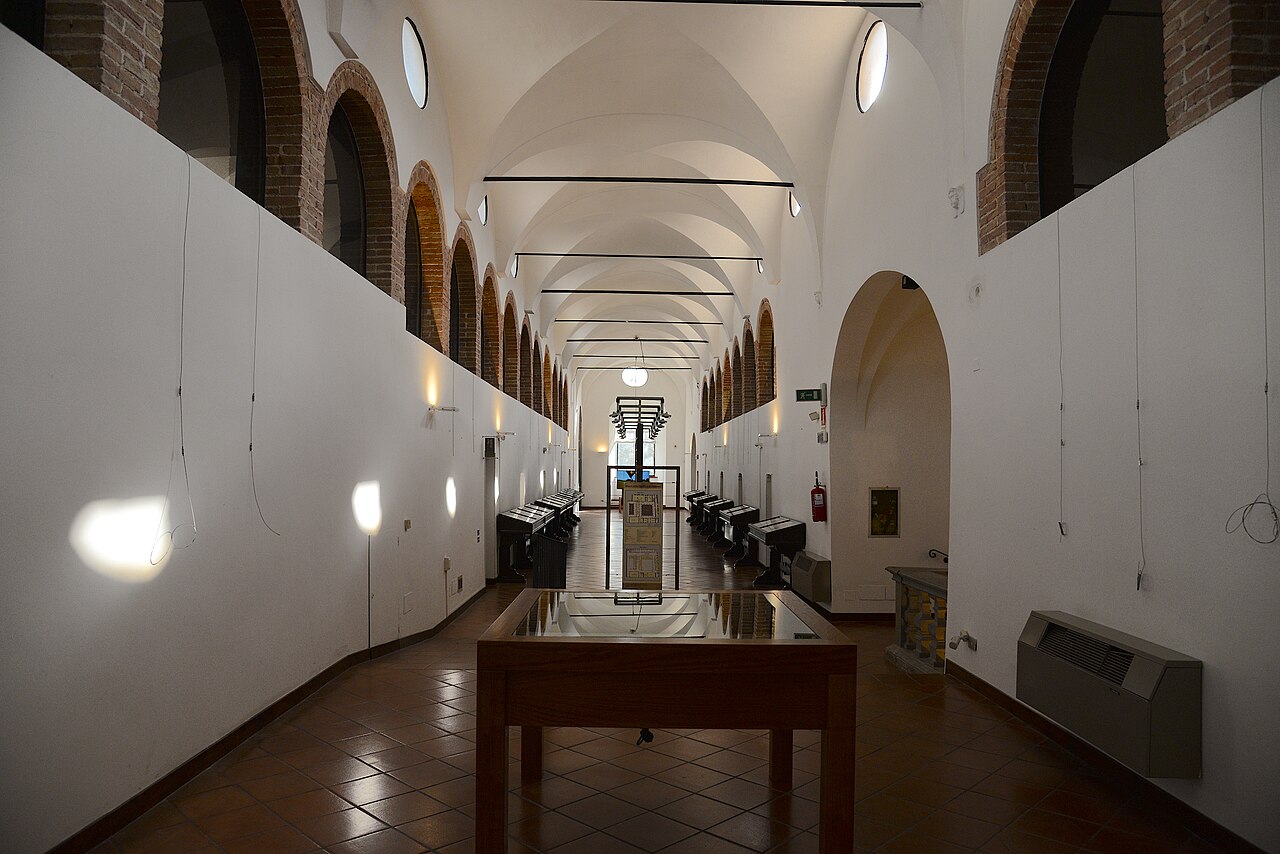
Fabriano’s Paper and Watermark Museum occupies the former Dominican convent of San Domenico. Its museum description explains that a working reconstruction of a medieval paper workshop helps demonstrate the process. Demonstration equipment and historical collections answer different questions: one makes a sequence of actions understandable, while the other preserves objects that need careful dating and interpretation.
That distinction is useful when looking at the photographs here. A modern photograph of a vat shows equipment used to explain hand papermaking. It is not evidence that every visible component stood in the same room in 1300. Museums help us picture work that documents alone can make surprisingly hard to imagine, provided we keep reconstruction and surviving object separate.
The blank page was already full of history
Fabriano’s contribution becomes clearer when we follow a sheet through its working life. Cloth supplied fibres. Water and machinery prepared pulp. A mould formed the sheet and left physical traces. Pressing, drying and sizing made it useful. Merchants, scribes and printers then carried it into further systems of work.
That story is close to everyday life because paper sat between so many ordinary activities. People made agreements, kept accounts, copied learning and sent letters on a material whose makers often disappeared from view. The writings preserved in the Cairo Geniza show how much history can survive in papers created for immediate practical needs. Fabriano offers another way of approaching such documents: ask about the sheet before reading what someone put on it.
You do not need to find a spectacular manuscript to appreciate the connection. A modest watermark, a pattern of lines or a difference between two leaves can reveal work that the author never described. The blank page was not empty after all. It had already travelled through a community of makers before anyone began the first sentence.