
Timbuktu’s Manuscripts and the Work of Learning
A copied page, a scribe’s fee and a travelling book reveal how Timbuktu’s scholars and families made, used and preserved a changing manuscript tradition.
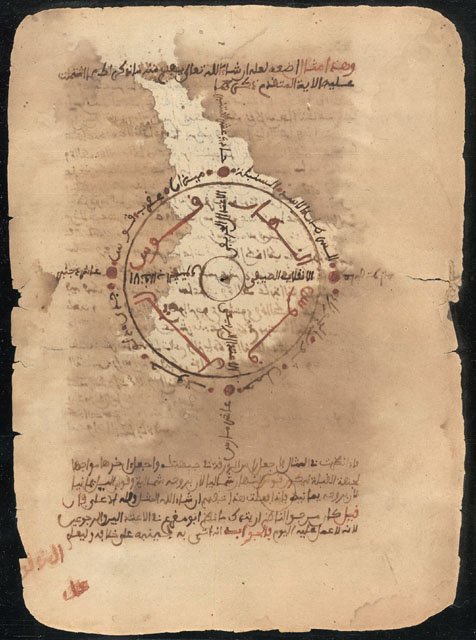
A circular diagram occupies the middle of a worn manuscript leaf. Arabic writing crowds above and below it; red lines help arrange the heavens. The copy was made in 1733. Preserved in Timbuktu’s Mamma Haidara Commemorative Library, it belongs to a text concerned with stars, seasonal change and astrological interpretation. A reader could use this book to learn a system, consult a calculation and connect the sky with affairs on earth. The Library of Congress’s catalogue identifies both the work and the date of the copy.
That small distinction opens a larger history. A manuscript has several lives: the composition of a text, the copying of this particular set of pages, its purchase or inheritance, and the uses later readers made of it. Timbuktu’s libraries bring those lives together. They preserve celebrated scholars, but also the work of people who copied, paid, studied, annotated and kept books in families long after the author had died.
A town at the junction of routes
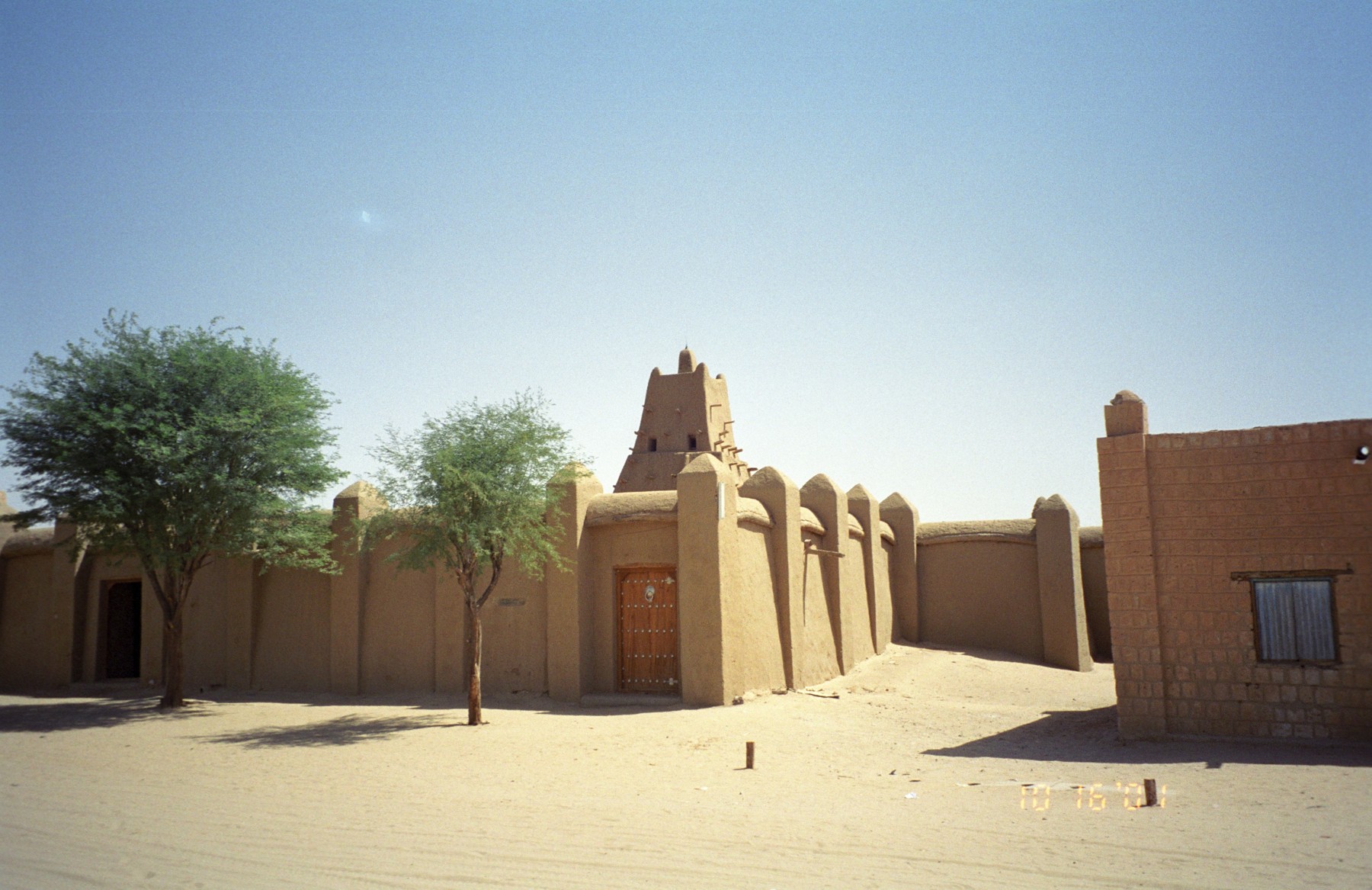
Timbuktu developed near the meeting of Saharan caravan routes and the Niger’s trading world. Goods arriving across the desert could move toward river communities; products from farther south could enter northern networks. The settlement gathered a mixed population of Tuareg, Arab, Soninke, Songhay and Fulani people. Its later reputation as a remote place can obscure the connections that made it useful.
By the fifteenth and sixteenth centuries, the town was a major scholarly centre. Under Songhai rulers, especially Askia Muhammad, patronage helped sustain learned activity. Imported books arrived from North Africa and Egypt, while pilgrimage provided another way for scholars to acquire or copy texts. The University of Cape Town’s historical account describes both a book market and local copying. Books were objects of commerce and tools used to make a living from knowledge. A library required money, materials and people able to replenish it.
Learning had names and relationships
Ahmad Baba, born in 1556, is the best-known name in this history. His career was formed through teaching relationships, including study with Muhammad Baghayogho. The scholarly environment had earlier figures such as Muhammad al-Kabari and would have later ones associated with the Kunta family. A city’s learning did not begin or end with its most famous author.
The Moroccan conquest of the Songhai state in 1591 brought violent disruption. Ahmad Baba was subsequently deported to Morocco, where he nevertheless became an influential teacher before returning home. The Tombouctou Manuscripts Project’s account follows this movement across the Sahara. His story makes it difficult to draw a clean boundary between a West African intellectual world and a North African one: conquest forced movement, but books, teachers and reputations also crossed those routes in other circumstances.
For historians, named teachers and known works are an entry into the record. They do not supply a complete enrolment list or a single institutional chart. The research project at Cape Town has therefore studied the circulation of ideas alongside the economy of the manuscript book. Its early digitisation work selected legal manuscripts from more than one collection, allowing comparison among texts that had been kept in different places. The project’s research description shows why the physical archive, not simply the fame of a city, determines the questions researchers can answer.
Who made the next copy?
The final lines of a manuscript can preserve a different kind of name: the scribe’s. A colophon may record the person who wrote the copy, the patron who ordered it and sometimes the payment. Cataloguers Ali Diakite and Paul Naylor have identified professional commissions as well as copies made for teachers, relatives or personal study. These were distinct forms of labour, even when they reproduced the same text.
Their survey of copyists in Mali’s collections includes a twenty-five-page work copied for 500 cowries and a decorated manuscript exchanged for 5,000. It also identifies women as owners and copyists. Khadijah al-Awfi, for example, copied a collection of poems with portions picked out in red. Such evidence places individual hands inside a history too often told only through male authors. The record remains incomplete: a copyist might leave no name, and a surviving name tells us little about all the work performed outside the written page.
A book could carry its own itinerary
Some manuscripts preserve enough ownership evidence to reconstruct stages of a journey. HMML cataloguers describe a legal commentary copied in Medina in 1687 for a pilgrim connected with Timbuktu. A teaching licence added after the colophon records that Ibrahim al-Kurani taught the work to its owner. The document linked a physical book, a teacher and an authorised transmission of learning.
Another legal manuscript was copied in 1362, changed ownership the following year and later belonged to an imam associated with Mecca. Its eventual route to Timbuktu is unknown. These documented cases reveal both the reach of the networks and the gaps. Script, decoration and language may indicate that a book was made elsewhere; an ownership note can pin down a person or date. Neither justifies filling the missing stretches with an imagined caravan journey.
Calculation, memory and the needs of readers
The subjects of the books were tied to repeated acts of learning. An eighteenth-century commentary by al-Rasmuki explained an earlier mathematical work with rules, examples and charts. It covered addition, subtraction, multiplication and division. The catalogue for the surviving 117-leaf manuscript identifies a text studied in Timbuktu and North Africa. A commentary extended the usefulness of an older work by making it available for another generation of teaching.
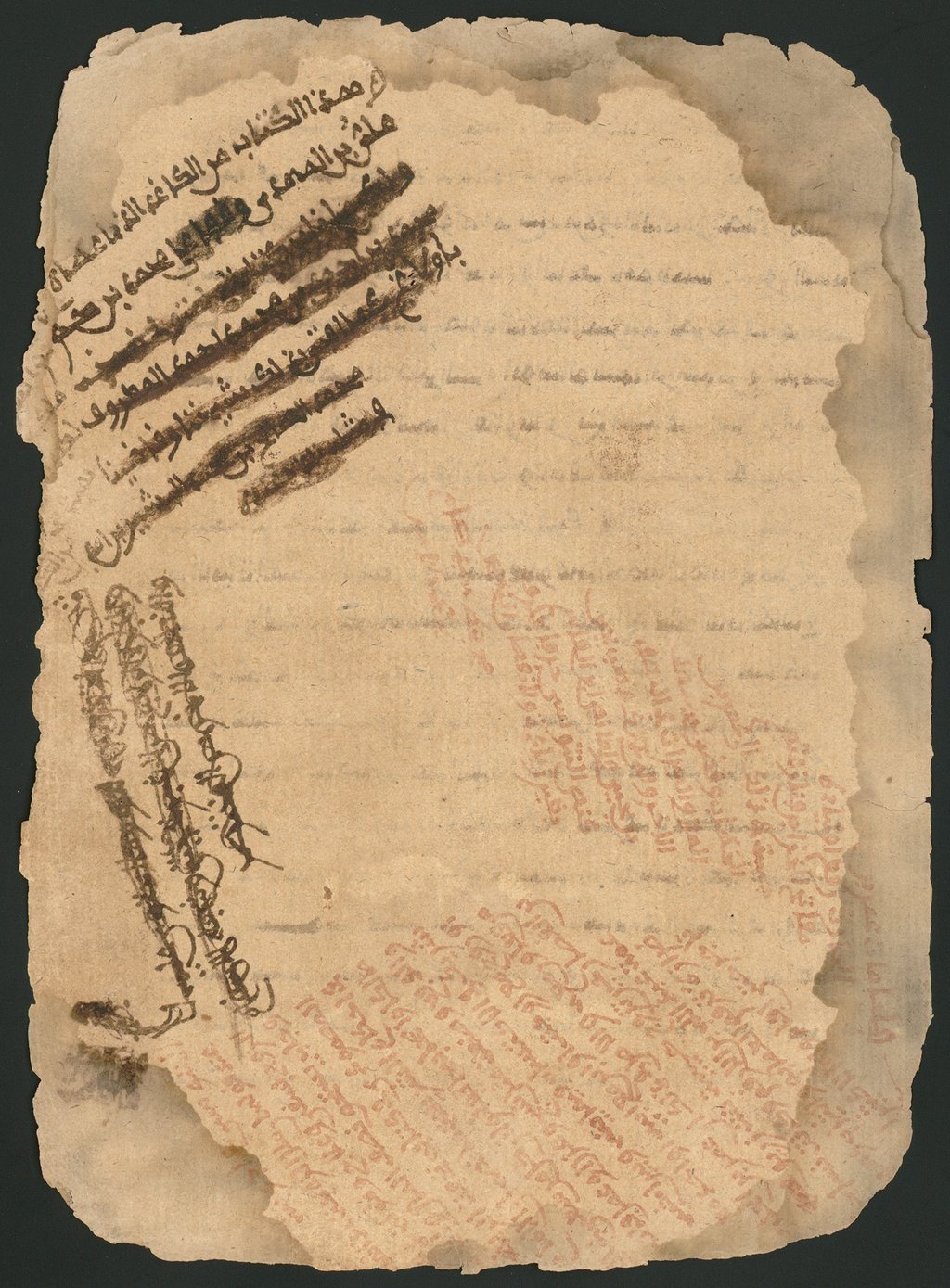
The manuscript’s worn page and marginal writing also warn against treating books solely as immaculate treasures. Their present appearance records use, damage and survival. We should not assign a particular marginal note to a named student without evidence; we can still see that the page offered more space than its main block of text. Reading could leave a material trace.
Legal teaching likewise used forms designed to be remembered. The Library of Congress exhibition describes a poem about commercial transactions and another concerning legal rights. Verse could carry rules for recitation and recall. Astronomy, calculation and jurisprudence occupied overlapping practical and religious worlds. Their organisation does not map neatly onto modern departments separating science, law and theology. The exhibition’s examples show texts doing specific jobs, from teaching contracts to explaining inheritance.
Authority and its limits on the page
Al-Maghili’s replies to questions from the Songhai ruler placed learned counsel within government. The surviving work urged the ruler to apply Islamic law in political and economic affairs and to consult scholars. It is evidence for advice offered and authority claimed. It cannot by itself establish how consistently officials acted on that advice, or how every community experienced their rule.

The distinction becomes especially important when reading about enslavement. In his 1615 treatise, Ahmad Baba examined the conditions under which people could lawfully be enslaved. The Library of Congress description of the manuscript emphasises his starting principle of human freedom alongside the legal exceptions he recognised. This was an argument within an existing system of slavery. Presenting it as a demand to abolish all enslavement would conceal those exceptions and misrepresent the question he was answering.
Other documents expose the system’s everyday operation. A commercial agreement preserved in the same library uses gold as a standard of value in transactions involving enslaved people, bullion and gum arabic, and refers to house-building costs at Massina. Such a record joins activities a modern reader may wish to separate. Scholarship existed in societies where people could be treated as property; religious and legal argument could limit particular practices while leaving much of the institution intact. The archive preserves those tensions because it includes business as well as learned ideals.
Counting manuscripts, identifying histories
Large totals can make Timbuktu’s collections sound easier to understand than they are. In a study of thirty-one private libraries, historian Charles C. Stewart found that many catalogued items consisted of only one or two folios. Some may have been excerpts or study sheets; many lacked an author’s name. Counting each as an item is a valid inventory practice, but it does not mean that every item is a complete medieval book.
Stewart’s analysis of the SAVAMA-DCI inventories also challenged the habit of treating the surviving private collections as a direct, unchanged remnant of the sixteenth century. Much of their material appears to reflect more recent, especially twentieth-century, manuscript practice. His conclusions concern a specified body of catalogues, with limitations in dating and identification. They do not erase older scholarship. They direct attention to the later readers whose copying and collecting also made the archive.
A collection’s own history can be equally complicated. The al-Wangari Library is associated with the sixteenth-century scholar Baghayogho, but its manuscripts eventually became dispersed among relatives in different towns. Mukhtar bin Yayha al-Wangari worked to gather them through family meetings, oral testimony and written evidence; the revived library formally opened in 2003. Its documented history involves reconstruction and negotiation as well as inheritance. The oldest dated item reported by the project is from 1695. The institution’s ancestry and the age of each surviving object require separate investigation.
The work of keeping a library alive
Modern preservation also has its own chronology. Mali established the Ahmed Baba Centre in 1973 after earlier UNESCO discussions. Collectors and staff located manuscripts held across the region and brought them into an institution intended to preserve and study them. The Cape Town project’s account of the institute identifies this as active collecting, rather than the sudden discovery of a single forgotten room. Private libraries continued alongside the state collection.
During the 2012–2013 crisis, library owners and custodians faced a new danger. Collections were evacuated in stages, using metal chests and routes that included vehicles and boats. Abdel Kader Haidara and the association SAVAMA-DCI played central roles. The University of Hamburg’s retrospective account describes the operation and the conservation problems that followed relocation to Bamako’s more humid environment. Some collections, including al-Wangari, remained in Timbuktu. The rescue was a series of local decisions and practical operations, not a single movement of every manuscript.
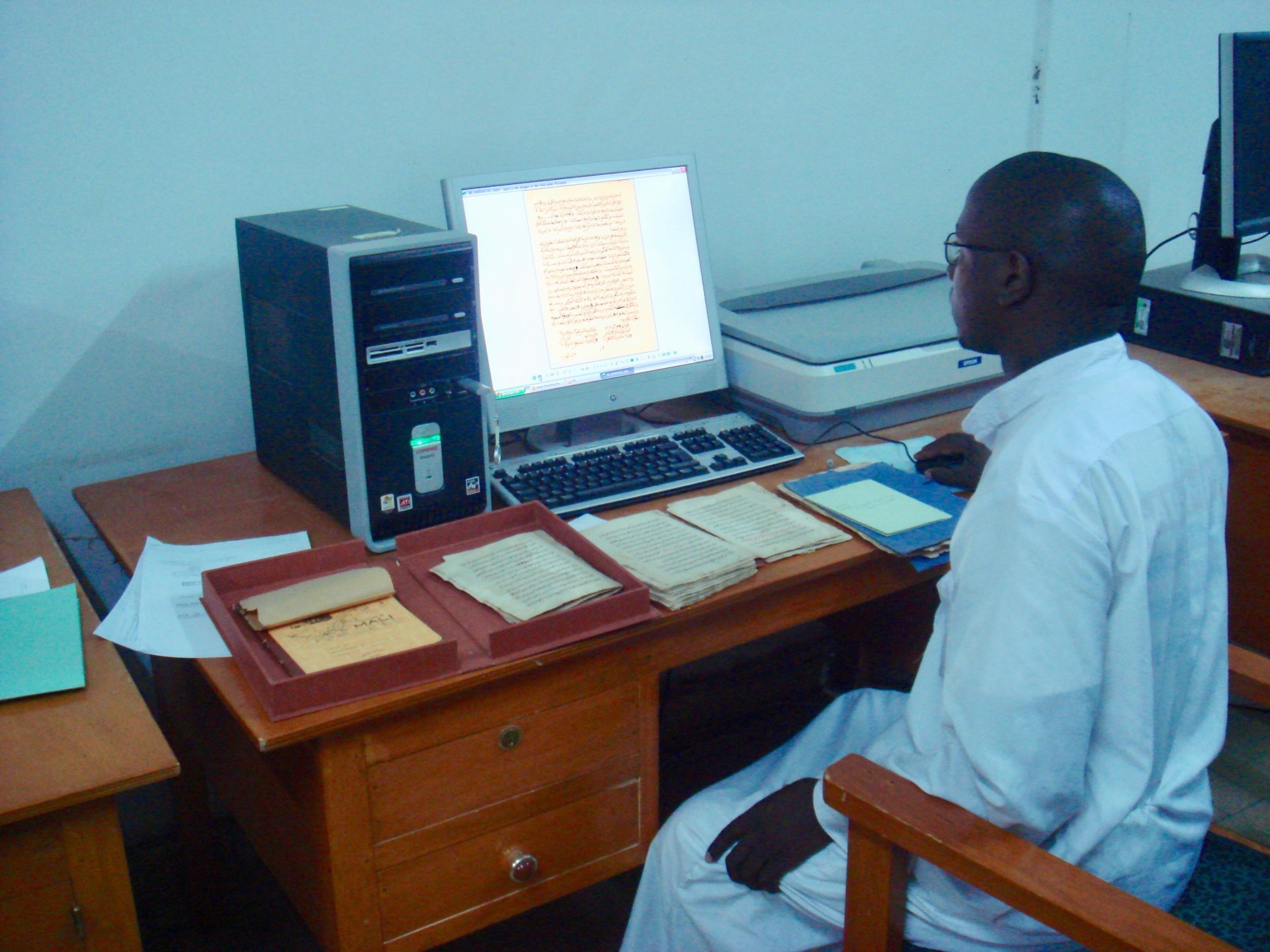
HMML began working with SAVAMA-DCI in 2013 to digitise evacuated collections. Photographs preserve access to page sequences and enable researchers to compare copies without repeatedly handling fragile originals. The library’s account of its Islamic collections places Timbuktu alongside other manuscript traditions rather than outside them. Digitisation still depends on people who identify texts, distinguish copies, describe missing leaves and keep ownership records attached to images. That continuing labour is part of the same history that begins with a copied page: learning survives because someone does the work needed to pass it on.
Sources and further reading
- Tombouctou Manuscripts Project, University of Cape Town: Timbuktu’s History
- Nobili, Molins-Lliteras and Jeppie: Why does Timbuktu matter?
- Ali Diakite and Paul Naylor, HMML: A Scribble of Scribes
- Ali Diakite and Paul Naylor, HMML: To Timbuktu from a Land Far Away
- Library of Congress: Ancient Manuscripts from the Desert Libraries of Timbuktu
- Library of Congress: Explanations of Problems in Arithmetic with Examples, 2021667144
- Library of Congress: Ahmad Baba’s Ladder of Ascent, 2021667249
- Library of Congress: Commercial Agreement (Gold as Currency), 2021667259
- Charles C. Stewart: What’s in the Manuscripts of Timbuktu? A Survey of the Contents of 31 Private Libraries
- Tombouctou Manuscripts Project: al-Wangari Manuscript Library
- University of Hamburg: Safeguarding the Manuscripts of Timbuktu
- Hill Museum & Manuscript Library: Islamic Manuscripts
- Tombouctou Manuscripts Project: Ahmed Baba Institute
- Tombouctou Manuscripts Project: Research Project
Source note: manuscript descriptions here draw on catalogue records and specialist studies, not newly made translations of the Arabic pages. Dates of authorship, copying, collecting and digitisation are kept distinct. Historical rescue figures vary by collection and inventory method; no single total is treated as a count of complete medieval books.