
Philadelphia, 1918: The Parade, the Influenza and the Work of Care
The Liberty Loan parade became an emblem of disastrous public-health judgment. The city’s catastrophe was larger than one afternoon, and its history belongs to nurses and households as well as officials.
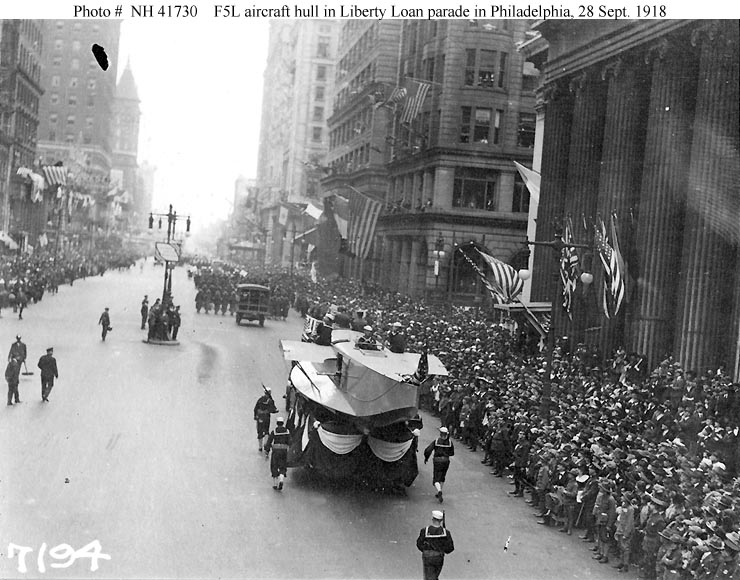
The photograph looks like a successful civic occasion. A naval aircraft float moves down Philadelphia’s Broad Street, accompanied by sailors, while spectators line the route. It is September 28, 1918, and the city is promoting the Fourth Liberty Loan. Nothing in the photograph can tell us which spectators are infectious, who will become ill, or which families will soon need help.
We know what followed: an explosive influenza emergency. That knowledge makes the parade almost impossible to view innocently. But it can also make history too easy. The familiar version needs only a reckless official, a crowded street and a terrible consequence. The more useful version asks how a dangerous gathering became normal, what was already happening before it began, and who kept the city functioning when its assurances collapsed.
The outbreak did not begin on Broad Street
Philadelphia was not a sealed community into which influenza arrived at a single public event. It was a wartime port and industrial centre, connected to naval facilities, troop movements and civilian travel. The military and the city shared hospitals, transport and people. A boundary on an administrative map could not keep their infections separate.
The University of Pennsylvania’s nursing-history timeline records sailors arriving from Boston early in September, followed by rising illness at the Navy Yard. By mid-month, civilian medical institutions were already receiving military patients. Nurses and doctors also fell sick. The epidemic was therefore consuming the workforce needed to respond to it before the famous parade took place.
This matters for causation. A large crowd could accelerate an outbreak without having created it. Counting everyone who died afterward as a victim specifically of the parade would claim a precision the surviving evidence cannot support. Conversely, acknowledging earlier transmission does not make gathering thousands of people harmless. Both statements can be true. History does not require choosing between them.
Patriotism made a crowd look like a duty
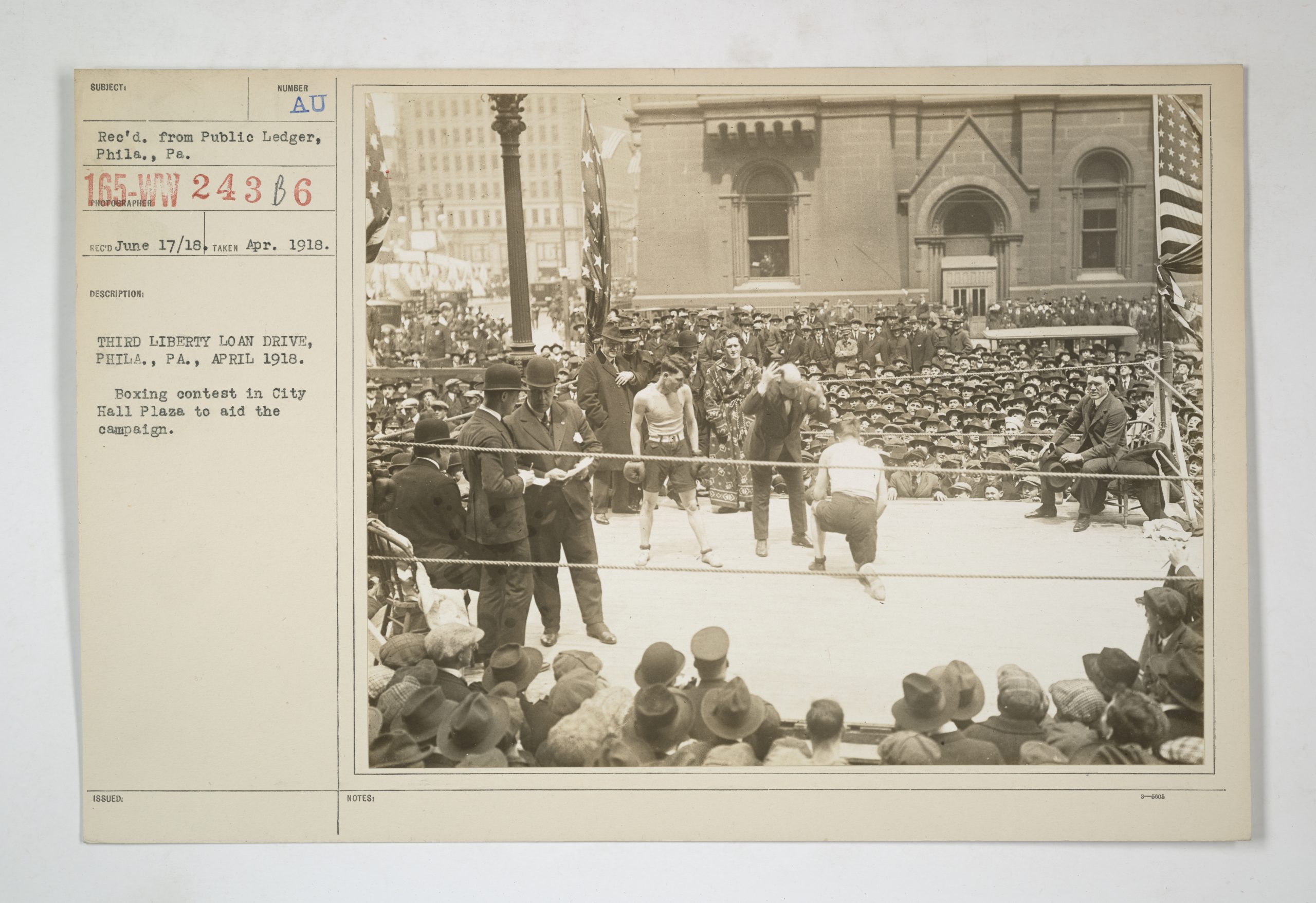
Liberty Loans helped finance America’s participation in the First World War. Their public campaigns also turned financial participation into a visible test of loyalty. A parade was a display of collective resolve, not merely entertainment. Officials, civic organisations and spectators could understand attendance as doing something useful for the country.
The Encyclopedia of Greater Philadelphia places the September event within this mobilisation. Contemporary reporting put attendance at roughly 200, 000. That is an estimate, not a turnstile count, but it conveys the scale. The Naval Aircraft Factory’s float made the relationship between Philadelphia’s labour and the military effort unusually literal.
The contradiction was already visible: residents were advised to avoid crowds, yet the city went ahead with a major crowd-making occasion. General advice can sound serious while leaving the most politically important activity untouched. It was precisely that gap between warning and collective action that made the parade such a powerful later symbol.
What officials knew, and what they could not know
Wilmer Krusen, Philadelphia’s director of public health and charities, figures prominently in accounts of the disaster. The University of Michigan’s Influenza Encyclopedia documents his early reassurances and the city’s effort to isolate cases. Influenza became reportable locally in September, an attempt to improve the information reaching officials.
Those measures did not amount to an adequate response. But describing Krusen as if he possessed modern virology and deliberately ignored it is misleading. Physicians had no influenza-virus test of the kind familiar today. Nor did they have present-day vaccination, antiviral treatment or antibiotics for bacterial complications. Understanding of the disease’s cause remained unsettled.
Uncertainty is not the same as having no grounds for precaution. Reports of rapidly increasing illness, medical staff becoming patients and hospitals under pressure were practical warnings. Public health often has to act before every mechanism is understood. John Snow’s investigation of cholera offers a different, earlier example of that problem: useful evidence and complete scientific explanation do not necessarily arrive together.
Responsibility also extended beyond one man. The decision belonged to a civic and wartime environment that rewarded reassurance. Concentrating the entire story in Krusen’s personality makes it harder to see why institutions accepted the risk.
A city of beds is not a city of care
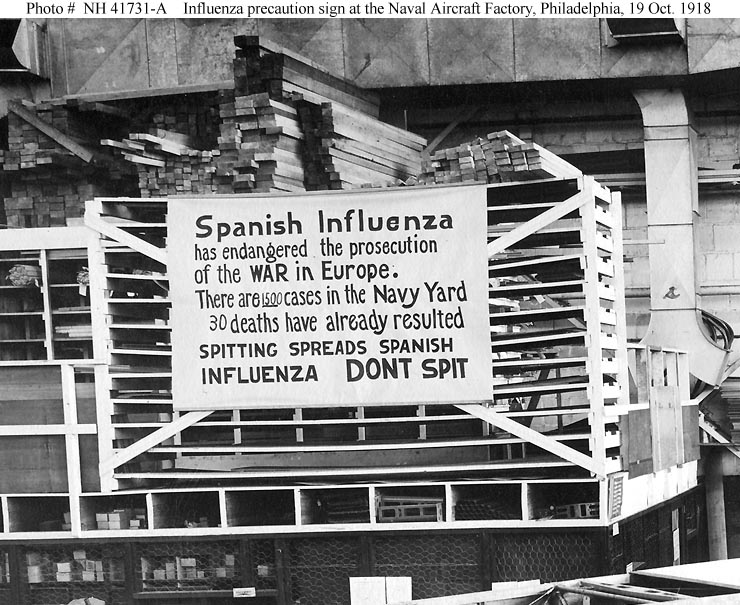
After the parade, demand for medical help surged. Emergency facilities opened and appeals sought people to nurse the sick. Restrictions on gatherings and closures followed in early October. These were responses to a crisis already under way, not the ending of an earlier citywide quarantine to permit the parade, as some modern retellings claim.
The distinction between a bed and care is crucial. An empty room can become a ward on paper. It cannot instantly produce trained nurses, doctors, clean linen, meals and transport. Penn’s retrospective on the pandemic puts the work of health professionals alongside the scale of the emergency. Staff shortages were not a side issue: they determined what treatment could actually mean.
In a household where several people were ill at once, ordinary tasks became urgent medical problems. Someone had to bring water, prepare food, watch a deteriorating patient and seek assistance. Describing the pandemic only through hospital admissions leaves that domestic work outside the frame. Much of a city’s capacity to survive is neither a building nor an official department.
Nurses were not an unlimited emergency reserve
The visiting nurses’ figures collected by Penn are especially revealing. Their influenza caseload rose from 15 in the week ending September 21 to 170 in the following week, then 725 in the week ending October 5. These are one organisation’s cases, not a citywide infection count. Their value is to show how quickly demand on a particular care network multiplied.
Nurses were exposed repeatedly, and some died. Student nurses took part in a response that stretched institutions beyond normal routines. Any account that describes volunteers arriving and then moves neatly to recovery risks making this work sound frictionless. Training, supervision, fatigue and illness did not disappear because the emergency was patriotic.
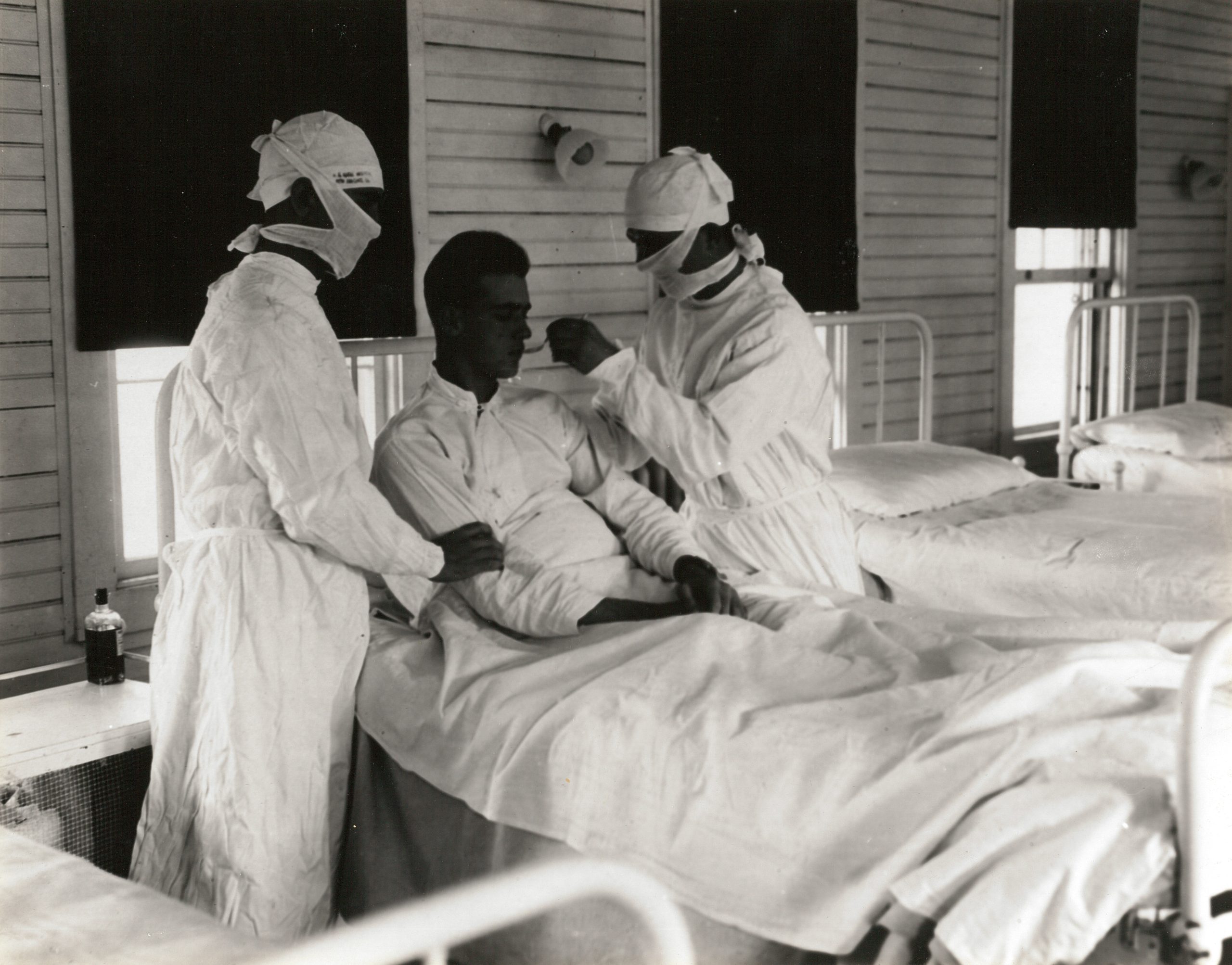
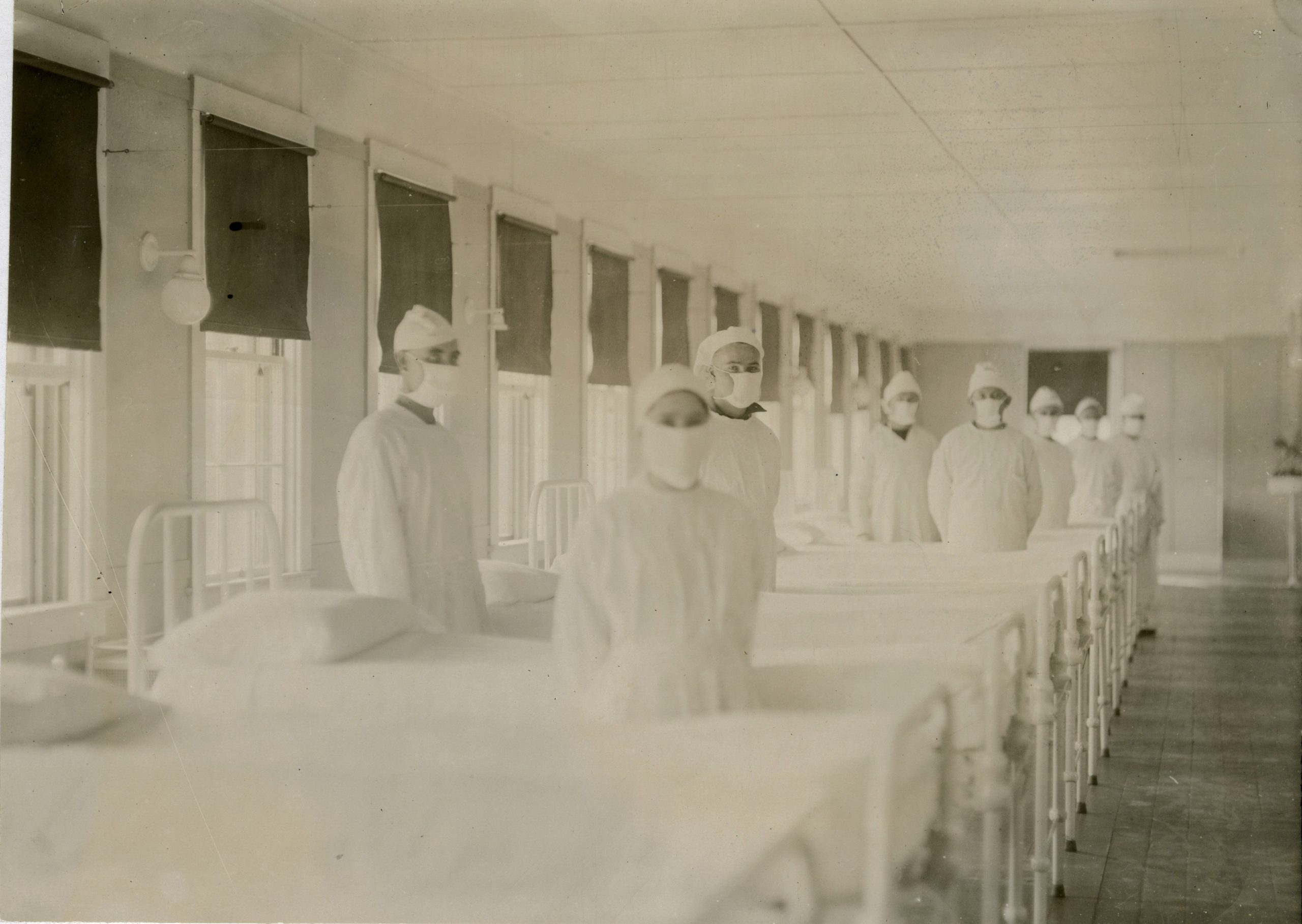
Photographs from naval hospitals elsewhere in the United States help document the wider material response: masks, crowded wards and screens between beds. They must not be silently relabelled as Philadelphia. Their comparative value lies in showing the kinds of improvised protections used across institutions, not in pretending every compelling photograph records this particular city.
The death toll needs dates, not dramatic arithmetic
Philadelphia lost thousands of people in a compressed period. Published totals vary with the dates covered and with whether deaths were classified as influenza, pneumonia or a combined category. A number detached from those choices may sound more exact while saying less.
Full Fact’s examination of a widely shared parade story traces estimates of roughly 12, 000 deaths over four weeks and a larger total over subsequent months. It also challenges the claim that quarantine was lifted for the occasion and notes limitations in some very precise assertions about hospital saturation within 72 hours. Correcting such details does not soften the disaster. It keeps the evidence from becoming an accessory to a ready-made moral.
The pandemic’s disruption also extended beyond clinical treatment to the handling of the dead. Naval historical accounts describe mortuary capacity overwhelmed in American communities during the same autumn. A death in such conditions was not simply a statistical endpoint. It created further work, delay and distress for relatives and those responsible for burial.
Remember the warning without reducing the people
The parade remains a useful warning about mass gatherings during an accelerating epidemic. It is less useful as a machine for producing a single, timeless explanation of every later public-health crisis. Diseases differ; institutions differ; the evidence available to decision-makers differs. Comparison should expose questions, not erase those differences.
The hardest question Philadelphia leaves is how a community recognises that familiar priorities must change. War finance, civic prestige and ordinary economic life did not suddenly become meaningless. They became dangerous when treated as reasons to continue without sufficient adjustment.
That is why the nurses, patients and households belong at the centre of the story. They bore the consequences after the public ceremony ended. To look again at the parade photograph is not merely to spot the mistake that hindsight makes obvious. It is to ask what systems of care were being asked to absorb, who was listening to their warnings, and whose labour would be needed when reassurance was no longer enough.