
Mari’s Palace: The Letters, People and Work Behind a Bronze Age Kingdom
A royal palace on the Euphrates has left an unusually crowded record of government: letters, grain accounts, painted gods, marriage negotiations and instructions about people whose work kept the court alive.
The surviving records of Mari include correspondence about alliances, palace supplies, royal marriages and the management of women captured in war. Set beside the great building where many of the tablets were found, they give a Bronze Age kingdom an unusually human scale. A ruler might command a city, yet still depend on someone else to arrange a journey, deliver a message or find the right person for a job.
Mari stood on the Euphrates in what is now eastern Syria. Its last great palace is closely associated with Zimri-Lim, who ruled in the eighteenth century BCE. Much of the building was older than his reign. Its surviving walls, objects and archives belong to successive occupants, and reading them together takes more care than simply attaching the last king’s name to everything.
That care pays off. The palace presents government as a continuing activity, full of relationships that needed attention. Its grandeur depended on food arriving, instructions being understood and alliances surviving the next crisis.
A city with a long history before its last king
The archaeological mission’s political history of Mari follows several distinct phases. During the third millennium BCE, Mari competed with Ebla and was subsequently conquered by the expanding Akkadian Empire. Governors known as shakkanakkus later became rulers in their own right. They rebuilt the city and established the great palace complex long before Zimri-Lim occupied it.
Keeping that sequence in view prevents a familiar mistake. Famous archaeological places often acquire one famous name, and centuries of change disappear behind it. At Mari, the palace’s fabric accumulated through building, repair and adaptation. A room could have a longer political history than the king whose letters happened to survive nearby.
The river needed work too
Mari’s location is often described as strategic, which is true but can sound as though geography did the work by itself. The city depended on an engineered landscape. The mission’s study of its planning connects the settlement with canals and the management of water around the urban site. It also distinguishes established evidence from a proposed early date for a long transport canal on the opposite bank.
That uncertainty is useful. A canal visible in a landscape does not carry its construction date on its surface. Researchers need excavation, objects, texts or a convincing relationship with other dated features. An economically attractive explanation can guide investigation without becoming a demonstrated date.
For the kingdom, waterways connected agricultural production, settlement and movement. The political relationships recorded in the archive likewise extended beyond a single walled city. Communities involved in mobile pastoralism belonged to the same regional world as farmers and palace officials. The correspondence helps undo a simple opposition between an urban civilisation and people supposedly outside it.
Clay tablets and different kinds of truth
The mission distinguishes roughly 2,000 documents from the late shakkanakku period from about 15,000 Amorite-period texts spanning around half a century. These are approximate corpus counts, not a claim that every tablet was a personal letter. The archive includes accounts as well as correspondence, with records of personnel, animals, textiles, grain, worship and taxation.
Those differences matter. An account might tell us what an office recorded as received or issued. A letter might tell us what its sender wanted a superior to believe. Both are evidence, but they answer different questions. Neither should be treated as an effortless transcript of everyday reality.
Letters from Samsi-Addu to his son Yasmah-Addu, whom he had installed at Mari, contain criticism of the younger ruler’s conduct. The father wanted greater attention to military and administrative responsibilities. It is an arresting relationship to find in an ancient archive. It is also a relationship seen through the surviving correspondence, where complaints have their own purpose.
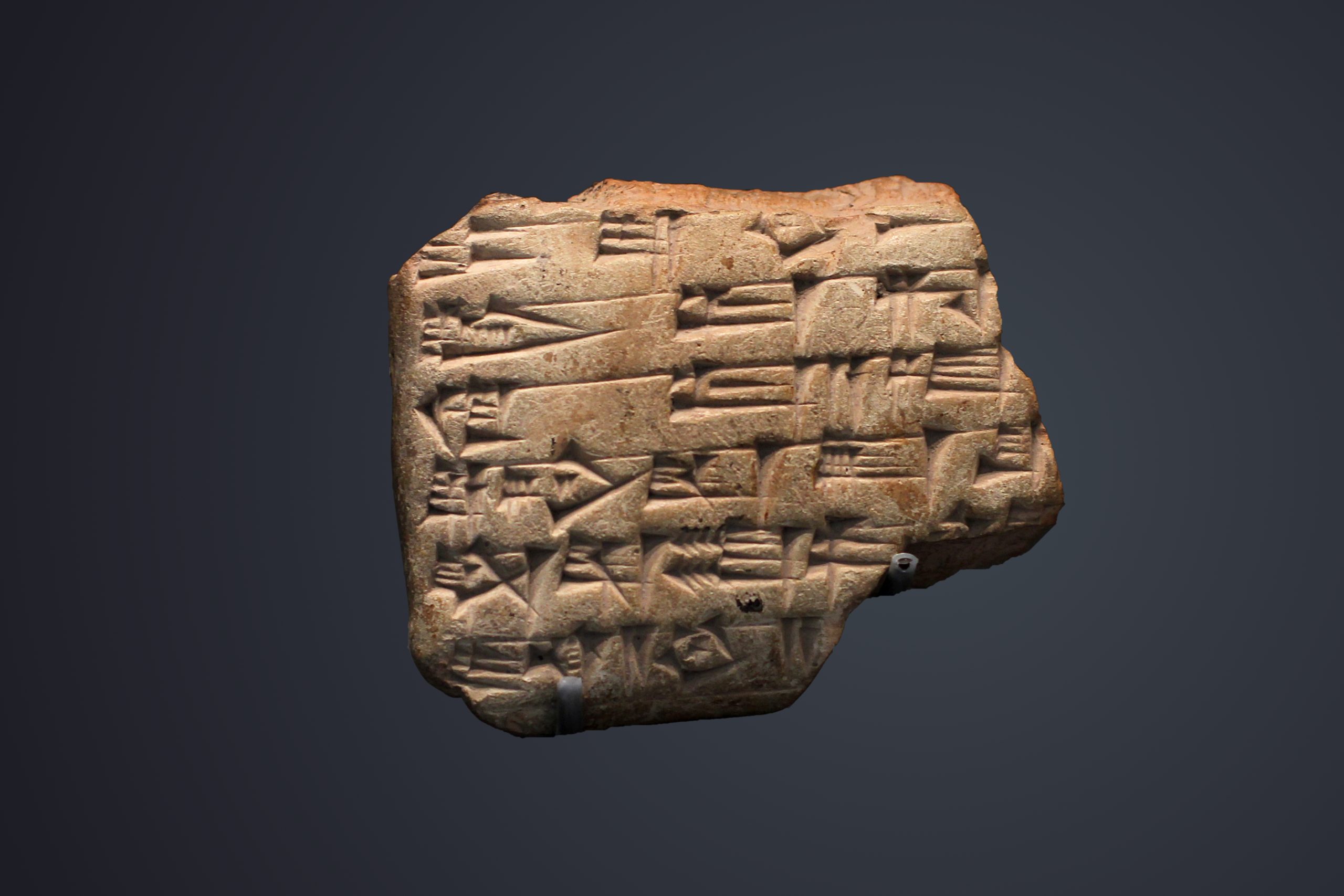
A particularly compact royal object is Zimri-Lim’s inscribed tablet concerning an ice-house at Terqa, now in the Louvre. The tablet illustrated below is a commemorative inscription, rather than one of the palace’s ordinary letters. The distinction keeps its claim in focus: the king advertised a building achievement. Such an object tells us about royal priorities and self-presentation, alongside the more routine records of administration.
Histovia’s account of the Persepolis tablets explores a comparable problem in a much later setting. A distribution recorded on clay can bring workers into view, while still leaving us inside the institution that counted their labour.
A palace organised around access
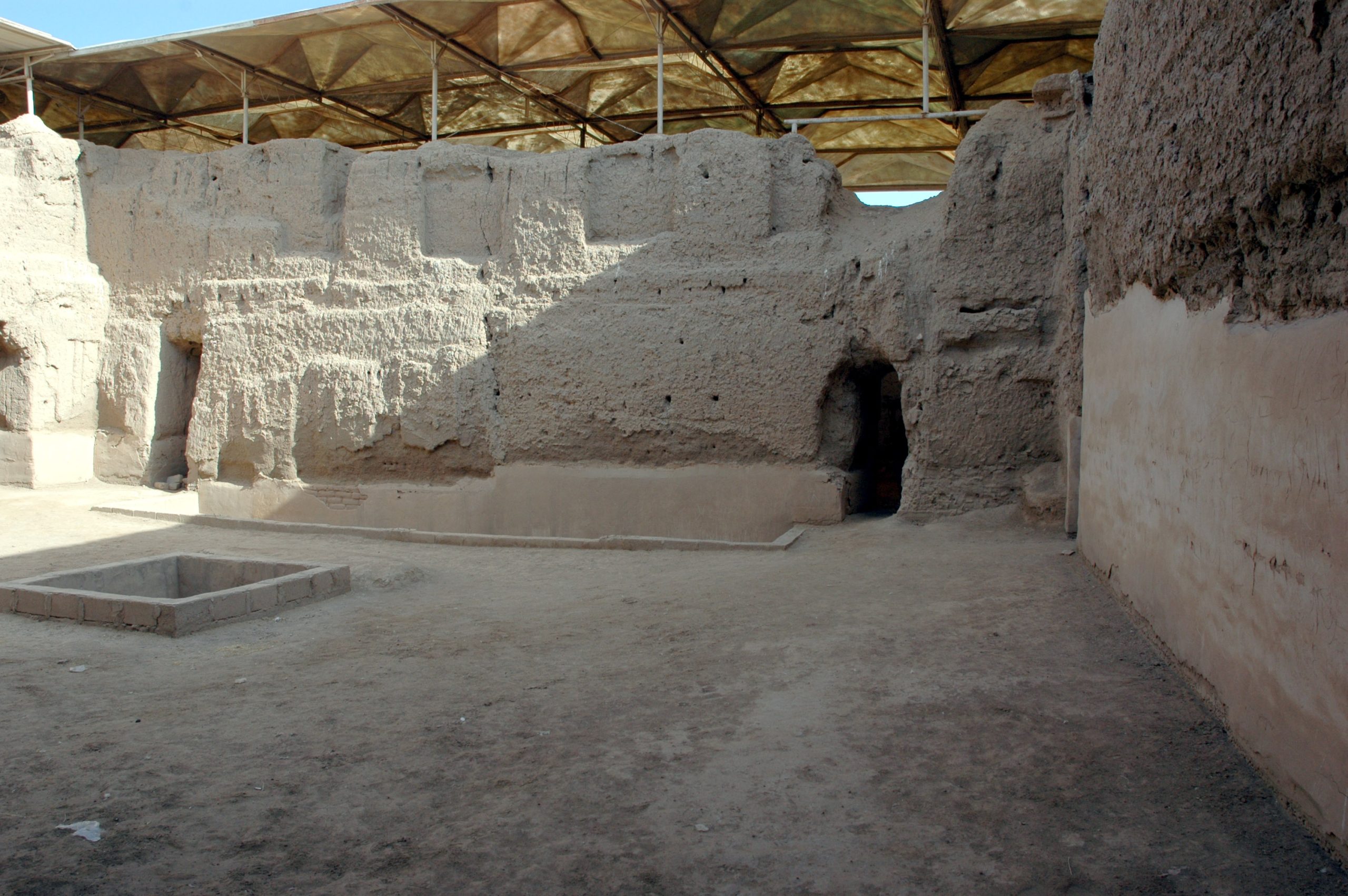
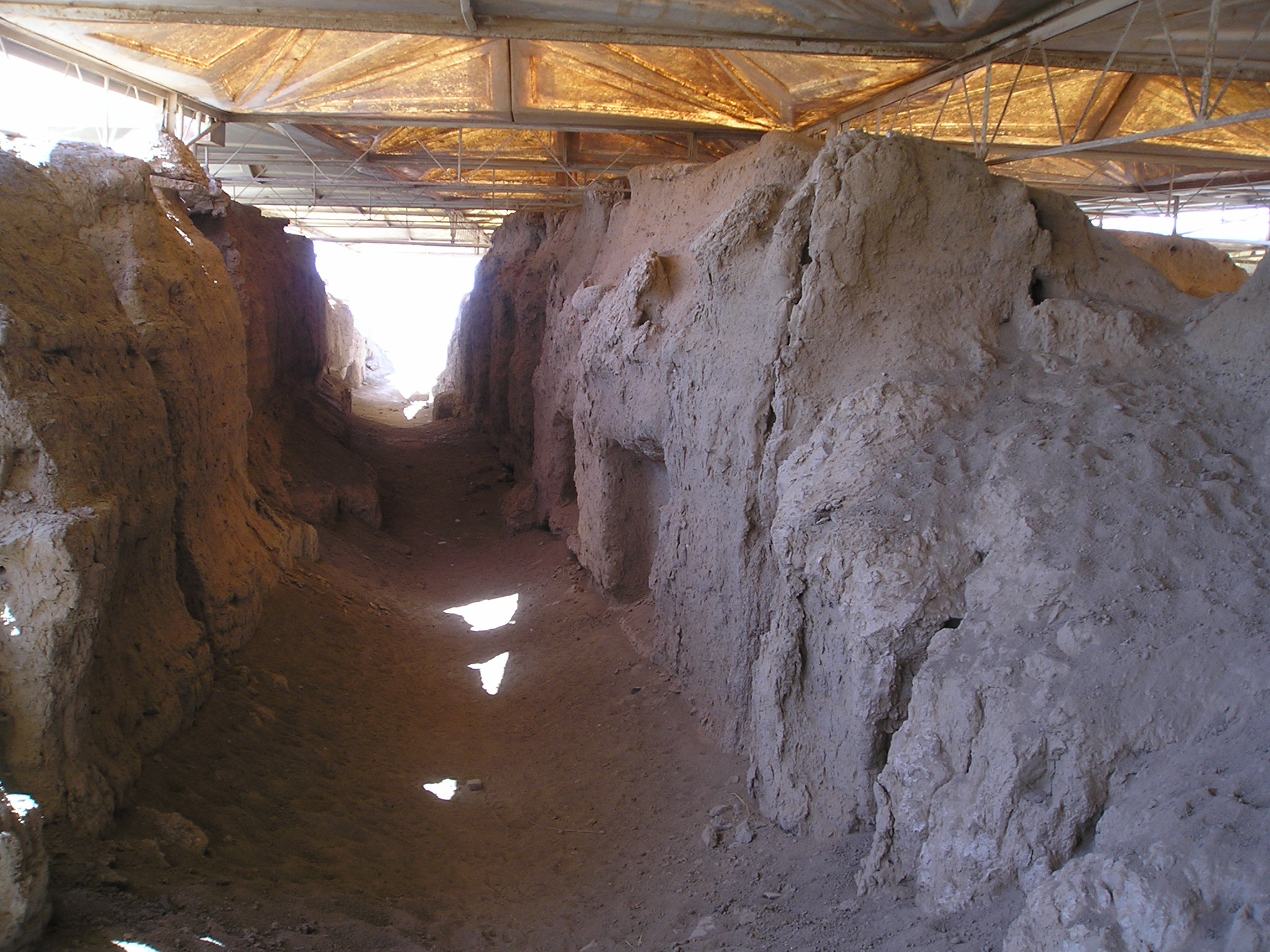
Look at the surviving architecture and movement becomes part of the story. Courts, doorways and reception rooms shaped who could approach whom. The archaeological interpretation of the official quarter links Court 106 with an adjoining hall and the throne room. Other areas contained kitchens, administrative rooms, storerooms and living quarters.
A plan lays these spaces flat. The original building had height, shade, thresholds and upper rooms. Reconstructing that lost volume requires evidence from stairs, wall thicknesses, fallen material and lighting. The mission’s reconstruction study even uses the position and scale of painted fragments to investigate ceilings and circulation. A digital reconstruction is therefore an argued interpretation of remains, rather than a photograph of an otherwise recoverable whole.
For someone working inside, the distinction between official ceremony and daily maintenance would have been less tidy than a modern room label suggests. A reception required spaces to be prepared and people to be fed. Keeping an important visitor waiting, or bringing the wrong goods at the wrong moment, could become a political problem.
Material remains help with those practical questions. Large jars survived in storage areas, while precious metal tableware mentioned in inventories was missing. Baking moulds and food-storage equipment provide another view of the palace’s consumption. The study of its furnishings describes stewards distributing rations to hundreds of people. Royal hospitality rested on repeatable work, much of it performed beyond the grandest rooms.
We should resist filling every empty space with an imagined object. Wooden furniture and musical instruments have largely disappeared. Their absence from the excavated building can coexist with written evidence that they once mattered greatly.
Shibtu and the business of being queen
Zimri-Lim’s marriage to Shibtu, daughter of Yarim-Lim of Aleppo, connected two ruling houses. The negotiations involved messengers, gifts, security and arrangements for her journey and accommodation. João Batista Ribeiro Santos’s study of the Aleppo–Mari alliance brings these exchanges together, while presenting a particular interpretation of the dynastic relationship.
The diplomatic marriage did more than establish a family connection on a genealogy. People and possessions had to travel between courts. Officials discussed safe passage. A queen’s household needed a place within a palace that already had its own occupants, hierarchies and competing interests. The negotiations expose the practical arrangements through which high politics became a functioning relationship.
Once at Mari, Shibtu exercised substantial authority. Her correspondence concerns the internal management of the palace, diplomatic and military matters, religious activity and the wellbeing of its inhabitants. Zimri-Lim’s absences made communication especially important. Decisions could not all wait for him to return.
Calling this simply a domestic role would conceal how the court worked. Supplies, personnel, illness and ceremonies affected the functioning of government. A palace household was also a major concentration of resources and labour. The queen’s access to information and her ability to direct people belonged within that political structure.
Her prominence does not tell us that all women shared comparable freedom. The documents place princesses and elite women alongside musicians, attendants, captives and enslaved workers. Santos discusses an instruction from Zimri-Lim asking Shibtu to select women with musical potential from among captives. Skill could make a person valuable to the court while leaving the coercion behind her presence intact.
This is one of the archive’s hardest contrasts to sit with. Its detailed attention can make individuals visible, yet some appear because the palace claimed the power to move, assign or maintain them. We learn about their work largely through the people who directed it.
What the king’s painted image leaves out
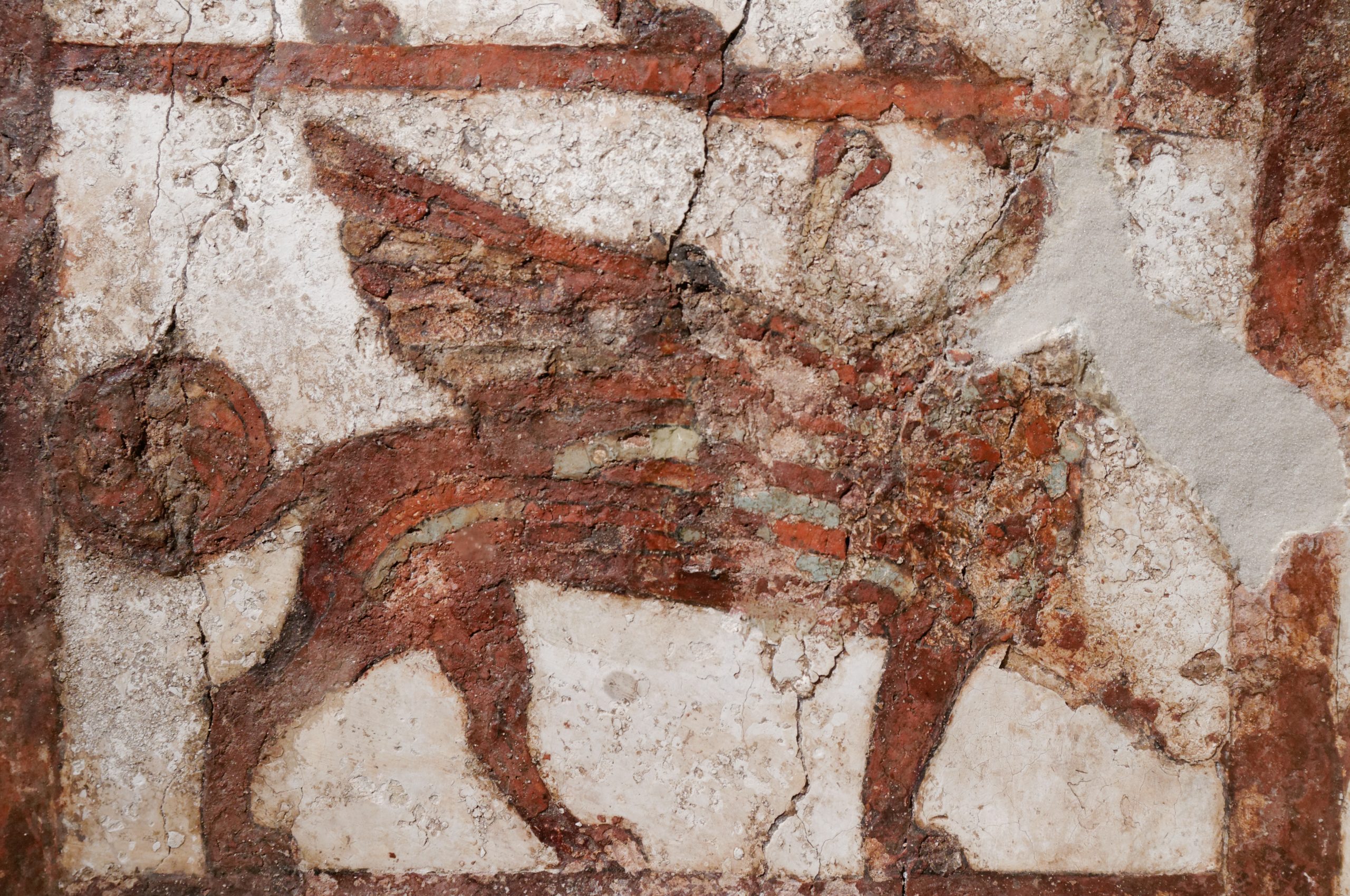
The famous Investiture Painting gives royal power a different form. A ruler approaches a goddess associated with the emblems of authority, within an ordered composition of divine figures and flowing water. The painting makes the relationship between kingship, divinity and abundance visible. Its purpose was ceremonial and ideological.
Its familiar modern title, “Investiture of Zimri-Lim,” deserves caution. Béatrice Muller’s account of the palace paintings identifies the depicted king as a predecessor of Zimri-Lim. The decorations also belong to different phases. An inherited painting could continue to carry authority even after the person originally associated with it had gone.
The letters place that composed royal image beside a much less settled political world. Mari’s relationship with Aleppo involved protection, hierarchy and negotiation. Diplomatic language could describe rulers as fathers or sons without referring to a literal biological relationship. Such terms expressed claims about standing and obligation, and those claims still needed to be maintained.
Santos discusses a dispute involving a smith accused of taking valuable goods from Hazor. In the surviving account, Zimri-Lim resisted returning the man and offered a competing version of what had happened. We need not turn that episode into a modern asylum case to see its stakes. The treatment of one person could involve trade, the authority of rulers and the credibility of protection.
A royal letter was an intervention in such a dispute. It selected facts, appealed to relationships and tried to produce an outcome. Reading correspondence this way lets the uncertainty remain visible. A strongly stated claim tells us what the writer argued; it does not automatically settle the case.
Earlier lives beneath the palace story
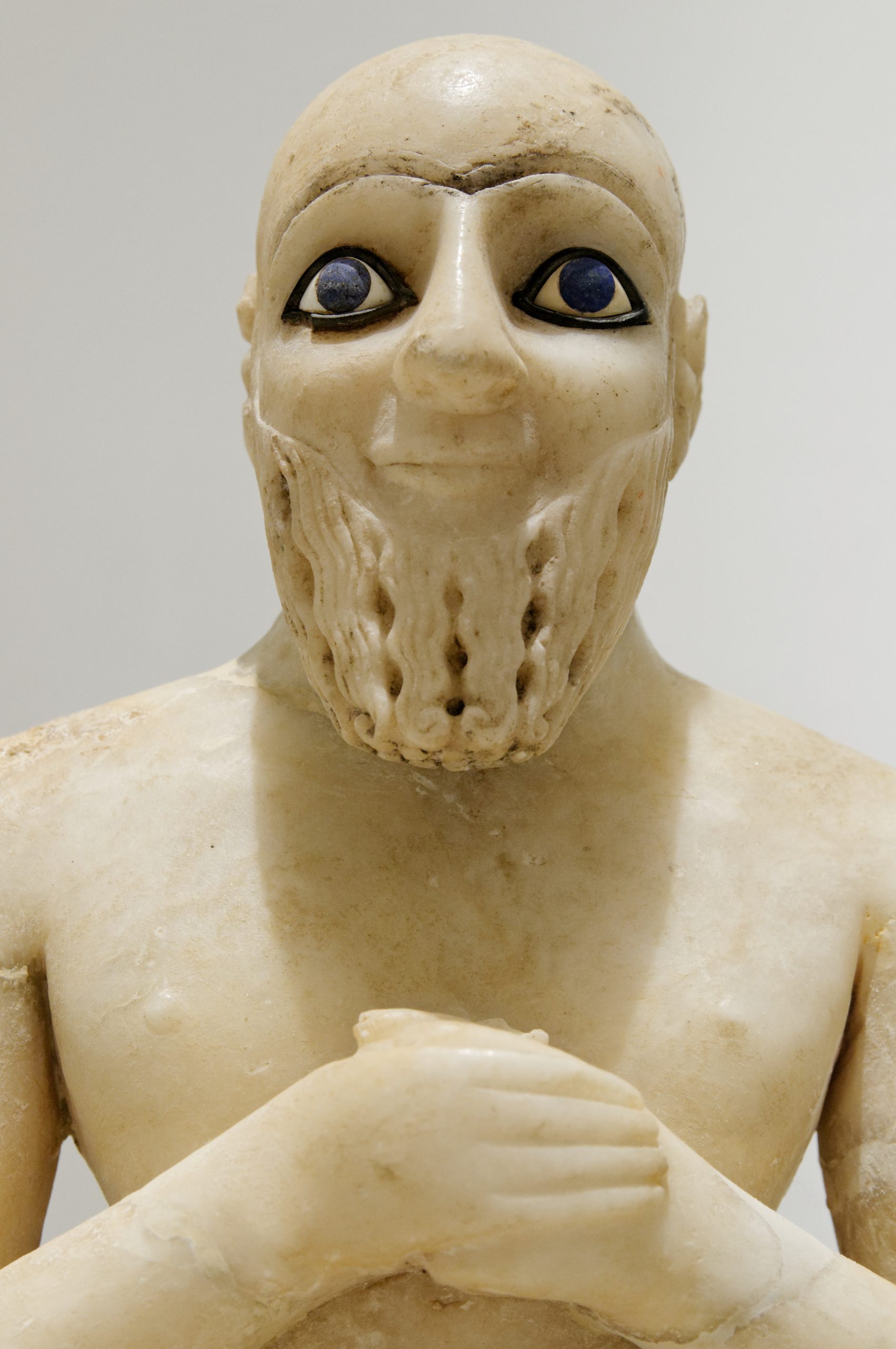
The statue of Ebih-Il offers a reminder of Mari’s much longer past. Found in the temple of Ishtar, it dates to the third millennium BCE, centuries before the last royal archive. Its clasped hands and carefully inlaid eyes belong to an earlier culture of elite devotion. The object’s archaeological context is different from that of the palace letters, even though both now help us imagine the same ancient city.
The destruction that changed what could survive
Hammurabi of Babylon brought Mari’s final period of independence to an end. The archaeological mission dates the city’s devastating destruction to 1759 BCE within its chronological framework. Exact dates for this period vary between scholarly chronologies; the important sequence is the conquest and destruction of a political centre that had remained active under Zimri-Lim.
What survived was shaped by violence and later disturbance. Objects could be removed, buildings burned and records displaced. The resulting archive is extraordinarily rich, yet it is no complete census of the kingdom’s people or concerns. The palace’s institutional perspective remains strongest because its records survived in quantity.
There is a useful comparison with Ashurbanipal’s library. Both discoveries transformed the study of ancient Mesopotamia, but a royal collection of learned texts and a palace archive of correspondence and accounts were assembled for different purposes. “Thousands of clay tablets” is only the start of explaining either.
Excavation at Tell Hariri began in 1933 under André Parrot. Later work enlarged the picture beyond the palace and reconsidered the development of the wider city. The mission’s history of research also records the importance of excavation archives after the Syrian conflict interrupted fieldwork and the site suffered major damage. The photographs here predate that destruction and should not be read as a report of present conditions.
At Mari, letters and walls can correct one another. A painted king presents authority in its most orderly form. An account shows resources being allocated. A complaint reveals that an instruction did not make a problem disappear. Together they let us follow the work of a kingdom unusually closely, while reminding us whose view of that work has reached us.