
Histovia · World War II · Asia & the Pacific
1931–1941 / The war before the familiar beginning
Why China’s World War II Began Before 1939
From a railway explosion in Manchuria to a war that would not end, China’s experience changes how we understand the making of a global conflict.
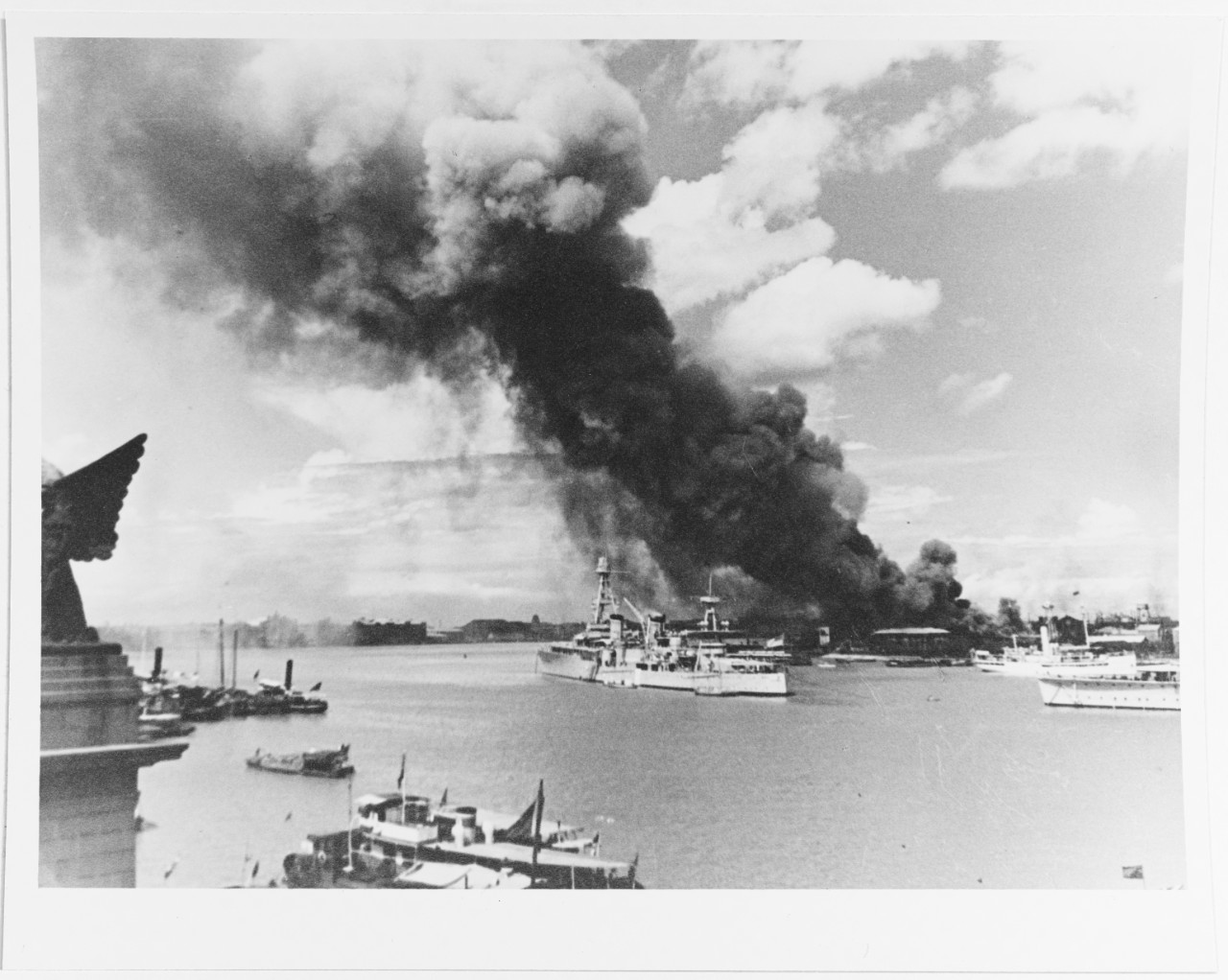

When American consul John Carter Vincent inspected a damaged railway outside Mukden in September 1931, his Japanese guides showed him the replacement rails. The rails damaged by the explosion, they said, had been removed. He left unconvinced by the story he had been told.
Vincent had not witnessed the blast. His memorandum of the visit, enclosed in a consular report dated 26 September, nevertheless exposes something important about the crisis: military action and the effort to justify it were proceeding together. A supposedly local emergency was being used to explain a rapidly expanding occupation.
The distance from that railway to the global war of the 1940s was considerable. It was crossed through decisions, failed settlements and continuing resistance. Asking why China’s war began before 1939 therefore means more than changing a date at the top of a timeline. It means asking how a conquest became a prolonged war, and how that war helped reshape the choices of powers far beyond China.
01 / What does a starting date explain?
1931, 1937 and 1941 mark different changes
September 1939 remains an essential date for the war in Europe. Germany’s invasion of Poland opened the conflict in which Britain and France declared war on Germany. But this chronology cannot describe the beginning of sustained fighting in East Asia. The University of Oxford’s research project on China’s war distinguishes the argument for origins in the invasion of Manchuria in 1931 from the total war fought between China and Japan in 1937–45.
Conquest
The seizure of Manchuria creates a new territorial and political order under Japanese control.
Full-scale war
Fighting near Beijing expands into sustained warfare across major regions of China.
Global coalition
Japan attacks Western powers; China’s existing resistance joins a wider Allied struggle.
These dates answer different questions. None requires us to pretend that every theater entered the same war at the same moment. The historical problem is to connect the stages while preserving the choices between them.
02 / An emergency made into a conquest
Manchuria showed how military initiative could become state policy
On 18 September 1931, officers of Japan’s Kwantung Army blew up a stretch of the South Manchurian Railway near Mukden, today’s Shenyang. Japan’s National Diet Library’s archival account identifies the perpetrators directly. The army used the incident to advance through Manchuria despite the cabinet’s declared policy against expanding the conflict.
The distinction between field officers and the government matters. Tokyo did not begin with a single, consistently enforced program for the crisis. Yet the story cannot end with disobedient officers. Japan subsequently recognized the army-created puppet state of Manchukuo in 1932. Its withdrawal from the League of Nations followed in 1933. A conquest initiated through military action had been consolidated through political decisions.
The contemporary American reports help us see the process before its outcome was settled. Consul General Myers emphasized the speed of occupation and the preparations that had preceded it. Vincent recorded discrepancies in the account presented during his inspection. Their evidence was partial and their diplomatic assumptions deserve scrutiny, but they were already questioning whether the incident supplied a convenient justification for action the army wanted.
That is the first connection between 1931 and the later war: an expanded military position could survive even when its justification was disputed. Condemnation and control of territory operated on different timetables.
Neither peace nor uninterrupted nationwide war
The intervening years should not disappear into an arrow pointing straight to 1937. The U.S. Office of the Historian’s account of the diplomatic response traces nonrecognition, League investigation and a truce in 1933 that left Japan holding Manchuria. Fighting also reached Shanghai in 1932, so the violence was never confined neatly to the northeast.
There were occupations, confrontations and negotiated pauses. These were meaningful differences from the sustained, large-scale campaigns that began in 1937. For people living under occupation, however, a pause in interstate fighting could hardly restore the world that had existed before conquest.
Diplomatic refusal to accept a territorial change also differed from reversing it. The gap helped leave an unstable situation in place: China had lost territory without accepting the legitimacy of the loss, while Japanese military power had acquired new positions from which to exert pressure.
03 / The weeks in which the war widened
Marco Polo Bridge did not make escalation automatic
Chinese and Japanese forces clashed near the Marco Polo Bridge outside Beiping, now Beijing, on 7 July 1937. The Japan Center for Asian Historical Records notes that a local settlement temporarily quieted the confrontation before full-scale war developed. Its linked incident diaries and official reports also remind us that the surviving accounts were produced by institutions with their own interests.
We should therefore resist treating this as an exact replay of Mukden. The evidence for the staged railway explosion in 1931 does not establish that the fighting at Marco Polo Bridge was the same kind of operation. What connects the episodes is the danger of turning local clashes into instruments of a larger policy.
Historian Ryoichi Tobe’s study of Japanese decision-making shows reinforcement orders being approved, delayed and reconsidered during July. Some army officers expected intimidation or a sharp defeat to force Chinese concessions. Others feared a prolonged commitment and the consequences for Japan’s position against the Soviet Union. Even advocates of expansion underestimated how large the struggle would become.
In this setting, military pressure carried an assumption about the opponent’s next move: China would yield. When resistance continued, additional force could be presented as the means of making the earlier investment succeed. Tobe identifies underestimation of Chinese resistance, attachment to decisive battles and strategic cities, and weak central control over field commands as interacting causes of expansion.
The JACAR chronology places fighting in Shanghai on 13 August. The conflict now extended beyond North China to a major commercial city on the coast. By the end of 1937, Japanese forces had captured Nanjing, the Nationalist capital. Wuhan fell in October 1938. Possession of these places did not secure the Chinese government’s surrender.
The destruction behind the campaign map
Nanjing’s capture in December 1937 was followed by atrocities against civilians and prisoners of war, including mass killing and sexual violence. Yale’s account of John Magee’s surviving films describes the documentation preserved alongside the papers of other missionary witnesses. These sources record suffering that cannot be represented adequately by a line marking an army’s advance.
Such evidence changes the questions we ask of military success. Who remained in a captured city? Who could escape? What happened to the wounded and to prisoners? A government’s capacity to continue the war and a population’s exposure to violence were related, but they were never the same measure.
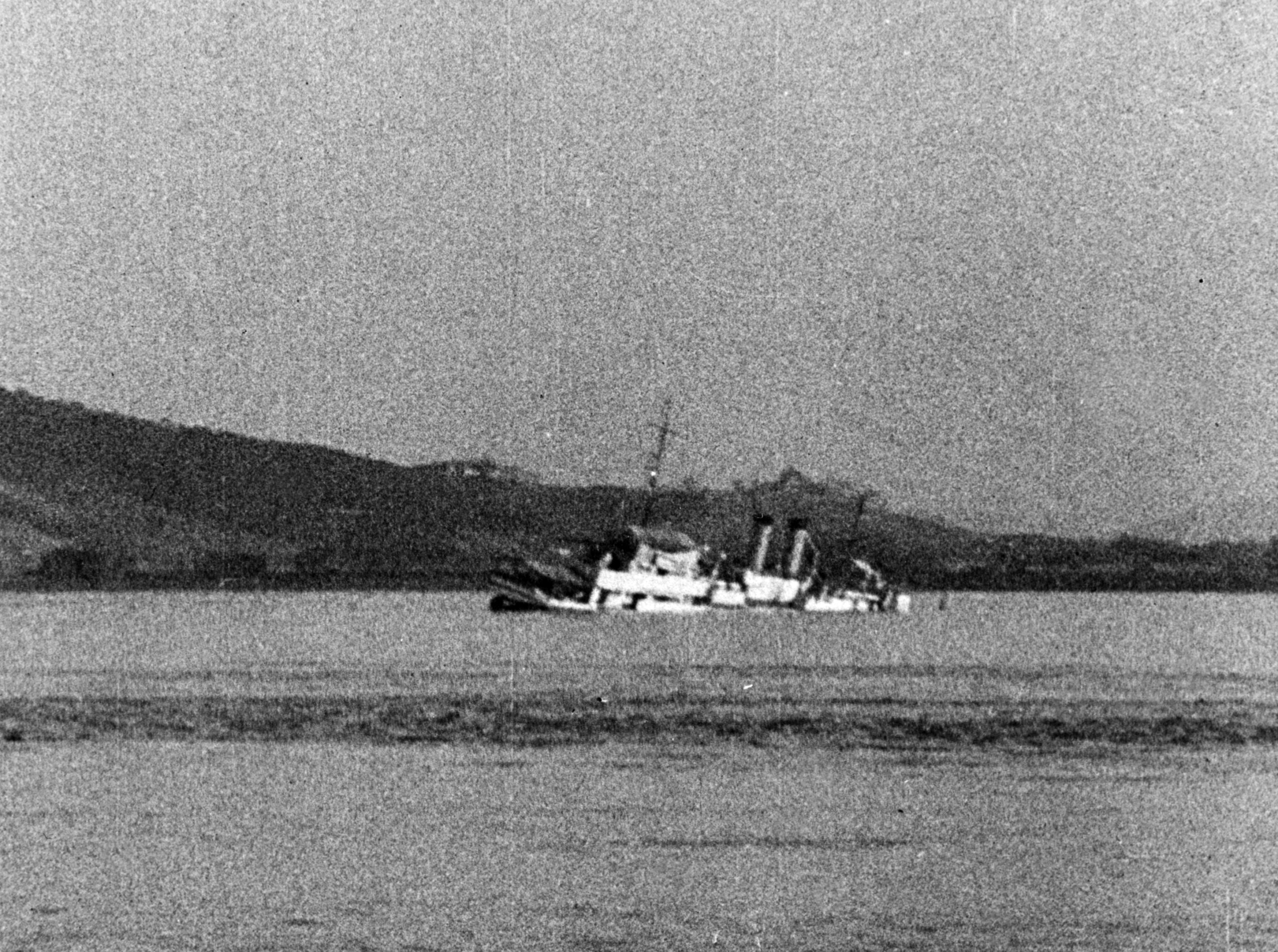
_sinking_in_the_Yangtze_River_on_12_December_1937_(NH_50805).jpg)
An international crisis without an immediate wider war
The sinking of Panay
Japanese aircraft attacked the American gunboat during the fighting around Nanjing. The United States accepted a Japanese apology and compensation rather than entering the war.
The National WWII Museum’s history of the attack illustrates why the years before Pearl Harbor deserve to be studied on their own terms. A direct attack on an American vessel did not produce the same political decision in 1937 that Japan’s much wider offensive produced in 1941.
04 / Why the war did not end with the loss of cities
Chinese endurance was a material achievement
China’s continued resistance is essential to the explanation. In an interview with the National WWII Museum, historian Richard B. Frank emphasizes the scale of Chinese conventional fighting from 1937 into the early 1940s. This was costly warfare. Losses, expenditure of ammunition, limited arms production and blockade progressively restricted what Chinese armies could do.
Frank also connects military difficulty to the loss of productive regions and government revenues. The Nationalist state’s later weaknesses cannot be understood solely as defects of personality or administration. They developed under the enormous strains of continued war. Recognizing those strains does not require denying corruption or the failures of wartime government.
But endurance needs a positive explanation too. Hans van de Ven’s study of wartime everyday life follows the inland resources and adaptations that sustained resistance. Agricultural regions beyond the occupied coast, refugee settlement, cultivation and supply arrangements helped keep people and institutions functioning. The state’s retreat inland changed its economic foundations as well as its location.
His discussion of Chi Pang-yuan’s experience of displacement and continuing education offers a different scale of wartime history. Moving inland was not simply an arrow on a strategic map. Families, students and teachers had to find ways to carry on in unfamiliar places. Institutional survival depended on these repeated, practical acts.
Foreign assistance also existed before December 1941, including Soviet arms supplies. China’s resistance should not be described as complete isolation. Nor should the word “China” suggest an undivided political actor: Nationalist, Communist and regional forces, alongside civilians, participated within a fractured political landscape.
Capturing a capital did not extinguish a government’s ability to regroup or a society’s capacity to support resistance. That persistence denied Japan the political conclusion its military victories were intended to deliver.
05 / A war already underway enters a new coalition
1941 transformed the setting of China’s struggle
The unresolved war in China became part of the escalating confrontation between Japan and the United States. The Office of the Historian’s account of the road to Pearl Harbor connects growing American aid to China with restrictions on trade with Japan, Japanese expansion toward Southeast Asia and diplomacy that failed to reconcile incompatible positions.
Japan’s Tripartite Pact with Germany and Italy in 1940 linked its position more closely to the European conflict. Its movement into Indochina and the tightening embargo in 1941 sharpened the crisis. Withdrawal from China was a central obstacle in negotiations: Japanese leaders were unwilling to relinquish the position their war had sought to establish.
Resource shortages intensified pressure, but they did not dictate one unavoidable response. Choosing further conquest rather than abandoning existing ambitions was a political and strategic decision. A history that makes the embargo itself “cause” Pearl Harbor risks removing the decisions through which pressure became wider war.
China’s formal declaration of war on Japan, dated 9 December 1941, captures the change with unusual clarity. It described resistance already lasting more than four years and connected the declaration to Japan’s attacks on the United States and Britain. The document is a belligerent government’s argument for its cause, but its chronology makes the distinction unmistakable: a formal declaration came after years of fighting.
On 1 January 1942, China joined the Declaration by United Nations, whose signatories pledged their resources against their enemies and undertook not to make a separate peace. The declaration invoked the Atlantic Charter’s principles. Histovia’s account of the Charter and the limits of empire explores the disagreements that remained beneath this common language of Allied purpose.
The alliance changed China’s international position. It did not wipe away the destruction, displacement and political tensions accumulated before other major powers entered the Pacific war.
China’s experience gives World War II a history of connected beginnings. Manchuria exposed the consequences of conquest surviving diplomatic protest. The escalation of 1937 showed the limits of coercion against an opponent determined and able to continue. In 1941, that unfinished struggle became inseparable from a global war. The years before 1939 belong inside the explanation.
The argument in six dates
- 18 September 1931The railway explosion near Mukden becomes the pretext for Japanese occupation.
- 1932–1933Japan recognizes Manchukuo; diplomatic opposition fails to reverse the conquest.
- 7 July 1937Fighting near Marco Polo Bridge begins a crisis that expands into full-scale war.
- August–December 1937War spreads to Shanghai; Japanese forces capture Nanjing.
- October 1938Wuhan falls, but Chinese resistance continues.
- 9 December 1941China formally declares war on Japan after more than four years of sustained fighting.
Evidence & further reading
Sources
This article distinguishes contemporary documents from later historical interpretation. Official wartime accounts reveal what their authors reported and argued; they are read critically rather than treated as neutral descriptions. Photographs are archival, with provenance and public-domain records linked in their captions.
Primary records and archival collections
- Myers to Johnson, with Vincent’s memorandum, 26 September 1931, Foreign Relations of the United States (FRUS), 1931, vol. III, document 82.
- “Manchurian Incident of 1931”, National Diet Library, Modern Japan in Archives, including Harada Kumao’s diary materials.
- Marco Polo Bridge incident records and chronology, Japan Center for Asian Historical Records.
- John Magee’s films and the Nanking Massacre collections, Yale University.
- Chinese declaration of war, 9 December 1941, FRUS, 1941, vol. V, document 590.
- Declaration by United Nations, 1 January 1942, FRUS, 1942, vol. I, document 18.
Historical interpretation and context
- “China’s War with Japan”, University of Oxford, Faculty of History.
- Ryoichi Tobe, “The Sino-Japanese War’s Expansion and the Japanese Army, July 1937–October 1938”, NIDS, 2019 International Forum on War History proceedings.
- Hans van de Ven, “Wartime Everydayness: Beyond the Battlefield in China’s Second World War”, open manuscript, University of Cambridge repository.
- Interview with Richard B. Frank on Tower of Skulls, National WWII Museum, 7 July 2020.
- “The 1937 Attack on the USS Panay”, National WWII Museum.
- Office of the Historian, “The Mukden Incident of 1931 and the Stimson Doctrine” and “Japan, China, the United States and the Road to Pearl Harbor, 1937–41”, retired historical overviews.