
Myths and Mysteries · Reading the Iliad
Hector of Troy: Duty, Family and Tragedy in the Iliad
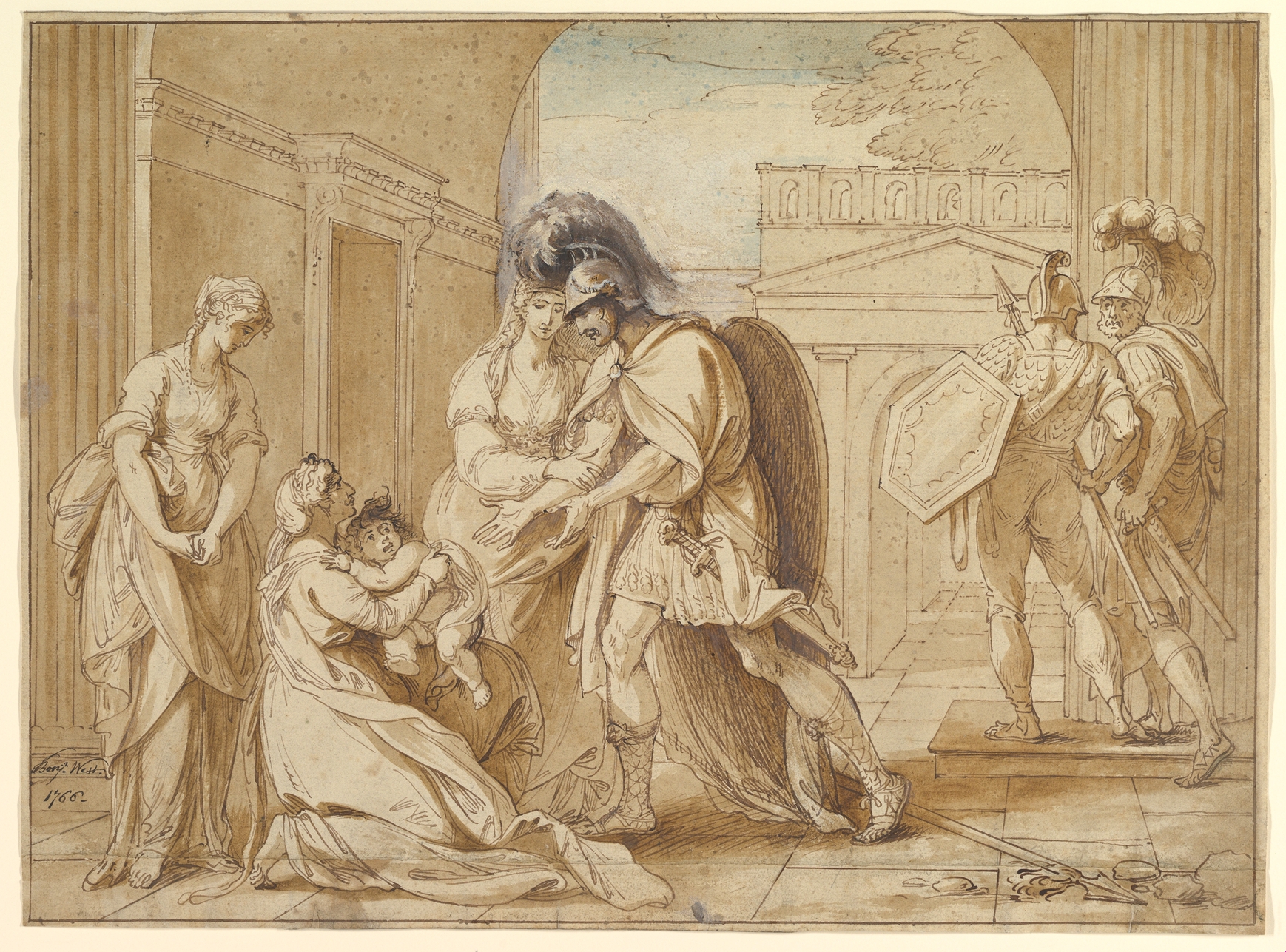
A warrior reaches for his infant son, and the child recoils from the horsehair crest of his helmet. Hector takes the helmet off. For a moment, Troy’s defender is simply a father trying to make his baby smile. Few scenes in the Iliad bring the human cost of war closer than this meeting between Hector, Andromache and their son.
Hector is the leading Trojan warrior in Homer’s poem: a son of Priam and Hecuba, the husband of Andromache, and the opponent Achilles will eventually kill. His appeal rests on the tensions in those roles. He loves his household, seeks public honour, makes damaging decisions and carries responsibilities he cannot finally fulfil.
How to read this story: The narrative below follows the Iliad, a work of ancient epic poetry. Its divine interventions, conversations and individual combats belong to that literary world. Archaeological Troy is a separate subject, considered at the end of this article.
A household inside a city at war
The Iliad begins late in the legendary Trojan War. The Greek coalition has come to Troy after Paris, Hector’s brother, brought Helen from the household of Menelaus. Different ancient traditions give Helen different degrees of choice in that departure. Homer’s poem concentrates on a short, devastating period in the war’s tenth year, especially the anger of Achilles and its consequences.
Hector belongs to Troy’s royal family, but the poem makes his place in the city visible through obligations rather than a neat succession chart. Soldiers look to him in battle. Women ask him about relatives fighting outside the walls. His mother is drawn into a public appeal for divine protection. His decisions reach into many households besides his own.
In Book 6, Andromache explains that Achilles has already killed her father and seven brothers. Her fear of losing Hector comes from experience. She urges him to defend the city from a less exposed position and points out a vulnerable section of its wall. Her argument concerns both family survival and military choices; she is more than a silent emblem of loyalty.
Hector understands her dread. He imagines Troy’s defeat and, most painfully, Andromache being carried away into slavery. Yet he also describes the shame he would feel before the Trojans if he held back. He has learned to fight among the foremost and to win honour for himself and his father. Affection, reputation and the expectations of a warrior society pull him in different directions. Read the meeting in Iliad 6, especially lines 390–502.
The helmet and the child
The baby’s name deepens the scene. Hector calls him Scamandrius, while others call him Astyanax, commonly understood as “lord of the city,” because his father is its great defender. A public identity has already been laid upon a child too young to understand it.
When Hector reaches toward him, the baby is frightened by the bronze helmet and its moving crest. Both parents laugh. Hector removes the helmet, kisses his son and prays that the boy will become a stronger warrior than his father. The warmth is genuine; so is the unsettling expectation that the next generation will win its standing in battle. Reading the scene only as a sentimental farewell misses that second note.
This meeting takes place in Book 6. It is not a final conversation immediately before Achilles kills Hector in Book 22. Keeping the two scenes apart matters: the reader carries the memory of the family’s moment together through the violence that follows.
Hector, Paris and the limits of leadership
Hector’s duty to Troy does not make him indulgent toward Paris. In Book 3, Paris steps forward to challenge the Greeks, then retreats when he sees Menelaus. Hector rebukes him for bringing disaster upon his city without meeting the responsibilities that follow. Paris then proposes a duel with Menelaus to settle the conflict, and Hector helps arrange it.
Menelaus gains the advantage, but Aphrodite rescues Paris. The promised settlement fails; in Book 4, Athena persuades Pandarus to break the truce by shooting at Menelaus. Human decisions and divine interference continually overlap in the poem. Treating these episodes as a straightforward military report strips away the kind of story Homer is telling. Iliad 3 and 4.
The duel with Ajax
Book 7 gives Hector his own formal challenge. After the Greeks draw lots, Ajax, son of Telamon, faces him. They exchange spear thrusts and heavy stones, and Ajax’s strength severely tests Hector. Heralds end the encounter as night approaches. Neither army receives the decisive result it might have hoped for.
The opponents exchange gifts: Hector gives a sword with silver fittings, and Ajax a belt. It is a striking pause in a poem full of stripped armour and disputed corpses. For a moment, each fighter can recognise the other’s standing. Later literature develops darker connections between these gifts and the heroes’ deaths, but those later associations should be distinguished from the exchange as Homer presents it. Iliad 7.
Hector’s strongest opportunity comes while Achilles refuses to fight after quarrelling with Agamemnon over Briseis, an enslaved captive. The dispute exposes the cruelty of a system in which a woman’s captivity is treated as a contest over male honour. Without Achilles in the Greek line, the Trojans press toward the ships that offer their enemies a way home.
Patroclus: a victory with a fatal consequence
The attack on the ships brings the crisis to its height. Patroclus asks to enter battle in Achilles’ armour, leading the Myrmidons. Achilles agrees, but orders him to drive the Trojans away from the ships and return rather than continue toward Troy. The armour helps frighten the Trojans, and Patroclus’ assault reverses their advance.
Success carries Patroclus farther than Achilles intended. His death in Book 16 is often simplified into a clean duel won by Hector. Homer gives a more complicated sequence: Apollo strikes and disarms Patroclus; Euphorbus wounds him with a spear; Hector then delivers the fatal blow as the wounded warrior withdraws. Patroclus’ dying words insist on the roles of the god and the earlier attacker.
That sequence prevents an easy ranking of the two warriors by this encounter alone. Hector has killed a formidable enemy, but he has done so after divine intervention and another man’s attack. When he boasts over Patroclus, the dying man predicts that Achilles will soon kill him. Iliad 16, lines 788–867.
In Book 17, Hector takes the armour Patroclus borrowed from Achilles and puts it on. The image is powerful: Troy’s champion wears the equipment of the man who will destroy him. Zeus recognises the tragedy of Hector’s confidence. Meanwhile, the Greeks fight to recover Patroclus’ body, preserving a duty to their dead that becomes central to the poem’s ending. Iliad 17.
The decision to remain outside Troy
Grief draws Achilles back into battle. He receives new armour made by Hephaestus and abandons his quarrel with Agamemnon to pursue revenge. The change is catastrophic for the Trojans. Hector, however, has already rejected Polydamas’ advice to withdraw inside the walls once Achilles’ return becomes clear.
At the beginning of Book 22, Hector remains outside the gates while the other Trojans find shelter. Priam and Hecuba plead with him to come in. Andromache is absent from this exchange; later in the book she learns what has happened while she is inside the city.
Hector’s inner debate complicates any portrait of an unerring commander. He knows that ignoring Polydamas has helped bring disaster upon his army. Fear of public blame keeps him outside. He briefly considers approaching Achilles with a settlement, then rejects the thought because he cannot expect mercy. The poem allows him courage and responsibility while exposing the consequences of his pride. Iliad 18 and 22, especially lines 90–130.
Fear, deception and the final fight
When Achilles approaches, Hector runs. Achilles chases him three times around Troy. This terror does not erase Hector’s earlier courage. It gives the confrontation its human scale: a celebrated warrior can still fear the death that has suddenly come within reach.
Athena then takes the form of Hector’s brother Deiphobus and offers to help him stand against Achilles. Hector stops, believing he has support. Before fighting, he proposes that the victor return the loser’s body. Achilles refuses. During the exchange of spears, Athena secretly restores Achilles’ weapon to him. Hector calls for another spear from Deiphobus and discovers that his supposed companion has vanished.
Understanding the deception, Hector draws his sword and charges. Achilles strikes the exposed part of his neck. The armour Hector took from Patroclus cannot save him. Even while dying, he asks that his body be ransomed to his parents. Achilles again refuses and attaches the corpse to his chariot, dragging it away toward the Greek ships. The chase around Troy and the subsequent abuse of the body are distinct actions. Iliad 22, lines 131–404.
Priam’s journey and the return of the body
Hector’s death does not end the poem. Its final movement turns on what the living owe the dead and whether grief can break through hatred. Achilles continues to dishonour the corpse, drawing it around Patroclus’ burial mound, while the gods protect it from destruction. Eventually, Zeus directs that Hector be returned.
Guided by Hermes, Priam travels into the Greek camp with ransom. He approaches Achilles and asks him to think of his own father. The old man’s appeal makes the enemy’s loss imaginable. Priam mourns Hector; Achilles weeps for Patroclus and for his father, Peleus. Their grief brings a brief, fragile recognition across the lines of war.
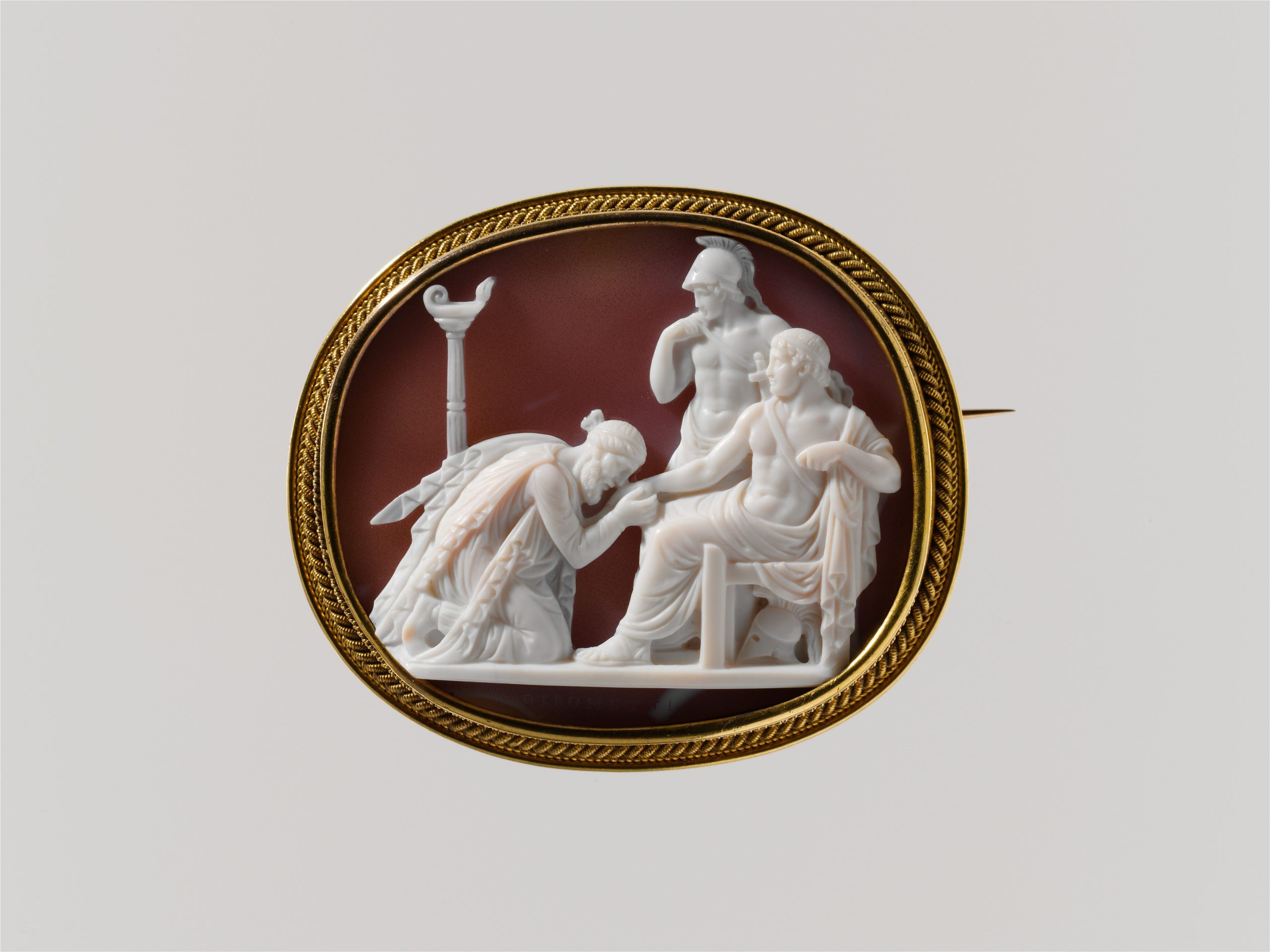
Achilles accepts the ransom, orders the body prepared and grants time for mourning and burial. Back in Troy, Andromache, Hecuba and Helen each lament a different relationship with Hector. Helen remembers his kindness when others were hostile to her. Through these voices, the lost warrior becomes a husband, a son and a protector within the household as well as on the battlefield.
The Iliad closes with Hector’s funeral. It does not narrate the wooden horse or the sack of Troy. Those belong to the wider Trojan tradition. Ending here leaves readers with the work of mourning, and with a city whose future loss is already felt. Iliad 24.
Was Hector a real person?
The site identified with ancient Troy lies at Hisarlık in north-western Türkiye. Its successive settlements, fortifications and destruction layers provide material evidence for a long-lived city and its regional connections. UNESCO’s World Heritage record describes the importance of these remains and the site’s exceptional literary influence.
That evidence does not establish Hector’s existence or verify a ten-year campaign led by Homer’s named heroes. The relationship between Bronze Age conflicts and later Greek epic remains a subject of research and debate. As the British Museum’s discussion of Troy explains, archaeology can offer a possible historical backdrop without confirming that the war happened as the poem describes it. UNESCO: Archaeological Site of Troy; British Museum: Troy and the evidence.
Hector is therefore best approached here as a literary figure whose story became part of cultural history. The artworks accompanying this article are evidence of later responses to that story. They cannot show us what a Bronze Age Hector looked like.
Hector endures because the poem lets his virtues and failures exist together. He protects people he loves, cares about how others judge him and struggles to acknowledge a disastrous decision. His story asks what courage can achieve when neither courage nor love is enough to keep a community safe.
Sources and reading notes
- Homer, Iliad, especially Books 3–7, 16–18, 22 and 24. Links above lead to A. T. Murray’s public-domain translation, hosted by the Theoi Classical Texts Library. Book and line references distinguish the poem’s narrative from later retellings.
- British Museum, “The myth of the Trojan War”, for the larger epic tradition.
- UNESCO, Archaeological Site of Troy, and the British Museum’s discussion linked above, for the distinction between the site and the epic story.
- Museum collection records linked in each caption identify the artists, dates and objects. Both images are public-domain works supplied through The Met’s CC0 Open Access programme.