
Civilizations & Empires
Persepolis in Clay: The Workers and Rations Behind an Imperial Capital
Grain allowances, seal impressions and a few lines about wine reveal a Persian imperial household from below. They also show how much an administrative record can leave unsaid.
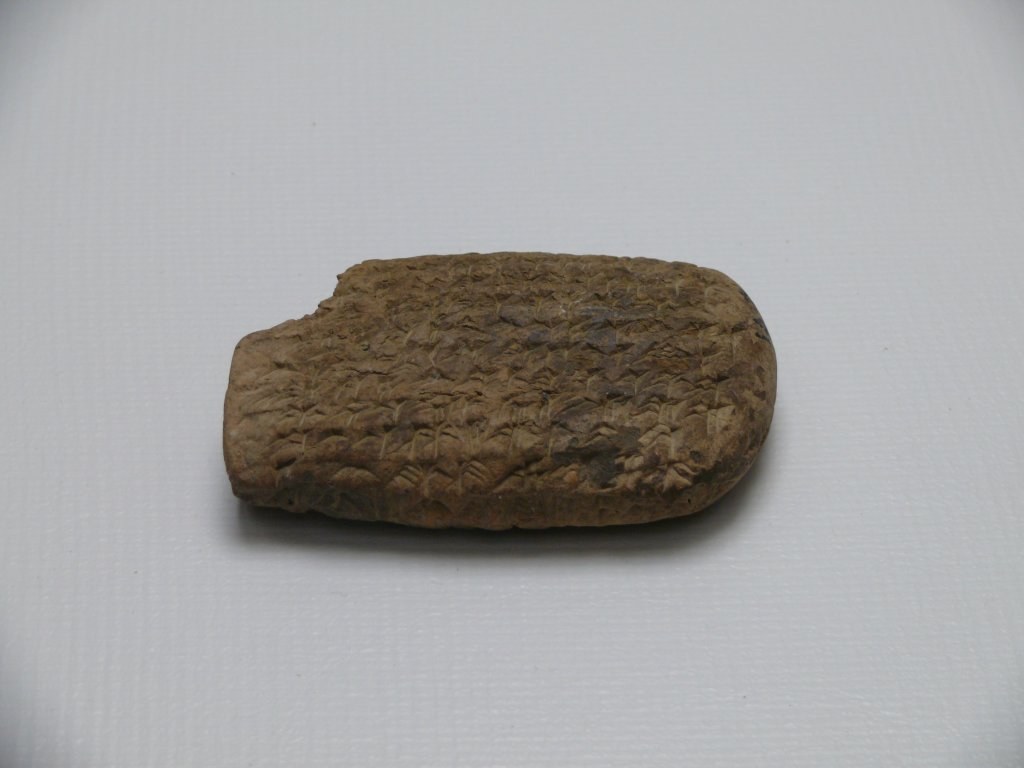
A clay tablet from Persepolis, scarcely wider than three centimetres, records wine in Greek. Its message is brief: two measures, and a month. No king speaks. No battle is celebrated. Yet this small account sits inside one of the richest surviving bodies of evidence for the Achaemenid Persian Empire.
The Greek tablet, Fort. 1771, is exceptional within a predominantly Elamite archive. Its ordinary subject is more representative. Across thousands of clay documents, administrators recorded grain, wine, livestock and the people entitled to receive them. Workers, mothers, travellers, animal handlers and powerful household owners enter history because somebody needed to account for provisions.
These records do not offer intimate portraits. They were made to make an institution function, not to preserve the experience of its workforce. Read carefully, however, their quantities and classifications reveal a society much less uniform than either the ceremonial processions carved at Persepolis or a modern slogan about benevolent Persian kings can suggest.
The archive beside the palaces
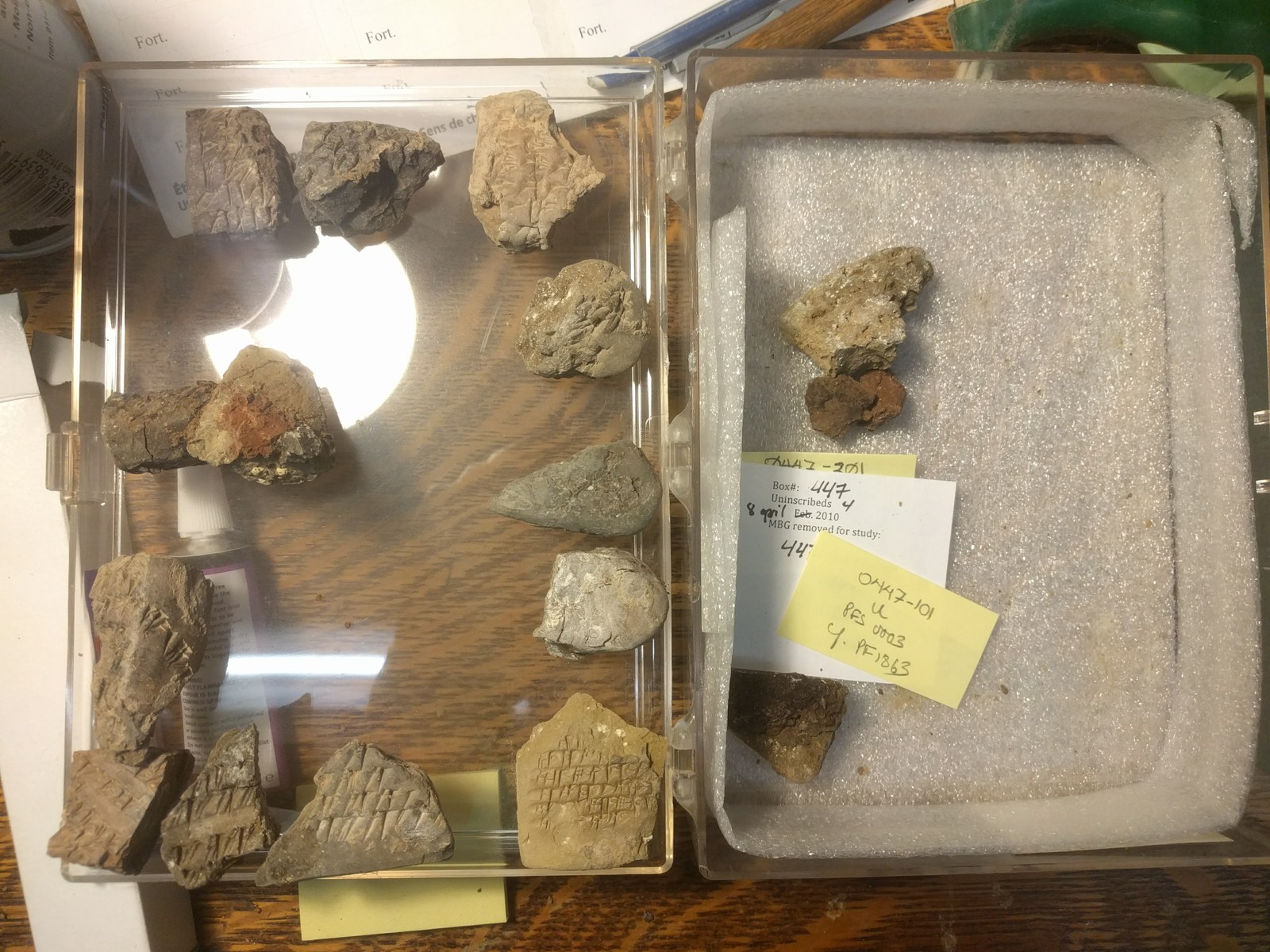
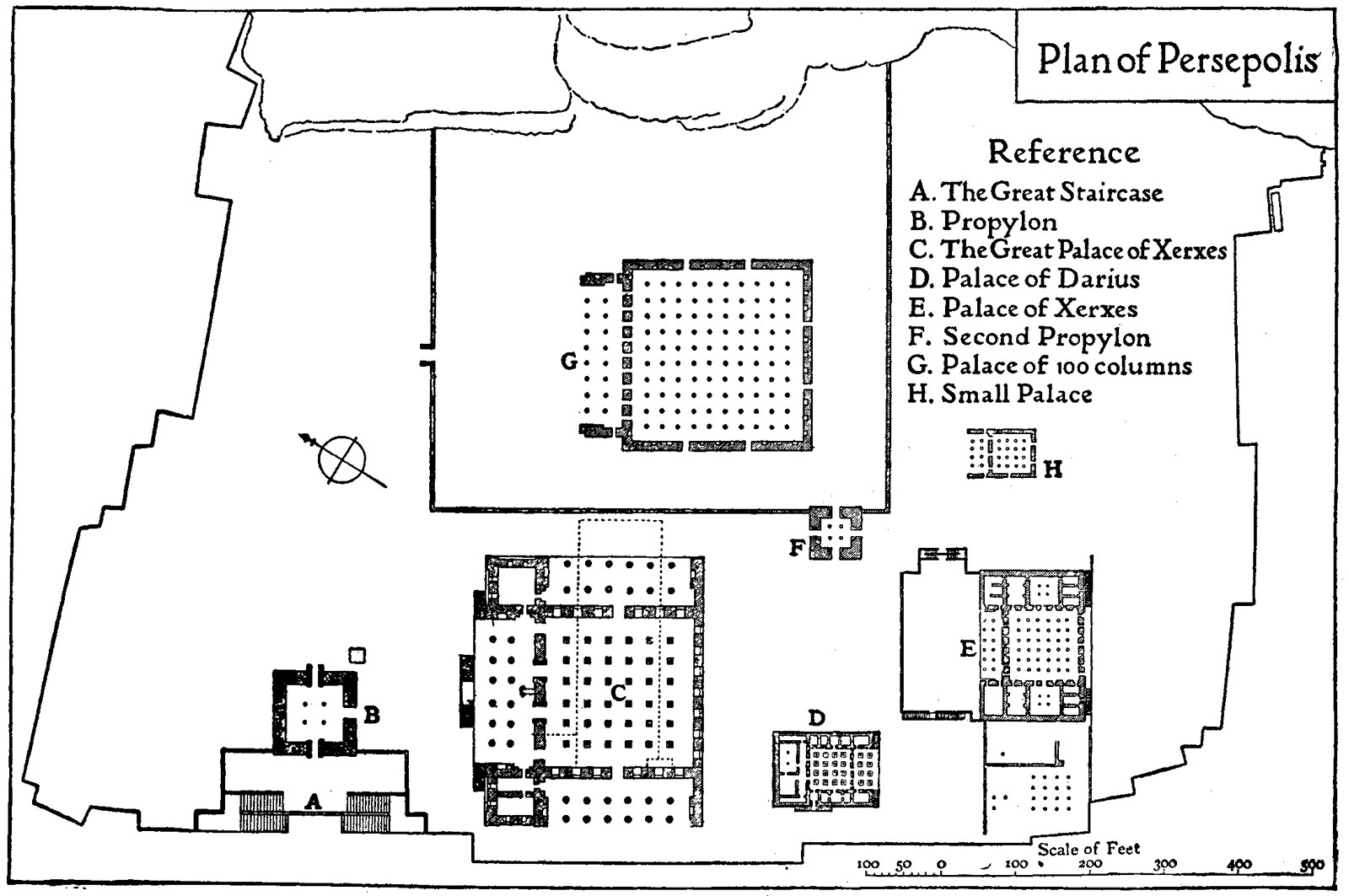
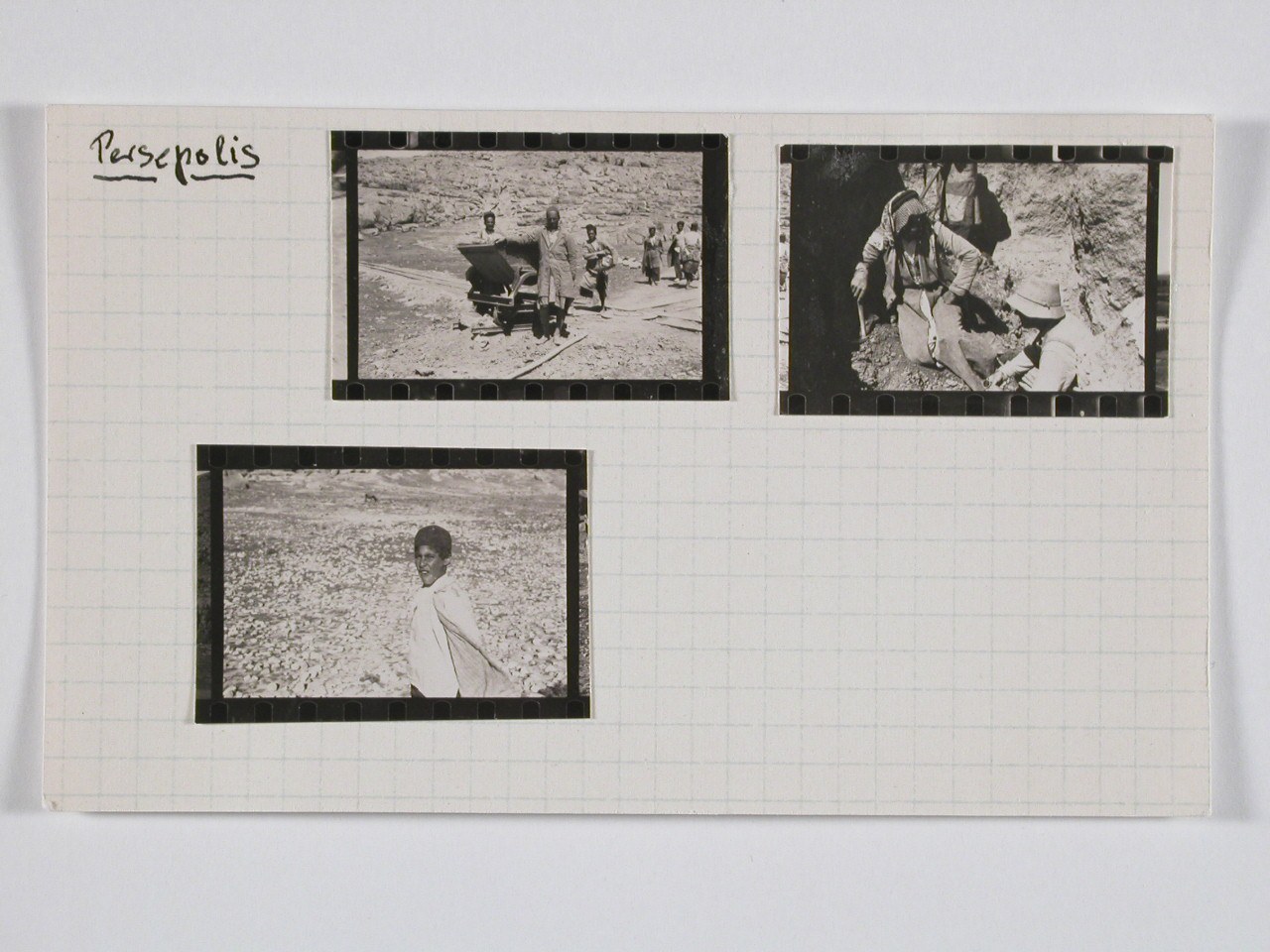
In March 1933, excavators directed by Ernst Herzfeld found tablets and fragments in two small spaces within the northeastern fortifications of the Persepolis terrace. The location gave the Fortification Archive its modern name. Estimates vary because a fragment is not necessarily a separate document: several pieces may eventually join, while others cannot be securely assigned. Counting the collection is itself an archaeological problem.
The dated Elamite documents extend from 509 to 493 BCE, during Darius I’s reign. Their administrative reach lay principally in the Persian heartland, rather than across every province of the empire. The archive’s scholarly description identifies a system handling agricultural produce, animals and related products through numerous settlements and facilities.
A separate discovery in the Treasury yielded a smaller, later group. Its texts run from 492 to 457 BCE and chiefly concern payments of silver in place of all or part of workers’ food allowances. The Treasury Archive includes craftsmen and accountants, sometimes identified by occupation or geographical origin. It should not be silently merged with the Fortification documents as if all the evidence belonged to one year or one office.
That distinction matters when people ask how “the workers of Persepolis” were paid. The surviving evidence covers changing arrangements, different recipients and more than the construction of the visible monuments. Farm labour and animal maintenance belong in the story alongside stonecutting. The palace complex was connected to a productive countryside, not sustained by an economy consisting only of builders and courtiers.
From an issue of grain to a checked account
The routine record began with a practical question: what had moved, who had received it, and under whose authority? A named recipient could appear alongside a supplier, a place, a quantity and a date. Without those connections, an impressive total of grain would tell an administrator little about responsibility.
Richard Hallock’s 1969 edition of the Elamite tablets organized the evidence into categories including provisions for travellers, allocations to workers, animal fodder, letters, journals and accounts. The publication made more than two thousand documents available for systematic comparison. Repeated formulas, rather than being tedious obstacles to interpretation, allowed scholars to recognize what changed from one transaction to another.
Documents also existed at different levels. Short records of individual transactions could be brought together into larger summaries and balanced accounts. A later compilation might preserve information after its supporting memoranda had served their immediate purpose. Mark Garrison’s study of seals and archives at Persepolis discusses this processing sequence and the unequal distribution of surviving document types across years.
The implication is easy to overlook. A gap in the archaeological archive need not signify a month when no work occurred. It may reflect selection, disposal, compilation or damage. Conversely, several records can concern successive administrative treatments of related business. Adding every surviving number together would not automatically produce a reliable total of imperial expenditure.
The form of a tablet supplied information too. Some were shaped around knotted strings; others were larger rectangular surfaces suited to tabulation. Clay preserved impressions of seals alongside writing. An ancient account was a handled object with edges and attachments, not merely the translation of a few lines on a modern page.
What a ration can and cannot tell us
“Ration” sounds like the minimum needed to keep a person alive. In these records it can cover a broader range of institutional support and remuneration. The recipients included working groups, officials and other people whose positions differed substantially. Quantities can therefore indicate rank, function or entitlement as well as subsistence.
The ISAC museum’s account of ancient Iran places these distributions within movements of produce between local centres and Persepolis. The record of an allowance tells us what an agency recognized or issued. By itself it does not establish everything a household grew, exchanged, consumed or obtained outside that particular channel.
Nor does receiving provisions establish that someone was a free wage earner. Scholars have long debated the legal and social position of the people described as kurtaš. The term is often rendered “workers” or “dependent workers,” but it does not resolve every person’s status. Susumu Sato’s study treats it as a category within the royal economy; Muhammad Dandamayev’s discussion stresses that the group need not have been legally homogeneous.
This is where comforting modern comparisons become hazardous. A provision ledger is not a labour contract, and an extra allowance is not proof of an enforceable employment right. Equally, the presence of dependent labour does not authorize treating every named specialist, supervisor or recipient as interchangeable. The evidence requires distinctions precisely because the institution made distinctions.
The archive preserves a managerial view of people: how many, of which category, supported at what rate. Recovering the human history means asking what those categories reveal while noticing what they leave out. The tablets seldom tell us whether a worker could refuse an assignment, how a family understood its circumstances or what happened when an expected payment failed.
Women inside the accounts
Women and children appear in work groups alongside men. According to Maria Brosius’s study of women in Achaemenid Persia, some female supervisors received the highest allowances within their groups. Ration scales varied: evidence of unequal allocations coexists with cases in which skilled women and men received comparable support. Mothers of newborn children could receive additional provisions, with larger supplements for boys than for girls.
These entries are striking, but “maternity pay” can be too reassuring a modern label. The records demonstrate that childbirth affected accounting. They do not establish a universal leave policy, the mother’s freedom to stop working or equal treatment across the empire. The difference between allocations after male and female births also belongs in any account of the arrangement.
At the other end of the hierarchy, Irdabama appears as a powerful woman controlling workforces and authorizing transactions through her seal. Her presence and that of female labourers in the same broad documentary world should sharpen, rather than dissolve, the distance between them. Gender mattered, but it was not the only axis along which resources and authority were distributed.
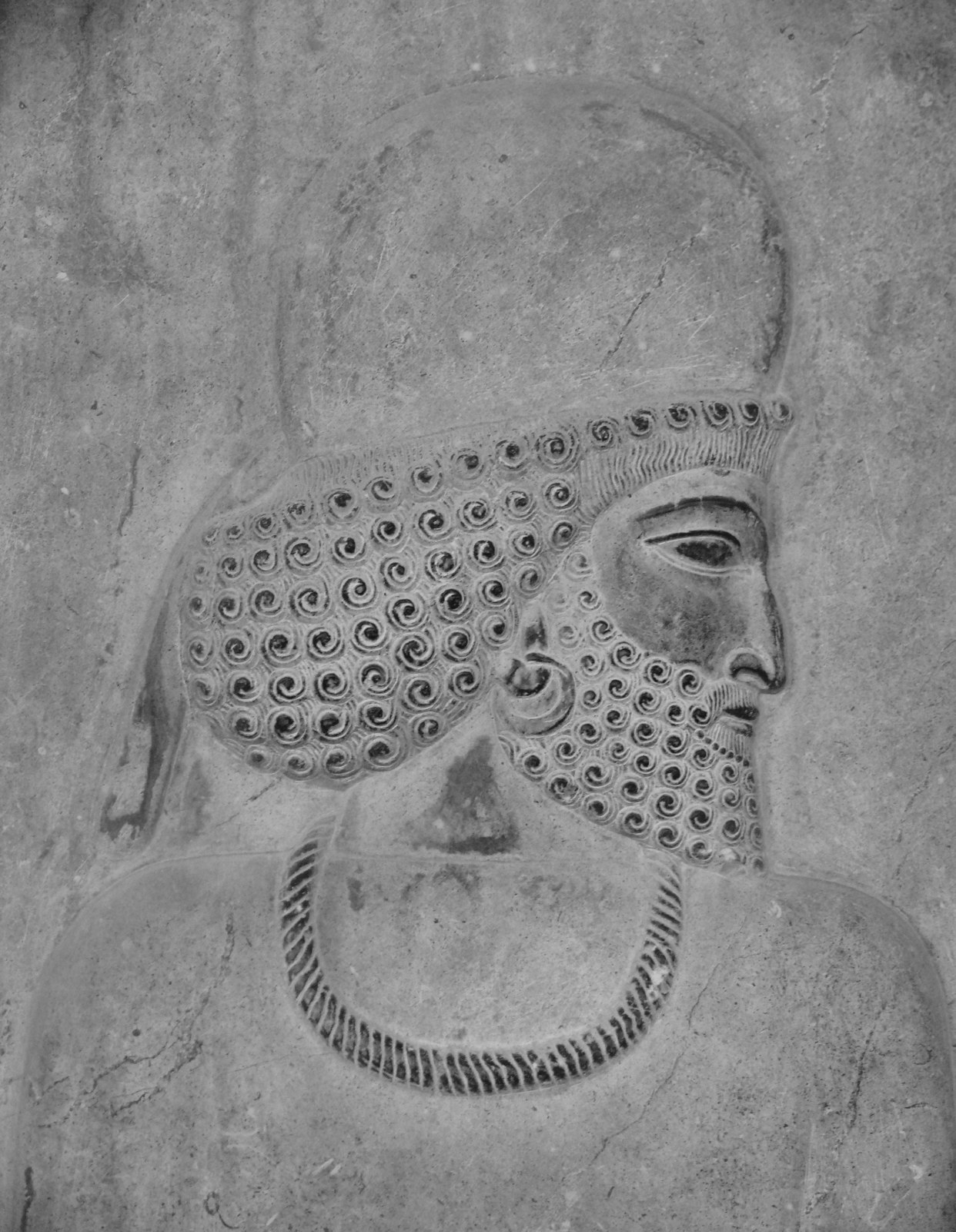
The contrast with monumental representation is instructive. A ceremonial relief organizes selected figures into a controlled public image. An account identifies the people whom a particular administrative operation needed to count. Neither is a census. Together they show why the visible court should not stand in for the whole society that provisioned it.
A camel driver leaves a mark
One document, PF 1711, records flour supplied by Karma and received by Dakizidda for ten camels. Its date places the transaction in the twenty-second regnal year of Darius. J. Troy Samuels uses the record in a study of a non-elite professional’s administrative connections. Dakizidda, conventionally described as a camel driver, appears with his own stamp seal.
Here a person becomes visible through more than a job label. The seal links an individual identity to a particular transaction, while other tablets connect the supplier with further recipients. Such overlaps let researchers reconstruct networks within the surviving documentation. They do not prove that every person connected through a supplier knew every other one socially.
That restraint preserves what is valuable about the case. We cannot recover Dakizidda’s conversation or his feelings about his work. We can identify an occasion when he received provisions, the animals supported and the material mark associated with him. The record fixes a small, consequential act without turning it into an invented day in his life.
Seal impressions have a wider importance. Garrison and Margaret Cool Root’s catalogue of the archive’s seals reconstructs images by comparing multiple impressions. A partial image on one tablet can help complete another. The original engraved objects are often missing; their repeated actions survive.
These tiny pictures provide a much wider visual repertoire than the famous palace reliefs alone. They also connect art with administrative context. An image was not simply decoration to be admired in isolation. Rolled or pressed into wet clay, it participated in a transaction involving particular people or offices.
Several languages, one difficult surviving system
Most of the archive’s written tablets use Elamite cuneiform, but a substantial group carries Aramaic, and thousands bear seal impressions without writing. The University of Southern California’s project account explains how shared findspots, contents and seals connect these different components. They should not be treated as unrelated collections merely because their scripts look different.
Their relationship nevertheless remains an active research problem. An uninscribed sealed tablet was not necessarily meaningless, and a concise Aramaic entry was not simply a defective Elamite one. Different forms could serve different stages, offices or documentary habits. The unusual Greek wine record brings that multilingual setting into focus without proving that Greek was a normal administrative language at Persepolis.
The archive’s religious evidence likewise resists a single flattened picture. Provisions supported ritual personnel and offerings associated with both Iranian and Elamite divine names. Administrative expenditure lets historians see practices that royal declarations alone would leave obscure. It does not provide a complete statement of what every participant believed.
Modern recording has therefore become part of interpretation. Ink, shallow wedges and faint seal impressions require different lighting techniques. Reflectance transformation imaging lets researchers examine changing light across a tablet’s surface. Digital documentation can make a worn sign more legible, but its identification still depends on comparison and expertise.
The people who remain partly hidden
The Persepolis Fortification Archive Project describes publication as a continuing process: records of tablets, texts and seals are made available and improved. A new reading or joined fragment can alter an existing interpretation. There is no need to pretend that an enormous archaeological collection becomes fully understood at the moment it is discovered.
The archive’s greatest strength is also its limit. Because administrators needed to distribute goods and check responsibility, people omitted from royal narratives entered durable records. Because those records served administrators, many of those people remain groups, categories or brief names rather than recoverable biographies.
Persepolis consequently offers something more useful than a simple verdict on whether the Persian Empire treated its workers well. It permits a closer account of how authority reached everyday life: through allowances, classifications, supervisors, documents and the movement of food. Behind the ordered figures carved in stone lay relationships that had to be renewed, recorded and checked. The clay has preserved some of that work, and some of the people who made the imperial household possible.