
At Ellis Island, Read the Waiting Room Before the Skyline
A source-based museum guide follows the desks, documents, hospitals, and changing laws that stood between an arrival and an admission.
The Registry Room at Ellis Island can look like an impressive interior with a useful view of New York. Its historical purpose becomes clearer when attention shifts from the windows to the desks and waiting areas. This was a place where an arrival still had to become an admission.
That distinction gives a visit its organizing question. What did an immigrant have to demonstrate, and which official could decide whether the answer was sufficient? The architecture, photographs, documents, and recorded recollections offer different parts of the explanation. None should be allowed to turn every person who passed through the island into the same representative traveler.
Nearly twelve million immigrants were processed at the station between 1892 and its closure in 1954, according to the National Archives. Across that period, buildings expanded, laws changed, and the island’s role shifted. A useful visit follows those changes rather than imagining one timeless scene of arrival beneath the same vaulted ceiling.
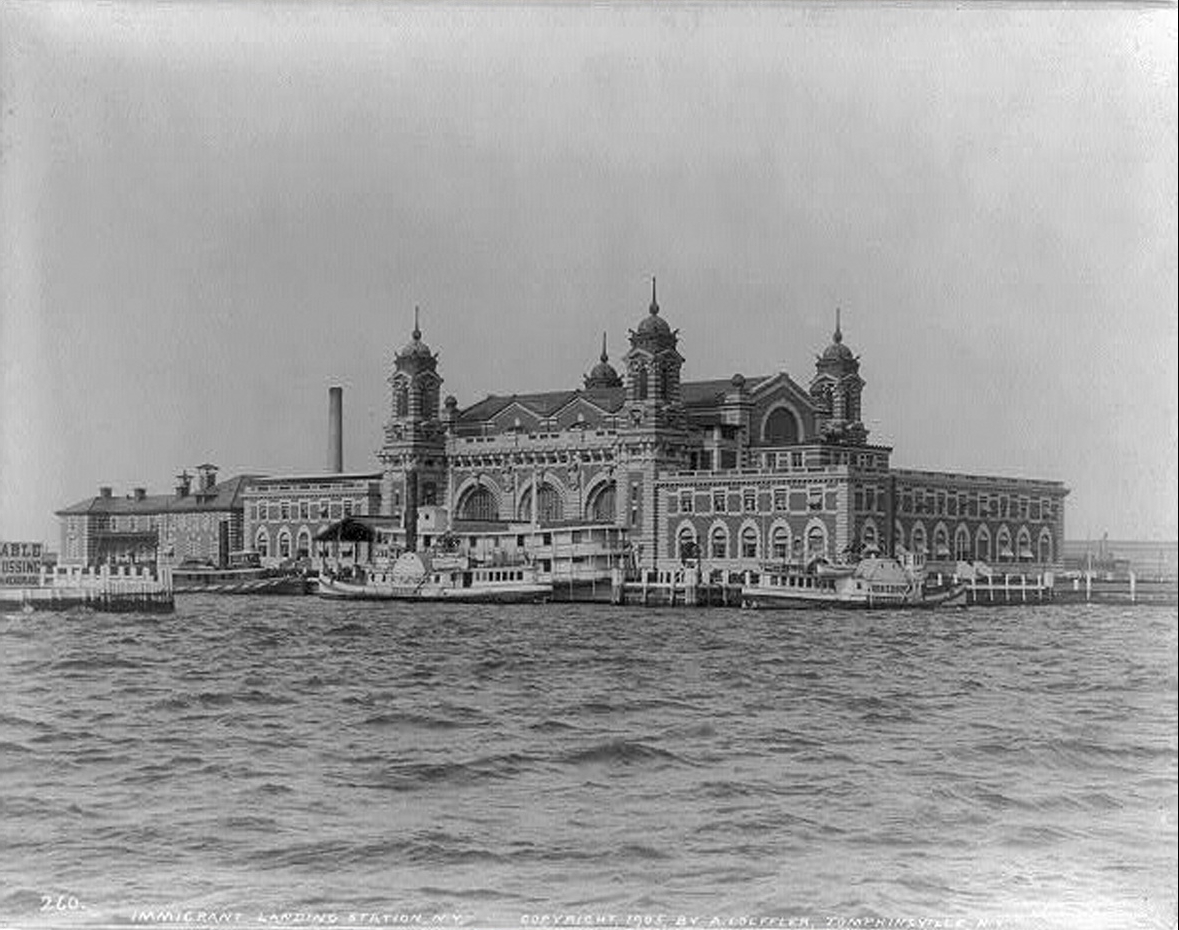
Begin by dating the building
The Main Immigration Building familiar from photographs was not the first station. Ellis Island opened for federal immigration processing in January 1892. Its wooden complex burned in June 1897; the present main building opened on December 17, 1900. The National Park Service’s construction history traces the rebuilding and subsequent expansion.
This chronology matters immediately for anyone connecting the museum with a family story. An ancestor who arrived in 1893 did not stand in the surviving Main Building. The site may still be relevant, but the relationship between the person and the visible fabric is different.
The building also belonged to a larger working complex. Kitchens, laundries, power facilities, hospitals, and isolation wards supported the station. Landfill expanded the island to accommodate those functions. Immigration processing needed food, heat, beds, waste disposal, medical care, and maintenance as well as officials asking questions.
Looking at the Main Building alone can hide that institutional scale. It is worth pausing over historical views of the whole island before moving into individual stories. The arrangement of buildings records attempts to separate activities and groups of people, while the successive additions reveal that the institution had to keep adapting.
The hall was not everybody’s route
The museum is central to the history of American immigration, but it was never the only American port of entry. Nor did every passenger entering New York Harbor undergo the same inspection route. The NPS historical FAQ identifies steerage and third-class travelers as the largest group processed on Ellis Island. First- and second-class passengers generally underwent inspection aboard their ships.
Class therefore shaped the encounter before anyone reached the Registry Room. The administrative system associated the ability to afford a more expensive passage with different expectations about health and financial dependence. That does not make wealth a reliable measure of either; it shows how assumptions entered the organization of inspection.
For a visitor, the consequence is simple: a family’s voyage and ticket class can matter as much as the date. A famous room cannot stand in for every possible arrival experience. Begin with the record, then ask which parts of the site that record actually connects to.

Watch the movement from person to case
The NPS interpretation of the Registry Room separates medical inspection from legal inspection. Doctors first looked for signs that required further examination. Suspected conditions could be marked with chalk, directing the person away from the main line. Most passed the medical stage that day, but a referral could change the rest of a family’s journey.
A photograph of lines and enclosures helps explain the administrative ambition. The hall organized a large number of individuals into a sequence that officials could manage. Each person carried a private history; the procedure required selected facts that could be recognized, recorded, and acted upon.
Try comparing the view from above with the position of a person within the line. From above, the arrangement is legible as an efficient pattern. Within it, the next decision might be difficult to predict. The photograph supplies evidence of the space and its organization, not direct access to everyone’s emotions.
The distinction is useful when reading displays that reproduce medical categories. Their language belongs to the immigration and medical systems of their time. A historical label should not become the visitor’s own diagnosis or judgment about the person to whom it was applied.
Medicine and admission were different decisions
Ellis Island’s doctors were officers of the federal public-health service. The NPS account of their work describes examination, diagnosis, and treatment, and makes an important distinction: immigration inspectors, rather than physicians, made the admission decisions.
This division of responsibility prevents the whole process from dissolving into an image of a single doctor deciding a person’s future at a glance. A medical finding could have serious legal consequences, but it entered an administrative process whose authority was distributed among different offices.
The hospitals also complicate an exclusively celebratory account of the island. Their existence records care, illness, separation, and waiting. The same complex could treat a person and participate in deciding whether that person could remain in the country. Those functions were connected without being identical.
Nor was Ellis Island synonymous with every public-health operation in the harbor. NPS distinguishes its medical work from quarantine conducted on Hoffman and Swinburne Islands. Keeping those locations separate protects the history from an easy but inaccurate image of one island carrying out every form of exclusion and treatment.

At the desk, the questions had consequences
Legal inspectors asked about matters including a traveler’s identity, occupation, destination, and available money. These questions were connected to rules about who could enter, rather than constituting a neutral conversation about a journey. The NPS account of historic legal inspection explains the importance of fears that an immigrant would become dependent on public support.
The interview could contain difficult tensions. Applicants needed to demonstrate that they could support themselves, while the contract-labor restrictions of the period could make a prearranged job problematic. A question that now looks like an uncomplicated request for useful information might have required an answer with serious legal implications.
Interpreters helped the process work across languages. Their presence is a useful corrective to the idea that the station simply confronted every traveler with incomprehensible English. It does not establish that communication was effortless or that the power between questioner and applicant was equal.
People whose cases required further consideration could be detained for a Board of Special Inquiry hearing. The additional step matters. Detention and denial were not interchangeable outcomes, just as a medical referral was not itself a final expulsion. Follow the distinctions on the exhibits before reducing a person’s experience to “accepted” or “rejected.”
A manifest is a record with its own history
The familiar story that an official invented a new surname at Ellis Island misdescribes the routine system. Inspectors worked from shipping-company passenger manifests prepared before arrival. The NPS guide to tracing immigrant ancestors cautions against that name-change myth and notes how handwriting and modern transcription can complicate searches.
This does not mean a family’s account of changing a name is worthless. It means the timing and mechanism need investigation. A later change, a variant spelling, and a database transcription error are different events. Treating them as one dramatic exchange at an inspection desk can obscure the evidence that would explain what actually happened.
When looking at a manifest, read across the row rather than stopping at the surname. A destination, occupation, traveling companion, or relative can help distinguish people with similar names. The document records what a particular administrative process needed to know, not a complete biography or an impartial summary of a life.

Listen for what the forms could not hold
Ellis Island’s oral-history program, begun in 1973, collected recollections from immigrants, employees, military personnel, and people detained there. The range is important. The island was experienced by people who processed arrivals as well as by those whose futures depended on processing.
A recorded recollection may restore details that an official form had no place to hold: how someone understood an instruction, which separation stayed in memory, or how arrival fitted into a much longer life. At the same time, an interview given decades later is a later act of remembering. Its date belongs beside the date of the event being described.
That is a reason to compare sources, not to dismiss testimony. A manifest can help establish a voyage; a later interview can explain what the voyage came to mean. Neither needs to impersonate the other. Taking one person’s recollection seriously also means resisting the temptation to assign it to every immigrant.
After the great arrivals, the island kept working
The nationality quotas enacted in 1921 and 1924 sharply restricted immigration. The later law also shifted much inspection into a system involving visas obtained overseas. The National Archives’ guide to visa records explains the records accumulated from 1924 onward. A quieter Registry Room could reflect a change in where the border was administered, not the disappearance of border control.
The NPS history of the post-peak years follows the island’s increasing association with detention and deportation. During the Second World War, parts of the complex supported Coast Guard training, while other spaces held people classified by the government as enemy aliens and their families.
The same room could therefore acquire a different meaning within one lifetime. A hall associated with hoped-for admission became a place of confinement for other occupants. Ending the visit’s historical narrative in the early twentieth century leaves those people outside the story even though they were inside the building.

The museum is a restored interpretation
After the station closed in 1954, the buildings deteriorated. The Main Building’s restoration returned it to the appearance of the 1918–1924 period before the museum opened in 1990. The NPS restoration history describes years of research, planning, and physical work.
Restoration makes the interior intelligible, but it also chooses a historical frame. The room visitors see cannot simultaneously reproduce every arrangement used from 1900 to 1954. Compare historical photographs with the restored space and ask what has been reinstated, what has changed, and which period is being shown.
A ranger’s interpretation, a family conversation, and an archival photograph now bring different narratives into that space. The museum’s achievement is not that it lets a visitor reproduce an immigrant’s experience. It lets a visitor examine evidence of experiences whose uncertainty the modern ticket holder does not share.
Plan enough time to read
Visitor information checked on October 24, 2026: the official NPS planning page states that the museum has no entrance fee, while ferry transport is paid. It identifies Statue City Cruises as the ferry provider, links to booking, and recommends reserving in advance. Follow that official link rather than assuming that every harbor cruise includes a landing at Ellis Island.
NPS advises allowing most of a day when combining Ellis Island with the Statue of Liberty. Security screening takes place before boarding. Recheck current operating information and alerts before traveling; this guide does not promise a particular departure time or ticket price.
The NPS accessibility pages provide separate guidance for mobility, hearing, vision, cognitive access, and service animals. Loan wheelchairs are described as first-come, first-served, so their availability should not be assumed.
Give the museum a deliberate share of the itinerary. One manifest read carefully beside one recorded recollection can be more revealing than a rapid circuit of every gallery. Then return to the Registry Room: its size and beauty remain, but the desks, divisions, and routes through it should now be harder to overlook.