
Science, Invention & Exploration
How Ottoman Variolation Changed Smallpox Prevention in Britain
Ottoman practitioners, Mary Wortley Montagu, medical correspondents and early outcome studies transformed British smallpox prevention. Their story reveals both the promise and dangers of variolation before vaccination.
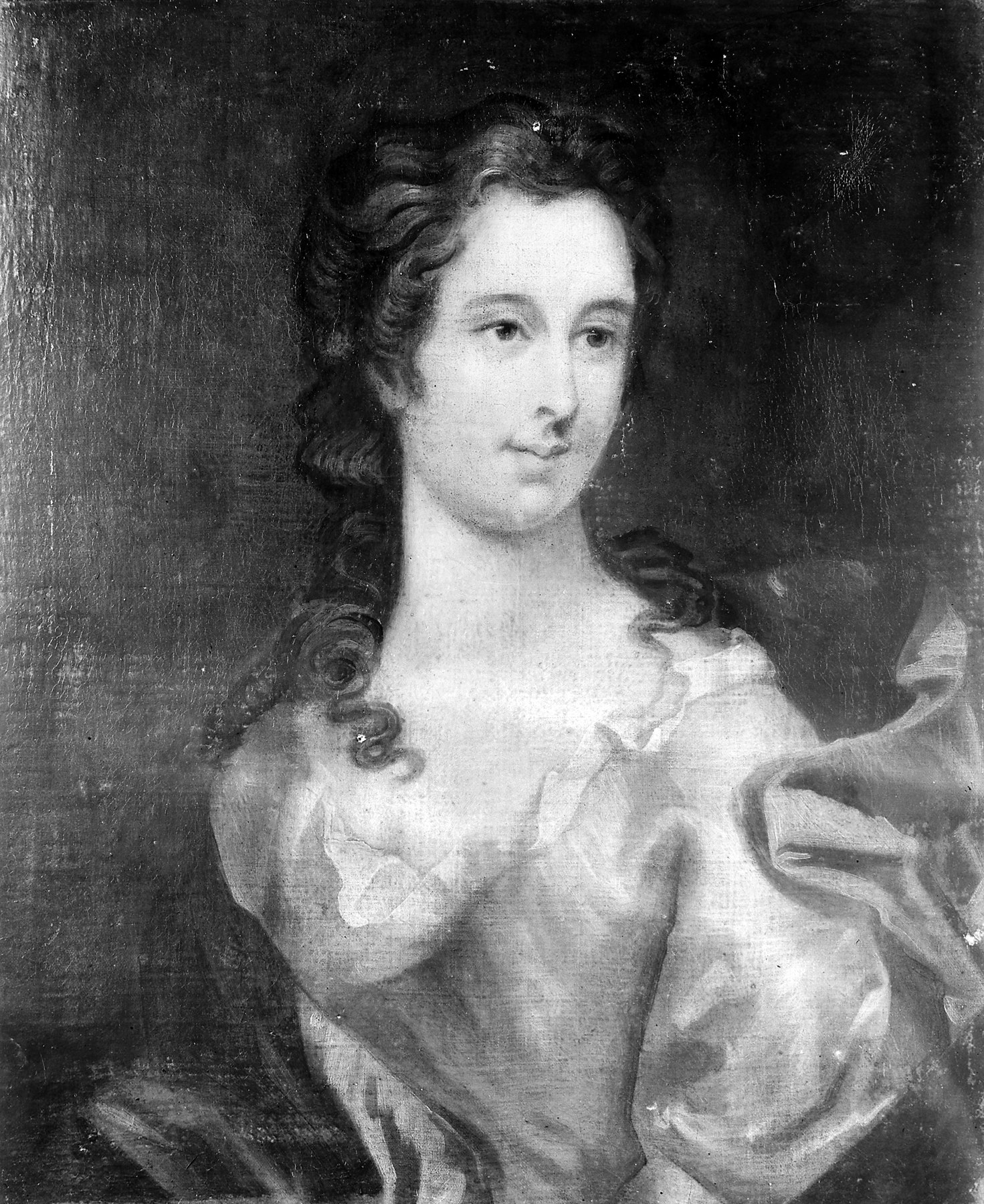
In April 1717, writing from Adrianople, now Edirne, Lady Mary Wortley Montagu described a procedure she wanted to bring into fashion at home. Women in the Ottoman Empire deliberately gave people smallpox, expecting a comparatively mild illness that would protect them from a later, more dangerous infection. To English readers accustomed to fearing the disease, that proposition could sound alarming. For the practitioners Montagu described, it was an established skill.
The procedure was variolation. It used material from human smallpox and could itself cause fatal illness or transmit infection to other people. Vaccination, associated with Edward Jenner’s work later in the century, used a different infectious source. Keeping the two distinct is essential to understanding both the achievement and the risks of the earlier practice.
The story of variolation’s British adoption runs through Ottoman households, scholarly correspondence, an ambassador’s family, a London prison and the collection of mortality statistics. Montagu was an important advocate within that chain. She was neither its inventor nor its only messenger.
A disease that shaped ordinary decisions
Smallpox killed, scarred and sometimes blinded its victims. Survivors usually acquired lasting protection, a pattern people could observe long before they understood viruses or immune responses. The possibility of producing that protection deliberately offered a way to change the timing and circumstances of an encounter with the disease.
The National Library of Medicine’s historical exhibition explains the central calculation. Variolation carried a lower risk of death than naturally acquired smallpox in the populations described, but the risk was real. Broad historical percentages summarize experiences that varied with place, technique, patient selection and record keeping. They should not be mistaken for an exact forecast available to every eighteenth-century family.
A successful procedure also created a social problem. The person being protected could become a source of smallpox for someone else. Inoculation therefore involved decisions about nursing, separation from other people and the surrounding community. Individual benefit and public safety could pull in different directions, especially when adoption was uneven.
Knowledge already in circulation
Practices intended to produce a controlled case of smallpox existed in several regions of Asia and Africa. Their origins and routes of transmission cannot all be reconstructed securely. The James Lind Library’s review of inoculation’s origins cautions against accepting extremely early dates merely because they have been repeated. Different procedures and fragmentary accounts should not be flattened into a single uninterrupted journey from one inventor to the rest of the world.
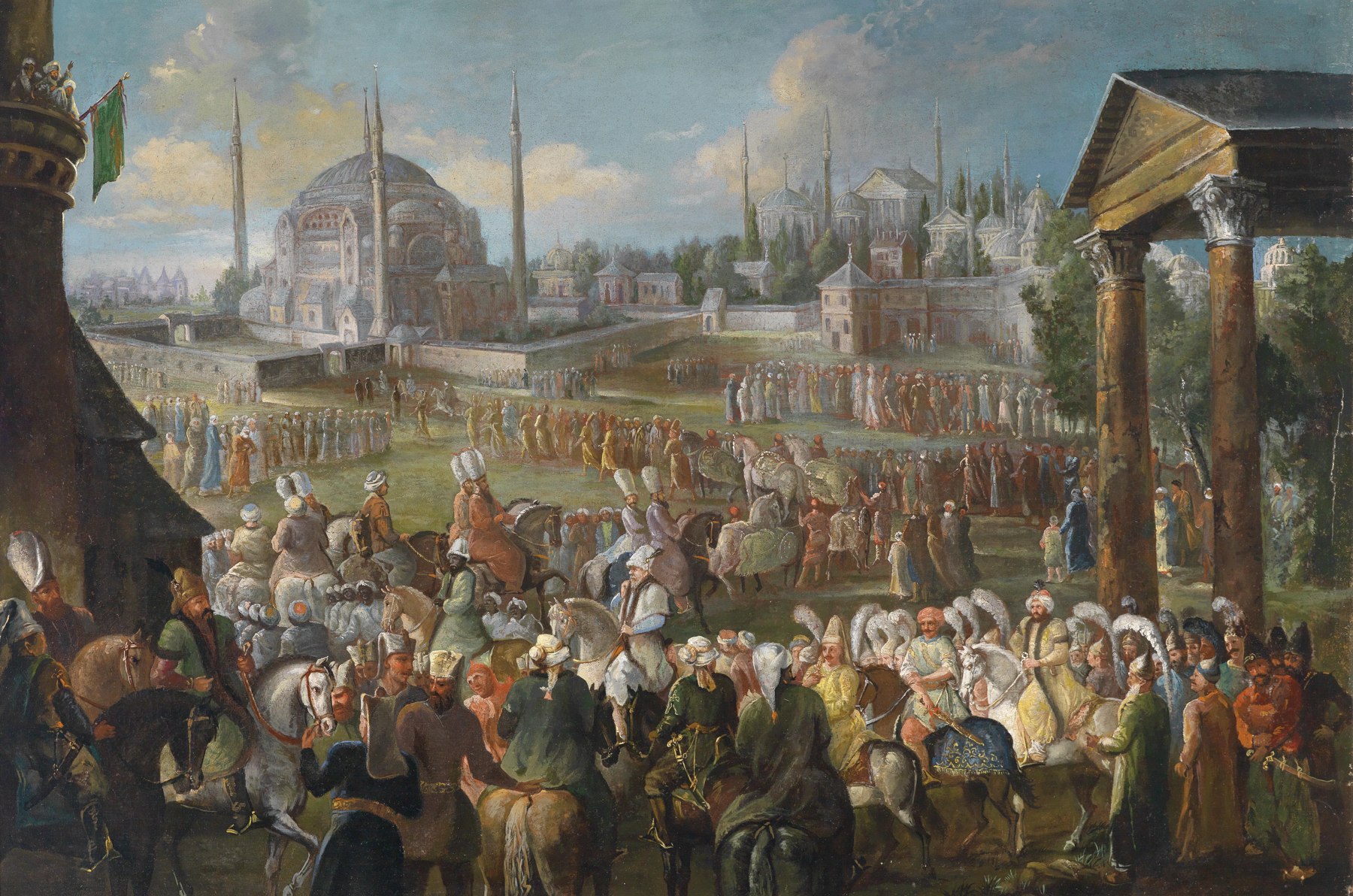
The Ottoman route into British elite medicine is unusually well documented. Constantinople, now Istanbul, was a setting in which practitioners, merchants, diplomats and physicians from different communities encountered one another. Calling the practice Ottoman identifies this political and social setting; it does not establish a single ethnic origin for everyone who performed it.
Before Montagu’s famous letter, Emanuel Timoni had communicated an account of inoculation to the Royal Society. Published in 1714, the report described a practice established in Constantinople and attributed its introduction there to people including Circassians and Georgians. Those origin statements are Timoni’s testimony, not independently verified conclusions about the first use anywhere. The Royal Society’s surviving manuscript record shows a medical observation becoming a document that could travel.
Jacob Pylarini also reported on the procedure, with his account appearing in Philosophical Transactions in 1716. Reports like these gave British physicians written descriptions before a prominent British family provided a conspicuous example. Transmission depended on both forms of evidence: accounts considered credible within learned institutions and demonstrations that persuaded households to act. A study of the language of inoculation in Social History of Medicine follows the terms and instruments through which the practice acquired a British medical identity.
What Montagu saw and what her letter claimed
Montagu accompanied her husband during his embassy to the Ottoman court. Her own experience of smallpox in 1715 gave the subject personal urgency, but her surviving descriptions do more than record private suffering. They argue that English readers should learn from people whom they might otherwise dismiss.
In the letter dated 1 April 1717 to Sarah Chiswell, she identified older women as the practitioners. She described families arranging for the operation together and presented recovery as comparatively manageable. Her account made expertise visible in people outside the male, formally educated medical world familiar to many of her readers.
It was also advocacy. Montagu claimed an exceptional degree of safety and anticipated resistance from English doctors, attributing some of it to financial self-interest. Historians can recognize the force of her challenge without accepting every assertion. Her letter supplies evidence about what she observed, heard and wanted to communicate. It is not a controlled clinical study, nor a comprehensive survey of Ottoman outcomes.
The language of grafting helped her make the procedure intelligible. An operation performed on a healthy person could be understood through a familiar analogy of inserting material so that it would take. That analogy linked prevention to practical experience rather than a modern account of immunology. Such language was useful precisely because the mechanism remained uncertain.
The letter also reveals a limit of the archive. We know Montagu’s name, correspondence and social network. The older women whose work she described are largely unnamed. Their anonymity is an effect of how the record was created, not evidence that the technique required little knowledge. British histories that begin with Montagu’s discovery risk making their expertise disappear a second time.
Two children and a public example
In March 1718 Montagu arranged for her son Edward to undergo the procedure at Pera, the diplomatic district across the Golden Horn from the old city. An experienced Greek woman and the embassy surgeon Charles Maitland participated. Some short histories give 1717, but the more detailed chronology places this episode in 1718, separately from the famous letter written the year before.
Maitland later described the event in a way that elevated his own surgical skill. His account is valuable, but its judgments about the local practitioner’s manner and equipment should not be repeated as neutral proof of her incompetence. The Social History of Medicine study reads those details as part of the transfer of authority as well as technique.
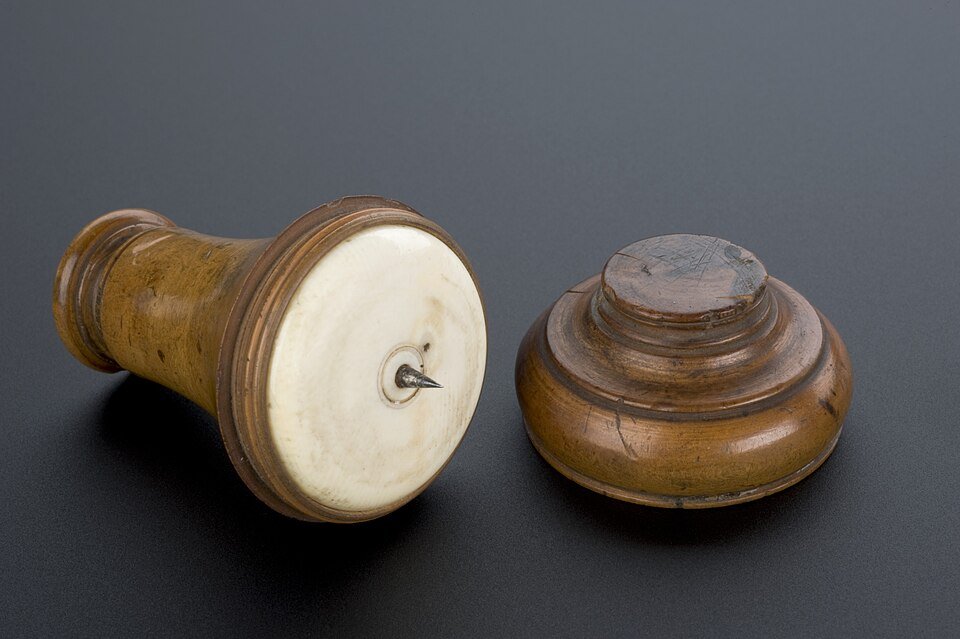
Back in England, Montagu arranged for Maitland to inoculate her daughter during the 1721 smallpox outbreak. Physicians observed the result. A choice made within an aristocratic household now became a demonstration capable of reaching other influential families. The Science Museum Group’s account of a smallpox recovery object places her advocacy in a world where infection, recovery and remembrance were woven into domestic life.
Nothing about this required the invention of a new principle in London. What changed was the circle of people willing to trust it, the institutions discussing it and the individuals authorized to provide it.
Experiments and unequal power
Interest from the royal household gave the question additional urgency. Caroline, Princess of Wales, considered inoculation for her children. Before royal children received it in 1722, practitioners performed highly visible trials on people with far less power.
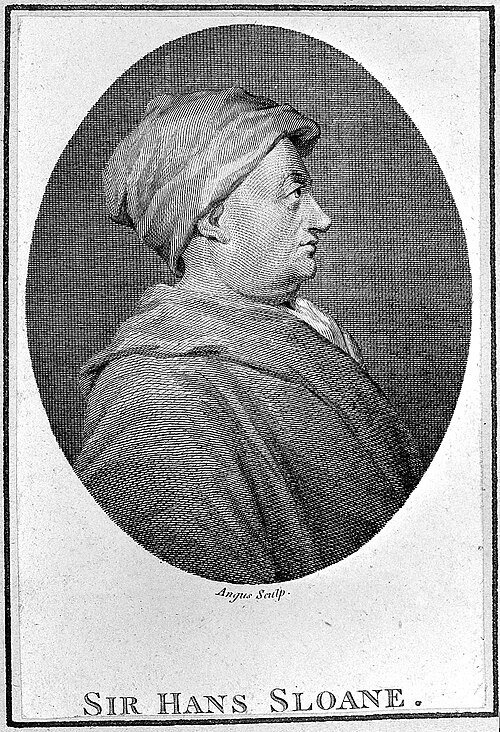
In August 1721 six prisoners at Newgate were inoculated under an arrangement connected with pardons. Further tests involved children in institutional care. Hans Sloane participated in evaluating the evidence and advising the royal household. The Royal Society’s archival overview of smallpox traces these episodes and the subsequent effort to collect outcomes.
Their role in winning acceptance should not be narrated as an ethically uncomplicated triumph. Prisoners facing punishment and children under institutional authority could not bargain with elite patrons on equal terms. The fact that an intervention promised benefit does not erase the circumstances in which people were enrolled. The available accounts preserve the priorities of doctors and sponsors much more clearly than the experiences of the subjects.
A modern experiment would require safeguards that were not present in this form. Historical explanation can acknowledge the period’s practices while still asking who bore the risk and who gained confidence from the result. The transition from a household procedure to a respectable medical intervention involved social hierarchy at every stage.
Counting outcomes instead of collecting success stories
Public demonstrations could attract attention, but individual successes did not settle the larger question of danger. James Jurin, secretary of the Royal Society, sought reports that would allow comparison between deaths after natural smallpox and deaths following inoculation. This required more than celebrating patients who recovered. He needed to know the number treated, what happened afterward and how to classify ambiguous cases.
The James Lind Library’s analysis of Jurin’s work shows his concern with biased reporting. If practitioners concealed failures or counted only favorable cases, a table could mislead while appearing precise. Disagreement also arose over whether a death following inoculation was caused by the procedure or by an infection already developing.
These were observational comparisons. People chosen for inoculation could differ from those who caught smallpox naturally in age, health, wealth and access to nursing. Historical statistics therefore demand attention to selection as well as arithmetic. Even so, systematically gathering unfavorable results represented an important advance over relying solely on professional reputation or a famous household’s experience.
Edward Huth’s study of the English and New England evidence places Jurin alongside physicians and correspondents who supplied data. The work was distributed. A London calculation depended on reports from other places, which in turn depended on someone recording illness and death consistently enough to compare them.
Another Atlantic route
Britain was not the only place where imported knowledge challenged medical practice in 1721. In Boston, the minister Cotton Mather had learned about inoculation from Onesimus, a man he enslaved. African experience and reports of Ottoman practice both informed the controversy surrounding its use during the city’s epidemic.
The Science Museum’s discussion of Onesimus restores an essential contributor to a story often told through Mather and the physician Zabdiel Boylston. Here, too, differences in power affected whose knowledge became authoritative and whose name appeared prominently in accounts of medical innovation.
The Boston episode does not need to be forced into Montagu’s biography. It demonstrates a parallel route through which knowledge reached an English-speaking society. A history organized entirely around one celebrated traveler would miss that wider circulation and would confuse publicity with invention.
Why vaccination was different
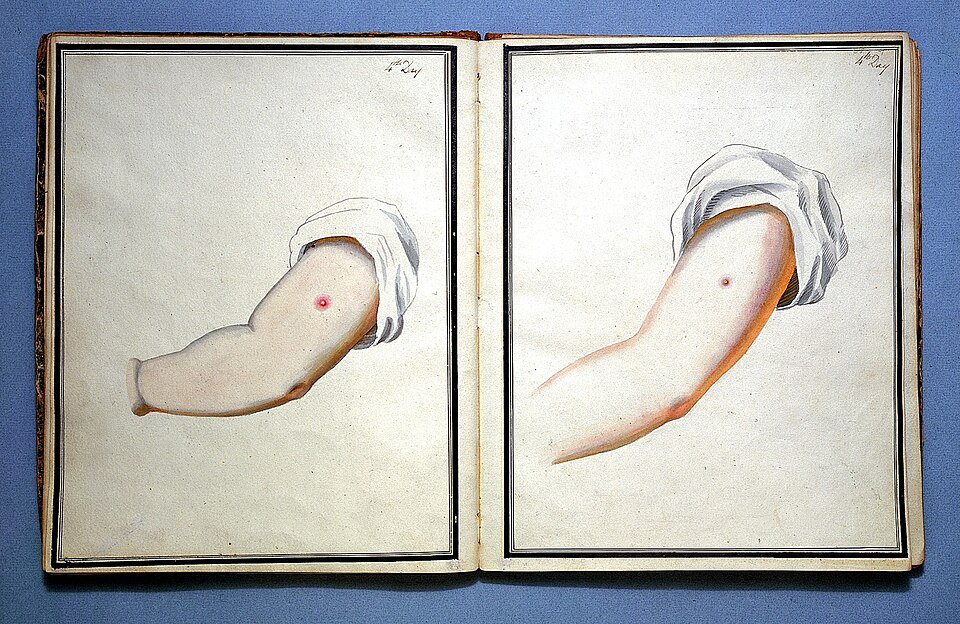
In 1796 Edward Jenner tested protection using material associated with cowpox, including his well-known experiment involving Sarah Nelmes and James Phipps. His published account followed in 1798. The intervention drew on observations and practices concerning cowpox and smallpox immunity, rather than simply repeating the Ottoman procedure under a new name.
Variolation deliberately exposed recipients to human smallpox. Vaccination developed from using a related infection to produce protection. That difference greatly changed the risks and possibilities of prevention. The historical review of Jenner and vaccination distinguishes his work from the earlier adoption of variolation, while recognizing that the earlier practice helped establish the idea of deliberately inducing protection.
The eventual eradication of smallpox required much more than the publication of one discovery. The later history of making penicillin at scale offers another example of the work between a promising intervention and widespread benefit. Vaccine production, transport, trained workers, case detection and coordinated public health campaigns developed over generations. The World Health Organization’s history of smallpox vaccination follows that longer process to the declaration of eradication in 1980.
Montagu’s contribution belongs within that history without being enlarged beyond the evidence. She observed an existing practice, trusted practitioners beyond her own country’s medical establishment, chose it for her children and used her connections to advocate its adoption. The women whose work she described, the physicians who circulated reports, the coerced or vulnerable subjects of trials and the people who counted outcomes also belong in the account.
The passage from Ottoman variolation to British inoculation shows how medicine changes through encounters. A technique crosses a border, but so do claims about credibility, skill and ownership. Remembering the whole chain makes the history more accurate and gives its achievement back to more of the people who made it possible.
Sources and further reading
- National Library of Medicine's historical exhibition
- James Lind Library's review of inoculation's origins
- Royal Society's surviving manuscript record
- study of the language of inoculation in Social History of Medicine
- letter dated 1 April 1717 to Sarah Chiswell
- Science Museum Group's account of a smallpox recovery object
- Royal Society's archival overview of smallpox
- James Lind Library's analysis of Jurin's work
- Edward Huth's study of the English and New England evidence
- Science Museum's discussion of Onesimus
- historical review of Jenner and vaccination
- World Health Organization's history of smallpox vaccination