
The Triangle Shirtwaist Fire: Why Escape Failed and Reform Took Work
The 1911 fire killed 146 people in a building that remained standing. The struggle over its meaning began with workers who had organized before the disaster.
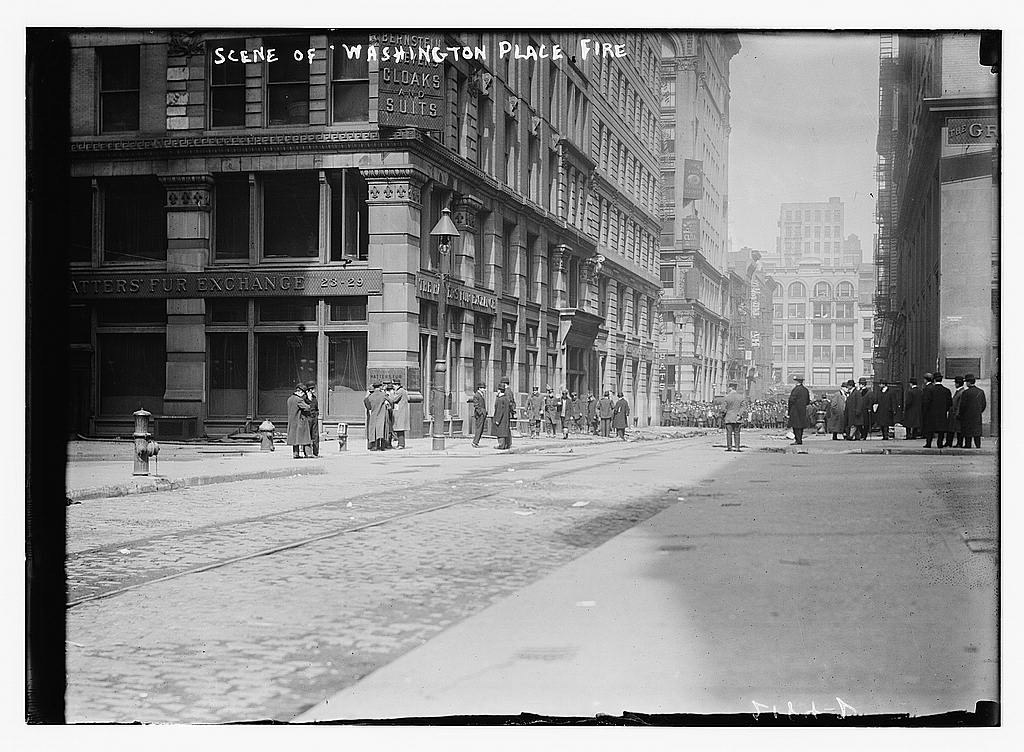
The Asch Building remained standing after the fire. Its upper floors had held the Triangle Waist Company, whose employees made the women’s blouses known as shirtwaists. On Saturday, March 25, 1911, flames spread through those workrooms and 146 people died. The building could survive a blaze that its occupants could not escape.
That distinction runs through the history of the disaster. Materials and construction mattered, but so did doors, warning systems, the arrangement of work, and the authority workers had to demand changes. The fire became a landmark in American labor history because people fought over those questions afterward. Many of the workers had already been fighting before it happened.
Before the smoke
Triangle occupied the eighth, ninth, and tenth floors of a building at Washington Place and Greene Street, near Washington Square. Its workforce numbered roughly five hundred. Many employees were young women and girls from Jewish and Italian immigrant communities. Factory wages supported households as well as individual workers. The pressure to retain a job could make protesting conditions risky.
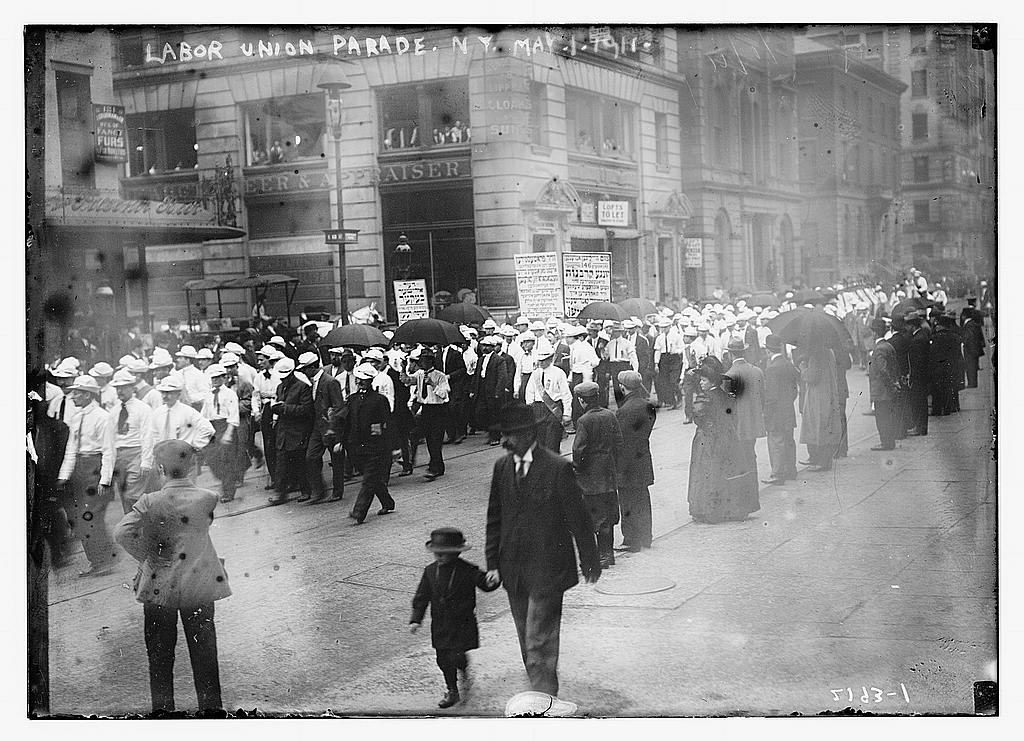
The history of organizing before 1911 challenges the idea that these workers were simply passive victims awaiting rescue by reformers. In 1909, Triangle employees participated in a walkout that became part of a much larger movement in the shirtwaist trade. Clara Lemlich’s call for a general strike helped mobilize thousands. The International Ladies’ Garment Workers’ Union and the Women’s Trade Union League supplied organization and support in a struggle that extended into the streets.
Lemlich’s contemporary article, “Life in the Shop,” described long working days, inadequate light away from the windows, low pay, and humiliating treatment. It was an argument from a worker within the industry, published while the strike was underway. Its details should not be turned into an exact schedule or wage sheet for every person at Triangle. Its importance is that garment workers were publicly explaining the conditions under which clothes were made before the disaster forced a larger audience to listen.
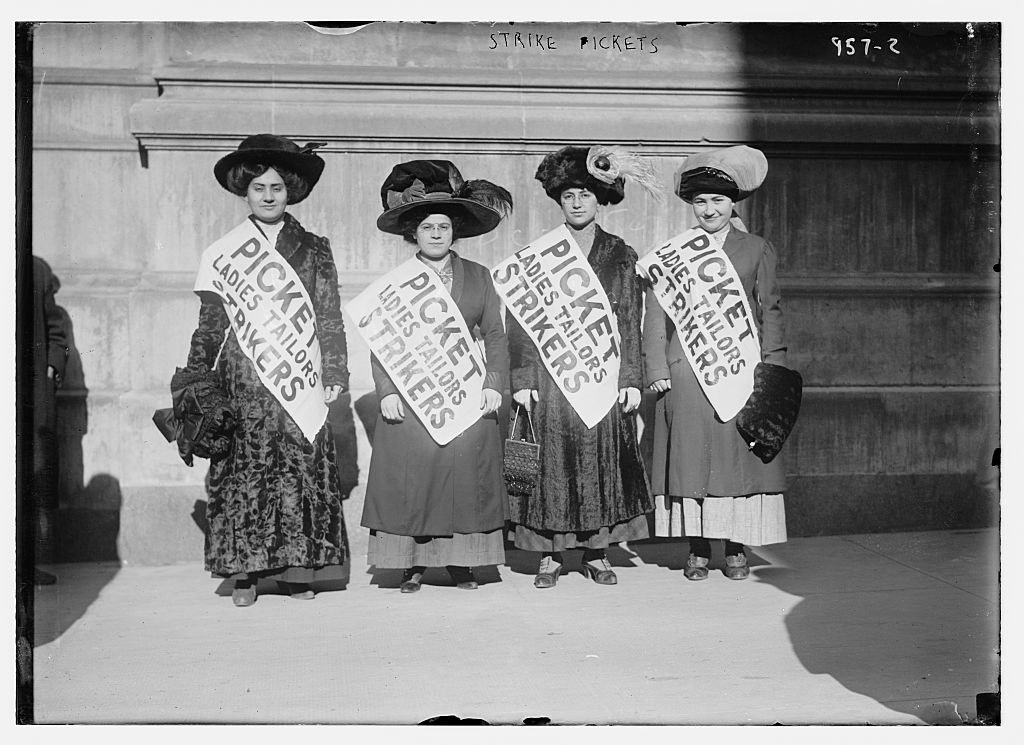
The strike brought gains across the industry, but Triangle remained a nonunion shop, even though some employees belonged to the union. That distinction affected power inside the workplace. An individual could recognize a hazard and still have little capacity to compel its removal. The history of safety was therefore also a history of bargaining, discipline, and who could insist that production stop.
A fire on the eighth floor
The blaze began near the end of Saturday’s working day on the eighth floor. Fabric scraps and combustible material helped it spread rapidly. A discarded match or cigarette is commonly identified as the likely ignition source, but it is more secure to describe that as an explanation than to pretend the precise initiating act was witnessed and conclusively established.
The National Park Service’s reconstruction describes an emergency made worse by failed communication and inadequate equipment. Employees on the tenth floor received warning. Those on the ninth did not receive an equivalent warning before danger reached them. There was no general fire alarm system for workers to activate, and an emergency hose failed to provide water. As fire developed, the time available for every subsequent decision contracted.
People escaped by different routes. Some descended stairs before fire cut them off. Elevator operators made repeated trips that saved many workers. People who reached the roof could cross toward the adjoining New York University building with help from people there. These acts of rescue matter because the disaster was not a single undifferentiated scene. Survival depended on floor, timing, information, route, and the help someone could reach.
For many on the ninth floor, the options failed together. Fire blocked one stair route. Workers testified that the door toward the Washington Place stairs could not be opened. The exterior fire escape collapsed. Firefighters arrived, but their ladders could not reach the trapped workers high above the street. A rescue service at the scene could not compensate for an escape system that had already broken down inside.
The Cornell archive’s account preserves testimony about the Washington Place door alongside the history of exit controls. At quitting time, management directed workers past inspection intended to prevent theft. An arrangement designed to control ordinary movement became deadly in an emergency. The crucial issue was not whether a door appeared on a plan, but whether frightened people could actually pass through it when they needed to.
A disaster witnessed from the street
The fire unfolded in public. Neighbors, passersby, and reporters saw people at windows beyond the reach of rescue. Some workers fell or jumped as the flames closed in. Others died inside. Describing those deaths does not require repeating the most graphic language of contemporary reporting. The essential fact is the failure of an industrial workplace to provide a survivable way out.
United Press reporter William Shepherd wrote an eyewitness account that carried the scene to readers outside New York. His report is powerful evidence of what an observer on the street could see and hear. It also assigns meanings and relationships to actions witnessed from below. Those interpretations deserve scrutiny, rather than automatic repetition as established biographies of the dying.
The list of victims assembled by Cornell’s Kheel Center offers another necessary scale of attention. Kate Leone and Rosaria Maltese were fourteen. Catherine Maltese was thirty-nine; Lucia Maltese, twenty. Max Lehrer was eighteen and Sam Lehrer nineteen. Names and ages interrupt the tendency to make everyone disappear into the number 146. They also show why descriptions of the dead simply as “girls” are incomplete: the victims included men and adult women as well as children.
Families had to identify the dead, arrange funerals, and face the loss of income and companionship. The catastrophe did not end when the flames were extinguished. For survivors, it also became a memory they would later be asked to narrate in interviews, commemorations, and histories. Such testimony carries immense value, while the circumstances and date of each account remain part of the evidence.
Mourning became an argument
Public grief quickly moved into collective action. Unions organized, witnesses came forward, and mourners filled religious services and streets. The archive’s account of the protests shows demands for accountability developing alongside efforts to assist bereaved families. A funeral procession could honor the dead and make a political claim at the same time.
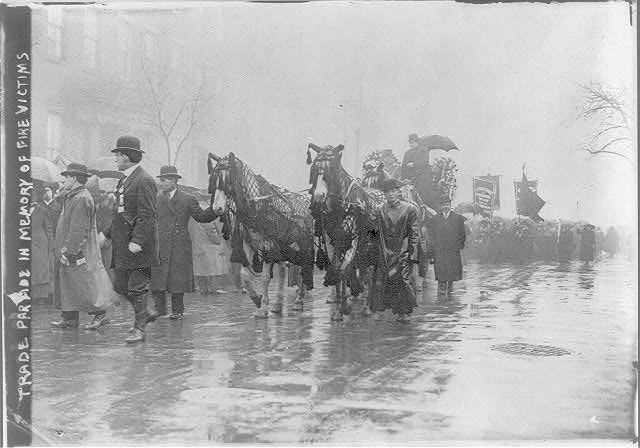
At a memorial meeting at the Metropolitan Opera House on April 2, labor organizer Rose Schneiderman refused to offer the comfortable reassurance her audience might have expected. In her speech published later that week, she contrasted public sympathy after a disaster with the treatment workers received when they struck against unbearable conditions. Charity for a grieving family did not answer the problem of a workplace where injury and death were recurrent risks.
Her argument reached beyond Triangle. Industrial danger included machinery, buildings, hours, and the economic necessity that kept people at their jobs. She called for a strong working-class movement because, in her view, workers needed the power to protect themselves. The speech resists a later version of the story in which enlightened officials simply bestowed safety on people who had never demanded it.
The division was not between mourning and politics. It was over what mourning required. Would the city respond with temporary generosity, criminal punishment, stronger organization, revised rules, or some combination? The answer would take shape through campaigns, investigation, legislation, and continuing disagreement.
The courtroom’s narrower question
Factory owners Isaac Harris and Max Blanck were indicted in April 1911. Their criminal trial began in December and ended with an acquittal on December 27. The Cornell account of the proceedings identifies a central difficulty for the prosecution: establishing that the owners knew the door was locked at the time of the fire.
That distinction is essential. An acquittal was the outcome of a criminal case with its particular evidence and burden of proof. It did not demonstrate that the factory had been safe or that workers’ accounts of failed escape were imaginary. Public judgment about responsibility and a jury’s decision on a criminal charge could differ without describing the same question.
Civil litigation continued. Twenty-three individual suits were settled in 1914 for seventy-five dollars per claim. This figure is often repeated as though it described a universal payment to every victim’s family; the record should be kept to the claims involved. Neither a settlement nor a criminal verdict restored the lives lost. Both became part of the bitter dispute over how institutions valued those lives.
From a single fire to a statewide inquiry
On June 30, 1911, New York created the Factory Investigating Commission. Its preliminary report makes clear that the assignment extended beyond reconstructing one fire. The commission could compel witnesses and documents. It investigated building hazards, machinery, exits, fire drills, ventilation, lighting, hours, occupational disease, tenement manufacturing, and enforcement of existing law.
Senator Robert F. Wagner became chairman and Assemblyman Alfred E. Smith vice-chairman. Experts and inspectors joined the work. In its retrospective Fourth Report, the commission recorded fourteen public hearings and 222 witnesses in its first year. One general sanitary investigation alone covered 1,836 factories. These numbers reveal the mechanism between outrage and reform: workers and officials had to document conditions across many establishments, not simply agree that Triangle had been terrible.
The early report drew a particularly important distinction between spectacular accidents and routine harm. A fire was immediately visible. Bad ventilation, unhealthy processes, and exhausting work could damage people less conspicuously. The commission treated both as matters requiring public action. Its inquiry enlarged the meaning of workplace safety beyond the prevention of another dramatic blaze.
Rules needed institutions behind them
The commission’s own list records eight laws resulting from its first year’s work and enacted in 1912. They addressed matters including factory registration, fire drills, automatic sprinklers, combustible rubbish, and sanitary conditions. In 1913, twenty-five further recommended measures became law. These included fire alarms and exits, occupancy limits, elevators, ventilation, washing facilities, dangerous trades, and the reorganization of the Labor Department.
The difference between a proposal and an enacted statute matters, as does the difference between a statute and an enforced practice. The commission explicitly worried that a momentary surge of attention would fade and old conditions return. Permanent change required clear rules, inspection, institutional authority, and people willing to use them. A safer factory was an ongoing administrative and political achievement.
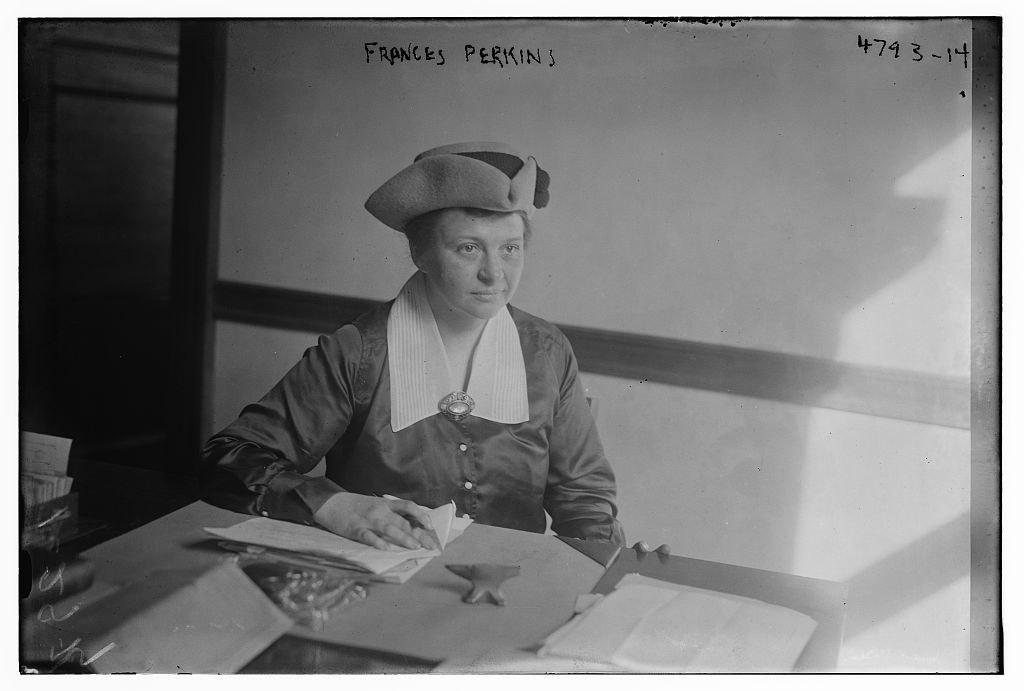
Frances Perkins helped connect those efforts. She had witnessed the fire and became a central participant in the safety campaign. The commission’s report records her assistance with investigation of fire hazards in mercantile establishments and her report on that work. She later carried a commitment to public protection of workers into her service as secretary of labor under Franklin D. Roosevelt.
It would still be too simple to claim that one afternoon created the New Deal, the labor movement, or every later safety law. Organizing and reform preceded Triangle; political work continued long after it. The fire gave terrible urgency to arguments already being made and helped a coalition translate some of them into enforceable measures.
The surviving building preserves that history’s most unsettling contrast. The structure endured while workers died because routes, warnings, equipment, and protections failed them. Remembering Triangle means remembering the people whose names fill the victim lists and the workers who had already raised their voices. It also means understanding the work required to make a promise of safety function at the moment it is needed.
Sources and further reading
- National Park Service, Triangle Shirtwaist Factory (Brown Building)
- Kheel Center, Cornell University, Sweatshops and Strikes Before 1911
- Clara Lemlich, Life in the Shop, New York Evening Journal, 28 November 1909
- Kheel Center, Cornell University, Fire!
- William Shepherd, Eyewitness at the Triangle, first published 27 March 1911
- Kheel Center, Cornell University, Victims list
- Rose Schneiderman, We Have Found You Wanting, 2 April 1911; published in The Survey 8 April 1911
- Kheel Center, Cornell University, Investigation and Trial
- New York State Factory Investigating Commission, Preliminary Report (1912), pp. 13–20
- New York State Factory Investigating Commission, Fourth Report (1915), pp. 2–11
- Kheel Center, Cornell University, Mourning and Protest