
WORLD WAR II · NORTH AFRICA · DIPLOMACY
The ceasefire did not settle the meaning of liberation
Operation Torch brought Allied forces into French North Africa. Their bargain with Admiral Darlan revealed how military cooperation could preserve deeply compromised institutions.
When American and British forces landed in Morocco and Algeria on 8 November 1942, their immediate opponents included soldiers, sailors, and airmen serving Vichy France. Within days, the Allies were cooperating with an important figure in that regime: Admiral François Darlan, commander-in-chief of Vichy France’s armed forces. The invasion opened a new front against the Axis through an agreement with a man deeply implicated in collaboration.
That reversal makes Operation Torch more than an amphibious campaign. It raises a question that Allied leaders themselves argued over: how far could an army preserve an existing political order to accelerate a war of liberation? The surviving agreements and diplomatic correspondence reveal a military bargain with consequences for resistance fighters, Jewish communities, and the colonized populations of North Africa.
.jpg)
Why the Allies chose North Africa
Torch emerged from a disagreement about where Britain and the United States could fight Germany effectively in 1942. American planners favored building toward an invasion across the English Channel. British leaders doubted that the available forces and landing craft could establish and sustain a continental foothold that year. North Africa offered an operation both governments could support, although diverting resources there complicated plans for a later invasion of France. The U.S. Army’s official history treats the choice as a strategic compromise, rather than an obvious or universally accepted solution. (U.S. Army Center of Military History, “The Decision to Invade North Africa”)
The geography explained its appeal. Landings around Casablanca, Oran, and Algiers could provide ports and airfields from which the Allies might advance east into Tunisia. Meanwhile, the British Eighth Army was attacking German and Italian forces from Egypt. Allied planners hoped to squeeze the Axis position between these advances, improve Mediterranean communications, and prepare further operations against southern Europe. General Dwight D. Eisenhower commanded the invasion. The assault areas were widely separated, and Casablanca lay outside the Strait of Gibraltar, making coordination and supply central concerns from the outset. (U.S. Army campaign overview)
The plan nevertheless depended on a political uncertainty. French North Africa had substantial armed forces and functioning colonial administrations. Would they admit the Allies, oppose them, or split between rival authorities?
Why French forces resisted
France’s defeat in 1940 had left Marshal Philippe Pétain’s government at Vichy administering the North African territories. Algeria was legally incorporated into France but governed through profound inequalities. Most Muslim Algerians lacked French citizenship, while Morocco and Tunisia were protectorates under French control. Vichy added its own discriminatory legislation, including the October 1940 repeal of the Crémieux Decree, which had granted citizenship to most Algerian Jews. These territories therefore combined an existing colonial order with the institutions and policies of a collaborationist regime. (United States Holocaust Memorial Museum, “Anti-Jewish Legislation in North Africa”)
Allied planners hoped that French officers could be persuaded to change sides. Yet sympathy was different from the authority to issue orders. Secret contacts could not reliably reach every commander without compromising the invasion. The U.S. Naval History and Heritage Command emphasizes this problem: some officials willing to cooperate lacked command authority, while other commanders had not been trusted with advance knowledge. Resentment of Britain, intensified by the Royal Navy’s 1940 attack on the French fleet at Mers-el-Kébir, further complicated the situation. (Naval History and Heritage Command, “Operation Torch”)
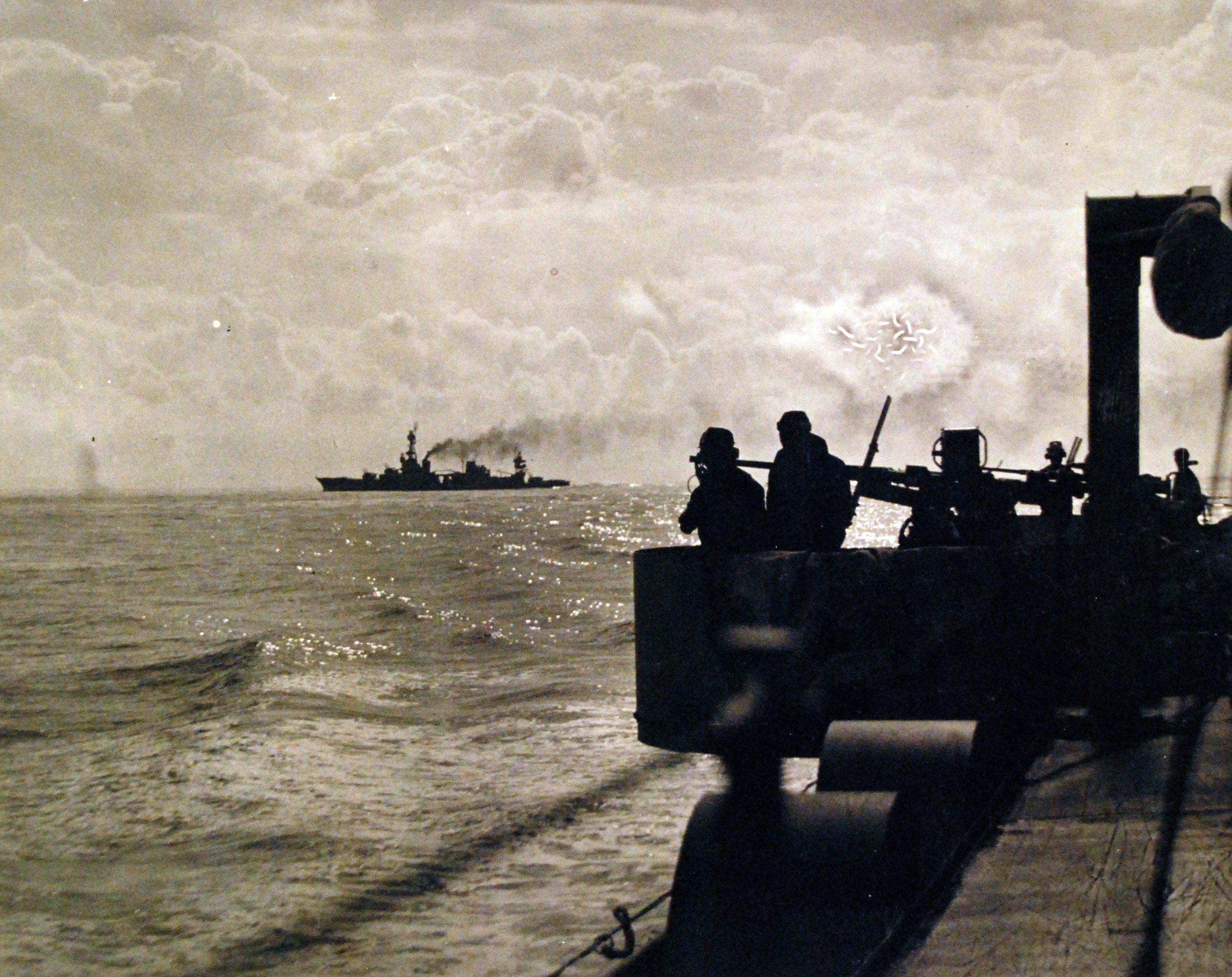
Once the landings began, French commanders who still accepted Vichy’s authority treated them as an attack on territory they were obliged to defend. Near Casablanca, French ships and shore batteries fought American warships. The cruiser USS Wichita exchanged fire with French positions and vessels, illustrating how quickly an operation intended to enlist French support became a battle against French forces. It would be misleading to assign every participant an identical ideological motive; orders, institutional loyalty, distrust, and individual choices all mattered. (USS Wichita’s official ship history)
Algiers and the struggle over authority
The outcome varied sharply by location. In Algiers, resistance organizers prepared to disrupt Vichy command as the invasion approached. José Aboulker, a young Jewish medical student, helped lead roughly 400 resisters who occupied key locations and interrupted communications during the night of 7–8 November. Their intervention helped the Allies secure the city and its port. It also demonstrated that local opponents of Vichy were active participants in the operation. (Ordre de la Libération, biography of José Aboulker)
The initial fighting did not end everywhere at once. Eisenhower’s operational report records an agreement to cease resistance in Algiers on the evening of 8 November, Oran’s surrender on 10 November, and the cessation of fighting around Casablanca on the morning of 11 November. Those distinctions matter: a local ceasefire, a wider order to stop fighting, and the subsequent political settlement were separate steps. (Eisenhower’s report on operations in North Africa)
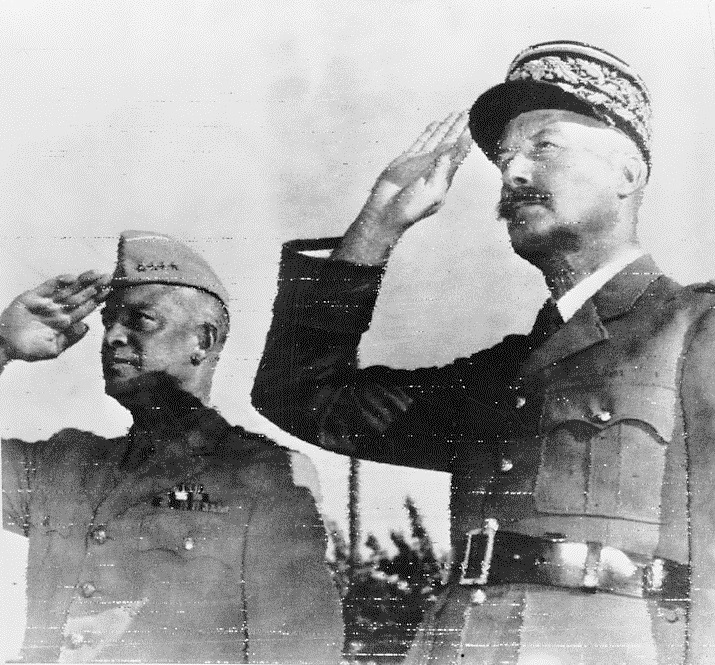
The Allies had hoped General Henri Giraud could rally French forces. His arrival in North Africa on 9 November, however, found Darlan already negotiating with them. Darlan’s presence in Algiers placed the commander-in-chief of Vichy’s armed forces within reach of Allied negotiators. On 10 November he ordered resistance across French North Africa to cease. The U.S. Army’s history of French rearmament shows how the problem of securing cooperation immediately became a question of which French authority could deliver it. (Marcel Vigneras, Rearming the French)
The military argument for Darlan
Eisenhower later described the decision as one of “sheer military expediency.” His report argued that officials who remained attached to Pétain recognized Darlan’s authority in a way they did not recognize Giraud’s. The Allies wanted more than silence from French guns. They needed an administration that could maintain communications, provide a secure rear, and help move forces toward Tunisia. Eisenhower believed a full military occupation would consume resources his command could not spare. This was his justification for the bargain, not proof that every possible alternative had been exhausted. (Eisenhower’s operational report)
The distinction is essential when assessing the decision. A commander’s account explains the pressures he considered decisive, but it also defends the policy he adopted. Darlan’s ability to secure compliance offered a concrete military advantage. Accepting that advantage did not settle whether preserving his authority was politically wise, how long such an arrangement should last, or what safeguards its beneficiaries ought to demand.
The formal agreement signed by General Mark Clark and Darlan on 22 November 1942 set out the practical exchange. French forces would cooperate against the Axis while retaining French command. Existing governmental personnel would continue their work. Ports, airfields, communications, and other facilities would be available for Allied military use. The agreement also provided for releasing Allied personnel and for identifying people detained because of their support for the Allies, whose release the American commander could direct. Its arrangements made cooperation possible through institutions already in place. (Clark–Darlan agreement, original text)
A temporary arrangement with lasting costs
The controversy was immediate. On 16 November, Free French representative Adrien Tixier told American official Adolf Berle that cooperation with Darlan dishonored people who had opposed collaboration. His warning concerned both political legitimacy and the effect on resistance networks: what would supporters of the Allies conclude when a Vichy leader appeared to gain their protection? Tixier also pressed for the release of prisoners held for supporting the Allied cause. These objections appear in a contemporary American diplomatic memorandum, rather than only in later recollections. (Berle’s memorandum of 16 November 1942)
British leaders were also troubled. In a message dated 17 November, Winston Churchill warned Roosevelt of the political damage that agreements with collaborators might do throughout occupied Europe. British Foreign Office correspondence distinguished a possibly necessary interim military arrangement from accepting Darlan as a permanent ruler. The argument was taking place inside the coalition, even as its armies continued their advance. (British messages preserved in U.S. diplomatic records)
Roosevelt publicly defended the bargain on 17 November as a “temporary expedient.” He argued that it saved lives and avoided a lengthy campaign to subdue Morocco and Algeria, allowing an earlier advance toward Tunisia. He also said that he had requested the release of people imprisoned for opposing Nazi domination and the repeal of Nazi-inspired laws. The wording expressed a demand and a justification; it did not establish that all prisoners had been freed or all discriminatory laws removed. (Roosevelt’s statement)

Liberation did not restore rights overnight
The difference between military alignment and civil freedom was especially stark for people imprisoned under Vichy. Its North African camp network held Jewish refugees, Spanish Republicans, political opponents, and others. The Allied landings did not immediately close the camps. The United States Holocaust Memorial Museum documents a prolonged process of opening them and releasing detainees, sometimes extending far beyond the invasion. A change in the army controlling a territory could leave officials, paperwork, and coercive practices operating beneath it. (USHMM, “Labor and Internment Camps in North Africa”)
Even participation in Torch did not guarantee protection. After Darlan’s assassination, Aboulker was arrested in late December 1942 and interned along with other resisters campaigning for de Gaulle’s arrival in Algiers. He was subsequently released following American intervention. His experience exposes the vulnerability of people whose help had been valuable during the landings but whose political demands challenged the authorities retained afterward. (Ordre de la Libération)
Darlan was assassinated on 24 December 1942, and Giraud succeeded him. The admiral’s death ended his personal role without resolving the underlying questions about government and rights. (French Ministry of the Armed Forces chronology)
Jewish citizenship in Algeria illustrates the delay. On 14 March 1943, Giraud continued to reject the Crémieux Decree, arguing that its distinction between Jews and Muslims was discriminatory. Jewish organizations challenged the continued deprivation of citizenship. Restoration came only in October 1943; the World Jewish Congress records being notified by the Free French on 21 October that the decree had been reinstated. Calling November 1942 a liberation must therefore leave room for the months during which legal exclusion persisted. (World Jewish Congress, account based on its wartime interventions)
The colonial boundaries of the settlement
For North Africa’s Muslim populations, the political limits went deeper than the survival of particular Vichy officials. Restoring prewar arrangements did not itself offer equality or national independence. Algeria’s unequal citizenship system and the protectorates’ subordination to France preceded Vichy. France’s National Museum of the History of Immigration emphasizes how slowly Jewish rights were restored and how incomplete Muslim civic equality remained in the emerging republican settlement. These were connected problems, but they were not interchangeable experiences. (Musée de l’histoire de l’immigration)
Histovia’s account of the Atlantic Charter and the limits of empire explores the broader gap between Allied principles and colonial claims. The Clark–Darlan agreement made the imperial horizon explicit. Its preamble joined the liberation of France to the ambition to “restore integrally the French Empire.” In that document, sovereignty was being negotiated among Allied commanders and French authorities. Independence for the peoples governed by that empire was not part of the settlement. The agreement’s language makes the distinction visible without requiring speculation about every negotiator’s private convictions. (Clark–Darlan agreement)
What Torch achieved
Torch secured an Allied foothold and changed the strategic balance in North Africa, but the hoped-for rapid capture of Tunisia failed. Germany and Italy built up forces there, and the campaign continued until the Axis surrender in May 1943. For Tunisia’s Jewish population, those intervening months brought German occupation, forced labor, and further persecution. The military timetable therefore had consequences well beyond headquarters and battle maps. (USHMM, “Tunisia Campaign”; USHMM study of North African camps)
The Darlan bargain helped convert French resistance into military cooperation. It also showed how an invasion conducted in the language of liberation could preserve compromised authorities and unequal institutions. Understanding Torch requires holding its operational gains alongside the people left waiting for freedom, citizenship, or political power. The ceasefire answered who would stop shooting. The questions of who would govern, whose rights would return, and whose future could be decided remained open.
Sources
- U.S. Army Center of Military History, “The Decision to Invade North Africa”
- U.S. Army campaign overview
- United States Holocaust Memorial Museum, “Anti-Jewish Legislation in North Africa”
- Naval History and Heritage Command, “Operation Torch”
- USS Wichita’s official ship history
- Ordre de la Libération, biography of José Aboulker
- Eisenhower’s report on operations in North Africa
- Marcel Vigneras, Rearming the French
- Clark–Darlan agreement, original text
- Berle’s memorandum of 16 November 1942
- British messages preserved in U.S. diplomatic records
- Roosevelt’s statement
- USHMM, “Labor and Internment Camps in North Africa”
- French Ministry of the Armed Forces chronology
- World Jewish Congress, account based on its wartime interventions
- Musée de l’histoire de l’immigration
- USHMM, “Tunisia Campaign”