
Histovia · World War II · Resistance & alliance
Warsaw 1944: Why Allied Aid Could Not Save the Uprising
Aircrews carried supplies across Europe. Diplomats argued over landing rights. Inside Warsaw, the space in which help could be received kept shrinking.
By Histovia Team
On 18 September 1944, U.S. ambassador John Winant sent President Roosevelt news of a supply mission over Warsaw. In clear weather, he reported, 107 aircraft had dropped their cargoes. After weeks of diplomatic argument and weather delays, the operation had finally taken place.
The published diplomatic record adds a sobering detail. Of 1,284 containers dropped, its editorial note states that no more than 288, and perhaps as few as 130, reached Polish hands. The presence of aircraft overhead was not the same thing as ammunition, food and medicine arriving where the insurgents could use them.
That gap between help attempted and help received runs through the history of the Warsaw Uprising. It involved distance, shrinking territory, German fire and the political choices of an unequal alliance. Explaining it requires recognizing both those who risked their lives to assist Warsaw and the decisions that restricted assistance.

A necessary distinction
Which Warsaw uprising?
The citywide uprising led by the Polish Home Army, or Armia Krajowa (AK), began on 1 August 1944 and ended with capitulation on 2 October, after 63 days. It was distinct from the Jewish Warsaw Ghetto Uprising of April–May 1943. Some surviving ghetto fighters later participated in the 1944 struggle, but the organizations, circumstances and immediate aims of the two uprisings were different.
The United States Holocaust Memorial Museum’s history places the 1944 resistance within the approaching collapse of German occupation. It estimates roughly 45,000 Home Army participants, only about a quarter of whom had weapons. Such figures describe the scale and imbalance; they should not be mistaken for a precise roll call of armed fighters at the opening hour.
The uprising’s leaders hoped that the proximity of Soviet forces would shorten the battle. They also wanted the capital’s liberation to establish Polish authority before the Soviet arrival. That second objective made the military gamble inseparable from the struggle over who would govern Poland after the war.
The political gamble
Liberation and sovereignty were becoming different questions
The Home Army answered to the Polish government-in-exile in London. Under Operation Tempest, its forces were to act against withdrawing German units and present themselves as representatives of an independent Polish state when Soviet troops arrived. Warsaw had not always been included in the plan; the approach of the front transformed the calculation.
As the National WWII Museum’s account of Operation Tempest explains, cooperation against Germany did not guarantee Soviet recognition of the Home Army’s political authority. Elsewhere, encounters could move from joint fighting to the disarming and arrest of AK personnel. Soviet backing for an alternative Polish leadership made the danger clear.
For the insurgent leadership, waiting carried a political risk, while rising carried an enormous military one. An independent government needed more than an assertion of legitimacy abroad. A successful action in the capital might give that claim a visible presence inside Poland.
This explains the decision without proving that it was sound. The leaders could not command the timing of Soviet operations, the scale of Western assistance or the German response. Their plan depended on actions by forces whose priorities they did not control. The result was a struggle for sovereignty fought with profoundly unequal resources.
The city under attack
Civilians sustained the resistance and bore the catastrophe
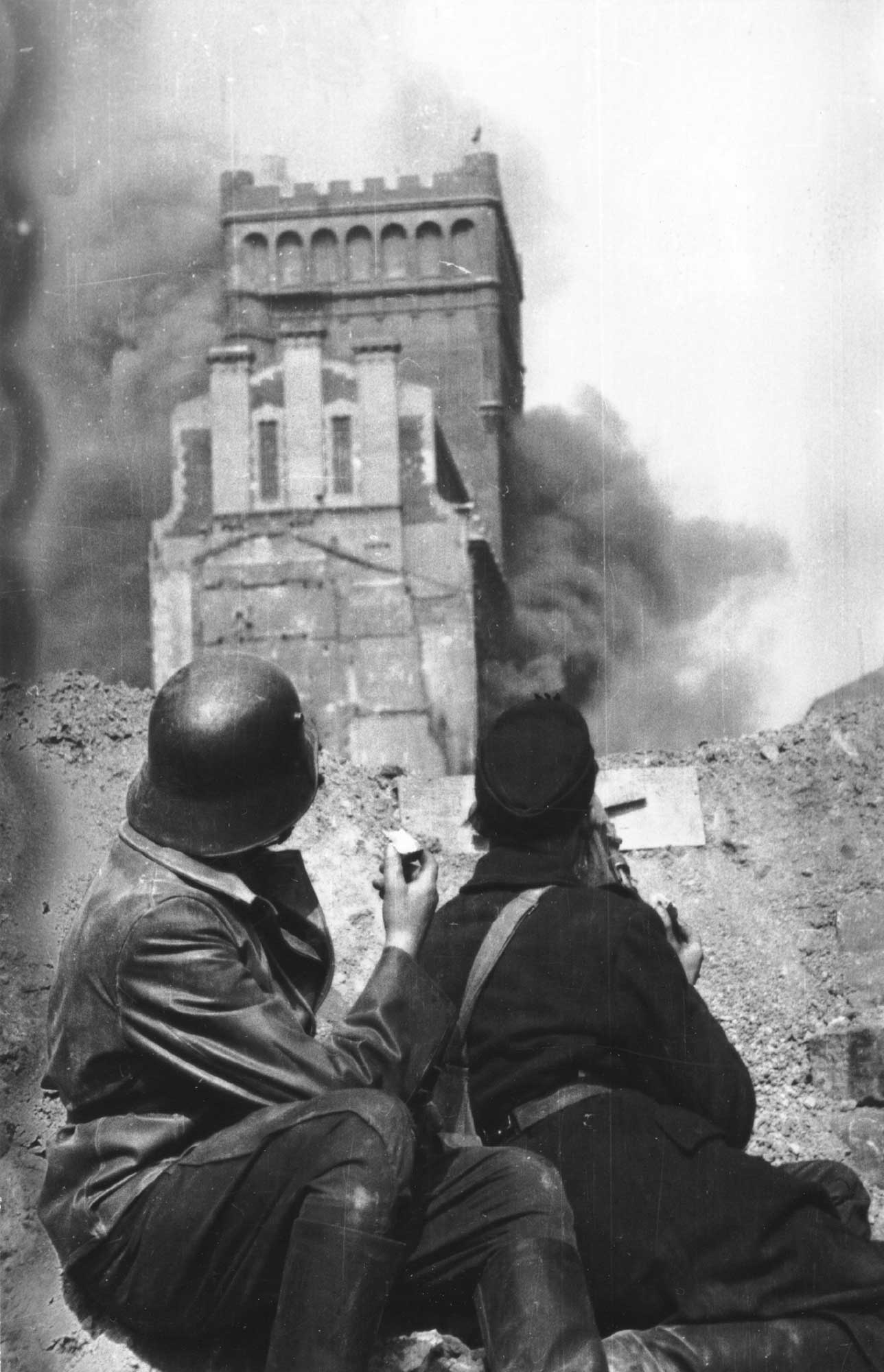
Fighting began at 5 p.m. on 1 August. Insurgents took parts of the city, but their positions were divided. Maintaining communications, moving supplies and caring for wounded people became increasingly difficult as German attacks reduced the areas held by the resistance.
The National WWII Museum’s account of women and children follows the labor behind the barricades: medical care, messages, food, shelter and the improvised routines that kept people alive. A struggle expected by some to last only days extended into weeks. Civilian responses changed with bombardment, shortages and the loss of homes; they cannot be reduced to uninterrupted enthusiasm.
German responsibility for the mass killing must remain explicit. In Wola, German forces murdered tens of thousands of civilians in early August. These deaths were not simply accidental consequences of urban crossfire. Terror was part of the crushing of the uprising.
As the Old Town fell, insurgents used sewers to escape to other districts, with the last evacuation on 2 September. Every contraction of territory worsened the supply problem. The area in which a container might land safely became smaller, while the need for its contents grew.
Two questions about Soviet action
Ground operations and airfield access should be examined separately
The Red Army’s proximity makes the absence of a successful rescue especially painful. Yet proximity on a map is not a complete account of military capability. Soviet forces had advanced a long distance; formations were dispersed, German counterattacks remained dangerous and crossing the Vistula posed a major operational problem.
Historian Jennifer Popowycz’s study of Allied responses describes the military difficulties in the opening weeks alongside the political conflict. It is too simple to assume that a fully prepared force could effortlessly have liberated the city on 1 August.
That qualification does not explain every later Soviet decision. Allowing Allied aircraft to use landing grounds was a separate question from launching a ground offensive. A government might face real battlefield constraints while still making political choices that increased the difficulty of relief.
Keep the questions distinct: What could an army realistically do at a particular moment? What assistance did its government permit other forces to provide? Evidence answering one does not automatically settle the other.
The distinction helps avoid a false choice between treating all Soviet inaction as mechanically unavoidable and claiming that a specific rescue would certainly have succeeded. The surviving diplomatic record can establish refusals more firmly than historians can prove an unrealized military outcome.
Inside the diplomatic record
The August refusal was stated in political terms
In a telegram of 22 August, U.S. ambassador W. Averell Harriman reported a meeting with Soviet Foreign Minister Vyacheslav Molotov held on the night of 17 August. The dates matter: the document was a later report of the conversation, not a transcript written during it.
According to Harriman, Molotov portrayed the uprising as an irresponsible undertaking with which the Soviet government wanted no association. During discussion of damaged British aircraft, Molotov accepted that crews could parachute onto Soviet territory but would not agree to the aircraft landing there.
Harriman pressed the practical consequences. Missions from distant bases faced difficult fuel and fighter-cover limits. Access to Soviet bases could change the operation’s risk and carrying capacity. He also warned that denying cooperation would damage confidence in the alliance and its treatment of Poland.
The source records an American diplomat’s account of Soviet statements. It cannot reveal every private calculation in Stalin’s leadership. But it provides clear evidence that access was contested, that the humanitarian and military consequences were understood, and that the Soviet explanation invoked its hostility to the uprising’s political direction.
Warsaw was therefore also a test of what a common war against Germany meant. Allied governments could agree on the enemy while disagreeing profoundly about the people and institutions entitled to shape the peace.
The long flight from Italy
Aircrews helped within severe limits
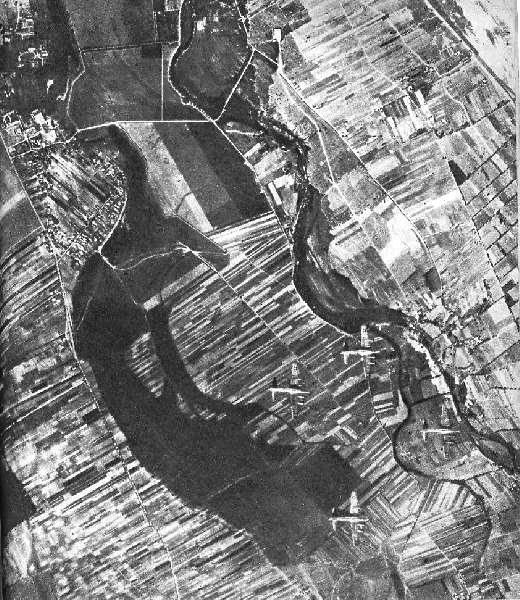
Polish, British and other Commonwealth aircrews, including South Africans, flew supply missions from southern Italy. The Warsaw Rising Museum’s airlift history describes journeys covering thousands of kilometres and lasting many hours. Much of that distance lay over enemy-controlled territory.
Crews had to balance fuel, cargo, navigation and the hazards of approaching a defended city. Darkness could offer protection while making small dropping zones harder to find. Weather could delay departures or obscure landmarks. German anti-aircraft fire threatened aircraft precisely when an accurate delivery required a controlled approach.
A successful sortie could still yield little to the intended recipients. A container might fall into German-held ground, become damaged or land where resistance members could not safely recover it. As the insurgent-held districts shrank, those difficulties became more acute.
Recognizing the limits does not diminish the crews’ courage. It clarifies the difference between their willingness to act and the resources available to make that action sufficient. “No one helped” erases real sacrifices. “Supplies were dropped” leaves unanswered the more important question of whether enough usable material arrived in time.

September brought changes, not rescue
Late assistance could not reverse the collapse
Soviet policy and operations did change in September. Soviet air drops began on 13 September. Soviet and Polish forces took Praga, on the east bank, on 14 September. Units of the Soviet-subordinate First Polish Army then attempted to establish bridgeheads across the Vistula between 16 and 23 September, suffering heavy losses without securing a successful relief of the uprising. The chronology is documented in the Institute of National Remembrance’s First to Fight.
The American mission on 18 September likewise became possible with Soviet landing permission. The Warsaw Rising Museum distinguishes 110 B-17s dispatched from the 107 that reached the dropping operation. Those figures describe different stages of one mission, rather than necessarily contradictory accounts.
Winant’s telegram reported the encouraging arrival of aircraft. The later editorial note records how little of the cargo reached Polish hands and that a second proposed mission did not receive Soviet clearance. Read together, they show why a diplomatic breakthrough and a visible demonstration of support did not produce a sustainable supply line.
By then, the resistance had endured weeks of destruction and declining territory. Aid required permission, available aircraft, suitable weather, accurate drops and secure recovery zones. A failure at any point reduced what the defenders could actually use.
The defeat extended beyond the surrender
The Home Army capitulated on 2 October. German forces expelled civilians and systematically destroyed remaining buildings. Soviet and Polish troops entered the ruined city on 17 January 1945. Estimates of civilian deaths vary, but museum accounts place the toll around 150,000 or more. The exact uncertainty does not diminish the scale of the catastrophe.
Warsaw exposes the limits of reading wartime alliances as unified moral or military actors. Different governments possessed different means, pursued different political outcomes and could obstruct one another even while fighting the same enemy. Aircrews could bridge distance; they could not by themselves reconcile those goals or replace a ground army.
The history also resists a guaranteed alternative ending. Earlier or larger assistance might have changed the fighting, but its precise effect cannot be demonstrated as a fact. What can be established is narrower and still devastating: German forces crushed the uprising, assistance was repeatedly constrained, and the people inside Warsaw had little control over the decisions on which their survival depended.
Sources
Diplomatic reports are used to identify stated decisions, not to claim access to private motives. Aircraft dispatched, supplies dropped and supplies recovered are kept separate. The 1944 uprising is distinguished throughout from the Warsaw Ghetto Uprising of 1943.
- United States Holocaust Memorial Museum, The Warsaw Polish Uprising.
- The National WWII Museum, Operation Tempest on the Eastern Front; Women and Children in the 1944 Warsaw Uprising; and Allied Responses to the Warsaw Uprising of 1944.
- Warsaw Rising Museum, Warsaw Airlift 1944.
- U.S. Department of State, FRUS, Harriman to the Secretary of State, 22 August 1944, reporting the 17 August meeting.
- U.S. Department of State, FRUS, Winant to Roosevelt, 18 September 1944, with editorial note on the air mission.
- Institute of National Remembrance, First to Fight, sections on Operation Tempest and Warsaw.
Image credits and public-domain records appear beneath the photographs. Sources checked October 2026.
More World War II history
D-Day’s Invisible Front
For a separate study of the Allied war effort, Histovia’s illustrated ebook examines deception, intelligence and command decisions around the Normandy landings.
US$3.90 · PDF + EPUB · By Histovia Team