
Cluny, 910: The Gift, the Prayers and the Making of a Monastic Network
William of Aquitaine’s charter joined an ambitious promise of independence to a very practical endowment. The monks were to pray, care for others and keep the gift beyond the reach of future interference.
Among the things William of Aquitaine gave to the new monastery of Cluny were vineyards, fields, woods, mills and people. The list appears in a charter traditionally dated 11 September 910. It is a useful place to begin, before the enormous church and the famous network of monasteries enter the story.
The gift was intended to support a community that would pray for William, his wife Ingelberga, their relatives and others connected with them. The charter also aimed to stop powerful people from taking the property back or choosing an abbot against the monks’ wishes. Spiritual hopes and legal precautions occupy the same document.
Cluny’s later success can make its beginning seem inevitable. Read the charter closely and the uncertainty returns. A donor wanted to turn possessions into something that would outlast him. To do that, he had to provide resources, define obligations and imagine the kinds of interference that might undo the whole arrangement.
What was actually given?
The foundation charter, available in Ernest F. Henderson’s public-domain translation, transfers William’s rights over an estate at Cluny in Burgundy to the apostles Peter and Paul. It names the manor and church, dependent settlements and chapels, cultivated and uncultivated land, water, revenues and people described in the translation as serfs of both sexes.
This was a working property with an existing human landscape. The monastery was not being planted in an empty wilderness. Its support depended on access to land and income, and on the obligations attached to people already living and working there.
That last point should stay visible when we talk about monastic liberty. The charter sought freedom for the religious community from certain outside powers. It did not abolish the unequal relationships through which an estate produced its income. The liberty of an institution and the status of the people supporting it were separate questions.
A gift expected to keep working after death
William explains his purpose with unusual directness. He cannot himself renounce everything, but he hopes to share in the spiritual reward of those who do. Supporting monks allows a wealthy layman to participate in their religious work without becoming one of them.
The beneficiaries of prayer form an expanding circle. The charter remembers William’s lord, King Odo, his parents, his wife and himself, as well as Ava, from whom he had inherited the property. Brothers, sisters, nephews, wider relatives and faithful followers also appear. It then extends the intended benefit to Christians across past, present and future generations.
This is more than a private arrangement between one anxious donor and one monastery. The text places a ruling household, its dead and its dependants inside a continuing community of remembrance. Property could pass into monastic hands while helping preserve the identities and relationships of those who gave it.
Calling the arrangement a simple purchase of salvation would flatten the belief behind it. The charter assumes that prayer, generosity and support for religious life have spiritual consequences. Those convictions made giving intelligible to the donor. They also made the reliability of the community important: prayers expected to continue after a death required an institution able to survive that death.
The mills in the endowment are a small but revealing detail. Histovia’s account of medieval watermills follows the rights and labour behind such assets. Here, a mill belongs to a larger arrangement in which agricultural income helps sustain worship and hospitality. A spiritual purpose still needs people to maintain the machinery.
Who would choose the next abbot?
William placed the first community under Berno. For the period after Berno’s death, the charter provided that the monks could choose an abbot from their own order in accordance with the Rule of Saint Benedict. William’s own power, and that of others, was explicitly excluded from obstructing a canonical election.
Succession was a practical test of the foundation. A donor might trust the first abbot and know his circumstances well. The next appointment would happen in a different political moment. By writing a procedure for it, the charter tried to carry the original intention beyond the people who had negotiated the gift.
Protection came with carefully drawn boundaries
The charter asked for the protection of the apostles and the Roman pontiff. Every five years the monks were to make a payment to the church of the apostles at Rome for lights. The connection gave the foundation a protector beyond the immediate circle of local claims.
Yet the text does not simply hand unrestricted control to the pope. Its prohibition on invading, reducing, exchanging or alienating the monastery’s property explicitly includes the Roman pontiff, alongside princes, counts and bishops. The protector too was being told what protection should mean.
That makes the document more interesting than a one-line claim that Cluny was “independent.” Independence had to be specified. The charter dealt with property, appointments and the founder’s relatives as well as royal and ecclesiastical power. It sought to prevent the endowment from becoming a resource that someone else could redirect.
Its sanctions combine several forms of authority. The warning against interference invokes divine judgement and exclusion from salvation. It also demands a substantial payment of gold under worldly law. To its authors, these measures could reinforce one another. Religious language was part of the document’s intended force.
A charter, however solemn, did not make every future conflict disappear. It supplied a claim that later abbots and supporters could invoke. We should distinguish what the document tried to establish from a complete history of how successfully that claim was enforced.
A community ruled through everyday practice
The monks were to follow the Rule of Saint Benedict. That much older text organises life around obedience, worship, reading and work. Its practical concerns include who announces the hours of service and who is capable of leading the singing or reading.
Chapter 47 assigns responsibility for announcing services to the abbot or a dependable brother. Chapter 48 sets out times for manual labour and sacred reading. These are small details with large consequences. A shared religious life required someone to keep the time, allocate duties and ensure that other people could carry them out.
The Rule was a framework used and interpreted by successive communities. It cannot by itself supply a minute-by-minute timetable for Cluny in every century. The distinction is like the one between a foundation charter and a later account book: the first tells us what should govern the institution, while evidence of practice shows how people lived within it.
Prayer became a demanding collective task
Cluny acquired particular renown for liturgy and intercession. Prayer was performed through repeated services, trained voices and a calendar that placed obligations on the whole community. This was skilled, organised activity, even when its intended results lay beyond anything a historian can measure.
The growing attention to the dead developed over time. Frederick S. Paxton’s study of the medieval economy of salvation distinguishes the charter’s broad promise of intercession from later evidence for elaborate death rituals. The founding text does not specify the full programme that Cluny eventually became famous for.
Under Abbot Odilo, who led the community around the turn of the eleventh century, commemoration of the faithful departed became especially important. The tradition associating him with All Souls’ Day on 2 November reflects Cluny’s lasting influence on the Christian calendar. The practice spread beyond the founding house; it was not suddenly universal at the moment of its introduction.
For donors, the attraction was continuity. A person would die, but the community could continue remembering and praying. For monks, accumulated commemorative duties meant work that had to be organised across time. A generous gift could therefore create both resources and further obligations.
The charter also required works of mercy towards the poor, needy, strangers and pilgrims, according to the house’s means. Its religious purpose reached beyond prayers for elite benefactors. Hospitality and assistance belonged within the foundation’s stated responsibilities, even though the charter alone cannot tell us how much was provided on any particular day.
Histovia’s history of Santiago’s pilgrims shows a related dependence on institutions that fed, sheltered and assisted people on the move. Religious journeys and religious houses met through very concrete needs.
How one house became many relationships
Cluny’s influence spread as abbots were asked to reform other monasteries, donors founded new houses and communities established different kinds of connection with Burgundy. The label “Cluniac” can hide that variety.
Manuel Pedro Ferreira’s study of music at Cluny carefully distinguishes formal dependence, looser supervision, temporary reform and shared observance. A community could adopt practices associated with Cluny without becoming permanently subject to its abbot. Even houses with close links did not reproduce every liturgical detail identically.
The network consequently needs to be read through particular relationships. Who appointed a prior? Who owed payments? Which community prayed for another’s dead? Who could intervene in a dispute? A map showing many dots is a beginning, but it cannot answer those questions by itself.
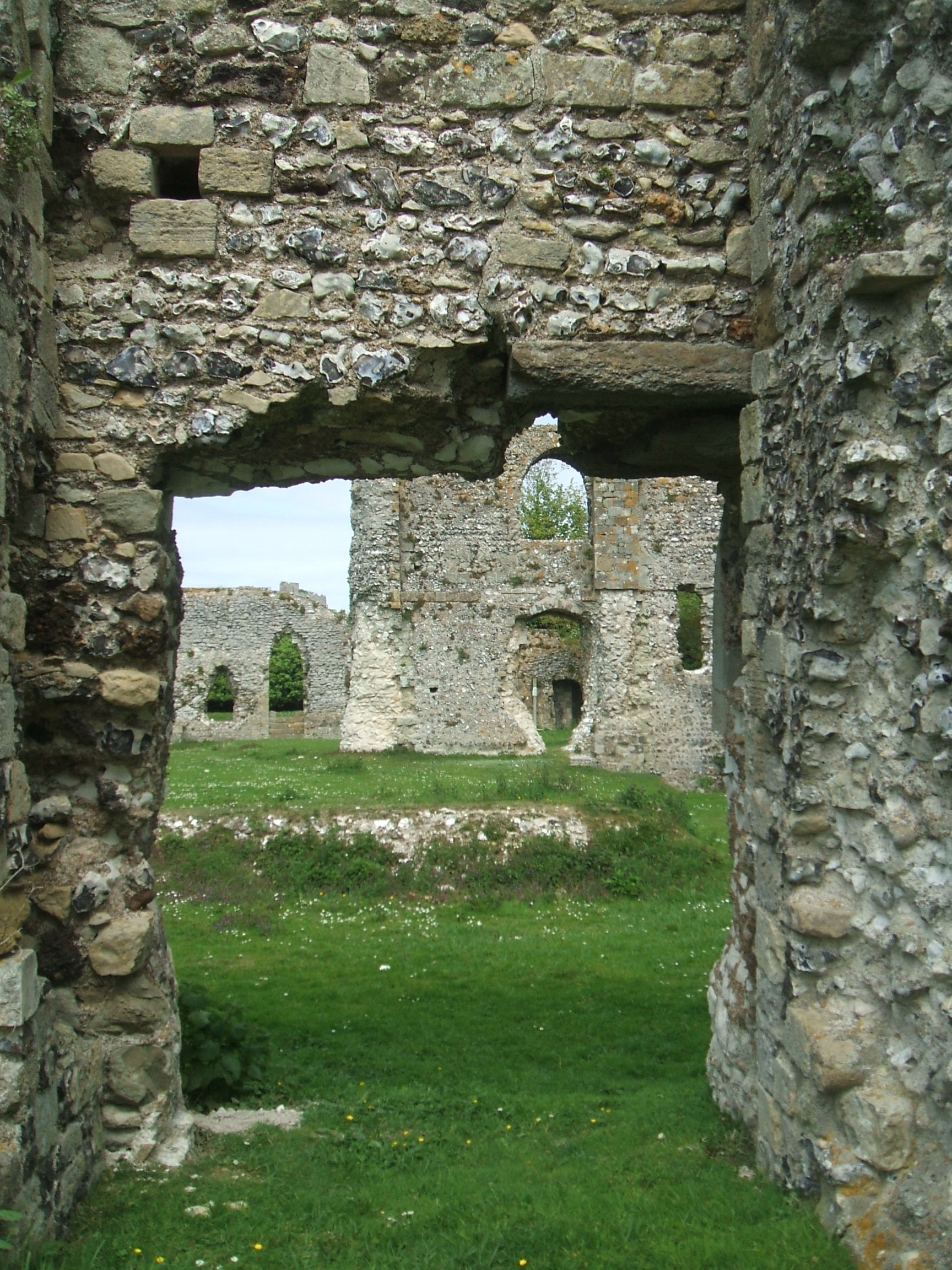
Lewes in Sussex provides a tangible example. The priory’s historical account dates its foundation by William de Warenne and Gundrada between 1078 and 1082. It became the first Cluniac priory in England and developed dependencies of its own. Its buildings and landed resources belonged to the local society in which it operated, while its religious connection reached across the Channel.
Such houses made a network durable because the connections were supported by institutions on the ground. They also made it complicated. A prior had local responsibilities; a donor had family interests; an abbot at Cluny had wider claims. Shared identity did not remove those overlapping relationships.
The great church was a later achievement
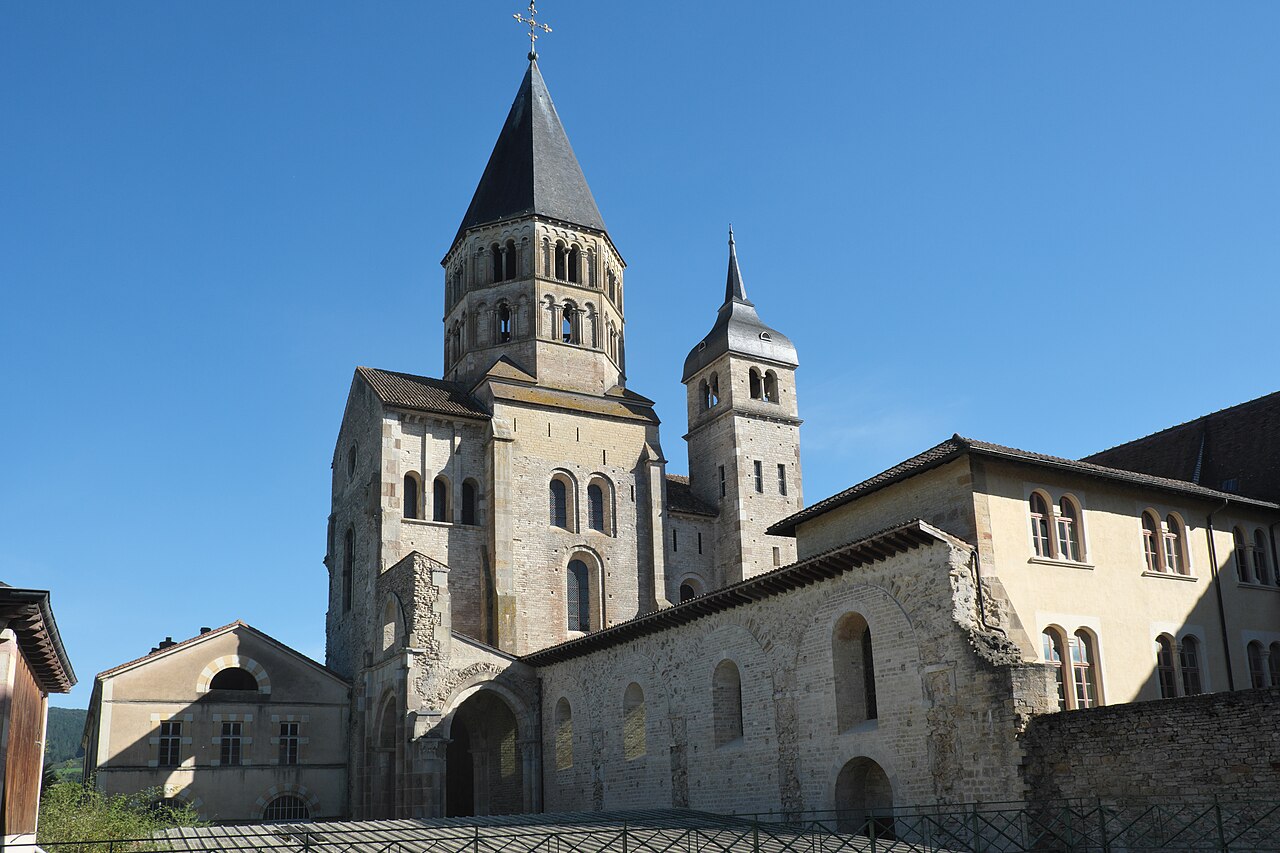
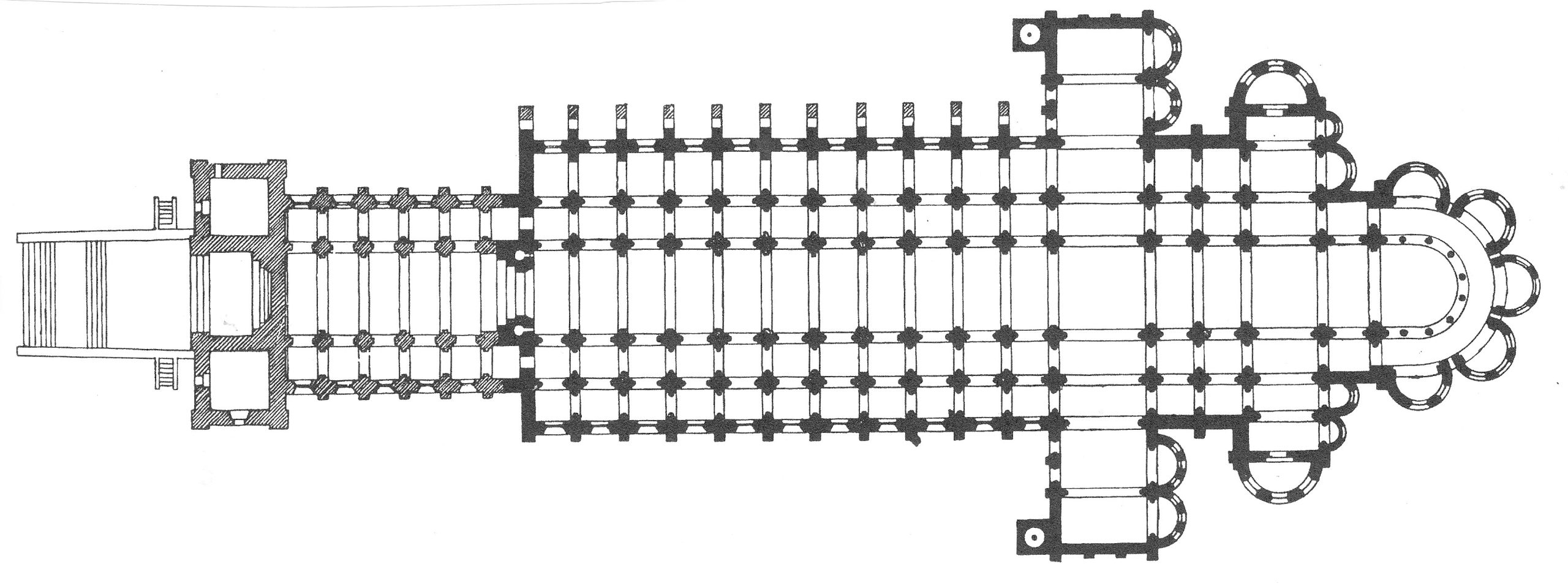
The immense church known as Cluny III belongs to a much later stage than the charter of 910. Under Hugh of Semur, work began in 1088. The Centre des monuments nationaux’s history places this project within the abbey’s long growth in wealth and prestige.
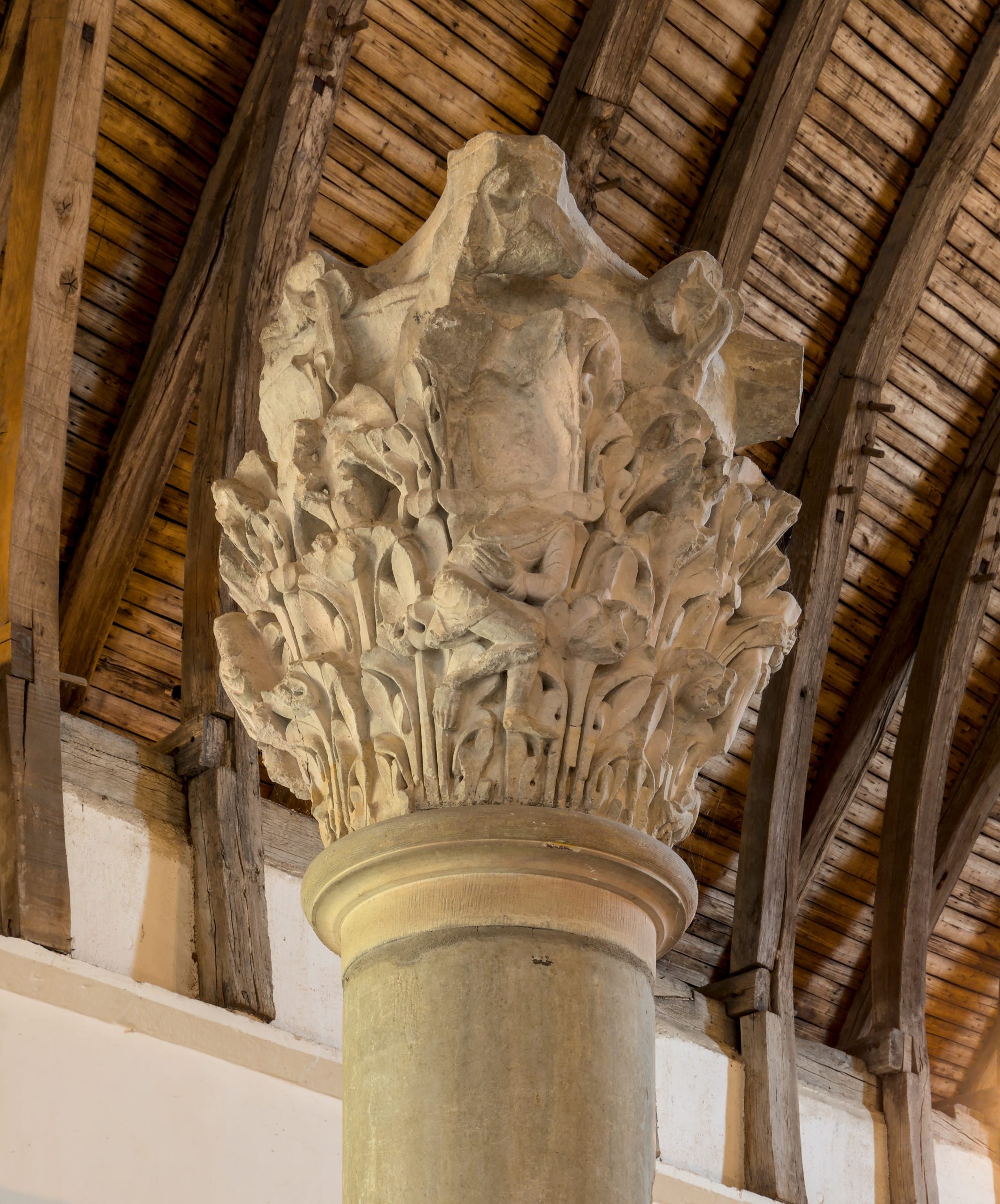
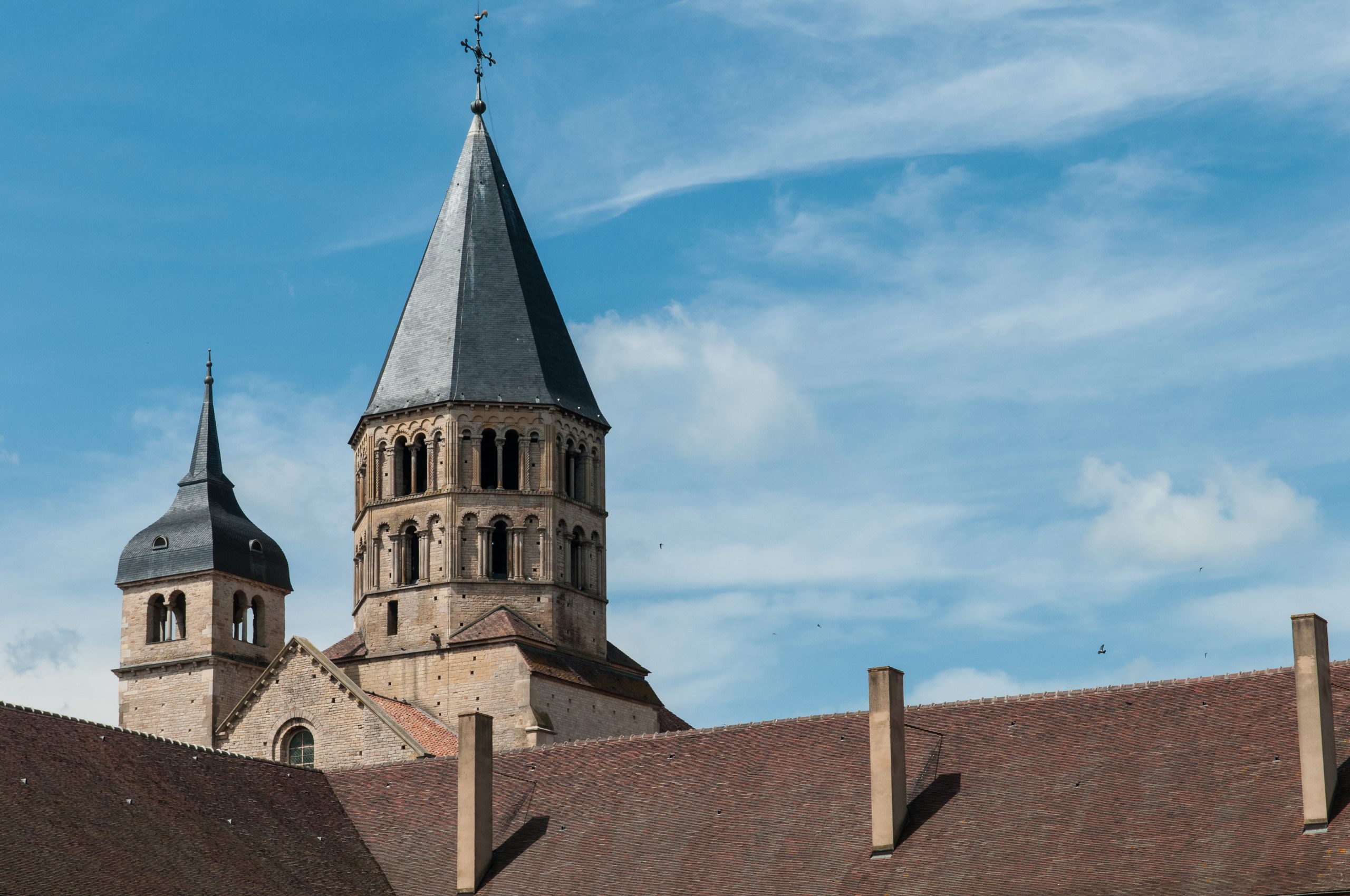
The carved capital shown earlier and the surviving transept help convey the ambition of that building. They should not be used to illustrate the first community as though nothing had changed in the intervening generations. A plan of the mature abbey shows the result of development, rather than a blueprint delivered with William’s gift.
What remains when the institution is gone
Monastic life at Cluny ended during the French Revolution. The subsequent sale and dismantling of much of the abbey church left only part of the enormous medieval building standing. Excavation, architectural fragments and historical plans now have to work together to recover its form.
The surviving heritage also extends far beyond Cluny itself. The Council of Europe’s Cluniac cultural route brings together places connected through that long history. Its present-day network is a heritage organisation, rather than a continuation of medieval abbatial government. The distinction matters when a familiar name travels across very different institutions.
Return to the charter and its ambitions seem both narrower and more demanding than the later fame suggests. William was trying to keep a gift intact, sustain a community and ensure that prayer and mercy continued after his own death. He could specify property, protect an election and call on powerful defenders. He could not guarantee the choices of every future generation.
Cluny grew through those later choices. Abbots interpreted inherited rules, donors entrusted property, monks maintained worship and other communities negotiated their relationship with the house. The charter supplied an unusually clear starting point. The network, the great church and the long accumulation of remembrance had to be made over time.