
Religion & Ideas
The Council of Trent: Reform, Doctrine and the Work of Governing a Church
Trent defined Catholic teaching, but its programme also depended on trained priests, resident bishops, schools, marriage records and the money to sustain them.
A church council could declare what Christians ought to believe. Making that declaration reach a parish required something else: a trained priest, a bishop willing to supervise him, books that could be consulted and money to keep the institutions operating. The Council of Trent addressed both kinds of problem.
Its decrees are famous for defining Catholic positions in the age of the Protestant Reformation. Read beyond the doctrinal canons, however, and one encounters rules about residence, schools, preaching, marriage witnesses, accounts and the inspection of religious images. These were attempts to organise the people and practices through which belief was taught and sustained.
Trent opened on 13 December 1545 and concluded on 4 December 1563. Those dates do not describe eighteen years of uninterrupted meetings. The council worked through separate periods under different popes, with long interruptions. Its eventual decisions should not be read backward as though everyone who arrived at the opening already knew the result.
Why bringing a council together took so long
Calls for reform did not begin with Martin Luther, and Catholic renewal was not confined to this one assembly. The Reformation nevertheless gave questions about authority, teaching and church practice a new urgency. Disputes once treated as correctable within a common institution had produced enduring divisions.
The St Andrews Encyclopaedia of Theology’s study by Wim François places the council within competing papal, imperial and royal priorities. Charles V wanted religious settlement within his empire. Popes had to consider how a council’s authority might relate to their own. French rulers had reasons to resist an outcome that strengthened Habsburg power.
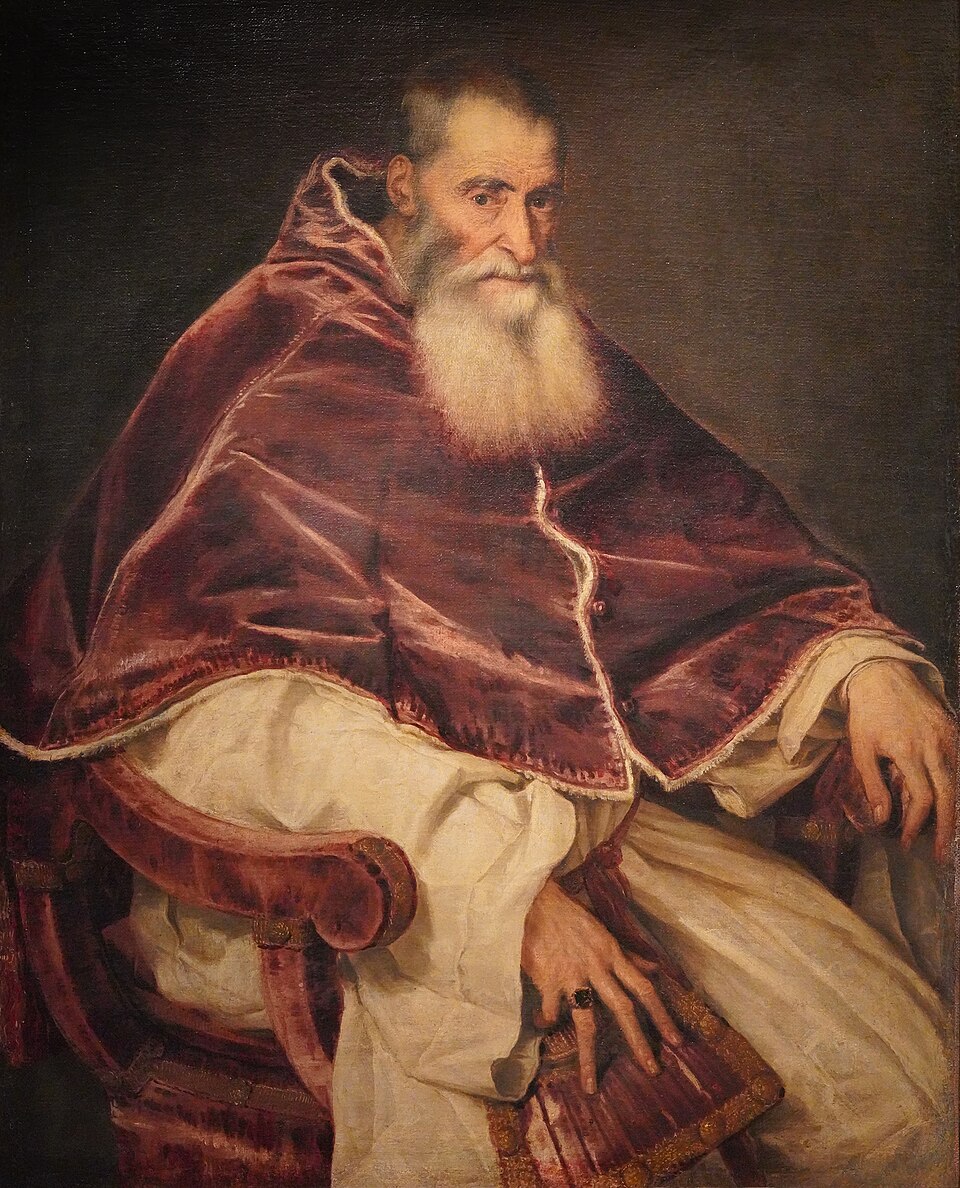
Paul III eventually convened the gathering. It met at Trent, an episcopal city within the Holy Roman Empire on routes between Italian and German-speaking territories. Geography made it a meeting place, but did not neutralise the political differences brought there. Holding a council and agreeing what it should accomplish were separate tasks.
For the background to those disputes, Luther’s Ninety-Five Theses and their circulation offer a useful starting point. By 1545, however, the controversy had moved far beyond the original argument over indulgences. Scripture, justification, sacraments, clerical authority and the organisation of Christian life were all involved.
The work behind a solemn session
The council’s twenty-five formal sessions were the occasions on which decisions and procedural acts were publicly issued. They were not the whole of its activity. Drafting, theological discussion, negotiation and revision took place between them. Counting sessions therefore tells us little about how many conversations were needed to reach a decree.
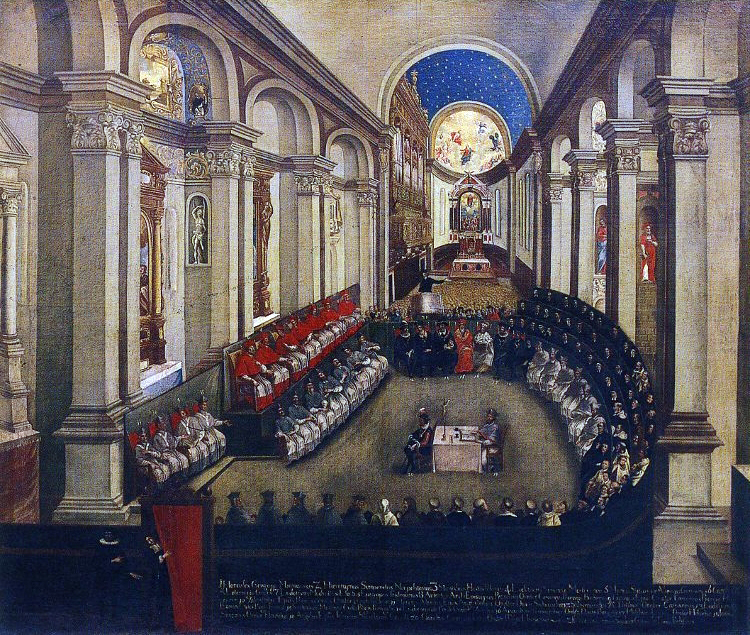
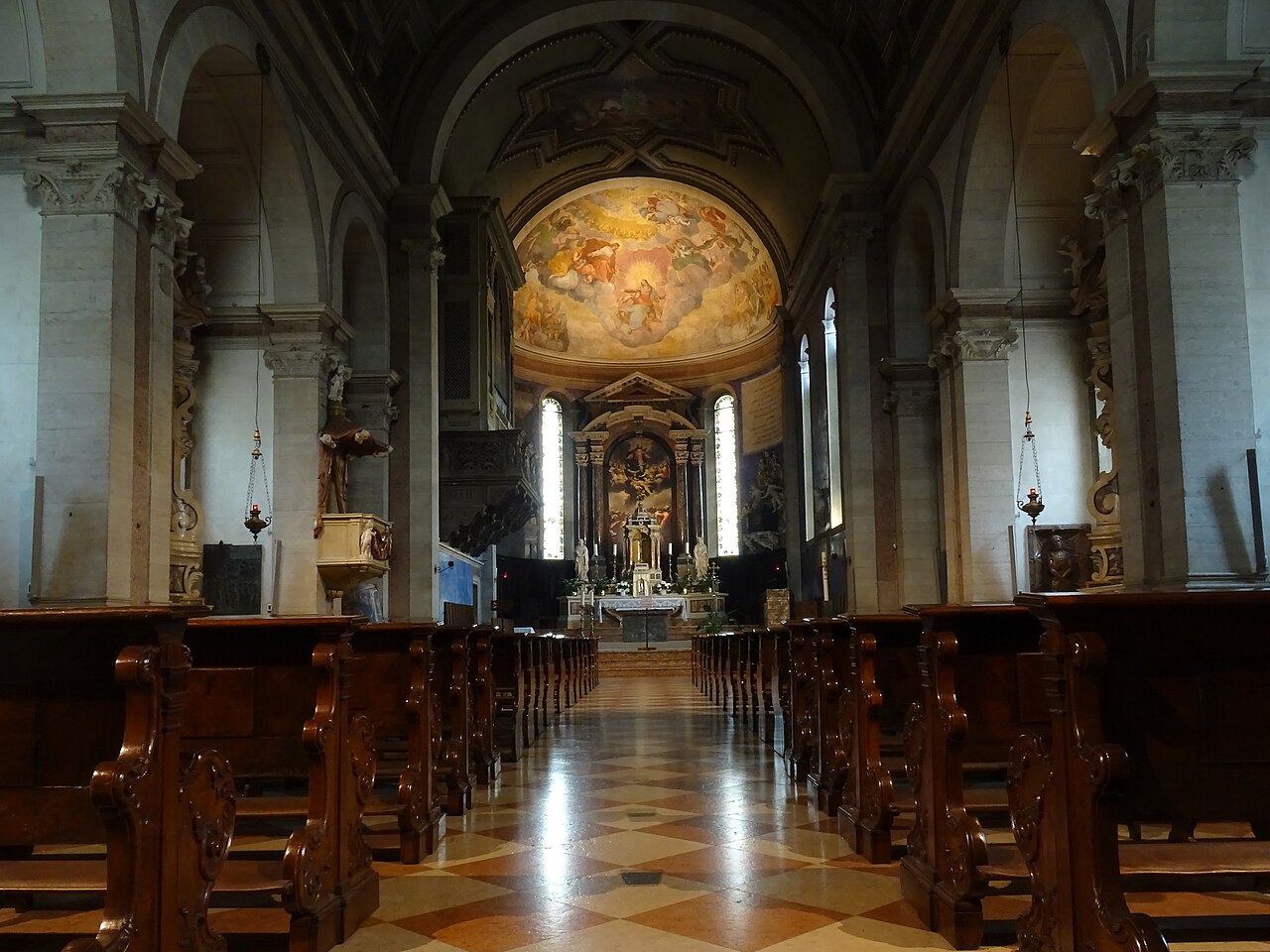
A useful visual source is a 1563 engraving described by the Museo Diocesano Tridentino. It shows a general congregation at Santa Maria Maggiore, one of the preparatory meetings before a formal session. The museum explains that increased attendance in the final period made earlier meeting spaces inadequate. The assembly had physical requirements as well as an intellectual agenda.
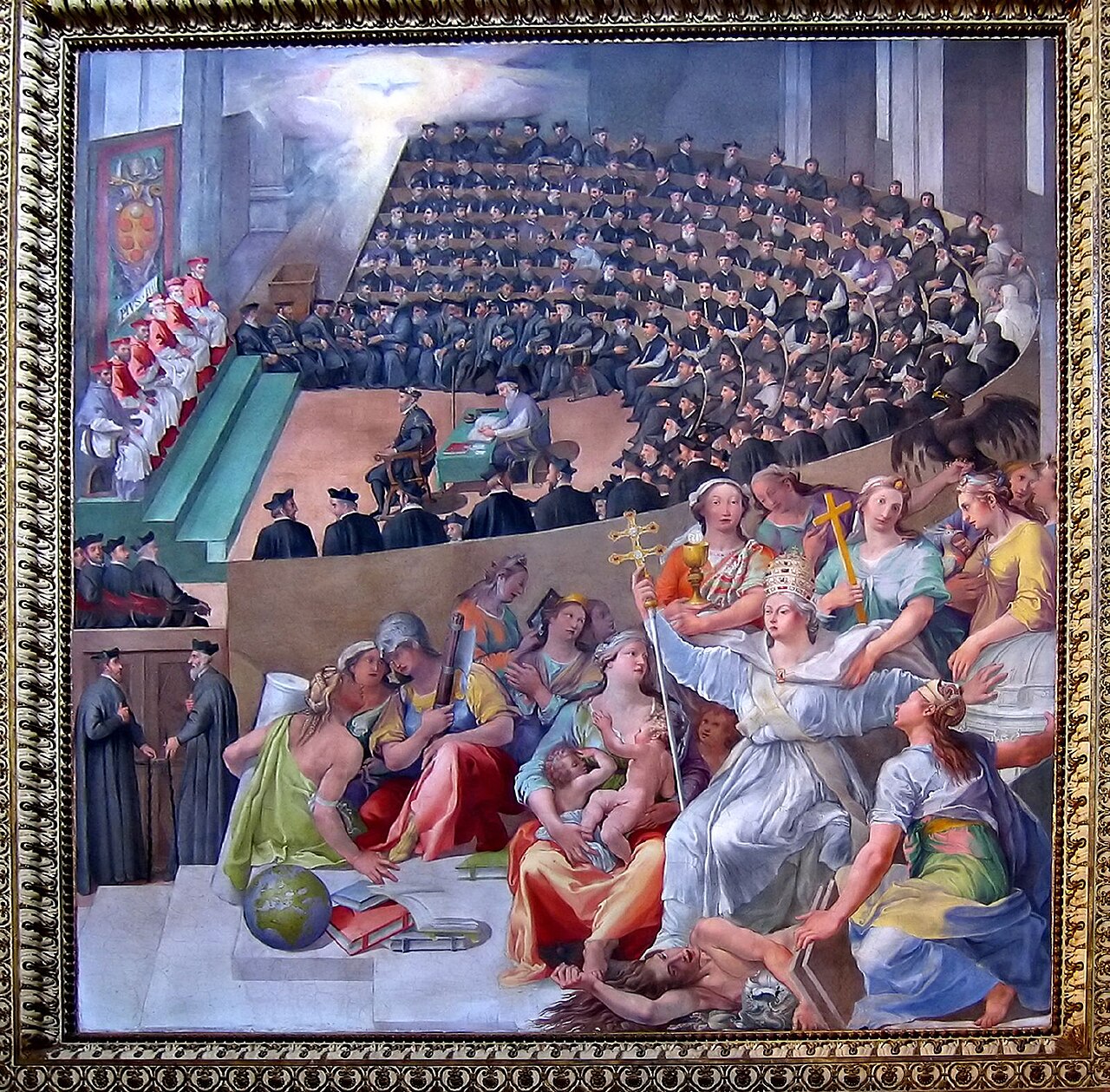
This distinction helps when looking at paintings of Trent. Rows of churchmen in an ordered architectural space can suggest a single harmonious event. Many familiar images were made later, and some are openly allegorical. They can illuminate how the council was remembered without functioning as photographic records of a particular debate.
The council’s periods of work also belonged to different political circumstances. Its first phase included the move from Trent to Bologna in 1547; it returned to Trent in 1551 and was suspended again in 1552. The final period began in 1562 under Pius IV. Participants, expectations and immediate pressures changed across these interruptions.
Scripture and the authority to interpret
The fourth session’s decrees of April 1546 listed the books received as canonical and affirmed the authority of apostolic traditions alongside the written scriptures. The council presented this as the preservation of received Christian truth, while drawing lines against positions it considered erroneous.
It also declared the Latin Vulgate authentic for specified public uses, including lectures, disputations, sermons and exposition. That decision concerned an authoritative text within ecclesiastical practice. It should not be simplified into a claim that the council had conducted a modern critical comparison of every surviving biblical manuscript.
The same session addressed printers. Books on sacred matters were to carry authors’ names and receive ecclesiastical examination and approval. Approval was to be recorded in writing. The decree joined a claim about truth to a process for controlling how texts circulated.
In an expanding print culture, this was an institutional response to a practical difficulty. A doctrine could be stated in one place and contradicted in books sold elsewhere. Supervision therefore reached beyond the spoken teaching of a local priest to the production and distribution of printed material. This was censorship as well as an effort to establish dependable instruction.
Justification was not a contest between faith and effort
The decree on justification, issued in January 1547, dealt with how sinful human beings were made righteous before God. It is easy to misrepresent the controversy as one side teaching faith and the other teaching that salvation could simply be earned through good behaviour. Trent’s own text does not support that summary.
The decree insisted on the initiative of divine grace. Human beings could not move themselves into righteousness without it. At the same time, it affirmed a human response to grace and rejected formulations that its authors understood to remove that response or reduce justification to a merely external status.
These distinctions were not verbal refinements without consequences. They shaped preaching, confession and the way believers were taught to understand repentance and assurance. But an accessible historical account should also acknowledge the limits of compression. Catholic and Protestant positions developed within complex theological traditions, and the council’s condemnations describe opponents through the categories its own authors chose.
Trent was defining Catholic teaching, not recording a neutral consensus among all Christians. Its doctrinal canons used formal condemnation to mark boundaries. Those boundaries became part of a divided Christian world rather than the formula for an immediate reunion.
A bishop was supposed to be there
Reform concerned the conduct of clergy as well as doctrinal propositions. The problem of residence was central: how could a bishop oversee a diocese while habitually living elsewhere, or a parish receive pastoral care from an absent holder of its income? An ecclesiastical office carried responsibilities that could be neglected even when its revenues continued to be collected.
The council returned to these questions in its disciplinary decrees. The aim was to make oversight more effective through duties attached to offices, visitation and accountability. A rule requiring presence had practical implications for households, travel, competing appointments and the relationships between bishops and local institutions.
The twenty-third session also required candidates for priesthood to be examined for their ability to teach and administer the sacraments. Ordination was to connect a cleric with a particular church or useful ministry. The council was trying to limit a gap between possessing a religious status and carrying out its work.
These measures could not enforce themselves. A bishop needed people capable of conducting inspections, reliable information about local conditions and the authority to act when obligations were evaded. Reform on parchment created tasks for administrators as well as duties for priests.
The seminary was a financial plan too
Among Trent’s best-known reforms was its provision for seminaries. Cathedral and metropolitan churches were to support institutions for educating future clergy, according to their resources and the needs of their dioceses. The decree described a continuing supply of trained ministers rather than a one-time remedy for a shortage.
Students were to receive religious formation and instruction in subjects including grammar, singing, scripture, ceremonies and the administration of sacraments. The curriculum connected reading and study with the activities they would later perform. Clerical competence was supposed to be learned through an organised setting.
The text gave particular attention to boys from poorer families, while allowing wealthier students to be maintained at their own expense. This was not universal education. It was a selective institution intended to reproduce a trained male clergy within the church’s own hierarchy.
Just as importantly, the decree considered buildings, teachers’ salaries, servants, maintenance and sources of revenue. It authorised contributions from ecclesiastical income and provided for annual accounts. Where one diocese lacked sufficient means, resources could be combined to support a college serving more than one church.
That attention to finance reveals the scale of the undertaking. Saying that priests should be better educated did not provide a schoolroom or pay an instructor. The seminary decree tried to connect an educational aim with an enduring institutional budget. Whether that connection succeeded in a particular place requires local evidence, not simply the date on the decree.
Marriage had to become demonstrable
The twenty-fourth session’s marriage reform of November 1563 addressed a different problem of evidence. A marriage contracted secretly might later be denied, leaving courts to decide between conflicting claims. The decree acknowledged the validity of earlier clandestine marriages while establishing a new public form for the future where its provisions took effect.
Under the decree commonly known as Tametsi, valid marriage ordinarily required the presence of the parish priest, or another properly authorised priest, and two or three witnesses. Public announcement of banns was prescribed, with provision for dispensations. The priest was also to record the marriage.
The rule did not come into force everywhere by magic on the day the council voted. Its text specified that it would take effect in a parish thirty days after publication there. That local requirement is essential to understanding why the history of marriage law after Trent cannot be reduced to a single universal date.
The decree also rejected the idea that parents could make their children’s marriages valid or invalid simply by granting or withholding consent. The council’s concern with public procedure should therefore not be confused with an unrestricted transfer of marital choice to families. The regulation of marriage involved overlapping claims by spouses, relatives, clergy and courts.
Images remained, but under supervision
In its final session, the council defended the use of sacred images, the veneration of relics and the invocation of saints. It explained that honour shown to an image referred to the person represented, rather than to a divine power residing in paint or stone. Images could teach and prompt remembrance.
The same decree called for the removal of abuses. Images should not communicate false doctrine or encourage inappropriate conduct. Unusual new images, claims of miracles and the recognition of new relics were placed under episcopal scrutiny. Defence of religious art went together with regulation.
That is a more precise conclusion than saying Trent invented a complete artistic style. The decree did not provide a universal blueprint for the composition, colour and emotional character of every later Catholic painting. Artists, patrons, religious communities and local authorities still made choices.
Pasquale Cati’s later representation of the council is particularly instructive. Its allegorical figures celebrate the church’s authority as well as showing assembled clerics. The painting belongs to the council’s reception: it tells viewers how the event could be presented after its conclusion. It should not be treated as a literal diagram of who occupied a seat during a session.
The decrees left the meeting place
At the end of 1563, the work of the assembled council ceased; the work of applying its decisions continued. Printed editions made the decrees available for consultation. Bishops and other authorities had to interpret requirements, organise institutions and confront local resistance or insufficient resources.
The resulting changes were uneven in timing and extent. A newly opened seminary, a visitation record or a parish marriage register can reveal implementation more directly than a later claim that a whole society instantly became “Tridentine.” Each document records a particular relationship between the council’s programme and local circumstances.
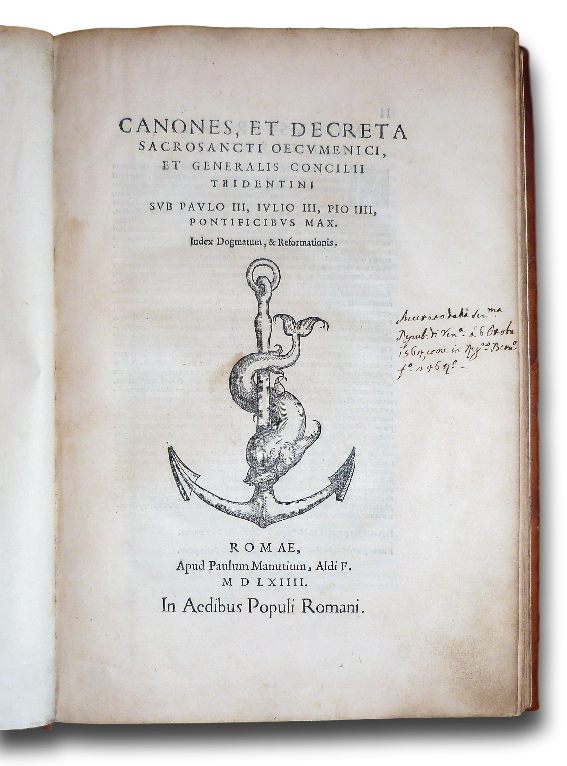
Trent’s historical importance rests in that combination of definition and administration. It made Catholic teaching more explicit on disputed questions and supplied tools for supervising the clergy and religious life. Its regulations reached from theological debate to the education of a future priest and the recording of a marriage.
To read the council only through its condemnations misses much of the work it assigned. To read it only as successful reform misses the conflicts and exclusions that accompanied it. The decrees are most useful when kept beside the institutions that had to put them into practice, where a statement made in Trent became a local obligation, an expense, a lesson or a record.